| Getting your Trinity Audio player ready... |
If you’ve found a basement wall crack or a leaking foundation crack, you’re probably searching for the fastest, most reliable foundation crack repair option. Two terms show up everywhere: epoxy crack injection and polyurethane crack injection.
They’re not interchangeable—and choosing the wrong one can mean a failed repair, repeat leaks, and more damage over time. This Dryshield guide breaks down the difference between epoxy vs polyurethane injection so you can choose the right crack injection service for your home.
The Short Answer, Dryshield Rule of Thumb
- Use epoxy crack injection when the goal is structural foundation crack repair (a dry crack that needs strength and bonding).
- Use polyurethane crack injection when the goal is waterproofing a basement crack (a wet crack or an actively leaking basement wall crack).
Epoxy Crack Injection: Structural Foundation Crack Repair “The Concrete Bond”
Think of epoxy injection as a high-strength bonding method used in concrete foundation crack repair. When installed correctly, it can restore structural continuity by bonding the two sides of the crack together.
How epoxy crack injection works
Epoxy cures into a hard, rigid material that bonds concrete to concrete. It’s designed for structural crack repair, where the goal is strength not flexibility.
When Dryshield recommends epoxy injection
- Structural foundation crack repair (when a crack is assessed as structural)
- Wide, dry foundation cracks that need bonding strength
- Non leaking cracks where water is not present
When epoxy is NOT the best choice
Epoxy generally performs poorly if the crack is wet, actively leaking, or has recurring moisture pressure. If you’re dealing with a leaking foundation crack repair situation, polyurethane is often the better solution.
H2: Polyurethane Crack Injection: Leaking Foundation Crack Repair “The Water Stopper”
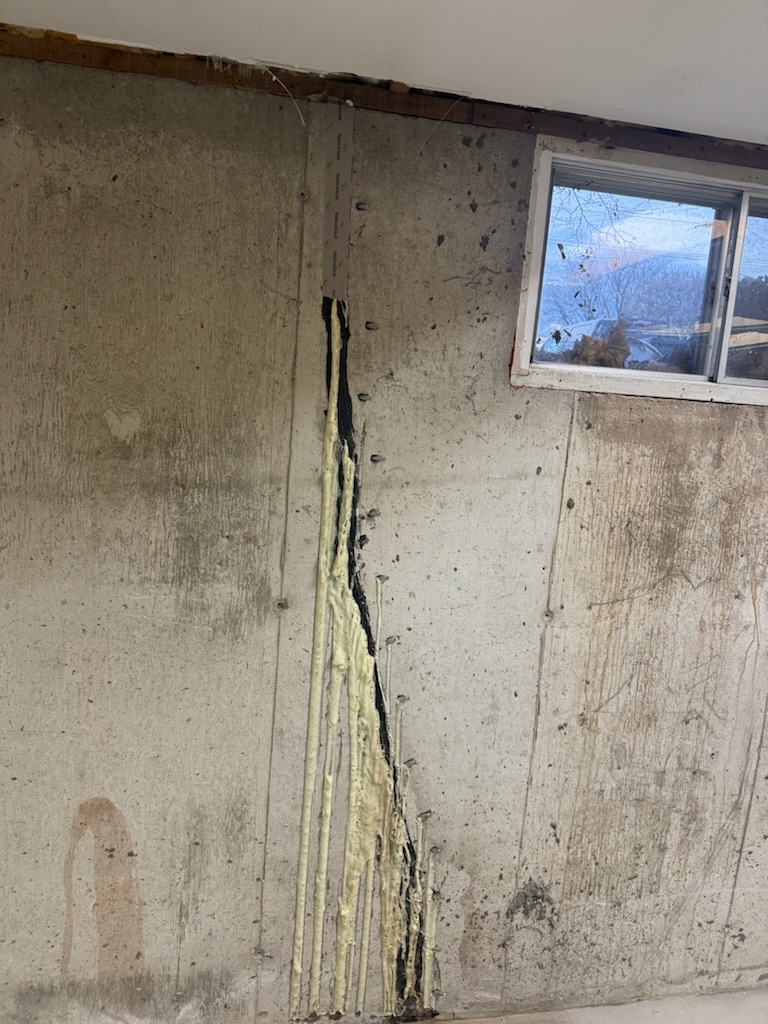
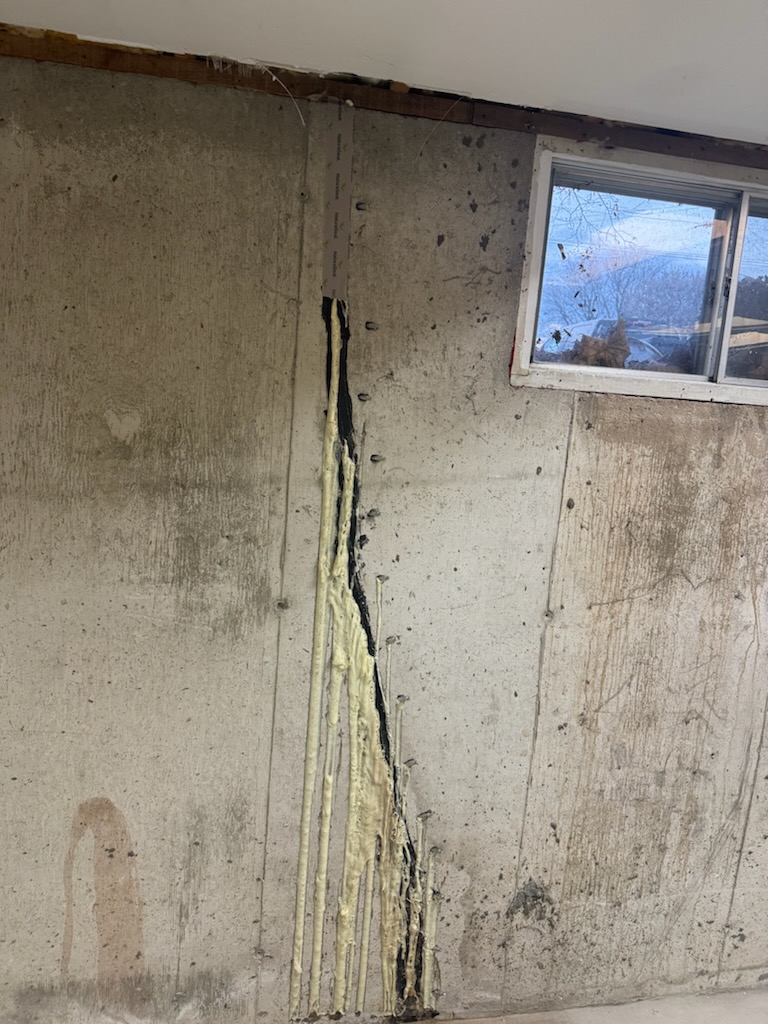
For most homeowners searching basement crack repair because water is coming in, polyurethane crack injection is the go to method.
Polyurethane is flexible and expands inside the crack, helping seal the pathway that water uses to enter your basement.
How polyurethane crack injection works
Polyurethane reacts with moisture and expands to fill tiny voids within the crack, creating a watertight seal. Unlike rigid epoxy, polyurethane stays slightly flexible, which helps it perform well through seasonal movement.
When Dryshield recommends polyurethane injection
- Leaking foundation crack repair, water enters during rain or snowmelt
- Hairline basement wall cracks that seep or stain
- Waterproofing foundation cracks where flexibility matters
- Basement leak repair where the crack is damp or actively leaking
Epoxy vs Polyurethane Injection Comparison
Primary Purpose
- Epoxy: Structural crack repair / bonding
- Polyurethane: Waterproofing / leak sealing
After Cure
- Epoxy: Rigid / hard
- Polyurethane: Flexible / resilient
Performance in Wet Cracks
- Epoxy: Can fail if the crack is wet
- Polyurethane: Designed for wet/leaking cracks
Expansion
- Epoxy: Minimal
- Polyurethane: Expands to fill voids
Best For
- Epoxy: Dry structural foundation crack repair
- Polyurethane: Basement crack repair for leaks
Which Crack Injection Should You Choose?
Scenario A: My basement wall crack leaks when it rains.
Best choice: Polyurethane crack injection.
If your main issue is water seepage, you need leaking foundation crack repair, not just bonding strength. Polyurethane is designed for basement leak repair and performs well when moisture is present.
Scenario B: I have a wide crack and I’m worried the wall is shifting.
Best choice: Epoxy crack injection (after assessment).
This may involve structural foundation crack repair, and epoxy can be recommended when the crack is dry and the goal is restoring strength. In some structural cases, additional reinforcement may be needed depending on severity.
Frequently Asked Questions: Epoxy vs. Polyurethane
Which method is better for stopping an active water leak?
Polyurethane is the superior choice for stopping active leaks. It is hydrophilic, meaning it reacts with the water inside the crack to expand (up to 20 times its volume) and form a tight, waterproof seal. Epoxy, on the other hand, typically requires a completely dry surface to bond correctly and can fail if applied to a wet crack.
When is Epoxy absolutely required?
Epoxy is required when the crack is structural. If the crack was caused by foundation settlement and poses a risk to the building’s stability, Epoxy is the only material that can restore the wall’s monolithic strength. It acts as a “weld” that is often stronger than the concrete itself.
Can I use a DIY crack injection kit from the hardware store?
For most homeowners, DIY kits don’t deliver the same results as professional service. A proper foundation crack injection needs the right prep, ports, and high-pressure injection technique to fill the full depth of the crack—not just the surface. Low-pressure DIY kits often fail to penetrate all the way to the outside soil, leading to re-leaking a few months later.
Can I use these injection methods on a cinder block foundation?
No. High-pressure injection (both Epoxy and Polyurethane) is designed for solid poured concrete foundations. Cinder blocks are hollow; if you try to inject them, the material will simply flow into the empty cores and waste away without sealing the leak. Block walls require exterior waterproofing or interior weeping tiles.
How long does crack injection last?
When performed correctly by a professional, both Epoxy and Polyurethane repairs are typically permanent. Polyurethane materials remain flexible, allowing them to expand and contract with the natural freeze-thaw cycles of Toronto’s soil without cracking again. DryShield offers a warranty on these repairs because the materials are industrial-grade.
Can I apply Epoxy over a crack that was previously repaired?
It is very difficult to inject Epoxy into a crack that has been previously filled with silicone, hydraulic cement, or DIY patches because the ports cannot get good penetration. In these cases, the old material usually needs to be chiseled out first, or a new injection path drilled adjacent to the crack.
Multiple cracks often indicate ongoing water pressure or movement. In that case, we’ll recommend the best combination of foundation crack repair and basement waterproofing to address the root cause, not just one spot.
Need Help Choosing the Right Foundation Crack Repair?
Not sure whether you need epoxy crack injection or polyurethane crack injection? Don’t guess. Dryshield offers professional inspections and honest recommendations so you get the right basement crack repair solution the first time.
Call us today at 1-800-277-5411 or Book a Free Estimate