Serving Toronto, the GTA, and surrounding areas. If you’re dealing with a basement leak—water on the floor, seepage at the wall/floor joint, or a leaking foundation crack—this guide helps you diagnose the source and choose the right long-term fix.
See our full service area
Book an inspection
What causes most basement leaks?
Most basement leaks come from one of three sources: (1) a foundation crack (or other wall entry point), (2) the wall–floor joint (cove joint), or (3) hydrostatic pressure pushing water under the slab and into weak points. The best fix depends on the entry path: seal cracks with injection, manage cove-joint leaks with interior drainage + a sump pump strategy, and stop storm-driven leaky basement with foundation waterproofing and proper exterior drainage.
Visual Symptom Checker (10-second diagnosis)
Use this table to match what you see to the most likely source and next step.
| If you see… | Most likely source | What it usually means | Best next step |
|---|---|---|---|
| White powder on walls (efflorescence) | Moisture migrating through the wall | Ongoing dampness (not always an active “streaming” leak) | Identify the moisture source + dry-out plan |
| Water pooling where wall meets floor | Cove joint / under-slab pressure | Hydrostatic pressure is finding the easiest exit point | Interior drainage + sump strategy |
| Water “comes through” the floor / a floor crack | Under-slab pressure / slab crack | High groundwater pressure under the slab | Drainage/sump plan + crack assessment |
| Wet streak starts mid-wall and runs down | Foundation crack / tie hole / honeycombing | Water entering through a specific wall entry point | Crack injection or targeted repair |
| Leak appears only after heavy rain | Surface water overload | Downspouts/grading/window wells/soil saturation | Foundation waterproofing plan + drainage checks |
| Recurring damp basement from multiple spots | Systemic water management issue | Usually needs a whole-system approach | Wet basement assessment |
Note: If you have a horizontal crack with wall movement, sudden severe flooding, electrical hazards, or sewage smell, treat it as urgent and get it assessed.
Where is the water coming from?
This decision chart helps you choose the best fix based on where the leak shows up.
| Where you see water | Most common cause | Most common best fix | Related DryShield page |
|---|---|---|---|
| Floor wet in the middle | Under-slab pressure, slab crack | Sump/drainage strategy + crack assessment | Wet Basement Repair |
| Floor wet at the edges | Cove joint / under-slab pressure | Interior drainage + sump | Interior Waterproofing |
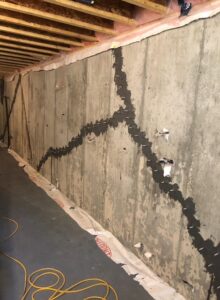
| One visible vertical/diagonal crack leaks | Crack entry point | Crack injection | Crack Injection |
| Wall damp without an obvious crack | Porous wall + hydrostatic pressure | Drainage strategy (interior/exterior) | Wet Basement Repair |
| Leak only after heavy rain | Surface water overload | Drainage + foundation waterproofing plan | Waterproof Foundation |
| Pump runs constantly / alarm | Sump undersized/failing | Sump upgrade + backup | Sump Pump Installation |
Water seeping through basement floor (or “water leaking through basement floor”)
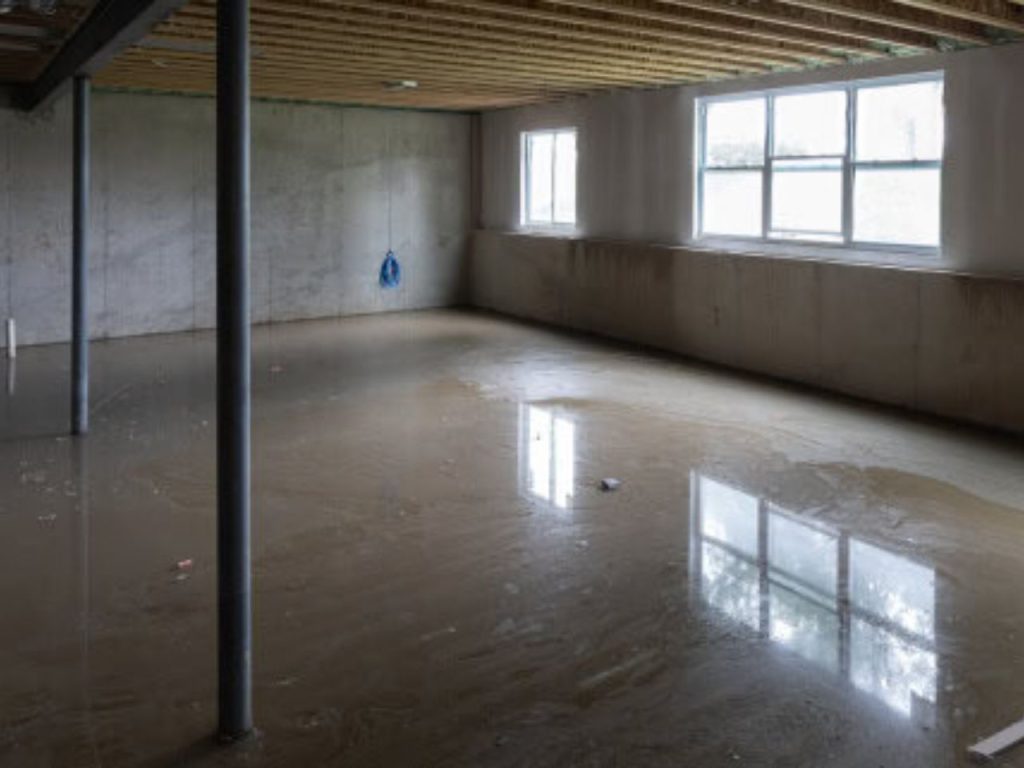
Water seeping or leaking through a basement floor is usually caused by hydrostatic pressure pushing groundwater under the slab and into weak points like hairline cracks, joints, or porous concrete.
Common signs
- Damp patches or puddles that worsen after rain or spring snowmelt
- Water collecting along the perimeter (sometimes mistaken for “floor leaks”)
- Leak activity increases when the ground is saturated
What typically works best
Floor “patches” rarely last because the issue is pressure. The most reliable long-term approach is a pressure-relief strategy such as interior drainage and, when needed, a properly sized sump pump system.
Basement leaks where wall meets floor (cove joint)
Snippet answer: Leaks where the wall meets the floor usually indicate cove-joint seepage caused by under-slab hydrostatic pressure. Water appears at the base with little or no wet streak above it.
Best matching fix
Most homeowners get the best results from interior drainage paired with a dependable sump pump setup (often including battery backup if outages are common).
Leaking basement wall, foundation leak, or leak in the foundation
Snippet answer: A leaking basement wall usually means water is entering through a foundation crack or another wall entry point (tie holes, honeycombing, penetrations). The best fix is to seal the entry path and reduce exterior water load so the leak doesn’t return.
Common entry points
- Vertical or diagonal cracks (settlement)
- Tie rod holes (small round points that can leak)
- Honeycombing (voids/rough concrete zones)
- Gaps around pipes, wires, and other penetrations
Next step: If you can identify a specific crack, start here: Crack Injection or Foundation Crack Repair.
Water leaking into basement after heavy rain
Snippet answer: If your basement leaks only during heavy rain, the most common cause is surface water overload—short downspouts, clogged gutters, poor grading, window wells filling, or saturated clay soil holding water against the foundation.
Storm-only checklist (DIY checks)
- Clean gutters and confirm downspouts are flowing freely
- Extend downspouts well away from the foundation
- Check grading: water should slope away from the home
- Inspect window wells for standing water or blocked drains
- Confirm sump discharge is routed away (not recycling back)
If leaks persist: Learn more about long-term options at Waterproof Foundation and Exterior Waterproofing.
What are the best methods to fix a basement leak and prevent future water intrusion?
Snippet answer: The best basement leak fix depends on the entry point. Start by reducing exterior water load, then seal cracks with injection, manage cove-joint leaks with interior drainage/sump systems, and use exterior waterproofing for persistent storm-driven exterior entry.
Best-practice order (most effective first)
- Control surface water: gutters, downspouts, grading, window wells
- Fix a known crack entry point: typically crack injection
- Relieve under-slab pressure: interior drainage + sump system
- Stop exterior entry (when needed): foundation waterproofing / exterior waterproofing
Comparison chart: Fix vs. best-for
| Method | Best for | Not ideal for |
|---|---|---|
| Crack injection | Single, identifiable crack leak | Multiple seep points / cove-joint pressure issues |
| Interior drainage + sump | Cove joint leaks, under-slab pressure, perimeter seepage | Preventing exterior water from reaching the wall (it manages it instead) |
| Exterior waterproofing | Persistent storm-driven leaks, exterior entry | Small isolated crack-only leaks where injection is sufficient |
How can I tell if a basement leak comes from a foundation crack versus a wall/floor joint?
Snippet answer: If a wet streak starts higher on the wall and runs down, it’s usually a foundation crack or wall entry point. If water pools at the base with no streak above, it’s often the wall–floor joint (cove joint) caused by under-slab hydrostatic pressure.
| Clue | More likely a foundation crack | More likely wall/floor joint (cove joint) |
|---|---|---|
| Wet trail | Starts higher up and runs down | Appears at the base with no trail above |
| Visibility | Often you can see the crack/entry path | Joint may look intact but still leaks |
| Best first fix | Crack injection | Interior drainage + sump |
Can heavy rain cause basement flooding, and how can I set up drains and sump pumps to mitigate it?
Snippet answer: Yes. Heavy rain can saturate soil quickly and spike hydrostatic pressure, causing seepage at the cove joint and leaks through weak points. The best mitigation is a layered system: interior drainage, a properly sized sump pump, a backup power option, and exterior drainage improvements.
A layered defense that works
- Primary sump pump sized for your risk + proper discharge routing
- Battery backup for power outages during storms
- Interior perimeter drainage to intercept water at the wall/floor joint
- Downspouts + grading to reduce water load at the foundation
Learn more: Sump Pump Installation and Interior Waterproofing.
The Anatomy of a Waterproofed Foundation
We don’t just “patch” leaks. We install a 5-layer engineered system designed to manage Southern Ontario’s heavy soil conditions.
Layer 1: The Seal
Rubberized Bitumen
We apply a heavy-duty, rubberized membrane directly to the bare foundation wall. This seals all pores, hairline cracks, and imperfections.
Layer 2: The Shield
Dimple Board (Delta-MS)
This tough plastic sheet creates an “air gap” against the wall. If water hits it, it flows straight down to the drain without touching the concrete.
Layer 4: The Filter
¾” Clear Gravel
We backfill the trench with clean gravel, not dirt. This acts as a massive filter, allowing water to drain instantly rather than pooling against the wall.
Layer 5: The Exit
Weeping Tile
A perforated pipe at the footing collects the water from the gravel and routes it safely away to a sump pump or storm sewer.
🛑 “Can I just use waterproof paint?” (The DIY Myth)
We get asked this every day. Here is the honest truth about DIY solutions.
The DIY Approach (Sealant Paint)
What it does: Acts like a thin layer of “skin” on the inside of your wall.
The Problem: Hydrostatic pressure from the soil is powerful (thousands of pounds). It will eventually bubble, peel, and push right through the paint because the water is still trapped inside the concrete.
Result: Temporary fix (6-12 months).
The Dryshield Approach (Drainage)
What it does: Relieves the pressure completely. We install a membrane that guides water down into a weeping tile and out via a pump.
The Solution: We don’t just block the water; we give it a path to escape so it never touches your floor.
Result: Permanent solution (Lifetime Warranty).
Severity & Urgency Chart
| Situation | Urgency | What to do |
|---|---|---|
| Minor dampness, no standing water | Low–Medium | Diagnose source, reduce exterior water load, plan repair |
| Recurring seepage after storms/thaw | Medium–High | Inspection + select the right waterproofing method |
| Standing water, electrical risk, sewage smell | Critical | Prioritize safety; contact a professional immediately |
Frequently Asked Questions (FAQ)
These answers are written to match how people ask the question and to work well in AI summaries and featured snippets.
What causes water seeping through basement floor?
Water seeping through a basement floor is usually caused by hydrostatic pressure—groundwater pressure pushing moisture under the slab and into weak points like hairline cracks, joints, or porous concrete. It’s common after heavy rain or spring snowmelt. The most reliable long-term fix typically involves relieving pressure with interior drainage and, when needed, a sump pump system that captures and discharges water away from the home.
Why is water leaking through basement floor after storms?
After storms, saturated soil increases pressure under the slab and water can push through cracks or joints. If the “floor leak” is mostly along the edges, it may actually be under-slab water exiting at the wall–floor seam (cove joint). Because pressure remains, surface patching often fails. A better long-term approach is to reduce exterior water load (downspouts/grading) and manage pressure with interior drainage and a sump discharge strategy.
Why is water leaking into basement after heavy rain?
If it happens only after heavy rain, the cause is usually surface water overload: short downspouts, clogged gutters, poor grading, window wells filling, or clay soil holding water against the foundation. Start with drainage basics—clean gutters, extend downspouts, and improve grading. If leaks continue, the best long-term plan often involves matching the fix to the entry path (crack injection, interior drainage/sump, or exterior waterproofing/foundation waterproofing).
What causes a leaking basement wall?
A leaking basement wall typically means water is entering through a defect such as a crack, tie hole, honeycombing, or a penetration gap. You’ll often see a wet streak that starts higher on the wall and runs down. The best fix is to seal the entry point (often with crack injection) and reduce exterior water pressure with improved drainage so the leak doesn’t return.
What is a foundation leak and how do you fix it?
A foundation leak is water entering through the foundation wall or slab, usually at cracks, joints, weak concrete areas, or penetrations. The fix depends on the entry: visible crack leaks are often best handled with injection; recurring cove-joint leaks usually need interior drainage and sump management; persistent storm-driven exterior entry can require exterior waterproofing/foundation waterproofing. The key is identifying the entry path and choosing a fix that seals or relieves the pressure driving it.
What does it mean if my foundation is leaking?
A leaking foundation usually means outside water pressure is finding a path inside—through cracks, joints, porous concrete, or drainage failures. It often correlates with rain, snowmelt, or high groundwater periods. The next step is determining whether it’s coming through a specific crack (targeted repair) or from under-slab pressure at the wall–floor seam (drainage/sump). Fixing drainage contributors (downspouts, grading, window wells) helps prevent recurrence.
Why do I have basement leaks where wall meets floor?
Leaks where the wall meets the floor usually indicate cove-joint seepage caused by under-slab hydrostatic pressure. When the soil is saturated, water collects under the slab and escapes at the wall–floor seam. That’s why “seam patching” can fail: pressure remains and water finds another weak point. The most effective long-term approach is commonly interior perimeter drainage and a sump pump strategy that captures and discharges water away from the home.
What’s the best fix for a leak in the foundation?
The best foundation leak fix depends on the entry point. If water is entering through a specific crack, injection is often the most direct and cost-effective solution. If water shows up at the wall–floor joint or through the slab, pressure management with interior drainage and sump pumping is often the right answer. If the problem is persistent and clearly storm-driven from outside, exterior waterproofing/foundation waterproofing may be needed to stop water before it reaches the wall.
What are the best methods to fix a basement leak and prevent future water intrusion?
The best method matches the leak’s source. Start by reducing exterior water load (gutters, downspouts, grading). Then fix the entry point: cracks are often resolved with injection, while wall–floor seam leaks are often solved by interior drainage and a sump system. For recurring storm-driven leaks, exterior waterproofing/foundation waterproofing may be required. Long-term prevention is about both sealing/managing the entry path and lowering water pressure around the foundation.
How can I tell if a basement leak comes from a foundation crack versus a wall/floor joint?
Look for a “starting point” on the wall. If you see a wet streak beginning higher up and running down, it’s more likely a foundation crack or wall entry point. If water appears mainly at the base with pooling and no streak above, it’s often the wall–floor joint (cove joint) driven by under-slab pressure. Crack leaks are usually best fixed with injection, while cove-joint leaks typically need drainage and sump management.
Can heavy rain cause basement flooding, and how can I set up drains and sump pumps to mitigate it?
Yes—heavy rain can saturate soil quickly and spike hydrostatic pressure, causing seepage at the cove joint and leaks through weak points. The best mitigation is a layered system: interior perimeter drainage to intercept water, a properly sized primary sump pump, a backup power option (battery), and exterior drainage improvements (downspouts and grading) to reduce how much water reaches the foundation.
Book a Basement Leak Inspection
Toronto + GTA + surrounding areas. Tell us where the water appears (floor, wall, wall–floor seam) and when it happens (heavy rain, snowmelt, constant). We’ll recommend the most effective repair approach for your home.
Request an inspection
or call: 1800-277-5411
Click here to visit our home page for a full guide on all our Basement Waterproofing Solutions