
Walk into any basement in Toronto, Vaughan, or Richmond Hill and you’ll likely find cracks. Some are hairline fractures barely visible to the eye. Others are gaping splits that make homeowners nervous. But here’s what most people don’t realize: the type of crack you see depends entirely on what your foundation is made of. Both poured concrete and cinder block foundations have unique cracking patterns that reveal important information about your home’s structural health.
Poured concrete and cinder block foundations crack in completely different ways. Understanding these differences isn’t just academic, it can save you thousands in unnecessary repairs or help you catch serious structural issues before they become catastrophic. At Dryshield Basement Waterproofing, we’ve inspected over 300,000 linear feet of foundation walls across the GTA, and we’ve learned that knowing your foundation type is the first step to proper diagnosis. Learn more about our foundation crack repair services.
Let’s break down the science behind why these two common foundation materials fail differently, and what those cracks are trying to tell you.
Understanding your foundation type
Before you can interpret what a crack means, you need to know what you’re looking at. In the Toronto area, you’ll encounter two main foundation types:
Poured concrete foundations are created by pouring wet concrete into wooden or metal forms that shape your basement walls. Once the concrete cures (hardens), the forms are removed, leaving seamless, monolithic walls. This method became the standard for new construction in the 1970s and remains the most common choice for homes built after that era.
Cinder block (or concrete block) foundations are built by stacking individual blocks like bricks, with mortar filling the joints between them. These walls have visible horizontal and vertical lines where the blocks meet. You’ll find block foundations in many homes built before the 1970s, as well as in some newer construction where builders wanted the structural advantages block provides.
Here’s the short version: poured concrete is one continuous piece, while block walls are assembled from many individual pieces joined together. That fundamental difference in construction determines everything about how each type cracks.
The science of how concrete cracks
To understand why foundations crack differently, you need to understand what concrete actually is. Concrete isn’t a single material, it’s a mixture of cement, water, sand, and aggregate (usually gravel or crushed stone). When you mix these ingredients, a chemical reaction called hydration begins. The cement particles absorb water and form crystalline structures that bind everything together.
Here’s where it gets interesting: concrete shrinks as it cures. The water in the mix either evaporates or gets chemically bound into the cement paste, causing the overall volume to decrease. According to civil engineering experts, typical house slab concrete might shrink by 800 to 1000 microstrain during curing. Really good concrete mix designs might only shrink 300 to 350 microstrain, but all concrete shrinks to some degree.
This shrinkage creates internal stress. Think of it like a drying mud puddle, the edges pull inward as water leaves, creating cracks. In concrete, these stresses seek the path of least resistance.
Temperature changes add another layer of stress. Concrete expands when hot and contracts when cold. In Toronto’s climate, where temperatures swing from -30°C in winter to +30°C in summer, your foundation is constantly moving. Freeze-thaw cycles are particularly brutal. When water seeps into tiny pores and freezes, it expands by about 9%, creating pressure from within the concrete.
Finally, there’s settlement. The soil beneath your home isn’t static. It compacts over time, expands when wet, and contracts when dry. Clay soils common in parts of the GTA are especially problematic because they expand significantly when saturated and shrink during dry spells. When one part of your foundation settles more than another, differential settlement occurs, and cracks follow.
How poured concrete foundations crack
Poured concrete walls crack in patterns that reflect their monolithic nature. Because the wall is one continuous piece, cracks tend to appear where stress concentrates.
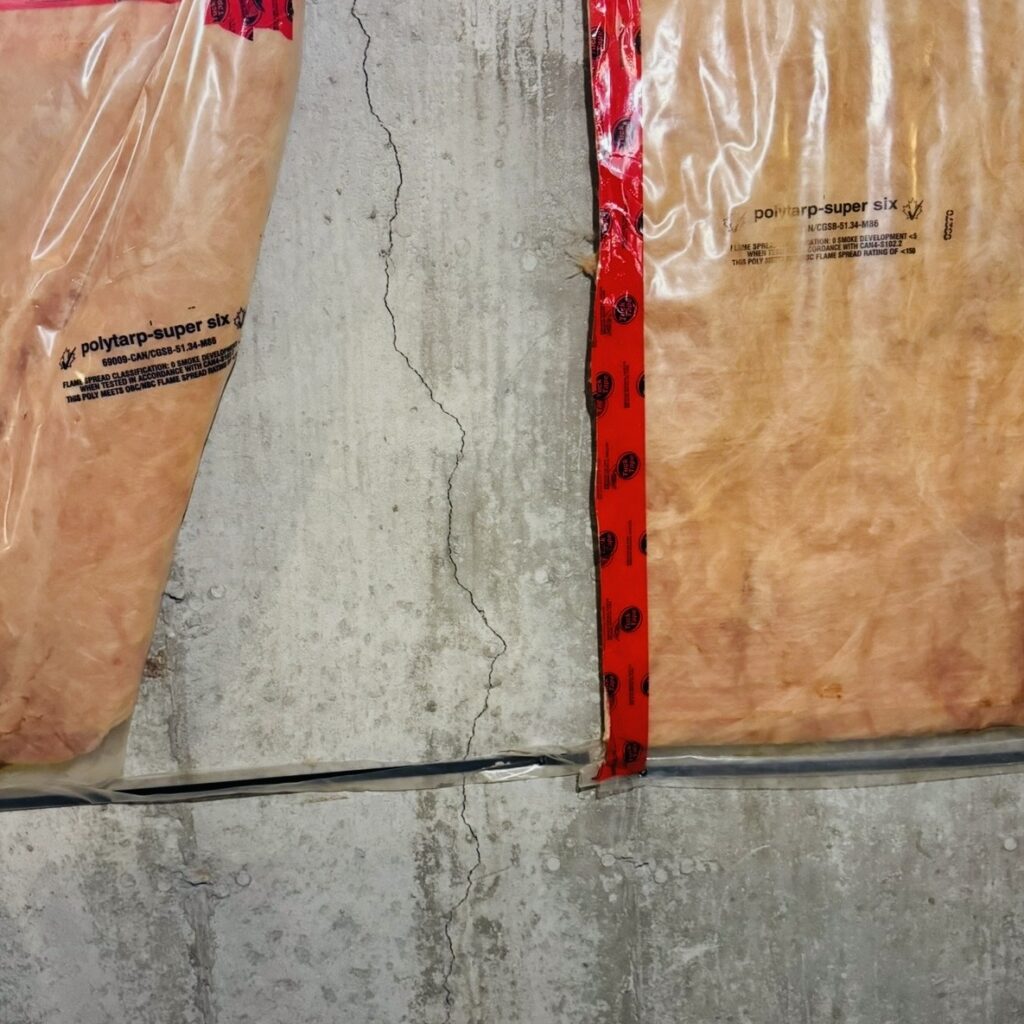
Hairline cracks are the most common type you’ll see in poured concrete. These thin, shallow cracks run in random directions and rarely extend the full length of a wall. They’re caused by shrinkage during the curing process and are typically harmless. The concrete has essentially relieved its internal tension through these small fractures. While water can still seep through hairline cracks, they don’t indicate structural failure.
Vertical cracks in poured concrete can mean different things depending on their characteristics. If a vertical crack is uniform in width from top to bottom, it’s likely a “cold joint.” This isn’t actually a crack at all, it’s where two batches of concrete were poured at different times, creating a visible line where they met. Cold joints are planned by contractors and are structurally sound, though they can leak like regular cracks.
However, if a vertical crack is wider at the top than the bottom, that’s a warning sign. This pattern indicates differential settlement, where one side of the foundation is sinking more than the other. This type of crack requires professional assessment.
Diagonal cracks typically run at approximately 45-degree angles and often start at the corners of windows or doors. In poured concrete, diagonal cracks usually indicate settlement or movement. When a wall experiences stress, it often fails at the corners first because that’s where stress concentrates. The direction of the diagonal matters: cracks angling upward suggest upward movement, while downward angles indicate settling.
Horizontal cracks in poured concrete are serious. They typically indicate lateral pressure pushing against the wall from the outside. This pressure might come from expansive clay soil that swells when wet, frost heave during cold snaps, or hydrostatic pressure from groundwater. Horizontal cracks suggest your wall is being pushed inward and may eventually bow or fail completely.
The key characteristic of poured concrete cracks is that they cut through the material itself. Because the wall is homogeneous, cracks appear as clean breaks through the concrete, often with relatively smooth surfaces inside the crack.
How cinder block foundations crack
Block walls crack differently because they’re not continuous. The mortar joints between blocks are inherently weaker than the blocks themselves. When stress occurs, cracks follow the path of least resistance, which means they travel along these joints.
Stair-step cracks are the signature crack pattern of block foundations. These cracks follow the mortar joints in a diagonal pattern that looks like a set of stairs. You’ll never see stair-step cracks in poured concrete because there are no mortar joints to follow. In block walls, they’re extremely common and almost always indicate some degree of movement.
Stair-step cracks typically form due to differential settlement, where one corner of the foundation settles more than others. The crack follows the joints because that’s where the wall is weakest. If you see stair-step cracks that are widening over time, or if they’re accompanied by bulging walls, that’s a sign of active structural movement requiring immediate attention.
Horizontal cracks in block walls usually appear at the mortar joints, often around the middle of the wall. Unlike poured concrete where horizontal cracks suggest lateral pressure, block wall horizontal cracks can indicate several issues: lateral pressure pushing the wall inward, settlement causing the wall to drop and crack at weak points, or even frost damage affecting the mortar.
Block walls are particularly vulnerable to horizontal cracking because each course (row) of blocks is essentially independent. If lateral pressure pushes the middle of the wall inward, the mortar joints between courses are the first thing to fail.
Vertical cracks through the blocks themselves (not just the mortar) are less common but more serious. When you see a crack running vertically through multiple blocks, that indicates significant stress has overcome the strength of the concrete blocks themselves. This type of cracking suggests either severe settlement, frost damage that has compromised the blocks, or structural overload.
The key difference in block wall cracking is that cracks follow the masonry pattern. Instead of clean breaks through homogeneous material, you see cracks stepping along joints, creating distinctive patterns that immediately identify the wall type.
When to worry: Reading your cracks
Not every crack means your house is falling down. Here’s how to assess what you’re seeing.
The width test is your first diagnostic tool. Take a standard nickel (21mm diameter). If the crack is narrower than the nickel (less than about 1/8 inch), it’s likely not structurally significant. If the nickel fits snugly or falls into the crack, you need professional assessment. This rule applies to both foundation types.
Direction matters more than you might think. Vertical cracks are generally less concerning than horizontal ones. In poured concrete, vertical cracks are often shrinkage-related. In block walls, vertical cracks through the blocks themselves are serious, but vertical cracks following mortar joints are common and may be harmless if stable.
Horizontal cracks, on the other hand, are almost always a red flag. They indicate lateral pressure or significant structural stress. In both foundation types, horizontal cracks warrant prompt professional evaluation.
Monitor for movement. Stable cracks that haven’t changed in years are less concerning than active, growing cracks. If you’re unsure whether a crack is expanding, mark the ends with pencil and date them, or take clear photos with a ruler placed beside the crack for scale. Check again in three to six months.
Look for companion symptoms. Cracks accompanied by other issues are more serious. Watch for:
- Doors or windows that stick or won’t close properly
- Gaps between walls and ceilings or floors
- Sloping or uneven floors
- Water intrusion through the crack
- Bulging or bowing walls
DIY vs. professional help. Hairline cracks with no other symptoms can often be monitored by homeowners. Anything wider than 1/8 inch, any horizontal crack, any crack that’s actively growing, or any crack accompanied by other structural symptoms needs professional assessment. Foundation issues don’t fix themselves, and delaying repairs typically makes them more expensive.
Repair approaches by foundation type
The repair method depends entirely on your foundation type and the crack characteristics.
For poured concrete foundations, epoxy or polyurethane injection is the standard repair for non-structural cracks. Epoxy creates a rigid bond that restores structural integrity, making it ideal for cracks that need strength. Polyurethane remains flexible, making it better for cracks that may experience minor movement. Both methods seal the crack to prevent water intrusion.
Block foundation repairs are more complex because of the multiple joints. Hydraulic cement is commonly used to fill cracks in block walls, but this is often a temporary solution if the underlying cause (settlement, lateral pressure) isn’t addressed. More extensive block wall repairs may involve removing and replacing damaged sections, installing reinforcement, or addressing drainage issues that are causing pressure.
The waterproofing approach differs significantly between foundation types. Poured concrete walls can often be waterproofed from the interior because the continuous surface responds well to sealants and membranes. Block walls, with their many joints, typically require more comprehensive approaches. Exterior waterproofing that addresses the joints directly is often more effective for block foundations than interior-only solutions.
Here’s the key thing to remember: repairing the crack without addressing the cause is like taking aspirin for a broken arm. It might mask the symptom temporarily, but the underlying problem continues. Proper foundation repair always includes diagnosing why the crack formed and addressing that root cause.
At Dryshield Basement Waterproofing, we approach every foundation repair with this comprehensive mindset. Our transferable lifetime warranty isn’t just a piece of paper, it’s our commitment that we’ve addressed both the symptom and the cause. Whether you have poured concrete or block walls, our assessment process identifies the specific failure mechanisms at work and designs repairs that last.
Protect your foundation with expert assessment
Understanding how your foundation cracks gives you the knowledge to act quickly when problems arise. Poured concrete cracks through its continuous mass, creating patterns that reflect stress points. Block walls crack along their mortar joints, creating the distinctive stair-step patterns that immediately identify the wall type.
Toronto homeowners face unique challenges. Our freeze-thaw cycles, expansive clay soils, and fluctuating water tables create conditions that stress foundations year-round. Whether you live in an older Toronto home with block walls or a newer Vaughan property with poured concrete, those cracks are communicating important information about your home’s structural health.
If you’ve noticed cracks in your foundation, don’t wait for them to worsen. Small cracks are easier and less expensive to address than major structural failures. Contact Dryshield Basement Waterproofing for a free inspection. With over 300,000 linear feet of waterproofing experience and an industry-leading transferable lifetime warranty, we have the expertise to diagnose your specific foundation issues and recommend the right solution for your home.
Frequently Asked Questions
Can you explain the foundation science behind why poured concrete cracks differently than cinder block in older Toronto homes?
Older Toronto homes with block foundations crack along mortar joints because that’s the weakest point in the wall assembly. Poured concrete cracks through the material itself because it’s homogeneous. Toronto’s freeze-thaw cycles and clay soils stress both types, but the crack patterns reveal which foundation type you have and what forces are acting on it.
What foundation science explains why poured concrete cracks differently than cinder block when exposed to the same soil conditions?
The difference lies in material continuity. Poured concrete is one continuous piece, so stress distributes and cracks appear where concentration occurs. Block walls have dozens of mortar joints that act as predetermined weak points. When soil expands or settles, block walls relieve stress at these joints while poured concrete cracks through its mass.
Does understanding foundation science about why poured concrete cracks differently than cinder block help with waterproofing decisions?
Absolutely. The crack type determines the waterproofing approach. Poured concrete responds well to injection repairs and interior sealants because cracks are discrete fractures. Block walls often need exterior waterproofing that addresses the multiple joints, as interior-only solutions may miss pathways water can follow through the mortar network.
How does foundation science explain why poured concrete cracks differently than cinder block during the curing process?
Poured concrete shrinks as it cures, creating random hairline cracks throughout the wall surface. Block walls are essentially pre-cured units, so they don’t experience this shrinkage cracking. However, block walls can crack during settling as the mortar cures and the wall finds its final position under the home’s weight.
What should I look for when examining foundation cracks to determine if I have poured concrete or cinder block?
Look at the crack pattern. Poured concrete cracks appear as continuous lines cutting through smooth concrete. Block wall cracks follow the stair-step pattern of mortar joints. If you see a diagonal line stepping up like stairs, you have block walls. If you see straight or irregular lines cutting through uniform material, you have poured concrete.
Are stair-step cracks only found in cinder block foundations, or can poured concrete crack this way too?
Stair-step cracks are exclusive to block, brick, or stone walls because they follow the mortar joints between units. Poured concrete cannot develop stair-step cracks because it has no joints to follow. If you see stair-step cracking, you definitely have a masonry foundation of some type, not poured concrete.
When should I be concerned about cracks in my foundation, regardless of whether it’s poured concrete or cinder block?
Be concerned about any crack wider than 1/8 inch (the width of a nickel), any horizontal crack, any crack that’s actively growing, cracks accompanied by water intrusion, or cracks with companion symptoms like sticking doors or sloping floors. Both foundation types can develop serious structural cracks that require professional assessment.