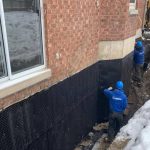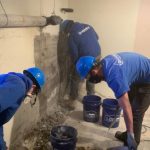
The main difference between interior and exterior waterproofing is the method of water control. Exterior waterproofing creates a barrier on the outside to stop water from entering and protect the foundation structure. Interior waterproofing manages water pressure (hydrostatic pressure) from the inside by draining it to a sump pump. Exterior is best for structural protection; Interior is best for cost-savings and finished basements.
When you discover a wet basement, the first question is usually: “Do I need to dig up the outside, or can I fix it from the inside?”
The answer depends on your specific foundation type, your budget, and the soil conditions of your neighbourhood. At Dryshield, we perform both methods daily, so we can give you an unbiased comparison.
The Core Difference
- Exterior Waterproofing is a Structural Solution. It stops water before it touches your foundation walls, preventing concrete decay.
- Interior Waterproofing is a Water Management Solution. It relieves hydrostatic pressure from under your floor and routes water safely to a sump pump.
Comparison Matrix: At a Glance
| Feature | Interior Waterproofing (Internal Weeping Tile) | Exterior Waterproofing (Excavation & Membrane) |
| Primary Goal | Manage water pressure (Hydrostatic Relief). | Stop water intrusion & protect structure. |
| Cost (2026 Avg) | $75 – $200 per linear foot | $160 – $300 per linear foot |
| Disruption | High Inside: We break 12″ of concrete floor. | High Outside: We excavate landscaping/decks. |
| Fixes Cracks? | No (Manages the leak). Cracks can be injected for full warranty | Yes (Seals cracks permanently). |
| Best For | High water tables, unfinished basements. | Cinderblock foundations, structural decay. |
| Warranty | Lifetime Transferrable (on system function). | Lifetime transferrable (on structure & leakage). |
(Note: Prices vary based on depth and access. Check our Cost Calculator for a specific estimate.)
Option 1: Exterior Waterproofing (The “Gold Standard”)
Exterior waterproofing is the only method that actually “waterproofs” the wall. By applying a rubberized bitumen membrane and a dimpled drainage board (Delta-MS) to the outside, we ensure your concrete stays bone dry.
When to Choose Exterior:
You Have a Cinderblock Foundation: Block walls are hollow. If you only waterproof the inside, water can fill the blocks and stay there, causing long-term rot. Exterior is mandatory for block walls.
You Have Structural Damage: If your walls are bowing or have horizontal cracks, we must excavate to repair the structure.
You Want to Preserve the Foundation: If you plan to live in the home for 20+ years, this prevents the freeze-thaw cycle from eroding your concrete.
The “Toronto Reality”:
In neighbourhoods like High Park or The Beaches, houses are often just 2–3 feet apart. In these cases, exterior waterproofing must be done by hand (more expensive) or switched to an Interior solution.
Option 2: Interior Waterproofing (The “Hydrostatic” Fix)
Interior waterproofing (Internal Weeping Tile System) does not stop water from touching the outside of your wall. Instead, it captures water at the most critical point: the Cove Joint (where the wall meets the floor).
How It Works:
We trench the perimeter of your basement floor (approx. 12 inches wide).
We drill “weep holes” into the bottom block to release trapped water.
We install a new drainage pipe and connect it to a Sump Pump.
We re-cement the floor flush.
When to Choose Interior:
High Water Table: If water is coming up through the floor cracks, exterior waterproofing won’t help. You need interior drainage to relieve that pressure.
Budget Constraints: Starting at $75/ft, this keeps your basement dry without the heavy price tag of excavation.
Finished Landscaping: If you just spent $50,000 on a new patio or deck, interior work saves you from destroying it.
Our Field Experience: The “Clay Soil” Factor
In our 25 years working in the GTA, we have noticed that homes in Scarborough and North York sit on heavy clay soil. We often see interior systems fail in these specific neighbourhoods IF the clay has already pushed the wall inward (bowing).
Expert Tip: If you see horizontal cracks in your block wall, do not choose Interior Waterproofing. You must excavate (Exterior) to push the wall back, or the structure could fail.
The Honest Downsides (Pros & Cons)
We believe in transparency. Here is why you might avoid each method:
Interior Downsides:
- No Wall Protection: It does not protect the wall from freezing. The concrete stays wet on the outside, which can cause ‘spalling’ (flaking) over 10-20 years.
- Loss of Space: If you finish the basement later, you must frame your walls slightly inward to accommodate the drainage membrane.
Exterior Downsides:
- Landscape Destruction: We must remove decks, interlock, AC units, and gardens within 3 feet of the wall.
- Cost: It is roughly double the price of interior work due to the heavy machinery required.
The “Hybrid” Approach
For many Toronto homes, the best solution is a mix. You might waterproof the accessible walls from the exterior to protect the structure, while installing an interior system along the wall covered by a garage or tight property line.
Check for Rebates:
Always check the City of Toronto Basement Flooding Protection Subsidy before starting work. You may be eligible for rebates on Sump Pumps and Backwater Valves installed during this process.
Ready to decide?
Stop guessing. A wet basement gets worse with time, not better.
- Get an Instant Cost Estimate
- Call for a Free Inspection: 1-800-277-5411
- Or visit our: Basement Waterproofing page