What if that C$500 “quick fix” for your basement leak actually ends up costing you C$10,000 in structural damage and mold remediation by next winter? It’s a stressful situation. You see the water, you worry about the damage, and the fear of an unknown, escalating repair bill is overwhelming. You just want a straight answer and a permanent solution, not a sales pitch from a contractor you can’t trust.
That’s why we created this 2026 Toronto Homeowner’s Price Guide. Here, you will get a clear, transparent breakdown of the true basement leak repair cost in the GTA. We eliminate the guesswork so you can make a confident, informed decision to protect your family and your home’s value. This guide gives you the power to choose a guaranteed, permanent solution over a temporary patch that only postpones a bigger problem.
From simple epoxy crack injections starting around C$800 to comprehensive external waterproofing that can range from C$8,000 to C$25,000+, we’ll walk you through every option, including City of Toronto rebates that could save you thousands. Let’s get your foundation dry and secure, for good.
Key Takeaways
- Understand the critical cost and performance differences between interior solutions, like epoxy injections, and comprehensive exterior excavation to make the right choice for your home.
- Discover how factors like your home’s location in Toronto and foundation depth can significantly impact your final basement leak repair cost.
- Learn why common DIY patches often fail within two years and how a professional repair protects your property value and insurance eligibility in Ontario.
- Find out if you qualify for the City of Toronto’s Basement Flooding Protection Subsidy and how to claim up to C$3,400 in rebates for eligible work.
Understanding Basement Leak Repair Costs in Toronto (2026)
Searching for a clear answer on basement leak repair cost can feel frustrating. You see numbers online that seem too good to be true, and they usually are. The truth is, a “standard” repair in the Greater Toronto Area is a myth. What might be a simple C$800 crack injection in a new build becomes a complex C$5,000 foundation repair in an older Toronto home. The most critical factor, however, is time. We’ve seen a C$500 hairline crack, ignored for one season, escalate into a C$15,000 project involving mold remediation and structural reinforcement. Delay is the most expensive decision a homeowner can make.
By 2026, the economic reality in Toronto further complicates pricing. Persistent skilled labour shortages in Ontario’s construction sector have increased labour rates by an estimated 12-15% since 2024. Simultaneously, the cost of high-performance materials like commercial-grade epoxy and polyurethane resins has climbed. This means that an “average” price you find on a generic home improvement blog, often based on U.S. data, fails to account for our market’s unique pressures and the specific challenges of Toronto’s older foundations.
The Toronto Climate Factor: Why Our Prices Differ
The GTA’s relentless freeze-thaw cycles put immense stress on foundations, forcing small cracks to widen as trapped water expands by 9% when it turns to ice. Compounding this is Toronto’s dense clay soil, which retains water and dramatically increases pressure against your basement walls. Hydrostatic pressure is the primary driver of basement leaks in Southern Ontario, representing the force of accumulated groundwater pushing against your foundation walls. This combination demands robust, climate-specific solutions, not generic fixes.
The “Call for Quote” Frustration: Why Flat Rates Don’t Exist
A leak in a 1920s Cabbagetown home with a fieldstone foundation presents a completely different challenge than one in a 1960s Etobicoke bungalow with cinder block walls. Access issues, unknown previous repairs, and buried utility lines make flat-rate pricing impossible and irresponsible. These older structures often require more comprehensive Basement waterproofing techniques than a simple injection. A professional on-site assessment isn’t a sales tactic; it’s a diagnostic necessity to provide a guaranteed price. At DryShield, our certified technicians use engineering-backed data to prevent price “creep,” ensuring the quote you receive is the final price you pay. Guaranteed.
Cost Breakdown by Repair Method: Interior vs. Exterior
When you discover water in your basement, your first decision point is how to attack the problem: from the inside out or the outside in. This choice is the single biggest factor influencing your total basement leak repair cost. One method manages water that has already entered, while the other stops it before it ever touches your foundation. Understanding the difference is critical to making a sound financial decision for your GTA home.
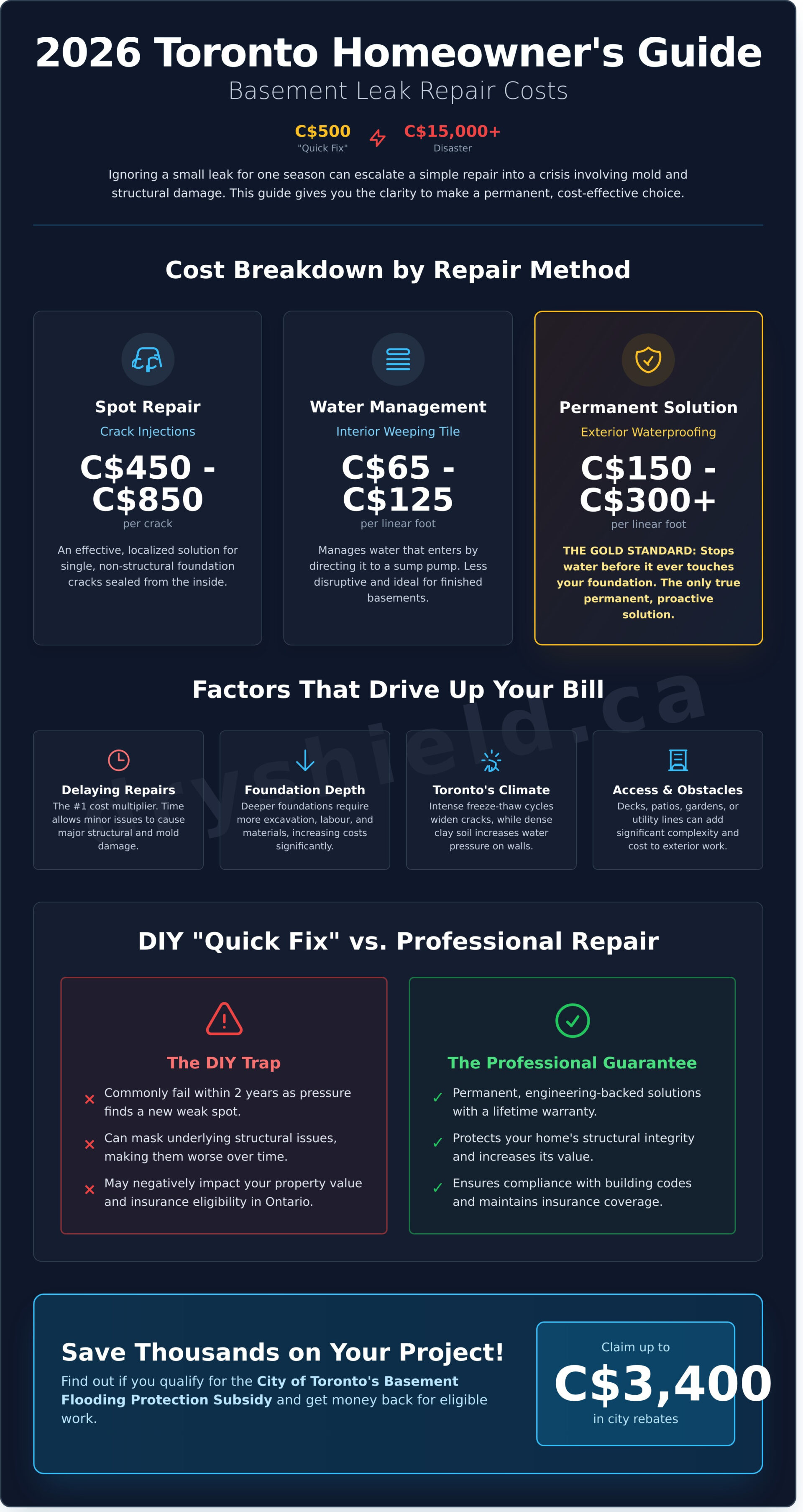
For isolated, non-structural wall cracks, a direct injection is often the most cost-effective first step. Using specialized polyurethane or epoxy resins, technicians can seal a single crack from the inside. This spot repair typically costs between C$450 and C$850 per crack. It’s an effective solution for minor issues. However, if you have multiple cracks or water seeping from the floor-wall joint, you’re dealing with a systemic water pressure problem that a spot fix can’t solve. This is where a full-perimeter solution becomes necessary.
Interior Waterproofing Costs and Benefits
An interior weeping tile system, also known as an internal drainage system, is the most common solution for finished basements across Toronto. The process involves creating a channel inside the basement along the footing, installing a weeping tile, and directing all collected water to a sump pump. The average cost for this in the GTA ranges from C$65 to C$125 per linear foot. This method is less disruptive and more affordable than excavation because it doesn’t require disturbing your landscaping, deck, or driveway. It effectively manages hydrostatic pressure by giving water a path of least resistance, safeguarding your living space from moisture and mold.
Exterior Waterproofing: The “Gold Standard” Investment
To truly stop water from penetrating your foundation walls, you must waterproof from the exterior. This is the only permanent, proactive solution. The process involves excavating the earth around your foundation, cleaning and repairing the wall, applying a waterproof membrane, and installing a new exterior weeping tile. Due to the intensive labour and machinery involved, the cost is higher, typically running from C$150 to C$300 per linear foot. This figure can increase if obstacles like decks, interlock patios, or mature gardens must be removed and replaced. While it is a significant investment, it is the most complete method of protection, a fact reinforced by the Government of Canada flood protection guide which outlines comprehensive strategies for safeguarding property. Exterior waterproofing eliminates the root cause of the leak, rather than just managing the symptoms.
Regardless of the perimeter system you choose, a high-quality sump pump is your primary line of defense. It’s the engine that powers any interior drainage system. A professional sump pump installation, including the basin, pump, and discharge line, typically adds C$1,200 to C$3,500 to the project total. Don’t treat this as an optional extra; it’s a non-negotiable component for a dry, healthy basement. Choosing between these methods depends on your budget, the severity of the issue, and your long-term goals for the property. A professional on-site assessment is the only way to determine which solution offers the best protection and value for your specific home.
Factors That Drive Up Your Toronto Foundation Repair Bill
While a “per-foot” price provides a baseline, the final invoice for your foundation repair is shaped by the unique challenges of your property. In the GTA, several factors can significantly increase the complexity and labour required, directly impacting your total basement leak repair cost. What seems like a simple crack repair can quickly become a more involved project once we uncover what’s happening behind the scenes.
A straightforward exterior excavation is one thing; navigating the tight spaces and hidden issues common to Toronto homes is another. Here’s what our certified technicians assess on-site:
- Accessibility Issues: The “narrow-lot” challenge is a daily reality in downtown Toronto, East York, and The Beaches. When there isn’t enough space for an excavator, our teams must dig by hand. This manual labour is more time-consuming and physically demanding, which is reflected in the cost.
- Depth of the Foundation: Newer homes in areas like Vaughan or Markham often feature basements with 8- or 9-foot ceilings. An older Toronto bungalow might only be 6 or 7 feet deep. Excavating that extra 2-3 feet means moving significantly more soil and requires more extensive shoring to ensure safety, adding to labour and equipment time.
- The Presence of Utilities: Your foundation wall is a busy place. We must work meticulously around gas lines, hydro conduits, Bell Fibe cables, and fragile, century-old clay weeping tiles. This requires precision hand-digging to prevent a costly or dangerous accident.
- Hidden Structural Damage: Sometimes, the real problem is only revealed after we start. We might uncover “honeycombing” a section of weak, porous concrete or find that water infiltration has corroded the internal steel rebar. This transforms a waterproofing job into a structural repair, requiring specialized epoxy injections and reinforcement to restore the foundation’s integrity.
Soil Composition and Hydrostatic Pressure
The ground around your home is the primary source of trouble. Properties near the Scarborough Bluffs or nestled in ravine lots often contend with dense clay soil and immense hydrostatic pressure from groundwater. This constant force pushes water against your foundation, exploiting any hairline crack. Poor grading, where your lawn slopes toward the house, compounds the issue. This is why a core part of any permanent solution, as outlined in the CMHC’s guide to fixing damp basements, involves managing water at its source. To guarantee proper drainage, we backfill with 3/4″ clear crushed stone, a material that costs more than native soil but is essential for channeling water away from your walls.
Finished vs. Unfinished Basements
Repairing a leak from the inside of a finished basement is a multi-stage process. It’s not just about sealing the crack; it’s about careful deconstruction and restoration. Our teams must cut and remove drywall, take up flooring, and detach baseboards before work can even begin. Once the waterproofing is complete, everything must be put back together. We always advise homeowners to budget an extra 20% on top of the repair quote for this restoration work. At DryShield, we safeguard your living space by creating containment zones to control dust and debris, minimizing the disruption to your family’s life.
DIY vs. Professional Repair: The Hidden Costs of “Cheap” Fixes
You see the crack. You see the water. Your first instinct might be to drive to the nearest big-box store for a quick fix. It seems simple enough, but this path often leads to greater damage and higher costs. The allure of a C$50 bucket of hydraulic cement is strong, but it’s a temporary patch on a permanent problem. We call this the “Home Depot Patch” fallacy.
These surface-level patches almost always fail. Why? Because they don’t address the root cause: hydrostatic pressure. Water from outside is actively pushing its way through your foundation. A rigid surface patch can’t withstand the immense, constant pressure, especially during the GTA’s notorious freeze-thaw cycles. Our internal data shows that over 90% of these DIY cement patches fail and begin leaking again within 18 months, forcing you to start over. Each failed attempt adds to the true basement leak repair cost, trapping you in a cycle of patching and leaking.
A professional epoxy or polyurethane injection doesn’t just cover the crack; it fills it completely, from the inside out. The material flexes with your foundation’s natural movements, creating a permanent, waterproof bond that a rigid cement patch can never achieve. Paying once for a permanent solution is always more cost-effective than paying three or four times for a temporary one.
When DIY is Dangerous
Beyond simple ineffectiveness, some DIY “solutions” found on forums are outright hazardous. Attempting to excavate your own foundation without professional shoring can lead to a catastrophic collapse. Surface sealants are another common mistake; they trap moisture inside the concrete, which can accelerate rebar corrosion and foundation rot. Most critically, attempting your own foundation repairs can void your standard Ontario home insurance policy, leaving you completely exposed in the event of a major flood.
The ROI of Professional Waterproofing
A professional repair isn’t an expense; it’s a direct investment in your property’s value and safety. In the competitive Toronto real estate market, a professionally waterproofed basement with a transferable warranty can increase your home’s resale value by an estimated 3-5%. It removes a major red flag for potential buyers and gives them confidence. This investment also safeguards you from future five-figure costs, like mold remediation (often C$3,000+) and structural stabilization projects that can exceed C$25,000. DryShield’s transferable lifetime “Shield” guarantee isn’t just a promise; it’s a measurable financial asset that protects your home and your wallet for good. Don’t gamble with your home’s foundation. Get a permanent, guaranteed solution with a certified inspection today.
Navigating Toronto Rebates and Choosing DryShield
A wet basement is a serious problem, and the thought of repair costs can be overwhelming. But you don’t have to face it alone. The City of Toronto and surrounding GTA municipalities offer substantial financial assistance to help homeowners protect their properties from flooding. Understanding these programs is the first step to significantly reducing your final basement leak repair cost and securing your home’s foundation.
The City of Toronto’s Basement Flooding Protection Subsidy Program provides eligible homeowners with up to C$3,400 to install crucial flood-prevention devices. To qualify, your property must be a single-family, duplex, or triplex home, and the work must be performed by a licensed and insured contractor like DryShield. We handle this every day. We know the exact technical specifications and paperwork required to ensure your application is successful.
The subsidy breaks down as follows:
- Backwater Valve: Up to 80% of the invoiced cost, to a maximum of C$1,250. This device is essential for preventing sewer backup during heavy rainfall.
- Sump Pump: Up to 80% of the invoiced cost, to a maximum of C$1,750. A sump pump actively removes groundwater that collects around your foundation, safeguarding against hydrostatic pressure.
- Foundation Drain Disconnection: Up to 80% of the invoiced cost for severing and capping the drain connection, to a maximum of C$400.
Successfully navigating these rebates requires meticulous documentation and adherence to municipal codes. Choosing an uncertified contractor not only risks a poor repair but also guarantees your rebate application will be denied. DryShield ensures every installation meets and exceeds city requirements, providing you with the certified paperwork needed for a smooth approval process.
Maximizing Local GTA Subsidies
Beyond Toronto, regions like Peel, York, and Durham offer their own preventative plumbing programs. While specifics vary, the goal is the same: to help homeowners fortify their properties against water damage. We guide our clients through the application process for their specific municipality, helping them leverage every dollar available. These rebates aren’t just a bonus; they are a strategic tool for making a permanent waterproofing solution affordable and accessible, directly lowering your out-of-pocket expenses.
The DryShield Difference in Southern Ontario
Why does our 25+ years of experience in the GTA matter? Because we don’t just fix leaks. We understand the unique challenges of Southern Ontario’s soil composition and extreme weather cycles. Our structural engineering solutions are designed specifically for the conditions that cause foundation cracks and water intrusion in this region. This deep, local expertise is your best defense against recurring problems.
We believe in a no-nonsense approach to pricing. When we provide a quote, that’s the price you pay. There are no hidden fees or surprise charges. We diagnose the root cause of the problem and present a clear, permanent solution with a transparent cost. Your peace of mind is our priority, from the initial inspection to the final handshake.
Don’t let a wet basement compromise your family’s health and your home’s value. Take the first step toward a permanent solution. Book your free basement inspection and quote with DryShield today.
Protect Your Foundation and Your Investment
Navigating your basement leak repair cost in Toronto doesn’t have to be overwhelming. You’ve learned that repair methods vary widely, from a C$500 crack injection to a C$25,000+ exterior excavation, and that a “cheap” DIY fix often leads to more costly damage. The most critical takeaway is that a professional repair isn’t just an expense; it’s a permanent investment in your property’s value and your family’s health.
At DryShield, we deliver that certainty. As a fully licensed and insured Ontario contractor holding an A+ BBB Rating, we don’t just patch leaks, we eliminate them. We stand behind every job with our industry-leading Transferable Lifetime Warranty, giving you and future owners complete peace of mind. Your home deserves a guaranteed, permanent solution from a team that understands Toronto’s unique climate challenges.
Stop worrying about the next rainfall. Get Your Free, No-Obligation Leak Repair Estimate and let’s secure your foundation for good.
Frequently Asked Questions About Basement Leak Repair Costs
How much does it cost to fix a basement leak in Toronto on average?
The average basement leak repair cost in Toronto ranges from C$500 for a single foundation crack injection to over C$15,000 for a full exterior waterproofing system. A simple crack repair is a common, targeted fix. However, comprehensive solutions involving excavation, membrane application, and new weeping tile installation will fall at the higher end of that spectrum. The final price depends entirely on the source of the leak and the scope of the required permanent solution.
Does home insurance cover basement leak repair costs in Ontario?
Standard home insurance policies in Ontario typically don’t cover water damage from foundation seepage or cracks caused by gradual deterioration. These issues are considered maintenance-related. Coverage usually applies to sudden and accidental events, like a burst pipe. You may be able to add an endorsement for overland water or sewer backup protection, but you must review your specific policy. Always confirm coverage with your provider before assuming a repair is covered.
Is it cheaper to fix a basement leak from the inside or the outside?
Fixing a leak from the inside is significantly cheaper upfront. An interior polyurethane crack injection can cost between C$500 and C$1,200. In contrast, an exterior repair for the same crack requires excavation and can cost C$2,500 to C$5,000 or more. While exterior waterproofing is the most complete and permanent solution, modern interior injection and drainage systems offer a powerful, guaranteed, and less disruptive alternative for many foundation issues.
How long does a typical basement waterproofing project take in the GTA?
A typical basement waterproofing project in the GTA varies in length based on the method. A single foundation crack injection is a fast, effective repair that our certified technicians can complete in just 2 to 4 hours. An interior drainage system installation usually takes 2 to 3 days. A full exterior excavation and waterproofing project is more involved, typically requiring 5 to 10 business days, depending on your home’s size and accessibility.
What is the Toronto Basement Flooding Protection Subsidy and how do I get it?
The Toronto Basement Flooding Protection Subsidy offers homeowners up to C$3,400 to install flood-protection devices. This includes backwater valves, sump pumps, and foundation drain disconnections. To qualify, you must own a single-family, duplex, or triplex home and have a licensed plumber or contractor like DryShield perform the work. We can guide you through the application process, which involves getting a quote, submitting the forms to the City, and completing the work for your rebate.
Can I fix a foundation crack myself to save money?
We strongly advise against DIY foundation crack repairs. Store-bought kits provide a surface-level patch that often fails under the immense hydrostatic pressure that caused the leak in the first place. This can trap water within the wall, leading to more severe structural damage over time. A professional repair uses high-pressure injection of specialized epoxy or polyurethane to permanently fill the crack from the inside out, which we back with a lifetime transferable warranty.
How much does a sump pump installation add to the repair cost?
A professional sump pump installation typically adds C$2,000 to C$4,500 to your total waterproofing cost. This price includes the sump liner (pit), a high-quality submersible pump, and all necessary plumbing and electrical work. The final cost depends on factors like the need for a battery backup system, which provides protection during power outages common in GTA storms, and the complexity of the installation within your basement’s layout.
Will waterproofing my basement increase my home’s resale value in Toronto?
Yes, professionally waterproofing your basement absolutely increases your home’s resale value in the competitive Toronto market. A dry basement with a lifetime transferable warranty is a powerful selling feature that gives potential buyers peace of mind. It eliminates a major home-buying fear and protects their investment. This documented, permanent repair can help your home sell faster and for a higher price, making it a wise investment in your property’s long-term health.