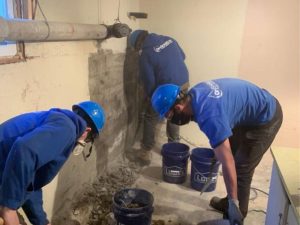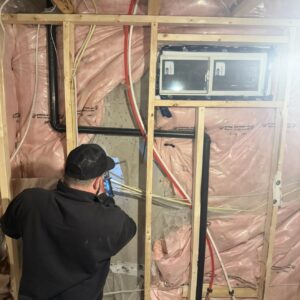

Water damage is now the number one cause of personal property claims in Canada, with the average basement flood costing a homeowner a staggering C$43,000 to repair. For Toronto residents, this risk is amplified by aging city infrastructure and intense seasonal thaws. It’s a fear that keeps many homeowners awake at night: the musty smell of mold, a dark stain spreading on the wall, or the dread of a small crack turning into a structural catastrophe. You’re right to be concerned; your home is your most significant investment, and protecting it is non-negotiable.
That’s why we created this guide. Forget the conflicting advice and high-pressure sales tactics. Here, you’ll discover the most effective, engineering-backed methods for the basement waterproofing Toronto homes need to stay permanently dry and secure. We will walk you through identifying the true source of your water problem, understanding the difference between temporary fixes and permanent solutions, and even navigating the City of Toronto’s rebate program to help you safeguard your property for good.
Key Takeaways
- Learn why Toronto’s unique soil composition and aging city infrastructure put your foundation at a constant risk of water intrusion.
- Differentiate between interior and exterior methods to determine the most effective and budget-appropriate strategy for your home’s specific layout.
- Understand the 2026 cost factors for basement waterproofing Toronto homeowners face, and see how a sump pump and weeping tile system create a permanent solution.
- Discover the critical questions to ask any contractor to ensure they are fully licensed, insured, and experienced with GTA-specific foundation issues.
Understanding Basement Waterproofing in Toronto: Why Your Home is at Risk
A dry basement is the bedrock of a healthy home, but keeping it that way in Toronto is a unique challenge. Basement waterproofing isn’t about a simple coat of sealant; it’s a comprehensive system designed to divert water away from your foundation and seal your home’s structure against moisture intrusion. For a technical overview, Understanding Basement Waterproofing provides a solid foundation, but Toronto’s specific conditions demand a local expert’s perspective. Your home is constantly under siege from factors unique to our region, from aging municipal infrastructure to the very soil it’s built on.
The “Toronto factor” is a combination of pressures. Many homes, especially those built before 1980, are still connected to original clay-pipe weeping tile systems that are now failing after decades of service. This, combined with high water tables in many parts of the GTA, means groundwater has nowhere to go but towards your foundation. Add in Southern Ontario’s intense freeze-thaw cycles, where water expands into ice within foundation pores, and you have a recipe for accelerated structural decay. Climate projections for the Golden Horseshoe predict a 15% increase in extreme rainfall events by 2026, meaning the pressure on your home’s foundation is only going to get worse. This isn’t a distant threat; it’s an urgent reality for local homeowners.
The Impact of Toronto’s Clay Soil and Hydrostatic Pressure
Much of the GTA is built on dense clay soil. Unlike granular soils, clay retains massive amounts of water, swelling and creating immense lateral force against your foundation walls. This constant, heavy pressure is called hydrostatic pressure. It relentlessly seeks out any point of weakness, forcing water through microscopic pores in concrete and turning tiny hairline cracks into active leaks. Older Toronto homes with brick or cinder block foundations are especially vulnerable, as they have countless mortar joints that can degrade and provide entry points for water.
Common Signs of a Leaky Basement in GTA Homes
Water damage doesn’t always start with a flood. The initial signs are often subtle, but they are direct warnings that your foundation is compromised. Ignoring them allows a small problem to become a catastrophic failure. You need to look for both the obvious and the hidden red flags.
- Subtle Signs: These are the early warnings. Watch for efflorescence (a white, chalky powder on walls), peeling or bubbling paint, and a persistent musty, damp odor that you can’t get rid of.
- Critical Signs: These demand immediate action. If you see water trickling down walls, visible foundation cracks (especially horizontal ones), or standing pools of water on the floor, your home’s structural integrity is at risk. Visible mold growth is not just a sign of water; it’s a direct threat to your family’s health.
- The “Invisible” Threat: The most deceptive danger is high humidity. Airborne moisture, often over 60% relative humidity, gets absorbed by wooden floor joists and structural beams, leading to wood rot. It also saturates your insulation, rendering it useless and driving up your energy bills.
Protecting your property requires a professional strategy for basement waterproofing in Toronto that addresses these local challenges head-on. A damp basement is more than an inconvenience; it’s a foundational problem that undermines your home’s value and your family’s well-being. At DryShield, we restore your peace of mind with guaranteed, permanent solutions.
Interior vs. Exterior Waterproofing: Which Strategy Fits Your Property?
When you discover water in your basement, the first question is always the same: how do we stop it? The answer isn’t a one-size-fits-all solution. The right strategy for your home depends entirely on your property’s unique challenges, from tight lot lines in Cabbagetown to your long-term budget. Choosing between an interior and exterior system is the most critical decision you’ll make in safeguarding your foundation. One stops water from entering; the other manages it once it’s inside. Let’s break down which method provides the best protection for your Toronto home.
The level of disruption is a major factor. Exterior work involves significant excavation of your yard, while interior work confines the mess to your basement. Understanding the process and longevity of each is key to making a confident investment in your property’s health.
Exterior Waterproofing: The Permanent Perimeter Shield
Often called the “gold standard” of waterproofing, this method creates an impenetrable barrier around your foundation. It stops water before it ever has a chance to touch, let alone penetrate, your concrete walls. It’s a comprehensive process that permanently resolves issues with hydrostatic pressure.
- Excavation: We dig a trench around the foundation, exposing the walls down to the footings, typically 6 to 8 feet below ground.
- Cleaning & Repair: The exposed wall is meticulously cleaned and any cracks or holes are professionally repaired and sealed.
- Waterproof Membrane: A commercial-grade rubberized membrane is applied, creating a seamless, waterproof shield that deflects water.
- New Weeping Tiles: We install a brand-new, high-flow weeping tile system at the base to collect and channel groundwater safely away from your foundation.
This approach is the most effective way to protect the structural integrity of your foundation for the long term. It is the ideal solution for homeowners with accessible yards who want to eliminate the problem at its source, once and for all.
Interior Waterproofing: Strategic Water Management
What happens when excavation isn’t an option? For many semi-detached homes or properties with extensive landscaping, an interior drainage system is the superior, strategic solution. This method doesn’t stop water from entering the wall; instead, it expertly controls and removes it before it can cause any damage to your living space.
The system works by capturing water at the most common point of entry: the cove joint, where the wall meets the floor. A trench is cut into the basement floor along the perimeter, and a specialized weeping tile is installed. This internal drain collects any seepage and directs it to a sump pump, which then automatically expels the water far from your home. An effective internal system is crucial because the dangers of basement moisture, including hazardous mold growth, can directly affect your family’s health. This system ensures your basement remains dry, healthy, and usable, regardless of the weather outside.
For many complex basement waterproofing Toronto projects, a hybrid approach offers the best of both worlds. We might waterproof the accessible front and back walls externally while protecting a shared party wall with an interior system. Determining the right path requires a professional diagnosis. To understand the precise solution for your foundation, you can schedule a free, no-obligation inspection with one of our certified technicians.
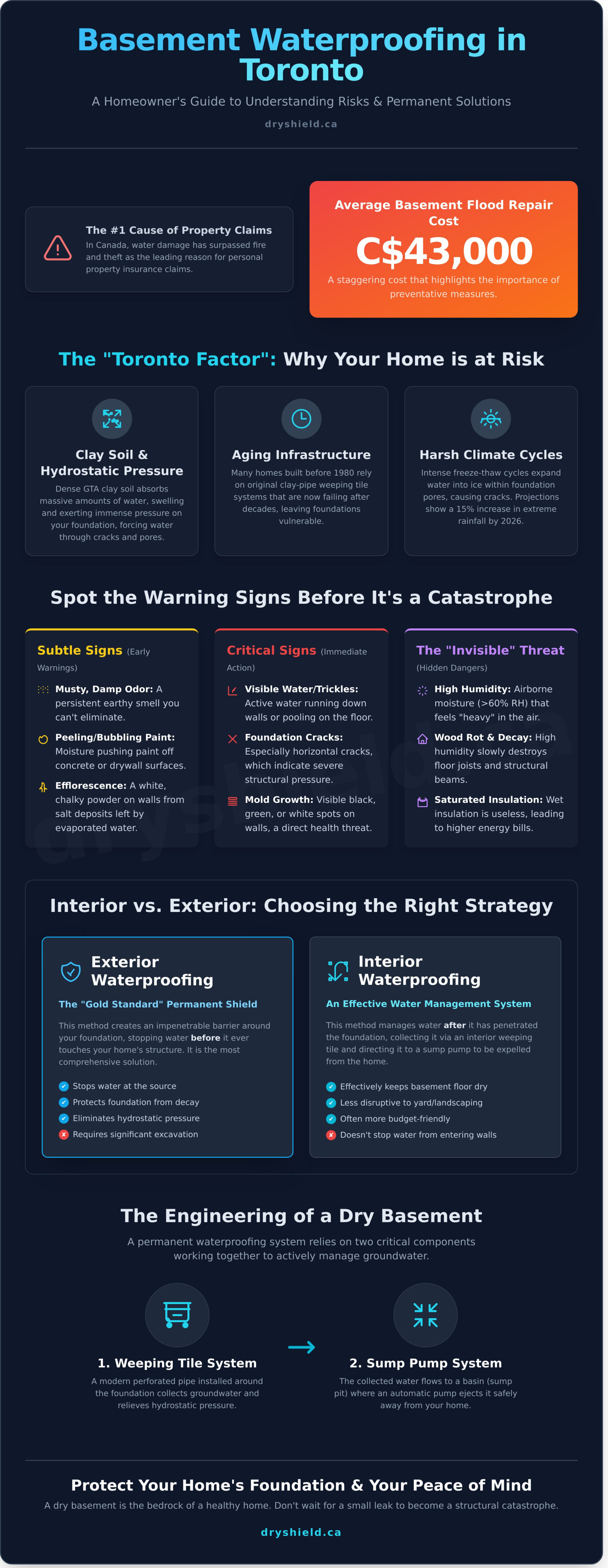
The Engineering Behind a Dry Basement: Sump Pumps and Weeping Tiles
A truly dry basement isn’t the result of a single product; it’s the outcome of a precisely engineered system. Think of your waterproofing solution like a cardiovascular system for your home’s foundation. At its core is the sump pump, the powerful heart responsible for actively expelling water. But that heart is useless without the network of veins that collects and directs water to it: the weeping tile. Together, they form an active defence that safeguards your home from the hydrostatic pressure that builds up in Toronto’s dense clay soil.
Understanding how these components work in tandem is the key to appreciating a professional installation. A poorly chosen pump or incorrectly laid weeping tile can lead to catastrophic failure. A complete basement waterproofing Toronto solution always integrates these two components into one seamless, powerful system designed to protect your property for life.
Sump Pump Installation and Maintenance
Your sump pump is the single most critical active component in your basement. We insist on installing high-performance, submersible pumps with cast iron housings. Why these specifics? A submersible pump sits directly in the sump pit, making it quieter and safer. The cast iron construction is vital for dissipating heat, extending the motor’s life by up to 50% compared to cheaper plastic models. For a typical Toronto home, a 1/3 horsepower pump capable of discharging over 7,500 litres per hour is the minimum standard to handle a severe storm.
During a torrential downpour or a spring thaw, the GTA power grid is at its most vulnerable. A power outage is not a possibility; it’s an inevitability. A sump pump without power is just a bucket. This is why a battery backup system is non-negotiable. It provides hours of protection, automatically kicking in the moment AC power is lost. Without it, you risk thousands in damages. The financial impact of water damage from a single failed pump during a storm can easily exceed C$25,000 in restoration costs and lost property. Proper discharge is also governed by Toronto bylaws; water must be directed at least 6 feet away from your foundation and neighbouring properties, and never into the city’s sanitary sewer system.
The Science of Weeping Tile and French Drains
Before a sump pump can remove water, that water must be collected. This is the job of the weeping tile. Weeping tile is a perforated drainage pipe designed to relieve hydrostatic pressure by collecting groundwater around a home’s foundation. Older Toronto homes may have original clay tiles, which are now brittle and prone to clogging with silt. Modern systems use durable, 4-inch PVC or flexible corrugated pipes, often wrapped in a geotextile filter sock to prevent sediment from entering and ensure decades of clog-free operation.
While weeping tile manages groundwater at the foundation footing, French drains tackle surface water problems. If your backyard slopes toward your house, a French drain-a gravel-filled trench containing a perforated pipe-can intercept rainwater and runoff before it ever reaches your foundation. It’s a crucial tool for managing the complete water situation on your property, providing an essential first line of defence.
Looking ahead, the standard for professional basement waterproofing Toronto installations by 2026 will include smart-monitoring technology. These next-generation sump pump systems connect to your home’s Wi-Fi, sending real-time alerts to your smartphone about power status, pump cycles, and potential issues. It’s the ultimate peace of mind, allowing you to check on your home’s most important defence system from anywhere in the world.
Calculating the Cost of Basement Waterproofing in Toronto
Understanding the cost of protecting your home is the first step toward a permanent solution. A basement waterproofing investment isn’t just an expense; it’s a direct enhancement to your property’s value, safety, and usability. The final quote depends on a few critical factors, not a one-size-fits-all price tag. We believe in transparency, so let’s break down what truly determines the cost.
The primary variables are straightforward: the linear footage of the foundation walls requiring treatment, the depth of your foundation, and the method chosen. Exterior excavation is the most comprehensive but labour-intensive solution, while an interior weeping tile system is a powerful, less disruptive alternative. Based on 2024 material and labour rates in the GTA, we project that by 2026, homeowners can expect to invest:
- Interior Waterproofing: C$85 – C$160 per linear foot.
- Exterior Waterproofing: C$130 – C$320 per linear foot.
This investment pays for itself. A professionally waterproofed basement not only protects your foundation but also adds valuable, livable square footage. A 2023 Royal LePage report confirms that a finished basement can yield a return on investment of 50% to 75% upon resale. It transforms a damp, unusable space into a prime asset.
Beware the “DIY trap.” Inexpensive kits from hardware stores often provide a false sense of security. They are temporary patches that fail to address the root cause of water intrusion, which is hydrostatic pressure. An improper seal can trap water against your foundation, accelerating decay and leading to far more expensive structural repairs. Fixing a failed DIY job often costs more than getting the professional basement waterproofing Toronto homeowners trust from the start.
Average Costs and What Influences the Quote
Beyond the core metrics, several site-specific conditions affect your quote. The tight laneways of downtown Toronto properties can restrict machinery access, increasing labour time. Soil composition, particularly the dense clay common in our region, impacts excavation difficulty. If our inspection reveals underlying foundation issues like significant cracks or bowing walls, those must be repaired first to ensure the waterproofing system is effective. For minor, isolated leaks, a polyurethane crack injection (typically C$500 – C$900 per crack) can be a targeted, cost-effective fix. To get an accurate, no-obligation quote tailored to your home’s specific needs, schedule a free inspection with a certified DryShield expert today.
Toronto’s Basement Flooding Protection Subsidy Program
The City of Toronto offers a powerful financial incentive to protect your home. Eligible homeowners can receive a rebate of up to C$3,400 for installing flood protection devices. This subsidy covers:
- Up to C$1,750 for a sump pump installation.
- Up to C$1,250 for a backwater valve installation.
- Up to C$400 for pipe severance and capping.
To qualify, you must own a single-family, duplex, or triplex home and the work must be performed by a City-licensed contractor. The process is clear: get a quote, complete the work, and submit your application with the paid invoice. Hiring a certified and licensed company like DryShield is not just a suggestion; it’s a requirement to access these funds and guarantee the work meets municipal code, ensuring your system functions flawlessly when you need it most.
Choosing a Toronto Specialist: The DryShield Protective Advantage
Selecting a contractor to protect your home is the most critical decision you’ll make. A leaking basement isn’t a DIY project; it’s a complex problem that demands a specialist’s touch. Your choice will determine whether you get a temporary patch or a permanent solution that safeguards your property’s value and your family’s health. The right partner understands that effective basement waterproofing in Toronto requires deep, localized knowledge.
Local experience is not a talking point; it’s a technical necessity. The soil composition across the GTA varies dramatically, and this dictates the type of hydrostatic pressure your foundation endures. The dense, heavy clay soil common in Mississauga and Brampton holds water and expands, putting immense stress on foundation walls. This is completely different from the challenges faced by homes in sandy loam soil closer to the lake in Scarborough or the Oak Ridges Moraine. DryShield Basement Waterproofing’s technicians have spent over 25 years working in these specific conditions. We don’t use a one-size-fits-all approach because we know your home’s environment is unique.
Your peace of mind rests on a contractor’s credentials. DryShield Basement Waterproofing is fully licensed, carries $5 million in liability insurance, and maintains an A+ rating with the Better Business Bureau. Every team member is covered by WSIB. This isn’t just paperwork; it’s your shield against liability and shoddy workmanship. Our process is built on transparency and expertise, beginning with a free, engineering-backed assessment to identify the true source of the water. We then provide a detailed, written quote-no surprises, no hidden fees. From precision excavation to the final cleanup, our certified team works meticulously to restore your home’s integrity.
What to Ask Your Waterproofing Contractor
Before signing any contract, demand clear answers. A professional will welcome these questions. Ask them directly:
- Are you fully insured and is every worker covered by WSIB? Can I see the certificates?
- Can you provide at least three recent references from my specific Toronto neighbourhood?
- What specific experience do you have with the types of foundations (e.g., concrete block, poured concrete) common in this area?
- Will I receive a comprehensive, written estimate that details all labour, materials, and warranty terms?
The DryShield Basement Waterproofing Guarantee
Our 25+ years of dedicated service in Southern Ontario means we’ve seen it all and fixed it all. This experience is the foundation of our industry-leading Transferable Lifetime Warranty. This guarantee protects your investment for as long as you own your home. If you decide to sell, it transfers to the new owner, becoming a powerful selling feature that adds tangible value and buyer confidence. It’s not just a promise; it’s a permanent commitment to a dry, secure home. Schedule your Free Foundation Inspection with DryShield Basement Waterproofing today.
Secure Your Home’s Future with a Dry Basement
A damp basement is a serious risk, threatening your property’s value and your family’s health. You now understand the critical systems that keep a home dry, from weeping tiles to sump pumps, and why a professional strategy is essential against Toronto’s climate. Choosing the right expert for basement waterproofing toronto isn’t just about fixing a leak; it’s a definitive investment in safeguarding your home’s foundation for decades to come.
Don’t wait for the next major storm to test your foundation’s limits. For over 25 years, DryShield has been the GTA’s trusted protector, earning an A+ BBB rating and numerous awards for our meticulous craftsmanship. We eliminate water intrusion permanently, and we prove our confidence with a fully transferable lifetime warranty. Let our certified team restore your peace of mind. Get Your Free, No-Obligation Waterproofing Estimate Now and secure your home with a solution built to last.
Frequently Asked Questions About Basement Waterproofing
How much does basement waterproofing cost in Toronto in 2026?
In 2026, homeowners can expect the average cost for professional exterior basement waterproofing in Toronto to range from C$100 to C$180 per linear foot. For a typical single-family home requiring 100 linear feet of excavation, the total project cost would fall between C$10,000 and C$18,000. This price reflects the comprehensive labour, high-grade materials, and specialized equipment required to permanently safeguard your foundation from Toronto’s harsh weather cycles. Final costs depend on foundation depth and accessibility.
Is interior or exterior waterproofing better for my home?
Exterior waterproofing is the only permanent solution to stop water from entering your foundation. By excavating and applying a seamless waterproof membrane to the outside walls, we block moisture at its source. This method directly addresses hydrostatic pressure. Interior systems, like weeping tiles and sump pumps, are effective for managing water that has already breached the foundation. They don’t stop the intrusion itself. For complete protection and peace of mind, an exterior system is the superior investment.
Does the City of Toronto still offer a subsidy for sump pumps?
Yes, the City of Toronto’s Basement Flooding Protection Subsidy Program is still active. As of early 2024, eligible homeowners can receive a subsidy of up to 80% of the invoiced cost, to a maximum of C$3,400. This financial assistance covers the installation of crucial flood-protection devices, including sump pumps and backwater valves. We recommend verifying the latest program details on the official City of Toronto website, as guidelines can be updated annually.
How long does a typical basement waterproofing project take?
A standard exterior waterproofing project on a detached Toronto home typically takes between 5 and 7 business days to complete. This timeline allows our certified crew to meticulously excavate, clean the foundation, apply the waterproofing membrane, install new weeping tiles, and backfill the area. Factors like poor weather, difficult soil conditions, or limited property access can extend the project duration, but our team works efficiently to restore your property and protect your home as quickly as possible.
Can I waterproof my basement from the inside myself?
We strongly advise against DIY interior waterproofing attempts. While store-bought paints and sealants may offer a temporary fix for minor dampness, they don’t solve the underlying problem. These surface-level products can trap moisture inside your concrete walls, leading to accelerated foundation decay and mould growth. A professional assessment is required to diagnose the source of the leak and implement a guaranteed, permanent solution that protects the structural integrity of your home.
Will waterproofing my basement increase my home’s value in the GTA?
Absolutely. A professionally waterproofed basement with a lifetime transferable warranty can increase your home’s market value by up to 15% in the competitive Greater Toronto Area. A dry, usable basement is a major selling point, eliminating a common point of anxiety for potential buyers. Investing in a proper basement waterproofing Toronto solution not only protects your property but also provides a significant return by boosting its resale value and appeal to a wider range of buyers.
What is the difference between damp-proofing and waterproofing?
Damp-proofing is a basic asphalt-based coating applied to a foundation during construction to resist moisture from damp soil. It is not designed to stop water under pressure. Waterproofing, in contrast, is a comprehensive system involving a durable, flexible membrane, drainage boards, and a weeping tile system. This robust barrier is engineered to completely block liquid water, even under significant hydrostatic pressure, providing a far superior and permanent level of protection for your home.
How do I know if my foundation crack is structural or just a leak?
A non-structural crack is typically vertical or diagonal, less than 1/8-inch wide, and may seep water after heavy rain. A structural crack, however, often presents as horizontal, jagged, or stair-stepped in the concrete blocks and may be wider than 1/4 inch. You might also notice bowing walls or other signs of shifting. While these are common indicators, only a certified foundation specialist can provide a definitive diagnosis. It’s critical to get a professional inspection to ensure your home’s safety.