| Getting your Trinity Audio player ready... |
If you live in the stretch of Central Ontario from the Georgian Triangle down to Wellington County, you know that our weather plays by its own rules.
While homeowners in downtown Toronto worry about aging city sewer lines, homes in Collingwood, Barrie, Shelburne, Orangeville, and Fergus face a completely different triple-threat: massive Georgian Bay lake-effect snowpacks, high-elevation freeze-thaw cycles, and rapid spring melts.
At Dryshield, we’ve spent decades waterproofing homes across this exact corridor. Whether you have a newly built subdivision home in Barrie or a 100-year-old stone farmhouse in Fergus, protecting your foundation requires a specific strategy. As the spring thaw hits full swing, here is everything you need to know about keeping your basement completely dry.
1. The Spring Melt and Hydrostatic Pressure (Barrie & Collingwood)
If you live in the snowbelt, you know how much snow accumulates against your foundation from December to March. When April arrives, that massive snowpack melts rapidly. The frozen ground simply cannot absorb that much water fast enough.
This creates a dangerous phenomenon called hydrostatic pressure. Thousands of pounds of heavy, pooling meltwater begin pushing against your foundation walls, searching for the path of least resistance—which is usually a microscopic crack requiring [link “foundation crack repair” to your crack repair page] or a failing window well.
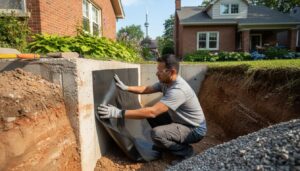
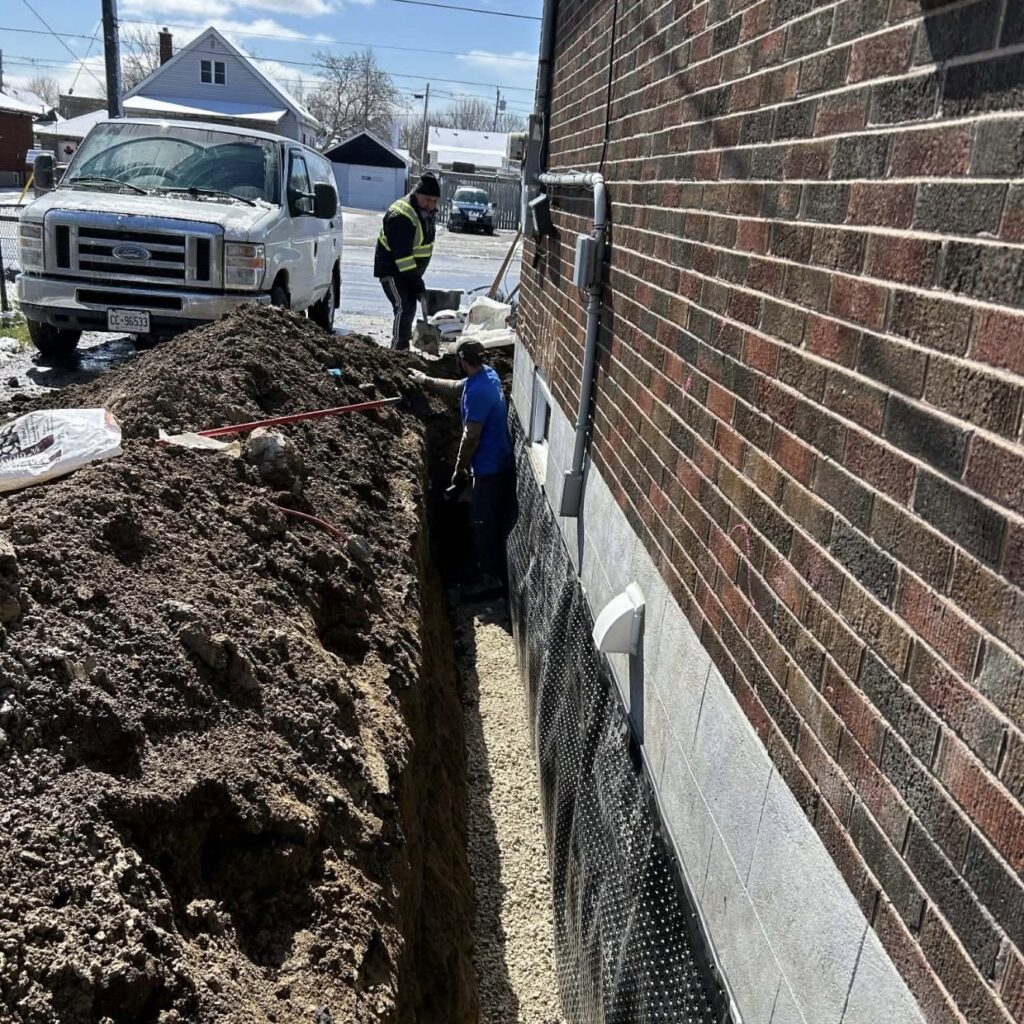
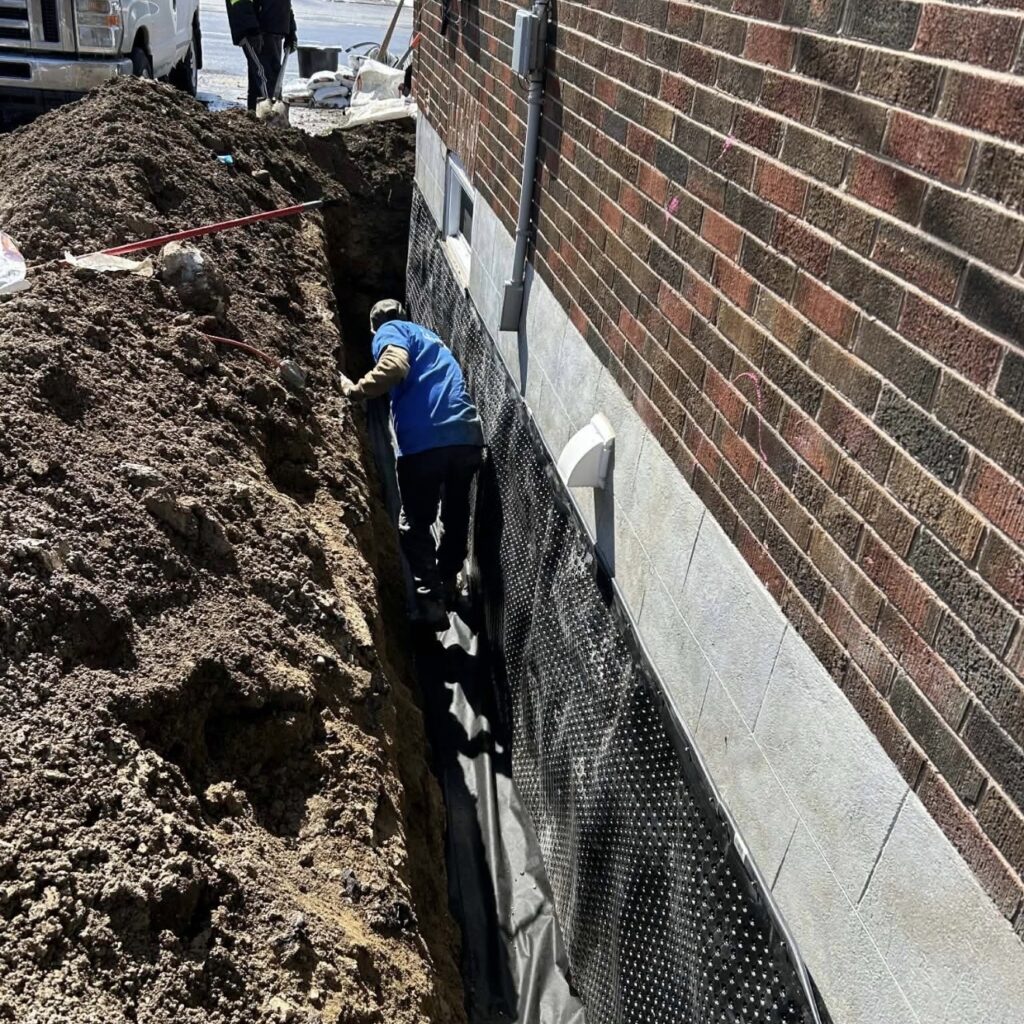
The Best Defense: External Waterproofing For modern, poured-concrete homes in areas like Barrie and Collingwood, external waterproofing is often the ultimate solution. This process involves:
- Excavating the soil around the affected foundation walls down to the footings.
- Repairing any cracks and applying a thick, rubberized waterproofing membrane to the exterior concrete.
- Installing a modern dimple board to create a physical barrier against the wet soil.
- Replacing old, clogged weeping tiles with a brand-new drainage system.
External waterproofing stops the meltwater before it ever touches your concrete, relieving the hydrostatic pressure and keeping your finished basement completely dry.
2. Historic Homes and Stone Foundations (Fergus & Orangeville)
As you drive south through Dufferin and Wellington counties, the architecture shifts. Fergus, Orangeville, and the surrounding rural townships are home to beautiful, historic properties built in the late 1800s and early 1900s.
These historic homes usually don’t have poured concrete basements; they have stone and mortar (rubble) foundations. Waterproofing these homes requires extreme care. You cannot aggressively excavate around a 100-year-old stone foundation without risking severe structural shifting. Furthermore, applying modern exterior tar to historic stone traps moisture inside the wall, causing the old mortar to crumble into sand.
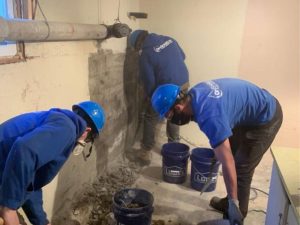
The Best Defense: Internal Waterproofing To protect heritage homes, internal waterproofing is the safest and most effective standard.
- We install an interior weeping tile system beneath the basement floor slab along the perimeter.
- We apply a specialized drainage membrane (dimple board) to the inside of the stone walls.
Stone naturally weeps and “breathes.” An internal system allows the stone to behave naturally, capturing any moisture that seeps through the mortar and channeling it safely to a sump pump. This keeps the basement bone-dry without ever risking the structural integrity of the farmhouse.
3. The Rural Power Outage Threat
There is one factor that unites this entire geographic corridor: high winds, ice storms, and unpredictable spring weather often lead to power outages.
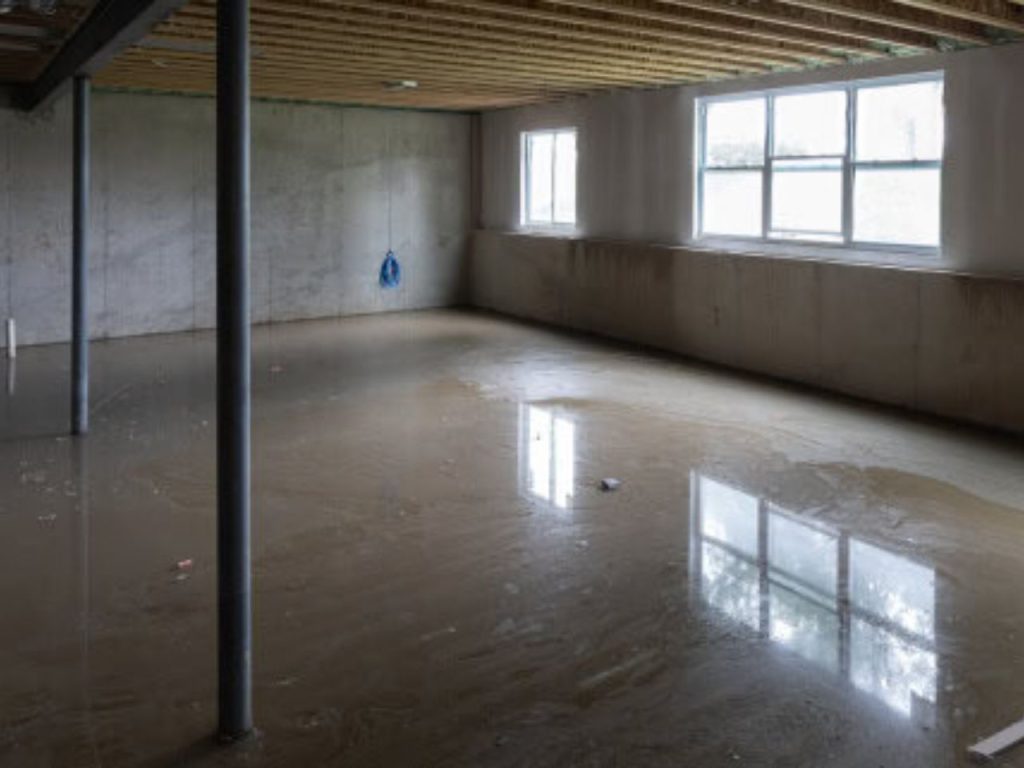
If you are on a rural route or in a subdivision on the edge of town, you cannot rely entirely on the electrical grid during a severe spring storm. If the power goes out, your primary sump pump shuts down. If this happens during a heavy rainstorm or peak snowmelt, your basement can flood in a matter of hours.
For homes from Collingwood down to Fergus, a battery-backup sump pump is absolutely mandatory. These systems automatically kick in the second the power drops, ensuring your basement stays dry even if you are in the dark for days.
4. Internal vs. External: What’s Right for Your Property?
Not sure which system your home needs? Here is a quick cheat sheet based on our experience in Central Ontario:
- Choose External Waterproofing if: You have a poured concrete foundation, a fully finished basement that you don’t want to tear up, and enough space around your property for a crew to safely excavate.
- Choose Internal Waterproofing if: You have a historic stone or block foundation, your home sits closely to neighboring properties or bedrock (making excavation impossible), or you are planning to finish a currently unfinished basement and want guaranteed protection from the inside.
Frequently Asked Questions: Basement Waterproofing in Central Ontario
Why does my basement flood every spring during the snowmelt? In snowbelt areas like Barrie and Collingwood, rapid spring thaws create “hydrostatic pressure.” The frozen ground cannot absorb the melting snow fast enough, causing thousands of pounds of water to push against your foundation walls. If there are any microscopic cracks or failing weeping tiles, that pressurized water will force its way into your basement.
Can you waterproof an old stone foundation from the outside? We strongly advise against exterior excavation for historic stone or rubble foundations, which are common in Fergus and Orangeville. Digging around a 100-year-old farmhouse can cause dangerous structural shifting, and applying modern exterior tar can trap moisture, causing historic mortar to crumble. Internal waterproofing is the safest and most effective method for heritage homes.
Do I really need a battery-backup sump pump if I live in a rural area? Yes. Homes in rural corridors and subdivisions outside major cities frequently experience power outages during spring ice storms and high winds. If your primary sump pump loses power during a heavy rainstorm or peak snowmelt, your basement can flood in hours. A battery-backup system automatically takes over to keep your foundation dry during grid failures.
How do I know if I need internal or external waterproofing? As a general rule, external waterproofing is ideal for modern poured-concrete homes with finished basements where you want to stop water before it touches the wall. Internal waterproofing is ideal for historic stone foundations, homes built on bedrock (common near Georgian Bay), or properties where exterior excavation isn’t physically possible.
Stop the Spring Melt Before It Starts
Waterproofing isn’t a one-size-fits-all job, especially not in Central Ontario. The techniques used in downtown Toronto don’t always apply to the unique soil, snowpacks, and historic homes found in our northern and rural communities.
At DryShield, we understand the local terrain. If you are noticing musty smells, damp walls, or pooling water this spring, don’t wait for a major flood to take action.
Secure your home for the season. Contact DryShield today at 1-800-277-5411 or visit Dryshield Basement Waterproofing to book your free, no-obligation inspection to your Contact/Quote page] and estimate.