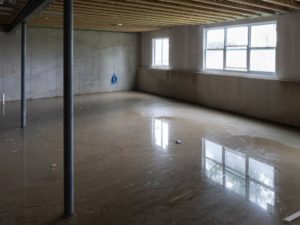
Water seeping through your basement floor often means groundwater or a plumbing leak is finding an easy path into your home. You can stop the problem by finding the source, fixing visible cracks or leaks, and improving drainage around the foundation.
Start by locating where the water comes from, then use targeted fixes like patching cracks, adding a sump pump, or improving gutters and yard slope to keep water out. These steps save you time and reduce the chance of mold and costly repairs.
Check pipes, drains, and the floor joint first so you know which fix fits your situation. If the issue is persistent or large, get a pro to evaluate waterproofing options and exterior drainage work.
Key Takeaways
- Identify the source of basement floor water before choosing a fix.
- Use simple repairs and drainage improvements to stop most seepage.
- Call a professional for persistent problems or major foundation work.
Understanding Why Water Seeps Through Basement Floors
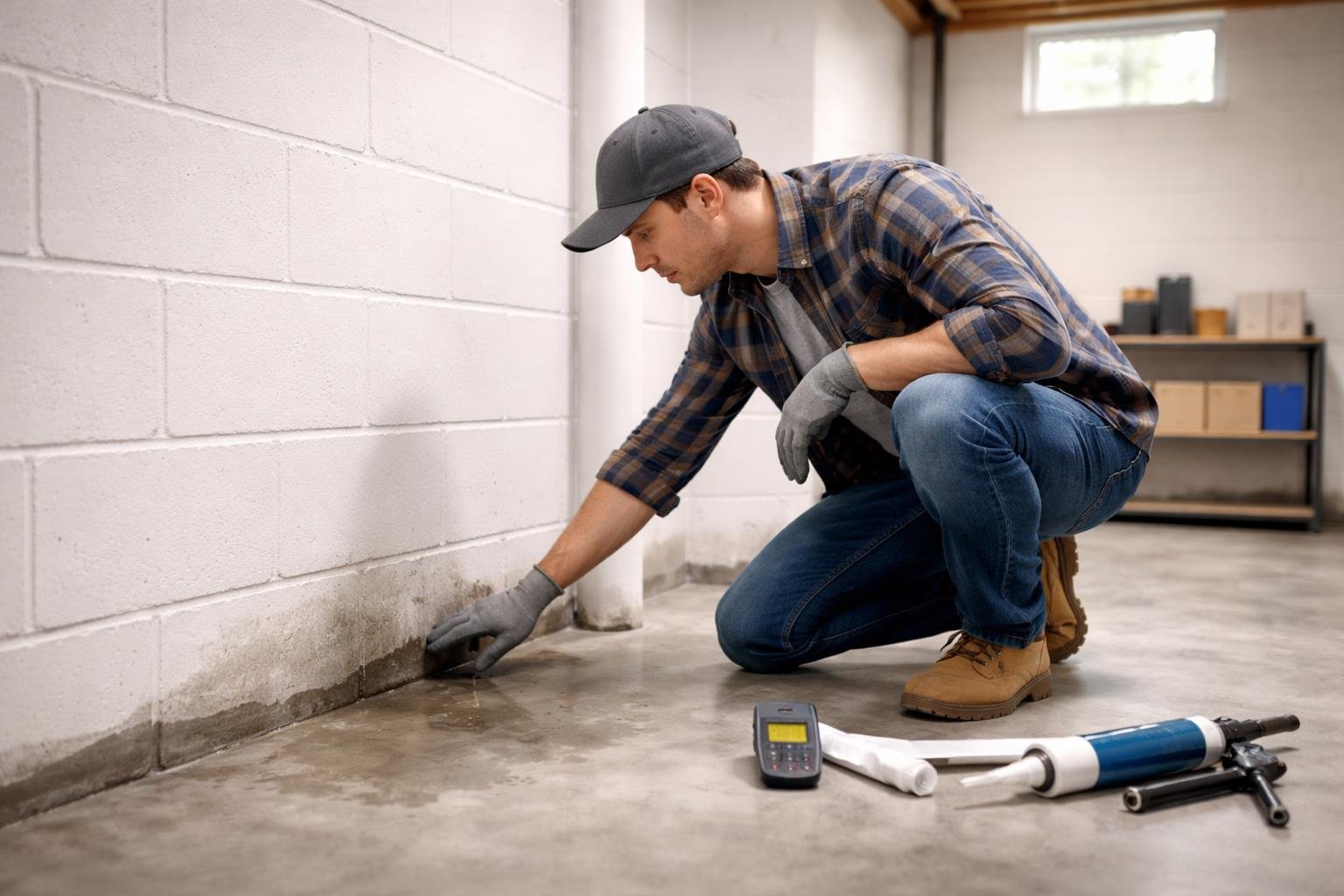
Water enters your basement when outside conditions and small weaknesses in the foundation let moisture move from the soil into your home. Most problems trace to poor drainage, ground water pressure, or cracks in concrete that let water follow the path of least resistance.
Common Causes of Water Intrusion
Clogged gutters and short downspouts send roof runoff close to your foundation. That extra water soaks the soil next to your basement and raises the chance of seepage. Heavy rain or melting snow over several days saturates soil and increases groundwater levels near the foundation.
Broken or old plumbing inside walls or under the slab can leak slowly and show up as damp spots on the floor. Poor exterior grading that slopes toward the house makes water collect at the foundation line instead of moving away. Finally, blocked or failed exterior drain tile systems let subsurface water collect against the footing and find weak points to enter.
Hydrostatic Pressure and Its Effects
Hydrostatic pressure builds when the soil around your foundation holds too much water. That pressure pushes water through tiny pores in concrete and along joints where the floor meets the wall. You will often see water seep evenly across the floor or press up through joints and cracks.
If pressure stays high, it can cause more damage. Floor slabs can heave slightly, joints can widen, and interior waterproofing systems like sump pumps may run constantly. Addressing soil drainage, installing or repairing drain tile, and using a sump pump with a reliable discharge line help relieve hydrostatic pressure and protect the foundation.
Foundation Cracks and Structural Weakness
Cracks form from settling, freeze-thaw cycles, or shifting soil. Hairline cracks let moisture wick in, while larger cracks allow visible water flow. Pay attention to where cracks appear: cracks at the wall-floor joint or along control joints on the slab often cause the worst seepage.
Repair choices depend on cause and size. Epoxy or polyurethane injections can seal many cracks from the inside. Structural issues may require foundation repair, such as underpinning or wall reinforcement, to stop movement that keeps reopening cracks. Professional assessment helps you choose the right fix and avoid repeated leaks.
How to Identify the Source of Basement Floor Water Seepage
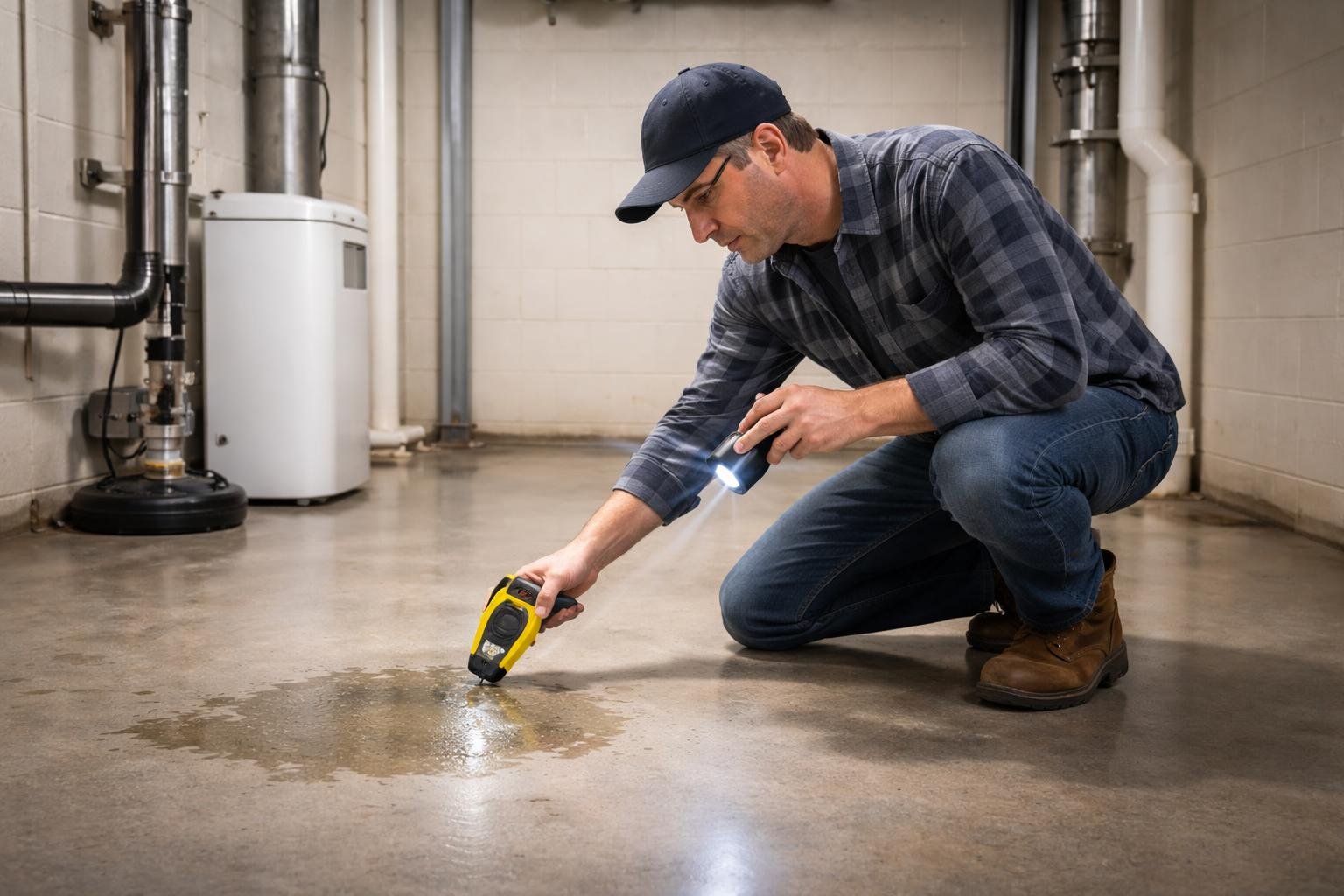
Find where the water enters, check visible signs, and test plumbing and drains. Focus on wet spots, cracks, and any plumbing nearby to narrow the cause quickly.
Signs of Moisture Problems
Look for damp or dark patches on the floor and walls. Water stains often follow a path from the lowest point upward or along joints where the slab meets the wall.
Check for efflorescence — white powdery deposits on concrete. That means groundwater is moving through the slab or wall.
Smell musty odors or see mold spots near corners, carpets, or stored boxes. Mold growth shows the issue has persisted and needs more than a quick patch.
Use a moisture meter to map wet areas. Mark the highest moisture readings and compare them to when it rains or the sump pump runs to spot patterns.
Inspecting Foundation and Basement Walls
Examine floor-to-wall joints, hairline cracks, and wider fractures in concrete. Small cracks can let groundwater in under hydrostatic pressure; larger cracks can allow heavy flow.
Look outside for soil slope and gutters. Soil graded toward the foundation or clogged gutters will push water down to the slab.
Check for a moisture barrier under flooring if accessible (finished basements). Missing or damaged barriers let ground moisture reach the slab and cause seepage.
Tap the walls and floor along suspected routes. Hollow sounds can mean delamination or voids where water pools. Photograph and measure crack widths and locations to show a contractor.
Pinpointing Plumbing and Drainage Issues
Inspect all visible plumbing for drips, wet insulation, or rust stains near supply lines and sewer drains. Run toilets, sinks, and showers to see if water levels change or new leaks appear.
Test the floor drain and sump pump. Pour water near the drain and watch how fast it clears. A slow or backed-up drain points to interior drainage problems, not just groundwater.
Check downspouts and extensions. Downspouts that empty close to the foundation or end inside the landscaping can feed water under the slab.
If you suspect the exterior drain tile or French drain, note repeated seepage after heavy rain. That pattern often means the drain system is clogged or compromised and may need excavation or a sump and internal drainage system.
Prevention Strategies for Basement Water Seepage
Keep water away from your foundation by directing runoff, keeping gutters clear, and protecting common entry points. These steps reduce pressure on basement walls and cut the chance of seepage through floors and joints.
Ensuring Proper Exterior Drainage and Grading
Grade soil so it slopes away from your foundation at least 6 inches over the first 10 feet. Use compacted fill and check slope after heavy rain to confirm water runs away from the house. Install a French drain or exterior perimeter drain if water pools near the foundation. A gravel trench with a perforated pipe tied to a storm outlet or sump pump moves groundwater away before it reaches the footing. Keep plantings and hardscape from creating low spots. Driveways and patios should slope away or have a channel drain tied to the same drainage path. When you do major work, consider exterior basement waterproofing membranes to stop water at the source and reduce hydrostatic pressure on the floor.
Maintaining Gutters and Downspouts
Clean gutters at least twice a year and more often if you have trees nearby. Remove leaves and debris by hand or with a gutter scoop. Flush with a hose to check flow and find leaks. Extend downspouts at least 4–6 feet from the foundation or connect them to underground drains that lead to a safe discharge point. Use rigid extensions or buried piping to prevent splash-back against the foundation. Repair sagging sections and seal seams with roofing-grade caulk. Consider gutter guards to reduce clogging but still inspect them regularly. A working gutter system reduces the volume of roof water that can soak into soil next to your foundation and cause basement waterproofing failures.
Addressing Window Wells and Entry Points
Keep window wells clear of leaves, mulch, and soil that can hold water against the window. Install tight-fitting covers rated for snow and rain to stop direct runoff. Ensure covers sit above the well rim and slope away from the house. Add a small drain in the window well tied into the perimeter drain or a routed downspout. If water still pools, install a sump in the well with a tiny pump that discharges uphill or to the main sump system. Seal gaps around window frames and any pipes or conduits entering the basement with polyurethane caulk or hydraulic cement for larger voids. Regularly inspect steps, door thresholds, and any slab penetrations and repair cracks promptly to maintain your basement waterproofing.
Effective Solutions to Stop Water Seepage Through Basement Floors
Use targeted fixes that stop water at the source and protect the concrete. Focus on sealing porous surfaces, repairing cracks and joints, and adding a drainage path that moves water away from the floor and foundation.
Applying Waterproof Sealants and Coatings
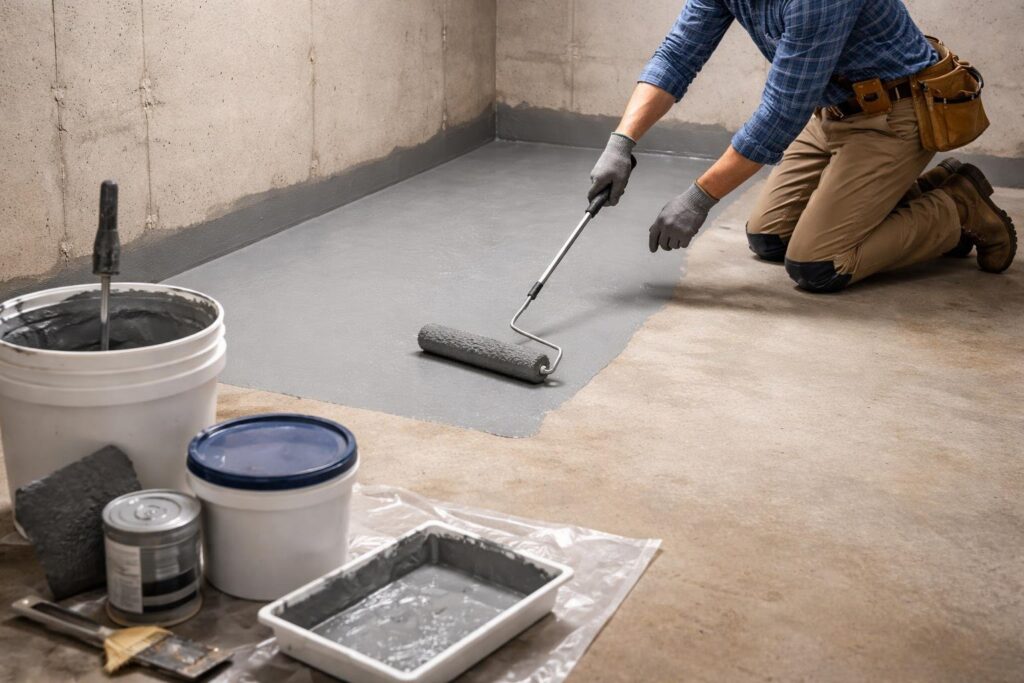
Choose a product made for concrete basement floors, such as silicate-based pore sealers or cementitious waterproof coatings. These penetrate or bond to concrete and reduce capillary water movement. Follow the maker’s prep steps: clean the floor, remove efflorescence, and allow the slab to dry before applying.
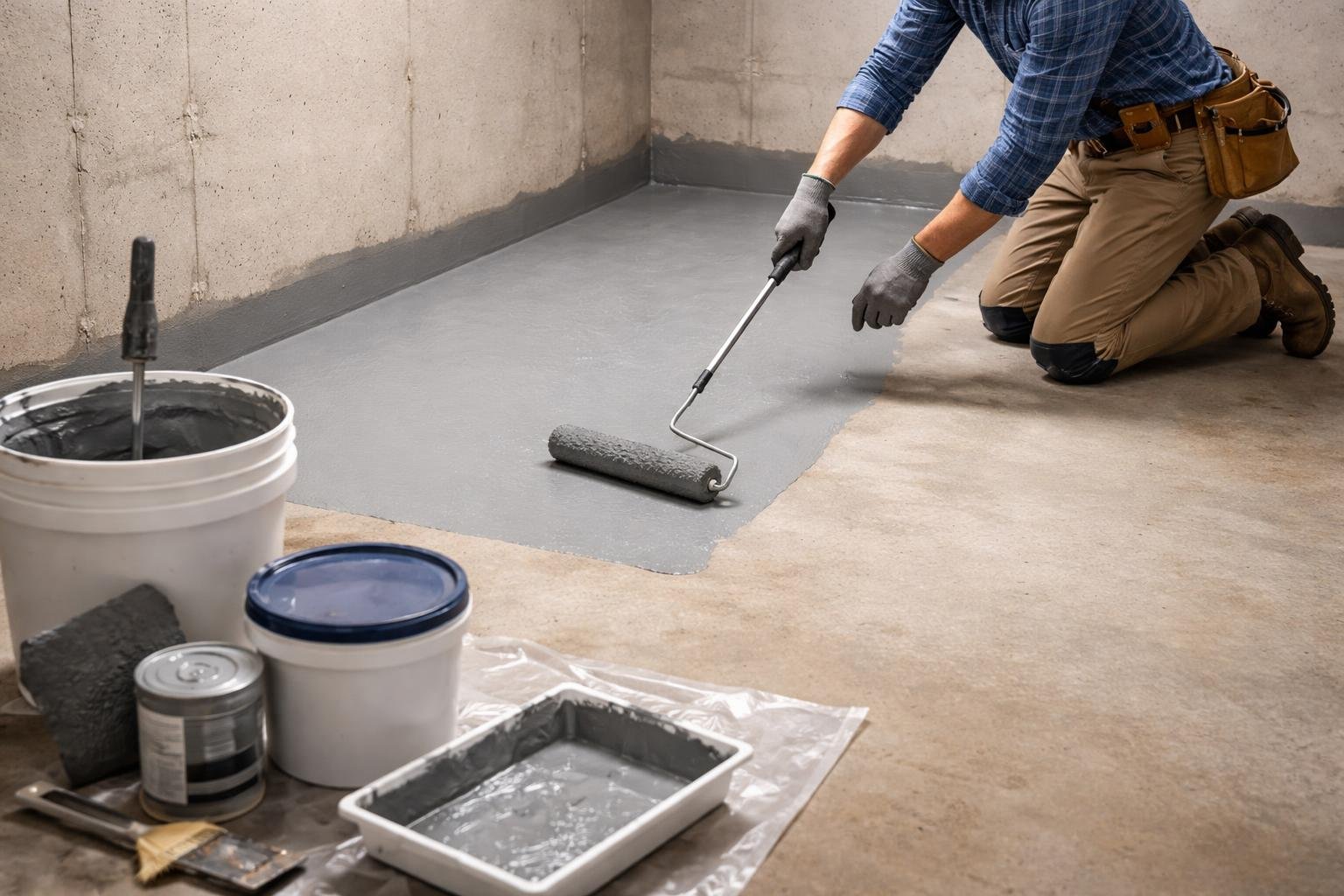
Apply in thin, even coats with a roller or brush and allow full cure time between layers. Use a product rated for below-grade use and compatible with any floor coverings you plan to install. For active leaks or hydrostatic pressure, coatings help but rarely solve the problem alone; combine them with drainage or foundation repair for lasting results.
Repairing Cracks and Gaps
Inspect the slab, wall-to-floor joints, and pipe penetrations for hairline cracks and larger voids. For small cracks, use a concrete crack filler or epoxy injection to restore structural integrity and stop seepage. For larger gaps or moving cracks, use hydraulic cement or a flexible polyurethane injection that expands and bonds under water.
Seal joints between the floor and foundation wall with a polyurethane caulk or elastomeric sealant rated for below-grade movement. Replace or seal pipe sleeves and boot fittings where pipes pass through the slab. If cracks indicate foundation movement, consult a foundation repair specialist so you address settlement or footing issues before redoing interior waterproofing.
Installing Interior Drainage Systems
Install an interior perimeter drain (drain tile) right at the joint between floor and wall to capture water entering through the footing area. This system typically uses perforated pipe set in a gravel channel or in a poured concrete trench and ties into a sump basin.
A sump pump in the basin evacuates collected water to daylight or a storm drain. Interior drainage controls groundwater and hydrostatic pressure without disturbing exterior grades. Have a professional design the layout so it integrates with your slab and foundation repair needs. Proper installation protects finished floors and allows future repairs without major exterior excavation.
Advanced Waterproofing Methods and Professional Help
You’ll learn when to call a pro and how interior and exterior methods compare. Read specifics on costs, tools, and likely outcomes so you can pick the right solution for your basement.
When to Seek Professional Basement Waterproofing
Call a professional if water pools after heavy rain, you see active leaks, or cracks widen over time. Professionals diagnose hydrostatic pressure, failing footings, and hidden cracks that DIY fixes miss. They can perform foundation repair, install a sump pump with battery backup, or fit an interior drainage system that ties into a sump basin.
Expect contractors to use tools you likely don’t have: concrete saws, excavation equipment, and pressure-injection pumps for epoxy or polyurethane. Get at least three written estimates and ask for references, warranty details, and photos of similar jobs. Professionals also handle permits and coordinate exterior excavation when an external moisture barrier is needed.
Comparing Interior vs. Exterior Solutions
Interior waterproofing systems focus on managing water that enters. Common interior fixes: perimeter French drains, sump pumps, and masonry waterproof coatings. These stop water inside the basement and are less invasive and often cheaper than exterior work. They don’t stop groundwater from reaching the foundation, so ongoing moisture and hydrostatic pressure may remain.
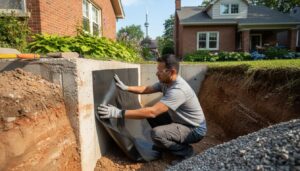
Exterior solutions stop water before it hits the foundation. Contractors excavate around the foundation, repair cracks, apply waterproof membranes, and add exterior drains or regrade soil. This approach targets the root cause and can reduce long-term foundation repair needs. It costs more and requires heavy equipment, but it’s the better choice when you have persistent seepage, saturated soil, or visible exterior wall damage.
Frequently Asked Questions
This section gives clear, practical answers about why water rises through your basement slab and what to do right away and long-term. You’ll learn how to spot the source, temporary steps to limit seepage, and the best interior and exterior fixes to stop it.
What are the most common causes of water seepage through a basement floor?
Groundwater pushed up by hydrostatic pressure is the most common cause. Heavy rain, high water table, or saturated soil around and under the slab forces water through pores and cracks.
Poor exterior drainage and the “clay bowl” effect also cause seepage. If soil backfill around your foundation holds water or your yard slopes toward the house, water collects against and beneath the slab.
Plumbing failures and clogged interior drains can add water from inside. Broken sewer lines, leaking pipes, or a blocked interior drain tile increase moisture under the slab and can cause visible seepage.
How can I tell whether the water is coming up through the slab or from the foundation walls?
Look at where the water appears. Water coming up in the middle of the floor or at the cove joint usually means it’s rising through the slab from below.
If water runs down from the top of the wall or appears near wall-floor seams higher on the wall, the source is more likely exterior wall penetration. Check for wet spots after rain versus steady leaks between storms; steady dampness often signals groundwater under the slab.
You can also mark the water line and watch during rain. Use a moisture meter and inspect the sump pit and drain tile for clear evidence of where water collects.
What immediate steps can I take to reduce basement floor seepage during heavy rain?
Move stored items and electronics to higher ground in the house. Protect valuables first to reduce damage.
Set up a portable water pump or use a wet/dry shop vac to remove standing water. Keep power and cords out of water and turn off circuits if water reaches outlets.
Redirect downspouts at least 5–10 feet from the foundation and use temporary sandbags or gravel along the exterior to divert surface runoff. These steps reduce incoming water until you can get a permanent fix.
Which interior waterproofing methods are most effective for stopping water coming through a basement floor?
An interior drainage system with perforated pipe in a trench along the perimeter captures groundwater before it enters your slab. The pipe channels water to a sump pit for removal.
A reliable sump pump with battery backup keeps the system working during storms and power outages. Use pumps sized for your expected flow and test them regularly.
Crack injection with polyurethane or epoxy can seal smaller active cracks, but only when combined with drainage. Surface coatings alone won’t stop water pushed up by hydrostatic pressure.
When should I install or replace a sump pump and interior drain system to address floor seepage?
Install or replace when you have recurring seepage after storms or visible water under the slab. If water returns after DIY patches, you likely need a full interior system.
Replace an old sump pump if it fails tests, shows rust, cycles too often, or lacks battery backup. Consider replacement every 7–10 years or sooner if you detect performance issues.
Call a waterproofing professional for an inspection if you see floor heaving, multiple cracks, or persistent musty odors. Those signs point to ongoing groundwater pressure that a pump and drain tile can solve.
What exterior drainage and grading improvements help prevent basement floor water intrusion long-term?
Grade the soil so it slopes away from the foundation at least 5% for the first 10 feet (about 6 inches drop over 10 feet). This directs surface water away from your home.
Extend downspouts at least 5–10 feet from the foundation or connect them to underground drains. Clean gutters and repair leaks so roof water does not saturate the soil near the slab.
Install or repair exterior footing drains or French drains if surface solutions aren’t enough. These systems intercept groundwater before it reaches the foundation and reduce hydrostatic pressure under the slab.