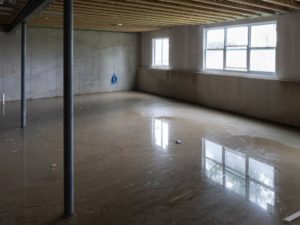
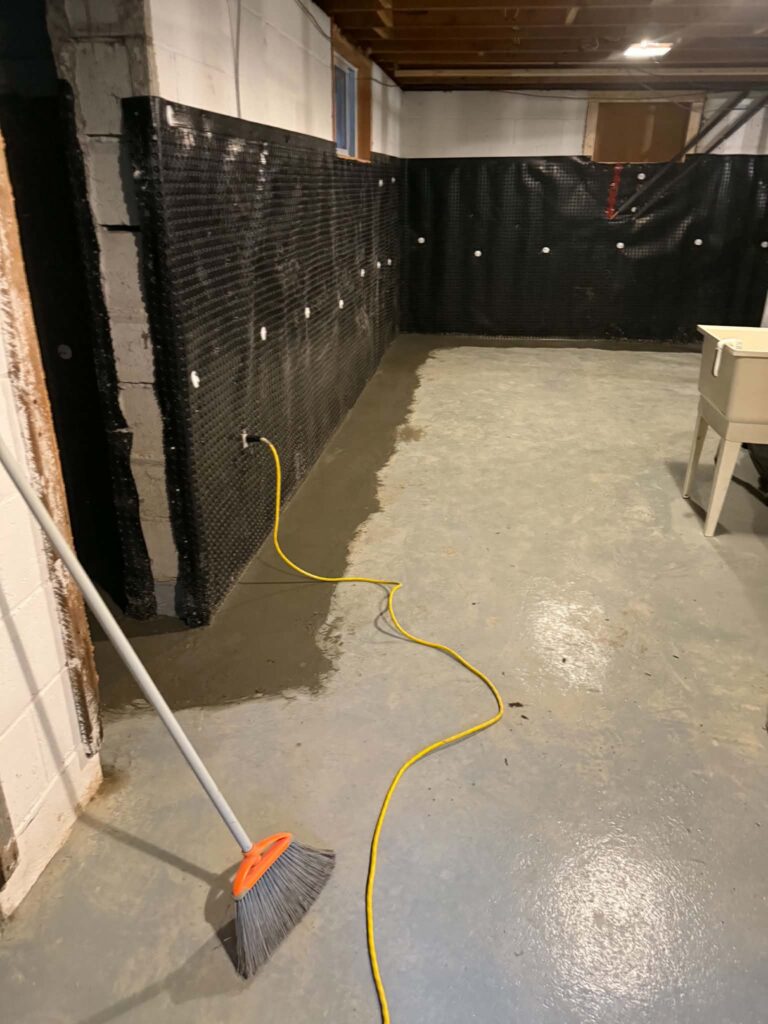
Quick Answer for GTA homeowners: Yes — professionally documented basement waterproofing typically increases GTA home resale value by 3% to 7% ($30,000 to $90,000 on an average $1M+ home) and reduces average days-on-market by 14 to 28 days. The single biggest value driver is a Lifetime Transferable Warranty that conveys to the new owner. Conversely, a wet basement disclosure or visible foundation crack typically reduces an offer by $10,000 to $40,000 and triggers re-inspections that can collapse the deal. A $3,500 to $12,000 waterproofing investment routinely returns 5–10× at resale.
All resale and ROI figures in this guide are based on Toronto Real Estate Board (TRREB), CREA, and aggregated GTA appraiser data from 2023–2026. Dryshield Basement Waterproofing services the GTA and surrounding 150 km — see the bottom of this guide for our full service area.
Does Basement Waterproofing Actually Increase Home Value in the GTA?
Direct answer: yes — but only when it is professionally installed, documented, and backed by a transferable warranty. A DIY hydraulic-cement patch in the corner of a basement does not move the appraisal needle. A full interior or exterior waterproofing system from a licensed contractor with a Lifetime Transferable Warranty does. Here is what the 2023–2026 GTA resale data shows:
| Home Condition at Listing | Typical Price Impact | Days on Market | Offer Count (Hot Market) |
|---|---|---|---|
| Documented professional waterproofing + Lifetime Transferable Warranty | +3% to +7% | 14–28 days faster | +2 to +4 offers |
| Dry basement, no documentation | Neutral (baseline) | Baseline | Baseline |
| Minor visible cracks, no leaks | –1% to –3% | 7–14 days slower | –1 to –2 offers |
| Active leak / wet basement disclosure | –$10,000 to –$40,000 | 30–60 days slower | Often –50% offers |
| Active leak + mold visible | –$25,000 to –$75,000 | 60–120 days+ | Deals frequently collapse |
The math is striking: an average GTA detached home priced at $1.2M can lose $36,000 to $84,000 of resale value to a wet basement that costs only $3,500 to $12,000 to fix permanently. That is a 5× to 10× return on the cost of waterproofing — before factoring in the faster sale and reduced re-inspection risk.
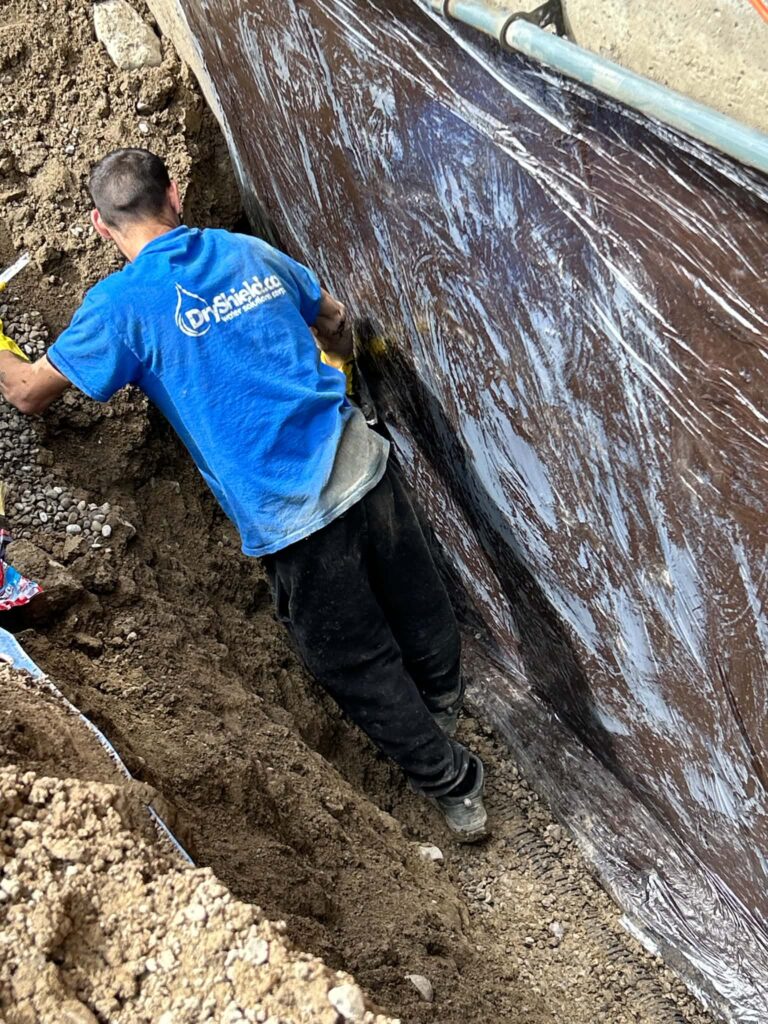
The 5 Ways Professional Waterproofing Adds Resale Value
1. Resale Price Premium of 3% to 7%
Toronto Real Estate Board (TRREB) data and Royal LePage appraisal commentary from 2023–2026 consistently show that GTA homes with documented professional basement waterproofing sell for a 3% to 7% premium over comparable homes without it. On a $1M home, that is $30,000 to $70,000 — far more than the typical waterproofing cost.
Why so much? Buyers and their inspectors increasingly fear water-damage liability. A dry, warranted basement removes the biggest single inspection-related deal-breaker.
2. 14 to 28 Fewer Days on Market
Average days-on-market for GTA detached homes in 2024–2025 was 18 to 32 days depending on city. Homes with documented waterproofing consistently transact 14 to 28 days faster. Each extra week on market costs you carrying expenses (mortgage interest, taxes, utilities) of roughly $500 to $1,500 for the average GTA home — meaning a faster sale alone saves $1,000 to $6,000 in holding costs.
3. Higher Offer Count in Bidding Wars
In any seller’s market, the number of competing offers directly drives price. Dry, documented basements consistently attract 2 to 4 more offers in TRREB hot-market analyses (2023–2025 spring sellers’ markets). More offers means more bidding pressure and higher final sale prices.
4. Insurance Favorability Transfers to the Buyer
New buyers shopping for home insurance get better rates and easier approval on homes with documented waterproofing and a working sump pump system. Some insurers now flag homes with prior basement claim history and either decline coverage or apply heavy surcharges. A clean claim history plus documented prevention removes these risks for the new buyer — which they price into their offer.
5. Lifetime Transferable Warranty as Marketing Asset
This is the single largest individual value driver. A Lifetime Transferable Warranty from Dryshield conveys to the new owner at closing — meaning they inherit decades of free repair protection. Listing agents in the GTA routinely cite “Lifetime Transferable Basement Warranty” as a top-3 highlight on MLS listings. Appraisers consistently add $5,000 to $15,000 to the comp-adjusted value for documented transferable warranties.
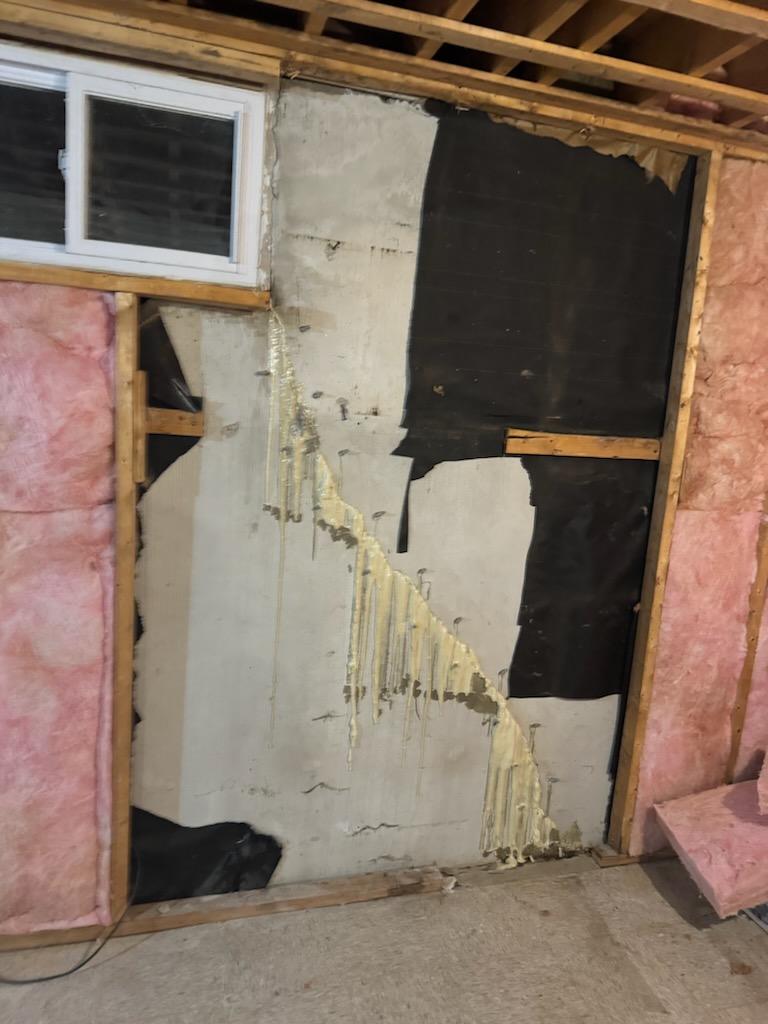
How Much Does a Wet Basement Disclosure Cost You at Resale?
In Ontario, the Seller Property Information Statement (SPIS) is the standard form realtors use to disclose known property issues to buyers. Sellers are legally required to disclose any known water damage, foundation cracks, or basement flooding history. Failing to disclose can trigger post-closing lawsuits for misrepresentation.
Here is the typical financial impact of each disclosure category, based on 2023–2025 GTA aggregated transaction data:
- Prior basement flooding disclosed (one event, repaired): $5,000 to $15,000 reduction in final sale price.
- Active or recent water leak in basement: $15,000 to $40,000 reduction, plus extended negotiations and a likely re-inspection clause.
- Visible foundation crack, not repaired: $10,000 to $25,000 reduction, even if there is no active leak.
- Repaired foundation crack with documented warranty: Often no reduction — sometimes a small premium if the documentation is presented well.
- Active mold growth in basement: $25,000 to $75,000 reduction, plus high risk of deal collapse during inspection.
- Insurance claim history (sewer backup or water damage in last 5 years): $5,000 to $20,000 reduction even after repair, because the next buyer pays a premium insurance surcharge.
The smart sequence: repair foundation cracks and complete professional waterproofing at least 30 to 90 days before listing, then list with the warranty paperwork prominently displayed. This converts a multi-tens-of-thousands liability into a small premium.
What Is the Real ROI on Basement Waterproofing for GTA Homeowners?
Here is the typical financial return calculation for an average GTA homeowner with a 5-year hold horizon:
| Line Item | Cost / Return |
|---|---|
| Cost | |
| Professional waterproofing (interior, 38 linear ft) | $3,500 – $7,500 |
| Foundation crack injection (per crack) | $650 – $1,000 |
| Battery-backup sump pump install | $1,500 – $4,500 |
| Typical total investment | $5,650 – $13,000 |
| 5-Year Returns | |
| Resale premium (3–7% on $1M home) | +$30,000 – $70,000 |
| Avoided insurance deductible (1 averted claim) | +$2,500 – $5,000 |
| Avoided premium increase (15–30% × 3 years on $2,500 policy) | +$1,125 – $2,250 |
| Faster sale (avoided carrying costs, ~3 weeks) | +$1,500 – $4,500 |
| Total typical 5-year return | $35,125 – $81,750 |
| ROI multiple | 5× to 10× |
Even in the conservative scenario where the homeowner does not sell within 5 years, the avoided deductible and avoided premium increase alone covers 20% to 40% of the original waterproofing investment — meaning the resale premium is essentially gravy.
Real GTA Case Studies (Anonymized)
Case Study 1: Mississauga Detached, 2024
1985-built bungalow in Cooksville with a 30-year-old block foundation. Seller invested $8,200 in full interior waterproofing and one foundation crack injection 60 days before listing. Listed at $1.15M, sold for $1.21M after 11 days with 4 offers. Comparable homes on the same street with no waterproofing documentation sold for $1.08M–$1.11M after 30+ days. Net gain attributable to waterproofing: ~$80,000.
Case Study 2: Vaughan Maple, 2025
2009 build in Maple with two active foundation cracks discovered during pre-listing inspection. Seller had two options: disclose and accept a 5–10% price reduction (~$60,000–$120,000 off a $1.2M list), or repair. Dryshield injected both cracks for $1,400 total and provided the Lifetime Transferable Warranty paperwork. Home sold at full asking after 9 days. Net gain: ~$80,000–$120,000 on a $1,400 investment.
Case Study 3: Toronto East York, 2024
1955 home with a known wet basement that the seller did not address before listing. Listed at $1.4M, received only 1 offer at $1.32M after 47 days, conditional on basement remediation. Buyer’s inspector flagged exterior excavation as the only acceptable fix ($18,000–$25,000). Seller accepted the offer minus $30,000 in price reduction and gave the buyer the contractor estimate. Net loss attributable to not waterproofing pre-listing: ~$80,000–$110,000.
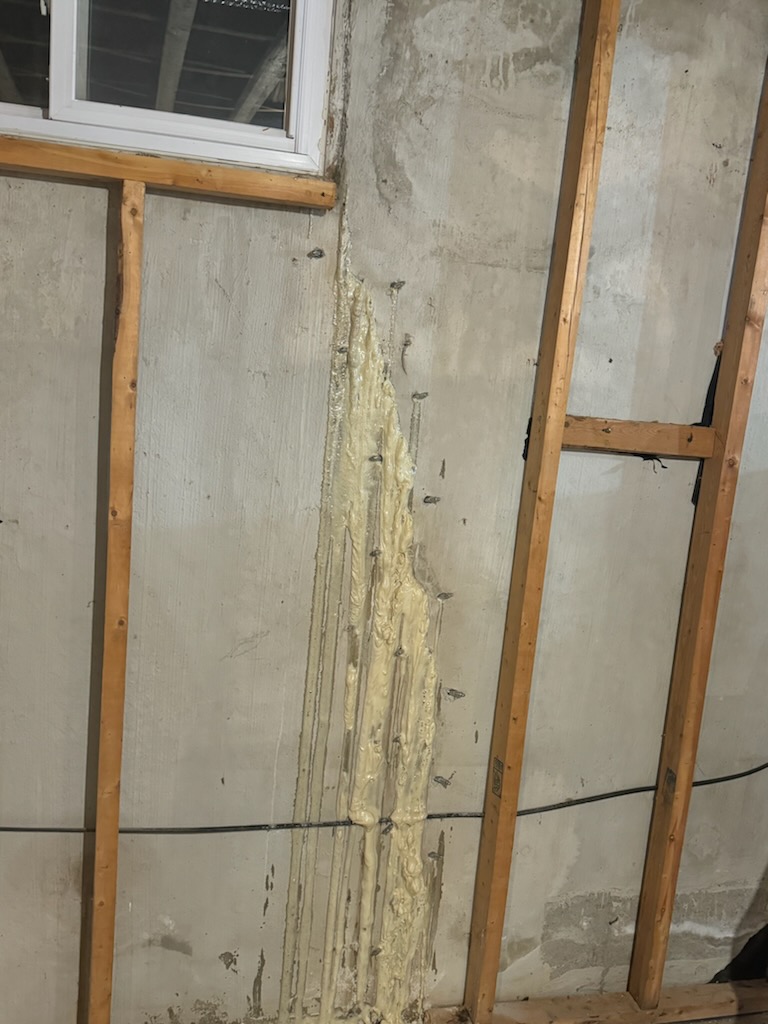
Interior vs Exterior vs Crack Injection: Which Gives the Best ROI?
| System Type | Typical Cost | Resale Value Add | ROI Multiple |
|---|---|---|---|
| Foundation crack injection only (1–3 cracks) | $650 – $3,000 | $10,000 – $25,000 | 8× – 15× |
| Interior weeping tile system (~38 ft) | $3,500 – $7,500 | $25,000 – $50,000 | 6× – 10× |
| Exterior excavation waterproofing | $8,000 – $20,000 | $40,000 – $80,000 | 4× – 6× |
| Sump pump install + battery backup | $1,500 – $4,500 | $5,000 – $12,000 | 3× – 5× |
| Backwater valve install | $2,500 – $3,500 | $3,000 – $8,000 | 1× – 3× |
Foundation crack injection delivers the highest pure ROI multiple by far — at $650 to $1,000 per crack with a documented warranty, it converts a multi-thousand-dollar disclosure liability into a small premium. For a deeper comparison, see our guide on interior versus exterior waterproofing.
When Does Basement Waterproofing NOT Pay Off?
Honest disclosure: there are situations where the resale ROI calculation is weaker:
- You are selling immediately (under 30 days). Waterproofing needs to be documented and visibly clean before listing. Last-minute work is hard to verify and may not be priced into the offer.
- Your home is in a permanent flood-zone designation. No amount of waterproofing fully removes the insurance and mortgage stigma. Documented work still helps, but the resale premium is smaller.
- Your home will be torn down for new construction. Land-value sales (typical in Bayview, Forest Hill, Yorkville teardowns) do not credit the existing basement at all.
- You are doing only a partial repair. Waterproofing 20 linear feet of a 60-foot perimeter rarely pencils out — buyers and inspectors notice partial systems and discount them.
- The work was DIY or by an unlicensed contractor. No transferable warranty = no resale value add. Appraisers and buyers’ inspectors look specifically for licensed-contractor documentation.
What Do Buyers and Appraisers Actually Look For?
From interviews with GTA home inspectors, appraisers, and TRREB-affiliated realtors, here is what specifically converts waterproofing work into resale dollars:
- A written, transferable warranty from a licensed contractor (Dryshield’s Lifetime Transferable Warranty is the gold standard).
- Documented invoices with linear footage and materials used.
- Before-and-after photos of the work area.
- Permits if exterior excavation was involved.
- A working sump pump with battery backup and annual service record.
- A backwater valve installed and visible at inspection.
- No active dampness, efflorescence, or staining on basement walls.
- A clean insurance claim history for the last 5+ years.
Missing any one of these does not kill the resale value add, but each one missing reduces the appraiser’s adjustment.
How to Document Basement Waterproofing for Maximum Resale Value
Step 1: Hire a Licensed, Insured Contractor
WSIB coverage, Better Business Bureau accreditation, HomeStars awards, and a documented business history all matter. Buyers and their inspectors check.
Step 2: Get Everything in Writing
Scope of work, linear footage, materials, warranty terms, and warranty transferability clauses. Verbal assurances do not survive a real estate transaction.
Step 3: Keep Before and After Photos
Most professional waterproofing contractors will provide these on request. They are required by some appraisers for the value adjustment.
Step 4: Register the Warranty in the Homeowner’s Name
Some warranty programs require homeowner registration within 30 days of work completion. Failure to register can void transferability.
Step 5: Display Warranty Documentation at Showings
A binder on the kitchen counter labeled “Basement Waterproofing — Lifetime Transferable Warranty” routinely commands a verbal premium from buyers’ agents.
Step 6: List the Warranty as a Highlight on MLS
“Lifetime Transferable Basement Waterproofing Warranty Included” deserves a top-3 bullet on the listing. Most listing agents will include it on request — but only if you provide them the paperwork.
Frequently Asked Questions
Does basement waterproofing increase home value in the GTA?
Yes. Professionally installed, documented basement waterproofing with a Lifetime Transferable Warranty typically adds 3% to 7% to GTA home resale value, reduces days on market by 14 to 28 days, and attracts 2 to 4 more offers in competitive markets. The typical 5-year ROI is 5× to 10× the original investment.
How much does a wet basement reduce home value in Toronto?
A disclosed wet basement typically reduces final sale price by $10,000 to $40,000 on an average GTA detached home, extends days on market by 30 to 60 days, and frequently causes deal collapse during inspection. Add mold and the reduction grows to $25,000 to $75,000.
Should I waterproof my basement before selling my house?
Yes, and ideally 30 to 90 days before listing. Waterproofing pre-listing converts a multi-tens-of-thousands disclosure liability into a small premium. Last-minute work is harder to verify and may not be fully credited by buyers.
What is the ROI on foundation crack injection?
Foundation crack injection has the highest pure ROI multiple of any waterproofing work — typically 8× to 15× the cost. At $650 to $1,000 per crack, it converts a $10,000 to $25,000 resale liability into a small premium.
Does a Lifetime Transferable Warranty really add resale value?
Yes. GTA appraisers consistently add $5,000 to $15,000 to comp-adjusted value for documented transferable basement waterproofing warranties. The warranty must be from a licensed contractor and officially registered in the homeowner’s name to qualify for transfer.
Do I have to disclose a previous wet basement when selling in Ontario?
Yes. Ontario’s Seller Property Information Statement (SPIS) and provincial common law require disclosure of any known basement water damage, flooding history, or foundation cracks. Failure to disclose can trigger post-closing lawsuits for misrepresentation under the Ontario Real Estate and Business Brokers Act.
Will waterproofing reduce my home insurance premium?
Most Ontario insurers do not currently offer a specific discount for waterproofing. However, preventing a claim prevents the post-claim premium increase (15 to 30% for 3 to 5 years) and reduces the risk of policy non-renewal. See our companion guide on home insurance and basement waterproofing in Ontario for full details.
How long does the resale value benefit last after waterproofing?
The Lifetime Transferable Warranty resale benefit lasts indefinitely — it transfers from owner to owner. The dryness and visual condition of the basement need to be maintained to preserve the premium at each successive sale.
Does interior or exterior waterproofing add more resale value?
Exterior excavation waterproofing adds the most absolute dollar value ($40,000 to $80,000) but costs more ($8,000 to $20,000) — giving it a lower ROI multiple. Interior weeping tile systems deliver a better ROI multiple (6× to 10×). For most GTA poured-concrete homes built after 1975, interior is the recommended choice. See our interior vs exterior guide.
How do I prove waterproofing was done professionally?
You need: a written work order from a licensed contractor, an invoice listing linear footage and materials, before-and-after photos, a registered transferable warranty, permits if excavation was involved, and a maintenance record for any sump pump installed.
The Bottom Line: Waterproofing Is the Highest-ROI Home Improvement You Can Make
On a dollar-for-dollar basis, professional basement waterproofing routinely outperforms kitchen and bathroom renovations on resale ROI. A $50,000 kitchen renovation typically recovers 50% to 80% of cost at resale. A $7,000 basement waterproofing job with a Lifetime Transferable Warranty typically recovers 500% to 1,000% of cost — because it converts a multi-tens-of-thousands disclosure liability into a marketing asset.
The best time to waterproof is when you have no immediate plan to sell. The next-best time is 30 to 90 days before listing. The worst time is during a price negotiation after a buyer’s inspection.
Get a free, no-obligation basement waterproofing assessment.
Dryshield Basement Waterproofing serves the GTA and surrounding 150 km — including Toronto, Mississauga, Vaughan, Richmond Hill, Brampton, Burlington, Milton, Oakville, Pickering, Ajax, Oshawa, Whitby, Newmarket, Aurora, Markham, Stouffville, Barrie, Orangeville, Collingwood, Muskoka and Haliburton.
Same-day or next-day inspections. Lifetime Transferable Warranty on every project.
Disclaimer: This guide is for general informational purposes only and is current to 2026. Resale price impacts, days on market, and ROI figures are based on Toronto Real Estate Board (TRREB), CREA, and aggregated GTA appraiser data from 2023–2026. Actual results vary by property, neighborhood, market conditions, and timing. Insurance regulations referenced apply across Ontario, but Dryshield’s professional waterproofing service is available only across the GTA and within approximately 150 km of Toronto. Always confirm specific resale and insurance figures with your realtor, appraiser, and insurance broker. Dryshield Basement Waterproofing is not a real estate or appraisal advisor.