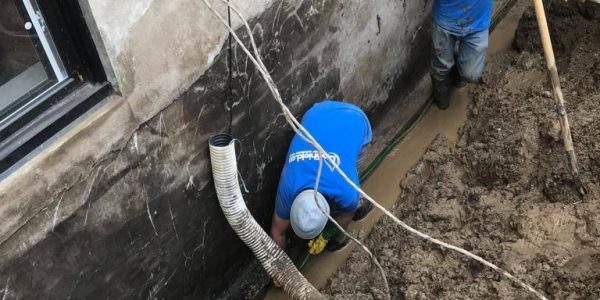
Completed over 300,000 Linear Feetof Basement Waterproofing
Lifetime Transferrable Warranty
Say Goodbye To Wet Basements For Good
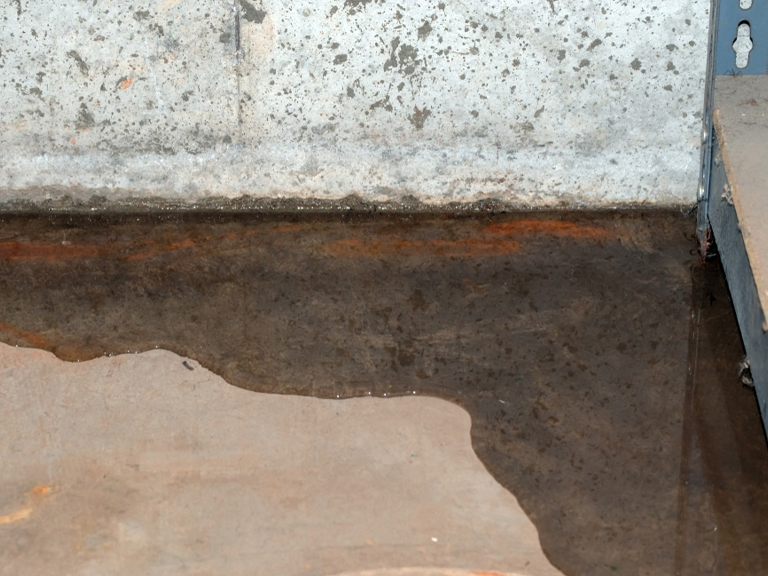
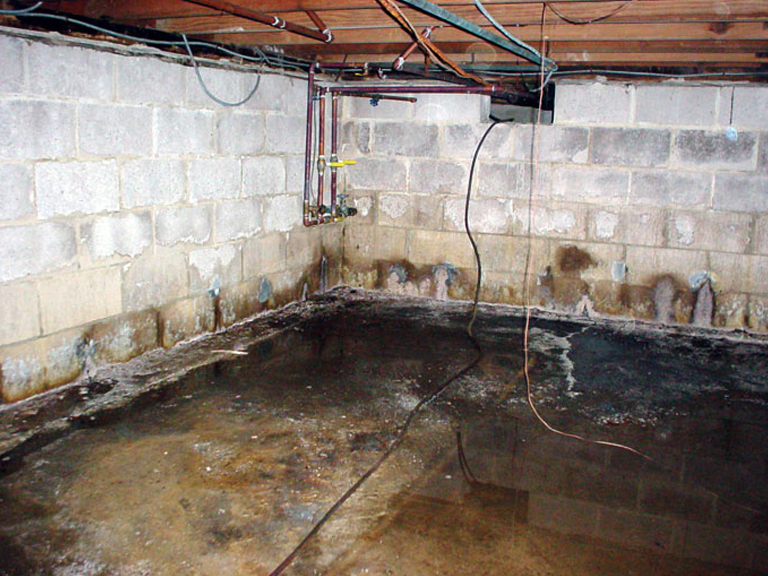
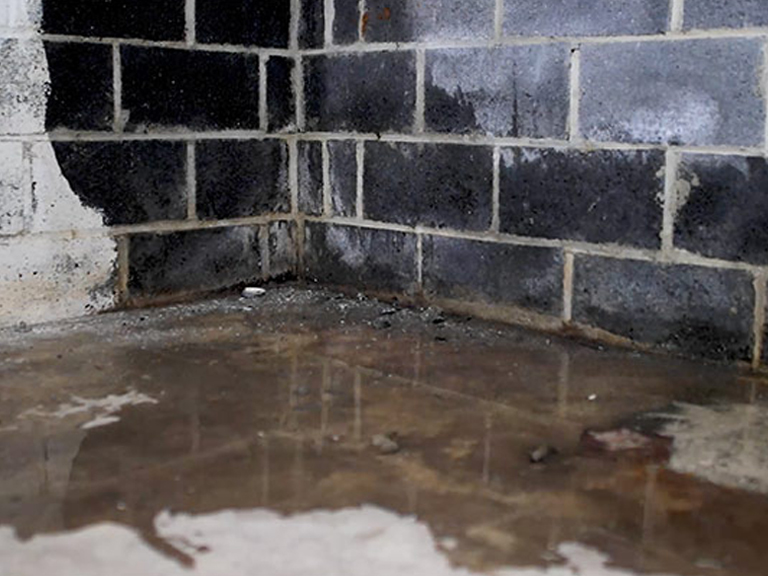
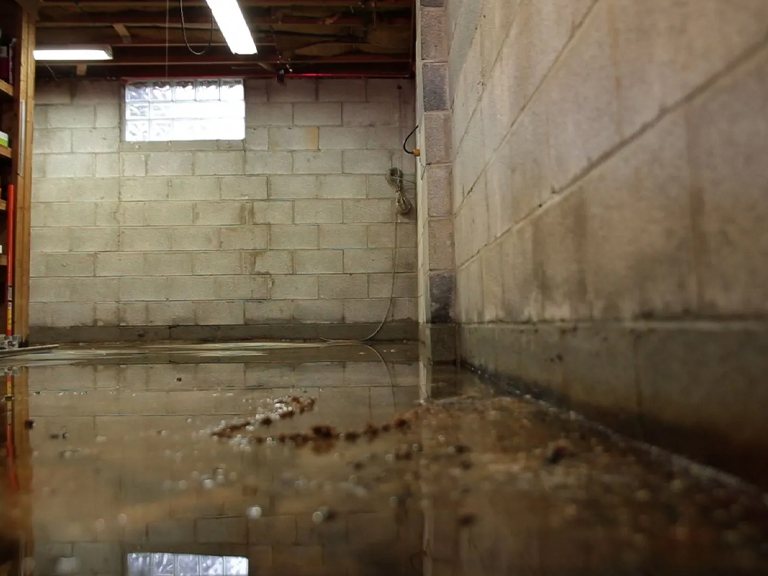
Basement waterproofing is one of the most important steps to protect your home from a leaking basement. If you've ever walked into your basement and smelled a damp, musty odour, or have seen water seepage creeping up the foundation walls, you know the feeling that comes with it. A wet basement isn't just an inconvenience, it's a warning sign that one of your biggest investments may already have a leaking basement.
That's where Dryshield Waterproofing Toronto comes in. For decades, we've been the trusted name for homeowners throughout Ontario, delivering proven solutions that keep basements dry, safe, and protected year-round.
Whether it's foundation crack repair, interior drainage systems, sump pump installation, or full exterior basement waterproofing, our team is dedicated to protecting your home for the long term.
Exterior & Interior Basement Waterproofing
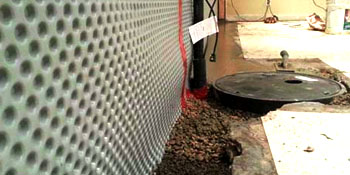
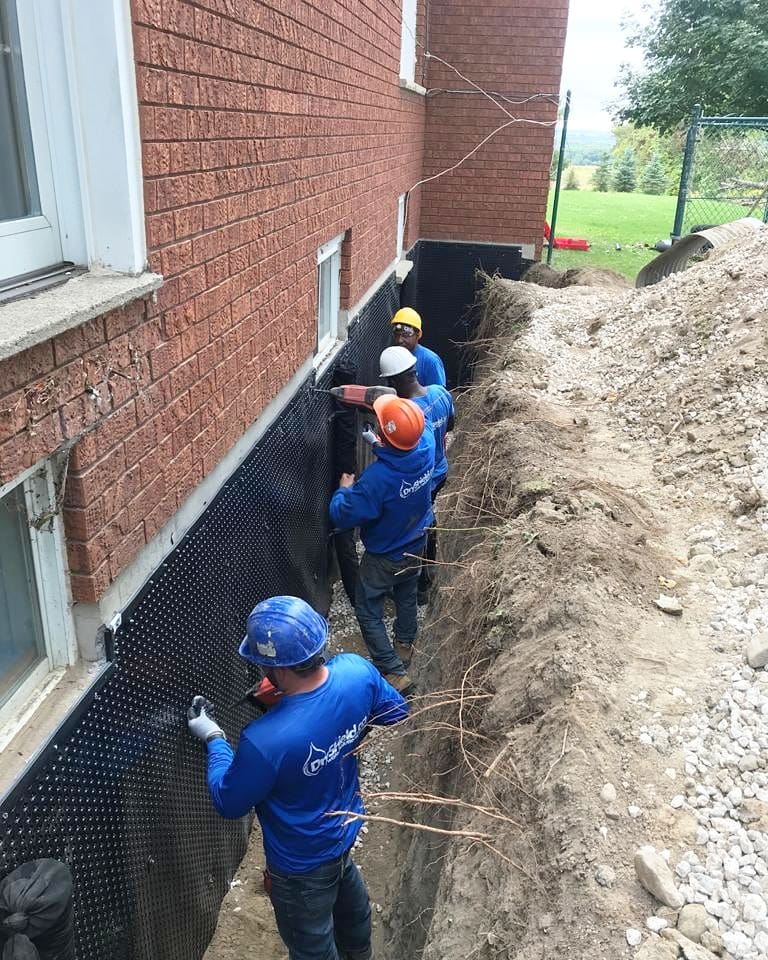
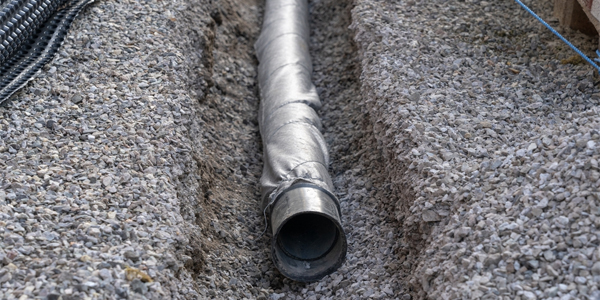
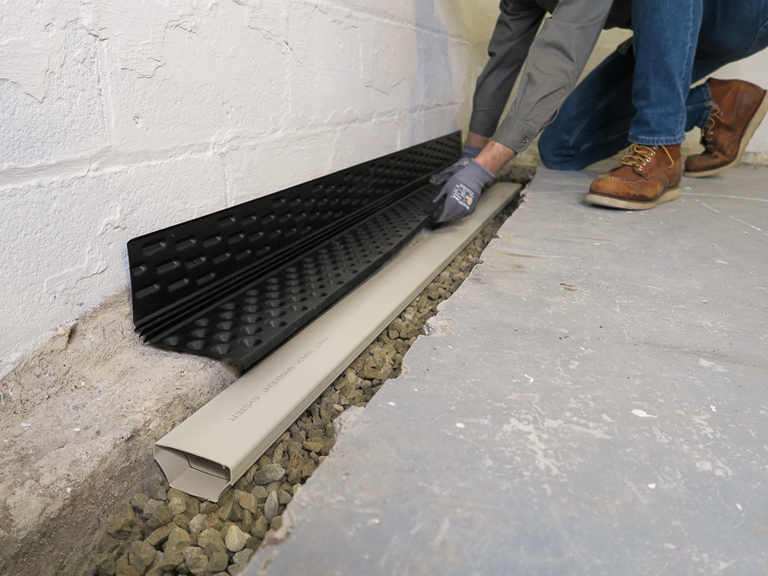
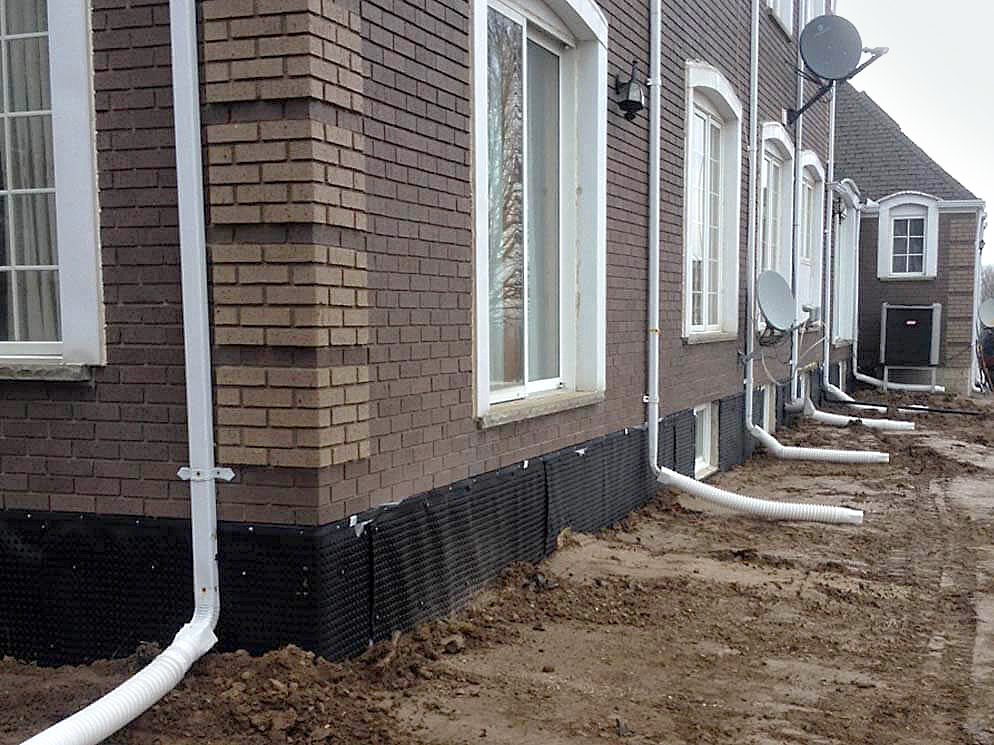
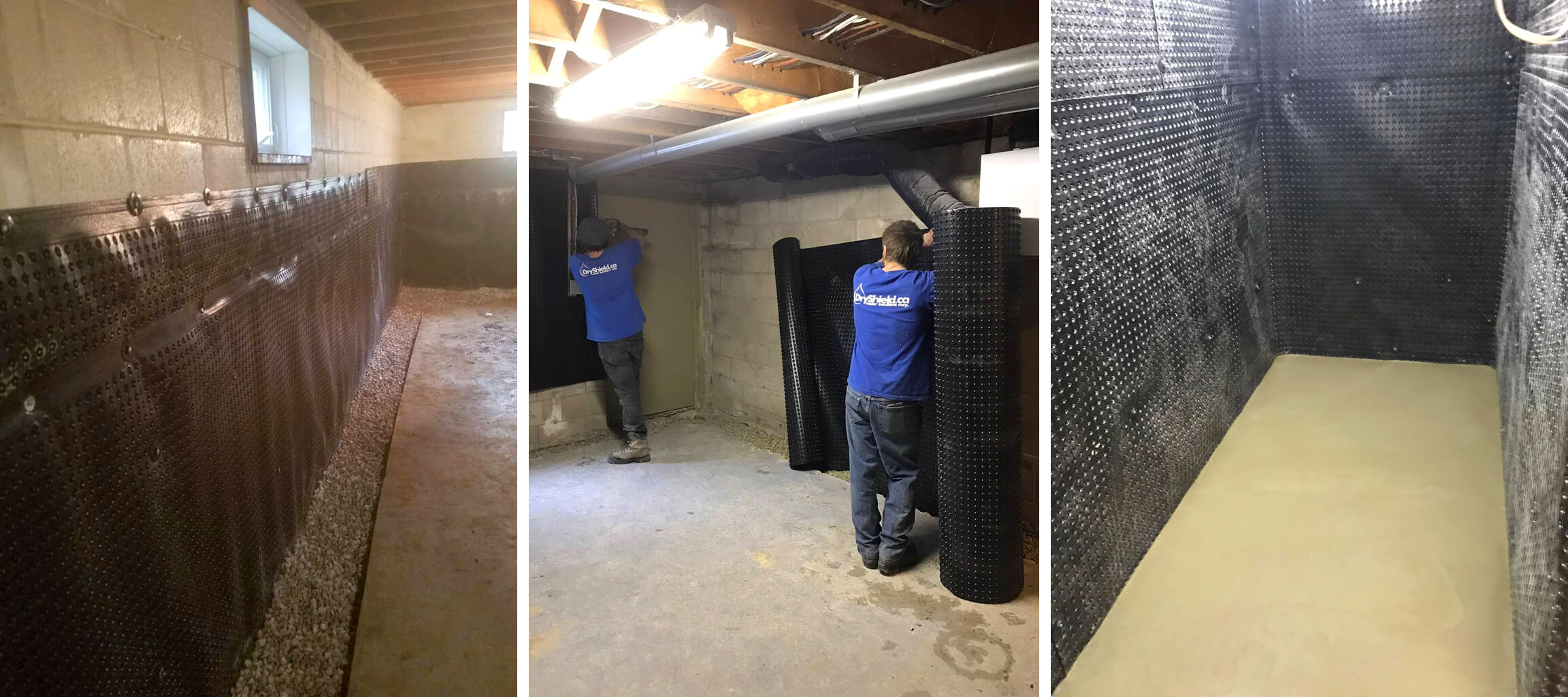
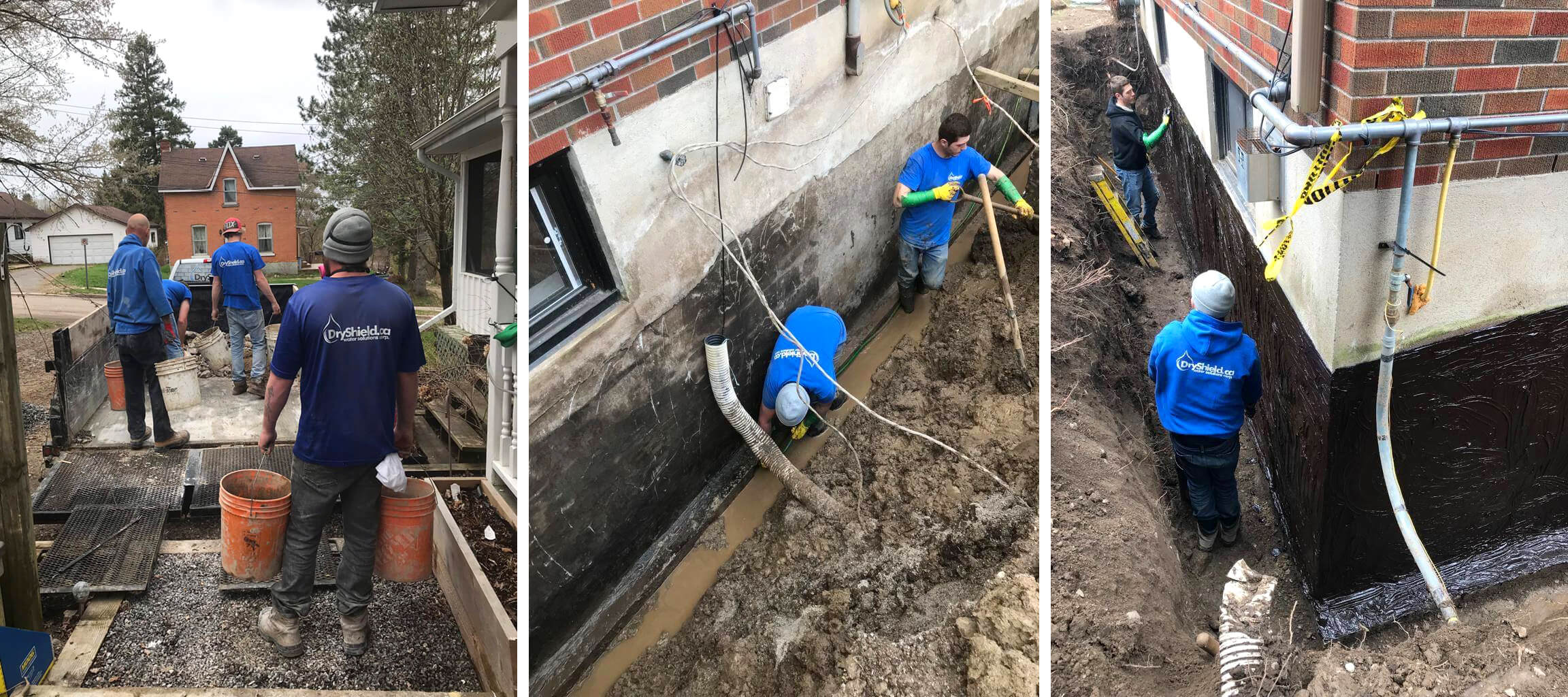
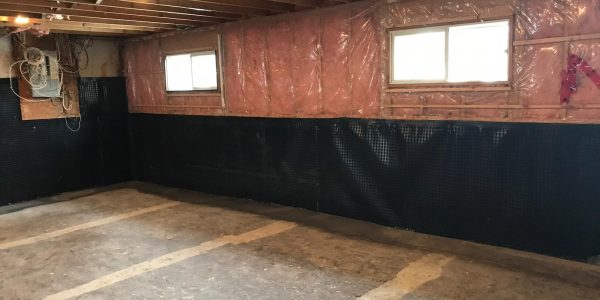
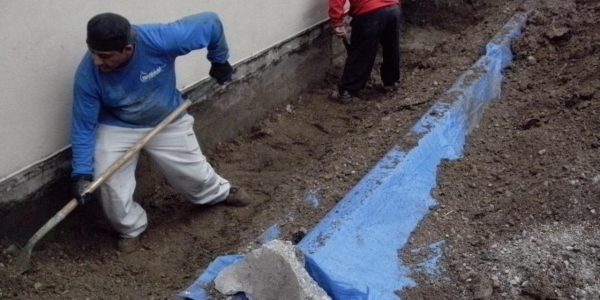
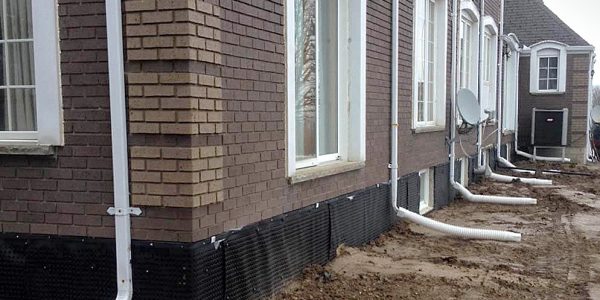
Dryshield Water Solutions Corp. https://www.dryshield.ca specializes in installing exterior waterproofing drainage systems designed to completely address foundation seepage issues. ---------------------- Hi, and welcome to Dryshield Basement Waterproofing' video on external waterproofing, and internal drainage systems. I'm going to walk you through how drainage systems function on existing foundations. The ground is excavated for installation of the foundation. Footings are poured, and foundation walls are installed. The floor is then installed on top of the footings. Originally, weeping tiles are installed at the bottom side of the footings. Typically, a damp-proof spray is applied, not a waterproof membrane, Excavated soil is then backfilled, however it is not as dense as the soil that was not excavated. When it rains or snow melts, water will find the excavated angle and travel back towards the bottom of the foundation. This is why weeping tiles are installed at the bottom side of the footings. Once the weepers clog, the water will begin to build on the outside of the foundation, causing hydrostatic pressure. Once the pressure builds, water will enter at the floor-wall joint, either from underneath or overtop of the footing. Over the past few decades , our research has allowed us to incorporate the highest level of waterproofing technologies and procedures to date. Let us show you how the external procedure is installed. The soil around the foundation is excavated. The weeping tiles are removed and the walls are cleaned. Small holes are drilled into the bottom blocks to remove any moisture in the wall. The walls and footings are coated by hand with the highest quality rubberized urethane. Polysheeting is applied, on top of the urethane, and dimple board is installed with steel brackets and a finishing strip. New weeping tiles, with a geotextile filter cloth and installed and connected to proper drainage. Three-quarter inch clear gravel is installed on top of the weepers to a minimum of one-foot depth. A geomembrane filter cloth is installed on top of the gravel. This will prevent the soil from clogging the system. Soil is then backfilled, and graded away from the foundation. With this installation, Dryshield provides a full, 25-year transferrable warranty on all external waterproofing. Depending on the situation, a more cost-effective approach can be done form the inside. The latest technologies allow for proper, internal drainage systems. The key to water seepage is drainage - regardless if done from inside or out. Our internal process involves exposing the foundation to the concrete, and in some cases, the removal of drywall studs, insulation and flooring. The conrete is then broken, from 12-14 inches from the foundation wall. A trench is dug to expose the inside of the bottom footing. Weeping tiles are then installed, and graded towards the sump-pump. Three-quarter inch, clear gravel is intalled over the weepers. A waterproof membrance is then installed over the weeping tile, extending to the top of the foundation wall. New concrete is poured over the system, flushed with the existing slab. Our team at Dryshield would like ot thank you for taking the time to watch our video. For more information, please continue reading our website (http://www.waterproofingservice.com), or call use today at 1800-277-5411.
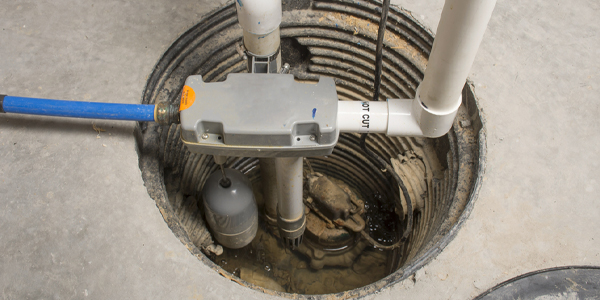
Sump Pump Basin and Sump Pump Installation: The purpose of a sump pump is to help drain water away from a foundation. The sump pump basin allows the water to collect, then the sump pump discharges the water out either
Let a wet basement trouble you no more! Living in a damp or wet basement is a serious health hazard and poses a grave danger to your home’s structural integrity. Moisture infusing through the walls and floors is a common problem
Water-related damage? French drain installations by DryShield are the best. Don’t allow problems with water to damage your land. The installation of French drains is handled with unmatched skill and dependability by DryShield Water Solutions. Using years of expertise and cutting-edge methods, our qualified experts create and install a unique French drain system that efficiently redirects water and protects your investment.
Do you have uneven concrete slabs? Is it a trip hazard? Perhaps you are afraid it is going to get worse and need replacement? Uneven or sunken concrete can cause you, or visitors to your house, to trip and fall. Not to mention how irritating it can be to have to constantly watch your step or stumble. These hazards can lead to minor, and sometimes, major injury. Concrete is a great versatile material.
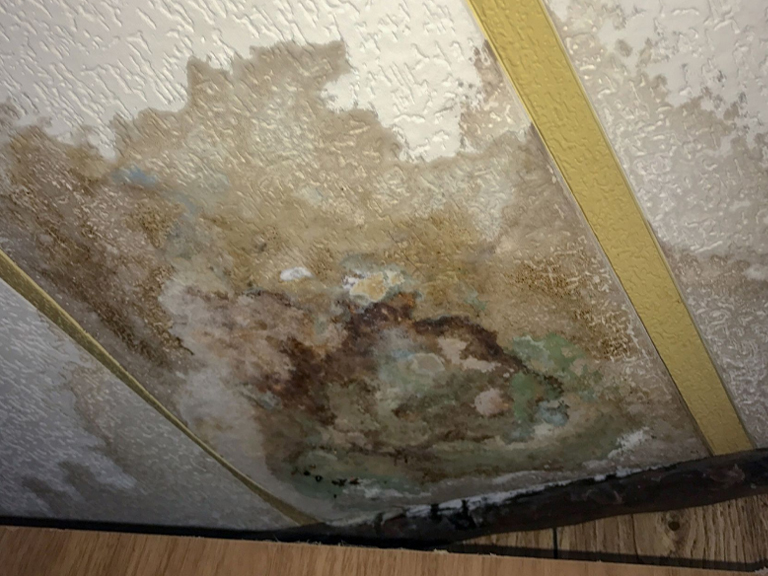
A leaky basement is arguably a pain in the neck and one thing that eats off your peace of mind. The frustration builds up even more when your basement is converted into a living space or is used as storage. The wetness and mushiness make the basement unlivable. Besides, a leaky basement is mainly prone to mold infestation and the entry of insects and un-wanted plants. Leakages in the basement usually result from water entry through the porous cracks formed on the basement walls.
Well, a leaky basement is something you must never condone and leave unattended to. There are some “Do it yourself” methods you can apply to try and fix a leaky basement, but that won’t be effective enough. There is something else to understand, and that involves looking around for a qualified basement waterproofing professional to help get things in shape.
These are the least effective methods professionals use and can also be done by themselves since they do not require skills. The paints and primes get applied directly to the interior of the basement walls. Most OF these primers and paints are usually temporary.
Conclusion.
Basement leaks can become a nuisance if action is not taken to fix them during the early stages. Besides, the leaks can become costly when the damages caused are extensive. Therefore, once you notice your basement is getting leaky, you need to make that call. The perfect person to give a call is a qualified and reputable professional.
DryShieldoffers the best basement waterproofing services that will salvage you from frustrations. Our services are excellent and top-notch, which will make your basement secure for the longest time possible. Give us a call at 1-800-277-5411 or check out our website, dryshield.ca.
If you have a damp, leaky basement, you might be already wondering about the basement waterproofing cost. So, let’s look in detail, how much does waterproofing of the basement cost. But before we dig any deep, the average cost can be anything around $500 to $10,000. Now, you would ask why so much variation. Here’s an explanation.
How to estimate the basement waterproofing cost?
To answer this question, first, you need to figure out what the problem is behind the water leakage. Some of the reasons could be:
Some of these problems are difficult to find out. Therefore, it is best to get a professional inspection done of your house to understand the actual cause of the leaky basement.
Now, you know about the problem, so you can go ahead and understand the best-suited solution to know about the waterproofing cost. The solutions that include vary from repairing foundation crack to the installation of sump pump and dehumidifiers. So, actually, the cost will vary as per the basic problem related to the waterproofing.
To get a better idea and a quote for your basement waterproofing, you can contact us today!
A wet or leaky basement often comes with several after-effects such as mold and mildew. So, today, let’s take a look at a few tips to deal with these water damages in your house till you get your wet basement repair done.
Control Indoor Moisture
It gets difficult to control moisture levels especially in cases of a leaky basement. But still, you can try to keep the moisture away by installing a sump pump and dehumidifier to get rid of all the accumulated moisture and humidity.
You should also make sure that the area is properly ventilated. Also, try if you can install window fans to get proper ventilation especially in case of basements.
Clean Visible Mold
If the atmosphere is damp in your house, there’s a possibility of mold growing on the surface. If you come across such mold and mildew growth, clean them immediately. You can also make use of bleach and water mixture to clean the mold.
Get Repair Done
If you are witnessing water damage signs, then it means you have a leakage problem in your house or that specific area. So, get a professional inspection done and contact wet basement repair services to correct the underlying problems.
Prevent Causes of Water Damage
There are several preventive measures that you can take for avoiding basement leakage. Learn about those measures and make sure you implement them to get a dry and healthy atmosphere in your basement and house.
A wet or leaky basement can result in musty smells over a period of time. Just getting the basement leak repair isn’t enough as the smell still stays behind. So, let’s a look at how to eliminate these musty smells from your basement areas.
Mold is a very common outcome of a leaking basement, which is also the main cause of the damp smell. So, the best way is to throw out everything with molds such as books, rugs, chipboards, old clothes, carpets, papers, etc.
Vacuum the area and use sandpaper to get rid of the mold that is deeply penetrated in the wooden area. Vacuuming will also help in getting rid of pathogens, mold spores, and allergens to eliminate the musty smell.
Opening windows and ventilation will help with getting rid of the smell caused by the wet and leaking basement. You can also make use of a dehumidifier to keep the basement dry and avoiding accumulating any damp smell.
Installing window fans for circulating the stagnant air will help with the elimination. It will also help with ventilation and moving air in and out of the window. This will replace the stagnant air with the fresh one.
Make sure that you look for basement leak repair services to take care of the cracks in your foundation. As with a leaky basement, the musty smell will always return irrespective of how hard you try to get rid of it.
Wet basements are like nightmares for the homeowners. To keep these nightmares from turning into reality, you need to be aware of the top three basement waterproofing methods. So, let’s talk about them here.
Interiors
You need to start somewhere, and the best is from somewhere you can see the problem. So, it’s interior waterproofing. You can use methods like using sealants and coatings for the faint cracks to keep the basement dry and away from leakage. The sump pump also helps to keep the condensation away.
Exteriors
The actual problem of leakage originates from the exterior. So, it’s important to pay special attention to the exterior waterproofing Toronto methods. Your goal should be to block the water from entering your basement in the first place. Some of the methods may include maintaining the drainage systems, coating the exterior walls, and external basement waterproofing for cracks and major problems. The best way to tackle this is by calling the exterior waterproofing Toronto services for an expert’s opinion.
Drainage
Lastly, you can look for the drainage systems as they are one of the topmost reasons for basement leakages. You can start by checking for any faulty drainage system and maintaining it. You can also go ahead and add an extra drainage system if the one you have isn’t working properly or needs assistance.
Being this said, each situation is different that needs different waterproofing methods. So, let us do the difficult part, and you can do the easy one by just giving us a call.
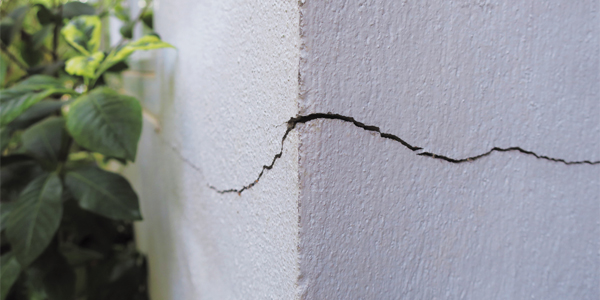
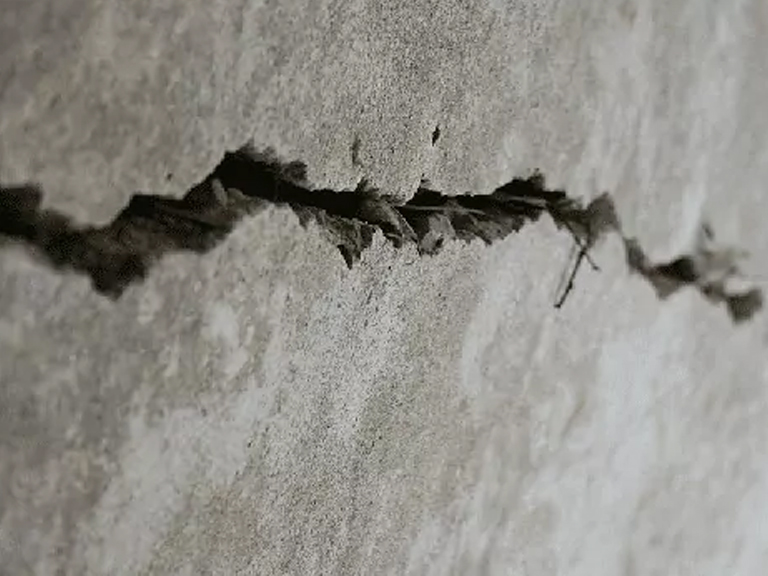
A crack in foundation may indicate a serious problem with structural integrity. But there’s no need to start panicking about it as soon as you find one. A crack doesn’t always mean a major problem; it can simply be a small one that can be fixed at home without approaching foundation crack repair services. So, today, let’s talk about different cracks you might find in the foundation, and how you need to deal with them.
Hairline Cracks Are the Easiest One to Fix
These tiny cracks start appearing as early as a year from the construction. So, if you come across them, do not fret. These are due to create shrinking or settling of the foundation as it cures. You can simply cover these hairline cracks with a coat of masonry paint.
Narrow Cracks Should Be Monitored
If you notice a new crack in foundation that is wider than the hairline but still a narrow one, then its time to put your observational skills into test. Make sure to mark these cracks and observe them regularly to check if they are expanding. If it isn’t expanding or seeping moisture in the basement, then there’s nothing to worry and a simple fix of filling it with grout is enough.
Wide Cracks Need Immediate Attention
One does not need to tell you that wide cracks do call for immediate attention, especially if they seep water through it. The best way to deal with these cracks is to call for foundation crack repair services. Their professional outlook and experience in this matter will help in understanding the cause of the crack and rectifying the issue from the source.
These are some simple pointers for you to look out for the foundation cracks and keep the structural integrity of your home intact. Let us know what you think about the foundation cracks, and we will be happy to help you.
It becomes imperative to waterproof your house for longevity and healthy integrity. Without interior waterproofing, the structure may give up – thanks to water and foundation leakage. So, today, we will check some dos and don’ts when it comes to doing-it-yourself the internal basement waterproofing.
Do determine the source of water…
This is the first step in waterproofing. Whether you do it on your own or call for professional help, determining the source of the leakage is your fist task for better waterproofing results. Look around the corners of the windows, along with the streaks of cracks, between the mortar joints, near the entry or exit points of the pipes, etc. If there is water leakage, there should be a water source nearby.
Now that you have determined the source of the water for your leakage problem, don’t be impatient to repair it at the first chance. You need to follow a certain procedure for ensuring that the problem doesn’t arise again. To do the things properly, remove all the standing water before you start with the repair work.
Do use hydraulic cement for filling cracks…
When you find the cracks, the best DIY procedure is to fill them up by using the hydraulic cement. This type of cement contains additives that expand when cooled, which means the crack will be filled properly without any problems. However, make sure that you use the mixture within three minutes for proper interior waterproofing.
Don’t apply a sealer over paint…
If you have found the basement leakage problem and are planning to fix it, then make sure that the area is paint-free. If the walls have cracks, and you are planning to address them, then remove the coating of paint before applying sealers for internal basement waterproofing.
Basement leakages have been a common problem with most of the building structures. And the best solution for this problem is by fixing the underlying issue. You can know about the reason behind the leaky basement by asking professional basement leak repair contractors to thoroughly inspect the area. Once, you know the cause, you can go ahead with the solution. So, here are the most common strategies for keeping water out of the basement area.
Adding Gutter Extensions
The most common reason for basement leak repair is the water seeping through the walls and concrete foundation of the house. Therefore, the best way out is to avoid any water near the area or seal them properly as much as you can. Adding gutter extensions is simply one way to avoid dumping extra water near the foundation. If the downspouts are anywhere less than five feet from your home, then add extensions to dump the water away.
Plug Gaps
If the water is creeping in the walls because of plumbing pipes, then plug gaps is the best solution. Water dribbling in the basement via gaps and cracks around the pipe can be blocked using hydraulic cement. However, this method can only come handy if the problem is related to a single hole or small crack. And another downside of this method is that it is just a temporary solution.
Check for the Landscape
If you have added the extensions and eliminated any chances of water seeping through holes or cracks in the foundation wall, then the reason for leaky basement could be the slope of the ground. Normally, the house should sit at a heightened place with a slope with at least 6 inches over the space of 10 feet in all directions. But if the water isn’t draining away from the house can cause them to seep in the ground and cause a problem of leakage.
Wet basement aren’t an uncommon scenario. Nearly, every family with a basement might have faced this problem at some point in time in their life. Still, people are unsure and unaware of this common yet serious problem. So, today we will talk about the common causes that can lead to the problem of basement moisture and all other related issues.
Before digging into the causes of the basement moisture, first, let us check the common signs that indicate this problem. So here are some very common signs and symptoms that indicate the trouble with your basement waterproofing.
Water trickling from the walls
Condensation on the floor or walls
Blistering or stained walls
The saturated base of walls
Damp, humid air in the basement
Deteriorating of wood or carpet
Mold or mildew odor
If you see any of these signs, it’s time for you to get a professional inspection done and get some advice regarding your waterproofing of the basement.
The common sources that can cause wet basement problems are rainwater or groundwater, interior moisture source, and ventilation with outside humid air. These three are the most common sources and can cause many scenarios that can ultimately lead to the problem of basement moisture. So, here are the common causes:
Interior water leakage
Ineffective or poor grading of the foundation
Defective or missing downspouts and gutters
Foundation cracks
The poor drain tile or missing tile
Basement condensation
These are the most common wet basements Toronto causes. The only way to rectify this problem is by seeking professional help and getting waterproofing services. The best way to do that is by consulting a professional firm and asking for an inspection. Once the reason behind the problem is clear after a thorough inspection, the professional team can suggest a solution to rectify the situation. So, if you come across any signs of basement moisture, don’t wait till the problem gets worse, contact a professional team right away.
Basement leakage is a common occurrence nowadays. However, the occurrence should not be left unaddressed and ignored as it could lead to undesirable situations such as mould and mildew growth, mosquito infestation, musty smell in the room, etc. It is vital to address the issue promptly or it could cause critical damage to goods and house foundation.
Constant exposure to water could undermine the structure and cause damage to goods. Furthermore, constant exposure to water could cause damage to the strength of the foundation. Some of the common causes of water leakage in basement are improper drainage system, leaking basement wall cracks, leaking window well, inadequate landscaping, broken pipes, clogged gutters, downspouts not positioned appropriately away from the building, sewage backup, etc. In some cases, the gutters above the roof facilitate the water come down to the basement rather than averting it from getting within.
Effective method to avert water seepage in the basement
Basement waterproofing is helpful in averting water from leaking into the basement and causing damage to wood, walls and house foundation. There’re two methods to conduct basement waterproofing. The methods are internal basement waterproofing and external basement waterproofing. The sort of waterproofing technique that a basement needs depends upon the state and the level/intensity of the damage. One more aspect deciding the sort of waterproofing technique to be utilized is if the source/cause of water damage is internal or external. Information about the techniques are provided below.
Internal basement waterproofing
Internal or interior waterproofing is also known as water control solution for the reason that it does not ceases the water from going into the basement walls. However, it manages the course/flow of water once it has gone into the walls. This method is helpful in preventing water accumulation in the basement through a interior drainage system. Furthermore, in this method, weeping tiles are installed to route the water from the basement to sump pump.
External basement waterproofing
Exterior or external waterproofing is also known as positive side waterproofing as it deals with the hydrostatic pressure and ceases the water from going into the basement. The technique requires excavation around the house in order to install an appropriate drainage system. Polymers and membranes are utilized in the technique.
Furthermore, it is good and convenient option to hire a professional basement waterproofing Toronto company. Our technicians determine the situation and identify the actual cause(s) of the issue. They inspect the basement along with additional parts of the property that might need waterproofing. Also, they determine the issue, its actual cause(s) and provide homeowners with some effectual techniques to deal with the situation. Furthermore, they recommend the appropriate basement waterproofing technique that goes well with the property. Moreover, they utilize several tools and equipments that are helpful in speeding up the repairing procedure.
Water leakage in basement is a common incidence nowadays. The incidence is common; though it could lead to undesired situations like mosquito infestation, mould and mildew growth, etc. In case the situation is left untreated and unaddressed, it could cause damage to the appliances, goods and things kept in the room. Constant water leakage could damage the property.
Some of the common causes of water leakage in basement are clogged gutters, leaking basement wall crack(s), downspouts not positioned appropriately away from the building, broken sump pump, inadequate landscaping, broken pipe(s), downspouts not extended, sewage backup in basement, leaking pipe(s), clogged drain tile system, window well not draining, gutters above the roof assisting the water go down to the basement rather than averting it from getting within, inadequate roof drainage, broken pipe(s), frozen pipe(s), etc.
One of the efficient ways to avert the situation from occurring is basement waterproofing. Furthermore, there’re two techniques to conduct basement waterproofing. The techniques are internal basement waterproofing and external basement waterproofing. Info regarding the processes is given subsequently.
Internal waterproofing
Internal waterproofing is also known as water control solution as it does not ceases the water from going into the basement walls. Alternatively, it administers the flow of water once it has gone into the walls. Furthermore, in this process, weeping tiles are installed so as to route the water from the basement towards sump pump.
External waterproofing
External or exterior waterproofing is also known as positive side waterproofing as it takes care of the hydro static pressure as well as ceases the water from going into the basement. The process initiates by excavating the ground surrounding the building. Also, in this process, membranes or polymers are utilized so as to waterproof the basement walls. Furthermore, in this method, drains and gutters are installed exteriorly (outside the basement).
In the situation of water seepage in basement, it’s a good option to contact a professional waterproofing Toronto company. We’ve a team of skilled, experienced and knowledgeable technicians. They carry out full basement inspection in order to determine the issue and its actual cause(s). After inspection, they suggest the most effective and appropriate solution to deal with the issue. They utilize various equipments that are helpful in speeding up the repairing process. In situation of water coming through crack in basement wall, our technicians inject epoxy or polyurethane foam into the crack to seal it. It’s a good option to hire a professional Toronto waterproofing company for the reason that they’ve the required experience, expertise and tools to efficiently carry out the repairing process.
More Info Visit www.dryshield.ca
A common misunderstanding is that basements are safer from water damage in the winter due to less rain and humidity. Unfortunately, this is not the case, winter poses just as much of a threat on your basement, if not more, than the summer.
Eavestroughs and downspouts are well designed to carry rainwater away from your roof and home. Specifically. They aren’t always built or designed with Ontario winter’s and heavy snowfalls in mind. Especially here in the GTHA where gallons of water can accumulate from heavy snowfall which will weigh down your eavestrough and lead to heavy leaking when the snow begins to melt. If your eavestroughs are not reinforced or positioned properly to carry the water far enough away from your house it can lead to a very wet basement.
The same rules go for heaps of snow built up around the foundation of your house and window wells. Shovelling snow off to the side of your driveway to make way for your car can cause big trouble once the snow begins to melt. That water will need somewhere to go, and your basement may be the perfect landlord.
Additionally to what is going on outside – in the winter we tend to drastically increase the temperature of our homes. Basements, being colder by nature, tend to get the benefit of a ‘cranked’ thermostat for more comfort. This increased temperature not only heats the air in the room, it carries through the walls and even into the foundation. This warmth will actually attract the snow and ice outside into the heat, and into your basement.
It is always best practice to clear snow away from the house. From driveways, pathways and back porches, etc. From window sills, window wells and if you have access in the winter, eavestroughs and ledges around your roof and home.
Most modern homes, due to City of Toronto or other municipality building codes, have moisture barriers. But if your home is older, which Toronto is home to many, you may not have all the protection your basement needs. If you have the misfortune of already finding moisture build up in your basement, or if you are unsure of your home’s moisture barriers, call a wet basement expert today. Dryshield Waterproofing has over 25 years of industry experience offering the highest standard in waterproofing technology, methods and materials for your interior & exterior waterproofing, concrete injection-sealing and foundation crack repair.
It becomes imperative to waterproof your house for longevity and healthy integrity. Without interior waterproofing, the structure may give up – thanks to water and foundation leakage.
Basement leakages have been a common problem with most of the building structures. And the best solution for this problem is by fixing the underlying issue.