By Dryshield Basement Waterproofing · 25+ years of foundation crack repair experience in cottage country · Updated 2026
On this page
- What freeze-thaw is and how it cracks a foundation
- Frost heave vs. lateral frost pressure
- Why seasonal and unheated cottages crack more
- Types of freeze-thaw foundation cracks
- Is it freeze-thaw or a structural problem?
- Frost depth and ground across cottage country
- When crack injection is the right fix
- How to prevent freeze-thaw cracks
- Frequently asked questions
If you own a cottage in Muskoka, Haliburton, Grey County or along Georgian Bay, you’ve probably noticed that foundation cracks appear faster here than at a year-round home in the city. It isn’t your imagination, and it isn’t poor construction — it’s the climate. Cold-country winters and the way an unheated building behaves combine to put more stress on a foundation than a heated, occupied home ever sees. This guide explains exactly why that happens, the kinds of cracks it produces, and how each is fixed.
Key Takeaways
- Water expands roughly 9% when it freezes; in a foundation crack or the soil against the wall, that expansion pries cracks wider every freeze-thaw cycle.
- Unheated cottages cycle through more freeze-thaw than heated homes, so they crack faster — the off-season is when most of the damage happens.
- Most freeze-thaw cracks in poured concrete are non-structural and permanently sealable with injection from inside, with no excavation.
- Horizontal cracks and inward-bowing walls signal soil and frost pressure and need a structural assessment, not just a seal.
- Sealing a crack before winter is far cheaper than letting freeze-thaw widen it into a leaking — or moving — wall.
What freeze-thaw is and how it cracks a foundation
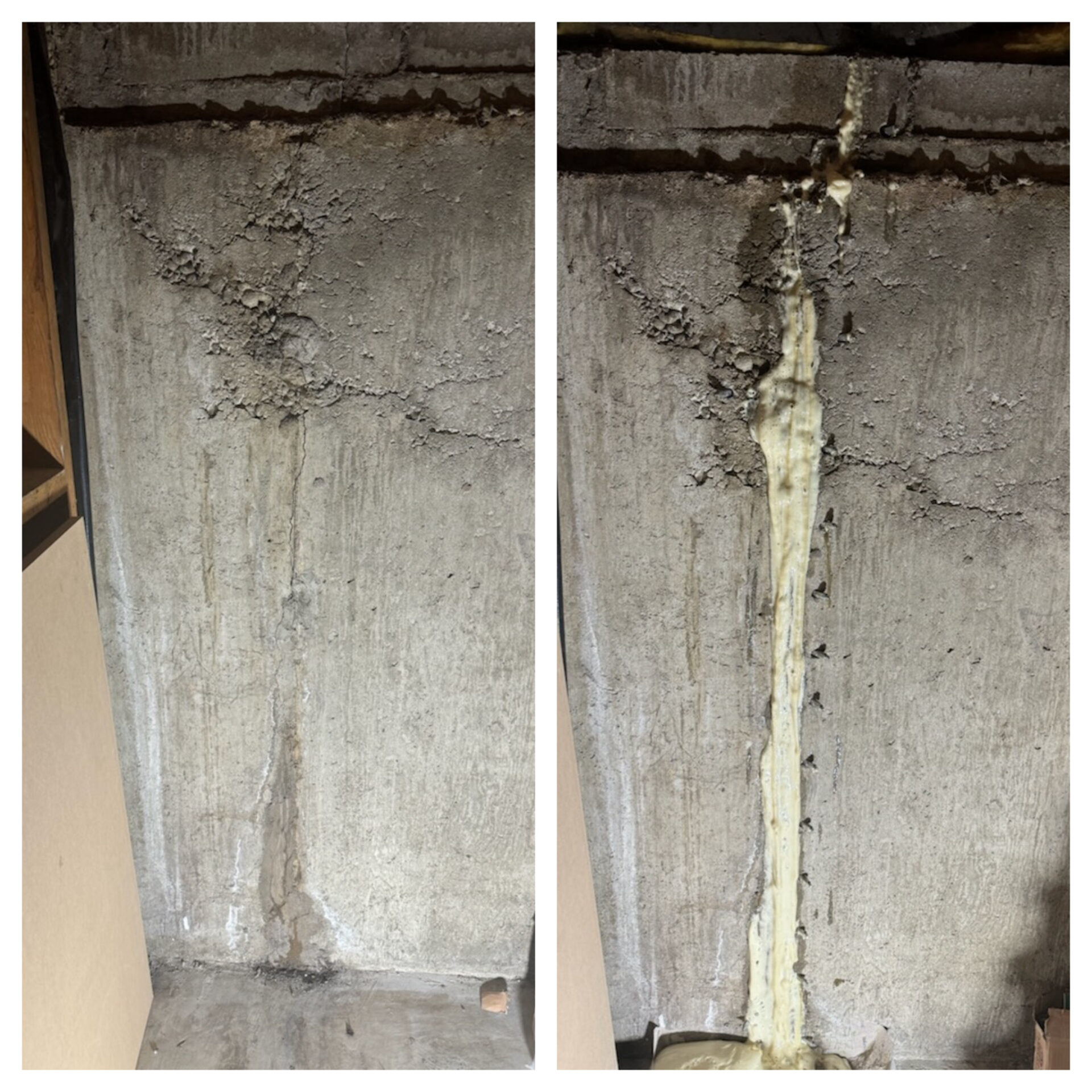
Freeze-thaw is the repeated freezing and thawing of water in the ground and in concrete. The mechanism is simple physics: water expands by about 9% when it turns to ice. When that water is trapped in a hairline foundation crack, a cold joint, or the saturated soil pressing against a basement wall, freezing forces everything apart. Then it thaws, water moves back in, and the next cold snap repeats the process. Across a single cottage-country winter — which delivers many freeze-thaw cycles, not one long freeze — that ratcheting action pries existing cracks wider and opens new ones.
Frost heave vs. lateral frost pressure
Two distinct forces do the damage, and they leave different signatures. Frost heave is vertical: when saturated soil beneath or beside a footing freezes, it swells and lifts, shifting the foundation and opening vertical and diagonal cracks as different parts of the wall move at different rates. It’s most aggressive under shallow footings, porches, steps, and additions. Lateral frost pressure is horizontal: frozen soil against the wall expands inward and pushes on it, which is what produces horizontal cracks and, in severe cases, an inward bow. Frost heave cracks are common and usually non-structural; lateral-pressure cracking is the one to take seriously, because it means the wall itself is under load.
Why seasonal and unheated cottages crack more
A heated, occupied home keeps its basement and the soil immediately around the foundation relatively warm, which buffers the freeze-thaw swing. A closed-up cottage has no such buffer. With no interior heat, the foundation walls and surrounding soil freeze deeper and stay frozen, then thaw and refreeze with every swing in temperature — so an unheated foundation simply experiences more cycles, and more severe ones, than a heated one. That’s the core reason seasonal homes crack faster. It compounds with two other cottage realities: many cottages sit on lots that drain poorly (granite that sheds water, or clay that holds it), keeping more water against the foundation to freeze; and no one is there to notice the first hairline crack, so it gets several winters of freeze-thaw before anyone sees it. For the full seasonal routine that prevents this, see our cottage foundation protection guide.
Types of freeze-thaw foundation cracks
| Crack type | What it looks like | Likely cause | Usual fix |
|---|---|---|---|
| Vertical / diagonal | Mostly straight, often from a corner or window | Settlement and shrinkage, widened by freeze-thaw | Polyurethane or epoxy injection |
| Floor-to-wall joint (cold joint) | Seepage along the base of the wall | Hydrostatic pressure and frost at the joint | Injection or interior drainage |
| Horizontal | Runs across the wall, sometimes with inward bow | Lateral frost and soil pressure — structural | Structural assessment; reinforcement |
| Stair-step (block) | Follows the mortar joints in block or stone | Movement and frost in block/fieldstone walls | Repair plus drainage or membrane |
For a deeper breakdown of how poured concrete cracks differently than block, see our guide on foundation crack science.
Is it freeze-thaw or a structural problem?
Most freeze-thaw cracks are cosmetic-plus-leak problems, not structural ones — but a few signs mean you should stop and get an assessment before sealing anything. Treat a crack as potentially structural if it is horizontal and runs a long way across the wall, if the wall is bowing inward, if a crack is wider than about 6 mm (a quarter inch) or wider at one end, or if it’s offset so one side of the wall has shifted relative to the other. Vertical and diagonal hairlines that leak but don’t show movement are the everyday freeze-thaw cracks that injection handles permanently. When in doubt, our guide on how to tell if a crack is structural walks through it, and a free inspection settles it.
Frost depth and ground across cottage country
Frost reaches deeper in cottage country than in the milder, snow-insulated city, and what the frost acts on changes by region:
| Region | Ground | Why cracks form |
|---|---|---|
| Muskoka, Haliburton, Minden | Granite bedrock of the Canadian Shield, thin soils | Water can’t soak in; it pools against foundations and freezes there, plus heave under shallow footings on rock |
| Grey County & Collingwood | Clay loam over limestone, high water table | Clay holds water and heaves hard when it freezes; heavy lake-effect snow loads the soil with meltwater |
| Georgian Bay shore & Owen Sound | Mixed soils near a high lake water table | Saturated soil against the wall freezes and expands; spring melt raises the water table fast |
We repair freeze-thaw cracks throughout these areas — see our location pages for Muskoka, Haliburton, Minden, Collingwood, Owen Sound and Markdale.
When is crack injection the right fix?
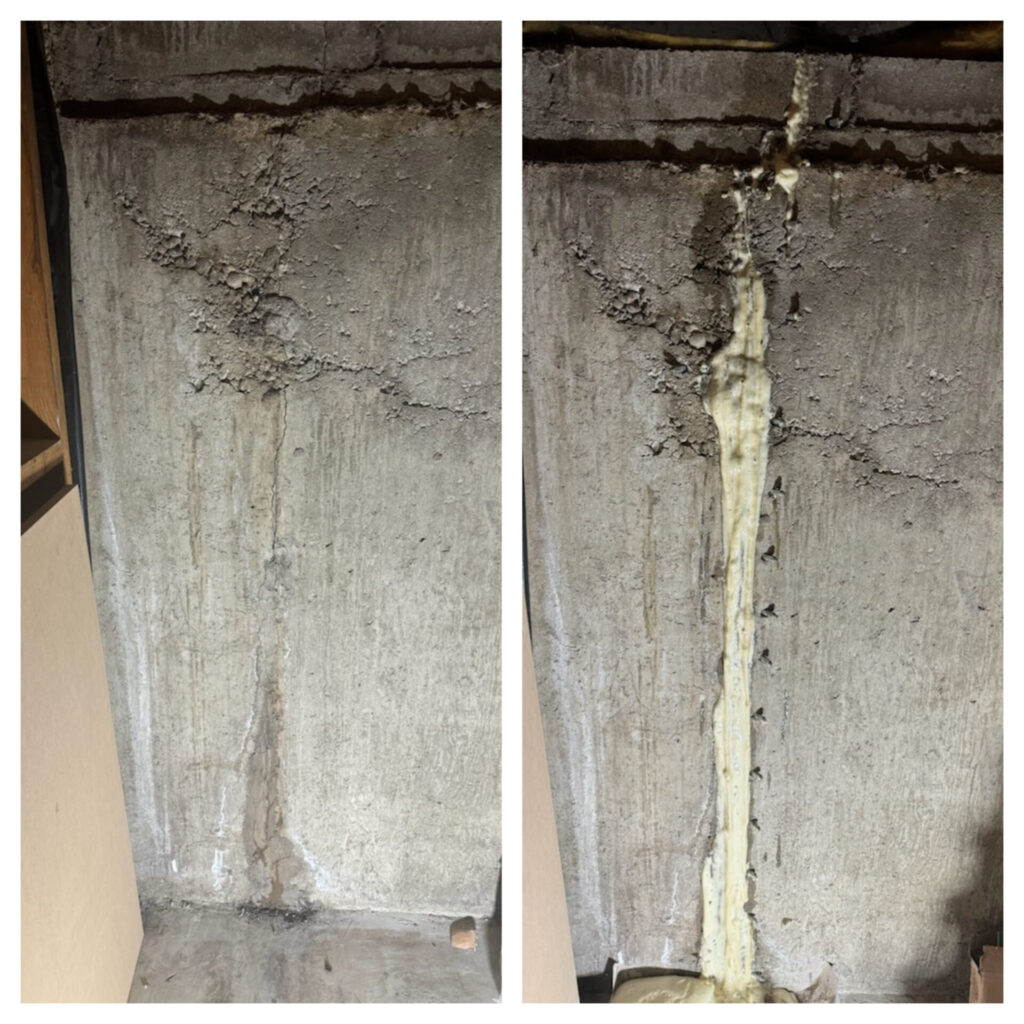
For the non-structural cracks that make up the large majority of freeze-thaw damage in poured-concrete foundations, injection is the permanent fix and it’s done from inside in one to two hours per crack. Polyurethane is a flexible resin that expands on contact with moisture to seal an actively leaking crack; epoxy is a rigid resin that structurally re-bonds a dry, dormant crack to full strength. Injection is not the answer for everything: a horizontal crack with inward bowing points to soil pressure and needs a structural assessment and often reinforcement, and badly deteriorated block or fieldstone walls usually need interior drainage or an exterior membrane rather than injection alone. For the full decision tree, read when crack injection works versus full waterproofing, or jump to our crack injection, polyurethane injection and epoxy injection service pages.
How to prevent freeze-thaw cracks at a cottage
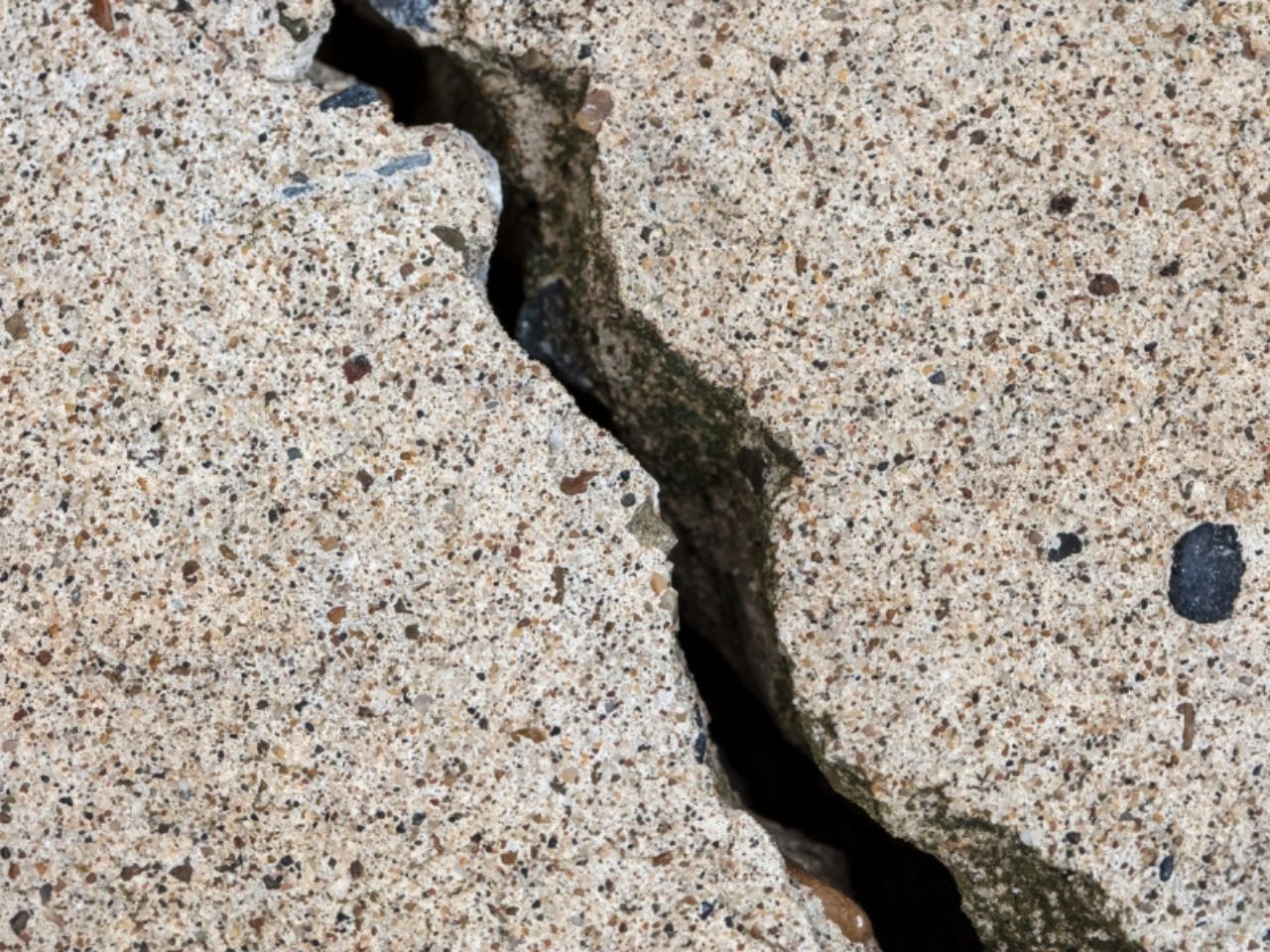
You can’t change the climate, but you can remove the water that frost acts on. Keep roof water away with clean gutters and extended downspouts; grade soil to slope away from the foundation; cover window wells; and make sure a perimeter drainage system is carrying groundwater to a sump rather than letting it sit against the wall. Most important: seal any crack that already exists before the next freeze — an open crack is the entry point freeze-thaw exploits, and closing it stops the cycle of widening. A hardware-store sealer brushed over a moving crack typically fails by the next spring; a proper injection is permanent and warrantied.
Frequently Asked Questions
Why do foundation cracks get worse in winter?
Water trapped in the crack and the surrounding soil freezes and expands about 9%, prying the crack wider; it then thaws and refreezes repeatedly through the season. Each cycle makes the crack a little bigger, which is why a hairline in fall can be a leak by spring.
Are freeze-thaw cracks dangerous?
Most vertical and diagonal cracks in poured concrete are non-structural — they leak but don’t threaten the building, and injection seals them permanently. Horizontal cracks, or any crack with an inward bow in the wall, indicate soil and frost pressure and should be assessed structurally.
Can a crack be injected in winter at an unheated cottage?
In most cases, yes — interior injection is done inside the wall, so it can be performed year-round. We assess each cottage’s conditions; exterior work waits for the ground to thaw.
Should I wait to see if a foundation crack gets worse before fixing it?
No. Waiting just gives freeze-thaw another winter to widen it, turning a quick, inexpensive injection into a bigger repair. The cheapest time to seal a crack is the first season you notice it.
Will the same crack come back after injection?
A properly injected crack is filled through the full wall thickness and bonds permanently, and we back our injection with a lifetime transferable warranty. New cracks can form elsewhere if the underlying water and drainage issues aren’t addressed, which is why we look at drainage too.
My cottage is on granite — why is it still cracking?
Bedrock doesn’t absorb water, so meltwater runs across the rock and collects against the foundation, where it freezes and applies pressure. The fix emphasizes drainage and directing water away, combined with sealing the cracks themselves.
Is polyurethane or epoxy better for a freeze-thaw crack?
Polyurethane for an actively leaking crack, because it stays flexible and expands to seal against moisture and slight movement; epoxy for a dry, dormant crack where re-bonding the concrete to full strength matters. We choose based on the crack’s condition.
Can I seal a freeze-thaw crack myself with a DIY kit?
A surface sealer or hardware-store kit applied over a crack that still moves with freeze-thaw typically fails within a season. Professional injection fills the full depth of the wall and stays sealed, which is why it carries a warranty and a DIY patch doesn’t.
How much does freeze-thaw crack repair cost?
Most foundation crack injections run $650 to $1,000 per crack, depending on length, access, and whether reinforcement is needed. We give an exact written quote after a free inspection.
Do you repair cracks in cottages across Muskoka and Grey County?
Yes — we work throughout Muskoka, Haliburton, Minden, Grey County, Collingwood, Owen Sound and the surrounding cottage country, year-round for interior injection.
Related guides
- Closing & opening your cottage: seasonal foundation protection
- Sump pumps for seasonal & unoccupied cottages
- How to tell if a foundation crack is structural
Got a crack before the freeze? Book a free inspection and Dryshield Basement Waterproofing will assess and seal it across Muskoka, Haliburton, Grey County and Georgian Bay before winter makes it worse. Call 1-800-277-5411 or request a quote online.