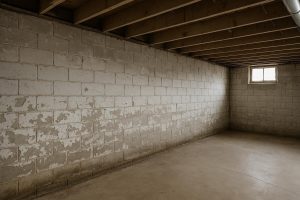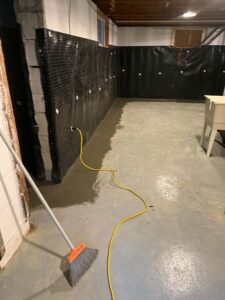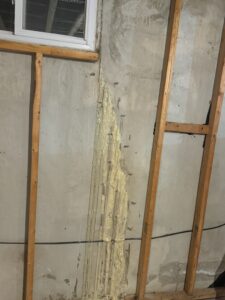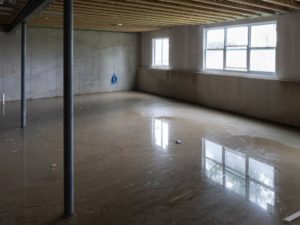
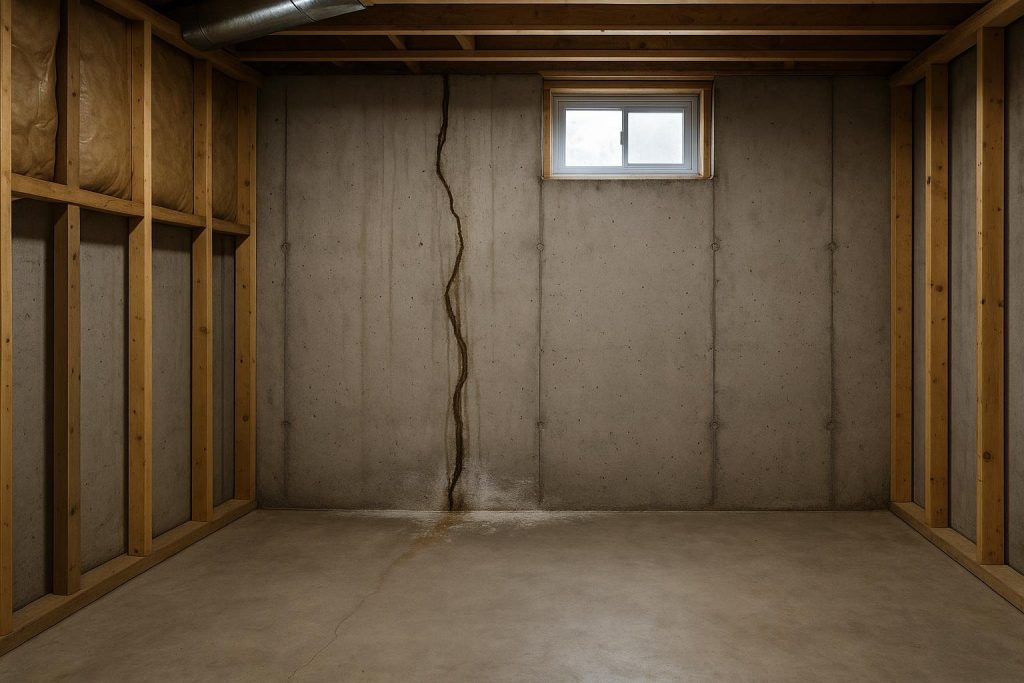
If you are asking why is my basement wet on the walls, the most likely answer is hydrostatic pressure forcing groundwater through a crack, a joint, or porous concrete. Start by locating the exact entry point: run your hand along the wall during or just after rain, check the cove joint where the wall meets the floor, and look for white mineral deposits that mark where water has been travelling. For a full overview of repair options, visit our wet basement repair service page.
How urgent is this?
Monitor: Faint white powder (efflorescence) with no visible dampness. Dry between rain events. No odour.
Act soon: Damp patches after heavy rain or spring thaw. Musty smell. Staining on drywall or insulation.
Act now: Active dripping or running water. Horizontal cracks in the wall. Floor heaving. Mould visible on framing.
Key Takeaways
- Hydrostatic pressure from saturated clay soil is the leading cause of wet basement walls in the GTA and surrounding Ontario regions.
- A single injected foundation crack typically costs $750 to $1,000; a full interior weeping-tile system or exterior waterproofing runs higher and depends on linear footage.
- Older Ontario homes commonly have silted-up original weeping tile that no longer drains, making the problem worse over time.
- Spring thaw and summer downpours are the two peak failure windows across Ontario, so acting before those seasons matters.
Confirm it is actually a wall moisture problem
Wet walls look different depending on the source. A crack that leaks during rain will show a distinct wet streak or drip trail running from a visible line in the concrete. Seepage through porous block or poured concrete tends to produce a broad, damp patch with no single entry point. The cove joint, where the footing meets the wall, is another common entry point that is easy to miss because it sits behind finished walls or insulation.
One reliable test: tape a piece of plastic sheeting tightly over the damp area for 24 hours. If moisture collects on the wall side of the plastic, water is coming through the foundation. If it collects on the room side, you may be dealing with condensation instead. This distinction matters because the fixes are completely different.
Problems it gets confused with
Condensation is the most common misdiagnosis. Warm, humid basement air hitting a cold concrete wall produces surface moisture that looks exactly like a slow seep. Condensation is more common in summer and tends to appear uniformly across the wall rather than at a specific crack or joint.
A plumbing leak above or inside the wall can also drip down and pool at the base, mimicking a foundation seep. Check whether the moisture appears only when water is running through nearby pipes. Parging failure, where the cement coating on the exterior of a block wall spalls off, can allow surface water to penetrate the outer wythe without being a true structural leak. Each of these has a different fix, so correct identification saves money.
Causes, ranked
1. Hydrostatic pressure through a foundation crack
Heavy clay soil, which covers most of the GTA and much of southern Ontario, holds water against the foundation wall for days after rain. That standing water builds hydrostatic pressure, and the path of least resistance is any existing crack in the poured concrete or block. Vertical shrinkage cracks are the most common entry point. The telltale sign is a wet streak that appears within hours of heavy rain and dries between events. A single crack injected with low-pressure polyurethane typically resolves this. You can read more about the full range of wet basement causes and diagnosis approaches in the master guide.
2. Failed or silted-up weeping tile
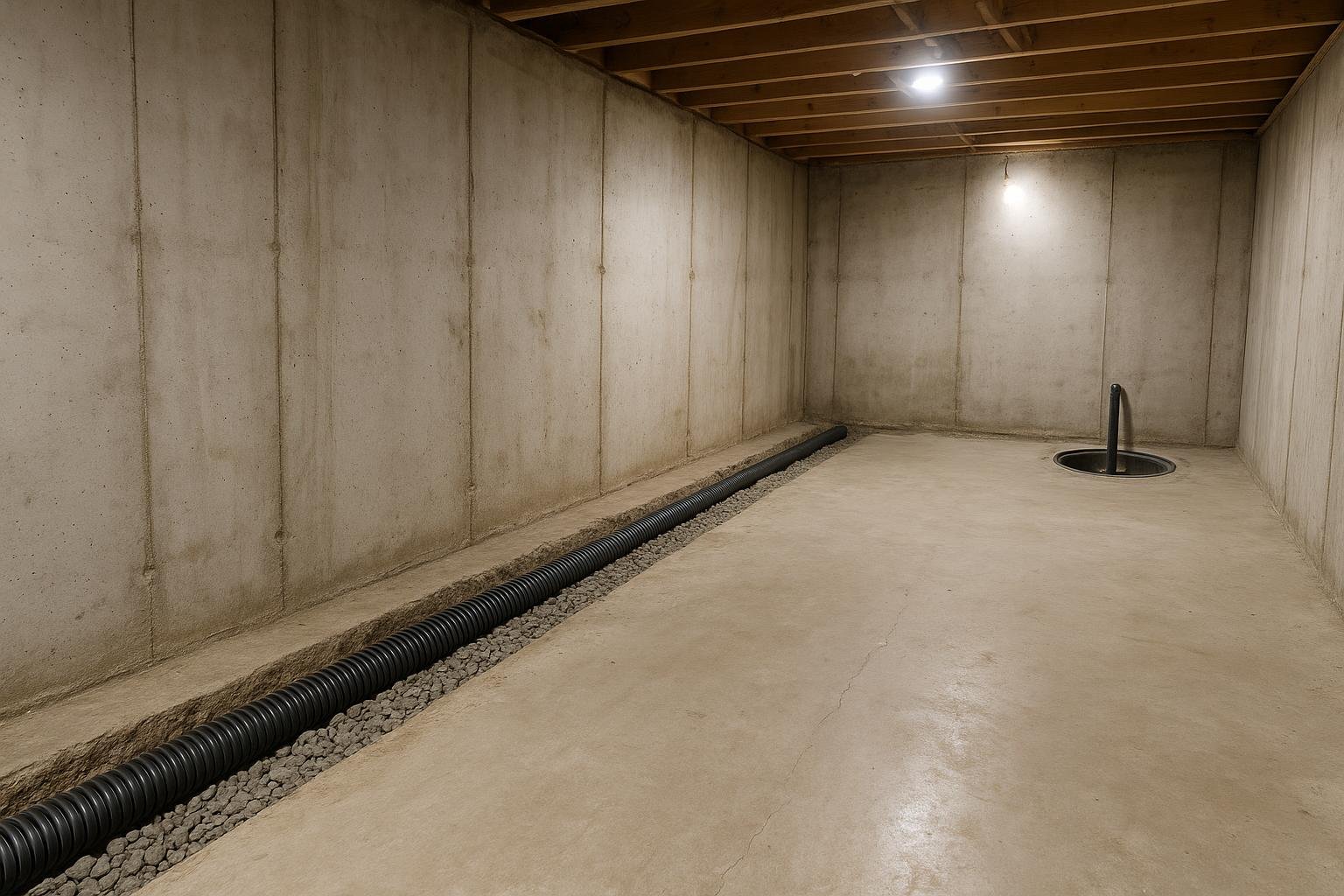
Most Ontario homes built before the 1980s have clay or concrete weeping tile around the footing. Over decades, silt and root intrusion block the perforations and the tile stops draining. Water that should flow away instead backs up against the wall. The telltale sign is seepage that appears at the cove joint or low on the wall rather than at a specific crack, and it worsens gradually over years rather than appearing suddenly. Replacing or supplementing the weeping tile, either from the exterior or via an interior perimeter drain to a sump basin, is the correct fix.
3. Negative grading and poor surface drainage
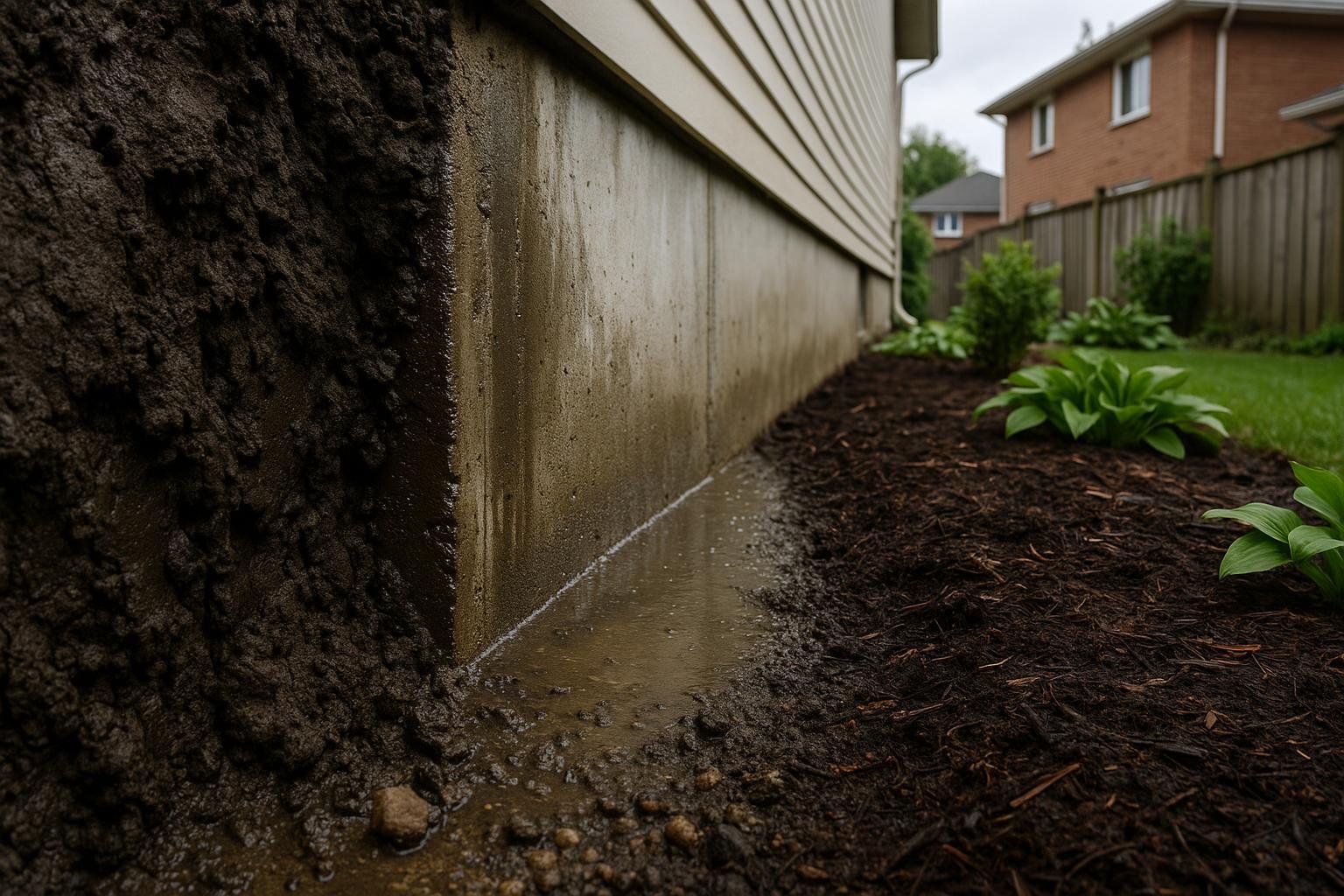
When the ground around the foundation slopes toward the house rather than away, every rainfall deposits water directly against the wall. This is especially common after years of soil settlement. The telltale sign is that wet walls appear only after surface rain, not during snowmelt or high water-table events, and the dampness is concentrated on one or two sides of the house that face a slope or a downspout discharge point.
4. Condensation from interior humidity
In summer, warm humid air enters through windows and doors and condenses on the cold concrete wall. The telltale sign is that the moisture appears in warm weather, not after rain, and the plastic-sheet test described above shows moisture on the room side. A dehumidifier and improved ventilation resolve this without any structural work.
5. Deteriorated exterior waterproofing membrane
Homes that had exterior waterproofing applied decades ago may have a membrane that has cracked, debonded, or simply reached the end of its service life. Water bypasses it and saturates the wall. The telltale sign is broad, diffuse dampness across a large section of wall with no single crack visible, often accompanied by efflorescence. Exterior excavation to the footing and membrane replacement is the permanent fix.
Why is my basement wet on the walls: cause and solution table
| Cause | Telltale sign | Appropriate fix | Urgency |
|---|---|---|---|
| Hydrostatic pressure through a crack | Wet streak at a visible crack, appears after rain | Low-pressure polyurethane crack injection | Act soon |
| Failed weeping tile | Seepage at cove joint, worsens over years | Interior perimeter drain to sump, or exterior weeping tile replacement | Act soon to Act now |
| Negative grading | Wet walls only after surface rain, one or two sides | Grade correction, extend downspouts, window well drains | Monitor to Act soon |
| Condensation | Moisture in summer, plastic-sheet test shows room-side moisture | Dehumidifier, improved ventilation | Monitor |
| Failed exterior membrane | Broad diffuse dampness, efflorescence, no single crack | Exterior excavation and membrane replacement | Act now |
Use this table as a starting point, not a final diagnosis. Hydrostatic pressure and failed weeping tile often occur together in older Ontario homes, and treating only one of them leaves the other active. A site inspection is the only reliable way to confirm which causes are present and in what combination.
What you can safely check yourself
- Walk the perimeter of the house after a heavy rain and note which walls are wet and which are dry. This narrows the entry point before a professional arrives.
- Check all downspout extensions. Each one should discharge at least 1.8 metres from the foundation. A blocked or short extension can saturate the soil against the wall.
- Look for visible cracks in the interior wall surface. Mark their ends with a pencil and date them so you can tell if they are growing.
- Run the plastic-sheet test described above to distinguish seepage from condensation.
- Check the sump pit if you have one. The pump should cycle on during or after heavy rain. A pump that never runs may indicate a blocked weeping tile that is not delivering water to the basin.
- Look for white chalky deposits on the wall surface. Efflorescence on basement walls is a reliable sign that water has been moving through the concrete, even if the wall feels dry at the moment.
What NOT to do
Do not apply hydraulic cement or waterproof paint to the interior wall surface as a permanent solution. These products can slow visible seepage temporarily, but they do not address the pressure behind the wall. Hydrostatic pressure will eventually push through any interior coating, often causing it to spall off and taking chunks of the wall with it.
Do not ignore a horizontal crack in a block or poured concrete wall. Horizontal cracks indicate lateral soil pressure and can signal structural movement. This is not a DIY repair. Do not excavate around your own foundation without understanding what is supporting the structure above. And do not install a sump pump without a proper weeping tile system feeding it, as a pump sitting in a dry pit does nothing to relieve wall pressure.
How a professional diagnoses it
A professional inspection starts with a free on-site moisture assessment. The inspector checks the interior wall surface for cracks, efflorescence, staining, and active seepage, then moves outside to assess grading, downspout discharge, window wells, and any visible foundation exposure above grade.
Where the source is unclear, a moisture meter is used to map the wettest zones on the wall. The inspector also checks the sump pit and, where accessible, the condition of the existing weeping tile. In older Toronto and GTA homes, the original clay weeping tile is frequently found to be fully silted and non-functional. The Canadian Mortgage and Housing Corporation’s guidance on basement moisture and foundation drainage aligns with this inspection approach, emphasising that source identification must precede any repair.
The result is a written scope with linear-foot pricing so you know exactly what work is proposed and why before any commitment is made.
Temporary vs permanent fixes
Temporary measures buy time but do not stop the underlying water movement. Hydraulic cement plugs an active drip at a crack. A portable dehumidifier reduces visible dampness from condensation. Redirecting a downspout stops one surface-water contribution. These steps are worth taking immediately to protect belongings, but they are not repairs.
| Fix | What it does | Typical lifespan | Approximate cost range |
|---|---|---|---|
| Polyurethane crack injection | Seals the crack from inside, flexible cure tolerates seasonal movement | Long-term when crack is stable | $750 to $1,000 per crack |
| Interior perimeter weeping tile to sump | Intercepts water at the footing and drains it away before it enters | Decades with pump maintenance | Varies by linear footage; inspection required |
| Exterior waterproofing with membrane | Blocks water at the source, includes new weeping tile and drainage board | 25 or more years | Roughly $6,000 to $9,000 for an average Toronto semi or detached |
| Hydraulic cement patch | Stops active drip at one point | Months to a few years | Low material cost, DIY possible |
| Grade correction and downspout extension | Reduces surface water reaching the wall | Ongoing with landscape maintenance | Low to moderate |
The right permanent fix depends on where the water is entering and why. Crack injection is the correct answer for a single stable crack. An interior weeping-tile system suits homes where excavation is not practical. Exterior waterproofing, which involves excavating to the footing, applying a rubberised membrane, installing a dimpled drainage board, and laying new weeping tile bedded in clear stone, is the most comprehensive option and the one that addresses hydrostatic pressure at its source. For a detailed breakdown of what these repairs cost in Ontario, see the foundation waterproofing cost guide.
Polyurethane injection cures flexible, which means it tolerates the seasonal expansion and contraction that Ontario’s freeze-thaw cycle puts on a foundation. Epoxy is reserved for structural cracks where the wall needs to be re-bonded, not just sealed.
Frequently asked questions
Why is my basement wet on the walls only after heavy rain?
Rain-triggered wall moisture almost always points to hydrostatic pressure. Saturated clay soil builds pressure against the foundation within hours of a downpour, and water finds the nearest crack or joint. If it dries completely between events, a crack injection is often the right starting point. A professional inspection confirms whether the weeping tile is also contributing.
Can I fix a wet basement wall myself?
You can redirect downspouts, correct minor grading, and run a dehumidifier without professional help. Crack injection kits exist for DIY use, but low-pressure port-and-paste application requires technique to achieve a full-depth seal. Anything involving the weeping tile, the footing, or a horizontal crack should be assessed by a professional before any work begins.
How much does it cost to fix wet basement walls in Ontario?
A single polyurethane crack injection typically runs $750 to $1,000. An interior perimeter weeping-tile system costs more and is priced by linear footage. Full exterior waterproofing of an average Toronto semi or detached home runs roughly $6,000 to $9,000 depending on excavation depth and site access. Every job is quoted after a free on-site inspection because no two foundations are identical.
Is a wet basement wall a structural problem?
A vertical shrinkage crack that leaks is usually not structural. A horizontal crack, a stair-step crack in block, or a crack wider than 6 mm at any point may indicate lateral soil pressure or differential settlement and warrants an engineer’s assessment. The guide to structural vs non-structural cracks covers the key distinctions in detail.
Why does my basement wall sweat in summer but not after rain?
Summer sweating with no rain correlation is almost always condensation, not seepage. Warm humid air enters the basement and hits the cold concrete wall, dropping its moisture on the surface. The plastic-sheet test confirms this. A properly sized dehumidifier and sealing air gaps around windows and doors resolves it without any foundation work.
Will waterproofing the inside of my basement walls stop the problem permanently?
Interior coatings and crystalline sealers can slow vapour transmission through sound concrete but cannot withstand sustained hydrostatic pressure. They are not a permanent fix for an active leak. A properly installed interior weeping-tile system that intercepts water at the footing and routes it to a sump pump is the interior approach that provides lasting results, because it manages the water rather than trying to block it.
Spring thaw and summer downpours are the two peak failure windows for Ontario foundations. If your walls are wet now, the next event will be worse without a repair in place.
If your basement walls are showing moisture, the right next step is a free on-site assessment so the entry point and cause can be confirmed before any money is spent. The DryShield Team serves Toronto, the GTA, and Ontario cottage country and can usually schedule an inspection quickly. Book your free assessment and get a written scope with no obligation.