Basement waterproofing myths lead Ontario homeowners to delay repairs, choose the wrong fix, or spend money on products that do nothing against hydrostatic pressure. This post separates fact from fiction so you can protect your foundation before the next spring thaw or summer downpour turns a small problem into a costly one.
Key Takeaways
- Waterproof paint and sealant sprays do not stop hydrostatic pressure from pushing water through a foundation wall.
- Interior and exterior waterproofing solve different problems. Neither is universally superior.
- A single injected crack typically costs $600 to $900. Waiting rarely makes it cheaper.
- GTA clay soil holds water against your footing long after rain stops, making the pressure problem ongoing, not seasonal.
- A professional inspection is the only reliable way to identify the actual entry point.
What’s Happening: The Basement Waterproofing Myths That Keep Basements Wet
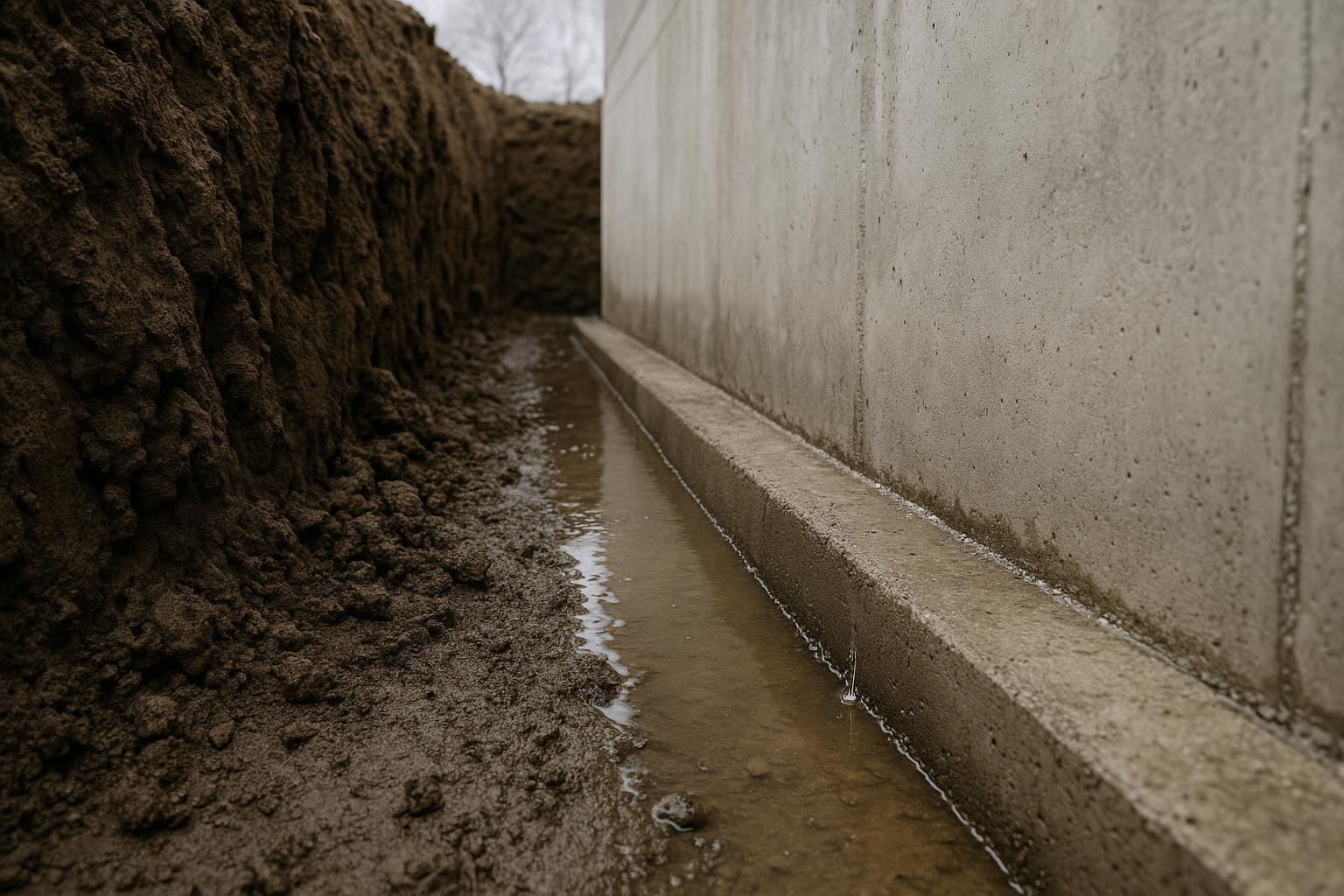
The most persistent basement waterproofing myths share a common thread: they make the problem sound simpler than it is. Ontario foundations, especially in the GTA where heavy clay soil dominates, face sustained hydrostatic pressure that builds against the wall and footing every time the water table rises. A coat of paint cannot resist that force.
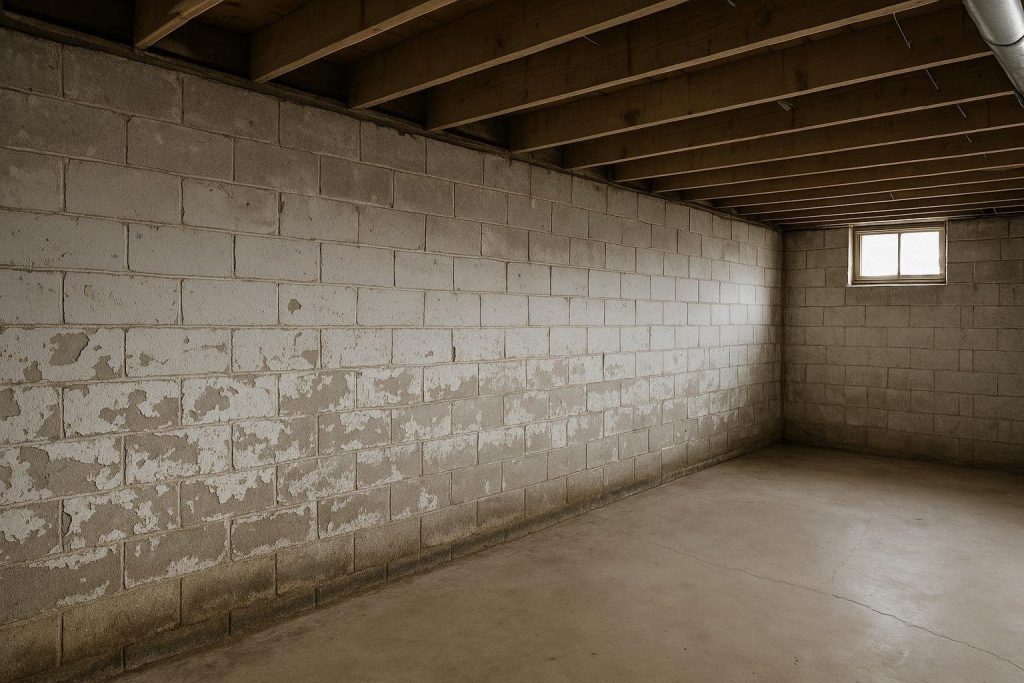
Myth one is that waterproof paint solves a wet basement. Masonry paint and brush-on sealers are vapour retarders at best. They slow surface condensation but they cannot withstand the lateral pressure of saturated clay pushing against a poured-concrete or block wall. When the bond fails, the paint peels and the water is still there.
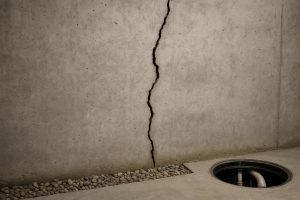
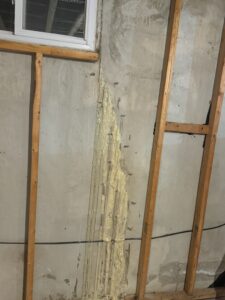
Myth two is that a crack only needs attention if it is actively dripping. In reality, a hairline crack in a poured-concrete wall is an open channel. Polyurethane injection fills the crack from port to port, cures flexible, and tolerates the seasonal movement that Ontario freeze-thaw cycles produce. Left alone, the crack widens every winter. The Canada Mortgage and Housing Corporation notes that foundation moisture problems rarely resolve on their own and typically worsen over time. You can read CMHC’s guidance on moisture and foundations at cmhc-schl.gc.ca.
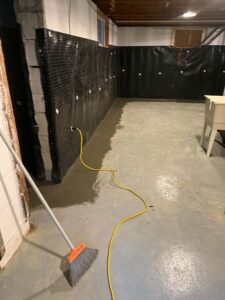
Myth three is that exterior waterproofing is always the gold standard and interior work is a shortcut. The truth is more nuanced. Exterior work, which involves excavating to the footing, applying a rubberised membrane, installing dimpled drainage board, and laying new weeping tile in clear stone, addresses the source. Interior weeping tile systems manage water that has already entered the wall cavity and route it to a sump basin. Both are legitimate solutions. The right choice depends on where water is entering, the age of the original weeping tile, and site access.
Hydrostatic pressure, not rainfall alone, is the root cause of most wet basements in the GTA. Clay soil stays saturated for days after a storm, keeping pressure on the wall long after the sun returns.
Background: Why These Basement Waterproofing Myths Persist
Many of these misconceptions come from products marketed at hardware stores that promise a dry basement in a weekend. The appeal is understandable. Excavating to the footing of a Toronto semi-detached is disruptive and, depending on linear footage and access, typically runs $6,000 to $9,000. A $40 tin of waterproofing paint feels like a reasonable first attempt.
Older Toronto homes add another layer of confusion. Many were built with clay weeping tile, which has a lifespan of 40 to 60 years. When that tile silts up completely, water has nowhere to go except against the wall. Homeowners often blame the wall itself rather than the failed drainage system beneath the footing. Understanding what is actually failing is why a free on-site moisture assessment matters before any product or method is chosen. Our wet basement and leak master guide walks through the diagnostic process in detail.
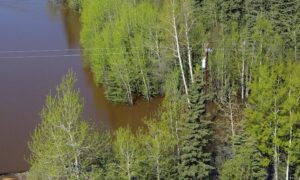
Cottage-country properties in Minden and Haliburton face a different version of the same problem. Sandy or rocky soil drains faster than GTA clay, but spring snowmelt can overwhelm even well-drained ground in a matter of days, and a sump pump that sat idle all winter may not be ready for the surge.
Why It Matters for Homeowners
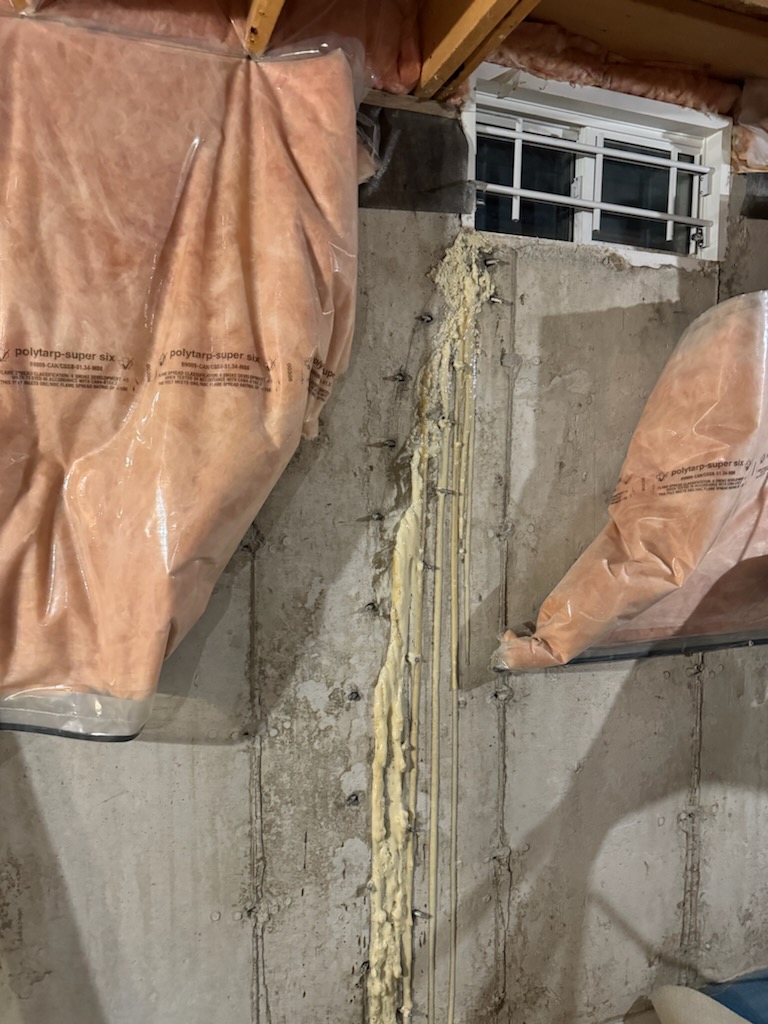
Basement waterproofing myths have real financial consequences when acted on instead of a proper diagnosis. A foundation crack injected at the $600 to $900 range is a contained repair. The same crack, left for two or three winters, can widen to the point where the wall needs structural assessment and the repair cost climbs significantly. The final figure always depends on a site inspection, but the direction of travel is predictable.
There is also the question of what water does once it is inside. Sustained moisture against a concrete wall encourages efflorescence, then mould, then wood-rot in any framing that touches the wall. A finished basement that floods once can require complete remediation of drywall, insulation, and flooring on top of the waterproofing repair itself.
Spring thaw and summer downpours are the two peak failure windows for Ontario foundations. Both are predictable, which means preparation is possible if the right system is in place before they arrive.
For buyers and sellers, a documented waterproofing system with a transferable warranty is a tangible asset. A wet basement disclosure, by contrast, triggers renegotiation or conditions. Our guide on how waterproofing affects home value in the GTA covers the resale data in more detail.
One more myth worth addressing: that interior waterproofing voids a home insurance claim. Insurance policies vary, but a properly installed interior system with a functioning sump pump is generally viewed as a risk-reduction measure, not a liability. Check your specific policy, and review our overview of home insurance and basement waterproofing in Ontario for context.
What to Do About It
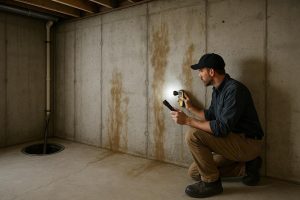
Start with a proper diagnosis, not a product. A free on-site inspection identifies whether the water is entering through a crack, through the wall-footing joint, through a silted weeping tile system, or through the floor slab itself. Each entry point has a different fix. Our exterior vs interior perimeter waterproofing comparison is a useful reference once you know where the water is coming from.
If a crack is confirmed, low-pressure polyurethane injection from the interior is the standard repair for non-structural cracks. Epoxy is reserved for structural cracks where the wall needs to be re-bonded. If the weeping tile has failed, the scope expands to either a full interior system draining to a sump basin or exterior excavation and replacement, depending on access and budget.
Do not let basement waterproofing myths delay action for a second wet season when the first one already gave you the answer. The cost of a site inspection is zero. The cost of another flooded spring is not.
Frequently Asked Questions
Does waterproof paint actually stop basement leaks?
No. Waterproof paint resists surface condensation but cannot withstand hydrostatic pressure from saturated soil. It is not a substitute for drainage, membrane, or crack injection. Most painted walls that leak will continue to leak, and the paint will eventually delaminate under pressure.
Is interior waterproofing just a band-aid fix?
Not when it is the right solution for the problem. An interior weeping tile system that routes water to a sump basin is a permanent, engineered drainage solution. It is the preferred method when exterior excavation is not practical or when the water table is the primary driver rather than a single crack or failed membrane.
How much does crack injection actually cost?
A single foundation crack injected from the interior typically costs $600 to $900, depending on crack length and accessibility. The final figure depends on a site inspection. Waiting does not reduce the cost and usually increases it as the crack widens through seasonal freeze-thaw movement.
Can I waterproof my basement myself?
DIY products address surface symptoms, not the underlying cause. Low-pressure polyurethane injection requires specific equipment and port placement to fill the crack completely. Exterior membrane work requires excavation to the footing. Both are jobs where an incomplete repair leaves the problem in place while giving a false sense of security.
Ready to find out what is actually causing your wet basement? Contact the DryShield Team for a free on-site inspection and written scope. There is no obligation, and a clear diagnosis is the only reliable starting point.