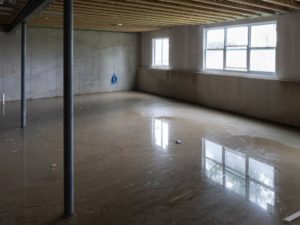
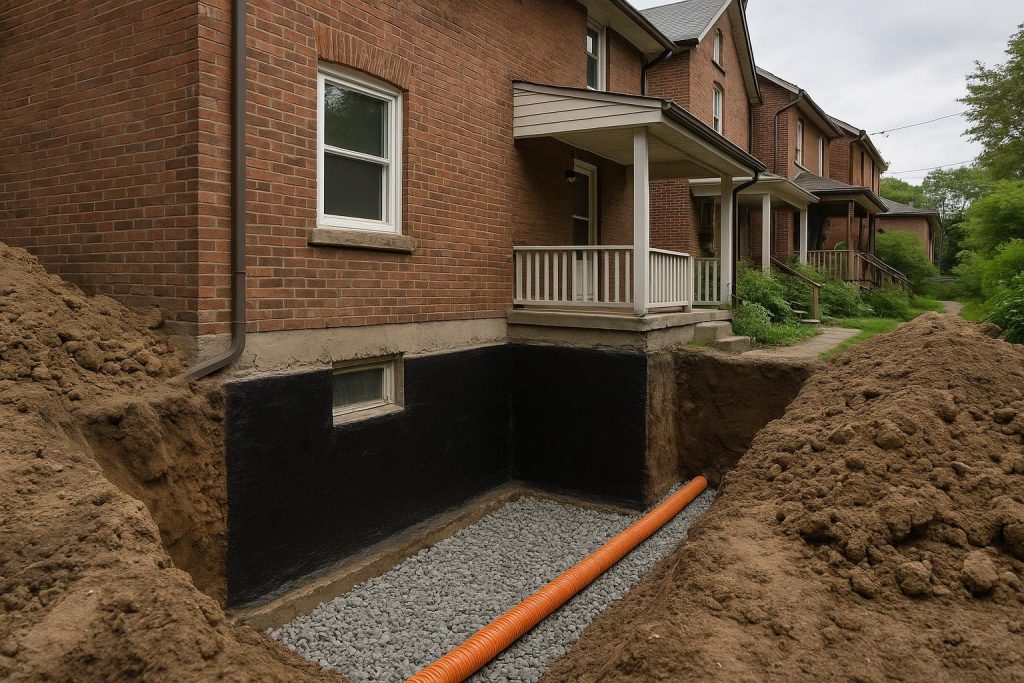
Foundation waterproofing cost in Ontario typically ranges from roughly $750 for a single interior crack injection up to $9,000 or more for a full exterior excavation system on an average Toronto semi-detached or detached home. These figures reflect work completed across the GTA and surrounding regions as of mid-2026 and are honest industry-typical bands. Every final number depends on a site inspection, because linear footage, excavation depth, soil conditions and access all shift the price significantly. For a broader overview of the service itself, see the Foundation waterproofing parent page.
Key Takeaways
- A single polyurethane crack injection typically costs $750 to $1,000, making it the lowest-cost entry point.
- Full exterior waterproofing on an average GTA home runs roughly $6,000 to $9,000, driven mainly by excavation depth and linear footage.
- Interior weeping-tile systems generally cost less than exterior work on the same home, though both address hydrostatic pressure differently.
- Heavy clay soil across much of the GTA holds water against foundation walls year-round, making proper drainage, not just sealing, the real solution.
- The final price always requires a free on-site inspection. Quotes given over the phone without seeing the footing depth are unreliable.
What the Quoted Ranges Include and Exclude
The $6,000 to $9,000 exterior range covers excavation to the footing, hydraulic cement parging of any voids in the wall face, application of a rubberised waterproofing membrane, installation of a dimpled drainage board to protect the membrane, new weeping tile bedded in clear stone, backfill and basic grade correction. That is the full system, not a partial repair.
What the range does not include: permits where the municipality requires them, concrete or interlock reinstatement over excavated areas, window-well reconstruction, landscaping restoration, or disposal fees for contaminated soil. These are real costs that appear on final invoices and are covered in the “Costs People Miss” section below.
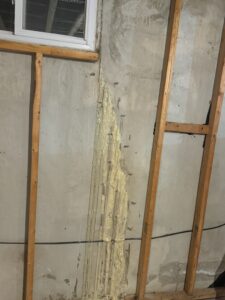
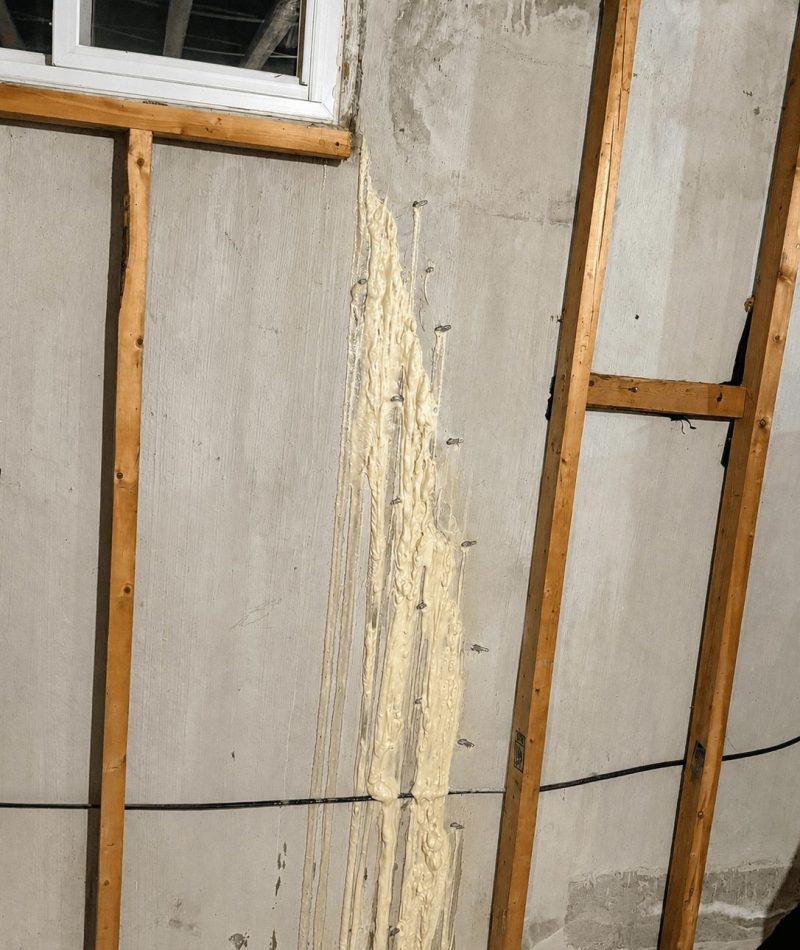
The $600 to $900 crack-injection figure covers the port-and-paste low-pressure polyurethane injection of a single wall crack from the interior, including the flexible cure that tolerates seasonal foundation movement. If a crack is structural and the wall needs to be re-bonded rather than simply sealed, epoxy injection is specified instead, and the scope and cost change accordingly.
What Drives Foundation Waterproofing Cost
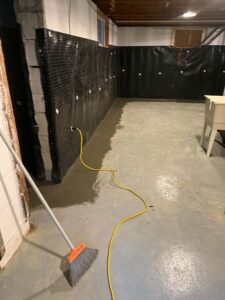
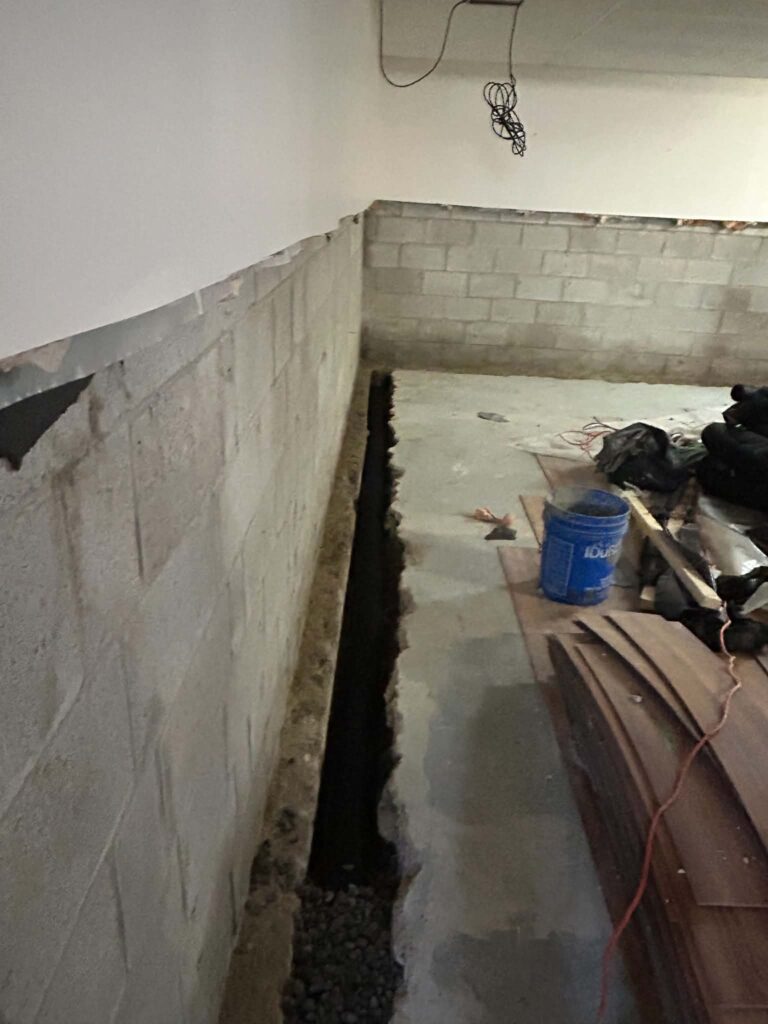
The biggest cost driver is the method chosen, which is itself determined by where water is entering and how severe the hydrostatic pressure is. Exterior excavation costs more than interior weeping tile because of the labour and equipment involved in digging to the footing. Interior systems cost less upfront but require jackhammering the perimeter slab, installing weeping tile to a sump basin, fitting a vapour barrier up the wall and re-pouring concrete, all of which add up quickly on a large footprint.
Linear footage is the second major variable. A Toronto semi-detached with 25 linear feet of affected wall costs materially less than a detached home where three or four sides need attention. Contractors price exterior work by the linear foot of wall treated, so a longer perimeter means a higher invoice.
Excavation depth matters because older Toronto homes often have footings at 7 or 8 feet below grade, requiring more machine time and shoring precautions than a newer home with a shallower footing. Depth also affects how much soil must be moved and disposed of.
Access is the fourth driver. A home with a narrow side yard, a fence that cannot be removed, or a deck built over the affected wall forces hand-digging or equipment repositioning, both of which add hours. Cottage-country properties in the Minden and Haliburton area sometimes face different soil profiles, with sandy or rocky ground replacing the GTA’s clay, which changes both the excavation method and the drainage design.
Finally, the condition of the existing weeping tile matters. Older Toronto homes commonly have original clay-tile or concrete-pipe weeping tile that is fully silted up and must be replaced entirely rather than supplemented. Replacement adds material and disposal cost that a newer home with intact drainage does not incur.
In GTA clay soil, hydrostatic pressure, not rainfall alone, is the root cause of most wet basements. A membrane without proper weeping tile and a functioning sump pump is only half a solution.
Typical Scenarios
| Scenario | Typical Range | What Pushes It Higher or Lower |
|---|---|---|
| Single interior crack injection (polyurethane) | $750 to $1,000 | Crack length and accessibility; epoxy for structural cracks adds cost |
| Interior weeping-tile system with sump pump | $4,000 to $7,000 | Linear footage, slab thickness, whether a sump basin already exists |
| Exterior waterproofing, one wall (Toronto semi) | $3,000 to $5,000 | Depth to footing, access, condition of existing weeping tile |
| Full exterior system, average detached GTA home | $6,000 to $9,000 | Number of walls treated, footing depth, soil disposal, grade correction |
| Cottage or rural property, exterior perimeter | $5,000 to $10,000+ | Travel, rocky or sandy soil, seasonal water-table behaviour, access |
The table above shows ranges, not fixed prices. A semi-detached in Scarborough with easy side-yard access and a shallow footing sits at the lower end of its row. The same job in a Vaughan detached with a deep footing and a fence on both sides sits at the upper end. Only a site visit confirms which end applies to your home.
Worked Examples
Example 1: Single crack, Toronto row house. A homeowner in North York notices a hairline vertical crack in the poured-concrete wall, damp after spring thaw. One interior polyurethane injection: roughly $750. The port-and-paste method seals the crack and the flexible cure handles seasonal movement. No excavation, no disruption to the yard. Total job time: two to three hours.
Example 2: Interior weeping-tile system, Mississauga bungalow. Water seeps along the perimeter floor-wall joint after heavy rain. The perimeter is 60 linear feet. Jackhammering, weeping tile to a new sump basin, vapour barrier and concrete re-pour: estimate in the $5,500 to $6,500 range. A battery-backup sump pump adds $400 to $700 depending on the unit. Total realistic budget: $6,000 to $7,200.
Example 3: Full exterior system, Hamilton detached. A 1960s detached home with failed original weeping tile and active seepage on two walls. Two walls total 50 linear feet, footing at 7 feet. Excavation, membrane, dimpled board, new weeping tile, backfill and grade correction: estimate in the $7,000 to $9,000 range. Old clay weeping tile disposal and concrete reinstatement over the driveway edge add roughly $800 to $1,200. Total realistic budget: $7,800 to $10,200.
Costs People Miss
Permits are the most commonly overlooked line item. Some Ontario municipalities require a building permit for exterior excavation work near the foundation. The City of Toronto, for example, may require one depending on scope. Permit fees vary by municipality but typically run $150 to $400. Factor this in before comparing quotes that exclude it.
Surface reinstatement is the second surprise. Excavation tears up interlock, concrete, garden beds and sometimes decking. Reinstating a poured-concrete walkway or a section of interlock driveway can add $500 to $2,000 depending on the material and area affected. A quote that does not mention reinstatement is either assuming you will handle it or has omitted it intentionally.
| Hidden Cost Item | Typical Range | Notes |
|---|---|---|
| Building permit | $150 to $400 | Required by some Ontario municipalities for exterior excavation |
| Surface reinstatement (interlock or concrete) | $500 to $2,000 | Depends on material type and area disturbed |
| Soil disposal (clay or contaminated fill) | $200 to $600 | Tipping fees at Ontario transfer stations |
| Window-well reconstruction | $300 to $800 | Required when excavation disturbs existing window wells |
| Battery-backup sump pump | $400 to $700 | Strongly recommended alongside any new interior system |
Always ask your contractor whether the quote includes surface reinstatement, soil disposal and permit fees. A low headline number that excludes these three items can end up costing more than a higher quote that includes them.
Financing, Subsidies and Rebates
The City of Toronto operates a Basement Flooding Protection Subsidy that reimburses eligible homeowners for qualifying work including sump pump installation and backwater valve installation. The programme has income and property eligibility criteria and a per-item cap. Homeowners outside Toronto should check with their local municipality, as several GTA cities have run similar programmes at various times.
CMHC’s homeowner resources at cmhc-schl.gc.ca include guidance on moisture control and basement health that can help you document a claim or understand what qualifies for subsidy. No federal grant specifically covers foundation waterproofing cost as of mid-2026, but energy-efficiency retrofit programmes occasionally overlap with basement insulation and air-sealing work done at the same time as waterproofing.
How to Read a Quote
A well-structured waterproofing quote itemises the scope in measurable units. For exterior work, it should state the number of linear feet of wall being treated, the depth of excavation, the membrane product being applied, the weeping-tile specification (diameter, material, clear-stone bed depth) and whether backfill and grade correction are included. For crack injection, it should state the number of cracks, the injection material (polyurethane or epoxy) and the warranty term.
| What a Good Quote Includes | Red Flags to Watch For |
|---|---|
| Linear feet of wall treated, stated explicitly | Single lump sum with no line-item breakdown |
| Excavation depth specified | Quote given without a site visit |
| Membrane product named (brand and spec) | Contractor refuses to name the membrane product |
| Weeping-tile diameter, material and stone-bed depth | No mention of weeping tile or drainage board |
| Backfill, grade correction and reinstatement noted | Reinstatement and disposal costs absent |
| Warranty term, transferability and coverage stated | Verbal warranty only, nothing in writing |
Warranty terms matter. A transferable lifetime warranty on the waterproofing system is a meaningful differentiator. Check whether the warranty covers both labour and materials, and whether it transfers to a new owner if you sell. You can review DryShield’s lifetime transferable warranty terms for a reference point on what a strong warranty looks like.
For a broader look at how exterior and interior approaches compare before you request quotes, the guide on interior vs. exterior waterproofing walks through the trade-offs in detail. If your concern is specifically a crack rather than perimeter seepage, the crack injection cost page covers that scope separately.
A quote that arrives without a site visit is a guess. Foundation waterproofing cost depends on footing depth, soil type, linear footage and access, none of which can be assessed remotely.
Frequently Asked Questions
What is the average foundation waterproofing cost in Ontario?
For an average GTA semi-detached or detached home, full exterior foundation waterproofing typically costs $6,000 to $9,000. Interior weeping-tile systems generally fall below that range for the same home. A single crack injection starts at roughly $750 to $1,000. Every figure depends on a site inspection.
Is exterior waterproofing always more expensive than interior?
Exterior waterproofing is almost always more expensive because excavation to the footing is the dominant cost. Interior systems avoid excavation but require jackhammering the slab and installing a sump basin. The right method depends on where water is entering and the severity of hydrostatic pressure, not on cost alone.
How long does exterior foundation waterproofing take?
A single-wall exterior job on an average Toronto home typically takes one to two days. A full perimeter on a larger detached home can take three to five days depending on depth, access and weather. Interior weeping-tile installation on a standard footprint usually takes one to two days.
Does foundation waterproofing add value to my home?
A dry, documented foundation is a positive disclosure item in Ontario real estate transactions. Buyers and home inspectors flag active moisture or failed weeping tile as deficiencies. Resolving these before listing removes a common negotiating point for price reductions. The waterproofing ROI guide covers the resale data in detail.
Can I get a quote without a site visit?
A reliable contractor will not quote a foundation waterproofing job without visiting the site. Footing depth, soil type, access constraints and the condition of existing weeping tile all affect the price and cannot be assessed from a photo. Any lump-sum figure given remotely should be treated as an estimate only.
What is polyurethane crack injection and when is it used?
Polyurethane crack injection is a low-pressure interior repair method where ports are pasted along a crack and flexible polyurethane foam is injected to fill the void. It is the standard repair for non-structural vertical cracks in poured-concrete walls. Epoxy injection is used instead when the crack is structural and the wall needs to be re-bonded.
Does clay soil affect the cost of waterproofing?
Yes. Heavy clay soil across much of the GTA retains water against foundation walls and sustains hydrostatic pressure long after rain stops. This means a membrane alone is insufficient. Proper weeping tile, clear-stone bedding and a functioning sump pump are required components, all of which add to the scope and cost compared with a home in well-drained sandy soil.
Is a permit required for foundation waterproofing in Ontario?
Permit requirements vary by municipality. Some Ontario cities require a building permit for exterior excavation near the foundation. The Ontario Building Code sets the baseline standards for drainage and damp-proofing, and the Ontario Building Code waterproofing guide explains what compliance looks like in practice. Always confirm permit requirements with your contractor before work begins.
Ready to get an accurate number for your home? The DryShield Team offers free on-site inspections and moisture assessments across Toronto, the GTA and Ontario cottage country. Contact us to book your inspection and receive a written scope with linear-foot pricing, so you know exactly what you are paying for before any work begins.