A wet crawl space is most often caused by groundwater seeping through the foundation, condensation forming on cold surfaces, or surface water draining toward the house. If you have discovered moisture under your home, the first step is to identify whether the water is coming from outside the structure or forming from humid air inside the space. That distinction determines which repair approach will actually solve the problem.
- Moisture in a crawl space can come from three distinct sources: groundwater intrusion, surface runoff, and interior condensation. Each requires a different fix.
- A failed or absent vapour barrier contributes to most condensation-driven cases but does not address active water entry on its own.
- According to Health Canada’s guidance on indoor mould, mould can begin colonising damp materials within 24 to 48 hours of sustained moisture exposure.
- Crawl space moisture migrates upward into living areas, affecting air quality and energy efficiency throughout the home.
- Temporary measures such as fans and dehumidifiers reduce symptoms but do not eliminate the source of intrusion.
Confirm it is actually this
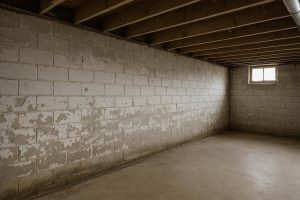
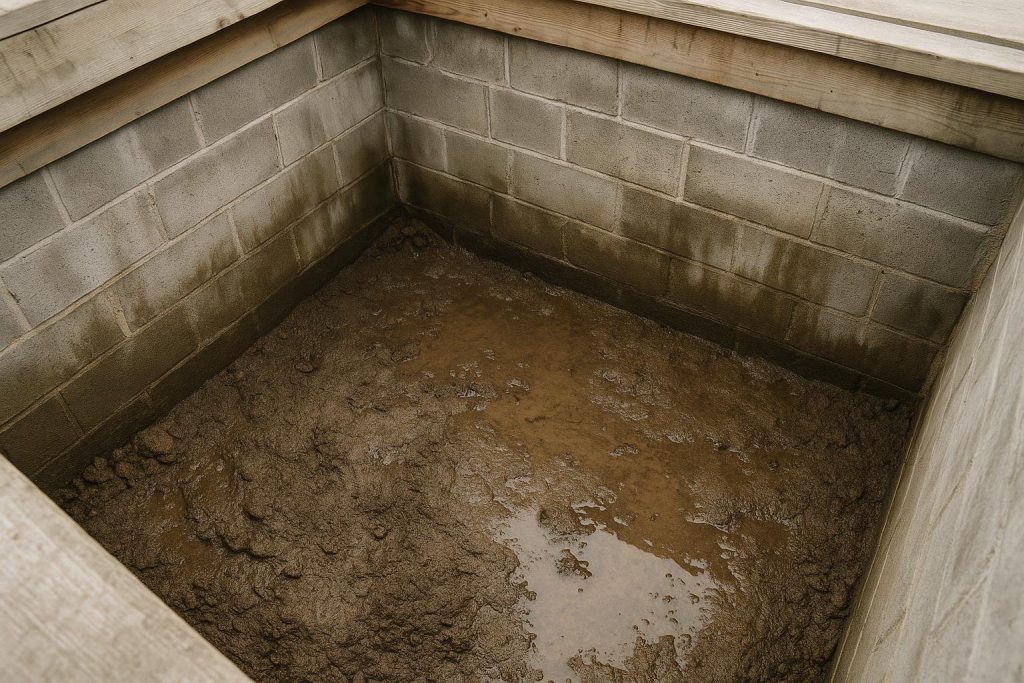
A genuinely wet crawl space shows one or more of the following: standing or pooled water on the floor, visibly damp soil, water stains or tide marks on the foundation walls or piers, rust on metal fasteners or beam hangers, soft or darkened wood on floor joists or the sill plate, and a persistent earthy or musty odour that intensifies after rain or snowmelt. You may also notice the floor above feeling slightly springy.
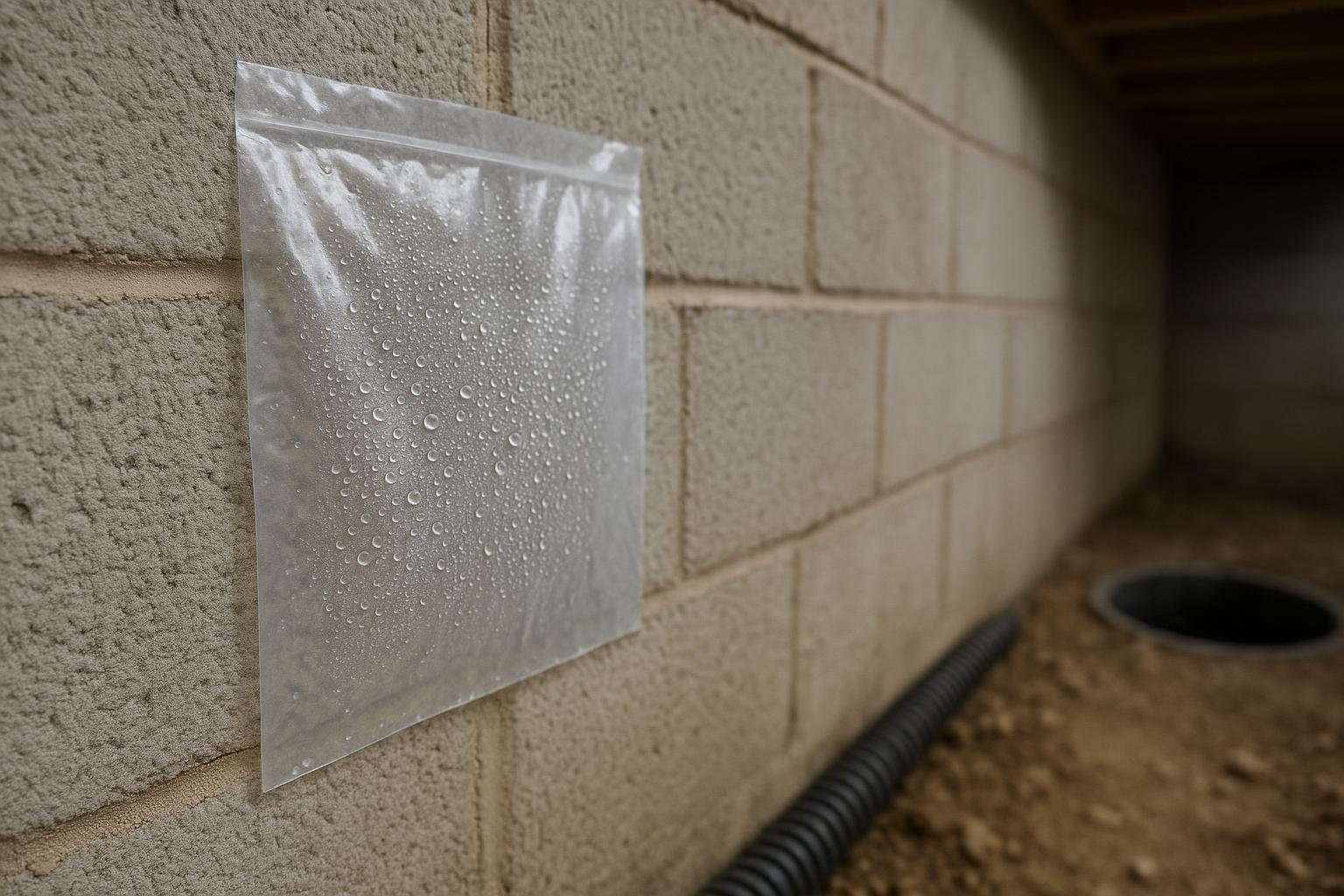
Condensation-driven wetness tends to be most pronounced in summer, when warm humid air enters a vented crawl space and contacts cooler surfaces. Groundwater intrusion is typically worse in spring and after prolonged rain. To distinguish the two, tape a piece of plastic sheeting to the foundation wall for 24 hours. Moisture on the room side indicates condensation; moisture behind the plastic indicates water moving through the wall.
Problems it gets confused with
A wet crawl space is sometimes mistaken for a plumbing leak. A slow drip from a supply line, drain pipe, or HVAC condensate line can mimic groundwater pooling. Check all visible pipes before assuming the source is external. Conversely, a high-humidity crawl space with no standing water is sometimes dismissed as normal, when chronic condensation is causing the same long-term wood degradation as active water entry. Frost heave damage to footings can also look like water staining but results from freeze-thaw movement rather than moisture intrusion. A sump pump that has failed can create what appears to be a new leak when the real problem is a drainage system that can no longer keep up.
Causes, ranked
1. Groundwater and hydrostatic pressure
The most common driver of a wet crawl space in Ontario is hydrostatic pressure: water in the surrounding soil builds up after rain or snowmelt and pushes through any gap, crack, or porous section of the foundation wall or floor. Clay-heavy soils, widespread across the GTA and surrounding regions, retain water rather than draining it away, keeping pressure elevated for days after a rain event. The telltale sign is water appearing at the base of the foundation wall or seeping up through the floor, worsening in spring and after heavy rain.
2. Failed or absent weeping tile
Weeping tile is designed to intercept groundwater before it reaches the foundation. In homes built before the 1980s, clay weeping tile is common and frequently collapses or becomes blocked with roots and sediment. When the drainage system fails, water accumulates and finds the path of least resistance into the crawl space. The telltale sign is water entering consistently around the perimeter of the crawl space floor, not at a single crack. See weeping tile installation and replacement for repair options.
3. Poor grading and surface drainage
When the ground around the foundation slopes toward the house, rainwater and snowmelt concentrate against the foundation wall. Even a modest negative slope can direct large volumes of water toward the structure during a single storm. The telltale sign is water appearing within hours of rain starting, concentrated on one or two walls that face a downhill grade or a hard surface such as a driveway or patio.
4. Condensation from a vented crawl space
Many older Ontario homes have vented crawl spaces. In practice, warm summer air entering through foundation vents carries humidity that condenses on cooler surfaces, including joists, insulation, and the vapour barrier. Over time this creates the same conditions as a water leak. The telltale sign is moisture that peaks in July and August, is worst in the morning, and is not correlated with rain events.
5. Damaged or absent vapour barrier
A vapour barrier on the crawl space floor slows moisture evaporation from the soil. If it is torn, missing, or only partially installed, soil moisture rises continuously into the space. This is rarely the sole cause of a seriously wet crawl space but is almost always a contributing factor. The telltale sign is damp soil visible through gaps or tears in existing poly sheeting.
6. Foundation wall cracks
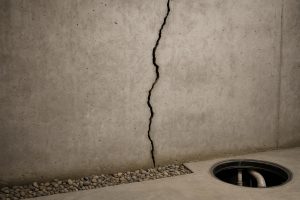
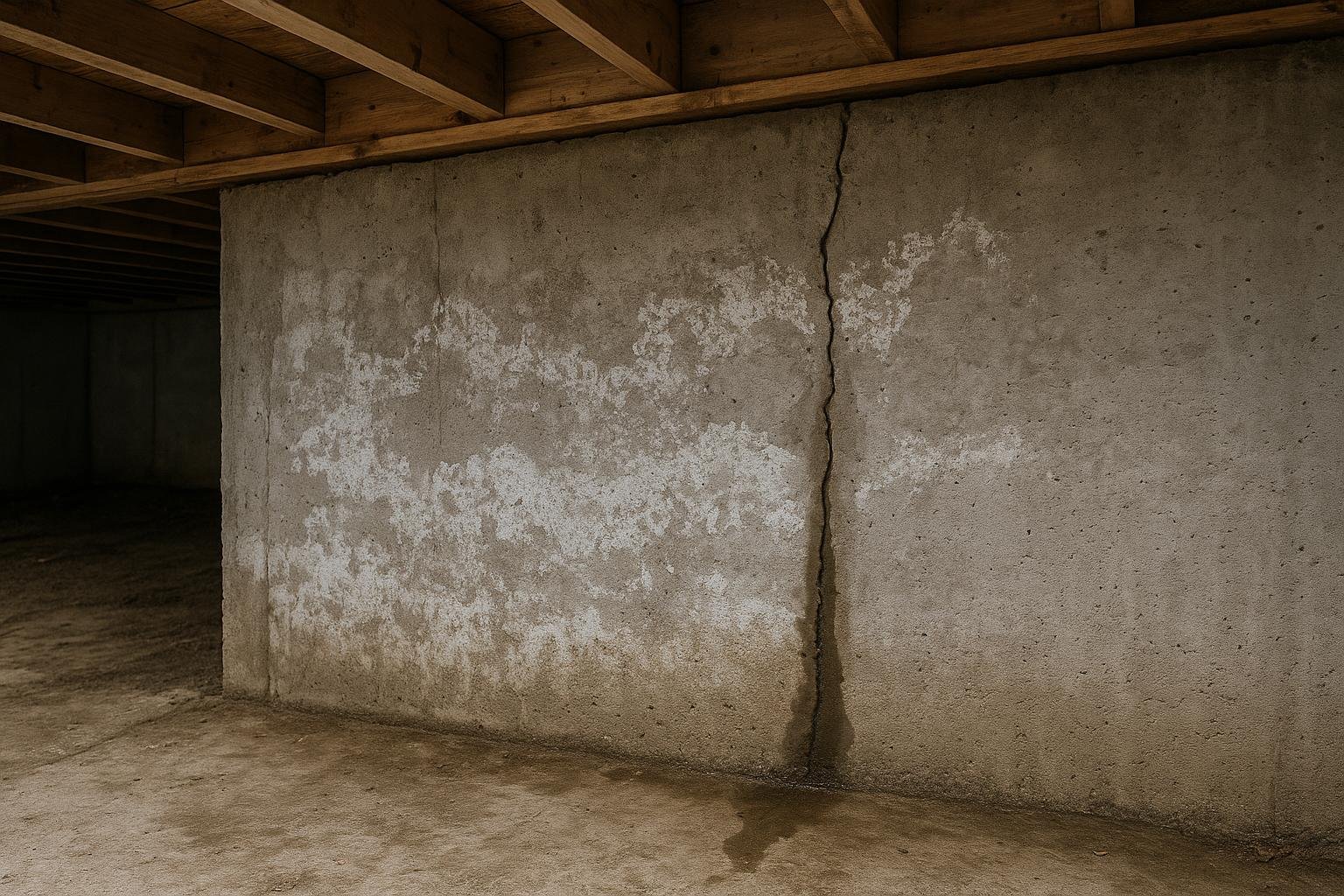
Vertical shrinkage cracks and diagonal settlement cracks in poured concrete walls can allow water to pass directly through the wall. In a crawl space, these cracks are often hidden behind insulation or are simply not inspected regularly. The telltale sign is a wet streak or mineral staining on the wall surface that traces back to a visible crack, often with efflorescence around it. Polyurethane crack injection is a common repair method for active leaking cracks.
Cause and solution table
| Cause | Telltale sign | Appropriate fix | Urgency |
|---|---|---|---|
| Hydrostatic pressure through floor or wall base | Water seeps at wall-floor joint after rain or snowmelt | Interior drainage channel and sump pump; exterior waterproofing if accessible | Act soon to act now |
| Failed or blocked weeping tile | Perimeter water entry, not tied to a single crack | Weeping tile replacement or supplemental interior drain tile | Act soon |
| Negative grading or surface runoff | Water appears within hours of rain on one or two walls | Regrade soil; extend downspouts; add swales | Act soon |
| Condensation in vented crawl space | Moisture peaks in summer, not correlated with rain | Crawl space encapsulation; seal vents; add dehumidifier | Monitor to act soon |
| Damaged or absent vapour barrier | Damp soil visible through gaps in poly sheeting | Install or replace vapour barrier; consider full encapsulation | Monitor |
| Foundation wall crack | Wet streak or efflorescence tracing back to a crack | Polyurethane crack injection; exterior excavation if crack is wide or structural | Act soon to act now |
Multiple causes often coexist in the same crawl space. Addressing only one will produce incomplete results. A professional inspection is the reliable way to confirm which causes are active and in what order they should be addressed.
What you can safely check yourself
- Inspect the perimeter grading. Walk around the foundation and observe whether the soil slopes away from the house. A minimum slope of 6 inches over the first 10 feet is a commonly cited standard in residential construction guidance.
- Check downspout extensions. Confirm that all downspouts discharge at least 1.8 metres (6 feet) from the foundation. Blocked or short extensions are a frequent and easily corrected contributor.
- Look at the vapour barrier. If you can safely enter the crawl space, check whether poly sheeting covers the entire floor, overlaps at seams by at least 30 cm, and is free of tears or gaps.
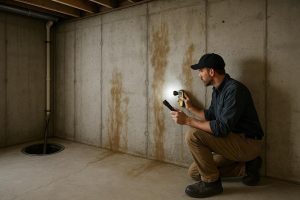
- Identify the water entry point. Use a flashlight to trace any staining or wet areas back to their origin. Note whether staining is at the wall base, through a crack, or rising from the floor.
- Perform the plastic tape test. Tape a 30 cm square of clear plastic to a damp wall section and seal all edges. After 24 hours, check which side has moisture to distinguish condensation from intrusion.
- Check the sump pump if one exists. Pour water into the pit to confirm the float activates and the pump discharges properly. A pump that runs but does not lower the water level may have a failed check valve or a discharge line that drains back into the pit.
What NOT to do
- Do not seal the interior wall with hydraulic cement or paint-on waterproofing as a standalone fix. These products can temporarily block seepage but do not address pressure behind the wall, and trapped water can shift the entry point.
- Do not add more ventilation to a vented crawl space. In humid Ontario summers, additional vents bring in more humid air and can worsen condensation.
- Do not ignore standing water. Even shallow standing water sustains mould growth and accelerates wood rot in floor framing.
- Do not install insulation over a wet crawl space. Fibreglass batt insulation absorbs and retains moisture, compounding the problem.
- Do not assume a dehumidifier alone is a permanent solution. It manages humidity but does not stop water from entering.
How a professional diagnoses it
A professional inspection begins with a visual survey of the exterior: grading, downspout discharge points, and any visible foundation cracks above grade. The inspector then enters the crawl space to assess the floor, walls, piers, and framing, looking for active water entry points, staining patterns, efflorescence, rust, and the condition of any existing vapour barrier or drainage system.
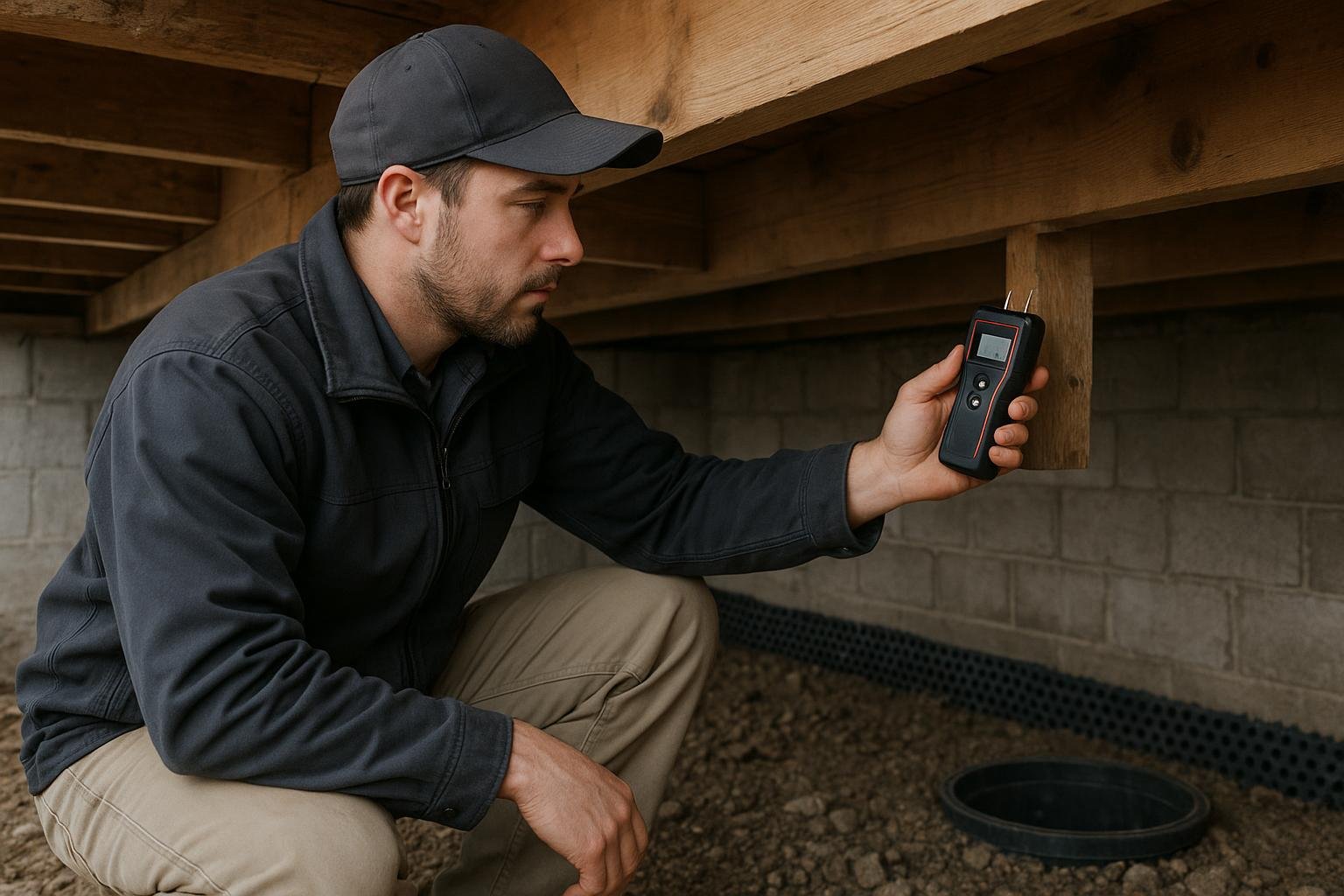
Moisture readings are taken with a pin or pinless moisture meter on wood framing. Some inspectors use a thermal imaging camera to identify cool, damp areas not yet visibly wet. The sump pit, if present, is checked for water level, pump function, and correct discharge. The inspector will also consider the home’s age and construction type, since clay tile weeping systems in older homes behave differently from modern perforated pipe systems. No verified price data for this inspection service has been supplied to this page; contact DryShield directly for current assessment information.
Temporary vs permanent fixes
Temporary measures can reduce immediate damage while you arrange professional repairs, but they do not address the underlying cause.
| Measure | What it does | Limitation | Permanent? |
|---|---|---|---|
| Portable dehumidifier | Reduces airborne humidity and condensation | Does not stop water entry; requires regular emptying or drain line | No |
| Redirecting downspouts | Reduces surface water reaching the foundation | Does not address groundwater or existing drainage failure | Partial |
| Patching cracks with hydraulic cement | Temporarily slows seepage through a specific crack | Does not bond permanently under hydrostatic pressure; crack can reopen | No |
| Polyurethane crack injection | Flexible waterproof seal within the crack | Addresses the crack only; does not resolve perimeter drainage issues | Yes, for that crack |
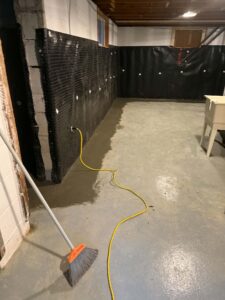
| Interior drainage system and sump pump | Intercepts and removes groundwater before it pools | Manages water rather than stopping it at the source | Yes, for managed drainage |
| Crawl space encapsulation | Seals the space from soil moisture and humid air | Must be combined with active drainage if groundwater entry is present | Yes, for moisture control |
The most durable outcomes combine drainage management with a sealed crawl space environment and corrected exterior grading. Addressing only one layer typically results in recurring moisture within a few seasons. See the crawl space encapsulation service page and the encapsulation pros, cons and ROI guide for more detail.
Frequently asked questions
Is a small amount of moisture in a crawl space normal?
Some seasonal humidity fluctuation is common in vented crawl spaces during summer. However, visible condensation on framing, damp soil that does not dry between rain events, or any standing water is not normal and warrants investigation. Wood framing can sustain mould growth at moisture content levels that do not feel obviously wet to the touch, so the threshold for concern is lower than most homeowners expect.
Can I encapsulate a crawl space myself?
A basic vapour barrier installation is within the capability of a careful DIYer, but full encapsulation involves sealing vents, insulating walls, managing drainage, and sometimes adding a dedicated dehumidifier. Errors in any of these steps can trap moisture rather than exclude it. If there is active water entry, that must be resolved before encapsulation, or the sealed space will hold water rather than exclude it.
Will a dehumidifier fix a wet crawl space?
A dehumidifier reduces airborne humidity and can prevent condensation-driven moisture from damaging wood framing. It will not stop groundwater from entering through cracks or the wall-floor joint. If the source is external water intrusion, a dehumidifier will run continuously without resolving the problem. It is a useful tool as part of a complete system, not a standalone solution for active leaks.
How does a wet crawl space affect the rest of the house?
Moisture in a crawl space migrates upward through the stack effect, raising humidity levels in the living areas above. This can cause condensation on windows, musty odours throughout the home, and conditions favourable to mould growth in wall cavities. Damp floor framing loses structural strength over time, and wet insulation loses its thermal resistance, reducing energy efficiency. See the crawl space moisture and mould guide for more detail.
What is the difference between a vapour barrier and crawl space encapsulation?
A vapour barrier is typically a single layer of polyethylene sheeting placed on the crawl space floor to slow soil moisture evaporation. Crawl space encapsulation is a more comprehensive system that covers the floor and walls with a thicker reinforced liner, seals foundation vents, and often includes a drainage layer, a sump pump, and a dehumidifier. See the crawl space encapsulation vs. vapour barrier guide for a detailed comparison.
How long does crawl space encapsulation last?
A properly installed encapsulation system using a reinforced liner is designed to last for many years, though the specific service life depends on the liner material, installation quality, and whether any active water entry was resolved before installation. Drainage components, including the sump pump, require periodic maintenance. No verified lifespan data specific to Ontario conditions has been supplied to this page; ask your contractor for product specifications and warranty terms.
Does a wet crawl space affect home insurance or resale value?
Active water damage in a crawl space is typically a material defect that must be disclosed in a real estate transaction in Ontario. Evidence of moisture or mould can affect sale price or conditions. Home insurance generally does not cover gradual moisture damage; it may cover sudden water damage depending on the policy. See the home insurance and waterproofing guide for more detail.
When does a wet crawl space require a sump pump?
A sump pump is appropriate when groundwater accumulates faster than it can drain away through the soil, when the crawl space floor sits at or near the local water table, or when an interior drainage channel is installed to intercept perimeter seepage. If water only appears after exceptional rain events and drains within 24 hours, drainage correction and grading improvements may be sufficient.
If you are dealing with a wet crawl space and are not certain of the source, a professional assessment is the most efficient next step. DryShield offers free assessments for homeowners across Toronto, the GTA, and Ontario cottage country. Book a free assessment to have a technician identify the cause and walk you through the options that suit your home and budget. You can also use the basement leak diagnostic tool to narrow down the likely source before your appointment.