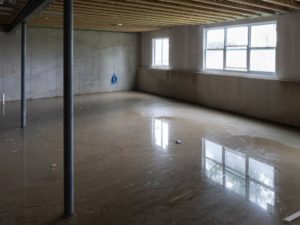
To water seal basement walls and floors effectively, you need to match the method to the source of moisture: surface dampness, hydrostatic pressure from saturated clay soil, or an active crack letting in groundwater. Applying a brush-on sealant over a structural crack, for example, will fail within one or two wet seasons because it addresses the symptom rather than the cause. This guide walks through every credible option, from interior coatings to full exterior membrane systems, so you can make an informed decision before spending a dollar.
Key Takeaways
- Surface sealers and coatings work only for minor condensation and capillary dampness. They cannot resist sustained hydrostatic pressure.
- Active cracks in poured concrete walls are best sealed with low-pressure polyurethane injection, which cures flexible and tolerates seasonal foundation movement.
- Interior weeping tile systems manage water that has already entered the wall assembly. Exterior membrane systems stop it before it reaches the wall.
- Heavy clay soil across most of the GTA holds water against foundation walls for weeks after rain or spring thaw, making hydrostatic pressure the most common root cause of wet basements in the region.
- A free on-site inspection is the only reliable way to confirm which method is appropriate. The wrong fix costs as much as the right one.
Definitions and Scope
When homeowners decide to water seal basement spaces, they use the term to describe anything from painting a waterproof coating on a wall to installing a full drainage system around the footing. In the trade, the methods fall into three categories: surface treatments (coatings, parging, crystalline products), crack-specific repairs (polyurethane or epoxy injection), and drainage-based systems (interior or exterior weeping tile, sump pumps, membrane installation).
Each category addresses a different failure mode. Surface treatments slow vapour transmission through intact concrete. Crack injection seals a discrete pathway where liquid water is entering. Drainage systems manage the volume of groundwater pressing against the foundation by giving it somewhere to go other than through the wall. Confusing these categories is the single most common reason basement waterproofing fails prematurely.
The basement waterproofing services overview on this site covers the full range of solutions DryShield offers across Toronto, the GTA and Ontario cottage country. This guide focuses specifically on the decision-making process for choosing and applying the right seal.
Why This Matters for Ontario Homeowners
Ontario’s geology and climate create conditions that are harder on foundations than most homeowners realise. The heavy clay soil that underlies most of the GTA, from Scarborough through Mississauga and up into Vaughan and Markham, absorbs rainfall slowly and holds it against foundation walls for extended periods. That sustained contact generates hydrostatic pressure, which pushes water through any weakness in the concrete: a shrinkage crack, a cold joint at the footing, or a section of deteriorated parging.
Spring thaw is the most dangerous window. Frozen ground thaws from the surface down, trapping meltwater above the still-frozen subsoil and directing it straight toward the foundation. Summer downpours are the second peak failure period, particularly in older Toronto neighbourhoods where original clay weeping tile installed decades ago has silted up completely and no longer drains.
Cottage-country properties in the Minden and Haliburton area face a different version of the same problem: shallower, sandier soils drain faster but freeze deeper, and seasonal occupancy means a leak can go undetected for months before causing serious structural or mould damage.
Canada Mortgage and Housing Corporation (CMHC) guidance at cmhc-schl.gc.ca confirms that moisture intrusion is the leading cause of premature foundation deterioration in Canadian residential construction, a finding consistent with what DryShield’s crews observe across thousands of inspections every year.
Your Options for How to Water Seal a Basement
Option 1: Interior Waterproof Coatings and Crystalline Products
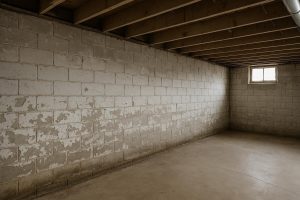
Brush-on or roll-on coatings, including hydraulic cement, crystalline waterproofing compounds and elastomeric paint, are applied directly to the interior face of the foundation wall. Crystalline products work by reacting with moisture in the concrete to form insoluble crystals that block capillary pores. They are genuinely effective at reducing vapour transmission through sound, uncracked concrete.
These products are best suited to walls that are damp from condensation or minor capillary seepage, not walls under active hydrostatic pressure. If water is visibly entering through a crack or at the floor-wall joint, a coating applied over the top will blister and delaminate within one or two wet seasons. Limitations include zero structural benefit and no ability to handle a moving crack. Attempting to water seal basement walls this way when hydrostatic pressure is the real cause is the most common and costly mistake homeowners make.
Option 2: Polyurethane Crack Injection
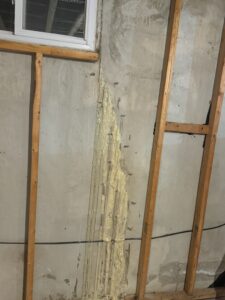
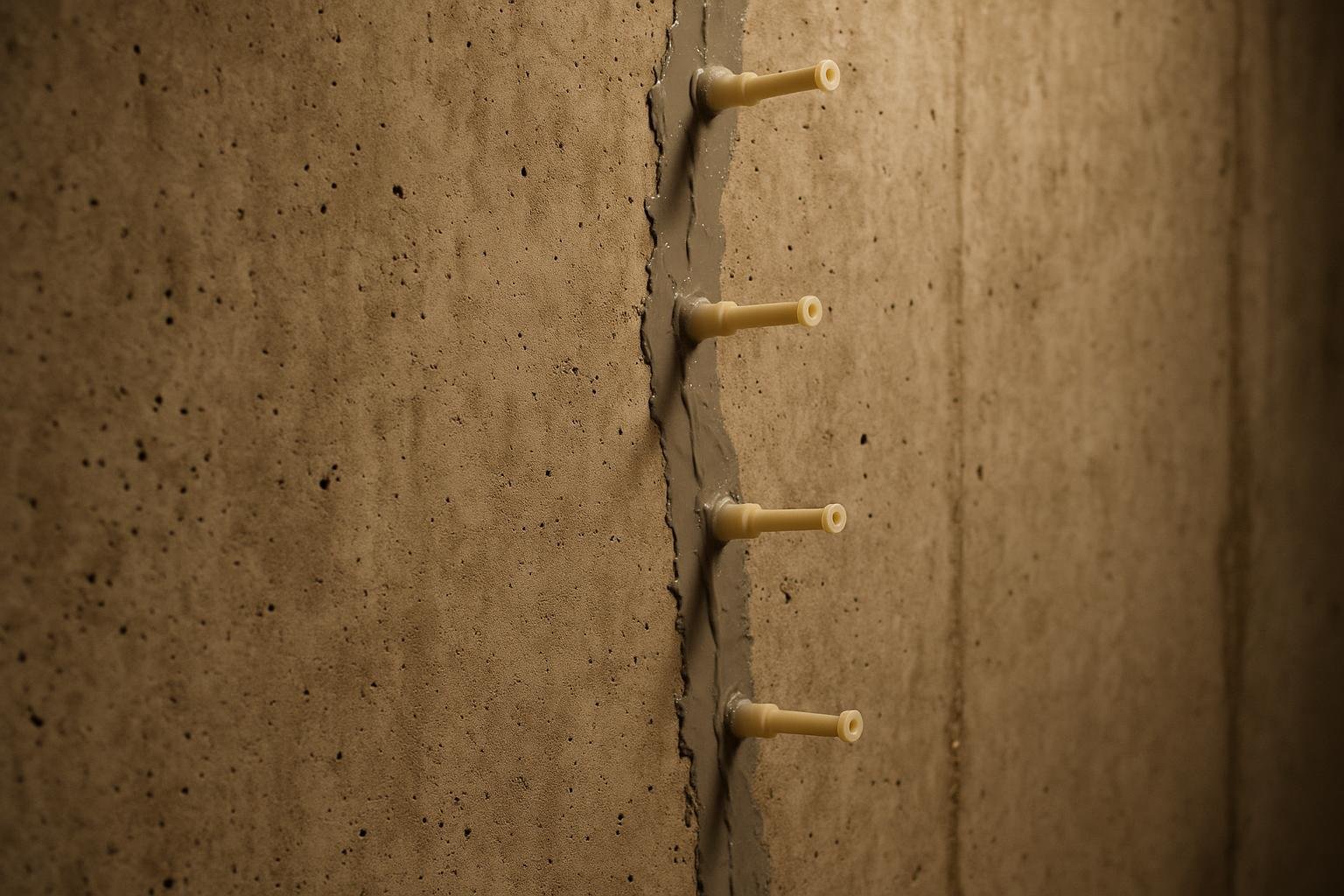
Low-pressure polyurethane injection is the correct repair for an active shrinkage crack in a poured concrete wall. The process involves installing injection ports along the crack at regular intervals, sealing the face of the crack with a surface paste, then injecting expanding polyurethane foam under low pressure until it fills the crack from the interior face to the exterior face of the wall.
Polyurethane cures flexible, which is critical in Ontario because foundations move slightly with seasonal freeze-thaw cycles. A rigid filler would re-crack at the same location. This method is best for discrete, non-structural cracks and typically costs in the $600 to $900 range per crack, depending on length and accessibility. It is not appropriate for horizontal cracks, which indicate lateral soil pressure and require structural assessment.
Epoxy injection is reserved for structural cracks where the wall must be re-bonded and rigidity is needed. The polyurethane crack injection service page explains the port-and-paste method in detail.
Option 3: Interior Weeping Tile System with Sump Pump
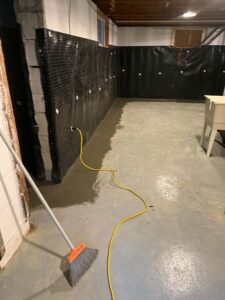
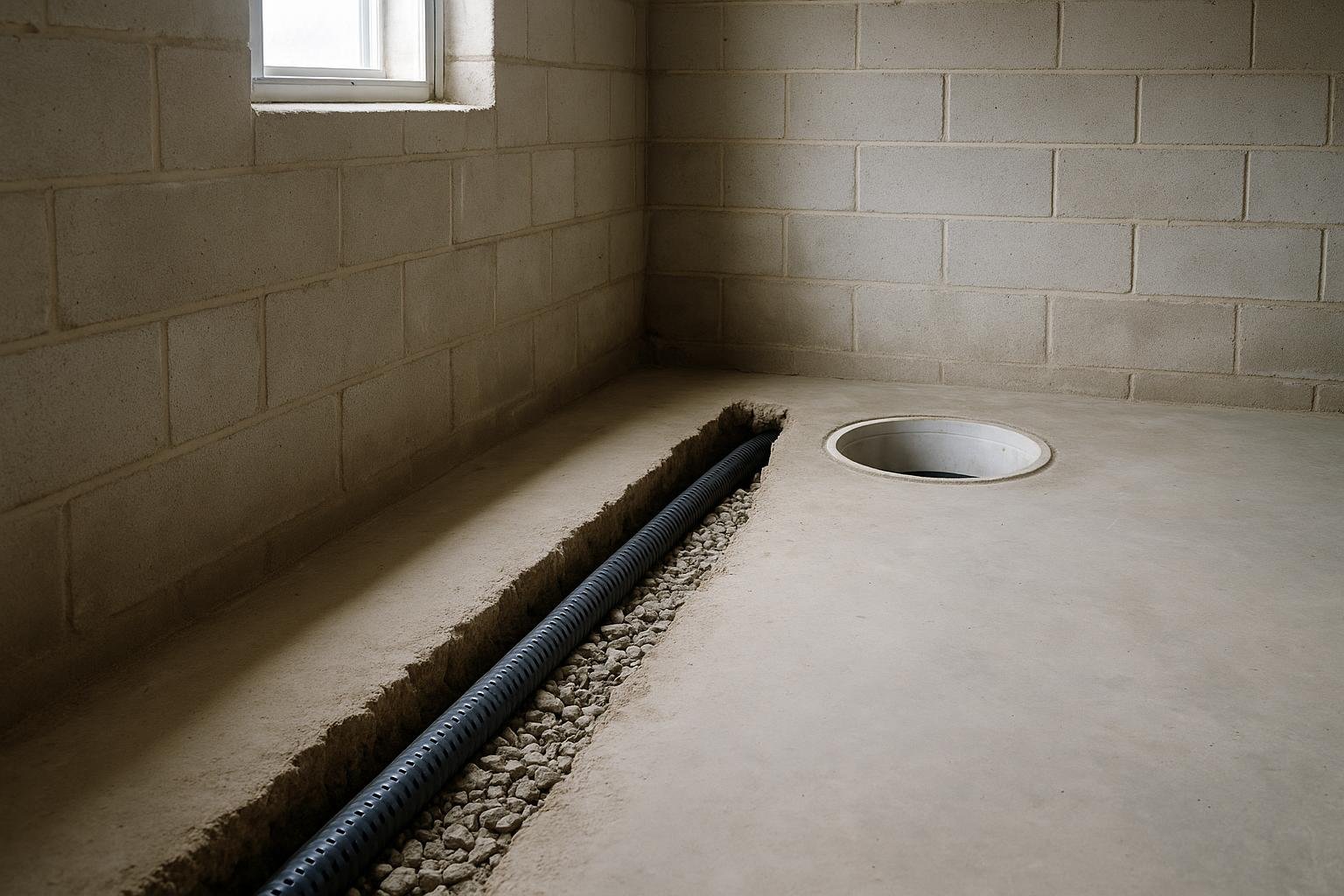
An interior drainage system does not stop water from entering the wall. It intercepts water at the base of the wall and directs it to a sump basin before it can spread across the floor. The installation involves breaking up the concrete perimeter, laying perforated weeping tile in a bed of clear stone, installing a vapour barrier up the wall face, and re-pouring the concrete over the drainage channel.
This approach is best when exterior excavation is not practical (due to decks, landscaping, or adjacent structures) or when the budget does not support full exterior work. It is a legitimate, long-term solution when installed correctly. The limitation is that it manages water rather than excluding it, so wall deterioration from ongoing moisture contact can continue over time.
Option 4: Exterior Waterproofing Membrane System
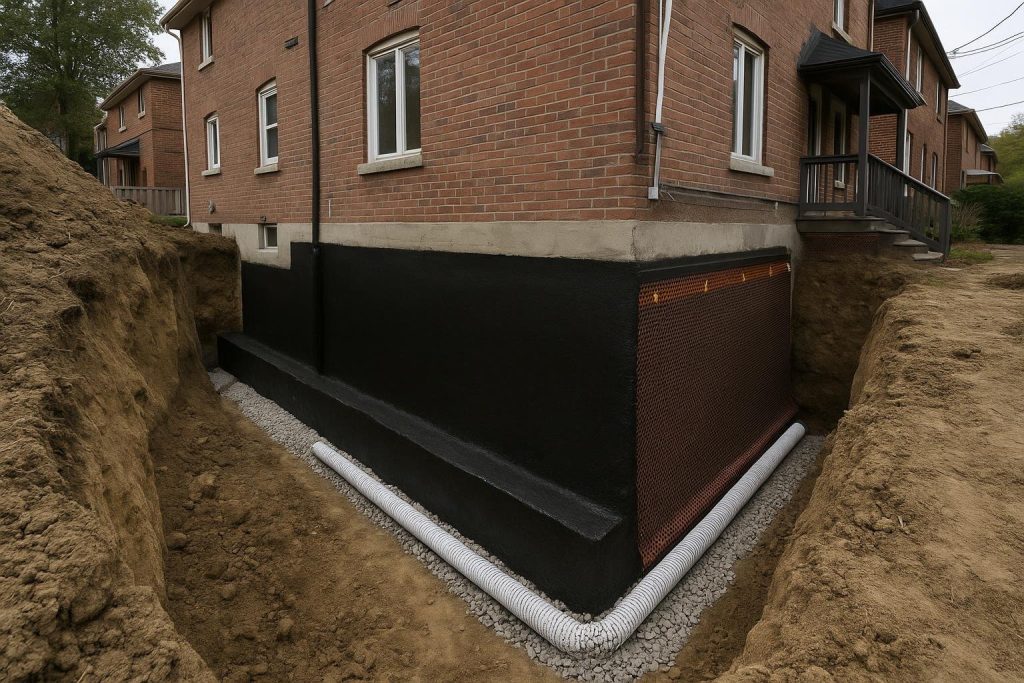
Full exterior waterproofing is the most comprehensive way to water seal a basement. It involves excavating to the footing, applying hydraulic cement parging to fill voids in the wall surface, applying a rubberised waterproof membrane, installing a dimpled drainage board to protect the membrane and create an air gap, laying new weeping tile in clear stone at the footing, and backfilling with corrected grade to direct surface water away from the house.
This is the only method that addresses hydrostatic pressure at its source. For an average Toronto semi-detached or detached home, the investment typically runs $6,000 to $9,000 depending on linear footage, depth of excavation and site access. It is the preferred solution for walls showing significant water ingress, efflorescence, or spalling concrete.
Option 5: Weeping Tile Replacement
Many Toronto homes built before the 1980s have original clay or concrete weeping tile that has fully silted up. Replacing it, either from the exterior during a membrane job or from the interior, restores the drainage capacity around the footing that the original system was designed to provide. Without functioning weeping tile, even a sound membrane will eventually face hydrostatic pressure it cannot resist indefinitely.
Option 6: Sump Pump Installation or Upgrade
A sump pump is the discharge point for any interior drainage system and an essential backup for exterior systems in high-water-table areas. A correctly sized pump with a battery backup unit protects against power outages during the storms that are most likely to cause flooding. Sump pump installation is often combined with interior weeping tile work rather than performed as a standalone measure.
Options Compared
| Method | Best For | Typical Lifespan | Relative Cost | Disruption |
|---|---|---|---|---|
| Interior coatings / crystalline | Vapour dampness, capillary seepage through intact concrete | 5 to 10 years (if correctly applied) | Lowest | Minimal, interior only |
| Polyurethane crack injection | Active shrinkage cracks in poured concrete walls | Permanent when correctly injected | Low to moderate ($600 to $900 per crack) | Minimal, interior, no excavation |
| Interior weeping tile + sump pump | Perimeter seepage, high water table, limited exterior access | 20 to 25 years with pump maintenance | Moderate | Moderate, jackhammer perimeter, interior work |
| Exterior membrane system | Sustained hydrostatic pressure, significant wall deterioration | Lifetime when properly installed | Higher ($6,000 to $9,000 typical Toronto home) | High, full excavation to footing |
| Weeping tile replacement | Silted or failed original drainage tile | 25 to 30 years | Moderate to higher (often combined with membrane) | High if exterior, moderate if interior |
| Sump pump installation / upgrade | High water table, interior drainage system discharge | 7 to 10 years (pump mechanism) | Low to moderate | Low, basin excavation only |
The table above shows that no single method is universally correct. Interior coatings are the least expensive but also the least capable under real hydrostatic pressure. Exterior membrane systems carry the highest upfront cost but address the root cause and carry the longest service life. Crack injection sits in a category of its own because it targets a specific, identifiable entry point rather than the wall as a whole. Most homes with a serious moisture problem need a combination: injection for any discrete cracks, plus either an interior or exterior drainage solution for perimeter seepage.
How to Choose the Right Method
Choose interior coatings if the wall is structurally sound, there are no visible cracks, and the dampness appears as a white mineral deposit (efflorescence) or a general surface moisture rather than running water. This is a maintenance-level treatment, not a waterproofing system.
Choose polyurethane crack injection if you can identify a specific crack that is the source of water entry. A single crack in a poured concrete wall is one of the most cost-effective repairs in the trade when caught before it widens. Use the basement leak diagnostic tool to confirm the source before booking any repair.
Choose an interior weeping tile system if exterior excavation is not practical, for example if a deck, addition, or neighbouring structure sits directly against the foundation wall, or if the primary problem is a high water table pushing water up through the floor-wall joint rather than through the wall itself. This is a sound way to water seal basement perimeters when excavation is off the table.
Choose exterior waterproofing if the wall shows significant deterioration, if multiple cracks are present, if interior methods have already been tried and failed, or if you want the most permanent solution available. This is also the correct choice when the original weeping tile has failed and needs replacement, since the excavation required for tile replacement makes adding the membrane a logical and cost-efficient step. Deciding how to water seal basement walls from the outside is best confirmed during a free on-site inspection.
A horizontal crack in a block or poured wall is a structural warning sign, not a waterproofing problem. It indicates lateral soil pressure on the wall and requires an engineer’s assessment before any sealing work begins.
Costs and Timelines
| Cost Driver | Why It Affects Price | Approximate Impact |
|---|---|---|
| Linear footage of wall treated | More wall means more membrane, more weeping tile, more labour | Primary driver, priced per linear foot |
| Depth of excavation | Deeper footings (common in older Toronto homes) require more excavation time and shoring | Significant, can add 20 to 30% to exterior jobs |
| Site access | Narrow laneways, fences, decks and landscaping restrict equipment and hand-digging increases labour | Moderate to significant |
| Number and length of cracks | Each crack injection is a discrete repair. Multiple cracks multiply the cost | $600 to $900 per crack (approximate) |
| Condition of existing weeping tile | Fully silted tile must be replaced. Partial blockage may be cleared | Moderate, replacement adds material and labour |
| Sump basin and pump specification | Battery backup, alarm systems and higher-capacity pumps increase material cost | Low to moderate |
As a general reference, a single foundation crack injected from the interior runs approximately $600 to $900. A full exterior waterproofing system on an average Toronto semi-detached or detached home typically falls in the $6,000 to $9,000 range. Interior weeping tile systems generally come in below the exterior figure. Every final number depends on a site inspection. The cost drivers above explain why two homes on the same street can receive quotes that differ by thousands of dollars. For a detailed breakdown, the basement waterproofing cost guide covers Ontario-specific pricing in full.
Timelines: crack injection is typically completed in a single visit of two to four hours. Interior weeping tile work on an average home takes two to three days. Full exterior waterproofing, including excavation and backfill, generally runs three to five days depending on linear footage and access.
Risks and Common Mistakes
| Symptom | Likely Cause | Correct Fix |
|---|---|---|
| White powder on wall surface (efflorescence) | Mineral salts carried by water moving through concrete | Identify and stop the water source. Surface treatment alone will not prevent recurrence |
| Water at floor-wall joint after heavy rain | Failed or silted weeping tile. Hydrostatic pressure at footing | Interior or exterior weeping tile system. Sump pump |
| Crack weeping water during spring thaw | Shrinkage crack under seasonal hydrostatic pressure | Polyurethane crack injection |
| Damp wall with no visible crack or joint failure | Capillary moisture through porous concrete or failed parging | Crystalline coating or exterior membrane depending on severity |
| Coating blistering or peeling within one season | Applied over active hydrostatic pressure the coating cannot resist | Remove coating. Address drainage. Apply appropriate system |
The most common mistake homeowners make is applying a brush-on product to a wall that is wet from hydrostatic pressure. No coating bonds reliably to a wet surface under outward pressure. The water simply finds the path of least resistance around or behind the product. The second most common mistake is injecting a crack without confirming it is the only entry point. If the floor-wall joint is also leaking, the injection solves half the problem and the basement stays wet.
Skipping the sump pump on an interior weeping tile installation is a third frequent error. The drainage channel collects water and routes it to the basin, but without a functioning pump the basin fills and the system backs up. A battery backup unit is not optional in areas prone to power outages during storms.
Never apply hydraulic cement or a surface coating over an active horizontal crack without first consulting a structural engineer. Sealing a crack that is under lateral soil pressure can cause the wall to deflect further inward.
How the Process Works
- Free on-site inspection and moisture assessment. A technician examines the wall surfaces, floor, window wells and exterior grade, uses a moisture meter to map wet zones, and identifies whether the source is a crack, the floor-wall joint, capillary seepage or surface drainage failure.
- Written scope with linear-foot pricing. The inspection produces a written proposal specifying the method, materials and price per linear foot or per crack, so you know exactly what is being done and why.
- Preparation. For exterior work, excavation proceeds to the footing. For interior work, the perimeter concrete is broken with a jackhammer. For crack injection, the crack face is cleaned and ports are installed at intervals along its length.
- Core repair or membrane installation. Exterior: hydraulic cement parging fills voids, rubberised membrane is applied to the wall, dimpled drainage board is installed over the membrane. Interior: weeping tile is laid in clear stone, vapour barrier is run up the wall face. Crack injection: polyurethane is injected under low pressure until it fills the full depth of the crack.
- Drainage restoration. New weeping tile is bedded in clear stone at the footing (exterior) or routed to the sump basin (interior). The sump pump is installed or inspected and tested.
- Reinstatement. Exterior: backfill is placed and grade is corrected to direct surface water away from the foundation. Interior: concrete is re-poured over the drainage channel.
- Final inspection and warranty documentation. The completed work is inspected, the warranty is issued, and the homeowner receives documentation of what was installed.
Frequently Asked Questions
What is the difference between waterproofing and water sealing a basement?
Waterproofing refers to a system that prevents water from entering the foundation assembly, typically through a membrane, drainage tile and sump pump working together. To water seal basement surfaces is a broader term that includes surface coatings and crack-specific repairs. A coating seals pores in the concrete surface. A waterproofing system manages the volume and pressure of groundwater around the entire foundation.
Can I water seal a basement from the inside?
Yes, and in many cases interior methods are the practical choice. Polyurethane crack injection, interior weeping tile systems and crystalline coatings are all applied from the inside. The key is matching the interior method to the actual cause of moisture. Interior drainage systems manage water effectively but do not stop it from contacting the wall, so they are not a substitute for exterior membrane work when wall deterioration is already advanced.
How long does polyurethane crack injection last?
When injected correctly under low pressure so that the foam fills the full depth of the crack, polyurethane injection is a permanent repair. The material cures flexible, so it accommodates the minor seasonal movement that poured concrete foundations experience in Ontario’s freeze-thaw climate without re-cracking at the same location. Epoxy injection, used for structural cracks, cures rigid and is not appropriate where movement is expected.
Does exterior waterproofing require a building permit in Ontario?
Most foundation waterproofing work in Ontario does not require a building permit because it is classified as repair and maintenance rather than new construction. However, requirements vary by municipality, and any work that involves altering the drainage pattern of the lot or modifying the structure may trigger a permit requirement. The Ontario Building Code sets the baseline. Your local building department has the final word. DryShield confirms permit requirements as part of the scoping process.
How do I know if my weeping tile has failed?
Signs of failed weeping tile include water consistently appearing at the floor-wall joint after rain or snowmelt, a sump pump that runs continuously during wet periods, and efflorescence concentrated at the base of the wall. Older Toronto homes with original clay tile installed before the 1980s should be treated as having failed tile until a camera inspection confirms otherwise. Silted tile cannot be flushed back to full function. Replacement is the correct repair.
Will a dehumidifier solve a wet basement?
A dehumidifier reduces relative humidity in the air but does nothing to address liquid water entering through a crack or at the floor-wall joint. It is a comfort measure, not a waterproofing solution. Running a dehumidifier in a basement with an active leak delays the repair while the water continues to saturate the wall assembly, potentially promoting mould growth behind finished surfaces.
How much does it cost to water seal a basement in Ontario?
The cost depends entirely on the method and the scope. A single crack injection runs approximately $600 to $900. An interior weeping tile system for an average home typically costs less than a full exterior job. Full exterior waterproofing on a Toronto semi-detached or detached home generally falls in the $6,000 to $9,000 range, with the final figure depending on linear footage, excavation depth and site access. Every quote should follow a free on-site inspection.
Is exterior or interior waterproofing better?
Exterior waterproofing addresses hydrostatic pressure at its source and is the more comprehensive solution. Interior systems are effective and long-lasting but manage water rather than excluding it. The right choice depends on the severity of the problem, the condition of the wall, and practical constraints like site access and budget. Many homes benefit from a combination: exterior membrane on the most exposed walls and interior drainage where excavation is not feasible. The interior vs. exterior waterproofing comparison covers this decision in detail.
Can I seal a basement wall crack myself?
DIY hydraulic cement plugs can temporarily slow an active leak, but they do not fill the full depth of the crack and will not hold under sustained hydrostatic pressure. Low-pressure polyurethane injection requires specific equipment and technique to ensure the foam reaches the exterior face of the wall. An incomplete injection leaves a void that water will find. Professional injection is the only method that carries a warranty against re-entry at the same location.
How soon after heavy rain should I call for an inspection?
Calling during or immediately after a rain event is actually ideal. The technician can observe water entry in real time, which makes diagnosis faster and more accurate. If the basement is dry when inspected, the technician relies on staining, efflorescence and moisture readings to reconstruct what happened. Either way, do not wait for the problem to worsen. Water that enters through a crack carries dissolved minerals that widen the crack over successive wet seasons.
If your basement is showing signs of moisture, whether a damp wall, a weeping crack, or water at the perimeter, the DryShield Team is ready to help. Request a free inspection and get a written scope with no obligation. We serve Toronto, the GTA, and Ontario cottage country from a single call.