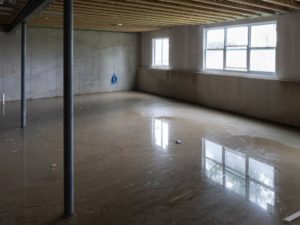
Basement sealing and waterproofing describes the full range of methods used to stop water from entering a foundation, whether through cracks in poured concrete, failed weeping tile, or hydrostatic pressure pushing through the wall from saturated soil. Understanding which approach fits your situation is the first step toward a dry, usable basement. The right method depends on where water is entering, how old the foundation is, and whether the root cause is a discrete crack or a system-wide drainage failure.
Key Takeaways
- Hydrostatic pressure from clay-heavy GTA soil is the most common root cause of wet basements, not rainfall alone.
- A single injected crack typically costs $600 to $900; a full exterior waterproofing system on a Toronto semi or detached home generally runs $6,000 to $9,000.
- Interior weeping tile systems manage water that has already entered the wall plane; exterior systems stop it before it reaches the foundation.
- Older Ontario homes often have fully silted-up original weeping tile, which makes a drainage upgrade necessary rather than optional.
- Spring thaw and heavy summer downpours are the two peak failure windows across the GTA and cottage country.
Definitions and Scope
Sealing and waterproofing are related but distinct actions. Sealing refers to closing a specific opening, such as a crack or a cold joint at the footing, so water cannot pass through that point. Waterproofing refers to a broader system that manages water across the entire foundation envelope, typically combining a membrane, a drainage layer, and a collection system that routes water away from the footing.
In practice, most jobs require both. A polyurethane crack injection seals the crack; a rubberised membrane and new weeping tile bedded in clear stone complete the waterproofing system around it. The Canada Mortgage and Housing Corporation (CMHC) guidance on residential moisture control confirms that drainage management, not surface sealing alone, is the foundation of a long-term dry basement.
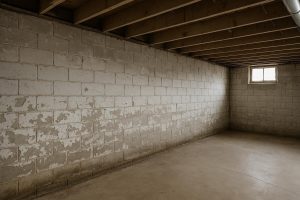
The scope of basement sealing and waterproofing on any given home is shaped by foundation type (poured concrete, concrete block, or stone rubble), soil conditions, depth to the footing, and whether the original drainage system is still functional. Across the GTA, heavy clay soil holds water against the wall long after rain stops, sustaining hydrostatic pressure that surface coatings cannot resist on their own.
Why This Matters
A wet basement is rarely just a cosmetic problem. Sustained moisture promotes mould growth, degrades wood framing, corrodes steel components, and can cause efflorescence and spalling in the concrete itself. Left unaddressed, hydrostatic pressure will widen an existing crack over successive freeze-thaw cycles until it becomes a structural concern.
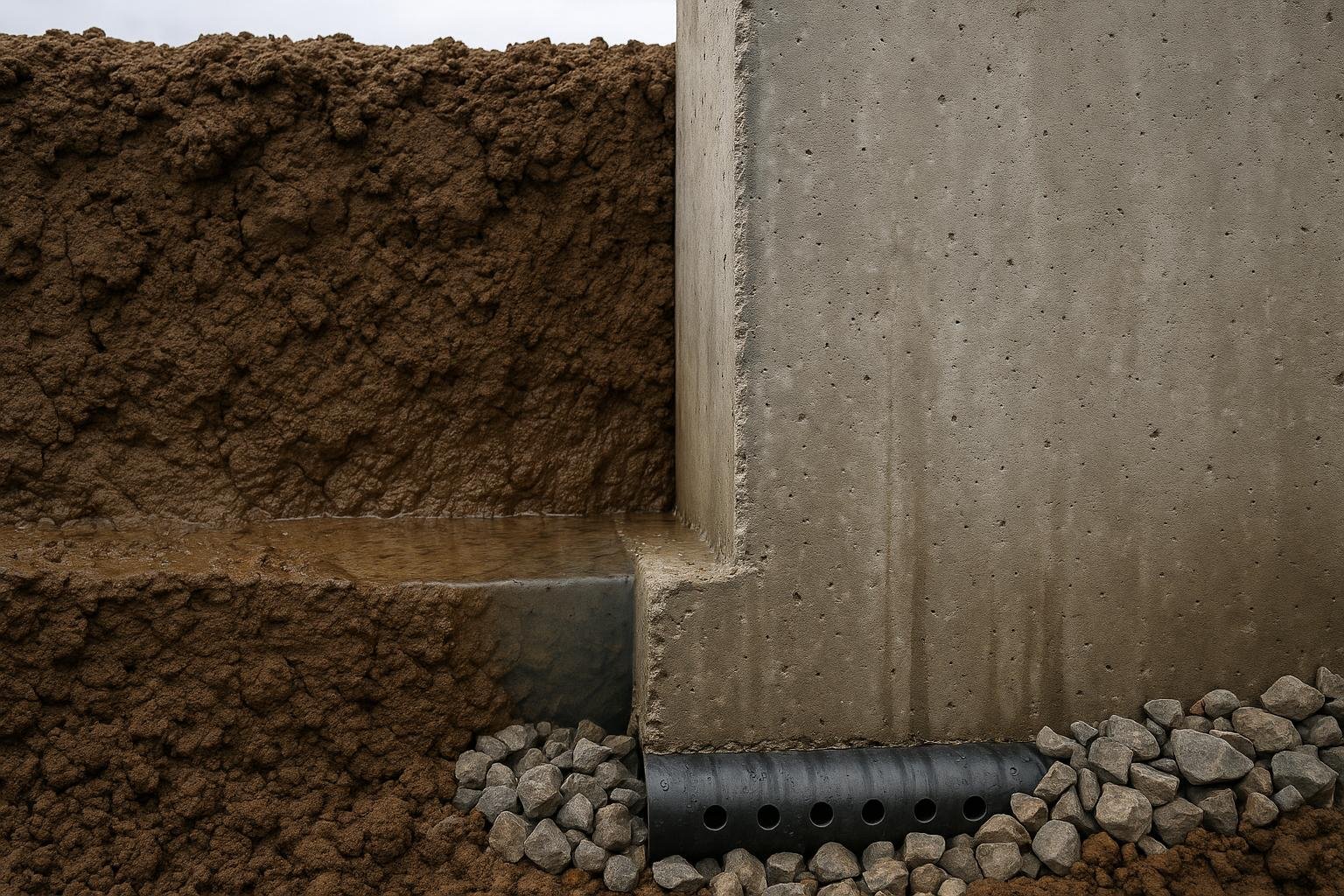
Ontario’s climate creates two distinct high-risk windows. Spring thaw drives snowmelt into soil that is still frozen below the surface, forcing water laterally toward the foundation. Summer downpours, particularly the intense convective storms common across the GTA, overwhelm surface drainage and saturate backfill within hours. Homes with failed or silted-up original weeping tile have no path for that water to escape, so it finds the foundation wall instead.
In much of the GTA, the original weeping tile installed at construction is clay or concrete pipe that has been in the ground for 40 to 80 years. Silt and root intrusion routinely block these systems completely, making the drainage upgrade the most important part of any waterproofing job.
Cottage-country properties in the Minden and Haliburton area face a different version of the same problem. Shallower bedrock, thinner soil profiles, and seasonal occupancy mean that freeze-thaw cycling acts on an unheated foundation for months at a time, widening cracks that might otherwise remain stable in a continuously heated GTA home. For a detailed look at the full range of options, the basement waterproofing services overview covers every method DryShield offers.
Your Options
Polyurethane Crack Injection
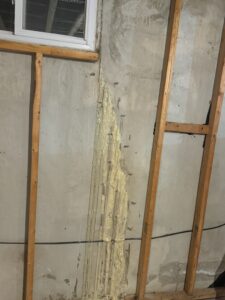
Low-pressure polyurethane injection is the standard repair for a non-structural crack in a poured concrete wall. Ports are surface-mounted along the crack at regular intervals, and liquid polyurethane is injected at low pressure until it fills the crack from the footing to the surface. The material cures flexible, so it tolerates the seasonal movement that is normal in Ontario foundations without re-cracking. This method works from the interior, requires no excavation, and is typically complete in a few hours.
Best for: isolated vertical or diagonal cracks in poured concrete walls where the wall itself is structurally sound. Not suitable for horizontal cracks, which indicate lateral soil pressure and require a structural assessment, or for block foundations where water travels through mortar joints rather than discrete cracks.
Epoxy Crack Injection
Epoxy injection is used specifically where a crack must be re-bonded structurally, not just sealed against water. Epoxy cures rigid and bonds to concrete with very high tensile strength, making it the correct choice when a crack has compromised the load-carrying capacity of the wall. Because it cures rigid, it is not appropriate for active cracks that continue to move seasonally.
Best for: structural cracks confirmed by an engineer where re-bonding the wall section is the goal. Limitations include the rigid cure, which can cause the crack to re-open adjacent to the injection if movement continues.
Interior Weeping Tile System
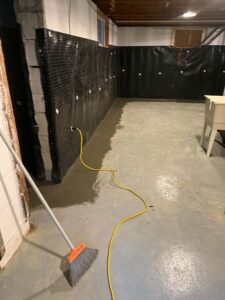
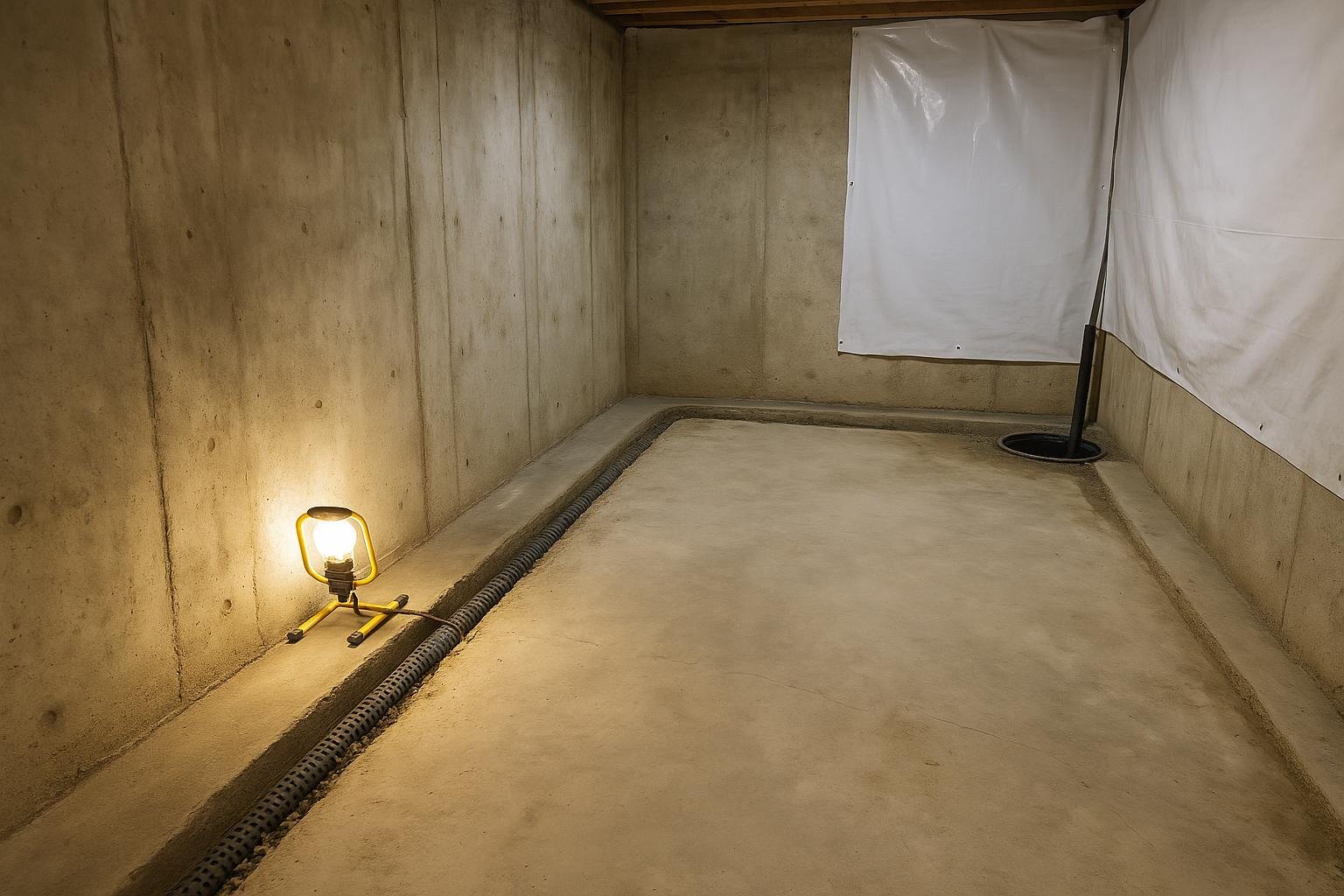
An interior system involves breaking the perimeter of the basement floor with a jackhammer, installing a perforated drainage pipe at the base of the wall, routing that pipe to a sump basin, and re-pouring the concrete. A vapour barrier is run up the wall to direct any seepage that passes through the wall into the drainage channel rather than onto the floor. The sump pump then discharges collected water away from the foundation.
Best for: homes where exterior excavation is not practical due to finished landscaping, close lot lines, or buried utilities. Also the preferred approach when the goal is to manage water that has already entered the wall plane. Interior systems do not stop water from contacting the exterior of the foundation.
Exterior Waterproofing with Membrane and Weeping Tile
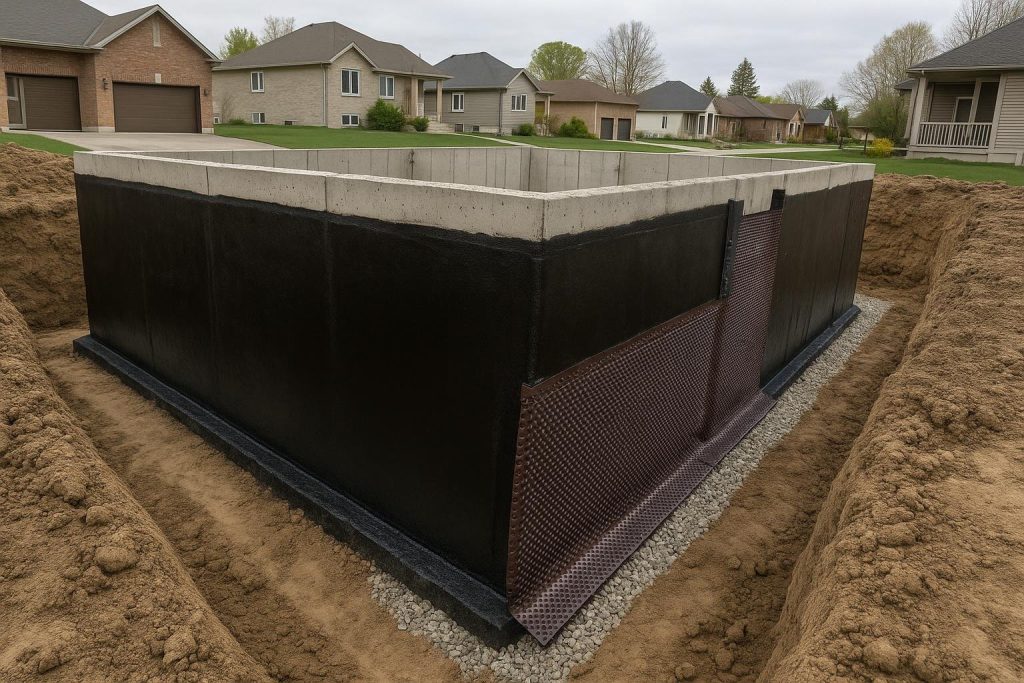
Exterior waterproofing is the most comprehensive approach to basement sealing and waterproofing. The foundation is excavated to the footing, voids and cracks are filled with hydraulic cement parging, a rubberised waterproofing membrane is applied to the wall, a dimpled drainage board is installed over the membrane to protect it and create a drainage plane, new weeping tile is laid in clear stone at the footing, and the trench is backfilled with grade correction to direct surface water away from the house.
Best for: homes with chronic water entry, failed original weeping tile, or where a long-term solution is the priority. This is the only method that stops water before it contacts the foundation wall. Limitations include cost and disruption: excavation requires access around the perimeter and typically takes two to five days depending on linear footage and depth.
Sump Pump Installation or Upgrade
A sump pump is a component of a drainage system, not a standalone waterproofing method. It collects water that the weeping tile routes to the basin and discharges it away from the foundation. A battery backup unit is essential for Ontario homes, where power outages during the storms that cause flooding are common. For seasonal cottages, a monitored backup system is particularly important because the property may be unoccupied when a pump fails.
Best for: any home with an interior drainage system, and as an upgrade when the existing pump is more than seven to ten years old or lacks a backup. Limitations: a sump pump cannot compensate for a drainage system that is not collecting water effectively.
Parging and Surface Coatings
Hydraulic cement parging fills surface voids and minor honeycombing in a foundation wall. Crystalline waterproofing coatings penetrate the concrete matrix and block capillary moisture transmission. These are appropriate for minor seepage through the wall face but will not hold against active hydrostatic pressure or a discrete crack. They are often used as part of an exterior system rather than as a standalone fix.
Best for: minor surface seepage, as a complement to a full system, or on interior walls after the drainage system is in place. Not a substitute for membrane waterproofing or crack injection where water is entering through a specific path.
Options Compared
| Method | Best For | Typical Lifespan | Relative Cost | Disruption |
|---|---|---|---|---|
| Polyurethane crack injection | Isolated non-structural cracks, poured concrete | Long-term if crack is stable | Lowest | Minimal, interior only, no excavation |
| Epoxy crack injection | Structural cracks requiring re-bonding | Permanent where movement has stopped | Low to moderate | Minimal, interior only |
| Interior weeping tile and sump | Chronic seepage, impractical exterior access | 20 to 30 years with pump maintenance | Moderate | Moderate, floor breaking required |
| Exterior membrane and weeping tile | Comprehensive protection, failed original tile | 25 to 40 years | Highest | High, full excavation required |
| Sump pump installation | Component of drainage system, backup power | 7 to 12 years per pump unit | Low to moderate | Low, basin work only |
| Parging and surface coatings | Minor surface seepage, complement to system | 5 to 15 years depending on conditions | Lowest | Minimal |
The table shows that no single method covers every scenario. Crack injection handles a specific, bounded problem quickly and at low cost. Exterior waterproofing costs more and takes longer but is the only approach that keeps water away from the foundation wall entirely. Interior systems sit in the middle: they manage water effectively without excavation but do not prevent the wall from getting wet. Most homes with chronic water problems need a combination, typically crack injection for any discrete cracks plus a drainage system upgrade.
How to Choose
Choosing the right basement sealing and waterproofing method starts with identifying where and how water is entering. Choose polyurethane crack injection if you have one or two identifiable cracks in a poured concrete wall, the wall is structurally sound, and water entry is clearly coming through those cracks. This is the fastest and most cost-effective path when the problem is discrete.
Choose an interior weeping tile system if water is entering along the base of the wall or across a wide section of the perimeter, exterior excavation is not practical, or you need a solution that can be completed without disturbing landscaping, decks, or driveways. The interior waterproofing options page explains how the system is configured for different basement layouts.
Choose exterior waterproofing if you want the most permanent solution, if the original weeping tile is confirmed to be failed or silted, or if the home has a history of repeated water entry despite previous interior repairs. Exterior work is also the right choice when the foundation wall itself shows deterioration that needs to be addressed from the outside.
Choose epoxy injection only when an engineer has confirmed the crack is structural and the wall needs to be re-bonded. For all other cracks, polyurethane is the correct material because it cures flexible.
If you are unsure which method of basement sealing and waterproofing applies to your home, a free on-site moisture assessment is the most reliable starting point. Water entry patterns, soil conditions, and foundation type all affect the recommendation, and none of those factors can be assessed accurately from a description alone.
Costs and Timelines
Prices vary with the scope of work, foundation depth, soil conditions, and site access. The figures below are approximate ranges based on completed jobs across the GTA and Ontario; a site inspection is always required before a firm quote can be issued.
| Cost Driver | Why It Affects Price | Approximate Range |
|---|---|---|
| Number of cracks injected | Each crack requires ports, material, and labour | $600 to $900 per crack |
| Linear footage of exterior excavation | More perimeter means more excavation, membrane, and weeping tile | Major driver in $6,000 to $9,000 range |
| Depth to footing | Deeper foundations require more excavation time and shoring | Adds cost on homes deeper than 7 feet |
| Site access constraints | Narrow lots, decks, or driveways over the work zone increase labour | Variable, assessed on inspection |
| Sump pump and basin | Basin size, pump capacity, and battery backup specification | Included in system quotes; varies by spec |
| Backfill and grade correction | Proper slope away from the foundation is part of every exterior job | Included in exterior system pricing |
A single polyurethane crack injection is the most affordable entry point, typically $600 to $900. A full exterior waterproofing system on an average Toronto semi or detached home runs roughly $6,000 to $9,000 depending on linear footage and excavation depth. Interior weeping tile systems generally fall below the exterior range. For a detailed breakdown of what drives the final number, the foundation waterproofing cost guide covers each variable in depth. The foundation crack sealing cost guide focuses specifically on injection pricing across Ontario.
Risks and Common Mistakes
The most common mistake is treating the symptom rather than the cause. Applying a surface coating over a crack that is actively moving will not hold. The coating bridges the crack temporarily, but hydrostatic pressure and seasonal movement will open it again, often within one or two freeze-thaw cycles.
A second frequent error is choosing an interior system when the exterior wall is deteriorating. Interior drainage manages water after it enters the wall plane, but it does not stop the wall from continuing to absorb moisture. Where parging has failed, the concrete is spalling, or the membrane has never been applied, the wall itself needs exterior attention.
Skipping the sump pump battery backup is a risk that becomes obvious only during a power outage in a storm. The same weather event that floods the soil around the foundation also cuts power in many Ontario neighbourhoods. A backup unit is not optional on any home that relies on a sump pump.
A third mistake is ignoring grade. If the soil around the foundation slopes toward the house, every rainfall event directs surface water toward the wall. No waterproofing system performs as designed when surface drainage is working against it. Grade correction is included in every exterior job for this reason.
| Symptom | Likely Cause | Correct Fix |
|---|---|---|
| Water along base of wall after rain | Failed or silted weeping tile, hydrostatic pressure | Interior or exterior weeping tile replacement |
| Water through a specific vertical crack | Shrinkage or settlement crack in poured concrete | Polyurethane crack injection |
| Horizontal crack with wall bowing inward | Lateral soil pressure, structural failure | Structural assessment before any waterproofing |
| White chalky deposits on wall face | Efflorescence from mineral-laden water passing through concrete | Address water source; surface cleaning alone is not a fix |
| Damp floor across entire slab | Rising water table, failed floor drain, capillary seepage | Interior drainage system with sump pump |
The symptom-to-cause table above is a starting framework, not a substitute for a professional assessment. Several of these symptoms can overlap, and the correct fix depends on confirming the water path before committing to a method.
How the Process Works
- Free on-site inspection and moisture assessment. A technician visits the property, identifies all water entry points, assesses the foundation type and condition, and checks whether the existing weeping tile is functional. This step determines which method or combination of methods is appropriate for basement sealing and waterproofing on that specific home.
- Written scope with linear-foot pricing. A detailed written proposal is provided, covering materials, method, linear footage where applicable, and timeline. No work begins without a signed scope.
- Preparation and access. For exterior work, the area around the foundation is cleared and excavation begins to the footing. For interior work, the perimeter of the basement floor is marked and jackhammering begins. For crack injection, ports are surface-mounted along the crack.
- Core waterproofing work. Exterior: hydraulic cement parging of voids, rubberised membrane application, dimpled drainage board installation, new weeping tile in clear stone. Interior: weeping tile installed to sump basin, vapour barrier up the wall, concrete re-poured. Crack injection: polyurethane or epoxy injected under low pressure until the crack is filled.
- Drainage and grade correction. On exterior jobs, backfill is compacted and the grade is corrected to slope away from the foundation. The sump pump is connected and tested where applicable.
- Final inspection and documentation. The completed work is inspected, the homeowner is walked through what was done, and warranty documentation is provided. DryShield’s warranty is transferable, which is relevant if the home is sold.
Frequently Asked Questions
What is the difference between basement sealing and waterproofing?
Sealing closes a specific opening such as a crack or joint. Waterproofing is a system-level approach that combines a membrane, drainage layer, and collection system to manage water across the entire foundation. Most effective repairs involve both: sealing the crack and then ensuring the drainage system prevents pressure from building up against the wall again.
How do I know if I need crack injection or a full waterproofing system?
If water is entering through one or two identifiable cracks in a poured concrete wall and the rest of the foundation is dry, crack injection is usually sufficient. If water appears along the base of the wall, across multiple sections, or after every significant rainfall regardless of visible cracks, the drainage system has failed and a weeping tile upgrade is needed. A site inspection confirms which applies.
Is interior waterproofing as effective as exterior?
Interior systems manage water effectively and are the right choice when exterior excavation is not practical. They do not, however, prevent water from contacting the exterior face of the foundation wall. Exterior waterproofing stops water before it reaches the wall, which is why it is considered the more comprehensive solution where access and budget allow.
How long does exterior waterproofing last?
A properly installed exterior system with a rubberised membrane, dimpled drainage board, and new weeping tile in clear stone typically lasts 25 to 40 years. The weeping tile component can last longer if the backfill is clean and root intrusion is managed. The membrane itself does not degrade under normal soil conditions within that timeframe.
Can I waterproof my basement myself?
Surface coatings and minor parging can be applied by a homeowner, but they address only capillary moisture, not hydrostatic pressure or active crack leakage. Crack injection requires specialised equipment and technique to ensure the polyurethane fills the crack fully from the footing up. Weeping tile installation requires excavation to the footing and proper bedding in clear stone. These are not practical DIY projects for most homeowners.
Does waterproofing add value to my home?
A dry, documented basement is a positive factor in a home sale, particularly in the GTA where buyers and their inspectors look closely at foundation condition. A transferable warranty on the waterproofing system is a concrete asset that can be passed to the new owner. The basement waterproofing ROI guide covers the resale data in detail.
How long does crack injection take?
A single crack injection is typically complete in two to four hours, including port installation, injection, and cleanup. The polyurethane begins to cure within minutes and reaches full cure within 24 hours. The basement can be used normally the same day in most cases.
What causes hydrostatic pressure against a foundation wall?
Hydrostatic pressure builds when water saturates the soil around the foundation and has no path to drain away. In the GTA, heavy clay soil holds water for extended periods after rain or snowmelt. When the original weeping tile is silted or broken, that water has nowhere to go and presses against the wall. The pressure is proportional to the depth of saturated soil, which is why lower sections of the wall and the footing area are typically the first to show water entry.
Is waterproofing covered by home insurance in Ontario?
Standard home insurance policies in Ontario do not cover the cost of waterproofing as a preventive measure. Some policies cover sudden and accidental water damage but exclude gradual seepage or maintenance-related failures. The home insurance and waterproofing guide explains what is and is not typically covered and how to document your claim if damage has already occurred.
How do I choose a waterproofing contractor in Ontario?
Look for a contractor who provides a written scope before any work begins, offers a transferable warranty, and does not pressure you to sign on the day of the inspection. Ask specifically whether the proposed method addresses the root cause or only the symptom. A contractor who recommends crack injection for a problem that is clearly a drainage failure, or who recommends full excavation for a single stable crack, is not matching the method to the problem.
If your basement is showing signs of moisture, seepage, or cracking, the most useful next step is a free on-site inspection. Proper basement sealing and waterproofing protects your home’s structure, air quality, and resale value. DryShield has served Toronto, the GTA, and Ontario cottage country for over 25 years. Contact the team to schedule your assessment and receive a written scope with no obligation to proceed.