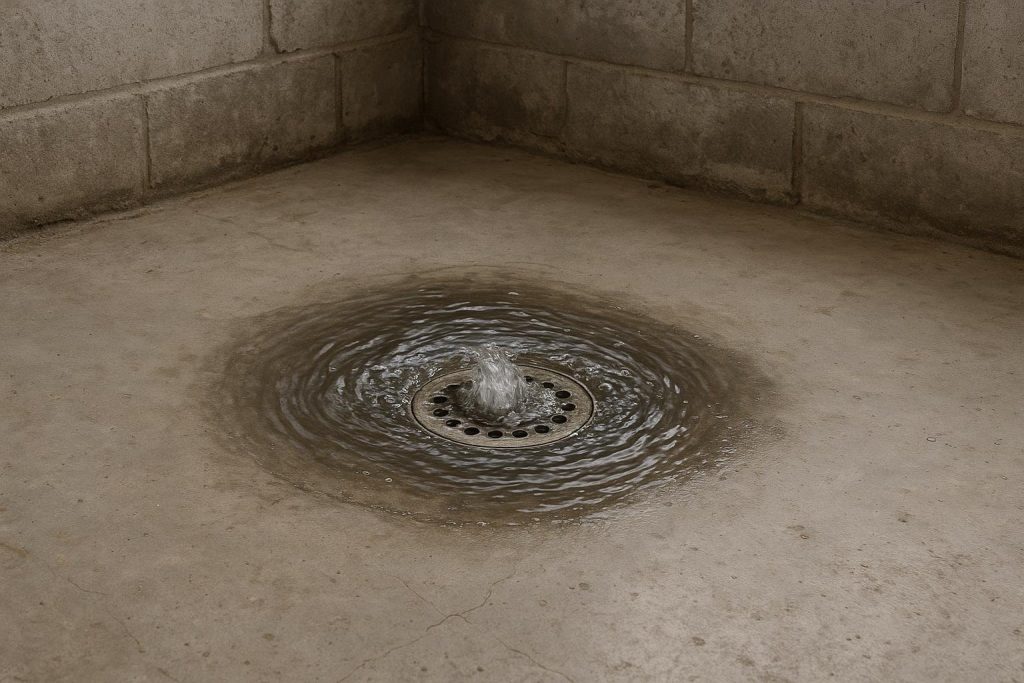
A basement floor drain backing up can indicate a blocked private drain or reverse flow from the sewer. Water collecting beside the drain may instead come from a nearby leak or sump overflow. Stop using plumbing while a backup is active, keep people away from the water, and arrange an inspection. Timing and the visible entry point are useful clues, but neither proves the cause.
How urgent is this?
Monitor: No overflow, contamination or electrical concern, but an isolated slow-drain symptom needs attention if it recurs. Act soon: Repeated gurgling or slow drainage warrants a plumbing inspection. Act now: Water is rising, sewage is present, several fixtures are backing up, or water is near electrical equipment. Stop using plumbing and seek help from a safe area.
- Distinguish water rising through the drain from water running toward it.
- Do not add water to diagnose an active backup.
- Clear water and a lack of odour do not establish that water is uncontaminated.
- A drain repair, backwater valve and sump system address different faults.
- Choose repairs from inspection findings, not the age of the house or the weather alone.
Confirm a basement floor drain backing up
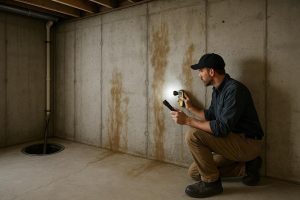
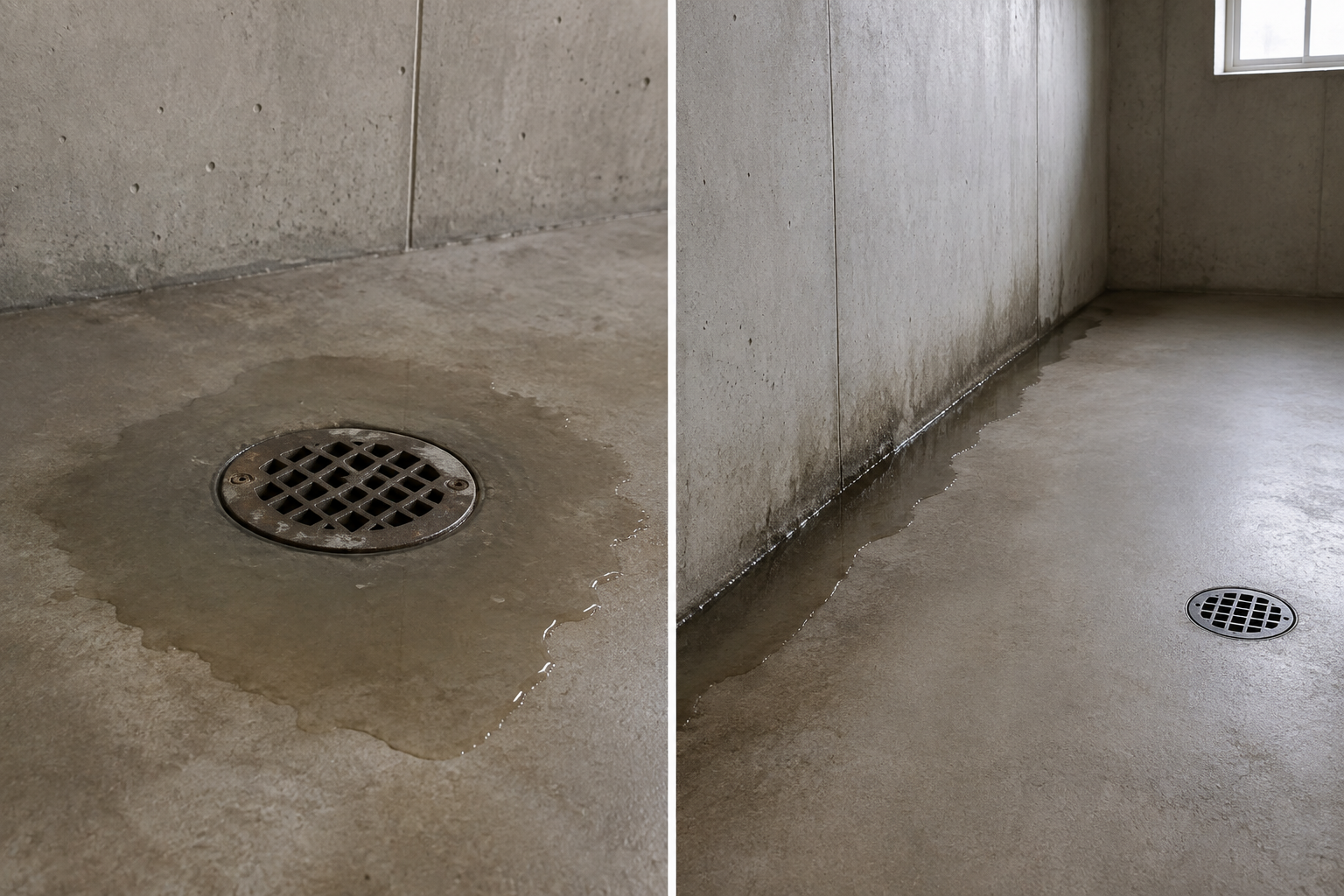
Look from a dry, safe position. Is water visibly rising inside the opening, bubbling through the grate, or simply pooling nearby? A true backup can produce gurgling, rising water or overflow at a low fixture. A stain beside a drain does not establish where the water entered. Photographs showing the first visible wet area can be more informative than a photograph taken after the whole floor is wet.
Write down when the event started and what was already happening: rainfall, melting snow, laundry or ordinary household water use. Do not recreate those conditions. Note whether other fixtures were already slow or gurgling. Several affected fixtures suggest a shared drainage problem, but a professional still needs to locate it. If you cannot see the source without stepping into water, leave that observation to the responder. Report uncertainty rather than guessing.
Problems it gets confused with
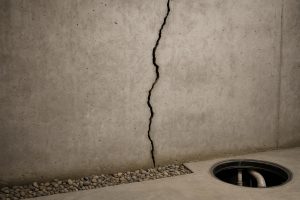
Water entering at a wall-floor joint or slab crack can travel toward the floor drain, making it look like the drain caused the flood. A leaking appliance, supply pipe or overflowing sump can do the same. Condensation can wet a surface, but it should not be assumed to explain significant standing water. Track the earliest visible entry point if you can do so safely.
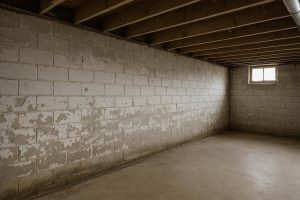
White deposits are evidence of past moisture movement, not a diagnosis of the current event. Our page on efflorescence on basement walls explains that related symptom. Compare the location of those deposits with fresh water marks rather than treating them as proof of a sewer or foundation fault.
Causes, ranked for investigation
The order below is a practical inspection sequence, not a claim about how often each cause occurs in Toronto. The right sequence changes with the symptoms and the home’s actual pipe connections.
1. A restriction in the floor drain or private drainage line
Debris or another obstruction may restrict drainage close to the floor drain or farther along the private line. A problem isolated to one drain is a different starting point from several fixtures backing up together. Tell the plumber which fixtures were affected before you stopped using water. Access, drain clearing and a camera inspection may help locate the restriction. Clearing it does not by itself establish that the underlying pipe is sound.
2. Sewer surcharge
During heavy rain, a sewer can become full and water can enter connected homes. Toronto identifies this as one possible cause of basement flooding. Rainfall timing is a clue, not proof that the municipal system caused a particular backup. Ask about neighbouring reports without entering another affected property. Toronto’s blocked or backed-up basement drain guidance explains how to report an incident and how City and private-side investigations differ.
3. A damaged or root-obstructed private pipe
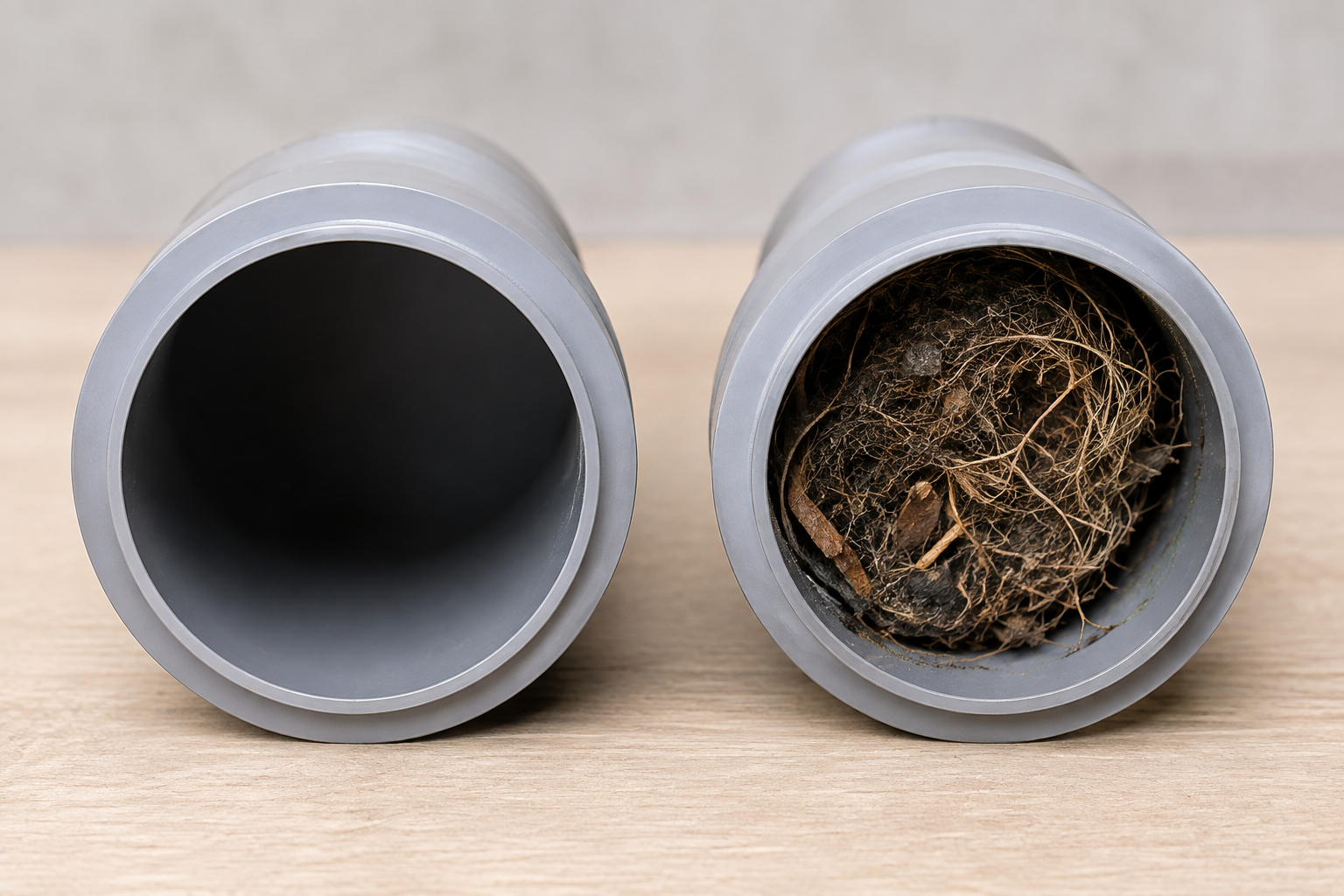
A recurring restriction can merit investigation for roots, displaced joints or damaged pipe, rather than repeated clearing without a diagnosis. Slow drainage and gurgling may justify that investigation, but cannot identify the defect on their own. Ask for the relevant camera recording or images, the location of any finding, and an explanation of whether the pipe could be fully inspected. A proposed repair should identify the actual section and problem it is intended to address.
4. A sump or foundation-drainage problem nearby
An overflowing sump or seepage at the slab perimeter can leave water beside a floor drain without a sewer backup. The relationship depends on the installed drainage arrangement. Do not assume a failed weeping tile system from clear water alone. A waterproofing assessment should examine the observed entry points and available system information. Read about sump pump systems when the evidence points to collected groundwater rather than reverse sewer flow.
5. Missing, unsuitable or poorly maintained backwater protection
A backwater valve may help protect a suitable sewer connection against reverse flow, but the device must match the plumbing arrangement. Its presence does not rule out a blockage or another water-entry path. Have a plumbing professional identify the device, assess its condition and explain its limits. Toronto advises that plumbing fixtures should not be used when the valve is closed, because household wastewater cannot discharge normally. Do not open the access cover during a backup.
Cause to solution table
| Possible cause | Useful observation | Appropriate next step | Urgency |
|---|---|---|---|
| Local restriction | One affected drain | Plumber locates and clears the obstruction | Prompt inspection, urgent if overflowing |
| Shared drain or sewer problem | Several fixtures affected | Stop water use, arrange plumbing or City investigation | Urgent during active backup |
| Pipe defect or roots | Recurring restriction | Camera findings and a location-specific repair plan | Prompt inspection |
| Sump or perimeter seepage | Water originates outside the drain | Assess foundation drainage and sump performance | Urgent if water is rising |
| Backwater protection concern | Valve condition or suitability is unknown | Qualified plumbing assessment | Prompt follow-up after the event |
Use the table to organize observations and questions, not to select an installation yourself. More than one fault may be present, and an apparently similar symptom can require a different trade. Ask what evidence supports the recommended work, what remains unconfirmed, and what the proposal will not fix. If water has reached electrical equipment or access is unsafe, resolving that immediate hazard takes priority over documenting the drain.
What you can safely check yourself
- Record existing observations. Note the start time, weather and fixtures already affected. Do not run taps, flush toilets or start appliances as a test.
- Observe from dry ground. Photograph the apparent entry point and water marks only if you can stay clear of affected water and electrical equipment.
- Gather system records. Look for previous plumbing reports, camera recordings and sump or backwater-valve instructions. Do not open pressurized cleanouts to identify equipment.
- Describe the event accurately. Report visible material, odour and changes in water level. Do not touch or deliberately smell water to classify it.
- Prepare access information. Tell the responder about finished floors, concealed access points or known past repairs. Leave unsafe areas closed off.
What not to do
Do not continue using plumbing during an active backup, pour chemical cleaner into standing water, or try to force a suspected blockage through an inaccessible line. Do not remove a cleanout cap, open a backwater-valve cover or dismantle a sump while water is rising. Do not plug the floor drain as a substitute for finding the cause. Keep people and pets away from affected water, even if it looks clear. A receding puddle is a reason to document what happened, not proof that the fault has disappeared.
How a professional diagnoses it
A useful inspection separates three questions: where the water entered, which drainage path is involved, and what defect explains the event. A plumber can assess the building drain, relevant fixtures and sewer connection. Depending on access and conditions, the work may include clearing a restriction and inspecting the line with a camera. Ask which sections were inspected and whether standing water or another obstruction limited the view.
When observations indicate seepage or a sump issue, a waterproofing assessment can examine the wall-floor junction, visible water marks, foundation drainage and accessible sump components. Exterior drainage may also be relevant. DryShield’s basement leak diagnostic tool can help organize a description, but it does not replace an on-site diagnosis or establish that waterproofing work is the correct repair.
Temporary versus permanent fixes
| Action | Immediate purpose | What still needs resolving |
|---|---|---|
| Stop household water use | Avoid adding flow during a backup | Locate and correct the cause |
| Professional drain clearing | Restore flow where a restriction exists | Determine whether a pipe defect caused recurrence |
| Repair an identified pipe defect | Address the damaged section | Check other water-entry paths separately |
| Suitable backwater protection | Reduce reverse-flow risk at that connection | Follow maintenance instructions and recognize limitations |
| Sump or foundation-drainage repair | Address the diagnosed groundwater problem | Do not assume it fixes a sewer obstruction |
A lasting repair is one that addresses the documented cause, not simply the largest scope offered. Ask for an itemized proposal covering access, reinstatement, maintenance and exclusions. No service life, price or warranty should be inferred from this table. For budgeting questions, use our Toronto basement repair cost guide as background and obtain a quote for the actual fault.
Evidence to request before approving work
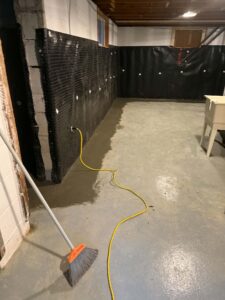
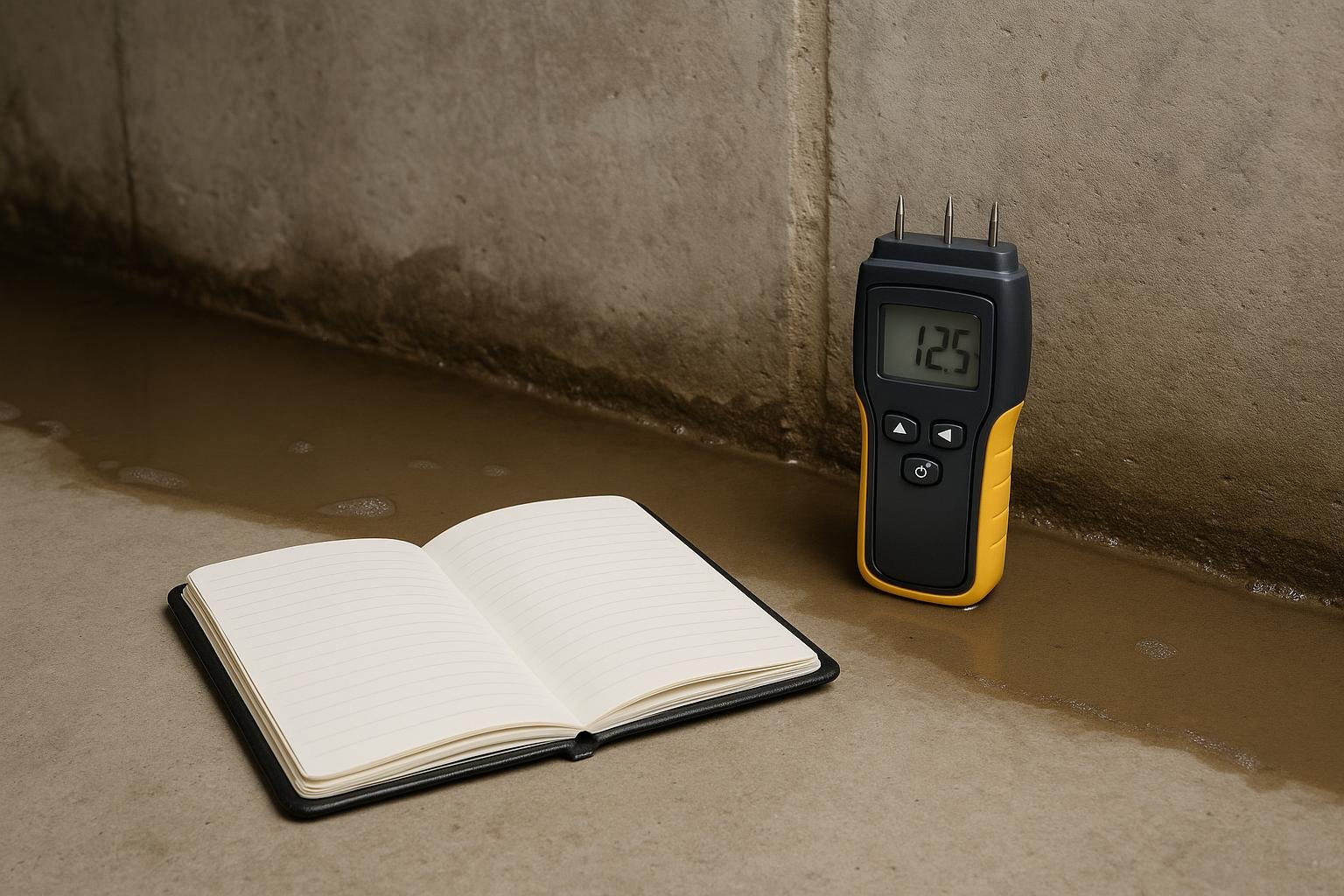
No verified customer case or before-and-after photographs are supplied for this article, so the illustrations are explanatory rather than evidence of a completed DryShield job. For your property, request dated observations, the identified water-entry point and relevant inspection images. Where camera footage supports a pipe repair, ask the contractor to connect the visible finding to the proposed location and scope.
A written diagnosis should distinguish confirmed findings from possibilities and explain any access limitations. Keep the inspection report and estimate together. If a quotation recommends both plumbing and waterproofing work, ask which finding supports each part and who is responsible for it. That record is more useful than a general claim that older homes always need a particular system.
Frequently asked questions
Is a basement floor drain backing up always a sewer problem?
No. A local blockage, a problem farther along the building drain, or sewer surcharge can cause a backup. Water from a nearby leak or sump overflow can also collect around the drain without rising through it. The entry point and an inspection matter more than colour or smell alone.
Can I use plumbing while the drain is overflowing?
Stop using toilets, sinks, showers and appliances that discharge water while a backup is active. Do not run fixtures to test the blockage. Keep people and pets away from affected water, avoid electrical hazards, and arrange professional help. Clear-looking water should not be assumed safe.
Will a sump pump prevent sewer backup?
A sump pump and a backwater valve address different paths. A sump system manages water collected in its pit. A suitable backwater valve helps limit reverse flow from a sewer connection. Neither substitutes for identifying a blocked private drain or confirming how the home’s drainage is connected.
Does a backup mean the weeping tile needs replacement?
No. Water near a drain does not establish a failed foundation drainage system. A plumber should first distinguish a true drain backup from water travelling across the floor. A waterproofing assessment is appropriate when the evidence also indicates seepage, a sump problem or inadequate foundation drainage.
How much will the repair cost?
The cost depends on the confirmed fault, access and the work required. Drain clearing, pipe repair, backwater-valve installation and foundation drainage are different scopes. Request a written diagnosis and itemized estimate before comparing quotes. A general basement repair price should not be treated as a quote for this symptom.
Can I install or open a backwater valve myself?
Do not open a valve or cleanout during an active backup. Ask a qualified plumbing professional to assess the installation and explain safe maintenance. Toronto publishes a backwater-valve permit guide. Confirm the applicable permit and installation requirements before work begins rather than assuming any valve suits every home.
Does Toronto provide financial assistance for prevention?
Toronto publishes a Basement Flooding Protection Subsidy Program for eligible flood-protection work. Check the City’s current eligibility rules, application deadlines and documentation requirements before authorizing work. A listed device does not establish that your property qualifies, and reimbursement should not be assumed when comparing contractor estimates.
What if the drain only backs up after rain or snowmelt?
Record the timing and report it, but do not diagnose the source from weather alone. Rain or snowmelt may coincide with sewer pressure, groundwater entry or an existing restriction becoming apparent. A recurring event warrants investigation even if the water recedes before a professional arrives.
Sources and next steps
For current City guidance, consult Toronto’s basement flooding advice, the flood-protection subsidy program and the backwater-valve permit guide. These sources were checked September 5, 2026. Confirm current requirements before authorizing work.
If the inspection points to basement seepage or foundation drainage, contact DryShield about an assessment. Share your observations and any plumbing report so the appropriate scope can be discussed. An active sewage backup or unsafe flooded area needs immediate assistance rather than a routine website enquiry.