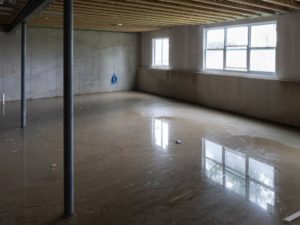
Basement leak repair cost in Toronto ranges from roughly $600 to $9,000 or more, depending on whether the job is a single crack injection or a full perimeter waterproofing system. These figures reflect work completed across the Toronto and GTA market and are effective as of August 2026. Every final price depends on a site inspection, because soil conditions, foundation depth, access constraints and the true source of the water all shift the number significantly.
Key Takeaways
- A single polyurethane crack injection typically falls in the $600 to $900 range.
- A full exterior waterproofing system on a Toronto semi or detached home typically runs $6,000 to $9,000.
- Interior weeping-tile systems generally cost less than exterior excavation for the same linear footage.
- Toronto’s heavy clay soil creates persistent hydrostatic pressure, which means surface-only fixes rarely hold long-term.
- The final price always depends on a free on-site inspection. No honest contractor quotes a firm number without seeing the foundation.
What the Quoted Ranges Include and Exclude
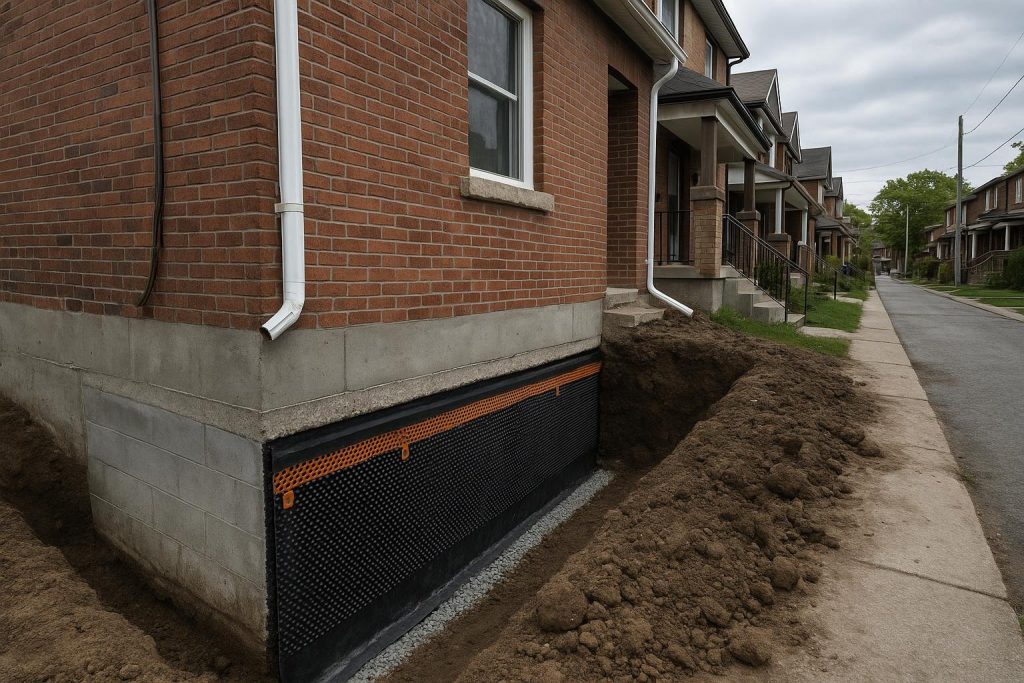
The figures above cover labour, materials and standard equipment for the repair method specified. A crack injection quote includes port installation, low-pressure polyurethane or epoxy injection, and surface patching. An exterior waterproofing quote covers excavation to the footing, hydraulic cement parging of any voids, a rubberised waterproofing membrane, a dimpled drainage board, new weeping tile bedded in clear stone, and backfill with grade correction.
What the ranges do not include: building permits where required, concrete or interlock restoration after excavation, landscaping reinstatement, window-well reconstruction, or the cost of mould remediation if the leak has been active for years. These are real line items that can add hundreds to thousands of dollars to a project. See the “Costs people miss” section below for specifics.
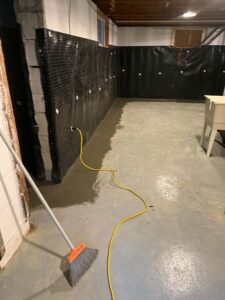
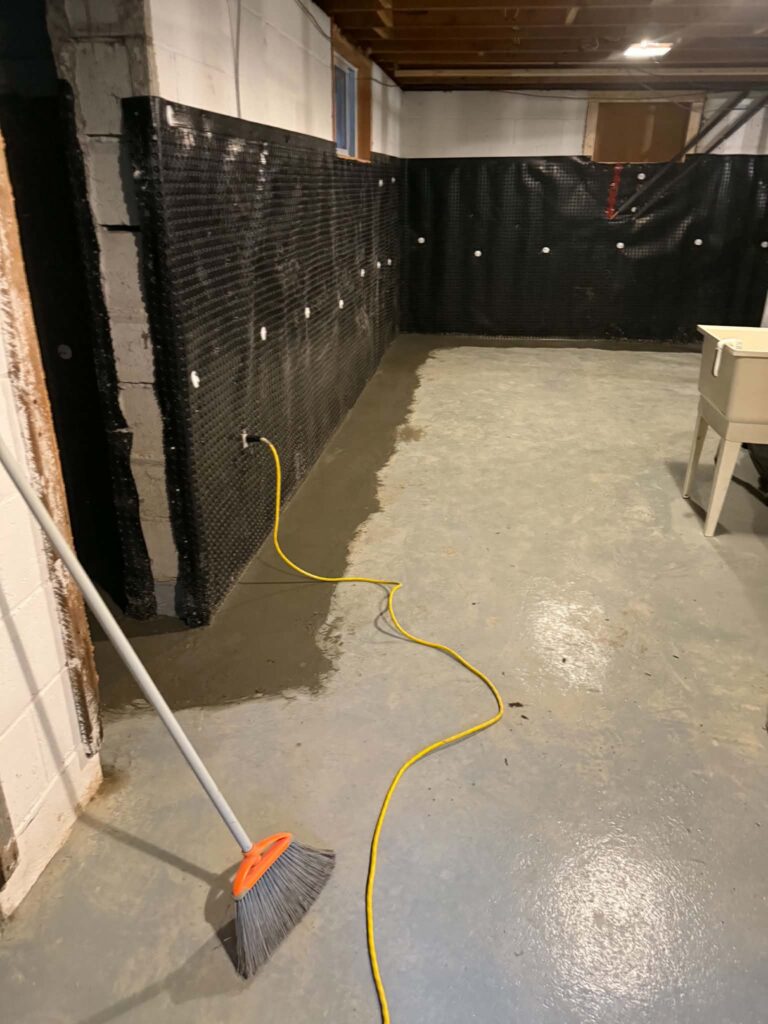
Interior weeping-tile systems involve jackhammering the perimeter slab, installing a drainage channel to a sump basin, fitting a vapour barrier up the wall, and re-pouring the concrete. That scope is typically priced below exterior excavation because there is no digging outside the home, but it does not address the membrane side of the wall.
What Drives the Price of Basement Leak Repair Cost
The single biggest cost driver is method. Exterior excavation requires heavy equipment, significant labour hours and a full material stack from membrane to weeping tile. Interior systems avoid the excavation cost but add sump pump installation. Crack injection is a one-trade, one-day job with minimal materials, which is why it sits at the low end of the range.
Linear footage is the second major driver. Exterior and interior perimeter systems are priced per linear foot of wall treated. A Toronto semi with three exposed sides of foundation wall costs more than a row house with only one exposed side. Depth of excavation matters too: a foundation sitting 2.4 metres below grade requires more digging time and shoring than a shallow one.
Access is a significant variable in Toronto specifically. Narrow laneways, mature trees close to the foundation, finished decks or patios over the work zone, and tight side yards all increase labour time and sometimes require hand-digging rather than machine excavation.
Soil type affects both the cause and the repair. The Lakeshore clay and till deposits that underlie most of Toronto and the inner GTA hold water against foundation walls for weeks after a rain event. That sustained hydrostatic pressure is the root cause of most wet basements here, and it means a thorough membrane and drainage solution is usually necessary rather than a surface patch.
Foundation age and condition also shift the price. Older Toronto homes, particularly those built before the 1960s, commonly have original weeping tile that is fully silted up or collapsed. Replacing failed tile adds scope and cost compared to a home where the drainage system is intact.
Toronto’s clay soil can hold water against a foundation wall for four to six weeks after a heavy rain. That sustained pressure is why surface-only patches so often fail within a season or two.
Typical Scenarios
| Scenario | Typical Range | What Pushes It Higher or Lower |
|---|---|---|
| Single poured-concrete wall crack, interior injection | $600 to $900 | Lower end: short crack, good access. Higher end: long or branching crack, tight space. |
| Multiple cracks, same visit | $900 to $2,000 | Each additional crack adds to the total; bundling saves mobilisation cost. |
| Interior weeping-tile system, partial perimeter | $3,000 to $5,500 | Lower: short run, simple sump basin. Higher: full perimeter, battery backup sump, thick slab. |
| Full exterior waterproofing, Toronto semi or detached | $6,000 to $9,000 | Lower: easy access, shallow footing. Higher: deep excavation, narrow side yard, failed weeping tile replacement. |
| Exterior waterproofing, large detached with restricted access | $9,000 to $14,000+ | Hand-digging, mature tree roots, long linear footage, deep foundation. |
These ranges reflect the Toronto and inner GTA market. Prices in Mississauga, Brampton and Vaughan are broadly similar, while cottage-country jobs in the Minden or Haliburton area can vary because of different soil conditions and longer travel time for crews and equipment.
Costs People Miss
Permits. The City of Toronto may require a building permit for excavation work that affects the foundation or for a new sump pump installation connected to the drainage system. Permit fees vary by scope but typically run $200 to $500. A contractor who tells you no permit is ever needed for exterior waterproofing in Toronto is worth questioning.
Surface restoration. Exterior excavation removes whatever sits above the work zone: interlock, concrete walkways, garden beds, downspout extensions. Basic backfill and grade correction are usually included in a waterproofing quote, but reinstating a patterned-stone patio or replanting a garden is not. Budget $500 to $2,000 for restoration depending on what was disturbed.
Mould remediation. If a leak has been active for more than a few weeks, mould growth behind drywall or on framing is common. Remediation is a separate trade and a separate cost, typically starting at $1,000 to $3,000 for a contained basement area. CMHC guidance on moisture and mould in residential buildings recommends addressing the water source before any remediation work begins, which is exactly the right order of operations. You can find that guidance at CMHC’s housing resource library.
Sump pump maintenance. An interior system that terminates at a sump basin needs a functioning pump. If the existing pump is old or undersized, replacement adds $400 to $900 to the project. A battery backup unit adds another $300 to $600 but is strongly recommended in Toronto neighbourhoods that lose power during summer storms.
Seasonal timing. Spring and early summer are peak demand periods in Toronto, driven by snowmelt and heavy rainfall. Booking during peak season may mean a longer wait or a modest premium. Fall bookings often have shorter lead times.
| Hidden Cost Item | Typical Add-On Range | Notes |
|---|---|---|
| Building permit (excavation or sump) | $200 to $500 | Required by City of Toronto for many foundation scopes. |
| Surface restoration (interlock, concrete) | $500 to $2,000 | Basic backfill usually included; patterned stone or garden reinstatement is not. |
| Mould remediation | $1,000 to $3,000+ | Separate trade; address water source first. |
| Sump pump replacement or upgrade | $400 to $900 | Required if existing pump is old or undersized. |
| Battery backup sump pump | $300 to $600 | Strongly recommended for Toronto neighbourhoods prone to power outages. |
Understanding these add-ons before you receive quotes helps you compare proposals accurately and avoid surprises on the final invoice.
Financing, Subsidies and Rebates
The City of Toronto operates a Basement Flooding Protection Subsidy Program that reimburses eligible homeowners for qualifying flood-protection work, including sump pump installation and backwater valve installation. The subsidy amount and eligibility criteria are set by the City and are subject to change; confirm current terms directly with the City of Toronto before budgeting. Not all waterproofing work qualifies, so ask your contractor which scope items are likely to be covered before signing a contract.
Worked Examples
The three scenarios below show how basement leak repair cost plays out in practice across different home types and repair methods common in Toronto.
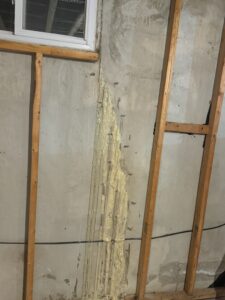
Example 1: Single crack injection on a 1960s North York bungalow. A vertical shrinkage crack in a poured-concrete wall, roughly 900 mm long, with good interior access. The repair uses the port-and-paste method: injection ports are bonded to the crack face, low-pressure polyurethane foam is injected until it exits the far side, and the ports are removed. The polyurethane cures flexible, so it tolerates the seasonal foundation movement common in Toronto clay. Estimated cost: $650 to $800.
Example 2: Interior weeping-tile system on a 1950s Toronto semi. The original clay weeping tile has silted up and water is entering along the footing on two walls, roughly 14 linear metres total. The perimeter slab is jackhammered, a drainage channel is installed to a new sump basin, a vapour barrier is run up the wall, and the slab is re-poured. A battery-backup sump pump is added given the home’s history of power outages during storms. Estimated cost: $4,500 to $6,000 depending on slab thickness and sump pump specification.
Example 3: Full exterior waterproofing on a detached home in Etobicoke. Three sides of the foundation are excavated to the footing, voids are parged with hydraulic cement, a rubberised membrane is applied, a dimpled drainage board is installed, new weeping tile is bedded in clear stone, and the area is backfilled with grade correction. The side yard is 900 mm wide, requiring partial hand-digging. Estimated basement leak repair cost for this scope: $7,500 to $9,000.
Polyurethane injection is the right tool for a non-structural shrinkage crack. Epoxy injection is reserved for structural cracks where the wall itself needs to be re-bonded. Choosing the wrong product wastes money and may not hold.
How to Read a Basement Leak Repair Quote
A well-written quote itemises the scope in plain language: which walls are being treated, the method (exterior excavation, interior weeping tile, crack injection), the materials specified (membrane brand, drainage board type, weeping tile diameter), the sump pump model if applicable, and what surface restoration is and is not included. It should also state the warranty terms clearly.
Red flags to watch for: a quote that gives a single lump sum with no line items; a contractor who diagnoses the problem without entering the basement; a price that is dramatically lower than all other quotes without a clear explanation of what is excluded; and any contractor who pressures you to sign on the day of the inspection without time to compare. Knowing the typical basement leak repair cost for your scenario before you receive quotes makes it far easier to spot an outlier.
For a deeper look at what separates a trustworthy contractor from a problematic one, the guide to choosing a reliable waterproofing contractor covers the full checklist. It is also worth understanding the difference between interior and exterior approaches before you receive quotes, since the right method for your home affects the price significantly. The interior vs. exterior waterproofing comparison explains when each method is appropriate.
A quote that lists only a total price with no scope breakdown is a red flag. You cannot compare quotes, hold a contractor accountable, or understand what you are buying without line-item detail.
Frequently Asked Questions
What is the average basement leak repair cost in Toronto?
The average depends entirely on the method required. A single crack injection averages $600 to $900. An interior weeping-tile system for a typical Toronto semi averages $3,500 to $6,000. A full exterior waterproofing job averages $6,000 to $9,000. No single average covers all scenarios, which is why a site inspection is the only reliable starting point. You can explore the basement waterproofing cost guide for a broader breakdown of what each method costs across Southern Ontario.
Is crack injection a permanent fix?
Low-pressure polyurethane injection is a durable, long-term repair for non-structural shrinkage cracks in poured concrete. The polyurethane cures flexible, which means it moves with the foundation through seasonal freeze-thaw cycles rather than cracking again. It is not appropriate for active structural movement or for block foundations where the leak path is through the mortar joints rather than a discrete crack.
Why does exterior waterproofing cost more than interior?
Exterior waterproofing requires excavating to the footing, which involves heavy equipment, significant labour hours, shoring in some cases, and full material installation from membrane to drainage board to new weeping tile. Interior systems avoid that excavation cost. The trade-off is that exterior work addresses the water at the wall face before it enters, while interior systems manage water that has already passed through the wall.
Does Toronto’s clay soil affect the repair cost?
Yes, in two ways. Clay holds water against the foundation wall for weeks after rain, which means hydrostatic pressure is the primary failure mechanism for most Toronto basements. That sustained pressure makes thorough membrane and drainage solutions more important than in sandy-soil areas. Clay also makes excavation slower and heavier than in well-drained soils, which adds labour time to exterior jobs.
Will the City of Toronto subsidy cover my repair?
The City of Toronto Basement Flooding Protection Subsidy covers specific items, primarily backwater valve installation and sump pump installation. It does not cover membrane application or weeping tile replacement as standalone items. Eligibility and reimbursement amounts are set by the City and change periodically. Confirm current terms with the City before planning your budget.
How do I know if I need crack injection or full waterproofing?
If water is entering through one or two discrete vertical cracks in a poured-concrete wall and the drainage system is otherwise functional, crack injection is usually the right first step. If water is seeping along the footing, coming through multiple points, or entering through a block foundation, a perimeter drainage solution is typically needed. A free on-site inspection is the only reliable way to determine which applies to your home. The crack injection vs. waterproofing guide explains the decision criteria in detail.
How long does a basement leak repair take?
A crack injection is typically completed in two to four hours. An interior weeping-tile system for a partial perimeter takes one to two days. A full exterior waterproofing job on a Toronto semi or detached home typically takes two to four days depending on access and the length of wall being treated.
Can I get a quote without an in-person inspection?
A ballpark range is possible based on home size and the likely method, but a firm, accurate quote requires an in-person moisture assessment. The source of a basement leak is not always obvious from a description or photo. Water that appears to come through a wall crack may actually be entering at the footing, or vice versa. Misdiagnosing the source leads to repairs that do not hold.
Ready to find out exactly what your repair will cost? Contact the DryShield Team for a free on-site inspection and written scope. There is no obligation, and you will leave with a clear understanding of what is causing the problem and what it will take to fix it properly.