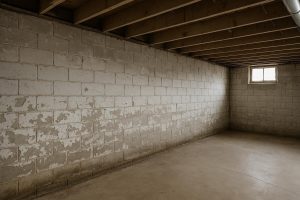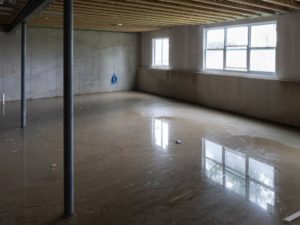
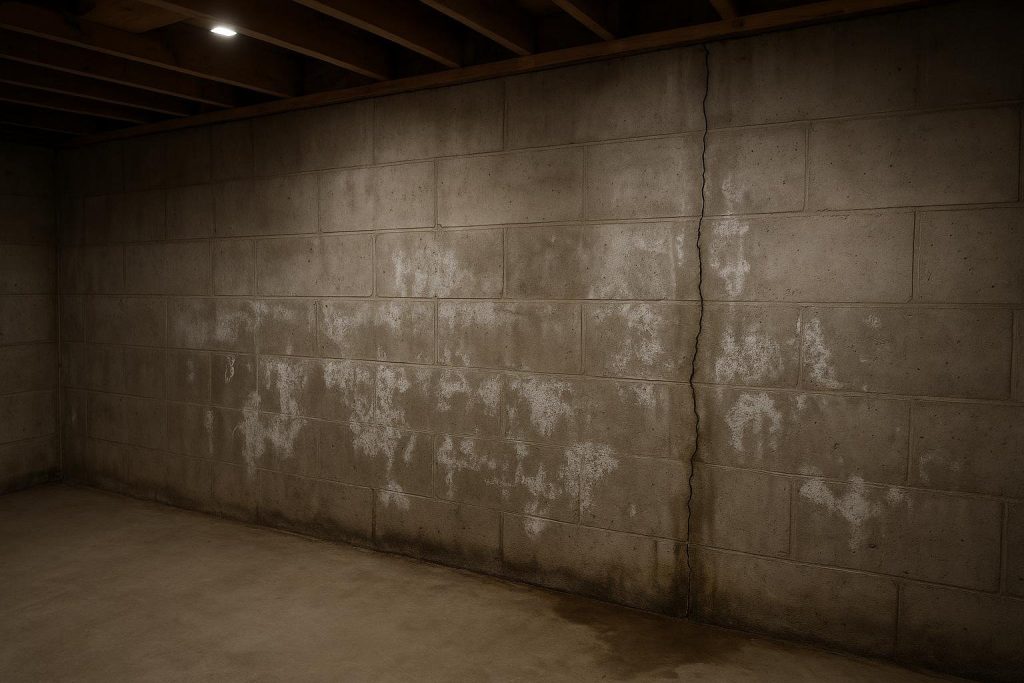
Basement leak repair Barrie homeowners face is shaped by two local realities: the heavy clay and silty soils left by glacial Lake Barrie, and a climate that swings from deep freeze to rapid spring thaw. Those two forces combine to push hydrostatic pressure against foundation walls year-round, making a wet basement one of the most common calls we receive from Barrie, Innisfil, and the surrounding Simcoe County area.
Key Takeaways
- Barrie’s clay-heavy soil holds water against foundation walls long after rain or snowmelt stops, so surface drainage fixes alone rarely solve the problem.
- A single injected foundation crack typically costs $600 to $900; a full interior weeping-tile system or exterior waterproofing job runs higher and depends on linear footage and site conditions.
- Spring thaw and summer downpours are the two peak failure windows for Barrie foundations.
- Older Barrie homes commonly have silted-up or collapsed original weeping tile that must be replaced, not just cleaned.
- The correct repair method depends on where water enters, not just how much of it appears.
Definitions and Scope
A basement leak is any pathway that allows liquid water or water vapour to move from the surrounding soil into the living or storage space below grade. In Barrie, the source is almost always hydrostatic pressure: water saturates the soil around the footing, builds up against the wall, and finds the path of least resistance. That path is usually a shrinkage crack in a poured concrete wall, a joint between the wall and the floor slab, a failed window well, or a weeping tile system that can no longer carry water away from the footing.
Scope matters because the word “leak” covers everything from a hairline crack that weeps a cup of water after heavy rain to a perimeter seam that floods the floor during every spring thaw. The repair method, timeline, and investment are very different for each. A proper diagnosis always comes before a repair recommendation. Effective basement leak repair Barrie professionals provide always starts with identifying the exact entry point.
Why This Matters for Barrie Homes
Barrie sits on the southern end of Georgian Bay, and the soils across much of the city and into Innisfil and Bradford are glaciolacustrine: fine-grained, poorly draining, and prone to frost heave. When winter temperatures drop, the ground freezes to depth. When the thaw arrives, often rapidly in March and April, that frozen ground releases a large volume of water in a short window. The weeping tile around a foundation that was installed in the 1970s or 1980s is frequently made of clay or perforated plastic that has since silted up completely. It can no longer carry that surge away from the footing.
The result is that hydrostatic pressure spikes sharply in spring, forcing water through any existing crack or joint. A crack that showed no sign of moisture all winter can suddenly weep heavily. Summer convective storms, which have become more intense across Simcoe County in recent years, create a second peak. Water that cannot infiltrate fast-frozen or compacted clay runs toward the house and pools against the foundation. This is why basement leak repair Barrie residents request most often occurs in March, April, and after heavy summer rainfall.
Hydrostatic pressure, not rainfall alone, is the root cause of most Barrie basement leaks. Fixing the symptom without addressing the pressure source leads to repeat failures.
CMHC’s guidance on residential moisture control confirms that foundation drainage and soil grading are the primary defences against below-grade water intrusion, which aligns exactly with what we see on Barrie job sites. You can also explore the broader foundation repair and waterproofing services available in Barrie to understand the full range of solutions.
Your Options for Basement Leak Repair Barrie
Polyurethane Crack Injection
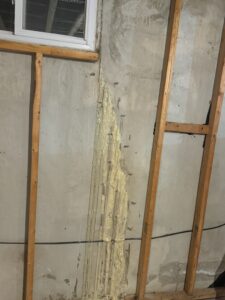
Low-pressure polyurethane injection is the standard repair for a single, active shrinkage crack in a poured concrete wall. A technician installs injection ports along the crack at regular intervals, seals the face with a paste, and then injects flexible polyurethane foam under low pressure. The foam expands into the full depth of the crack, cures flexible, and tolerates the seasonal movement that Barrie’s freeze-thaw cycle imposes on a foundation. A single crack treated this way typically costs $600 to $900, depending on length and accessibility. This method works from the interior, so no excavation is needed.
Epoxy injection is reserved for structural cracks where the wall must be re-bonded and rigidity is required. Epoxy is rigid and does not flex, so it is the wrong choice for a non-structural crack in a climate with significant seasonal movement.
Interior Weeping Tile System
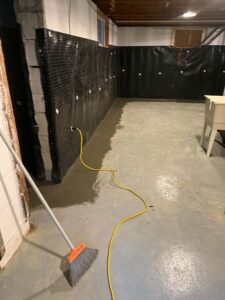
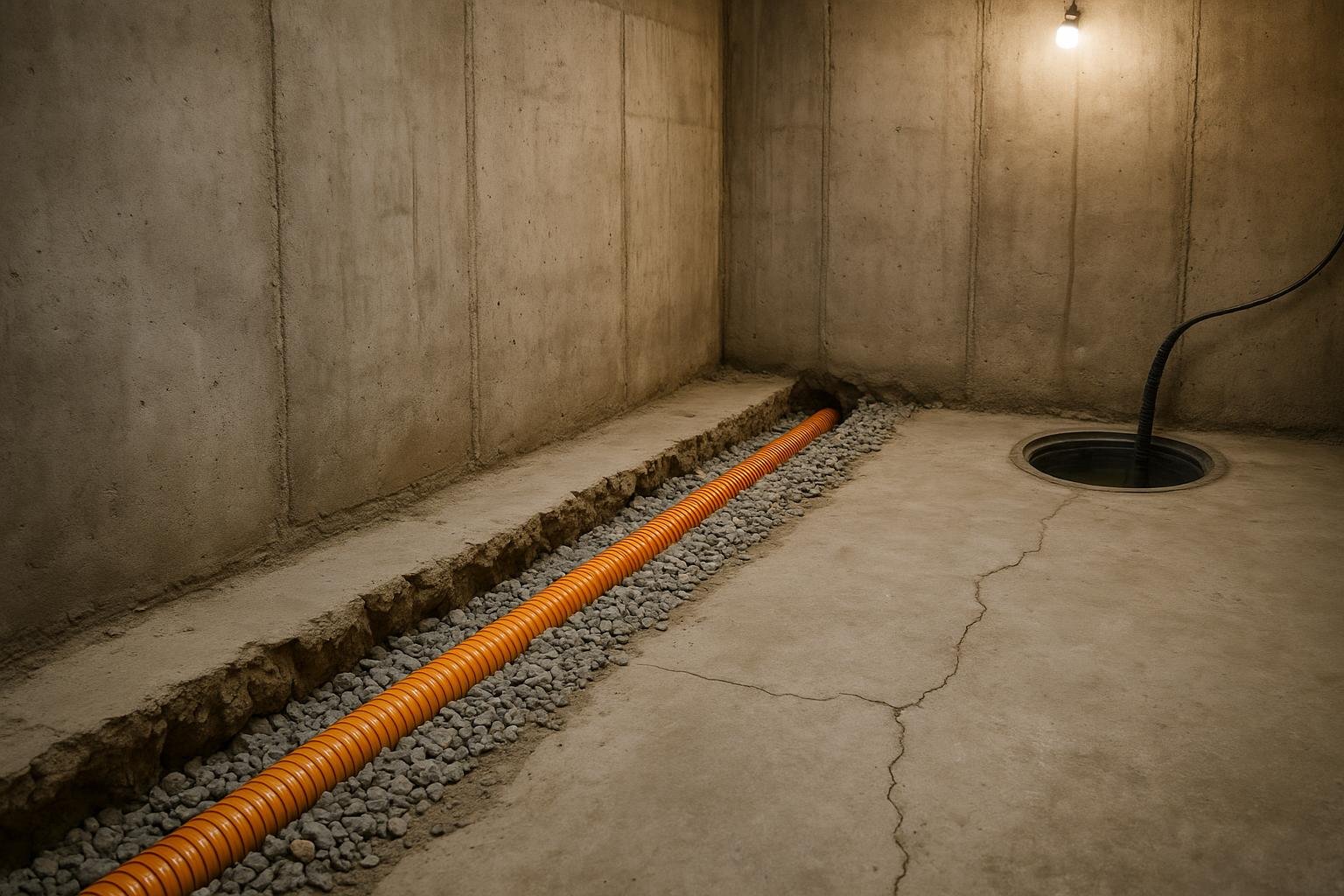
When water enters along the wall-floor joint, through multiple cracks, or through a floor that is under hydrostatic pressure, an interior drainage system is the most practical solution. The perimeter concrete is jackhammered, a new perforated weeping tile is laid at footing level and bedded in clear stone, and all water is directed to a sump basin. A sump pump then discharges it away from the house. A vapour barrier is installed up the wall face to capture seepage and direct it to the drain. The concrete is re-poured over the system. This approach does not stop water from entering the wall, but it intercepts it before it reaches the floor and manages hydrostatic pressure at the footing level.
Exterior Waterproofing
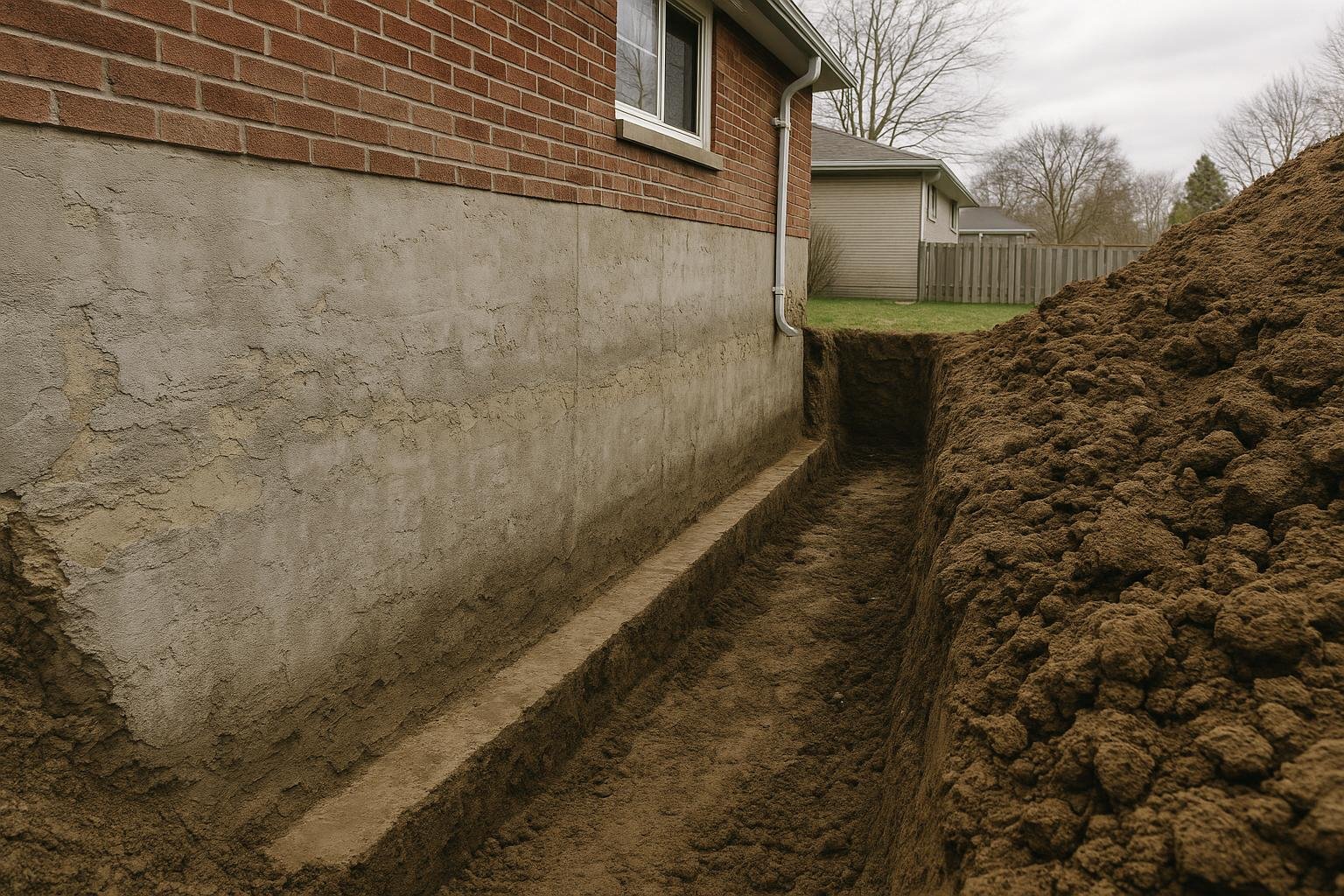
Full exterior waterproofing addresses the source directly. The soil is excavated to the footing, voids in the wall are filled with hydraulic cement parging, a rubberised membrane is applied to the entire below-grade wall surface, a dimpled drainage board protects the membrane and creates an air gap, new weeping tile is laid in clear stone at the footing, and the trench is backfilled with corrected grade. For an average Barrie semi-detached or detached home, this work typically runs in the range of $6,000 to $9,000 depending on linear footage, excavation depth, and site access. It is the most complete solution and carries the longest service life.
Sump Pump Installation or Replacement
A sump pump is often part of a larger interior system, but it can also be installed as a standalone measure in a home that already has a weeping tile system but lacks a working pump. Barrie’s spring thaw creates high-volume, short-duration water events that overwhelm undersized or aging pumps. A properly sized pump with a battery backup protects against power outages during storms. Our sump pump installation service covers sizing, basin placement, and discharge routing.
Window Well Drainage
Basement windows that sit below or near grade are a common entry point in Barrie homes, particularly in older bungalows and split-levels. A window well that lacks a gravel bed and a drain connected to the weeping tile system will pool water against the window frame and allow it to seep through. Correcting the well drainage and ensuring the window seal is intact is a targeted fix for this specific entry point.
Grade Correction and Surface Drainage
Soil that has settled away from the foundation over time creates a bowl that directs surface water toward the wall. Regrading so that the ground slopes away from the house at a minimum of 5% over the first 1.5 metres is a low-cost first step that reduces the volume of water reaching the footing. It does not replace a failed weeping tile or seal an existing crack, but it meaningfully reduces hydrostatic load.
Options Compared
| Method | Best For | Typical Lifespan | Relative Cost | Disruption |
|---|---|---|---|---|
| Polyurethane crack injection | Single active shrinkage crack, poured concrete wall | Long-term if crack is non-structural | Lowest ($600-$900 per crack) | Minimal, interior only, no excavation |
| Interior weeping tile system | Multiple entry points, wall-floor joint seepage, high water table | 25+ years with pump maintenance | Moderate | Interior jackhammering, 1-2 days |
| Exterior waterproofing | Full perimeter protection, failed original membrane, severe hydrostatic pressure | Lifetime with proper membrane | Highest ($6,000-$9,000+ typical) | Excavation required, landscaping disturbed |
| Sump pump installation | Existing drainage system lacking a working pump | 7-12 years per pump unit | Low to moderate | Minimal, basin cut in floor |
| Window well drainage | Water entry at below-grade windows | 10-20 years | Low | Minimal, exterior only |
| Grade correction | Surface water pooling near foundation | Ongoing maintenance required | Lowest | Minimal, exterior landscaping |
The table shows that no single method fits every situation. Crack injection is the right answer for a clean, isolated crack but does nothing for a failed weeping tile. Exterior waterproofing is the most complete solution but requires excavation and a larger investment. Interior systems manage water that has already entered the wall plane, making them practical when excavation is not feasible. Most Barrie homes with chronic wet basements need a combination: crack injection for any active cracks, a new interior or exterior drainage system for perimeter seepage, and a reliable sump pump to handle the discharge.
How to Choose
Choose polyurethane crack injection if you have one or two identifiable cracks in a poured concrete wall, the rest of the basement is dry, and the cracks are not horizontal or stair-step in pattern. Horizontal cracks indicate lateral soil pressure and may be structural; those require an engineer’s assessment before any injection work.
Choose an interior weeping tile system if water enters along the wall-floor joint or through multiple points, if excavation is not practical due to finished landscaping, a deck, or a neighbouring structure, or if the home already has a failing interior system that needs replacement.
Choose exterior waterproofing if the original membrane has failed, if the home has never had proper below-grade waterproofing, or if you want the most permanent solution and excavation access is available. Homes in Barrie’s older neighbourhoods near the waterfront or in the Allandale area often have foundations that have never had a rubberised membrane applied.
Choose grade correction and window well drainage as a first step when the budget is limited and water entry is clearly linked to surface pooling or a specific window. These measures reduce load but should be followed by a proper inspection to confirm no deeper issue exists. When in doubt about which approach suits your property, a qualified basement leak repair Barrie technician can assess the entry points and recommend the right combination.
If you are unsure where water is entering, use our basement leak diagnostic tool to narrow down the likely source before booking an inspection.
Costs and Timelines
| Cost Driver | Why It Affects Price | Approximate Impact |
|---|---|---|
| Linear footage of affected wall | More wall means more membrane, more weeping tile, more labour | Primary driver for perimeter systems |
| Excavation depth | Deeper footings require more digging time and shoring | Significant for exterior work |
| Site access | Tight side yards, fences, or decks slow excavation and may require hand-digging | Can add materially to exterior cost |
| Number of cracks | Each crack is priced individually at $600-$900 for injection | Additive per crack |
| Existing system condition | Removing and disposing of failed clay tile or collapsed pipe adds labour | Moderate for interior replacement jobs |
| Sump pump specification | Larger capacity pumps and battery backup units cost more but are recommended for Barrie’s spring surge | Low to moderate incremental cost |
As a general guide: a single crack injection runs $600 to $900. A full exterior waterproofing job on an average Barrie detached home typically falls in the $6,000 to $9,000 range. Interior weeping tile systems generally cost less than full exterior work. Every figure depends on a site inspection, because footing depth, soil conditions, and access vary significantly even within the same neighbourhood. For a broader look at what drives waterproofing costs across the region, the Simcoe County waterproofing guide covers pricing context across the county.
Risks and Common Mistakes
| Symptom | Likely Cause | Correct Fix |
|---|---|---|
| Water along wall-floor joint after rain | Failed or absent weeping tile, hydrostatic pressure at footing | Interior or exterior weeping tile replacement |
| Wet vertical crack in poured wall | Shrinkage crack allowing water under pressure | Polyurethane crack injection |
| White powder on wall surface (efflorescence) | Mineral deposits left by evaporating water, indicating ongoing seepage | Identify and seal water source, not just clean the surface |
| Horizontal crack mid-wall | Lateral soil pressure, potential structural issue | Engineer assessment before any repair |
| Floor seepage across slab | High water table pushing up through slab | Interior drainage system with sump pump |
The most common mistake Barrie homeowners make is applying hydraulic cement or a paint-on waterproofing product to the interior wall face and expecting it to hold against hydrostatic pressure. These products can slow minor seepage temporarily, but they do not address the pressure source and will eventually fail or cause the wall to spall. A second frequent error is replacing a sump pump without inspecting the weeping tile it serves. If the tile is silted up, a new pump will run constantly and still fail to keep the floor dry. A third mistake is delaying repair after the first sign of moisture. A small crack that weeps in spring will widen with each freeze-thaw cycle, and the cost of basement leak repair Barrie homeowners face rises as the damage progresses.
Hydraulic cement and interior sealant paints are temporary measures, not permanent fixes. They do not relieve hydrostatic pressure and are not a substitute for proper drainage.
How the Process Works
- Free on-site inspection and moisture assessment. A technician visits the property, inspects the interior and exterior of the foundation, identifies all entry points, and assesses soil grading and drainage conditions around the perimeter.
- Written scope with linear-foot pricing. You receive a written proposal that specifies the method, the affected sections of wall, and the total investment range. No work begins without your approval.
- Preparation and access. For interior work, the perimeter concrete is jackhammered and debris is removed. For exterior work, excavation proceeds to the footing, exposing the full below-grade wall surface.
- Core repair work. Cracks are injected, voids are filled with hydraulic cement parging, membrane is applied (exterior), or weeping tile is laid and connected to the sump basin (interior). Dimpled drainage board is installed over exterior membrane to protect it during backfill.
- Drainage and pump installation. New weeping tile is bedded in clear stone and directed to the sump basin or to a daylight outlet. The sump pump is installed and tested.
- Reinstatement. Interior concrete is re-poured over the drainage system. Exterior trenches are backfilled and grade is corrected to slope away from the foundation.
- Final inspection and warranty documentation. The completed work is inspected, and warranty paperwork is issued. DryShield’s lifetime transferable warranty applies to qualifying interior and exterior systems.
Frequently Asked Questions
How do I know if my Barrie basement leak needs injection or a full drainage system?
If water enters through one or two identifiable cracks in a poured concrete wall and the rest of the basement is dry, injection is usually the right starting point. If water appears along the floor perimeter, through multiple points, or after the weeping tile has been confirmed as failed, a drainage system is needed. A site inspection is the only reliable way to confirm which applies to your home.
Why does my basement only leak in spring?
Spring thaw is the peak failure window for Barrie foundations because frozen ground releases a large volume of water quickly. The soil around the footing becomes saturated faster than the existing drainage can handle, hydrostatic pressure spikes, and water finds any crack or joint in the wall. A basement that is dry all summer can still have a serious drainage problem that only shows up during the thaw.
Can I inject a crack myself using a hardware store kit?
DIY injection kits are available, but they typically use cartridge-based delivery that cannot maintain the sustained low pressure needed to fill a crack through its full depth. An incompletely filled crack will re-open with the next freeze-thaw cycle. Professional port-and-paste injection ensures the polyurethane reaches the exterior face of the wall and cures as a continuous flexible seal.
How long does exterior waterproofing take for a typical Barrie home?
A full exterior waterproofing job on one or two walls of an average detached home typically takes two to three days, weather permitting. Homes with difficult access, deep footings, or extensive crack repair may take longer. The written scope provided after inspection will include a realistic timeline for your specific property.
Will basement leak repair affect my home’s resale value?
A documented, warranted waterproofing repair removes a significant disclosure item and gives buyers confidence. Homes with active water intrusion or visible efflorescence consistently attract lower offers and longer time on market. A transferable lifetime warranty is a tangible asset that transfers to the new owner at closing.
Is interior or exterior waterproofing better for Barrie’s clay soil?
Exterior waterproofing is the more complete solution because it applies a membrane directly to the wall and replaces the weeping tile at the footing, addressing the pressure source. Interior systems manage water that has already entered the wall plane. Both are legitimate and effective; the right choice depends on access, budget, and the severity of the existing drainage failure. Many Barrie homes benefit from exterior work on accessible walls and interior drainage on walls where excavation is not practical.
How often should a sump pump be replaced in Barrie?
Most sump pumps have a service life of seven to twelve years under normal use. In Barrie, where spring thaw events can run a pump continuously for days, the mechanical components wear faster. A pump that is more than eight years old, runs loudly, or cycles on and off without clearing water should be inspected before the next thaw season. A battery backup unit is strongly recommended given the frequency of storm-related power outages in Simcoe County.
What is efflorescence and does it mean my wall is leaking?
Efflorescence is the white, chalky mineral deposit left on a concrete or block wall when water moves through it and evaporates at the surface. It confirms that water has been migrating through the wall, even if the wall feels dry at the time of inspection. It is not a cosmetic issue to be painted over; it is a signal that an active seepage pathway exists and should be investigated.
Does DryShield serve areas around Barrie, such as Innisfil and Bradford?
Yes. DryShield serves Barrie and the surrounding Simcoe County area including Innisfil, Bradford, Wasaga Beach, Midland, Collingwood, and Alliston. Soil and drainage conditions vary across the county, and our technicians are familiar with the specific foundation challenges in each community. See the Innisfil waterproofing page for area-specific information.
How do I prepare my home for a waterproofing inspection?
Clear any stored items away from the basement walls so the technician can see the full perimeter. Note where and when you have seen moisture, whether after rain, during thaw, or continuously. If you have photos of active leaking, have them available. Outside, check that downspout extensions are in place and that the grade slopes away from the house. This information helps the technician form an accurate diagnosis during the visit.
If your Barrie home is showing signs of water intrusion, the right time to act is before the next spring thaw or summer storm. Basement leak repair Barrie professionals at DryShield offer a free on-site inspection and a written scope with no-obligation pricing. Our technicians work across Barrie and Simcoe County and can typically schedule an assessment within a few business days.