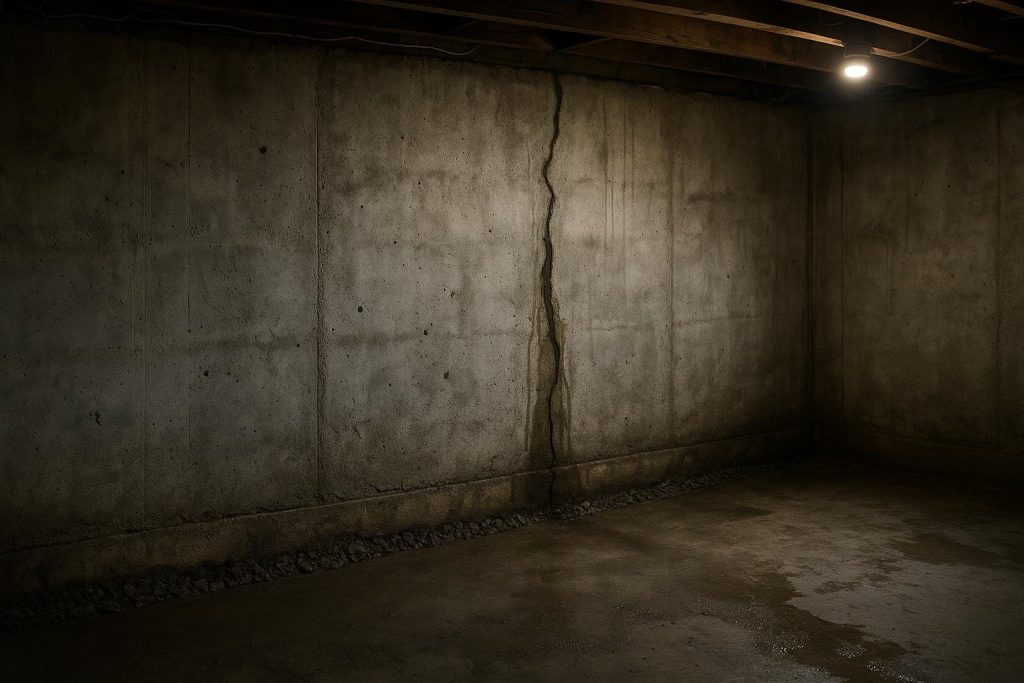
Basement leak repair Hamilton homeowners need most often comes down to one root cause: hydrostatic pressure from Hamilton’s dense clay and till soils pushing groundwater through foundation walls, floor joints, and aging weeping tile. Understanding which entry point is letting water in determines which repair method will actually solve the problem long-term, rather than masking it for a season or two.
Key Takeaways
- Hamilton’s clay-heavy soils hold water against foundation walls, making hydrostatic pressure the most common driver of basement leaks in the city.
- A single injected foundation crack typically costs $600 to $900; a full interior weeping tile system or exterior waterproofing job runs considerably more and depends on linear footage and access.
- Spring thaw and summer downpours are the two peak failure windows for Hamilton foundations, especially in older neighbourhoods like Durand, Stipley, and the lower city.
- Polyurethane injection seals active cracks from the interior; epoxy is reserved for structural cracks that need the wall re-bonded.
- No repair quote is meaningful without a free on-site inspection, because depth of excavation, soil conditions, and access all move the final number.
Definitions and Scope
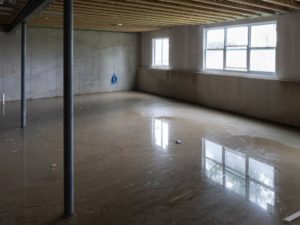
Basement leak repair Hamilton professionals assess starts with identifying the entry point and the pressure source behind it. A basement leak is any unwanted water entry below grade, whether it appears as a trickle down a wall crack, seepage through the floor-wall joint, pooling on the slab, or a damp film that feeds mould.
Hamilton sits on a mix of Queenston shale bedrock and glacial till overlaid with clay-rich topsoil. That clay expands when wet and contracts when dry, cycling seasonal pressure against foundation walls. Homes in the lower city and on the escarpment face different drainage challenges: lower-city lots tend to sit in flat, poorly draining terrain, while escarpment properties deal with concentrated surface runoff channelled toward the foundation.
Repair methods fall into three broad families: crack injection (sealing a discrete entry point), interior drainage systems (managing water that has already entered the wall assembly), and exterior waterproofing (stopping water before it contacts the foundation). Each has a distinct scope, cost profile, and durability. Choosing the wrong family wastes money and leaves the underlying pressure unaddressed.
Why This Matters for Hamilton Homes
Hamilton’s housing stock skews older. Many detached and semi-detached homes in neighbourhoods like Beasley, Crown Point, and Gibson were built between the 1920s and 1960s, when original weeping tile was clay pipe laid in sections. After 60 to 80 years, that tile is typically silted up, crushed, or simply absent from the record. When it fails, groundwater has nowhere to go except against the footing and up through the floor-wall joint.
The Niagara Escarpment creates a secondary pressure: spring meltwater and heavy summer rain run down the escarpment face and concentrate at the base, raising the local water table quickly. Homes on the bench between the upper and lower city can see water table spikes within hours of a significant rainfall event. Basement leak repair Hamilton contractors encounter this escarpment-driven pressure pattern regularly in properties along the mountain brow.
Spring thaw and summer downpours are Hamilton’s two peak failure windows. Foundations that held through winter often show their first active leak in March or during a July cloudburst, when the water table rises faster than aging drainage can handle.
Ignoring a basement leak in Hamilton is not a neutral choice. Persistent moisture degrades parging, corrodes rebar in poured walls, and promotes mould growth that spreads through the floor assembly into living space. The Canada Mortgage and Housing Corporation (CMHC) notes that uncontrolled basement moisture is one of the leading contributors to indoor air quality problems in Canadian homes. You can review their guidance at the CMHC website.
Acting at the first sign of seepage, rather than waiting for visible flooding, keeps the repair scope narrow and the cost lower.
Your Options for Fixing a Leaking Basement in Hamilton
Polyurethane Crack Injection
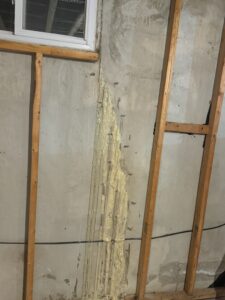
Low-pressure polyurethane injection fills an active crack from the interior using a port-and-paste method. Ports are bonded to the crack face at intervals, then liquid polyurethane is injected under low pressure until it travels the full depth of the wall and cures in place. The cured material remains flexible, so it tolerates the seasonal foundation movement that is normal in Hamilton’s freeze-thaw climate without re-cracking.
This method is best for a single vertical or diagonal shrinkage crack in a poured concrete wall where the crack is the only entry point and the surrounding wall is structurally sound. It is not appropriate for block foundations, for cracks with significant horizontal displacement, or for walls where water is entering at multiple points. A single crack injection typically falls in the $600 to $900 range, though the final figure depends on crack length and access.
Epoxy Crack Injection
Epoxy injection uses the same port-and-paste delivery method but with a rigid, high-strength adhesive rather than flexible polyurethane. The cured epoxy re-bonds the two faces of the crack, restoring much of the wall’s original tensile strength. It is the correct choice when a structural engineer has identified a crack that has compromised the wall’s load-bearing capacity.
Epoxy is not suitable for active wet cracks, because moisture prevents proper adhesion. The wall must be dry before injection begins. For the vast majority of basement leak repair Hamilton cases, which involve shrinkage or settlement cracks rather than structural failures, polyurethane is the appropriate material. See our guide on when crack injection is the right fix versus full waterproofing for a detailed comparison.
Interior Weeping Tile System
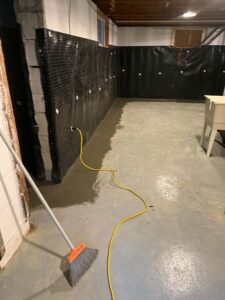
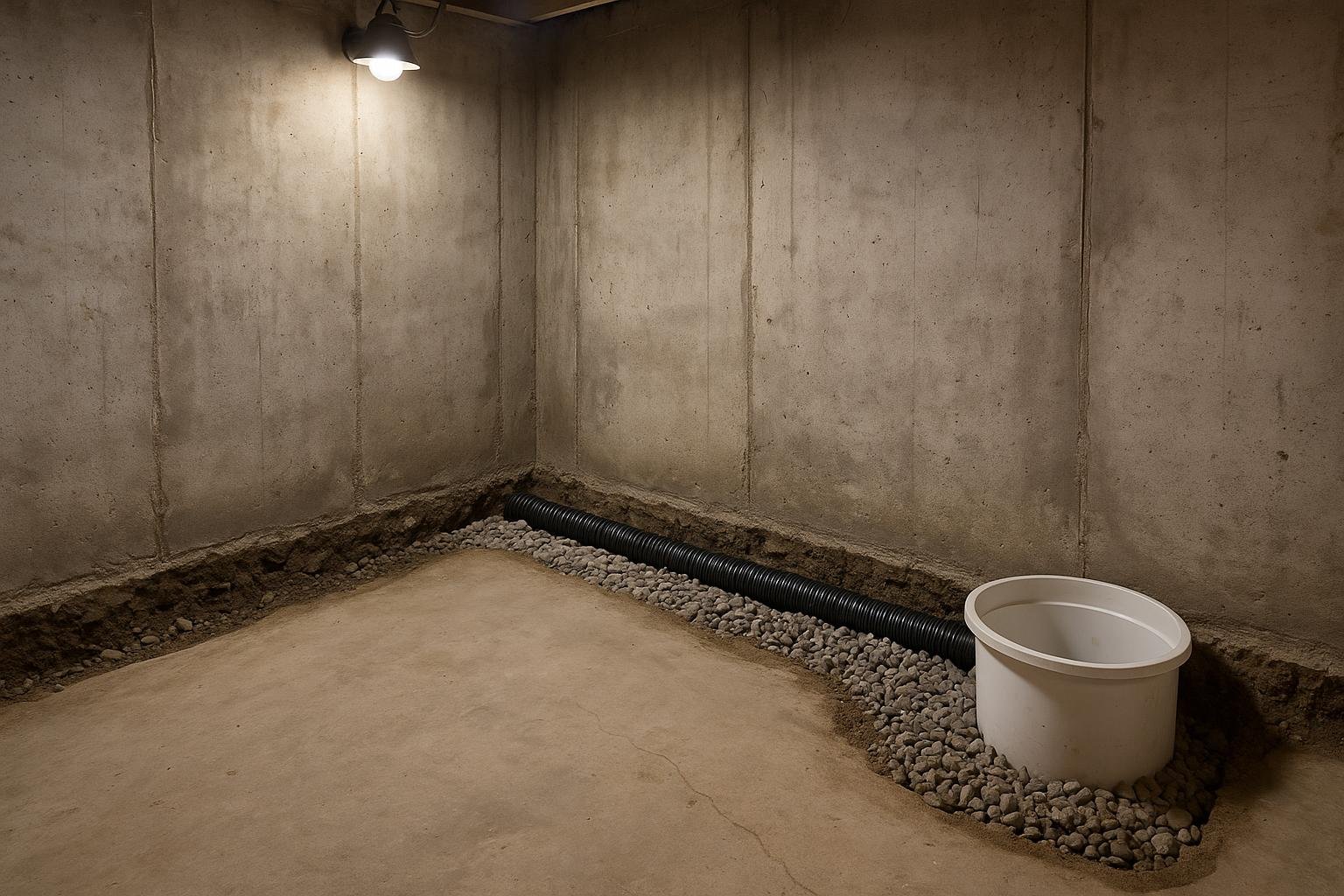
An interior weeping tile system intercepts groundwater after it has passed through the wall or footing and channels it to a sump basin before it can reach the floor. The process involves jackhammering the perimeter of the basement slab, installing a new perforated drain pipe in clear stone bedded at the footing level, running it to a sump pit, and re-pouring the concrete. A vapour barrier is typically run up the wall face to direct any wall seepage into the drain rather than onto the floor.
This approach is best for homes where exterior excavation is impractical due to decks, additions, or tight lot lines, and for situations where water is entering at multiple points along the perimeter. It manages water rather than stopping it at the source, which is an important distinction. The sump pump becomes a critical component, and a battery backup unit is strongly recommended for Hamilton homes given the frequency of summer storm power outages.
Exterior Waterproofing
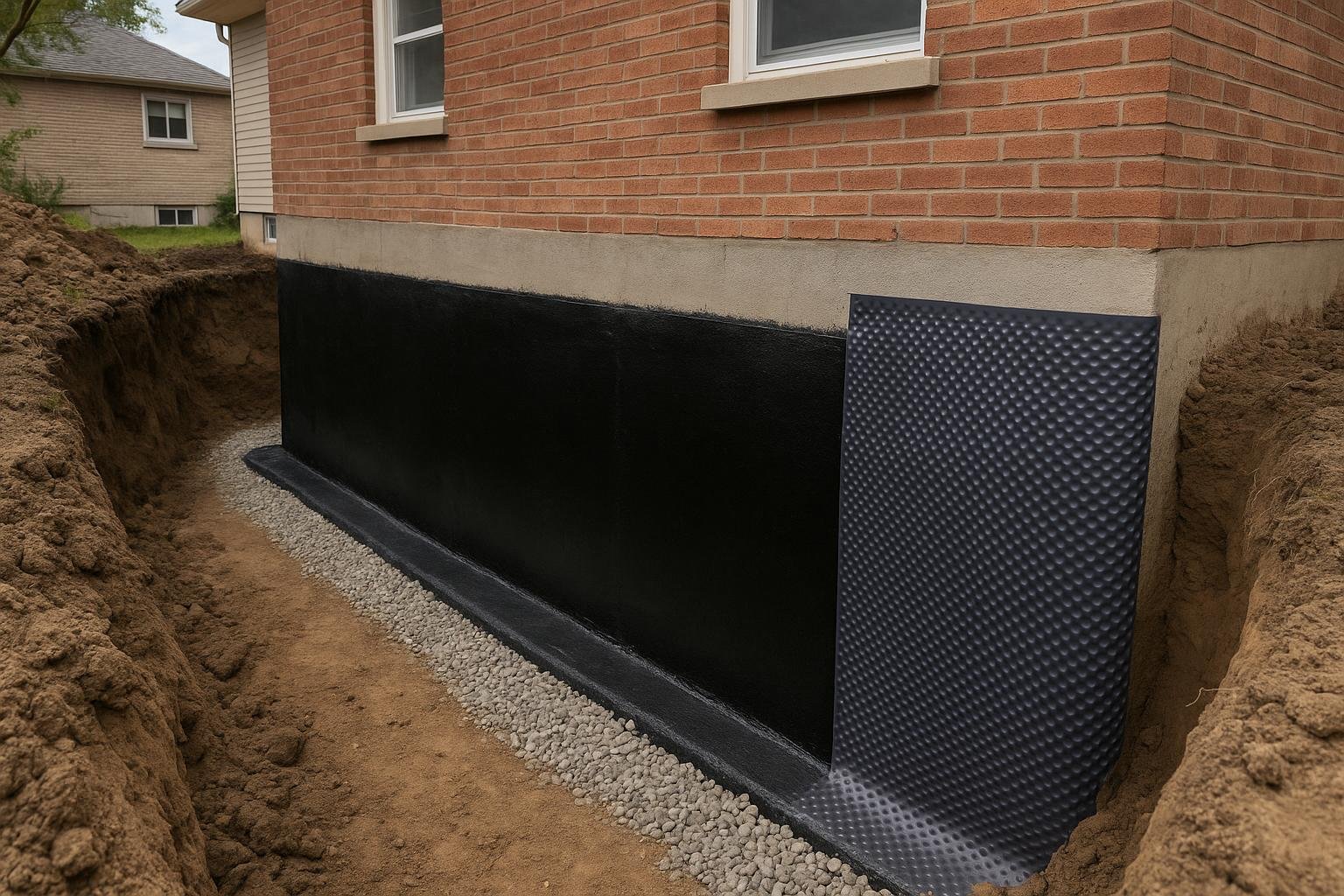
Exterior waterproofing is the most comprehensive solution. It involves excavating to the footing, applying hydraulic cement to any voids or honeycombing in the wall face, coating the exterior with a rubberised waterproofing membrane, installing a dimpled drainage board to protect the membrane and channel water downward, laying new weeping tile in clear stone at the footing, and backfilling with graded material that promotes drainage away from the wall.
For an average Hamilton semi-detached or detached home, full exterior waterproofing typically runs in the $6,000 to $9,000 range depending on linear footage, depth of excavation, and site access. It is the only method that stops water before it contacts the foundation wall, and it is the right choice when the existing exterior membrane has failed, when the original weeping tile is confirmed silted or absent, or when the homeowner wants the longest-lasting solution available. Explore the full Hamilton waterproofing and foundation repair service page for details on what is included.
Interior Drainage with Sump Pump Only
In some Hamilton basements, particularly finished spaces where a full perimeter system is disruptive, a targeted sump pump installation combined with a partial interior drain addresses a concentrated low point where water collects. This is a narrower scope than a full interior system and suits situations where water entry is localised rather than perimeter-wide. The sump pump handles the collected water, and the basin is sized to the expected inflow volume.
Parging and Surface Sealing
Parging, applying a cement-based coating to the exposed above-grade portion of the foundation wall, addresses surface erosion and minor surface porosity. It is a maintenance measure, not a waterproofing solution. Surface sealers applied to the interior wall face similarly slow vapour transmission but cannot resist active hydrostatic pressure. Both are appropriate as finishing steps after a primary repair, not as standalone fixes for an actively leaking basement.
Options Compared
| Method | Best For | Typical Lifespan | Relative Cost | Disruption |
|---|---|---|---|---|
| Polyurethane crack injection | Single active shrinkage crack, poured wall | Long-term when crack is isolated | Lowest ($600-$900 per crack) | Minimal, interior only, no excavation |
| Epoxy crack injection | Structural crack requiring re-bonding | Permanent if wall is dry and stable | Low to moderate | Minimal, interior only |
| Interior weeping tile system | Multiple entry points, excavation not feasible | 20-plus years with pump maintenance | Moderate | High interior disruption, jackhammering required |
| Exterior waterproofing | Failed membrane, silted weeping tile, full perimeter | Longest available | Highest ($6,000-$9,000 typical range) | Exterior excavation, landscaping affected |
| Sump pump installation | Localised low-point collection, complement to drainage | Pump lifespan 7-10 years, basin indefinite | Low to moderate | Low, pit excavation only |
| Parging and surface sealing | Surface erosion, vapour reduction, finishing step | 5-10 years before reapplication | Lowest | Minimal |
The table makes clear that no single method suits every Hamilton basement. Crack injection is the fastest and least expensive path when the problem is genuinely a single crack. Exterior waterproofing costs more upfront but addresses the source of hydrostatic pressure directly and carries the longest service life. Interior systems occupy the middle ground: they are effective and durable but rely on a functioning sump pump, which introduces an ongoing maintenance obligation. Parging and sealing should never be the primary answer to an active leak.
How to Choose the Right Repair for Your Hamilton Basement
Choose polyurethane crack injection if you have a single visible vertical or diagonal crack in a poured concrete wall, the crack is the only entry point you can identify, and the surrounding wall shows no signs of horizontal displacement or bowing. This is the most common scenario in Hamilton’s post-war poured-concrete homes and the most straightforward to resolve.
Choose epoxy injection if a structural engineer has assessed the crack and determined the wall needs re-bonding. Do not select epoxy simply because the crack looks serious; get a professional assessment first.
Choose an interior weeping tile system if water is entering at multiple points along the perimeter, if the original weeping tile is confirmed failed, and if exterior excavation is blocked by a deck, addition, driveway, or neighbouring structure. This is also the right choice for finished basements where the homeowner wants to preserve the exterior grade and landscaping.
When evaluating basement leak repair Hamilton options, exterior waterproofing is the right choice if the exterior membrane is known to have failed, if you are already excavating for another reason such as a foundation repair, if the home has never been waterproofed, or if you want the most durable long-term outcome. Homes on Hamilton’s lower city lots with flat drainage and heavy clay benefit most from exterior membrane and new weeping tile, because those conditions generate the highest sustained hydrostatic pressure.
If you are unsure which entry point is causing the leak, use the basement leak diagnostic tool to narrow down the likely cause before booking an inspection.
Choose a sump pump upgrade or addition if you already have an interior drainage system but the pump is aging, undersized, or lacks a battery backup. Hamilton’s summer storms can knock out power for hours, and a sump basin that overflows during an outage defeats the purpose of the drainage system.
Costs and Timelines
| Cost Driver | Why It Moves the Price | Approximate Impact |
|---|---|---|
| Linear footage of affected wall | More wall means more membrane, more weeping tile, more labour | Primary driver for exterior and interior systems |
| Depth of excavation | Deeper footings require more excavation time and shoring | Significant for exterior work on older Hamilton homes with deep footings |
| Site access | Tight lots, fences, decks, and neighbouring structures limit equipment | Can add hand-digging labour cost |
| Number of cracks | Each injected crack is priced individually at $600-$900 | Additive; three cracks can approach the cost of a partial interior system |
| Sump pump specification | Battery backup, horsepower rating, and alarm systems vary in cost | Moderate; backup units add meaningful value for storm-prone Hamilton lots |
| Concrete re-pour thickness | Interior systems require slab removal and replacement | Included in interior system scope but varies by slab condition |
As a general orientation: a single crack injection runs $600 to $900. A full exterior waterproofing job on a typical Hamilton semi or detached home falls in the $6,000 to $9,000 range. Interior weeping tile systems typically come in below the exterior range but above the crack injection range. Every figure depends on a site inspection, and any contractor quoting a firm price without visiting the property is guessing. For a broader view of what drives pricing across Southern Ontario, see the basement waterproofing cost guide.
Timelines are generally short. Crack injection is a half-day job. Interior weeping tile installation on a typical Hamilton basement takes one to two days. Exterior waterproofing, including excavation, membrane application, and backfill, typically runs two to three days per wall section depending on access and depth.
Risks and Common Mistakes
| Symptom | Likely Cause | Correct Fix |
|---|---|---|
| Water seeping along the floor-wall joint | Failed or absent weeping tile, hydrostatic pressure at footing | Interior weeping tile system or exterior waterproofing to footing |
| Vertical crack with active water flow | Shrinkage crack in poured wall, hydrostatic pressure | Polyurethane crack injection from interior |
| Horizontal crack mid-wall | Lateral soil pressure, possible structural concern | Structural assessment first, then appropriate repair |
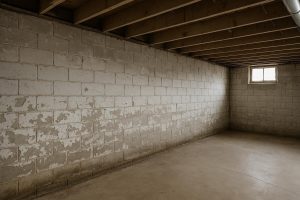
| White chalky deposits on wall face | Efflorescence from mineral-laden water migrating through concrete | Identify and seal the water source; efflorescence is a symptom, not the cause |
| Damp floor slab with no visible crack | Vapour transmission through slab, high water table | Interior drainage system with sump, vapour barrier on floor |
The most common mistake Hamilton homeowners make is treating the symptom rather than the source. Painting the interior wall with a hydraulic cement product or a waterproofing paint may slow seepage temporarily, but it cannot resist sustained hydrostatic pressure. When the pressure builds, the coating fails, often taking chunks of the wall face with it and making the eventual proper repair more expensive.
A second common error is skipping the sump pump battery backup. Hamilton’s summer storm season regularly produces power outages that last several hours. A sump basin that fills during an outage and overflows undoes the entire drainage system in one event.
Never inject a crack that shows horizontal displacement or step cracking across mortar joints without a structural assessment first. These patterns can indicate wall movement that injection alone will not stabilise.
A third mistake is assuming that because a crack has been dry for years, it does not need attention. Hamilton’s water table fluctuates seasonally. A crack that was dormant through a dry summer can become an active leak the following spring. Proactive injection while the crack is dry is easier and less expensive than emergency repair during an active leak.
How the Repair Process Works
- Free on-site inspection and moisture assessment. A technician visits the property, traces water entry points, probes the wall for moisture, and assesses the condition of any existing weeping tile or sump system. No quote is issued without this step.
- Written scope with linear-foot pricing. The homeowner receives a written proposal specifying the method, materials, linear footage, and any site-specific conditions that affect the work. This is the basis for an apples-to-apples comparison if you are getting multiple quotes.
- Preparation and access. For exterior work, excavation proceeds to the footing. For interior work, the perimeter slab is jackhammered and debris removed. For crack injection, the wall face is cleaned and ports are bonded at intervals along the crack.
- Primary repair. Exterior: hydraulic cement parging of voids, rubberised membrane application, dimpled drainage board installation, new weeping tile in clear stone, backfill and grade correction. Interior: weeping tile to sump basin, vapour barrier up the wall, concrete re-pour. Crack: low-pressure polyurethane or epoxy injection through ports until the material reaches full depth.
- Secondary components. Sump pump installation or upgrade where required, including battery backup unit and alarm. Downspout extensions and grading corrections to reduce surface water loading on the foundation.
- Inspection and clean-up. The completed repair is inspected, ports are removed and the crack face is finished, and the work area is restored as closely as practical to its pre-work condition.
- Warranty documentation. The homeowner receives written warranty documentation. DryShield’s work is backed by a lifetime transferable warranty on qualifying systems, which transfers to a new owner if the home is sold.
Frequently Asked Questions
How do I know if my Hamilton basement leak needs injection or full waterproofing?
If water is entering through a single identifiable crack in a poured concrete wall and the rest of the wall is dry, injection is likely sufficient. If water is seeping along the floor-wall joint, through multiple cracks, or through a block wall, a drainage system or exterior waterproofing is the appropriate scope. An on-site inspection is the only reliable way to confirm which applies to your specific situation.
Will polyurethane injection work on a wet, actively leaking crack?
Yes. Polyurethane foam is specifically formulated to react with moisture and expand to fill the crack even when water is actively flowing. This is one of the key advantages over epoxy, which requires a dry surface to bond properly. The port-and-paste method allows injection to proceed even during an active leak event.
How long does exterior waterproofing take on a Hamilton home?
For a typical Hamilton semi-detached or detached home, exterior waterproofing of one or two walls typically takes two to three days from excavation to backfill. Homes with restricted access, deep footings, or extensive parging repairs may take longer. The written scope issued after the inspection will include a realistic timeline for your specific property.
Is my basement leak covered by home insurance?
Most standard Ontario home insurance policies exclude gradual water damage from groundwater seepage and foundation leaks. Sudden and accidental water damage from a burst pipe may be covered, but chronic basement leaks driven by hydrostatic pressure are generally considered a maintenance issue. Some policies include overland water or sewer backup endorsements that may apply in specific flooding scenarios. Review your policy wording and speak with your broker before assuming coverage.
What is the difference between weeping tile and a French drain?
In Canadian residential construction, weeping tile and French drain refer to the same concept: a perforated pipe bedded in clear stone that collects and redirects groundwater. The term weeping tile comes from the original clay pipe sections used in older construction. Modern installations use corrugated or rigid perforated PVC pipe. The distinction that matters is whether the system is at the footing (the most effective position) or higher up the wall, and whether it drains to daylight or to a sump basin.
How much does a sump pump installation cost in Hamilton?
Sump pump installation cost depends on whether a basin already exists, the depth required, and the pump specification including battery backup. The final figure depends on a site visit. A battery backup unit adds meaningful cost but is strongly recommended for Hamilton properties given the frequency of summer storm outages. See the sump pump installation service page for details on what is included.
Can I waterproof only part of my basement perimeter?
Yes. If water entry is confirmed on one or two walls and the remaining walls are dry and structurally sound, the repair scope can be limited to the affected sections. A partial exterior or interior system is a legitimate approach when the budget or site conditions make a full perimeter job impractical. The risk is that untreated walls may develop issues later, particularly if the water table rises. Your technician will advise on the risk profile of a partial scope for your specific property.
Does basement waterproofing increase my home’s resale value in Hamilton?
A dry, documented basement is a material selling point in Hamilton’s resale market. Buyers and their inspectors flag moisture evidence immediately, and a wet basement can reduce offers or kill deals. A transferable warranty on the waterproofing system adds further value because it gives the buyer confidence in the repair. The return on investment varies by neighbourhood and market conditions, but eliminating a known defect generally recovers its cost in the sale price.
What causes efflorescence on Hamilton basement walls?
Efflorescence is the white chalky deposit left when water migrates through concrete or masonry, dissolves soluble salts in the material, and deposits them on the surface as the water evaporates. It is a reliable indicator that water is moving through the wall, even if the wall feels dry to the touch. Brushing off the deposit without addressing the water source will result in recurrence. The correct response is to identify and seal the entry point, then remove the efflorescence as a finishing step.
How do I find a reliable waterproofing contractor in Hamilton?
Look for contractors who provide a free written inspection report, itemise the scope by method and linear footage, and offer a written warranty that is transferable to future owners. Be cautious of quotes issued without a site visit, high-pressure same-day signing tactics, and contractors who recommend the most expensive option without explaining why the alternatives were ruled out. Our guide on how to choose a reliable waterproofing contractor covers the full checklist.
Basement leak repair Hamilton homeowners can rely on starts with a proper diagnosis. If your Hamilton basement is showing signs of moisture, seepage, or active cracking, the DryShield Team is ready to help. Contact us to book a free on-site inspection and receive a written scope with no obligation. The sooner the entry point is identified, the narrower and less expensive the repair.