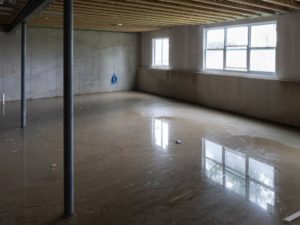
Basement wet repair is the process of matching the correct fix to the correct source of water entry. Once you know whether water is coming through a single crack, seeping along the full perimeter, or rising through the floor slab, the method becomes clear. This guide focuses on the decision-making layer: which repair method fits which problem, what each costs in Ontario, and what to watch out for when comparing quotes. For a broader look at diagnosing the source of moisture before choosing a fix, the basement waterproofing service overview is a useful starting point.
Key Takeaways
- Heavy clay soil across much of the GTA holds water against foundation walls, making hydrostatic pressure the most common root cause of a wet basement, not surface rain alone.
- A single foundation crack injected with low-pressure polyurethane typically costs $600 to $900; full exterior waterproofing of a Toronto semi or detached home typically runs $6,000 to $9,000.
- Spring thaw and summer downpours are the two peak failure windows for Ontario foundations.
- Older homes commonly have failed or fully silted-up original weeping tile, which no surface sealer can fix.
- The correct basement wet repair must match the source: an interior drain manages water that has already entered, while exterior membrane work stops it at the wall.
Definitions and Scope
The term “wet basement” covers a wide range of problems, from a hairline crack that weeps during heavy rain to a perimeter that floods every spring. Repair options sit on a spectrum from targeted crack injection to full perimeter excavation. Understanding the vocabulary helps you evaluate quotes and avoid being sold a solution that does not match your problem.
Hydrostatic pressure is the force that saturated soil exerts against a foundation wall. In clay-heavy GTA soils, this pressure builds quickly after rain or snowmelt and pushes water through any gap, crack, or porous section of concrete. Weeping tile is the perforated pipe that runs along the footing to carry groundwater away before it can build up. When it silts up or collapses, water has nowhere to go except into the basement. A sump pump collects water that reaches the interior and discharges it away from the foundation.
Repair scope ranges from a single port-and-paste crack injection completed in a few hours to a multi-day exterior excavation project involving membrane application, new drainage board, and fresh weeping tile. The Canada Mortgage and Housing Corporation (CMHC) publishes guidance on basement moisture control at cmhc-schl.gc.ca that is worth reading alongside any contractor quote.
Why This Matters
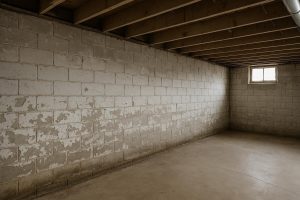
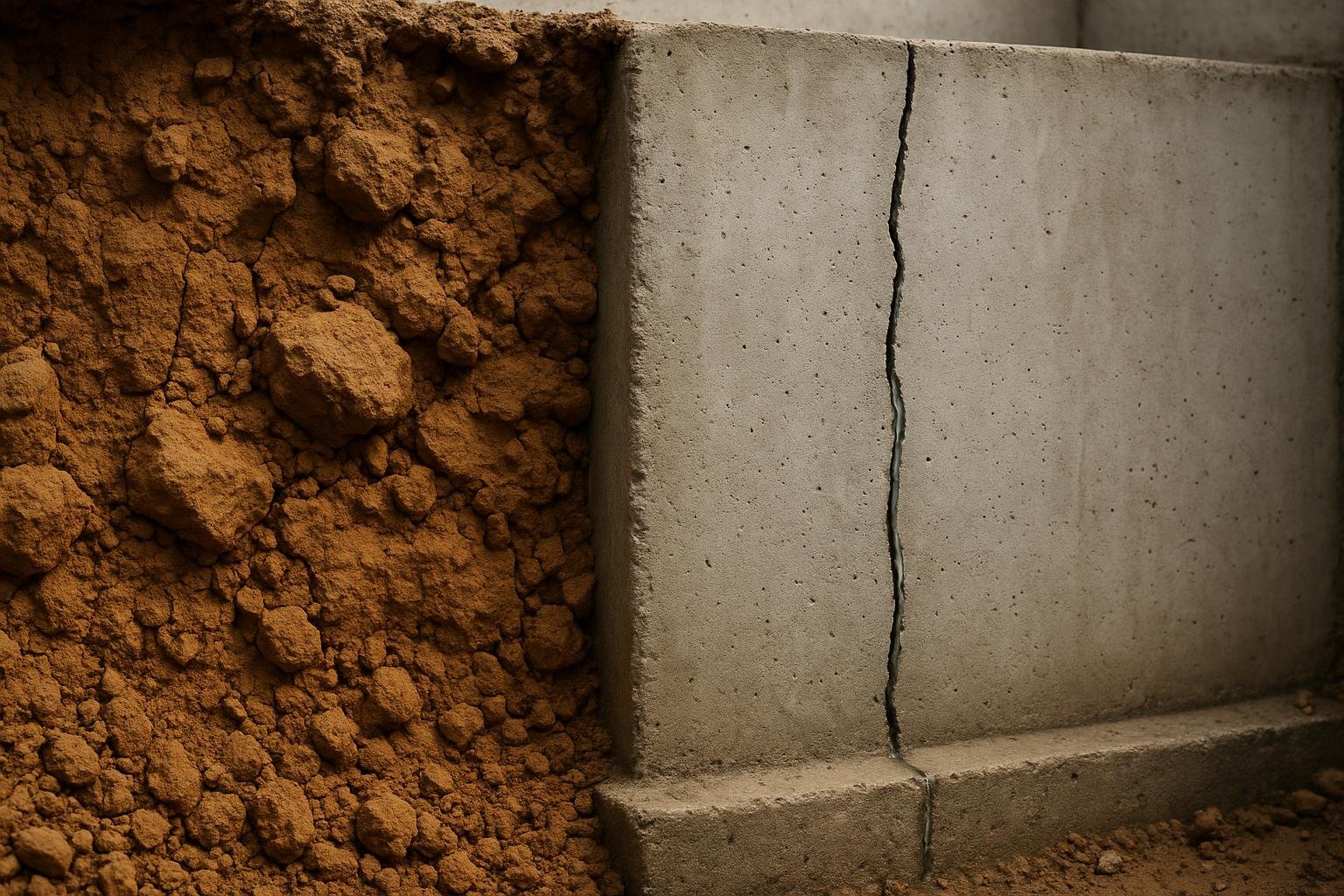
A wet basement is rarely a cosmetic problem. Persistent moisture degrades concrete through a freeze-thaw cycle: water that seeps into a crack expands when it freezes, widening the crack each winter. Over several seasons, a hairline crack becomes a structural concern. Efflorescence, the white chalky deposit left when mineral-laden water evaporates on a wall, is an early warning sign that water is moving through the concrete regularly.
Mould follows moisture. In Ontario’s climate, a damp basement wall can begin supporting mould growth within 24 to 48 hours of a flood event. Beyond health implications, mould remediation adds cost on top of the underlying waterproofing work.
Property value is also at stake. Ontario home inspectors flag active water intrusion and staining, and buyers routinely negotiate price reductions or walk away when a wet basement appears on an inspection report. Addressing the problem before listing protects resale value. For a detailed look at how waterproofing affects GTA home values, the ROI guide for GTA homeowners covers the resale data in depth.
Acting early is almost always cheaper. A crack injected at the first sign of seepage costs a fraction of what a full interior drain system costs once the footing has been undermined by years of water movement.
Your Options for Basement Wet Repair
Polyurethane Crack Injection
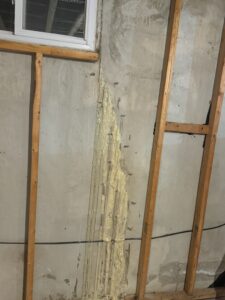
Low-pressure polyurethane injection is the standard fix for a non-structural poured concrete crack that is actively leaking. A technician drills injection ports along the crack at regular intervals, pastes a surface seal between them, then injects expanding polyurethane foam under low pressure. The foam travels the full depth of the crack and cures flexible, so it tolerates the seasonal movement that Ontario foundations experience without re-cracking. This method is completed from the interior with no excavation. It is best for vertical shrinkage cracks in poured concrete walls. It does not address the source of hydrostatic pressure, so if the surrounding soil drainage is poor, the crack may re-open over time.
Epoxy Crack Injection
Epoxy injection is used specifically for structural cracks where the wall must be re-bonded and load-bearing capacity restored. Epoxy cures rigid and bonds with tensile strength comparable to the original concrete. Because it is rigid, epoxy is not suitable for cracks that are still moving. A structural engineer’s assessment is recommended before choosing epoxy over polyurethane. This method is also completed from the interior.
Interior Weeping Tile System
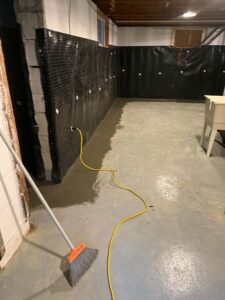
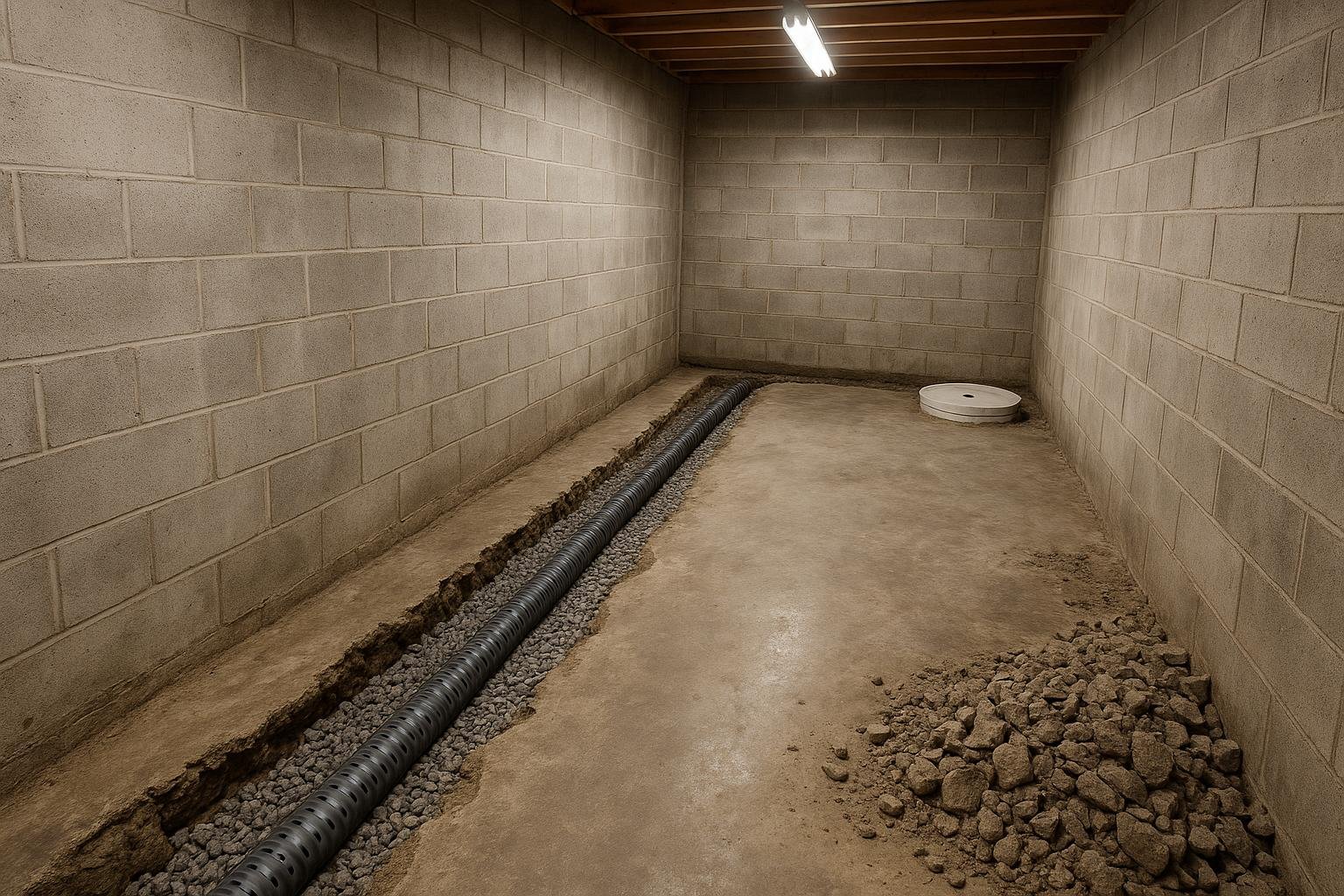
Where hydrostatic pressure is the root cause and exterior excavation is not practical, an interior perimeter drain system manages water that has already entered the wall. The perimeter slab is jackhammered, a perforated pipe is installed at the footing level and bedded in clear stone, and the system drains to a sump basin. A vapour barrier is then run up the wall. The concrete is re-poured over the pipe. This approach does not stop water from entering the wall, but it intercepts it before it can pool on the floor. It is well-suited to finished basements where excavation would cause major disruption, and to homes where access around the exterior is blocked by a driveway or neighbouring structure.
Exterior Waterproofing with Membrane
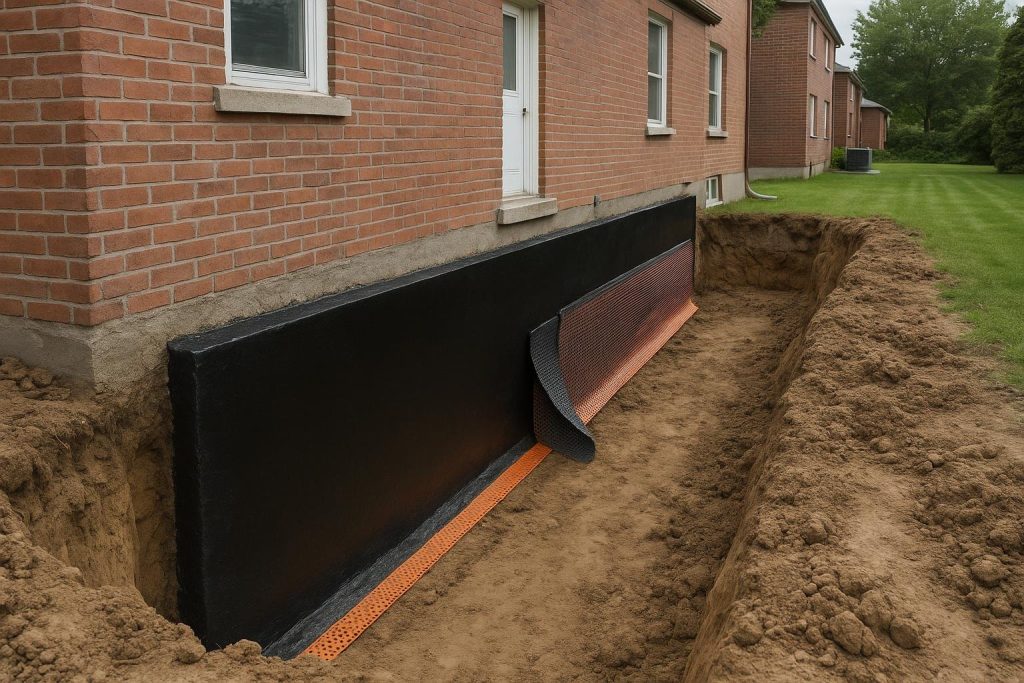
Exterior waterproofing is the most comprehensive basement wet repair option. The soil is excavated down to the footing, voids in the foundation wall are filled with hydraulic cement parging, and a rubberised waterproofing membrane is applied to the full height of the wall. A dimpled drainage board is placed over the membrane to protect it and channel water downward. New weeping tile is bedded in clear stone at the footing and connected to a drainage outlet or sump. The trench is then backfilled and the grade is corrected to slope away from the foundation. This method stops water at the wall rather than managing it after entry. It is the preferred solution for foundations with widespread seepage, failed original weeping tile, or significant hydrostatic pressure from clay soil.
Sump Pump Installation or Replacement
A sump pump is often installed as part of an interior or exterior system, but it can also be added as a standalone measure where a low point in the basement collects water. The pump sits in a pit below the floor slab and activates automatically when water reaches a float trigger. Battery backup units are important in Ontario, where power outages during storms are common. A sump pump manages water volume but does not seal the source, so it works best as part of a broader repair strategy rather than a standalone fix.
Exterior Grade Correction and Downspout Extension
In some cases, water enters a basement because the ground slopes toward the foundation or downspouts discharge too close to the wall. Regrading the soil to slope away from the foundation and extending downspouts at least two metres from the wall can reduce surface water intrusion meaningfully. This is the lowest-cost intervention and is worth doing regardless of what other repairs are planned. It does not address groundwater or hydrostatic pressure from a high water table.
Options Compared
| Method | Best For | Typical Lifespan | Relative Cost | Disruption |
|---|---|---|---|---|
| Polyurethane crack injection | Single non-structural poured concrete crack | Long-term if foundation movement is stable | Lowest ($600-$900 per crack) | Minimal, interior only, no excavation |
| Epoxy crack injection | Structural cracks requiring wall re-bonding | Permanent if crack is stable | Low to moderate | Minimal, interior only |
| Interior weeping tile system | Perimeter seepage, high hydrostatic pressure, limited exterior access | 20-plus years with pump maintenance | Moderate | High interior disruption, jackhammering required |
| Exterior waterproofing with membrane | Widespread seepage, failed weeping tile, clay soil pressure | 25-plus years | Highest ($6,000-$9,000 for average Toronto home) | High exterior disruption, excavation required |
| Sump pump installation | Water volume management, backup for drain systems | 7-10 years per pump unit | Low to moderate | Low, pit excavation only |
| Grade correction and downspout extension | Surface water intrusion, minor seepage | Ongoing with landscape maintenance | Lowest of all options | Minimal |
The table above shows that no single method suits every situation. Crack injection is the right call for an isolated, non-structural crack, but it will not solve a basement that floods every spring because the original weeping tile has silted up over 50 years. Exterior waterproofing addresses the root cause most completely but carries the highest cost and disruption. Interior systems are a practical middle ground when exterior access is blocked. In practice, many homes need a combination: exterior membrane work on the most exposed wall, crack injection on isolated cracks, and a sump pump to handle residual groundwater.
How to Choose the Right Basement Wet Repair Method
Choose polyurethane crack injection if you have one or two identifiable vertical cracks in a poured concrete wall that leak during or after heavy rain, and the rest of the basement is dry. This is the most targeted and cost-effective basement wet repair for that specific problem.
Choose epoxy injection if a structural engineer has identified a crack that has compromised the wall’s load-bearing capacity. Do not use epoxy on cracks that are still moving seasonally.
Choose an interior weeping tile system if water is seeping through multiple points along the perimeter, if the original weeping tile has failed, or if exterior excavation is not possible because of a shared wall, a patio, or a driveway that cannot be disturbed. This method also suits homeowners who want to avoid the disruption of exterior work in a densely built neighbourhood.
Choose exterior waterproofing if the foundation has widespread seepage, if the soil is heavy clay that holds water against the wall for weeks after rain, or if a previous interior fix has failed. Exterior work is also the right choice when the weeping tile needs full replacement, since the footing must be exposed anyway.
Choose grade correction and downspout extension as a first step in any scenario, and as the primary fix only if a site inspection confirms that surface water, not groundwater, is the sole source.
A free on-site inspection is the only reliable way to confirm which basement wet repair method is appropriate. Moisture can travel several metres through concrete before it appears on a wall, so the visible wet spot is often not directly above the entry point.
Costs and Timelines
| Cost Driver | Why It Affects Price | Approximate Range (Ontario) |
|---|---|---|
| Linear footage of wall treated | More wall means more membrane, drainage board, and weeping tile | Priced per linear foot on written scope |
| Depth of excavation | Deeper footings require more labour and equipment time | Significant factor in exterior jobs |
| Exterior access | Tight side yards, decks, or driveways increase labour and may require hand-digging | Can add meaningfully to base price |
| Number of cracks | Each crack injection is a discrete service | $600-$900 per crack (approximate) |
| Soil type | Dense clay is harder to excavate and backfill than sandy soil | Affects labour hours |
| Sump pump specification | Battery backup, alarm monitoring, and horsepower rating vary | Varies by unit selected |
| Concrete re-pour (interior systems) | Jackhammering and re-pouring the perimeter slab adds material and labour | Included in interior system scope |
As a general guide, a single foundation crack injected from the interior typically falls in the $600 to $900 range. Full exterior waterproofing of an average Toronto semi-detached or detached home typically runs $6,000 to $9,000 depending on linear footage, excavation depth, and site access. Interior weeping tile systems generally fall below the exterior range. Every figure depends on a site inspection, and written scope with linear-foot pricing is the standard before any work begins. For a detailed breakdown of what drives waterproofing costs across Ontario, the foundation waterproofing cost guide covers the full picture.
Spring thaw and summer downpours are the two peak demand windows in Ontario. Booking an inspection before those seasons, rather than during them, typically means shorter wait times and more scheduling flexibility.
Risks and Common Mistakes
| Symptom | Likely Cause | Correct Fix |
|---|---|---|
| Water seeping through a single vertical crack after rain | Shrinkage crack in poured concrete wall | Polyurethane crack injection |
| Water along the full perimeter of the floor | Failed or silted weeping tile, high water table | Interior or exterior weeping tile replacement |
| White chalky deposits (efflorescence) on walls | Chronic low-level water movement through concrete | Identify and seal the entry point; address drainage |
| Horizontal crack in a block foundation wall | Lateral soil pressure, potential structural issue | Structural assessment before any waterproofing |
| Damp floor slab with no visible wall cracks | Groundwater rising through the slab (floor seepage) | Interior drain system with sump pump |
The most common mistake homeowners make is applying a surface sealer or hydraulic cement to the interior face of a wet wall and expecting it to hold. Interior surface sealers cannot withstand sustained hydrostatic pressure from clay soil. They may slow seepage briefly, but water will find another path. The correct basement wet repair addresses the drainage condition, not just the visible wet surface.
A second common error is choosing an interior system when the foundation wall itself is deteriorating. If the concrete has spalled or the parging has failed, water is entering through the wall material, not just through cracks. In that case, exterior membrane work is necessary to protect the wall structure, not just to manage water volume inside.
Skipping the sump pump on an interior system is also a risk. The weeping tile collects water and routes it to the basin, but if there is no pump or the pump fails during a storm, the basin overflows. A battery backup unit is essential in Ontario, where power outages during heavy rain events are common. The ROI guide notes that a documented, warranted repair system adds measurable value at resale, while a failed patch repair can actually reduce buyer confidence.
Horizontal cracks in a block foundation wall are a structural warning sign. Always get a structural engineer’s opinion before proceeding with any waterproofing work on a wall showing horizontal movement.
How the Process Works
- Free on-site inspection and moisture assessment. A technician visits the property, identifies all entry points, checks the grade, inspects the sump pit if one exists, and assesses soil conditions around the foundation.
- Written scope with linear-foot pricing. A detailed proposal is provided before any work begins, specifying the method, materials, linear footage, and what is included in the warranty.
- Preparation and access. For exterior work, landscaping and any surface features near the wall are protected or temporarily removed. For interior work, the area along the perimeter is cleared.
- Core repair work. Exterior: excavation to the footing, hydraulic cement parging of voids, rubberised membrane application, dimpled drainage board installation, new weeping tile bedded in clear stone. Interior: jackhammer perimeter slab, install weeping tile to sump basin, vapour barrier up the wall, re-pour concrete. Crack injection: drill ports, apply paste seal, inject polyurethane or epoxy under low pressure.
- Backfill and grade correction. On exterior jobs, the trench is backfilled in lifts and the grade is corrected to slope away from the foundation at the minimum slope required by the Ontario Building Code.
- Final inspection and documentation. The completed basement wet repair is reviewed, the warranty documentation is issued, and the homeowner is walked through what was done and what to monitor going forward.
For homeowners who want to understand the full exterior system in detail, the exterior foundation protection guide covers each layer of the system and why each one matters.
Frequently Asked Questions
What is the most common cause of a wet basement in Ontario?
Hydrostatic pressure from water-saturated clay soil is the most common cause across the GTA and surrounding areas. Heavy clay holds water against the foundation wall for days or weeks after rain, and that sustained pressure forces moisture through cracks, joints, and porous concrete. Surface drainage problems, failed weeping tile, and missing or undersized sump pumps are the next most frequent contributors.
Can I fix a wet basement myself?
Minor surface issues like regrading soil or extending downspouts are reasonable DIY tasks. However, crack injection, weeping tile replacement, and membrane application require specialised equipment and materials. Low-pressure polyurethane injection in particular requires the correct port spacing, paste formulation, and injection pressure to fill the crack fully. An incomplete injection leaves voids that allow water to bypass the repair.
How long does basement wet repair take?
A single crack injection is typically completed in two to four hours. An interior weeping tile system for a standard basement perimeter takes one to three days. Full exterior waterproofing of an average Toronto home takes two to four days depending on linear footage, excavation depth, and site conditions. Final cure times for membranes and concrete re-pours add to the overall timeline before the area can be fully used.
Does basement wet repair require a permit in Ontario?
Crack injection and interior drainage systems generally do not require a building permit in Ontario. Exterior excavation work that affects the foundation structure may require a permit depending on the municipality. Your contractor should confirm permit requirements as part of the written scope. The Ontario Building Code sets minimum standards for drainage slope and backfill that apply regardless of permit status.
How do I know if my weeping tile has failed?
Signs of failed weeping tile include water seeping along the full perimeter of the basement floor rather than through a single crack, a sump pump that runs continuously during wet weather, and efflorescence or staining along the base of the walls. A camera inspection of the existing tile can confirm whether it is silted, crushed, or disconnected. Many Toronto-area homes built before the 1980s have clay or concrete weeping tile that has long since collapsed.
Is exterior or interior waterproofing better?
Exterior waterproofing stops water at the wall and is the more complete solution. Interior systems manage water that has already entered and are better suited to situations where exterior access is limited or cost is a constraint. The right choice depends on the source of the water, the condition of the foundation wall, and the site conditions. A site inspection is the only reliable way to determine which approach is appropriate for a specific home. The interior vs. exterior waterproofing comparison covers the trade-offs in detail.
Will waterproofing stop mould in my basement?
Eliminating the moisture source is the necessary first step to stopping mould growth. Once the basement is dry, existing mould must be remediated separately. Waterproofing prevents new mould from forming by removing the conditions it needs, but it does not kill or remove mould that is already present on framing, insulation, or drywall.
How much does basement wet repair cost in Ontario?
A single crack injection typically costs $600 to $900. Full exterior waterproofing of an average Toronto semi-detached or detached home typically runs $6,000 to $9,000 depending on linear footage, excavation depth, and access. Interior weeping tile systems generally fall below the exterior range. Every project is quoted individually after a site inspection. For a full breakdown of what drives the cost, the foundation waterproofing cost guide provides Ontario-specific ranges.
Does a wet basement affect home insurance in Ontario?
Most standard Ontario home insurance policies do not cover gradual water damage from a chronic wet basement. Sudden and accidental water damage from a burst pipe may be covered, but seepage through a foundation crack or failed weeping tile is typically excluded. Some insurers offer overland water or sewer backup endorsements that provide partial coverage. Completing a documented waterproofing repair may also affect your eligibility for certain endorsements going forward.
How long does a waterproofing repair last?
A properly executed polyurethane crack injection on a stable foundation can last the life of the home. Exterior membrane systems are typically warranted for 25 years or more. Interior weeping tile systems last 20-plus years with routine sump pump maintenance. The pump unit itself typically needs replacement every 7 to 10 years. A lifetime transferable warranty on the waterproofing system adds value at resale by giving the next owner confidence in the repair.
If your basement is showing signs of moisture, the best next step is a free on-site inspection. DryShield serves Toronto, the GTA, and Ontario cottage country including the Minden and Haliburton areas. Contact the team to book your assessment and receive a written scope before any work begins.