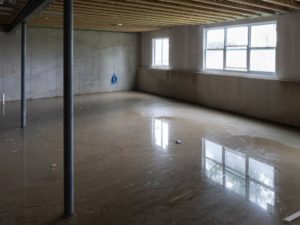
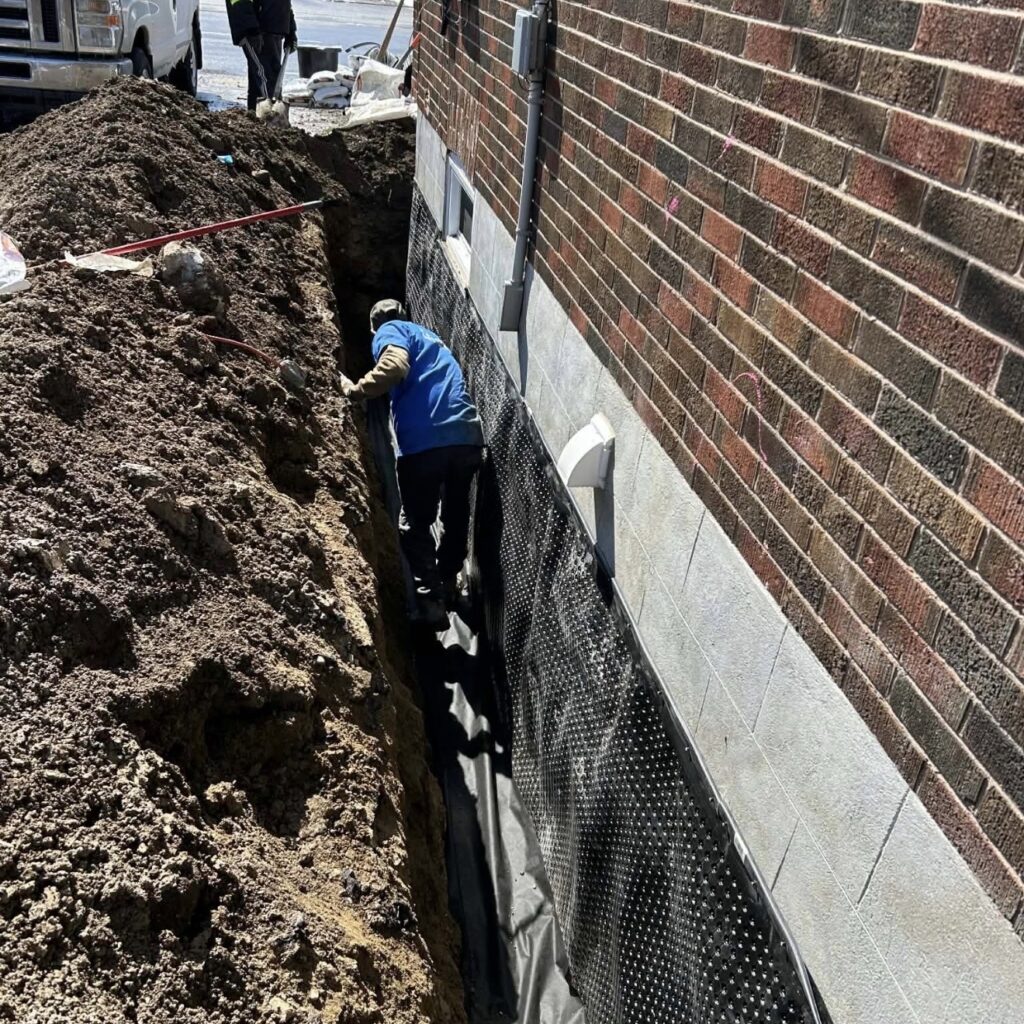
Waterproofing outside your foundation is the most direct way to stop water before it ever contacts your basement wall. Rather than managing moisture that has already penetrated the structure, exterior waterproofing intercepts hydrostatic pressure at the source, protecting the footing, the wall face, and the drainage plane all at once. For Ontario homes sitting on heavy clay soil, that distinction matters enormously.
Key Takeaways
- Waterproofing outside addresses the root cause of hydrostatic pressure rather than redirecting water that has already entered.
- A full exterior system on a Toronto semi or detached home typically runs $6,000 to $9,000, depending on linear footage, excavation depth, and site access.
- GTA clay soil holds water against foundation walls for weeks after rain, making drainage board and new weeping tile critical components, not optional add-ons.
- Interior systems are a legitimate alternative when excavation is not feasible, but they do not stop water from contacting the wall itself.
- Spring thaw and summer downpours are the two peak failure windows for Ontario foundations.
Definitions and Scope
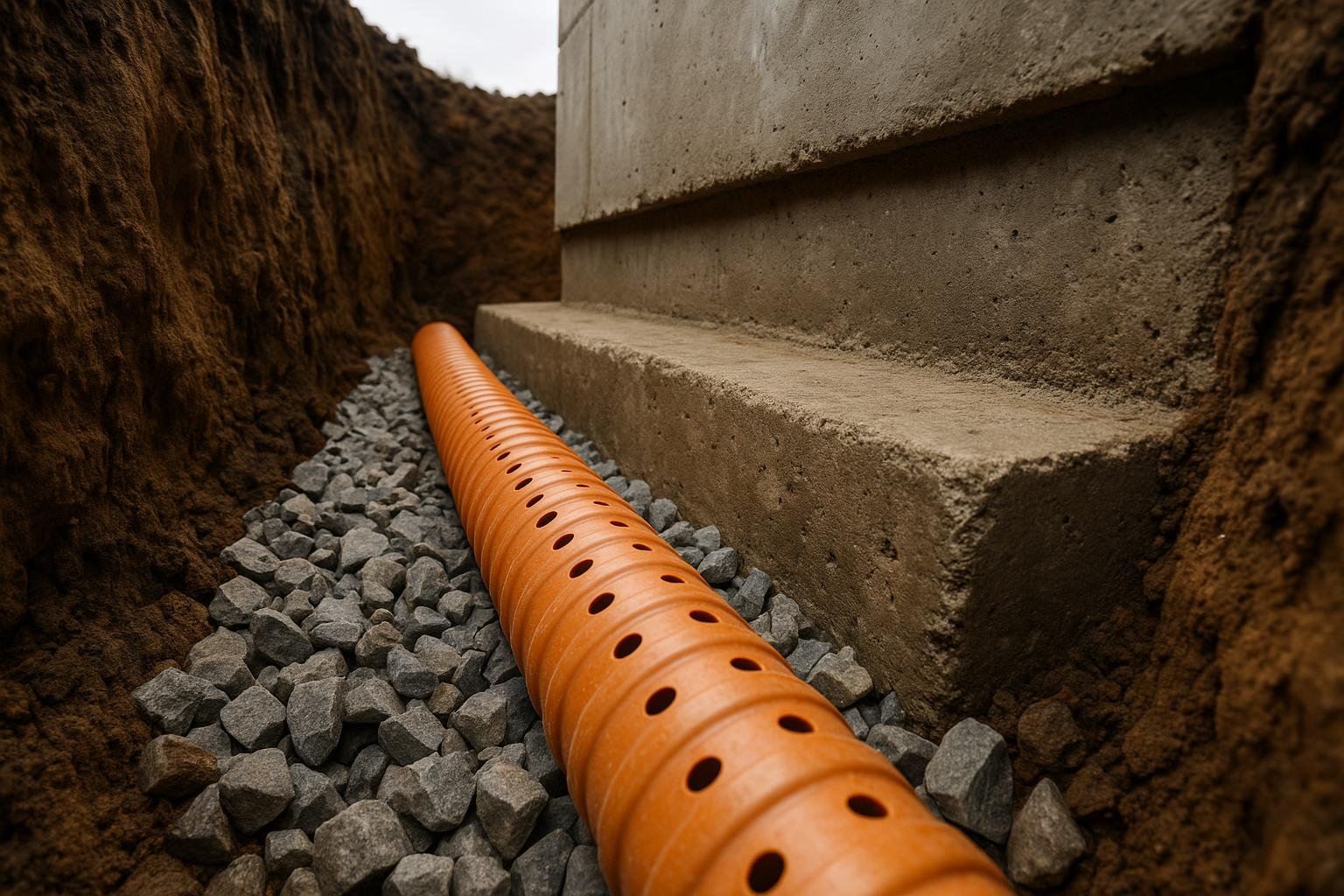
Waterproofing outside refers to any system applied to the outside face of a foundation wall, from the top of the footing up to grade. The goal is to create a continuous barrier that sheds water away from the structure before hydrostatic pressure can build. A complete exterior system typically includes membrane application, a dimpled drainage board, new weeping tile bedded in clear stone, and corrected surface grading.
Hydrostatic pressure is the force that saturated soil exerts against a foundation wall. In the GTA, where Leda clay and dense urban fill are common, that pressure can be sustained for days or weeks after a heavy rain event. Older Toronto homes frequently have original weeping tile made from clay or concrete segments that have fully silted up over decades, leaving no functional drainage path at the footing level.
This guide covers all exterior and interior waterproofing options, compares them honestly, and explains when each approach is the right call. It is part of DryShield’s broader basement waterproofing resource hub, where you can find related guides on costs, methods, and regional considerations. For details on DryShield’s dedicated exterior service, see the exterior waterproofing service page.
Why This Matters
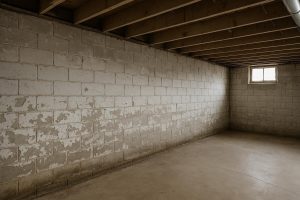
Water in a basement is rarely a cosmetic problem. Sustained moisture against a poured concrete or block foundation wall causes efflorescence, spalling, and eventually structural deterioration at the parging and the wall face itself. Mould growth follows within 24 to 48 hours of standing water, and remediation costs can quickly exceed the original waterproofing investment.
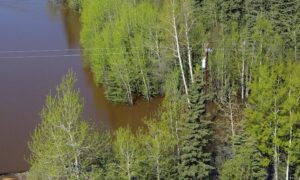
Ontario’s climate creates two predictable high-risk windows every year. Spring thaw sends large volumes of meltwater into frozen or near-frozen ground that cannot absorb it quickly, so the water travels laterally and pools against foundation walls. Summer convective storms, particularly the intense short-duration events that have become more frequent across the GTA and cottage country, overwhelm surface drainage and push water through any existing crack or joint.
The Canada Mortgage and Housing Corporation (CMHC) notes at cmhc-schl.gc.ca that foundation moisture is one of the leading causes of premature structural deterioration in Canadian residential housing. Addressing it proactively, rather than after visible damage appears, consistently produces better outcomes and lower total cost.
For GTA homeowners specifically, the combination of aging housing stock, clay-heavy soil, and increasingly intense rainfall makes waterproofing outside one of the highest-value investments a property owner can make. Many homes in Toronto’s older neighbourhoods have never had their original drainage systems replaced.
Your Options for Waterproofing Outside and In
Full Exterior Excavation and Membrane System
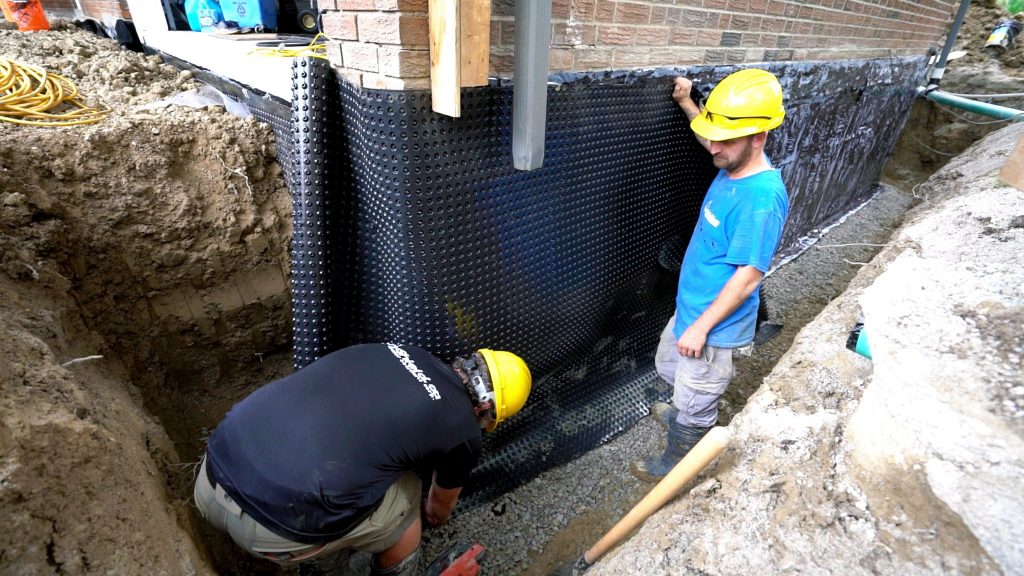
This is the most comprehensive approach to waterproofing outside a foundation. The soil is excavated down to the footing along the affected wall or the full perimeter. The wall face is cleaned, any voids are filled with hydraulic cement parging, and a rubberised waterproofing membrane is applied from the footing to grade. A dimpled drainage board is then installed over the membrane to protect it and create an air gap that channels water downward. New weeping tile is laid at the footing in a bed of clear stone and connected to a sump basin or municipal drain. The trench is backfilled and the surface grade is corrected to direct runoff away from the house.
Best for: homes where the exterior wall has never been waterproofed, where existing weeping tile has failed, or where hydrostatic pressure is the confirmed root cause. Limitations: requires excavation, which means disruption to landscaping, decks, or driveways, and is not always feasible on semi-detached homes with zero lot-line access on one side.
Interior Weeping Tile System
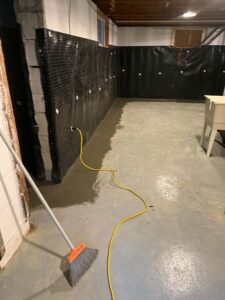
Where excavation is not practical, an interior perimeter drainage system manages water that has already entered the wall. The concrete floor is jackhammered along the perimeter, a new weeping tile channel is installed to a sump basin, a vapour barrier is run up the wall face, and the floor is re-poured. The sump pump then evacuates collected water before it can pool.
Best for: homes with restricted exterior access, finished basements where excavation would cause disproportionate disruption, or as a complement to exterior work on a high-water-table site. Limitations: water still contacts the wall, so the system manages rather than prevents moisture intrusion. It does not address hydrostatic pressure on the wall face itself. See the full breakdown at our interior basement waterproofing service page.
Polyurethane Crack Injection
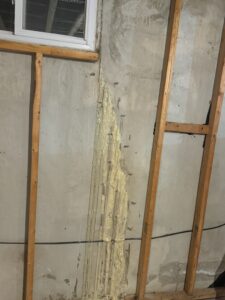
For a single active crack in a poured concrete wall, low-pressure polyurethane injection from the interior is often the correct and most cost-effective fix. Ports are surface-mounted along the crack, and expanding polyurethane foam is injected under low pressure until it fills the crack from face to face. The foam cures flexible, which means it tolerates the seasonal movement that Ontario foundations experience through freeze-thaw cycles without re-cracking.
Best for: isolated shrinkage or settlement cracks in poured concrete walls where the surrounding wall is otherwise sound. Limitations: injection does not address failed weeping tile or perimeter drainage issues. If multiple cracks are present, or if the wall shows signs of lateral movement, a broader assessment is needed. Epoxy injection is reserved for structural cracks where the wall must be re-bonded rather than simply sealed.
Exterior Spray-Applied Membrane Only (Partial Scope)
On new construction or on walls that are already exposed for another reason, a spray-applied rubberised membrane can be applied without a full drainage system. This is faster and less expensive than a complete waterproofing outside system but relies on existing weeping tile being functional.
Best for: new builds or situations where the drainage layer is confirmed to be in good condition. Limitations: if the weeping tile is silted or absent, the membrane alone cannot prevent hydrostatic pressure from building at the footing. This partial approach is rarely appropriate for older Ontario homes.
Sump Pump Installation or Upgrade
A sump pump is the active component of any drainage system, interior or exterior. It receives water from the weeping tile and pumps it away from the foundation. A battery backup unit is essential for Ontario homes where power outages during storms are common.
Best for: any home with a drainage system that discharges to a sump basin. Limitations: a sump pump is a component, not a complete waterproofing solution on its own. It requires a functioning weeping tile network to collect water and deliver it to the basin.
Grade Correction and Surface Drainage
Correcting the slope of the soil and hardscaping around the foundation so that surface water drains away from the house rather than toward it. This is always included in a full waterproofing outside scope and is sometimes the only intervention needed for minor moisture issues caused by poor grading rather than failed subsurface drainage.
Best for: homes where moisture entry is clearly linked to surface runoff rather than a high water table or failed weeping tile. Limitations: grade correction alone does not address hydrostatic pressure from a saturated soil column or failed subsurface drainage.
Options Compared
| Method | Best For | Typical Lifespan | Relative Cost | Disruption Level |
|---|---|---|---|---|
| Full exterior excavation and membrane | Failed weeping tile, high hydrostatic pressure, unprotected wall face | 25+ years with proper drainage | Highest ($6,000-$9,000 typical range) | High: landscaping, driveway or deck may be affected |
| Interior weeping tile and sump | Restricted exterior access, high water table, complement to exterior work | 20-25 years | Moderate (below exterior range) | Moderate: floor jackhammered, interior disruption |
| Polyurethane crack injection | Single active crack in poured concrete | Long-term if wall is otherwise stable | Low ($600-$900 per crack, approximate) | Minimal: interior access only, no excavation |
| Spray membrane only | New construction or exposed wall with functioning drainage | 15-20 years | Low to moderate | Low if wall is already exposed |
| Sump pump installation | Homes with existing drainage needing active discharge | 7-12 years (pump mechanism) | Low to moderate | Low: pit excavation only |
| Grade correction | Surface runoff issues, minor grading defects | Ongoing maintenance required | Lowest | Low to moderate |
The table makes clear that full exterior excavation carries the highest upfront cost and disruption but also delivers the longest service life and the most complete protection. Interior weeping tile is a strong alternative when excavation is not feasible, but it does not stop water from contacting the wall. Crack injection is precise and cost-effective for isolated defects but is not a substitute for perimeter drainage. Most Ontario homes with a chronic wet basement need a combination of at least two of these methods.
A single polyurethane crack injection typically costs $600 to $900. A full exterior waterproofing system on a Toronto semi or detached home typically runs $6,000 to $9,000. The right choice depends on what is actually causing the moisture, which is why a site inspection always comes first.
How to Choose
Choose full exterior excavation and membrane if your home has never had waterproofing outside applied, if your original weeping tile is silted or absent, or if water is entering through the wall face rather than through a discrete crack. This is the correct answer for most older Toronto and GTA homes where the foundation drainage system predates modern standards.
Choose interior weeping tile if exterior excavation is not possible due to a shared wall, a permanent structure against the foundation, or a zero lot-line situation. Interior drainage is also the right complement to waterproofing outside on sites with a persistently high water table, where even a sound exterior membrane benefits from active subsurface drainage.
Choose polyurethane crack injection if a licensed inspector confirms that a single crack is the sole entry point and the surrounding wall and drainage system are otherwise functional. This is the most common scenario for newer poured-concrete homes where shrinkage cracking is the primary issue.
Choose grade correction as a first step if your moisture problem is clearly linked to surface runoff and the subsurface drainage is confirmed to be working. This is rarely the complete answer for homes over 20 years old.
If you are unsure which category your home falls into, the basement leak diagnostic tool can help you identify the most likely source before booking an inspection.
Costs and Timelines
| Cost Driver | Why It Affects Price | Approximate Impact |
|---|---|---|
| Linear footage of wall to be treated | More wall means more excavation, membrane, drainage board, and weeping tile | Primary driver; priced per linear foot |
| Excavation depth | Deeper footings require more labour and shoring; common in older Toronto homes | Significant; deeper jobs cost more per foot |
| Site access | Narrow side yards, fences, decks, or driveways increase machine time or require hand-digging | Can add meaningfully to labour cost |
| Condition of existing wall | Severe spalling, failed parging, or block construction requires more prep before membrane | Moderate; assessed during inspection |
| Weeping tile condition | Fully silted tile must be replaced; partially functional tile may be supplemented | Moderate to significant |
| Backfill and grade correction | Poor existing grade or compacted clay requires additional material and grading work | Low to moderate |
The cost of waterproofing outside on a typical Toronto semi or detached home runs approximately $6,000 to $9,000, depending on the drivers above. Interior weeping tile systems generally fall below that range. A single crack injection is typically $600 to $900. All figures are approximate ranges based on completed work and will vary by site. A written scope with linear-foot pricing follows a free on-site inspection, so the final number is always tied to what is actually found at your property.
Timelines: a full exterior excavation job on a standard Toronto lot typically takes two to three days once work begins. Interior weeping tile installation is usually one to two days. Crack injection is often completed in a single visit of a few hours.
Risks and Common Mistakes
| Symptom | Likely Cause | Correct Fix |
|---|---|---|
| Water along the full perimeter of the basement floor | Failed or absent weeping tile; hydrostatic pressure at the footing | Exterior excavation with new weeping tile, or interior perimeter drainage to sump |
| Water entering through a single vertical crack | Shrinkage or settlement crack in poured concrete | Low-pressure polyurethane injection |
| Efflorescence on block or concrete wall | Sustained moisture migration through wall; mineral deposit left as water evaporates | Identify and address the moisture source; membrane or drainage upgrade |
| Damp wall after every rain but dry floor | Surface runoff pooling against foundation; failed parging | Grade correction, parging repair, and membrane if wall is unprotected |
| Sump pump running constantly | High water table or failed exterior drainage directing all water to the sump | Exterior drainage assessment; possible weeping tile replacement |
The most common mistake Ontario homeowners make is applying an interior coating or paint-on sealant to a damp wall and expecting it to hold against hydrostatic pressure. These products cannot withstand sustained water pressure from saturated clay soil. They delay the visible symptom while the underlying problem continues.
A second frequent error is injecting a crack without confirming that the surrounding drainage system is functional. If the weeping tile is silted, water will simply find the next path of least resistance, often a new crack or a floor-wall joint, within one or two seasons.
Skipping the inspection and choosing a method based on cost alone is the third common mistake. A $600 crack injection is the right answer for the right crack. It is the wrong answer for a home with 40-year-old failed weeping tile and active hydrostatic pressure across the full wall face.
How the Process Works
- Free on-site inspection and moisture assessment. A technician examines the interior and exterior of the foundation, checks for active cracks, tests wall moisture levels, and assesses the condition of existing weeping tile and grading. No work is scoped until the source is confirmed.
- Written scope with linear-foot pricing. You receive a detailed written proposal specifying exactly which walls will be treated, what materials will be used, and how the drainage will be connected. Pricing is itemised so you can see what each component costs.
- Excavation to the footing. For waterproofing outside, the soil is removed along the specified wall or walls down to the footing level. Access constraints are managed at this stage, including removal of fencing or temporary shoring where needed.
- Wall preparation and membrane application. The wall face is cleaned, voids and failed parging are filled with hydraulic cement, and the rubberised membrane is applied from the footing to grade in a continuous layer.
- Drainage board, weeping tile, and clear stone. A dimpled drainage board is installed over the membrane. New weeping tile is laid at the footing in a bed of clear stone and connected to the sump basin or a gravity outlet.
- Backfill and grade correction. The trench is backfilled in lifts and compacted. The surface grade is corrected to slope away from the house at a minimum of 5% for the first 1.5 metres, consistent with Ontario Building Code requirements.
- Final inspection and documentation. The completed waterproofing outside system is inspected, the warranty is issued, and any surface restoration is completed. The warranty is transferable to future owners, which supports resale value.
Frequently Asked Questions
What does waterproofing outside a foundation actually involve?
Waterproofing outside a foundation means excavating the soil around the affected walls, applying a rubberised membrane to the wall face, installing a dimpled drainage board, and laying new weeping tile at the footing in clear stone. The system intercepts water before it contacts the wall and channels it away through the drainage layer. It is the most complete approach to preventing hydrostatic pressure from building against the structure.
How long does exterior waterproofing last?
A properly installed exterior system with a rubberised membrane, drainage board, and new weeping tile typically lasts 25 years or more. The membrane itself is highly durable, but the weeping tile and drainage stone must remain clear of silt to function. On GTA clay sites, a sump pump with battery backup ensures the system continues to discharge water even during power outages.
Is exterior waterproofing always better than interior?
Waterproofing outside stops water at the source, which makes it the more complete solution when excavation is feasible. Interior systems manage water that has already entered the wall, which is a meaningful distinction on clay-soil sites where hydrostatic pressure is the root cause. The right answer depends on site access, the condition of existing drainage, and the source of the moisture. Many homes benefit from both approaches working together.
Can I waterproof the outside of my foundation myself?
Excavating to the footing, applying a continuous membrane, and installing weeping tile correctly requires equipment, materials, and experience that are not practical for a DIY project. Errors in membrane continuity or weeping tile slope create failure points that may not show up for a full season. The investment in professional installation is protected by a transferable warranty that a DIY repair cannot provide.
How much does exterior waterproofing cost in Ontario?
The cost of waterproofing outside on a typical Toronto semi or detached home runs approximately $6,000 to $9,000, depending on linear footage, excavation depth, and site access. That range is based on completed work across the GTA. The final figure is always determined by a site inspection and written scope. Interior weeping tile systems generally fall below that range, and a single crack injection is typically $600 to $900.
Does exterior waterproofing require a building permit in Ontario?
Permit requirements vary by municipality. In the City of Toronto and most GTA municipalities, excavation adjacent to a foundation wall for waterproofing purposes may require a permit, particularly if it affects a shared wall or public right-of-way. Your contractor should confirm local requirements before work begins. The Ontario Building Code sets the baseline standards for drainage slope and membrane application that all compliant work must meet.
What is the difference between a weeping tile and a French drain?
Weeping tile is perforated pipe installed at the footing level to collect groundwater and direct it to a sump or outlet. A French drain is a broader term for any subsurface drainage trench filled with stone and pipe, which may be installed at grade or at depth. In Ontario residential waterproofing, the two terms are often used interchangeably, but weeping tile specifically refers to the footing-level drainage that is the core of a waterproofing outside system.
Will exterior waterproofing damage my landscaping?
Excavation will disturb the soil and any plantings within roughly one metre of the foundation wall. Sod, garden beds, and shallow-rooted shrubs can often be replaced after backfill. Mature trees close to the foundation require careful assessment before excavation, as root systems may complicate the dig. Fences and decks adjacent to the work area are typically removed and reinstalled. A site assessment before signing the scope will identify any specific concerns.
How do I know if my weeping tile has failed?
Signs of failed weeping tile include chronic perimeter dampness that worsens after rain or spring thaw, a sump pump that runs constantly even in dry weather, and efflorescence or staining along the base of the basement wall. On older Toronto homes, clay or concrete segment tile installed before the 1980s has a high failure rate from silt accumulation and root intrusion. A camera inspection of the existing tile can confirm its condition before a full replacement is recommended.
Does waterproofing the outside of the foundation affect home insurance or resale value?
A documented waterproofing outside system with a transferable warranty is a positive disclosure item in an Ontario real estate transaction. Some insurers offer reduced premiums or improved coverage terms for homes with professional waterproofing and sump pump systems. Check with your broker for specifics, as policy terms vary. For a broader look at how waterproofing affects property value, see the GTA waterproofing ROI guide.
If you are seeing signs of moisture intrusion, whether a single active crack or chronic perimeter dampness, the right starting point is a free on-site inspection. DryShield serves Toronto, the GTA, and Ontario cottage country including the Minden and Haliburton area. Request your free inspection and get a written scope with no obligation.