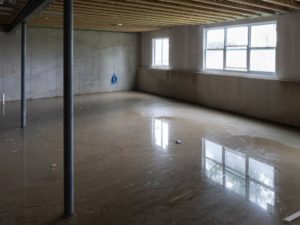
To hire a reliable basement waterproofing contractor in Toronto, verify (1) proof of insurance (COI), (2) WSIB registration/coverage, (3) a real business presence, and (4) a written scope that specifies materials, drainage, and warranty terms. Then compare quotes using the same checklist: excavation depth to footing, membrane type, drainage details, backfill material, cleanup, and timeline. Avoid contractors who pressure you to pay cash, can’t show documents on-site, or refuse to put details in writing.
Toronto/GTA reality check: Basement waterproofing is expensive to do right, easy to do wrong, and problems can take months to show. This guide helps you spot red flags before you sign.
BBB Check: Accreditation, Rating & Complaint History
Being listed on the Better Business Bureau (BBB) isn’t the only factor when choosing a contractor, but it’s a strong trust signal because you can review a company’s accreditation status, rating, and how they respond to customer complaints.
- Accredited status: Are they currently accredited?
- Business details: Does the name/address match the quote and contract?
- Complaint pattern: Look for repeated themes (leaks returning, poor cleanup, warranty disputes).
- Response behavior: Do they respond professionally and resolve issues?
Dryshield BBB Profile: View Dryshield on the Better Business Bureau (BBB)
Table of Contents
-
The 7 Non‑Negotiable Credentials
-
Red Flags That Predict a Bad Job
-
The “Truth Serum” Interview Script (Questions + Best Answers)
-
How to Verify a Contractor in 10 Minutes
-
Contract Clauses You Must Have in Writing
-
Toronto/GTA Factors: Soil, Weather, and Access
-
Cost Expectations in 2026 (Reality Ranges)
-
Payment Schedule + Final Walkthrough Checklist
-
Frequently Asked Questions
1) The 7 Non‑Negotiable Credentials
If a contractor can’t provide proof of these, pause the quote until they do.
1) Certificate of Insurance (COI) — Minimum $2M Liability
Ask for a current Certificate of Insurance (COI) showing:
-
policy is active (current dates),
-
coverage limit (commonly $2,000,000+),
-
business name matches the contract/invoice.
Why it matters: excavation and concrete work can damage foundations, walkways, fences, neighboring property, and buried services.
2) WSIB Registration / Coverage Proof
Ask for proof they are registered/covered and in good standing.
Why it matters: it’s a basic legitimacy check and a safety/compliance signal.
Tip: If their answer is vague (“we don’t need that”), treat it as a yellow flag and verify before work begins.
3) A Verifiable Business Presence
You want a contractor who can honor warranties years later.
Look for:
-
a real office/yard address (not only a mailbox),
-
a business phone that’s consistently used,
-
consistent business name across website, invoice, and insurance.
4) Written Warranty Terms (and What Voids It)
Don’t accept “lifetime warranty” as a slogan. Ask:
-
What’s covered? labor + materials, or “materials only”?
-
Is it transferable?
-
What voids it? landscaping changes, basement finishing, clogged drains, etc.
-
What’s the claim process and response time?
5) Clear Scope + Materials (Brand/Type, Not Just “Waterproofing”)
The scope should list:
-
membrane type (and ideally brand/type),
-
dimple board/air-gap layer if used,
-
drainage specs (weeping tile type, filter sock, cleanouts),
-
backfill material.
Why it matters: “waterproofing materials” can mean anything from premium systems to a thin tar coat.
6) Defined Crew Accountability (Employees or Controlled Subs)
If they use subs, you want to know:
-
who is responsible for excavation,
-
who installs the membrane/drain,
-
who is responsible for restoration/cleanup,
-
who you call if something goes wrong.
7) Evidence of Real Work in the GTA
Ask for:
-
before/after photos from the last 3–6 months,
-
2–3 references you can call,
-
one local example similar to your home (finished basement, tight access, shared driveway, etc.).
2) Red Flags That Predict a Bad Job
If you see 2–3 of these, keep shopping.
-
Cash-only or “cash discount” pressure
-
Large deposit demanded before any materials arrive or dates are confirmed
-
“We’ll email insurance later” / “We don’t have it on hand”
-
No written scope (or a one-line quote)
-
Won’t specify excavation depth (“we’ll see when we dig”)
-
Won’t specify what goes back in the hole (backfill)
-
Won’t commit to cleanup/restoration responsibilities
-
Warranty language is vague or excludes the most common failure modes
3) The “Truth Serum” Interview Script
Use these questions to compare contractors apples to apples.
How to use this: Ask every contractor the same questions and paste their answers into a notes doc. The best contractor usually sounds the most specific, not the most confident.
Questions to Ask (and what good answers sound like)
| Question | Red Flag Answer | Strong Answer |
|---|---|---|
| 1) “How deep do you excavate?” | “A few feet.” / “As needed.” | “Down to the footing (or specified depth), and we verify exposure before waterproofing.” |
| 2) “What exact membrane system do you use?” | “Tar.” / “Black coating.” | “A true waterproof membrane + protection layer (e.g., rubberized system) and (when appropriate) a dimple/air-gap layer.” |
| 3) “What do you put back in the excavation?” | “We put the dirt back.” | “We use clear stone/clear gravel where drainage is needed and don’t pack excavated clay directly against the wall.” |
| 4) “Do you include cleanouts / access points?” | “Not needed.” | “Yes — cleanouts where applicable so the system can be flushed/serviced later.” |
| 5) “Is the warranty transferable and what voids it?” | “Lifetime.” (no details) | “Transferable terms in writing + clear exclusions spelled out.” |
| 6) “Who restores the site?” | “We’ll leave it pretty good.” | “Restoration scope is listed: soil removal, grading, walkway/fence/landscape items, broom-swept finish.” |
| 7) “How do you prevent leaks at the top edge?” | “We just run it up.” | “Proper termination detail (sealed top edge / termination method) to prevent water behind the membrane.” |
| 8) “Can the job be done without damaging my neighbor’s driveway/fence?” | “Probably.” | “We plan access, protection, and restoration; constraints are priced and documented.” |
Note: If a contractor refuses to answer in detail, that’s information too.
4) How to Verify a Contractor in 10 Minutes
Don’t rely on truck branding. Verify basics before you choose.
Step 1 — Verify Insurance
Ask for COI before booking. Check:
-
business name matches contract
-
dates are current
-
limit is clear (commonly $2M+)
Step 2 — Verify WSIB Status / Coverage Proof
Ask for documentation showing they’re properly registered/covered and in good standing.
Step 3 — Verify Reputation (look for patterns, not just star ratings)
-
Look at reviews across multiple sources.
-
Read the negative reviews and see how the business responds.
-
Watch for repeats: “didn’t finish,” “leaks came back,” “won’t honor warranty.”
Step 4 — Verify Work Examples
Ask for 3 examples of:
-
exterior waterproofing,
-
interior drainage,
-
crack injection,
in the last 6–12 months.
5) Contract Clauses You Must Have in Writing
A good contract protects both sides and prevents scope fights.
Clause A: Materials + System Specs
Must list:
-
membrane type (and ideally brand/type),
-
protection layer / dimple board (if used),
-
drainage components,
-
backfill material description.
Clause B: Site Protection + Cleanup Scope
Must specify:
-
soil removal (who takes excess),
-
surface restoration expectations,
-
driveway/sidewalk protection,
-
fence/landscaping responsibilities.
Clause C: Dates + Change Orders
Must include:
-
start date (or start window),
-
estimated completion date,
-
change-order process (written approvals for extras).
Clause D: Warranty Terms (in plain language)
Must specify:
-
what is covered (labor/material),
-
whether transferable,
-
exclusions,
-
how claims are handled.
6) Why “Local” Matters in Toronto/GTA
Waterproofing isn’t one-size-fits-all here.
Toronto / North York (Clay Soil)
Clay holds water and increases hydrostatic pressure. Systems often need:
-
proper drainage path,
-
protection layer,
-
careful backfill/drainage design.
Mississauga / Oakville (Rocky / Shale Areas)
Excavation can be slower and require heavier equipment. Confirm:
-
how they’ll reach footing depth,
-
how access constraints affect cost and timeline.
Tight Access Neighborhoods (Old Toronto, semi-detached)
Ask:
-
hand-dig vs machine access plan,
-
neighbor protection,
-
where soil will be staged/removed.
7) Waterproofing Cost Expectations in 2026
Every home is different, but ranges help you spot “too good to be true.”
Important: Quotes vary with depth, access, finished basements, soil, and how much restoration is included.
-
Exterior Waterproofing: often quoted per linear foot and usually includes excavation, membrane system, drainage details, and backfill/restoration items.
-
Interior Waterproofing (drainage system): often quoted per linear foot and includes concrete removal, drain installation, sump/flow strategy, and concrete patch.
-
Crack Injection: commonly priced per crack depending on crack type, access, and whether it’s actively leaking.
Rule of thumb: A quote is only comparable if the scope is comparable.
8) The “Don’t Pay Yet” Final Walkthrough Checklist
Before final payment, verify the deliverables you paid for.
Exterior jobs: confirm these before backfill is complete (or before final sign-off)
-
Depth reached (to the promised depth/footing area)
-
Membrane installed continuously across the specified area
-
Protection/air-gap layer installed (if included)
-
Drainage details installed as specified (cleanouts, gravel/stone zone, etc.)
-
Top-edge termination detail is properly finished
-
Site is restored to the contract standard (soil removal, grading, cleanup)
Interior jobs: confirm these before final payment
-
drain placement matches plan
-
sump discharge strategy is clear
-
concrete patch is complete
-
workspace is cleaned and safe
9) Frequently Asked Questions
How do I compare waterproofing quotes fairly?
Compare scope and materials, not the final price. Make sure each quote specifies:
-
method (exterior vs interior vs injection),
-
depth/coverage area,
-
membrane type and protection,
-
drainage components,
-
backfill and cleanup,
-
warranty terms.
Is exterior waterproofing always better than interior waterproofing?
Not always. Exterior is often the “outside barrier” approach; interior systems manage water once it enters. The right choice depends on access, foundation type, finished basement, and the leak mechanism.
Should I pay a deposit?
A reasonable deposit can be normal, but avoid paying large amounts without:
-
written scope,
-
scheduled start window,
-
proof of insurance/coverage,
-
clear change-order terms.
What’s the #1 red flag?
A vague scope. If they won’t write down materials, depth, drainage, and warranty terms, you can’t compare, enforce, or verify the job.