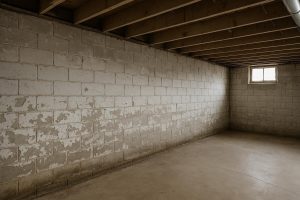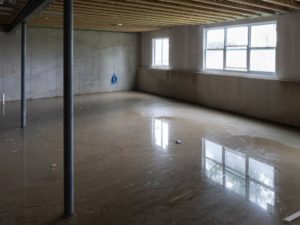
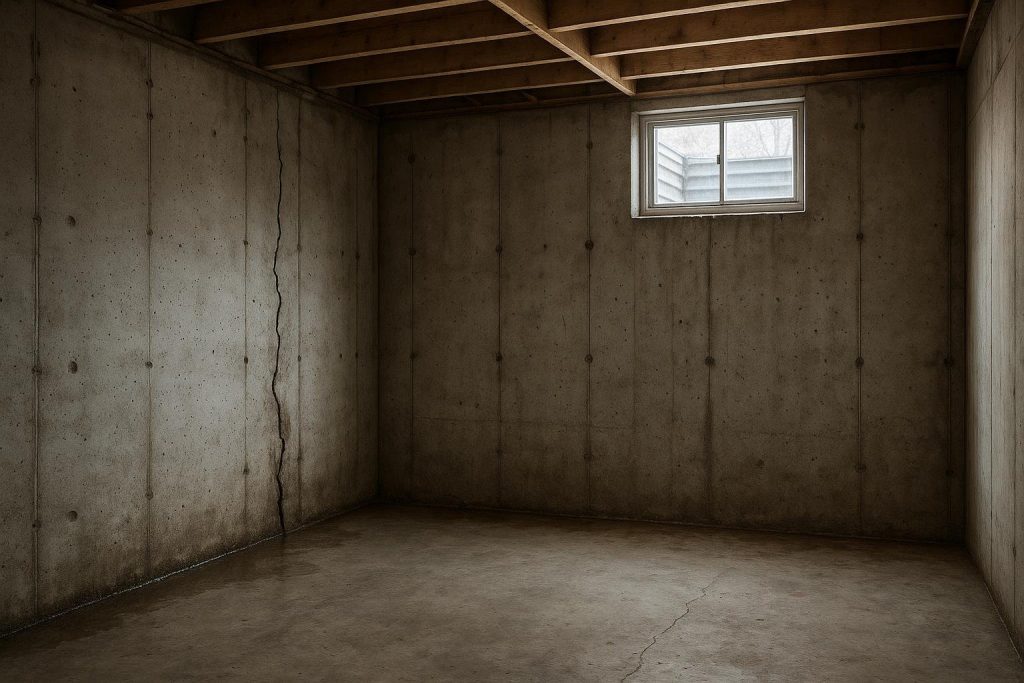
Leaky basement repair Toronto homeowners rely on starts with understanding why water is getting in, not just where it appears. In Toronto, the most common culprit is hydrostatic pressure: the city’s dense clay soil holds rainwater and snowmelt against foundation walls for days after a storm, forcing moisture through cracks, cold joints and deteriorated parging until it finds a way inside.
Key Takeaways
- Heavy clay soil across most of Toronto creates persistent hydrostatic pressure, making wet basements a structural issue, not just a cosmetic one.
- A single injected foundation crack typically costs $600 to $900; a full exterior waterproofing system on an average Toronto semi or detached runs roughly $6,000 to $9,000, depending on linear footage and excavation depth.
- Interior and exterior waterproofing solve different problems. Choosing the wrong method wastes money and leaves the root cause untouched.
- Spring thaw and heavy summer downpours are the two peak failure windows for Toronto foundations.
- Many older Toronto homes have original weeping tile that is fully silted up and no longer draining, which is a leading cause of recurring wet basements.
Definitions and Scope
A leaky basement is any below-grade living or storage space where water enters through the foundation walls, floor slab, wall-floor joint, or window wells. In Toronto, the term covers everything from a hairline crack weeping a few drops after rain to a perimeter floor joint that floods during spring thaw.
The repair scope depends entirely on the entry point and the root cause. A single vertical crack in a poured concrete wall is a different problem from a block foundation with failed parging, a silted weeping tile system, or a floor slab cracked by upward hydrostatic pressure. Correct diagnosis before any work begins is what separates a lasting fix from a temporary patch. The basement waterproofing services hub covers the full range of solutions available to Toronto homeowners.
Toronto foundations are predominantly poured concrete (post-1960s) or concrete block (pre-1960s), with a smaller number of stone rubble foundations in the oldest neighbourhoods. Each type fails differently and requires a different repair approach.
Why This Matters for Toronto Homeowners
Toronto sits on a thick layer of glacial till and Leda clay that drains poorly. After a heavy rainfall or the spring thaw, water saturates the soil and presses against every below-grade surface with significant force. That pressure, not rainfall alone, is what drives water through even small imperfections in a foundation wall.
Two seasons create the highest risk. Spring thaw brings a rapid release of frozen ground moisture, often faster than the soil can drain. Summer storms, particularly the intense convective events Toronto sees in July and August, can dump 50 mm or more in an hour, overwhelming both municipal storm sewers and residential drainage systems simultaneously.
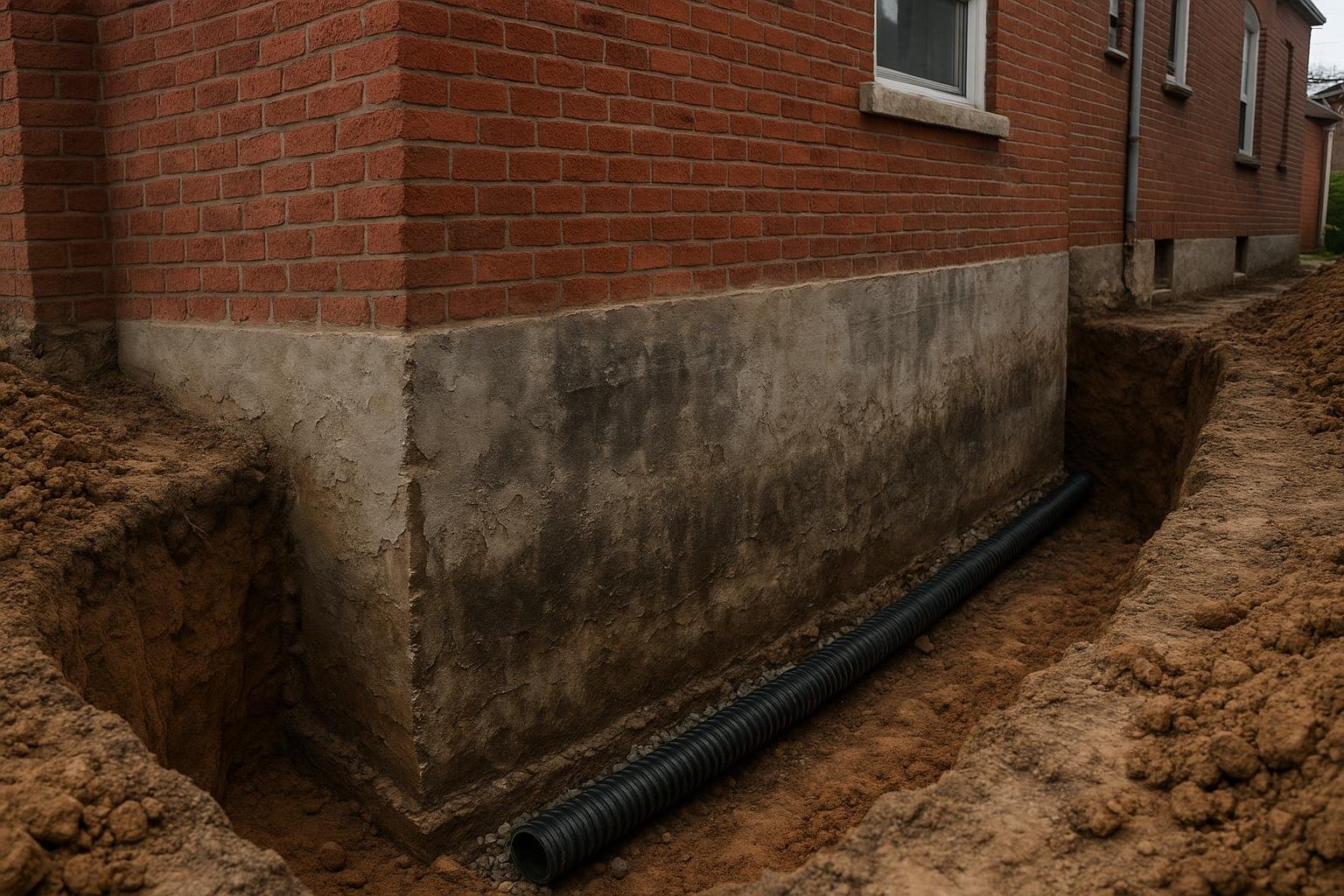
Older Toronto homes face a compounding problem. Original clay weeping tile installed in the 1950s and 1960s has a functional lifespan of roughly 40 to 50 years. By now, most of it is either crushed, root-infiltrated, or completely silted up. When the weeping tile stops draining, all of that hydrostatic pressure has nowhere to go except through the wall.
Toronto’s clay soil can hold water against a foundation wall for 72 hours or more after a storm ends. That sustained pressure is why a basement that stayed dry for 20 years can suddenly start leaking without any obvious change to the house itself.
The Canada Mortgage and Housing Corporation (CMHC) notes that moisture intrusion is one of the leading causes of indoor air quality problems and structural deterioration in Canadian homes. Addressing a wet basement promptly protects both the building envelope and the health of the people living in it. More detail on moisture management standards is available from CMHC’s housing research resources.
Your Options for Leaky Basement Repair in Toronto
When evaluating leaky basement repair Toronto options, the right method depends on the entry point, the foundation type, and whether a drainage failure underlies the visible symptom. The sections below cover each approach in detail.
Polyurethane Crack Injection
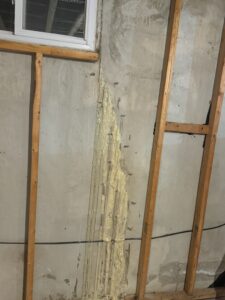
Low-pressure polyurethane injection is the correct fix for an active, non-structural crack in a poured concrete wall. A technician drills injection ports along the crack at regular intervals, pastes them in place, then pumps flexible polyurethane resin under low pressure until it fills the crack from footing to grade. The resin cures flexible, so it tolerates the seasonal movement that Toronto foundations experience as the clay soil expands and contracts. This method works from the interior with no excavation required. It is best for single vertical or diagonal cracks in poured concrete. It does not address the underlying drainage problem if one exists, and it cannot seal a crack that is actively moving structurally.
Epoxy Crack Injection
Epoxy injection is used specifically for structural cracks where the wall must be re-bonded and its load-bearing capacity restored. Epoxy cures rigid and achieves compressive strengths that exceed the original concrete. Because it is rigid, epoxy is not suitable for cracks that are still moving. A structural engineer’s assessment is recommended before choosing epoxy over polyurethane. This method also works from the interior without excavation.
Interior Weeping Tile System
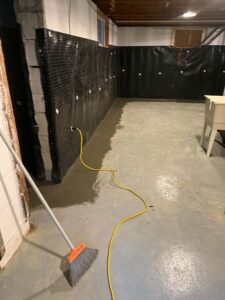
Where water is entering along the wall-floor joint or through multiple points in the lower wall, an interior drainage system manages the water rather than blocking it at the source. The process involves jackhammering a channel around the perimeter of the basement floor, installing a perforated drainage pipe that directs water to a sump basin, running a vapour barrier up the wall to capture seepage, and re-pouring the concrete. A sump pump then discharges the collected water away from the foundation. This system is less disruptive than full exterior excavation and is well-suited to homes where exterior access is restricted by driveways, decks or neighbouring structures. It does not stop water from contacting the wall, but it controls where that water goes.
Exterior Waterproofing
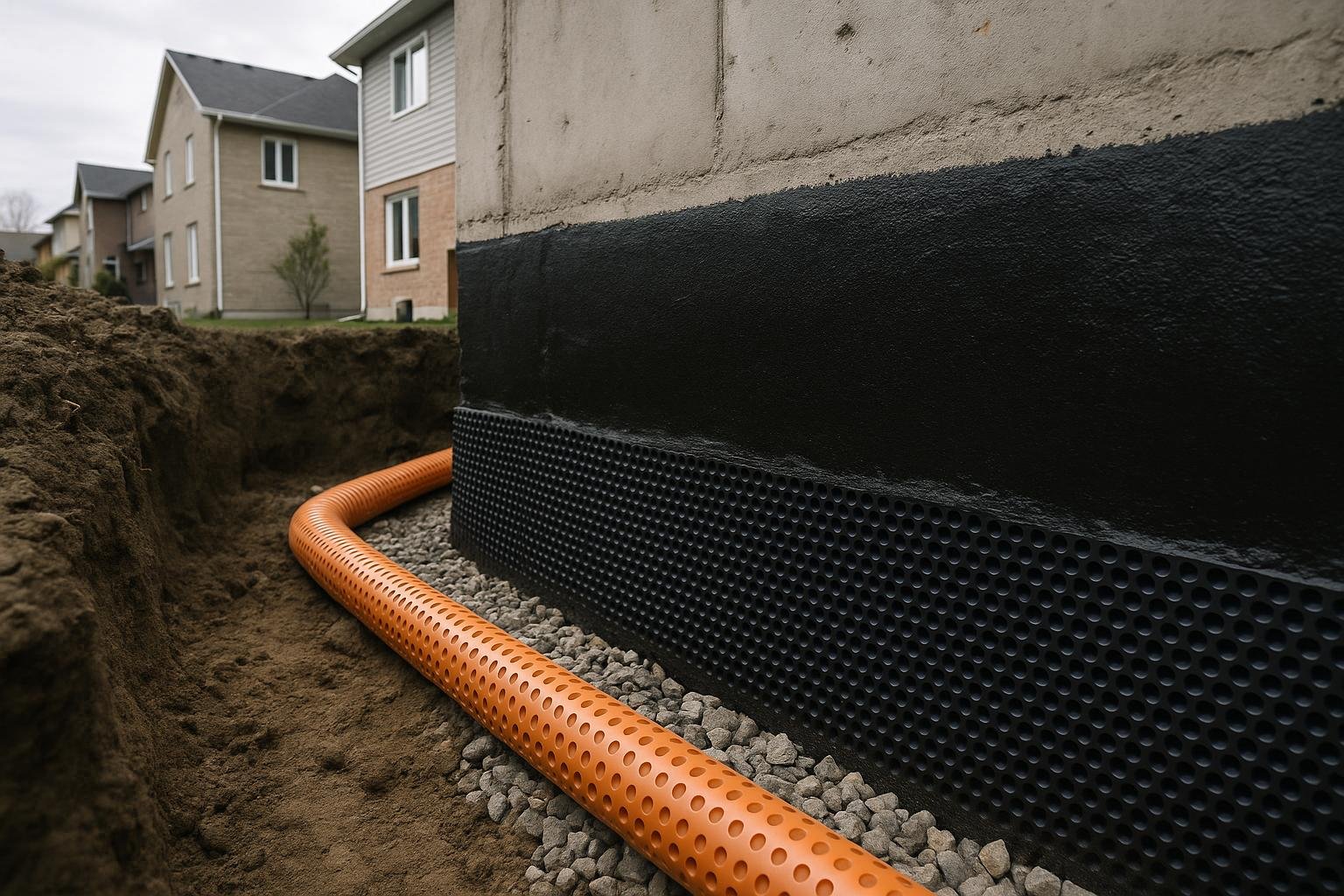
Exterior waterproofing is the most comprehensive solution because it addresses hydrostatic pressure at the source. The process requires excavating to the footing, applying hydraulic cement to any voids or honeycombing, coating the wall with a rubberised waterproofing membrane, installing a dimpled drainage board to protect the membrane and direct water downward, laying new weeping tile bedded in clear stone at the footing, and backfilling with grade correction to direct surface water away from the house. On an average Toronto semi or detached, this work runs roughly $6,000 to $9,000 depending on linear footage, excavation depth and site access. It is the most durable solution and the only one that stops water before it contacts the wall.
Sump Pump Installation or Replacement
A sump pump is a component, not a standalone waterproofing system, but it is a critical one. Where a weeping tile system is present, the sump pump is what actually removes the collected water. A failed or undersized pump is a common reason a previously dry basement starts flooding. Battery backup units are strongly recommended for Toronto homes, where power outages during storms are the most likely time the pump is needed most. Learn more about sump pump installation options for Toronto and GTA homes.
Parging and Surface Sealing
Parging, the application of a cement-based coating to the exterior of the foundation wall above grade, can slow surface water infiltration through deteriorated block or stone foundations. It is a maintenance measure, not a waterproofing system. Parging that is cracked or delaminating should be removed and replaced, but homeowners should understand that parging alone will not stop water driven by hydrostatic pressure from below grade.
Options Compared
| Method | Best For | Typical Lifespan | Relative Cost | Disruption |
|---|---|---|---|---|
| Polyurethane crack injection | Single active crack, poured concrete wall | Long-term if crack is stable | Lowest ($600-$900 per crack) | Minimal, interior only |
| Epoxy crack injection | Structural crack requiring re-bonding | Permanent if crack stops moving | Low to moderate | Minimal, interior only |
| Interior weeping tile system | Multiple entry points, restricted exterior access | 20-30 years with pump maintenance | Moderate | Moderate (jackhammer, concrete re-pour) |
| Exterior waterproofing | Persistent hydrostatic pressure, failed original weeping tile | 25+ years | Highest ($6,000-$9,000 typical) | High (full excavation) |
| Sump pump installation | Complement to any drainage system | 7-10 years (pump unit) | Low to moderate | Low |
| Parging | Above-grade surface maintenance | 5-15 years | Low | Minimal |
The table above shows that no single method is universally correct for leaky basement repair Toronto situations. Crack injection is the right tool for an isolated crack but will not help a basement where the weeping tile has failed. Exterior waterproofing delivers the most durable result but requires excavation and a higher investment. Interior drainage is a practical middle ground when exterior access is limited. The right choice depends on the specific entry point, the age of the home, and the site conditions found during a professional inspection.
How to Choose the Right Fix
Choose polyurethane crack injection if you have a single identifiable crack in a poured concrete wall, the crack is not actively widening, and there is no evidence of broader drainage failure such as perimeter seepage or efflorescence along the full base of the wall.
Choose an interior weeping tile system if water is entering along the wall-floor joint across multiple walls, if your home has a driveway, deck or neighbouring structure that prevents exterior excavation, or if the existing weeping tile has been confirmed as failed but full exterior work is not feasible this season.
Choose exterior waterproofing if the home has a history of recurring wet basements despite previous interior repairs, if the original weeping tile is confirmed silted or crushed, if there is evidence of membrane failure on the exterior wall, or if you want the most permanent solution available. Homes in Toronto’s older neighbourhoods, particularly those built before 1970, are strong candidates for exterior work because their drainage systems are well past their service life.
Choose epoxy injection only when a structural engineer has confirmed the crack is structural and the wall needs to be re-bonded. Do not use epoxy on an active or moving crack.
If you are unsure which entry point is causing the problem, use the basement leak diagnostic tool to narrow down the likely cause before booking an inspection.
Costs and Timelines
Understanding the cost of leaky basement repair Toronto projects requires knowing which variables drive the final number. The table below breaks down the main cost drivers.
| Cost Driver | Why It Affects Price | Approximate Impact |
|---|---|---|
| Linear footage of wall to treat | More wall means more membrane, drainage board and weeping tile | Primary driver for exterior work |
| Excavation depth | Deeper footings (common in older Toronto homes) require more labour and shoring | Can add significantly to exterior cost |
| Site access | Narrow laneways, decks and fences slow excavation and equipment access | Moderate to significant premium |
| Number of cracks | Each crack injection is priced per crack ($600-$900 range) | Scales linearly |
| Condition of existing drainage | Fully silted weeping tile requires complete replacement, not just supplementing | Adds to both interior and exterior scope |
| Sump basin and pump | Required for interior systems; battery backup adds to unit cost | Moderate addition |
A single foundation crack injected with polyurethane typically falls in the $600 to $900 range. A full exterior waterproofing system on an average Toronto semi or detached runs roughly $6,000 to $9,000. Interior weeping tile systems generally come in below the exterior figure. All of these are starting-point ranges: the final number depends on what a site inspection reveals about excavation depth, access constraints and the condition of the existing drainage. Toronto homeowners can also review detailed basement waterproofing cost breakdowns for Southern Ontario to understand what drives the final quote.
The City of Toronto offers a Basement Flooding Protection Subsidy program that may offset part of the cost of eligible work including backwater valves and sump pumps. Ask about eligibility during your inspection.
Risks and Common Mistakes
The most expensive mistake Toronto homeowners make is applying an interior coating or hydraulic cement plug to a wall that is leaking due to hydrostatic pressure. These products can slow seepage temporarily, but sustained pressure will eventually push through any rigid surface coating. The water has not been redirected; it has simply been dammed, and the dam will fail.
A second common error is injecting a crack without investigating whether the crack is part of a broader drainage failure. If the weeping tile is silted, injecting one crack will stop that specific entry point while water finds the next weakest spot, often the wall-floor joint or an adjacent crack.
Delaying repair after the first sign of water is consistently the most costly decision. A small crack that costs $600 to $900 to inject can, if left open through several freeze-thaw cycles, widen to the point where the wall requires structural attention. Water that reaches the footing can undermine bearing capacity over time.
| Symptom | Likely Cause | Correct Fix |
|---|---|---|
| Water at a single vertical crack after rain | Shrinkage or settlement crack in poured concrete | Polyurethane crack injection |
| Seepage along wall-floor joint, multiple walls | Failed or silted weeping tile, high hydrostatic pressure | Interior weeping tile system or exterior waterproofing |
| Efflorescence and damp patches on block wall | Deteriorated parging, failed membrane, clay soil pressure | Exterior waterproofing with new membrane |
| Water on floor slab after heavy rain | Upward hydrostatic pressure through floor cracks or joints | Interior drainage system with sump pump |
| Sudden flooding despite previously dry basement | Failed sump pump or overwhelmed weeping tile | Pump replacement plus drainage assessment |
The symptom-to-cause table above is a starting point, not a substitute for a professional inspection. Multiple symptoms often appear together, and the correct fix addresses the root cause rather than the most visible sign.
How the Process Works
Every leaky basement repair Toronto project follows the same structured sequence, whether the scope is a single crack injection or a full exterior system.
- Free on-site inspection and moisture assessment. A technician visits the property, examines all visible entry points, checks for efflorescence and staining patterns, and assesses the condition of the existing weeping tile and drainage grade.
- Written scope with linear-foot pricing. You receive a written proposal that itemises the work, the materials and the cost. There are no verbal estimates that change on the day of work.
- Preparation and protection. Interior contents are moved or protected. For exterior work, excavation equipment is positioned and any landscaping or hardscaping that must be temporarily removed is documented.
- Core repair work. For exterior jobs: excavation to the footing, hydraulic cement parging of voids, rubberised membrane application, dimpled drainage board installation, new weeping tile bedded in clear stone, backfill and grade correction. For interior jobs: perimeter jackhammering, weeping tile to sump basin, vapour barrier installation, concrete re-pour. For crack injection: port-and-paste setup, low-pressure resin injection, port removal and surface finish.
- Sump pump installation or verification. Where a drainage system is installed, the sump pump is set, tested and the discharge line confirmed clear.
- Site cleanup and grade check. The work area is restored, and final grade is confirmed to direct surface water away from the foundation at the correct slope.
- Warranty documentation. Completed work is covered under a written warranty. DryShield offers a lifetime transferable warranty on qualifying waterproofing systems, which transfers to a new owner if the home is sold.
A lifetime transferable warranty on a waterproofing system is a genuine selling point when listing a Toronto home. Buyers and their home inspectors look for documented foundation repairs, and a transferable warranty turns a past problem into a resolved asset.
Frequently Asked Questions
How do I know if my Toronto basement leak needs crack injection or full waterproofing?
If water is entering through a single identifiable crack in a poured concrete wall and there is no sign of perimeter seepage or failed drainage, crack injection is usually the right starting point. If water appears along the base of multiple walls, at the wall-floor joint, or if the home has a history of recurring leaks despite previous repairs, a full drainage assessment is needed and exterior or interior waterproofing is likely the correct solution.
How long does leaky basement repair take in Toronto?
A single crack injection is typically completed in one visit of two to four hours. An interior weeping tile system in an average Toronto basement takes one to three days. Full exterior waterproofing on a semi-detached or detached home generally takes two to four days depending on linear footage, excavation depth and site access conditions.
Does the City of Toronto offer any subsidies for basement waterproofing?
The City of Toronto’s Basement Flooding Protection Subsidy program provides partial reimbursement for eligible work including backwater valve installation, sump pump installation and severance of the downspout from the foundation drain. Eligibility depends on the property address and the specific work performed. Confirm current program details with the City or ask during your inspection.
Will waterproofing my basement increase my home’s resale value?
A documented, warranted waterproofing system removes a significant buyer concern and can support a stronger sale price in Toronto’s competitive market. A lifetime transferable warranty is particularly valuable because it gives the new owner the same protection. Homes with unresolved wet basement issues routinely receive lower offers or conditional clauses requiring remediation before closing.
Can exterior waterproofing be done in winter in Toronto?
Exterior excavation is generally not performed when the ground is frozen because the soil cannot be safely excavated or properly backfilled. Interior crack injection and interior drainage work can proceed year-round. If you discover a leak in January, crack injection or an interior system is the practical near-term fix, with exterior work scheduled for spring or fall when ground conditions allow.
What is the difference between weeping tile and a French drain?
Weeping tile refers specifically to the perforated pipe installed at the footing of a foundation to collect and redirect groundwater away from the wall. A French drain is a broader term for any trench-based drainage system filled with gravel and pipe. In residential foundation waterproofing, the two terms are often used interchangeably, but weeping tile at the footing is the critical component that relieves hydrostatic pressure against the foundation wall.
My basement only leaks during heavy rain. Does that mean it is a minor problem?
Rain-triggered leaks are not minor. They indicate that the foundation’s drainage system cannot handle peak water loads, which is exactly when it needs to work. A crack or failed weeping tile that only shows symptoms during storms will worsen over time as freeze-thaw cycles widen the entry point each winter. Addressing it before the next heavy rain season is always less expensive than waiting.
How do I find a reliable waterproofing contractor in Toronto?
Look for a contractor who provides a written scope of work before any payment, offers a transferable warranty, and does not pressure you to sign on the day of the inspection. Ask specifically whether the proposed fix addresses the root cause or manages the symptom. A contractor who recommends crack injection for a perimeter drainage failure, or exterior excavation for a single hairline crack, is not diagnosing correctly. The guide on how to choose a reliable waterproofing contractor covers the full checklist.
Is mould a concern after a basement leak in Toronto?
Yes. Mould can begin colonising damp building materials within 24 to 48 hours of a water event. Toronto’s humid summers accelerate this. If a basement has been wet repeatedly, mould assessment should be part of the repair process. Waterproofing stops the moisture source, but existing mould on framing, insulation or drywall requires separate remediation before the space is enclosed again.
If your Toronto basement is showing any of the signs described in this guide, the right next step is a free on-site inspection. Leaky basement repair Toronto homeowners can rely on starts with an accurate diagnosis, and DryShield has served Toronto and the GTA for over 25 years. Every inspection includes a written assessment with no obligation to proceed. Request your free inspection and get a clear answer on what is causing the leak and what it will take to fix it properly.