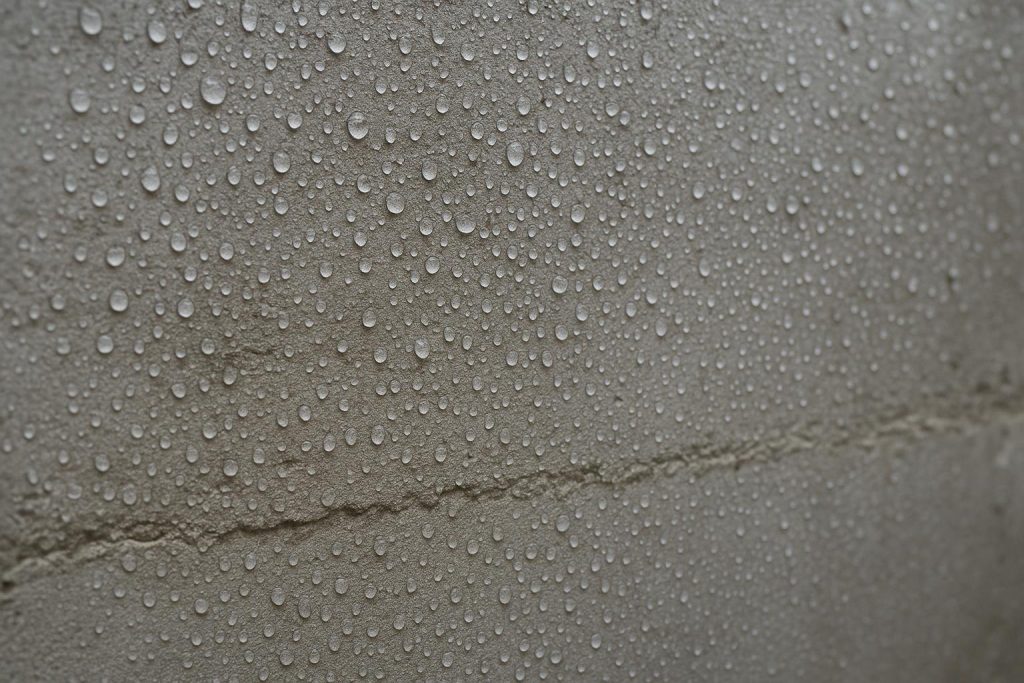
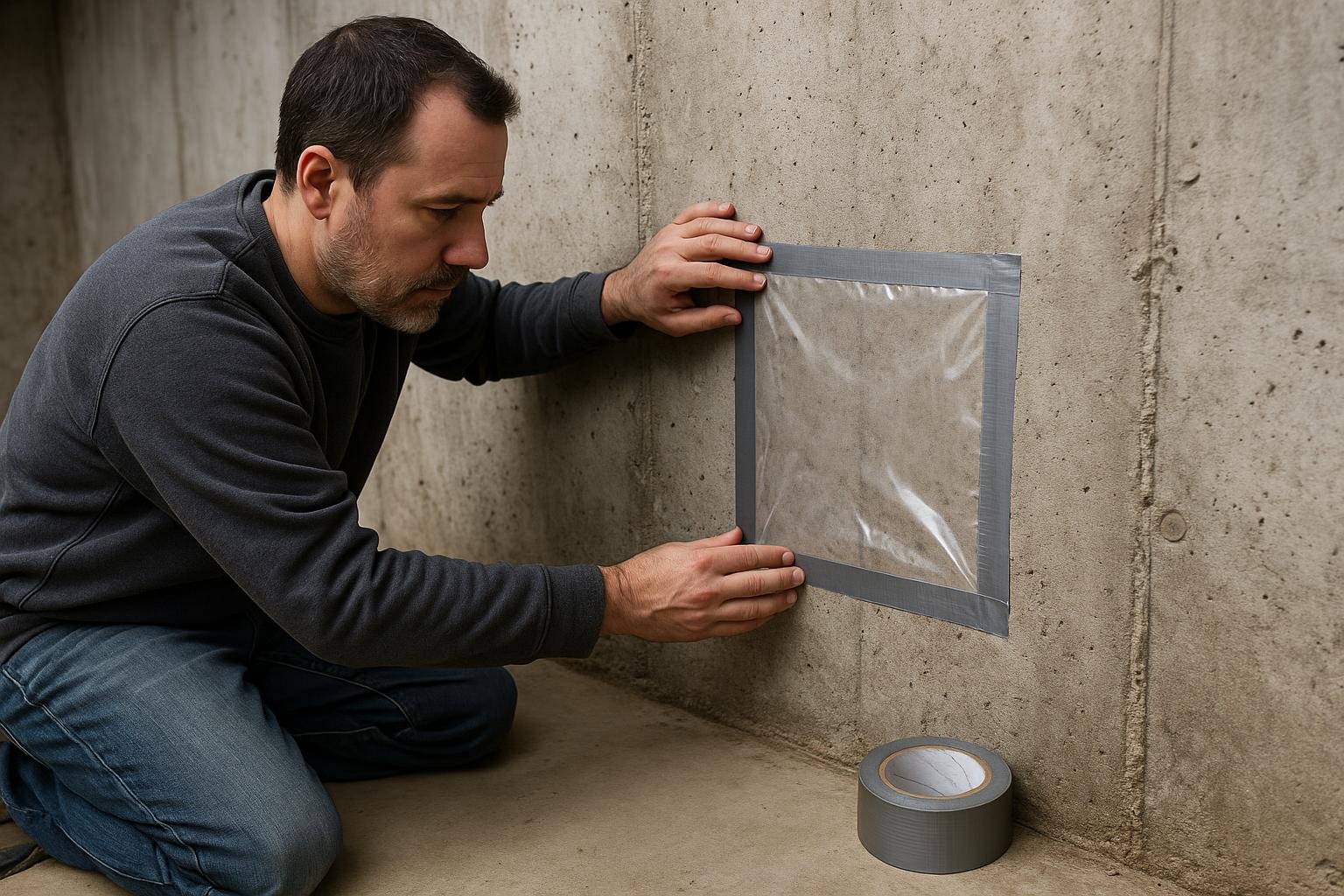
Condensation on basement walls forms when warm, humid air contacts a cool concrete or block surface and the moisture drops out as liquid water. Before assuming you have a waterproofing problem, confirm the source: tape a piece of plastic sheeting flat against the wall for 24 hours and check which side is wet. Moisture on the room-facing side means condensation; moisture behind the sheet means water is migrating through the foundation itself.
- Condensation is a humidity and ventilation problem; true seepage is a waterproofing problem. The plastic-sheet test separates them reliably.
- Ontario basements are especially prone in summer when warm outdoor air enters a cool below-grade space.
- Persistent condensation feeds mould and corrodes finishes; it warrants action even though it is not a structural emergency.
- Fixing the humidity source is the correct first step; waterproofing a wall that only sweats will not solve the problem.
- If the plastic-sheet test reveals moisture behind the sheet, the issue is infiltration, not condensation, and professional diagnosis is needed.
Confirm it’s actually this
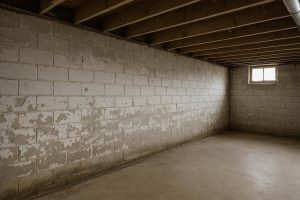
True condensation on basement walls looks like a uniform film of moisture or beading droplets spread across a large area of wall surface, typically appearing during warm, humid weather and diminishing when outdoor temperatures drop or when a dehumidifier runs. The wall itself feels cool to the touch even when the room air is warm. Dampness is often worst near floor level, where concrete stays coldest, or near uninsulated rim joists where warm air infiltrates most easily.
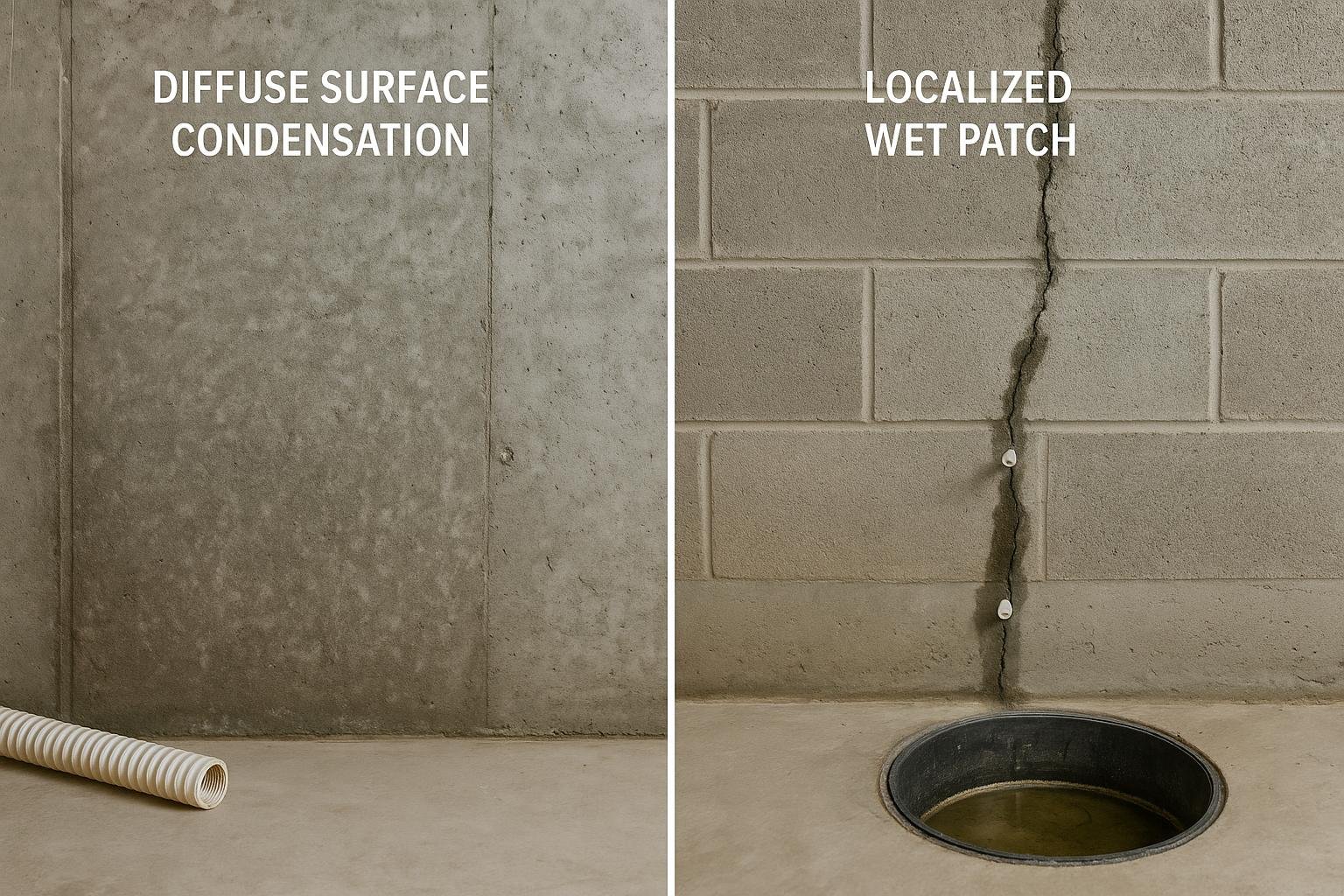
Condensation rarely produces a concentrated wet patch in one spot. It does not follow a crack line, and it does not appear after heavy rain if outdoor air is cool and dry. A hygrometer reading above 60 percent relative humidity in the basement on a warm day strongly supports a condensation diagnosis. Efflorescence (white chalky deposits) can accompany condensation over time but is more commonly associated with water migrating through the wall.
Problems it gets confused with
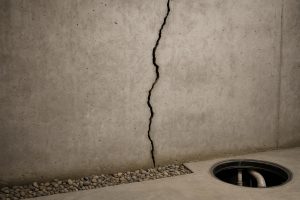
The two most common look-alikes are active seepage through the wall and rising damp through the floor slab. Seepage tends to be localized, follows cracks or cold joints, and worsens after rain or snowmelt regardless of indoor humidity. Rising damp produces a tidemark at a consistent height and is accompanied by efflorescence and spalling concrete. A third look-alike is a slow plumbing leak from a pipe inside or behind the wall, which produces a wet patch that does not vary with weather or season. Condensation, by contrast, tracks outdoor dew-point conditions closely. Misidentifying seepage as condensation is a common and costly mistake because dehumidification alone will not stop water under hydrostatic pressure.
Causes, ranked
1. High indoor relative humidity meeting a cold wall surface
This is the most frequent cause. Ontario summers bring outdoor dew points that can exceed 20 degrees Celsius. When that air enters a basement through open windows, doors, or gaps around the rim joist, it contacts concrete walls that may be only 10 to 15 degrees Celsius. The air cannot hold as much moisture at that lower temperature, so it deposits the excess as liquid on the wall. The telltale sign is dampness on warm, muggy days that disappears when you close the basement and run a dehumidifier.
2. Inadequate or absent vapour control on interior walls
Finished basement walls that lack a proper vapour barrier allow humid room air to reach the cold concrete behind the drywall or insulation. Moisture condenses inside the wall assembly where it is invisible until mould or rot makes it apparent. The telltale sign is musty odour and mould growth behind finished walls even when visible surfaces look dry.
3. Uninsulated or under-insulated foundation walls
Bare concrete or block walls conduct cold from the soil directly into the basement. The colder the wall surface, the lower the dew point threshold at which condensation forms. The telltale sign is condensation forming even at moderate outdoor humidity levels, not only on the most humid summer days.
4. Clothes dryers, showers or laundry venting into the basement
Any appliance that exhausts moisture into the basement air rather than to the exterior raises indoor relative humidity sharply. The telltale sign is condensation appearing shortly after laundry or shower use, concentrated near the moisture source.
5. Blocked or absent mechanical ventilation
Heat recovery ventilators (HRVs) and exhaust fans exchange stale, humid basement air and limit infiltration. When absent, undersized, or blocked, humidity accumulates. The telltale sign is consistently high humidity readings regardless of outdoor conditions, combined with stale air.
6. Slow seepage mistaken for condensation
Fine cracks, porous block mortar joints, and cold joints at the floor-wall interface can allow water to seep through at a rate slow enough to look like sweating. The telltale sign is moisture that persists or worsens after rain, does not respond to dehumidification, and is concentrated in one area rather than spread uniformly across the wall.
Cause to solution table
| Cause | Telltale sign | Appropriate fix | Urgency |
|---|---|---|---|
| High outdoor humidity entering basement | Dampness on warm, muggy days only; disappears with dehumidifier | Keep basement closed in summer; run a properly sized dehumidifier; seal rim joist gaps | Monitor to Act soon |
| No vapour barrier behind finished walls | Musty smell; mould behind drywall; no visible surface moisture | Remove and replace wall assembly with correct vapour control layer | Act soon |
| Uninsulated foundation walls | Condensation even at moderate humidity; cold wall surface | Add interior rigid insulation or spray foam to raise wall surface temperature | Act soon |
| Appliance exhausting moisture indoors | Condensation after laundry or shower use; high local humidity | Reroute dryer vent and exhaust fans to exterior | Act soon |
| Blocked or absent mechanical ventilation | Persistently high humidity; stale air | Service or install HRV; add exhaust fan | Act soon |
| Slow seepage through cracks or porous wall | Moisture persists after rain; localized; does not respond to dehumidifier | Professional crack injection or waterproofing assessment | Act now |
Use this table as a starting point, not a final diagnosis. A single basement can have more than one cause at the same time. If dehumidification reduces but does not eliminate moisture, suspect a secondary seepage source and arrange a professional inspection. The plastic-sheet test is the most reliable way to separate condensation from infiltration before deciding on a repair path.
What you can safely check yourself
- Run the plastic-sheet test. Tape a 30 cm square of clear plastic sheeting to the wall with all edges sealed. Leave it for 24 to 48 hours, then check which side has moisture. Room-side moisture means condensation; wall-side moisture means seepage.
- Measure humidity. Place an inexpensive hygrometer in the basement. Readings consistently above 60 percent relative humidity indicate a humidity management problem.
- Check all exhaust vents. Confirm your dryer, bathroom fan, and any other exhaust appliances vent to the exterior, not into the basement.
- Inspect rim joists. Look for gaps, missing insulation, or daylight visible around pipes and wiring penetrations where warm outdoor air can infiltrate.
- Look for efflorescence or staining. White chalky deposits or rust-coloured stains suggest water has been moving through the wall over time, pointing toward seepage rather than pure condensation.
- Note the pattern. Condensation is diffuse; seepage is localized. Photograph where moisture appears to help a professional understand the pattern.
What NOT to do
- Do not open basement windows on humid summer days to “air it out.” Warm, humid outdoor air is the primary driver of summer condensation; opening windows makes it worse.
- Do not apply waterproofing paint or sealant to a sweating wall without first confirming the cause. Sealants do not stop condensation and can trap moisture inside the wall assembly.
- Do not ignore mould growth. Even condensation-driven mould can affect indoor air quality and spread to structural wood members.
- Do not assume dehumidification alone is a permanent fix if the plastic-sheet test shows moisture behind the sheet. Running a dehumidifier against active seepage masks the problem without solving it.
- Do not finish walls with drywall or insulation before resolving the moisture source; trapping moisture inside a finished wall assembly accelerates mould and rot.
How a professional diagnoses it
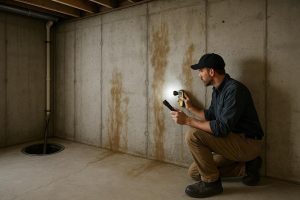
A professional assessment typically begins with a visual survey of the entire perimeter, looking for crack patterns, efflorescence, staining, and the location of wet areas relative to the floor-wall joint, window wells, and pipe penetrations. The inspector will ask when the problem started, whether it correlates with rain events or seasons, and what remediation has been attempted.
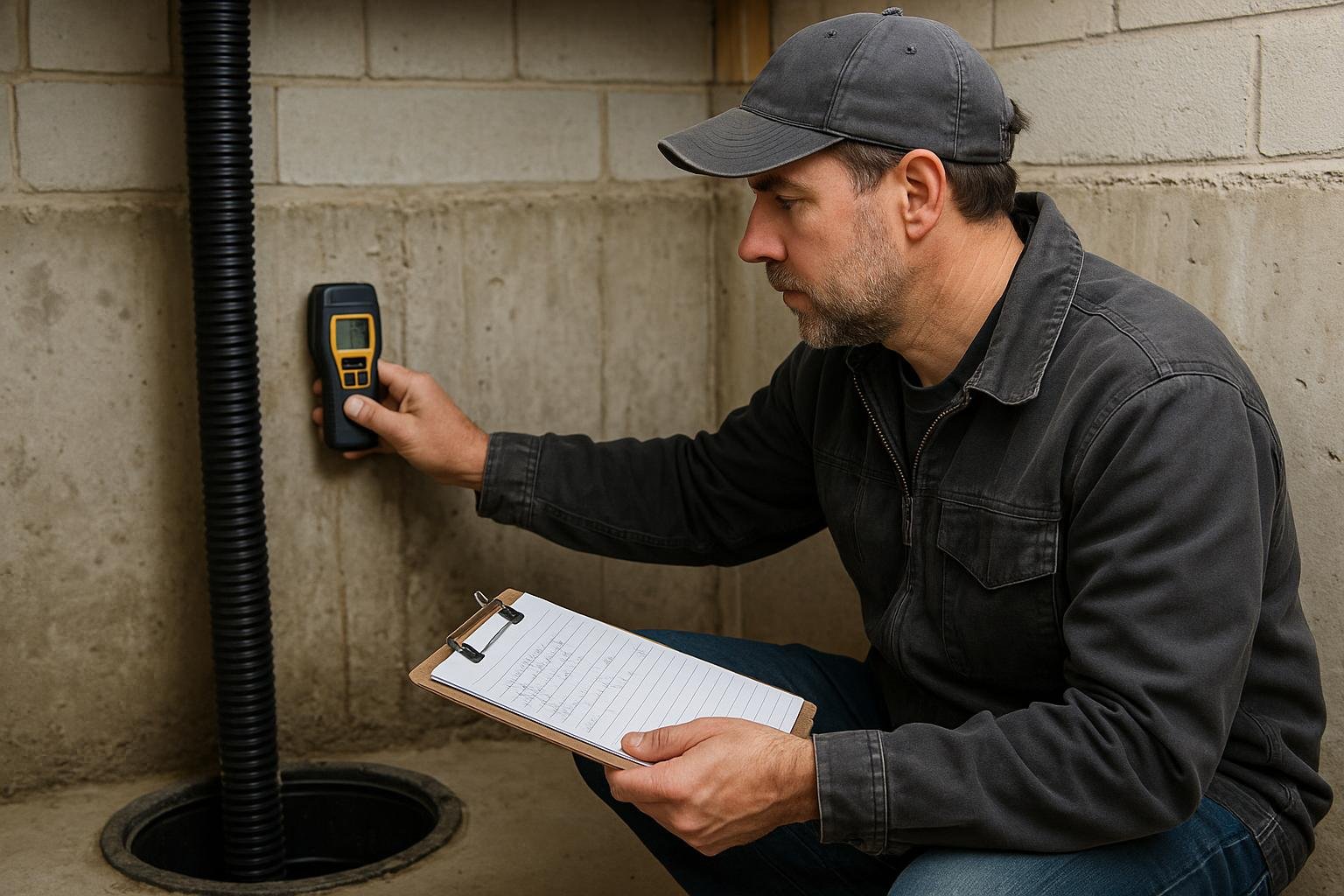
Moisture meter readings at the wall surface and at depth help distinguish surface condensation from moisture migrating through the wall. Thermal imaging can reveal cold spots where condensation is most likely to form, or wet areas behind finished surfaces. The inspector will also assess exterior drainage conditions, including grading and downspout discharge. If seepage is suspected, the weeping tile system and sump pump operation may be reviewed. The goal is a written finding that separates condensation from infiltration before recommending a repair path.
Temporary vs permanent fixes
For genuine condensation, a properly sized dehumidifier is an effective ongoing management tool. It does not address the root cause but keeps humidity below the threshold at which condensation forms. Closing basement windows during humid summer weather is a no-cost immediate measure. Sealing rim joist gaps with spray foam is a low-cost, durable improvement that reduces warm-air infiltration.
Permanent resolution requires raising the wall surface temperature above the dew point of the indoor air. This is achieved by insulating the interior face of the foundation wall with rigid foam or closed-cell spray foam, installed with appropriate vapour control to avoid creating a new condensation plane inside the wall assembly.
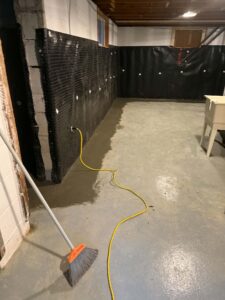
If the plastic-sheet test reveals seepage rather than condensation, temporary fixes such as hydraulic cement or interior sealants are stopgaps only. Permanent repair requires addressing the source of water entry, which may involve crack injection, interior waterproofing, or exterior waterproofing depending on the cause and severity.
| Fix | What it addresses | Duration | Limitation |
|---|---|---|---|
| Dehumidifier | Condensation (humidity management) | Ongoing; requires maintenance | Does not stop seepage; ongoing energy cost |
| Close windows in summer | Condensation (air infiltration) | Immediate; seasonal habit | Does not address other humidity sources |
| Rim joist air sealing | Condensation (warm-air infiltration) | Permanent improvement | Requires access to rim joist area |
| Interior rigid insulation on walls | Condensation (cold wall surface) | Permanent | Must be installed with correct vapour control |
| Crack injection | Seepage through cracks | Permanent when correctly applied | Does not address condensation |
| Interior or exterior waterproofing system | Seepage through wall or floor joint | Permanent | Higher cost; not needed for pure condensation |
Choosing the wrong fix wastes money and can delay treatment of a genuine water-entry problem. Confirm the diagnosis before committing to any repair beyond basic humidity management. If you are uncertain after the plastic-sheet test, a professional assessment is the most cost-effective next step.
Frequently asked questions
Is condensation on basement walls dangerous?
Condensation itself is not immediately dangerous, but sustained high humidity promotes mould growth, which can affect indoor air quality and cause respiratory irritation. Over time, persistent moisture also degrades drywall, wood framing, and insulation. Addressing the humidity source early is far less costly than dealing with mould damage later.
How do I know if it is condensation or a leak?
The plastic-sheet test is the most reliable field method. Tape plastic sheeting to the wall with all edges sealed and leave it for 24 to 48 hours. Moisture on the room-facing side indicates condensation; moisture on the wall-facing side indicates water migrating through the foundation. A professional can confirm with a moisture meter and, where needed, thermal imaging. See our guide on wet basement walls for more detail.
Why is my basement wall sweating in summer but not in winter?
Ontario summers bring high outdoor dew points. When warm, humid outdoor air enters the basement, it contacts cool concrete walls and moisture condenses. In winter, outdoor air is cold and dry, so it does not carry enough moisture to condense on the walls. The seasonal pattern strongly indicates condensation driven by outdoor humidity rather than seepage, which is tied to rain events or snowmelt.
Will a dehumidifier fix the problem permanently?
A dehumidifier is an effective management tool but not a root-cause fix. The underlying drivers, such as warm-air infiltration through rim joists, uninsulated walls, or appliances venting indoors, remain. Combining it with air sealing and wall insulation produces a more durable result. If seepage is present, a dehumidifier will not stop water entry.
Can I just paint the walls with waterproofing paint?
Waterproofing paint is designed to resist minor seepage pressure, not to stop condensation. It does nothing to reduce indoor humidity or raise the wall surface temperature. Applied to a wall that is only sweating, it may temporarily hide moisture but will eventually peel or blister. If the wall has active seepage, paint will not withstand hydrostatic pressure and will fail.
What humidity level should I maintain in my basement?
Building science guidance generally recommends keeping indoor relative humidity between 30 and 50 percent year-round to limit mould growth, with an upper practical target of 60 percent for basements to prevent condensation on cool concrete. A hygrometer lets you monitor this easily. Verify current thresholds with Health Canada or your local public health unit, as guidelines can be updated.
Could my sump pump or weeping tile be related to this problem?
A failing sump pump or blocked weeping tile raises the water table around the foundation, increasing hydrostatic pressure and the likelihood of seepage. If seepage is then mistaken for condensation, the underlying drainage failure goes unaddressed. See our pages on sump pump problems and weeping tile issues for more information.
When should I call a waterproofing professional instead of handling this myself?
Call a professional if the plastic-sheet test shows moisture behind the sheet, if moisture persists year-round or after rain events, if you see efflorescence or active staining, or if mould covers more than a small area. Condensation that responds fully to a dehumidifier and air sealing can often be managed without professional waterproofing work. Any sign of true seepage warrants a professional assessment. You can also use our basement leak diagnostic tool as a starting point.
If you have run the plastic-sheet test and are still uncertain whether you are dealing with condensation or seepage, or if moisture persists despite humidity controls, the DryShield team offers a free assessment to help you identify the source and discuss your options. Getting the diagnosis right before spending money on repairs is always the better path. Book a free assessment or explore our full problems library to learn more about what your basement may be telling you.