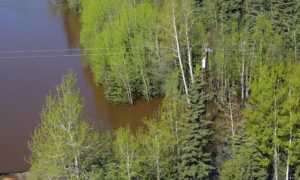
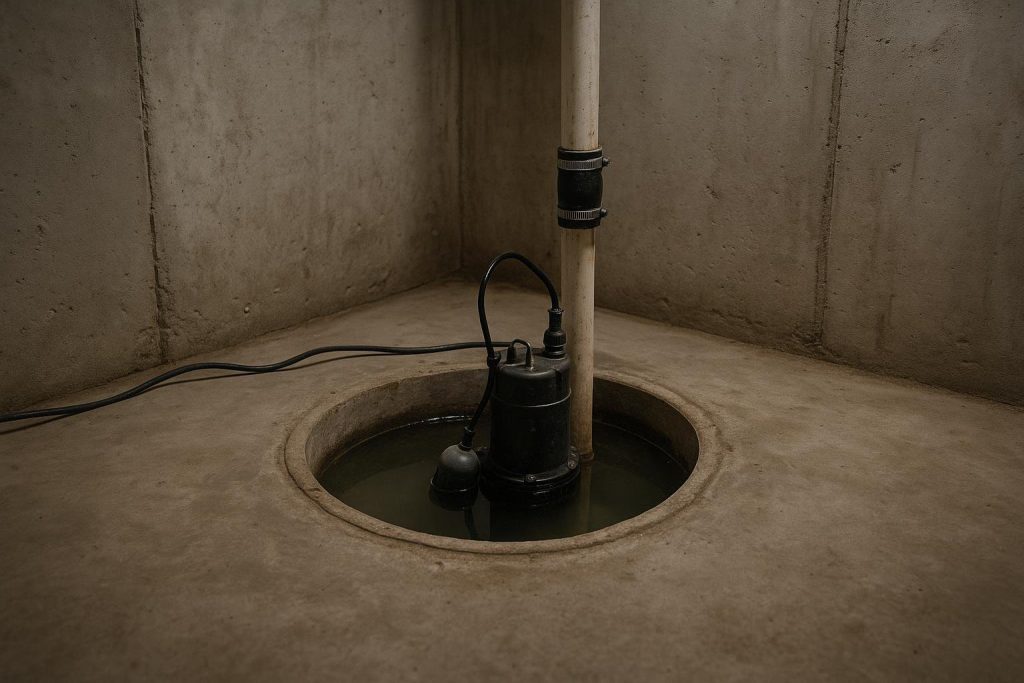
A sump pump not working during a Toronto rainstorm or spring thaw is one of the fastest ways to end up with a flooded basement. The most common reasons are a tripped float switch, a lost power circuit, or a pump that has burned out from running continuously against heavy hydrostatic pressure. Check the power supply and float switch first, then call a professional if water is already rising.
Key Takeaways
- A tripped GFCI outlet or breaker is the single most common reason a sump pump stops mid-storm.
- Toronto’s heavy clay soil holds water against foundation walls long after rain stops, so a failed pump can cause damage hours later.
- A pump that runs constantly and then stops has likely burned out its motor from overwork, not a simple electrical fault.
- Battery backup systems are essential for Toronto homes where power outages often coincide with the worst storms.
If water is already entering the basement, move valuables above floor level before troubleshooting. Do not wade through standing water near any electrical panel or outlet.
How urgent is this?
Monitor: Pump is silent, pit is dry, no rain forecast. You have time to test and service it calmly.
Act soon: Pump is not cycling but rain is expected within 24 hours, or the pit has a small amount of standing water. Diagnose and resolve before the next weather event.
Act now: Active rainfall or snowmelt, water is rising in the pit or already on the floor, or you can smell burning from the pump motor. This is an emergency.
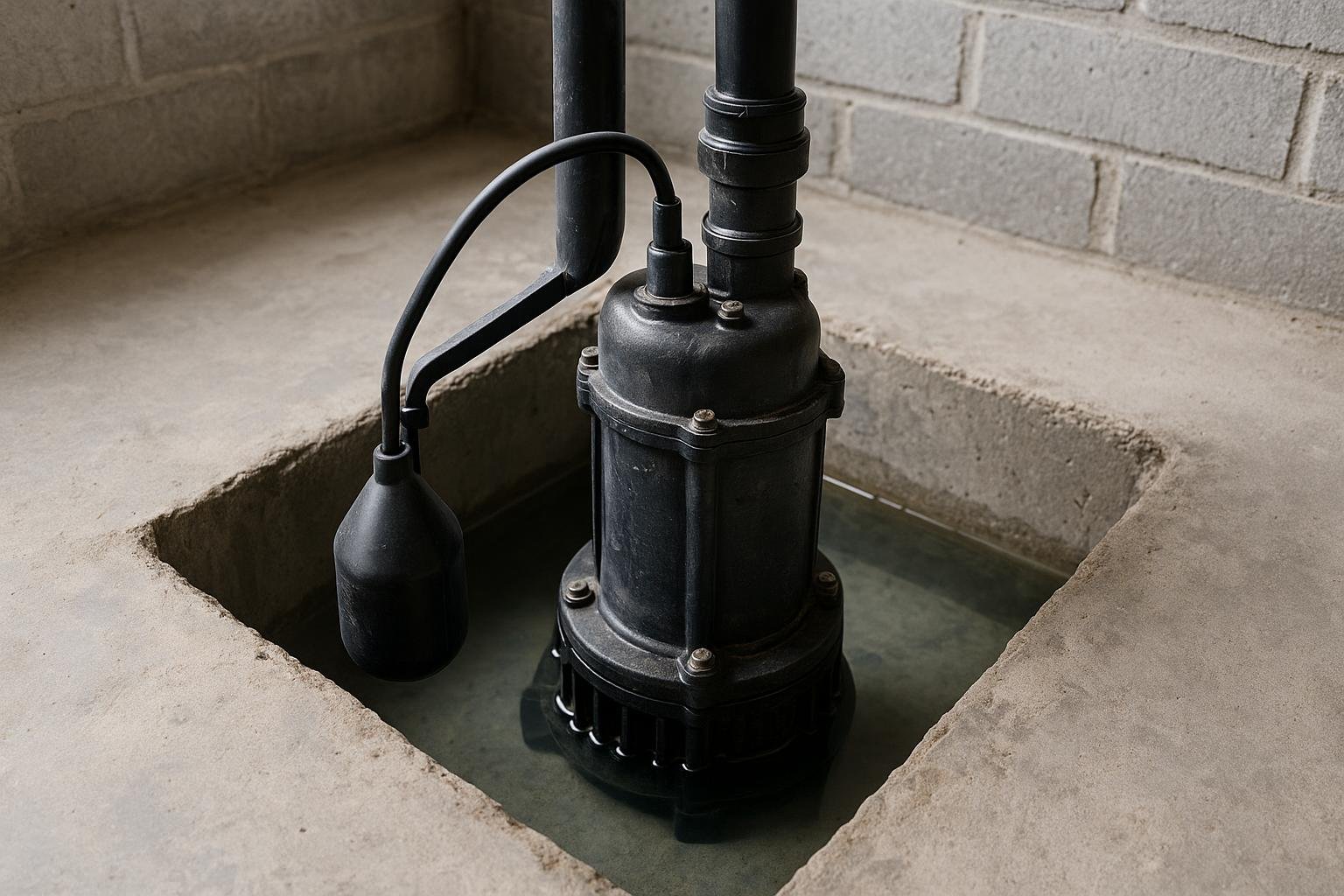
Confirm it is actually a sump pump failure
A working sump pump cycles on when water in the pit reaches the float trigger point, runs for 15 to 60 seconds, then shuts off. If your basement is wet but the pump is humming, the problem may be a blocked discharge line rather than a dead pump. If the pump is completely silent and the pit is filling, that points to a power or motor fault.
Listen for a hum with no water movement, which usually means the impeller is jammed. A pump that clicks on and off rapidly every few seconds is short-cycling, often because the float is stuck or the pit is too small for the inflow rate. No sound at all, combined with a full pit, almost always means a power interruption or a burned-out motor.
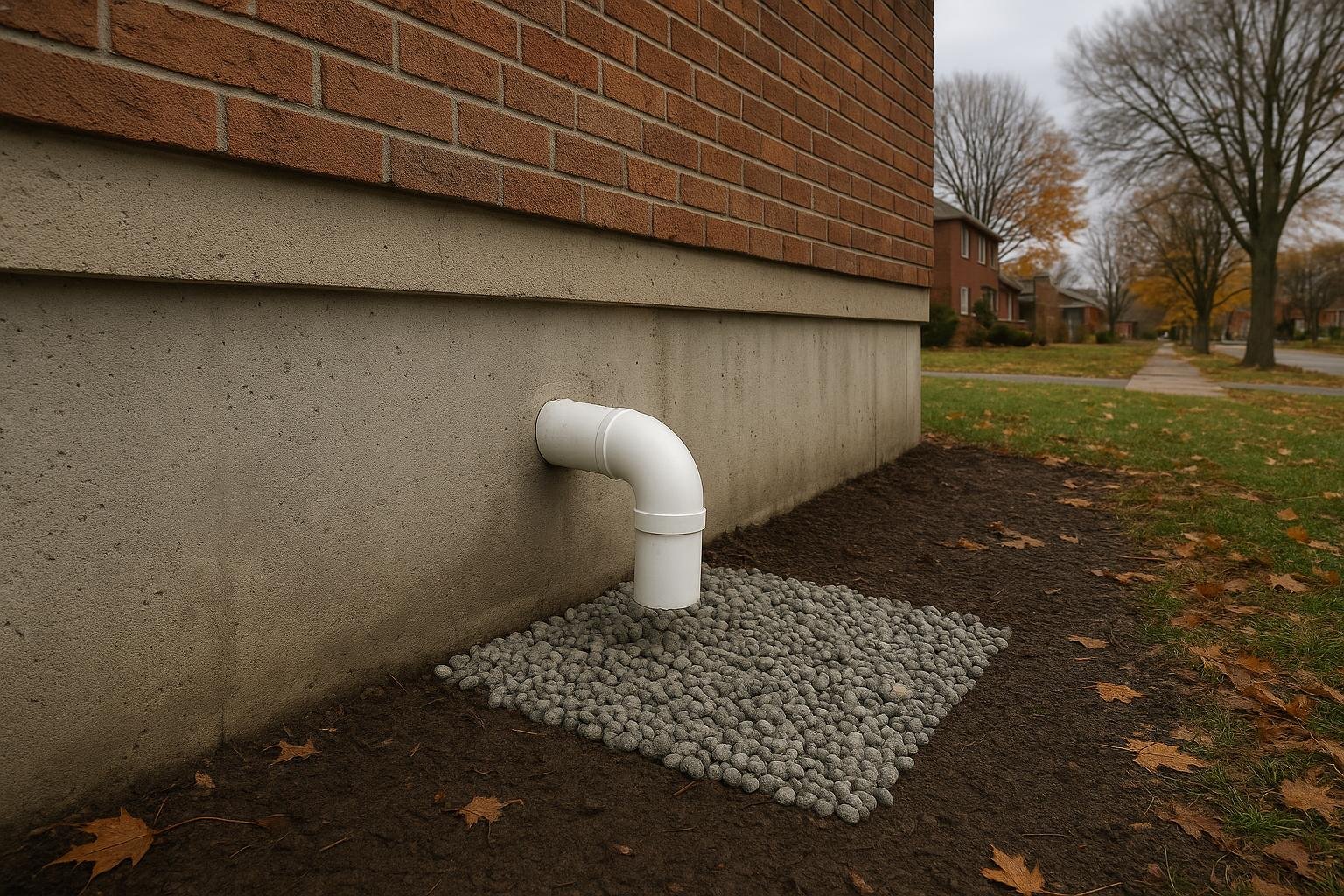
Check whether the discharge pipe is expelling water outside. In Toronto winters, the exterior end of the discharge line can freeze solid, causing the pump to work against a blocked line until it overheats. This is a common failure mode from November through March.
Problems it gets confused with
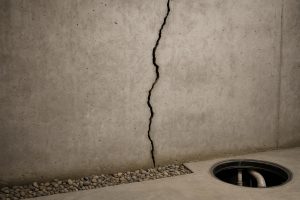
A wet basement floor is not always caused by a sump pump not working correctly. Water seeping through foundation wall cracks or through the floor slab due to hydrostatic pressure will appear even when the pump is running perfectly. If the pit is dry but the floor is wet, the pump is not the issue. Similarly, a condensation problem on cold concrete walls can mimic a leak. Use our Basement Leak Diagnostic Tool to separate pump failure from a waterproofing problem before spending money on the wrong fix.
A failed weeping tile system can also overwhelm a functioning pump. If the perimeter drain is silted up, water bypasses the pit entirely and enters through the footing joint instead. In that case, replacing the pump alone will not solve the flooding.
Causes, ranked
1. Power supply interrupted
This is the most common cause and the easiest to rule out. Sump pumps must be on a dedicated 15-amp circuit. During a storm, a GFCI outlet can trip, or the breaker can flip. The pump plug should never share an extension cord or a multi-outlet strip. Check the dedicated outlet, the GFCI reset button, and the main panel before assuming the pump has failed. Telltale sign: no hum, no movement, pit filling steadily.
2. Float switch stuck or misaligned
The float switch tells the pump when to turn on. If it is tangled against the pump body or the pit wall, it cannot rise with the water level and the pump never activates. This is especially common in narrow pits or after a pump has shifted during a previous high-volume event. Telltale sign: pit is full but pump is silent, and the pump runs normally when you lift the float by hand.
3. Burned-out motor
Toronto’s clay soil creates sustained hydrostatic pressure that can force a pump to run for hours without a break during spring thaw or a major summer downpour. Continuous operation overheats the motor windings. A sump pump not working after it ran hard during the last storm has likely burned out. Telltale sign: burning smell near the pit, pump is warm to the touch, no hum even with power confirmed.
4. Blocked or frozen discharge line
The discharge pipe carries water from the pit to daylight, typically 2 metres or more from the foundation. If the exterior end is buried under snow, capped incorrectly, or pitched back toward the house, water backs up and the pump works against a closed system. In winter this line can freeze solid. Telltale sign: pump hums and runs but no water exits outside, and the pit does not drop.
5. Clogged impeller
Gravel, silt, and debris from the pit can lodge in the impeller, preventing it from moving water even when the motor spins. This is more common in pits without a proper filter screen or in older installations where the clear stone bed around the weeping tile has broken down. Telltale sign: pump hums loudly but moves no water, and the motor runs hot.
6. Pump undersized for inflow volume
A pump rated for modest inflow can be overwhelmed during a major storm or spring thaw. The unit runs continuously, cannot keep up, and eventually burns out. This is a design problem, not a maintenance failure. Telltale sign: pump ran non-stop during the last heavy rain event and the pit never dropped below a certain level.
Cause to solution table
| Cause | Telltale sign | Appropriate fix | Urgency |
|---|---|---|---|
| Tripped GFCI or breaker | No hum, pit filling, power light off | Reset GFCI or breaker; confirm dedicated circuit | Act now |
| Float switch stuck | Pit full, pump silent, runs when float lifted manually | Reposition float; replace switch if damaged | Act soon |
| Burned-out motor | Burning smell, warm pump, no hum with power confirmed | Replace pump unit | Act now |
| Blocked or frozen discharge line | Pump runs but pit does not drop, no water outside | Clear blockage; re-pitch or insulate discharge line | Act now |
| Clogged impeller | Loud hum, no water movement, hot motor | Clean or replace impeller; add pit filter screen | Act soon |
| Undersized pump | Pump ran non-stop, never kept up with inflow | Upgrade to higher-capacity unit; consider battery backup | Act soon |
The table above covers the six most common failure modes in Toronto-area homes. Power faults and float issues are DIY-resolvable in minutes. A burned-out motor or an undersized pump requires replacement, and that work should be done before the next rain event. If the pump failed because the weeping tile system is overwhelmed, pump replacement alone will not prevent future flooding. A full drainage assessment is needed in that case.
What you can safely check yourself
- Check the power outlet. Locate the pump’s dedicated outlet and press the GFCI reset button if present. Check the breaker panel for a tripped breaker on the sump pump circuit.
- Confirm the plug is seated. Vibration during operation can loosen the plug over time. Unplug and re-plug firmly.
- Lift the float by hand. With the power on, reach into the pit and gently lift the float. If the pump starts, the float switch is the problem, not the motor.
- Look at the discharge line outside. Walk to where the pipe exits the foundation. Confirm water is flowing out during a test run. Check for ice blockage in cold weather.
- Listen and smell. A burning or electrical smell near the pit means the motor has overheated. Do not continue testing; the unit needs replacement.
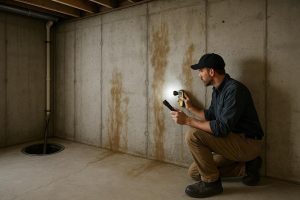
- Check the pit for debris. Shine a flashlight into the pit. Visible gravel or silt near the pump inlet suggests a clogged impeller.
What NOT to do
Do not reach into a pit that has standing water while the pump is still plugged in. Disconnect power before any hands-on inspection. Do not use a standard extension cord to bypass a tripped GFCI outlet; this defeats the ground-fault protection that exists specifically to prevent electrocution near water.
Do not ignore a sump pump not working at full capacity, such as one running continuously without cycling off. Sustained operation without cycling off means either the inflow exceeds the pump’s capacity or the float is stuck in the on position. Both situations will burn out the motor within hours. Do not seal the pit lid tightly without confirming the discharge line has a proper air gap; back-siphoning can occur in some configurations.
How a professional diagnoses a sump pump not working
A professional inspection starts with confirming the electrical supply, including the dedicated circuit amperage and whether the outlet is properly grounded. The technician will then test the float switch travel range, check the pump’s rated horsepower against the estimated inflow volume for the property, and inspect the discharge line from the pump to the exterior termination point.
If the pump has failed, the technician will assess whether the pit size and weeping tile condition are adequate for the replacement unit. In many older Toronto homes, the original weeping tile is fully silted up, meaning the pit receives water through the footing joint rather than through a functioning perimeter drain. Replacing the pump without addressing the drainage system leaves the root cause in place. A proper diagnosis includes a moisture assessment of the perimeter walls and floor to determine whether a broader interior waterproofing solution, such as a new weeping tile system draining to a properly sized sump basin, is warranted. CMHC’s guidance on basement moisture management, available at cmhc-schl.gc.ca, outlines the relationship between drainage design and pump sizing that professionals use as a baseline.
Temporary vs permanent fixes
| Option | What it does | Realistic cost range | How long it lasts |
|---|---|---|---|
| Reset GFCI or breaker | Restores power to a functioning pump | No cost | Permanent if circuit is sound |
| Float switch replacement | Restores automatic cycling | $80 to $200 installed* | 5 to 10 years |
| Pump unit replacement | New motor and impeller, correct sizing | $400 to $900 installed*, depending on horsepower and pit access | 7 to 12 years |
| Battery backup system added | Secondary pump activates on power failure | $1,000 to $2,500 installed | Battery replaced every 3 to 5 years |
| Interior weeping tile and new sump basin | Addresses root drainage failure, not just pump | Typically below the cost of exterior excavation; final figure depends on site inspection | Decades with proper maintenance |
Battery backup reflects DryShield installed pricing. *Float switch and pump-unit figures are typical Ontario market ranges, confirmed at your free on-site quote.
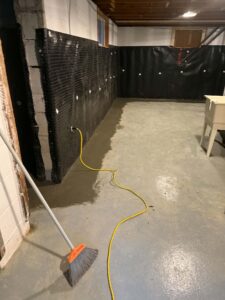
A simple pump swap is the right answer when the drainage system itself is sound. When the weeping tile is silted up or the pit is undersized, a new pump will fail again under the same conditions. The interior weeping tile route, where the perimeter is jackhammered, new drain tile is installed to a properly sized sump basin, and a vapour barrier is run up the wall, addresses the cause rather than the symptom. Our sump pump installation service page covers the full scope of what a properly designed system includes. For a broader view of what waterproofing work costs across Ontario, the basement leak repair cost guide for Toronto has current pricing context.
A battery backup sump pump is not optional for Toronto homes in flood-prone neighbourhoods. Power outages and heavy rainfall arrive together during the same storms that push the most water against your foundation.
Frequently asked questions
Why did my sump pump stop working during a storm?
The most likely cause is a tripped GFCI outlet or breaker caused by the electrical load during the storm. The second most common cause is a float switch that became tangled as water rose quickly. Check power first, then the float. If the pump ran for hours before stopping, motor burnout from overload is probable.
How long does a sump pump last in Toronto?
Most residential sump pumps last 7 to 12 years under normal cycling conditions. Toronto’s clay soil creates sustained hydrostatic pressure during spring thaw and summer downpours, which means pumps here often work harder than the manufacturer’s duty-cycle assumes. Units in homes without a battery backup tend to fail sooner because they run continuously during power-outage storms.
Can I replace a sump pump myself?
Swapping a like-for-like pump in an accessible pit is within the ability of a confident DIYer, provided the power is disconnected first and the new unit is correctly sized for the inflow volume. Sizing is where most DIY replacements go wrong. If the old pump was undersized or the pit is in poor condition, a professional assessment before purchase will save money in the long run.
What is a battery backup sump pump and do I need one?
A battery backup system is a secondary pump that activates automatically when the primary pump loses power or is overwhelmed. It runs on a marine-grade battery that is kept charged by a trickle charger. Given that Toronto’s worst storms often knock out power at the same moment they push the most groundwater against foundations, a backup system is strongly recommended for any home with a finished basement.
My sump pump is running but the basement is still wet. Why?
A functioning pump only removes water that reaches the pit. If water is entering through foundation wall cracks, through the floor slab under hydrostatic pressure, or through a failed footing joint that bypasses the weeping tile entirely, the pump cannot intercept it. The pump is doing its job; the waterproofing system has a separate failure. Our guide to basements that leak when it rains covers these entry points in detail.
How do I test my sump pump before a storm?
Pour a bucket of water slowly into the pit until the float rises and the pump activates. Confirm that water is discharging outside and that the pit level drops within 30 to 60 seconds. Run this test at the start of every spring thaw season and again before any forecast heavy rainfall. Also check the discharge line exterior termination for debris or ice. For smart pump sensors, our step-by-step sensor testing guide walks through the full diagnostic process.
Toronto homeowners can apply for the City of Toronto Basement Flooding Protection Subsidy, which may offset part of the cost of sump pump installation or upgrade. Check the subsidy page for current eligibility details.
If you have a sump pump not working or you are not confident it will handle the next storm, book a free on-site assessment with the DryShield Team. We will inspect the pit, the weeping tile condition, the discharge line, and the overall drainage picture, then give you a written scope with clear pricing before any work begins. Reach out through our contact page to get started.