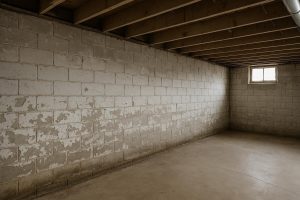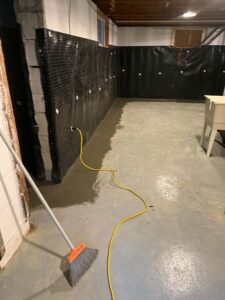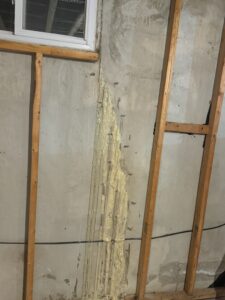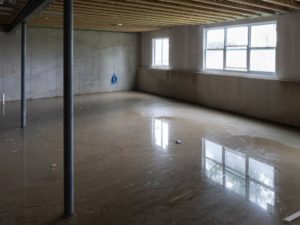
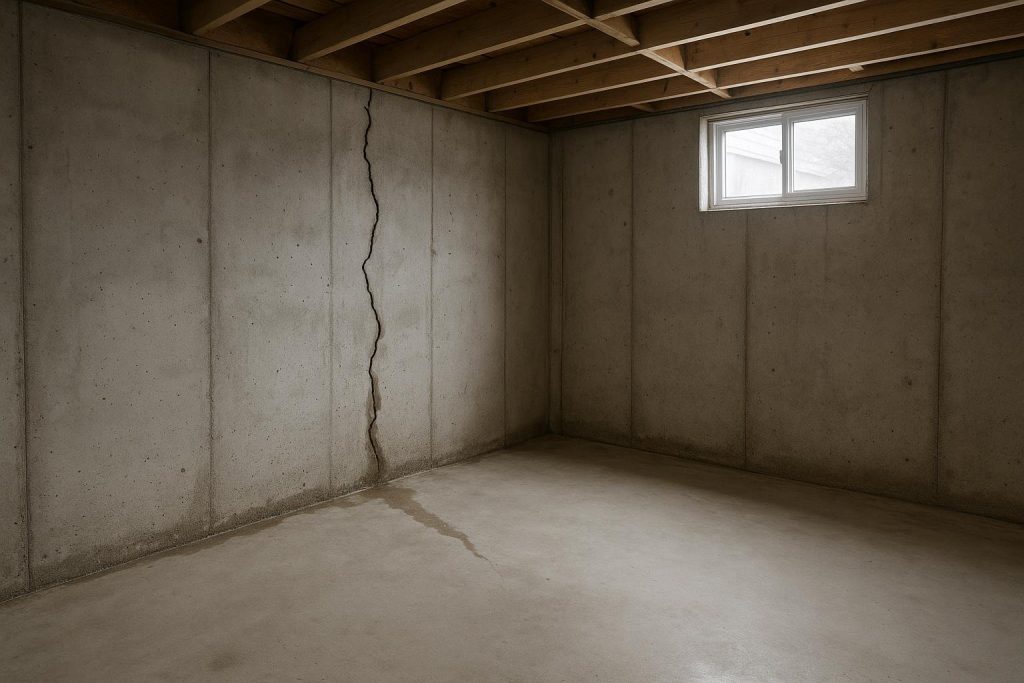
Basement leak repair Kitchener homeowners need most often traces back to one root cause: hydrostatic pressure building up in the clay-heavy soils that sit beneath much of Waterloo Region. Water saturates the ground around your foundation during spring snowmelt and summer downpours, then pushes inward through cracks, cold joints, and deteriorated weeping tile. Catching the source early and matching it to the right repair method is what separates a lasting fix from a temporary patch.
Key Takeaways
- Kitchener’s mix of clay and silty soils holds water against foundation walls longer than sandy soils, making hydrostatic pressure the most common leak driver in the region.
- A single injected foundation crack typically costs $600 to $900; a full interior weeping-tile system or exterior waterproofing job runs higher and depends on linear footage and access.
- Polyurethane injection works for active, non-structural cracks; epoxy is reserved for structural cracks where the wall must be re-bonded.
- Spring thaw and heavy summer rainfall are the two peak failure windows for Kitchener-area foundations.
- A free on-site inspection is the only reliable way to confirm which repair method is appropriate before any work begins.
Definitions and Scope
A basement leak is any point where water enters the living or storage space below grade. In Kitchener homes, leaks appear in three main locations: foundation walls (vertical or diagonal cracks in poured concrete or block), the floor-wall joint (the cold joint where the floor slab meets the footing), and the basement floor slab itself. Each entry point has a distinct cause and a distinct repair pathway.
Waterproofing is the broader discipline that prevents water from reaching the foundation in the first place. Leak repair is the targeted correction of an existing failure. The two overlap: repairing a crack without addressing the drainage conditions that caused it often leads to a repeat failure within a few seasons. That is why a proper scope of work considers both the symptom and the underlying pressure source.
Weeping tile, sump pumps, rubberised membranes, dimpled drainage board, and crack injection are the core tools of the trade. Understanding what each one does helps you evaluate a contractor’s proposal before you sign anything.
Why This Matters for Kitchener Homeowners
Kitchener sits within Waterloo Region, where glacial till and clay-rich soils are common across older residential neighbourhoods. Clay expands when wet and contracts when dry, which means the soil around your foundation shifts with every seasonal cycle. That movement stresses the concrete, opens hairline cracks, and eventually creates pathways for water.
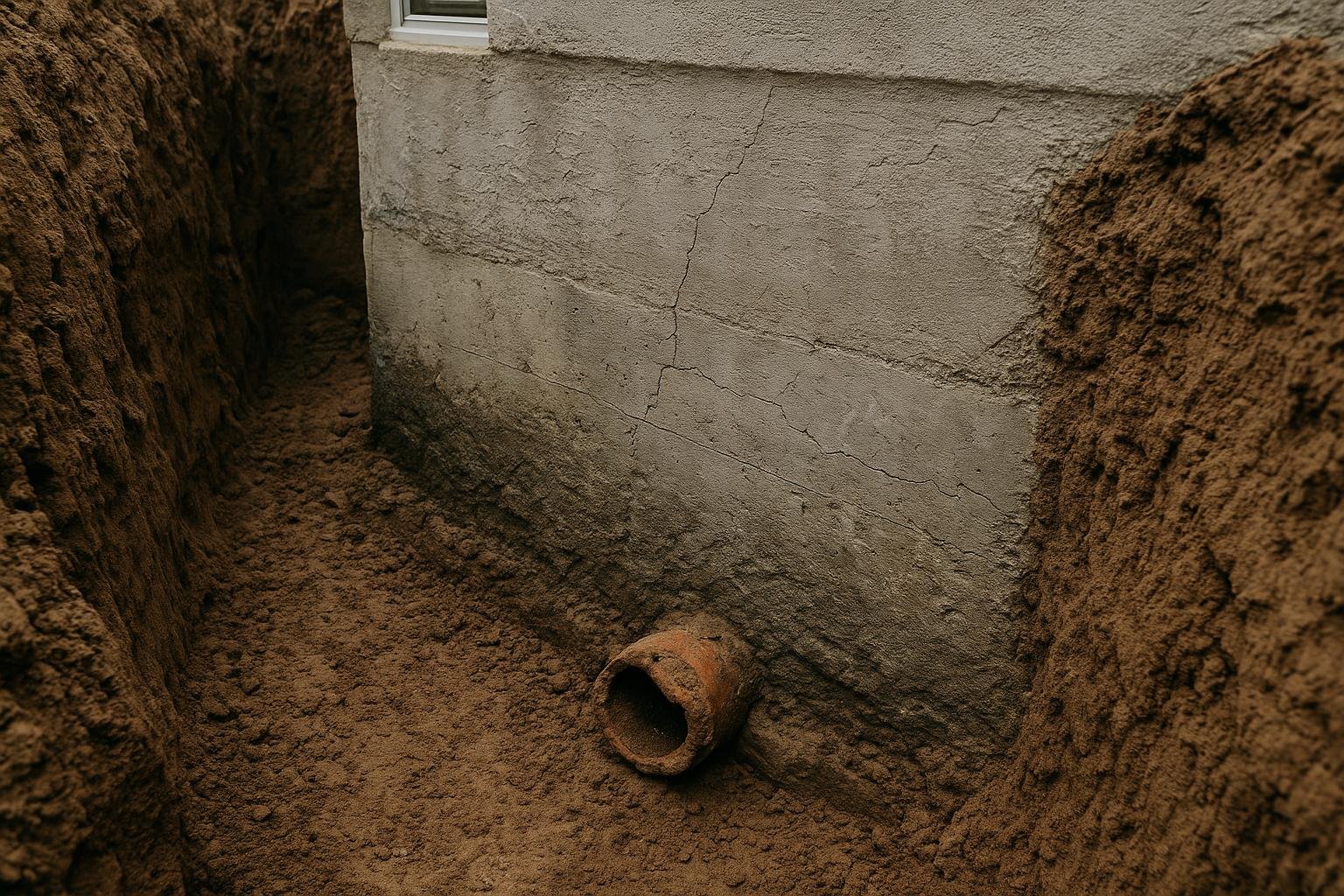
Homes built before the 1980s in areas like Rockway, Vanier, and Centreville often have original clay weeping tile that has fully silted up after decades of use. When that drainage system fails, groundwater has nowhere to go except against the foundation wall. The result is visible efflorescence, damp patches, or active seepage, usually noticed first in late March or after a heavy July storm.
Spring snowmelt and summer downpours are the two peak failure windows for Kitchener foundations. If your basement has shown any moisture in either season, a professional inspection before the next cycle is the most cost-effective step you can take.
Left unaddressed, persistent moisture degrades the parging on block foundations, corrodes steel reinforcement, and creates conditions for mould growth. The Canada Mortgage and Housing Corporation (CMHC) notes that moisture is the leading cause of indoor air quality problems in Canadian homes, and a wet basement is the most common moisture source. You can find their guidance at cmhc-schl.gc.ca.
Your Options for Basement Leak Repair Kitchener
Polyurethane Crack Injection
Low-pressure polyurethane injection is the standard repair for an active, non-structural crack in a poured concrete wall. A technician installs injection ports along the crack at regular intervals, seals the face with paste, then pumps flexible polyurethane resin into the crack under low pressure. The resin expands as it cures, filling the full depth of the crack from interior face to exterior face. Because the cured material remains flexible, it tolerates the seasonal foundation movement that is normal in Kitchener’s freeze-thaw climate without re-cracking. A single crack treated this way typically costs $600 to $900, and the work is completed in a few hours with no excavation required.
This method is best for hairline to moderate-width vertical or diagonal cracks that are leaking but not displacing. It is not appropriate for horizontal cracks, which indicate lateral soil pressure and may signal a structural problem.
Epoxy Crack Injection
Epoxy injection is used when a crack must be structurally re-bonded rather than simply sealed. Epoxy cures rigid and achieves compressive strength that exceeds the surrounding concrete. The trade-off is that a rigid repair in a moving foundation can transfer stress to an adjacent section of wall. For that reason, epoxy is reserved for dry, stable cracks where re-bonding the wall is the primary goal. Kitchener homes with block foundations rarely benefit from epoxy; poured concrete walls with confirmed structural cracks are the correct application.
Interior Weeping Tile System
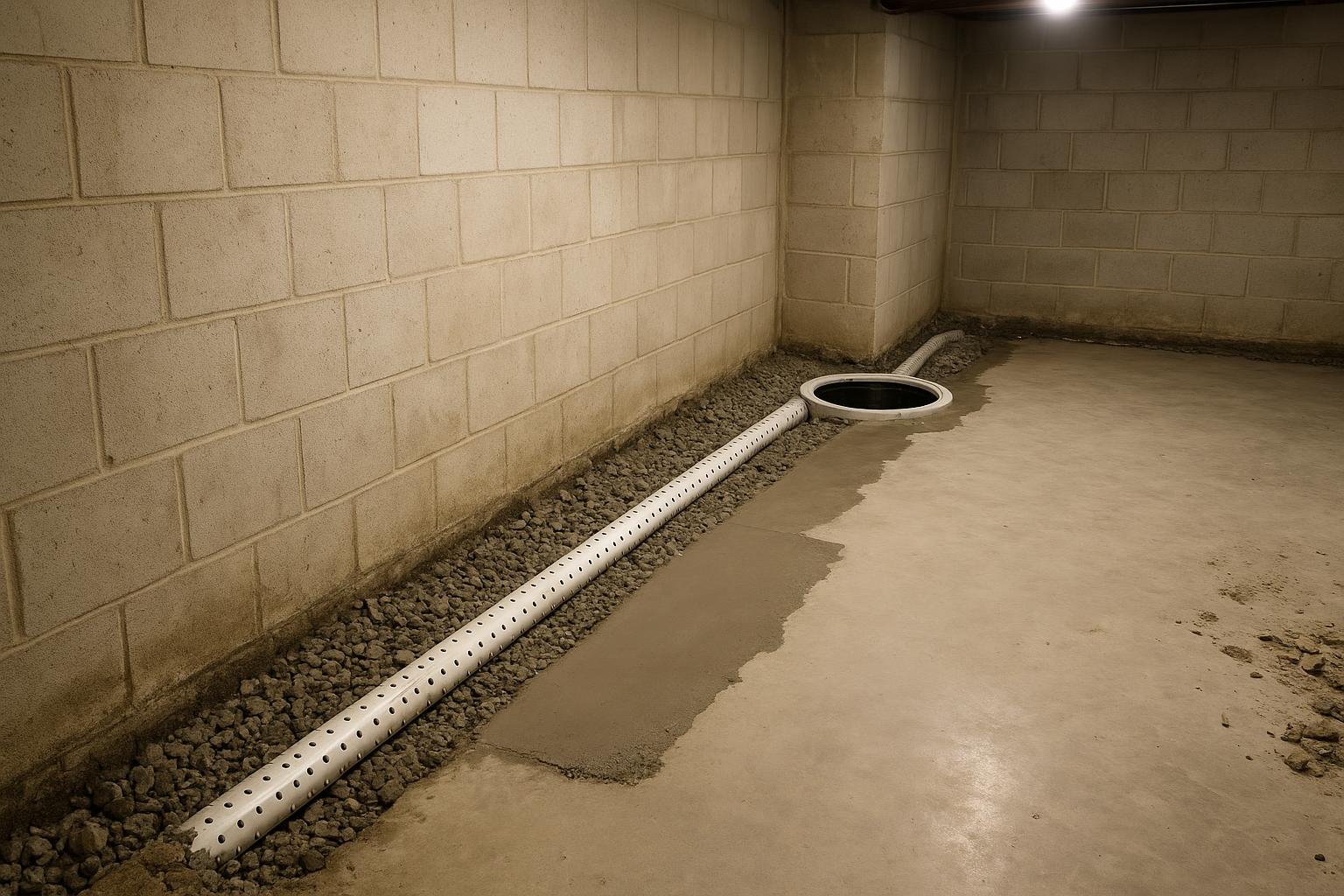
When water is entering along the floor-wall joint or through multiple wall cracks, an interior drainage system is often the most practical solution for basement leak repair Kitchener properties face. The perimeter of the basement floor is jackhammered, a new weeping tile channel is installed and routed to a sump basin, a vapour barrier is run up the wall, and the concrete is re-poured. The sump pump then evacuates groundwater before it can reach the living space. This approach does not stop water from entering the wall, but it intercepts and redirects it before damage occurs. It is well suited to Kitchener homes where exterior excavation is impractical due to finished landscaping, driveways, or close lot lines.
Exterior Waterproofing
Full exterior waterproofing is the most comprehensive solution. The process involves excavating to the footing, applying hydraulic cement to any voids in the wall, coating the exterior face with a rubberised membrane, installing dimpled drainage board to protect the membrane and channel water downward, laying new weeping tile bedded in clear stone at the footing level, and backfilling with corrected grade. This approach addresses hydrostatic pressure at its source. For an average Kitchener semi-detached or detached home, the investment typically runs in the range of $6,000 to $9,000 depending on linear footage, excavation depth, and site access. Final pricing always depends on a site inspection.
Exterior work is the preferred method when the foundation membrane has failed, when multiple cracks are present on one wall, or when the original weeping tile is confirmed to be silted and non-functional.
Sump Pump Installation or Replacement
A sump pump is the active component of any drainage system. Without a functioning pump, even a well-designed weeping tile system will eventually back up. Kitchener homes in lower-lying areas of the city, or those with high seasonal water tables, benefit from a battery backup unit that keeps the pump running during power outages, which often coincide with the same storms that cause basement flooding. Sump pump installation is frequently paired with an interior weeping tile system but can also be added as a standalone upgrade to an existing drainage setup.
Parging and Surface Sealing
Parging, the application of a mortar coat to the exterior of a block foundation, is a maintenance repair rather than a waterproofing solution. It seals surface voids and slows moisture absorption but does not resist sustained hydrostatic pressure. Surface-applied waterproofing paints and coatings fall into the same category. These products are appropriate for minor dampness on a wall that is otherwise structurally sound and well-drained, but they are not a substitute for proper drainage when groundwater pressure is the root cause.
Options Compared
| Method | Best For | Typical Lifespan | Relative Cost | Disruption |
|---|---|---|---|---|
| Polyurethane crack injection | Single active, non-structural wall crack | Long-term when crack is stable | Lowest ($600-$900 per crack) | Minimal, no excavation |
| Epoxy crack injection | Dry structural crack needing re-bonding | Permanent if wall is stable | Low to moderate | Minimal, no excavation |
| Interior weeping tile system | Multiple entry points, impractical exterior access | 20+ years with pump maintenance | Moderate | Moderate (jackhammer, dust) |
| Exterior waterproofing | Failed membrane, silted weeping tile, multiple cracks | 25+ years | Higher ($6,000-$9,000 range) | High (excavation required) |
| Sump pump installation | High water table, backup for drainage system | 7-10 years per pump unit | Low to moderate | Low |
| Parging and surface sealing | Minor surface dampness, maintenance repair | 5-10 years | Lowest | Minimal |
The table above shows that no single method is universally correct. Polyurethane injection is the fastest and least disruptive option when only one crack is the source, but it does nothing to improve drainage around the foundation. Exterior waterproofing costs more and requires excavation, but it is the only method that addresses the membrane, the drainage layer, and the weeping tile in a single scope of work. Interior systems sit in the middle: they manage water effectively without excavation, but they do not stop water from entering the wall itself.
How to Choose the Right Repair
Choose polyurethane injection if you have a single vertical or diagonal crack in a poured concrete wall that is actively leaking, the crack shows no displacement, and the rest of the basement is dry. This is the fastest and most cost-effective path when the problem is genuinely isolated.
For basement leak repair Kitchener homeowners dealing with water entering along the floor-wall joint, multiple cracks across different walls, or exterior excavation blocked by a driveway, deck, or neighbouring structure, an interior weeping tile system is the right choice. Interior drainage is also appropriate when the budget does not allow for full exterior work but a long-term managed solution is needed.
Choose exterior waterproofing if the original weeping tile is confirmed to be silted or absent, if the exterior membrane has visibly failed, or if you are dealing with a wall that has multiple cracks and persistent hydrostatic pressure. Homes in Kitchener’s older neighbourhoods with clay tile drainage systems that are 40 or more years old are strong candidates for a full exterior scope.
If you are unsure which entry point is causing the leak, use the basement leak diagnostic tool to narrow down the likely source before booking an inspection.
Choose sump pump replacement or addition if your existing drainage system is functional but the pump is more than seven years old, if you have experienced a power outage during a storm that caused flooding, or if the water table in your area rises significantly in spring. A battery backup unit is a low-cost insurance policy for any Kitchener home with a drainage system already in place.
Costs and Timelines
| Cost Driver | Why It Affects Price | Approximate Impact |
|---|---|---|
| Linear footage of affected wall | More wall = more membrane, drainage board, and weeping tile | Primary driver for exterior and interior systems |
| Excavation depth | Deeper footings require more labour and equipment time | Significant for exterior work; older Kitchener homes often have deeper footings |
| Site access | Tight lots, fences, or finished landscaping increase excavation difficulty | Can add meaningfully to exterior job cost |
| Number of cracks | Each injected crack is priced individually ($600-$900 per crack) | Moderate; multiple cracks may shift recommendation to a system approach |
| Foundation material | Block foundations require more prep work than poured concrete | Moderate increase for block walls |
| Sump basin and pump | Required for interior systems; battery backup adds cost | Low to moderate add-on |
A single injected crack in a Kitchener home typically falls in the $600 to $900 range. A full exterior waterproofing scope for an average semi-detached or detached home runs roughly $6,000 to $9,000, with the final figure depending on linear footage, excavation depth, and access conditions. Interior weeping-tile systems generally fall below the exterior range. All figures should be treated as starting points: the only reliable number is the one that comes from a written quote after a site inspection. For a broader look at what drives waterproofing costs across southern Ontario, the basement waterproofing cost guide breaks down the variables in detail.
Risks and Common Mistakes
| Symptom | Likely Cause | Correct Fix |
|---|---|---|
| White powder on block wall | Efflorescence from mineral-laden water moving through the block | Address drainage source; parging alone will not stop recurrence |
| Water along floor-wall joint | Hydrostatic pressure at footing level; failed or absent weeping tile | Interior weeping tile system or exterior waterproofing |
| Crack leaking after previous injection | Epoxy used on a moving crack; crack re-opened adjacent to rigid repair | Polyurethane re-injection or exterior membrane repair |
| Damp wall after heavy rain only | Surface water not draining away from foundation; grading or downspout issue | Grade correction, downspout extension, then assess wall condition |
| Horizontal crack in block wall | Lateral soil pressure; potential structural concern | Engineering assessment before any waterproofing work |
The most common mistake Kitchener homeowners make is applying a surface coating or hydraulic cement plug to a crack that is under active hydrostatic pressure. These products cannot resist sustained water pressure and typically fail within one or two seasons. The second most common mistake is choosing interior drainage without confirming that the sump pump is correctly sized and has a battery backup, leaving the system vulnerable during the power outages that often accompany major storms.
Never use epoxy injection on a crack that is still moving seasonally. Epoxy cures rigid and will transfer stress to the adjacent concrete, often opening a parallel crack within a year. Polyurethane is the correct choice for any crack in a foundation that experiences freeze-thaw cycling.
A third mistake is delaying action after the first sign of moisture. Basement leak repair Kitchener specialists consistently find that a hairline crack costing under $1,000 to inject today can widen over two or three winters to the point where exterior excavation becomes necessary. The full range of work available to homeowners in Waterloo Region is outlined on the Kitchener waterproofing and foundation repair service page.
How the Process Works
- Free on-site inspection and moisture assessment. A technician visits the property, identifies all entry points, assesses the drainage conditions around the foundation, and checks the condition of any existing weeping tile or sump system.
- Written scope with linear-foot pricing. You receive a written proposal that specifies the method, the materials, and the price per linear foot or per crack, so the quote is transparent and comparable.
- Preparation and access. For crack injection, ports are installed and the face is sealed. For interior systems, the perimeter concrete is jackhammered. For exterior work, excavation proceeds to the footing using equipment sized to the site access available.
- Core repair work. Cracks are injected, membranes are applied, drainage board is installed, and new weeping tile is bedded in clear stone at the footing. Interior systems route the tile to a sump basin.
- Backfill, grade correction, and reinstatement. Excavated areas are backfilled and graded to direct surface water away from the foundation. Interior concrete is re-poured. The site is left clean.
- Final inspection and documentation. The completed work is reviewed, and warranty documentation is issued. DryShield’s lifetime transferable warranty applies to qualifying interior and exterior waterproofing systems, which is a meaningful asset when the home is eventually sold.
Every basement leak repair Kitchener job follows this sequence, whether the scope is a single injected crack or a full exterior excavation. Knowing the steps in advance helps you ask the right questions and hold your contractor to a clear standard of work.
Frequently Asked Questions
How do I know if my Kitchener basement leak is a crack or a drainage problem?
If water appears at a specific point on the wall and you can see a visible crack at that location, the crack is the entry point. If water appears along the entire floor-wall joint or seeps up through the floor slab, the source is hydrostatic pressure at the footing level, which points to a drainage problem rather than a single crack. A professional inspection with a moisture meter and visual assessment of the exterior grade will confirm the source.
Is polyurethane injection a permanent fix?
Polyurethane injection is a long-term repair when the crack is non-structural and the surrounding drainage conditions are adequate. The cured resin remains flexible and tolerates seasonal movement. If the root cause is unresolved hydrostatic pressure, the same wall may develop a new crack adjacent to the repaired one. Addressing drainage alongside the injection gives the best long-term outcome.
How long does exterior waterproofing take for a typical Kitchener home?
A full exterior waterproofing scope on one wall of an average Kitchener semi-detached home typically takes two to three days, depending on excavation depth and access. Homes with finished landscaping, decks, or tight lot lines may require additional time for careful excavation. Weather can also affect the schedule, as membrane application requires dry conditions.
Can I stay in my home during the work?
For crack injection and most interior drainage work, yes. The work is contained to the basement and, while dusty during jackhammering, does not require you to vacate. Exterior excavation is also done outside the home, so occupancy is not affected. Your contractor will advise if any specific area needs to be cleared temporarily.
What is the difference between a weeping tile system and a French drain?
Both terms describe a perforated pipe buried in gravel that collects and redirects groundwater. Weeping tile specifically refers to the pipe installed at the footing of a foundation, either on the interior or exterior, to relieve hydrostatic pressure. A French drain is a broader term that can describe any subsurface drainage trench. In the context of basement leak repair, the two are functionally the same thing when installed at the foundation perimeter.
Does Kitchener’s soil type affect which repair method I need?
Yes. The clay-heavy soils common across much of Waterloo Region hold water against foundation walls for extended periods after rain or snowmelt, which means hydrostatic pressure builds up more persistently than it would in sandy or well-drained soils. This makes drainage-based solutions, whether interior or exterior, more important in Kitchener than in regions with naturally permeable soil. Crack injection alone is often insufficient when the surrounding soil stays saturated for weeks at a time.
Will waterproofing my basement affect my home’s resale value?
A documented, warranted waterproofing system is a positive disclosure item in a real estate transaction. Buyers and their inspectors look for evidence of past or active moisture, and a transferable warranty from a reputable contractor addresses that concern directly. Leaving a known leak unrepaired, on the other hand, typically results in a price reduction or a condition in the offer to repair it before closing.
How do I compare quotes from different contractors?
Ask each contractor to specify the method, the materials (membrane type, drainage board specification, pipe diameter), the warranty terms, and whether the price is per linear foot or a fixed sum. A quote that lists only a total price without a scope breakdown is difficult to compare. The guide on how to choose a reliable waterproofing contractor walks through the key questions to ask before signing.
Is there a risk that interior waterproofing will cause mould behind the vapour barrier?
A correctly installed interior system includes a vapour barrier that is sealed at the top and bottom to prevent humid air from being trapped against the wall. If the barrier is installed loosely or without proper sealing, condensation can accumulate behind it. Specifying a full-height, sealed barrier and ensuring the sump system keeps the area dry are the two controls that prevent this outcome.
What should I do immediately when I discover an active basement leak?
Move any stored items away from the wet area to prevent damage and mould. If water is entering rapidly, a wet-dry vacuum can remove standing water. Do not apply hydraulic cement or waterproofing paint to an actively wet crack under pressure, as these products will not bond correctly. Book a professional inspection as soon as possible, and document the location and volume of the leak with photos before any drying occurs.
If your Kitchener home is showing any sign of moisture, from a faint damp patch to an active wall crack, the DryShield Team is ready to help with basement leak repair Kitchener homeowners can rely on. Contact us for a free on-site inspection and a written quote with no obligation. The right repair, done once, protects your foundation for decades.