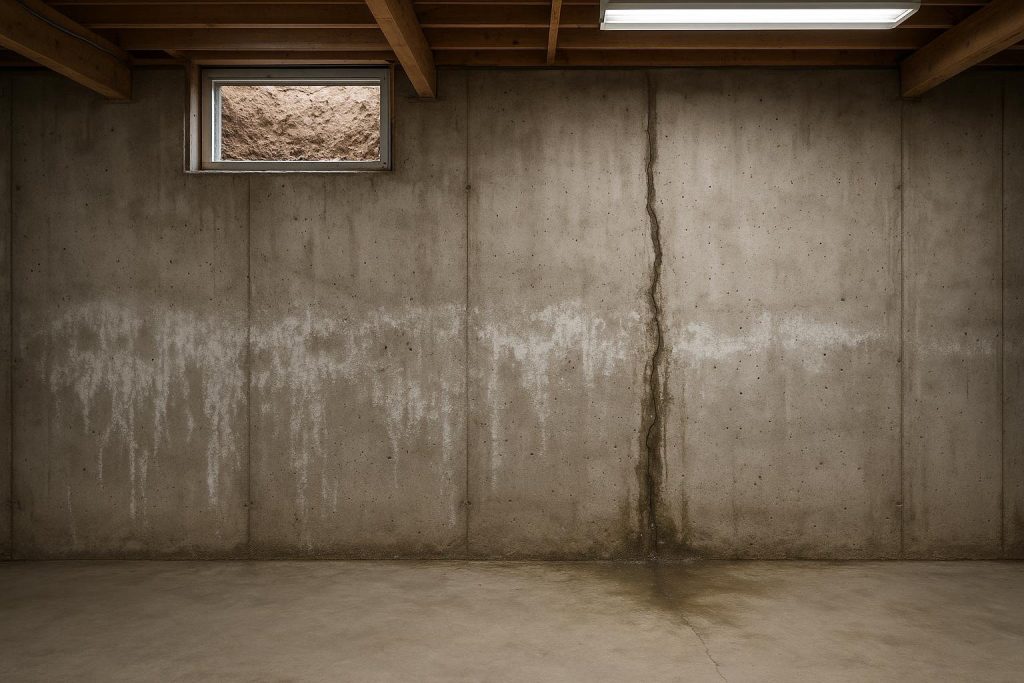
Basement leak repair Mississauga homeowners need most often comes down to one root cause: hydrostatic pressure from Mississauga’s heavy clay soil pushing water against foundation walls and footings. Whether the entry point is a hairline crack in poured concrete, a failed weeping tile system, or a gap at the floor-wall joint, the fix must address that pressure directly rather than simply mask the symptom inside. This guide focuses specifically on how to diagnose which method applies to your home and how the leading repair options compare side by side.
Key Takeaways
- Clay soil across most of Mississauga holds water against foundations long after rain stops, making hydrostatic pressure the primary driver of basement leaks in this city.
- A single injected foundation crack typically costs $600 to $900; a full interior weeping tile system or exterior waterproofing job runs considerably more and depends on linear footage and access.
- Spring thaw and heavy summer downpours are the two peak failure windows for Mississauga foundations built before 1990.
- Interior and exterior waterproofing both work, but they solve different problems. Choosing the wrong method wastes money without fixing the leak.
- A free on-site inspection is the only reliable way to confirm which method your home actually needs.
Definitions and Scope
Basement leak repair covers every technique used to stop water from entering a below-grade living or storage space through the foundation walls, floor slab, or the joint where they meet. In Mississauga, the relevant methods range from low-pressure polyurethane crack injection for isolated wall cracks, through interior weeping tile systems that intercept water before it reaches the floor, to full exterior waterproofing that excavates to the footing and installs a rubberised membrane and new drainage board.
The scope of any repair is set by the source of the water, not by the homeowner’s preference. Water entering through a single vertical crack in a poured concrete wall calls for crack injection. Water seeping through multiple points along the base of the wall, or rising through the floor slab, usually signals a failed or fully silted-up weeping tile system, which is a different repair entirely. Parging failures, deteriorated mortar in block foundations, and improper grading around the home round out the common causes seen across Mississauga neighbourhoods.
Why This Matters for Mississauga Homeowners
Mississauga sits on a thick band of Lakelands clay that was deposited during post-glacial lake stages. This clay is dense, slow-draining, and expands when wet. After a heavy rain or during spring thaw, it holds water against foundation walls for days or even weeks, generating sustained hydrostatic pressure that forces moisture through any available gap. Unlike sandy or loam soils that drain quickly, clay gives water nowhere to go except toward your foundation.
Homes built in Mississauga before roughly 1985 were commonly fitted with clay or concrete weeping tile at the footing. After 40 or more years, those original systems are frequently silted up, crushed, or simply absent. When the drainage path fails, water has no managed outlet and pressure builds against the wall. The Canada Mortgage and Housing Corporation (CMHC) notes that foundation moisture problems are among the most common and costly defects in Canadian housing stock, and Mississauga’s clay belt makes local homes particularly susceptible. You can find CMHC’s guidance on moisture and foundations at cmhc-schl.gc.ca.
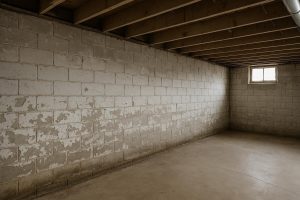
Ignoring a wet basement in this region rarely leads to a stable situation. Efflorescence on the wall, white chalky mineral deposits left behind as water evaporates, is an early warning sign. Left unaddressed, chronic moisture leads to mould growth, deteriorating parging, and eventually structural compromise of the footing itself. Acting at the first sign of seepage is almost always less expensive than waiting.
For a broader look at waterproofing options across the city, the Mississauga basement waterproofing guide covers the full range of protective systems available to local homeowners.
Diagnosing Your Leak Before Choosing a Method
Accurate diagnosis is the step that separates a lasting basement leak repair Mississauga homeowners can rely on from a patch that fails within two wet seasons. The entry point visible on the interior wall is rarely the whole story. Water travels along the path of least resistance inside the concrete before it appears on the surface, which means the visible wet spot may be several feet from the actual breach. A professional moisture assessment maps all active and latent entry points before any method is recommended.
The three diagnostic questions that drive method selection are: Is water entering through a discrete crack or through a broad area of the wall? Is the floor-wall joint wet or dry? And is the sump basin, if present, running continuously or cycling normally? The answers to these three questions narrow the field from five possible methods to one or two that genuinely fit the situation.
Your Options for Basement Leak Repair in Mississauga
Polyurethane Crack Injection
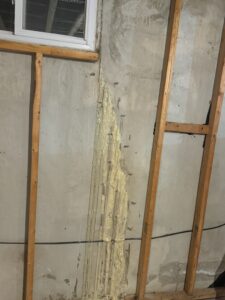
Low-pressure polyurethane injection is the standard repair for an isolated vertical or diagonal crack in a poured concrete foundation wall. A technician drills injection ports along the crack at regular intervals, pastes surface sealer between them, then injects expanding polyurethane foam under low pressure from the lowest port upward. The foam travels through the full depth of the crack and cures flexible, so it can tolerate the minor seasonal movement that Mississauga’s freeze-thaw cycles produce without re-cracking.
This method is best for: single cracks in poured concrete walls where the surrounding wall is otherwise sound. It is not appropriate for block foundations, for cracks that are actively moving structurally, or for widespread seepage through multiple points. Epoxy injection is reserved for structural cracks where the wall must be re-bonded and rigidity is required.
Interior Weeping Tile System
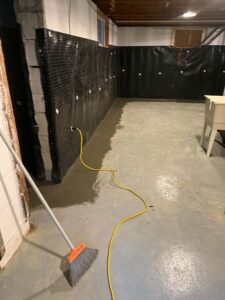
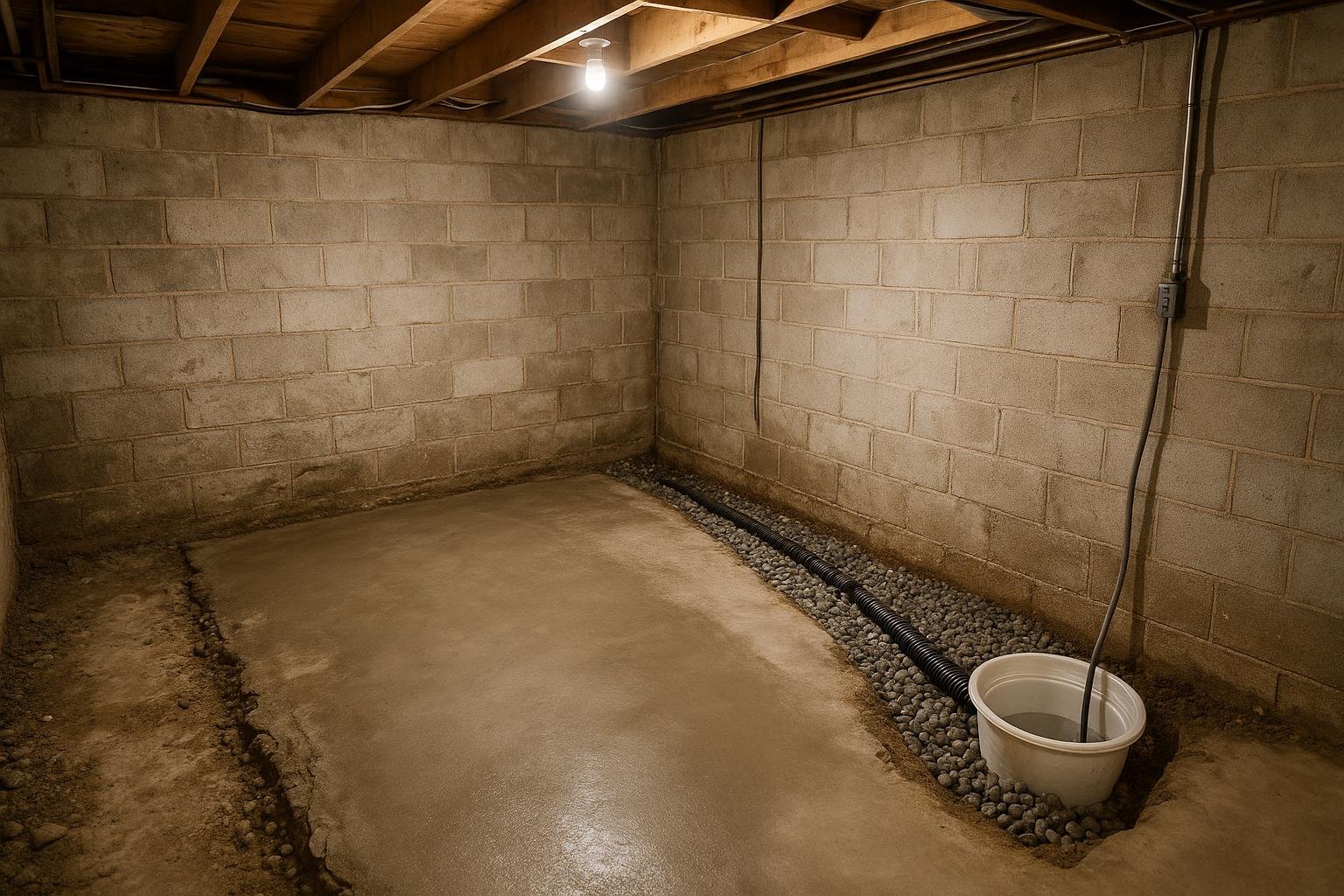
Where water is entering along the floor-wall joint or through multiple low points in the wall, an interior weeping tile system intercepts the water before it spreads across the floor. The process involves jackhammering a channel around the perimeter of the basement slab, installing perforated weeping tile in a bed of clear stone, routing it to a sump basin, and re-pouring the concrete. A vapour barrier is applied up the wall to direct any wall seepage down into the channel rather than onto the floor.
This method is best for: homes where exterior excavation is impractical due to decks, driveways, or finished landscaping, and for situations where water is entering from multiple sources. It manages water rather than stopping it at the source, so it works alongside, not instead of, crack injection where individual cracks are present.
Exterior Waterproofing
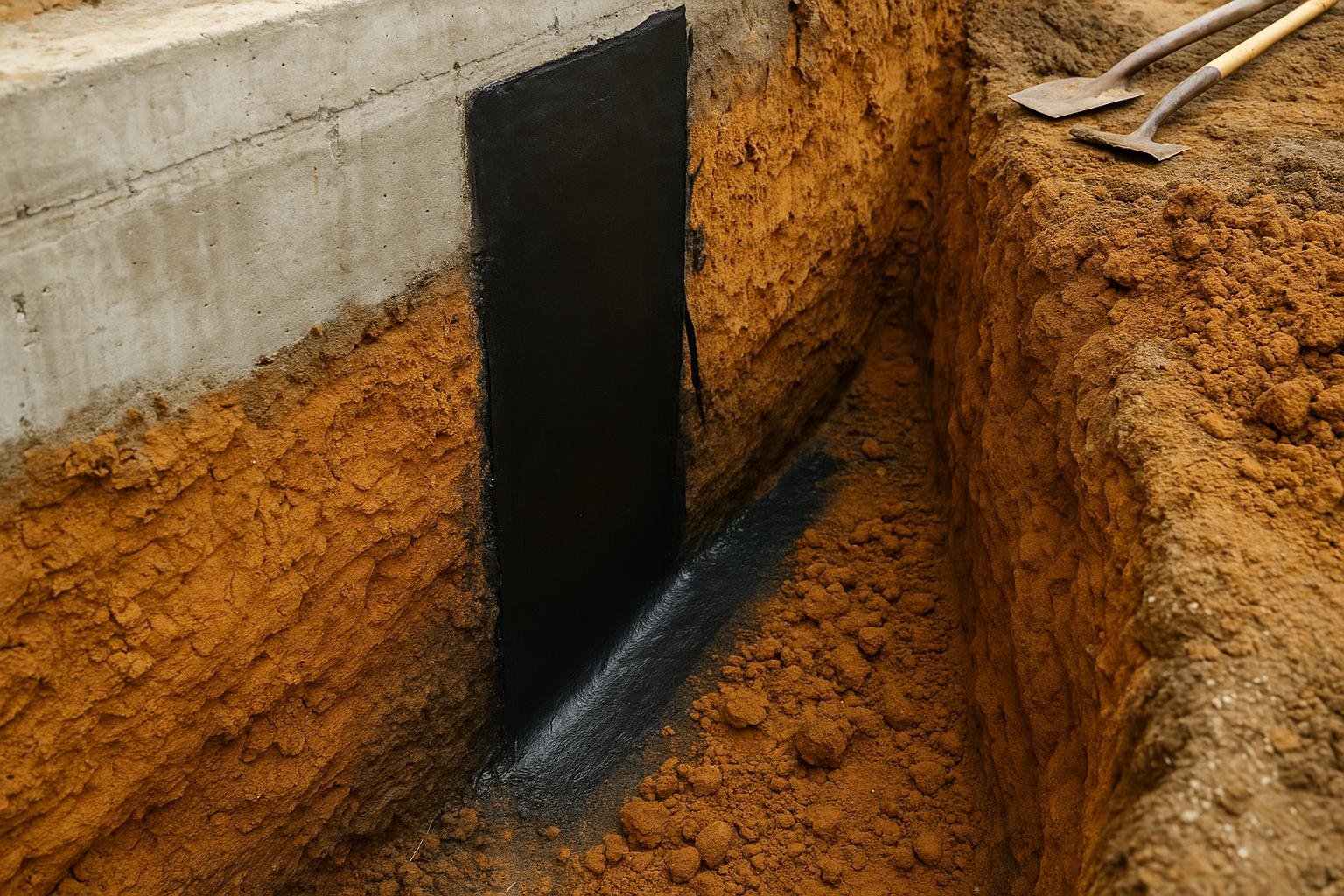
Full exterior waterproofing is the most comprehensive repair available for basement leak repair Mississauga properties with chronic seepage. Excavation proceeds to the footing, exposing the full height of the foundation wall. Any voids or honeycombing in the concrete are filled with hydraulic cement parging. A rubberised waterproofing membrane is applied to the wall, followed by a dimpled drainage board that protects the membrane and channels water downward. New weeping tile is bedded in clear stone at the footing and connected to a sump or daylight outlet, then the trench is backfilled and the grade is corrected to slope away from the house.
This method is best for: homes with chronic seepage through the wall face, deteriorated original weeping tile, or where a long-term solution with a transferable warranty is the priority. It is the most disruptive and typically the highest-investment option, but it addresses the problem at its source.
Sump Pump Installation or Replacement
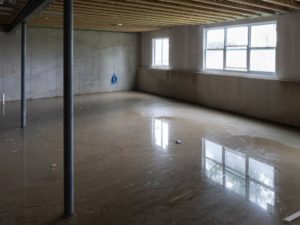
A sump pump is the active component of any interior drainage system. It collects water that enters the sump basin and ejects it away from the foundation. In Mississauga, where spring thaw can deliver large volumes of water quickly, a battery backup sump pump is strongly recommended. A failed or undersized pump during a heavy spring event is one of the most common causes of basement flooding in the city.
Sump pump installation is rarely a standalone fix for a leaking foundation, but it is an essential part of any interior weeping tile system and a critical upgrade for homes that already have drainage tile but lack a reliable pump.
Parging and Surface Sealing
Parging, the application of a mortar coat to the exterior face of the foundation wall above grade, can deteriorate over time and allow surface water to penetrate. Repairing or replacing failed parging is a lower-cost intervention that makes sense when the parging itself is the primary entry point and the underlying wall and drainage system are otherwise sound. Surface sealers applied to interior walls can slow vapour transmission but will not stop active water under hydrostatic pressure. They are a finishing step, not a primary repair.
Options Compared
| Method | Best For | Typical Lifespan | Relative Investment | Disruption Level |
|---|---|---|---|---|
| Polyurethane crack injection | Single vertical crack, poured concrete | Long-term if crack is stable | Lowest ($600-$900 per crack) | Minimal, interior access only |
| Interior weeping tile system | Multiple entry points, floor-wall joint seepage | 25+ years with pump maintenance | Moderate | Moderate, jackhammer work inside |
| Exterior waterproofing | Chronic wall seepage, failed original weeping tile | Lifetime with proper membrane | Highest ($6,000-$9,000 typical range) | High, full excavation required |
| Sump pump installation | Active drainage system, spring flood risk | 7-12 years per pump unit | Low to moderate | Low, basin work only |
| Parging repair | Deteriorated above-grade mortar coat | 10-20 years depending on exposure | Low | Minimal |
The table above shows that no single method fits every Mississauga home. Crack injection is the most targeted and least expensive repair when the problem is genuinely limited to one crack. Exterior waterproofing costs more and disrupts more, but it is the only method that stops water at the wall face before it contacts the foundation at all. Interior systems sit in the middle: they are practical where excavation is not feasible and effective when properly installed with a reliable sump pump. Parging repair and surface sealing are supplementary, not primary, fixes.
How to Choose
Choose polyurethane crack injection if you have one or two visible vertical cracks in a poured concrete wall, the rest of the wall is dry, and there is no evidence of seepage along the floor-wall joint. This is the fastest and most cost-effective path when the crack is the sole entry point.
Choose an interior weeping tile system if water is entering from multiple locations, if the floor-wall joint is wet, or if exterior excavation is blocked by a deck, finished driveway, or close neighbouring structure. Interior drainage is also the right choice when the budget does not support full excavation but a managed solution is needed now.
Choose exterior waterproofing if the original weeping tile is known to have failed or is more than 40 years old, if the wall face shows active seepage across a broad area, or if you want the most permanent solution available with a transferable warranty. Homes in older Mississauga neighbourhoods like Cooksville, Lakeview, or Port Credit, where original construction dates to the 1950s through 1970s, are strong candidates for this approach. When evaluating basement leak repair Mississauga options for pre-1980 homes, exterior waterproofing is almost always the most durable long-term answer.
Choose sump pump replacement or upgrade if you already have an interior drainage system but the pump is more than seven years old, has no battery backup, or has failed during a previous storm event. A drainage system without a reliable pump is incomplete.
A free on-site inspection is the only reliable way to confirm which method your Mississauga home needs. Water entry points are not always visible to the eye, and moisture mapping during the inspection often reveals sources that a homeowner would not find on their own.
Costs and Timelines
| Cost Driver | Why It Affects Price | Approximate Impact |
|---|---|---|
| Number of cracks to inject | Each crack requires its own ports, material and labour | $600-$900 per crack (approximate) |
| Linear footage of weeping tile | More perimeter means more jackhammering, pipe and stone | Primary driver of interior system cost |
| Excavation depth and access | Deeper footings and tight lot lines increase machine time | Significant for exterior work |
| Foundation wall condition | Extensive parging, honeycombing or block repair adds labour | Moderate to significant |
| Sump basin and pump spec | Battery backup and higher-capacity pumps cost more | Low to moderate add-on |
| Grade correction and backfill | Importing clean fill and re-grading after exterior work | Moderate, included in exterior scope |
As a general reference, a single foundation crack injected from the interior typically falls in the $600 to $900 range. A full exterior waterproofing job on an average Mississauga semi-detached or detached home, including excavation to the footing, membrane, drainage board, new weeping tile and backfill, typically runs in the $6,000 to $9,000 range depending on linear footage, footing depth and site access. Interior weeping tile systems generally fall below the exterior figure. These are approximate ranges drawn from completed jobs in the GTA; the final number for any specific home depends on a site inspection. For a detailed breakdown of what drives waterproofing costs across Ontario, the foundation waterproofing cost guide covers the full picture.
Crack injection is the most targeted repair available. At $600 to $900 per crack, it is also the most affordable entry point for Mississauga homeowners dealing with an isolated wall crack.
Risks and Common Mistakes
The most common mistake Mississauga homeowners make is applying hydraulic cement or a surface sealer to a leaking crack and assuming the problem is solved. These products can slow seepage temporarily, but they cannot withstand sustained hydrostatic pressure from clay-saturated soil. When the pressure builds again, the patch fails, often at a different point in the same wall.
A second frequent error is choosing interior drainage when the real problem is a single injectable crack. Interior weeping tile manages water after it enters the wall; it does not stop the crack from admitting water. If the crack is the only entry point, injection is faster, less invasive and less expensive. Matching the method to the actual problem is the core discipline of effective basement leak repair Mississauga contractors apply on every job.
Skipping the sump pump battery backup is a risk that shows up every spring in Mississauga. Power outages during heavy storms are common, and a primary pump without backup will fail exactly when it is needed most. Any interior drainage system installed without a battery backup unit is incomplete for this climate.
Incorrect grading is another overlooked factor. If the soil around the foundation slopes toward the house rather than away from it, even a well-installed waterproofing system will be fighting a constant inflow. Grade correction, directing surface water away from the foundation at a slope of at least 6 inches over the first 10 feet, is a low-cost step that meaningfully reduces the load on any drainage system.
| Symptom | Likely Cause | Correct Fix |
|---|---|---|
| Single damp vertical crack in poured wall | Shrinkage or settlement crack admitting groundwater | Low-pressure polyurethane injection |
| Water along floor-wall joint after rain | Failed or silted weeping tile, hydrostatic pressure | Interior weeping tile system with sump pump |
| Broad wall seepage, white efflorescence | Saturated clay, no functioning exterior drainage | Exterior waterproofing with new weeping tile |
| Water rising through floor slab | High water table, inadequate sub-slab drainage | Interior drainage system, sump pump upgrade |
| Damp patches above grade on exterior wall | Failed parging or deteriorated mortar | Parging repair and grade correction |
The symptom-to-cause table above is a starting framework, not a substitute for a professional inspection. Multiple symptoms can appear together, and the correct repair sequence matters. Fixing a crack before addressing a failed weeping tile system, for example, may simply redirect water to the next weakest point.
Mississauga’s clay soil means water pressure against the foundation persists for days after rain stops. A surface patch that holds during dry weather will often fail within one or two wet seasons.
How the Process Works
- Free on-site inspection and moisture assessment. A technician visits the home, maps all visible entry points, checks the sump basin condition, and assesses the exterior grade and drainage. This step determines which method is appropriate before any work is quoted.
- Written scope with linear-foot pricing. You receive a written proposal detailing the method, the materials, the linear footage or number of cracks covered, and the total investment. No work begins without your written approval.
- Preparation and protection. Interior contents near the work area are protected. For exterior work, any landscaping, decking or paving that must be removed is documented so it can be restored.
- Core repair work. For crack injection: ports are drilled, paste is applied, and polyurethane is injected from the bottom port upward until the material appears at the next port. For interior weeping tile: the perimeter slab is jackhammered, tile is laid in clear stone to the sump basin, vapour barrier is applied to the wall, and concrete is re-poured. For exterior work: excavation proceeds to the footing, parging voids are filled, membrane and drainage board are applied, new weeping tile is bedded in clear stone, and the trench is backfilled with grade correction.
- Sump pump installation or inspection. Where a sump basin is part of the scope, the pump, float switch and battery backup unit are installed and tested before the crew leaves.
- Final inspection and documentation. The completed work is reviewed with the homeowner. Warranty documentation is provided. For exterior work, photos of the membrane and drainage board before backfill are standard practice.
- Post-repair monitoring guidance. The homeowner is advised on what to watch for in the first one to two wet seasons and how to maintain the sump pump and drainage system going forward.
Frequently Asked Questions
How do I know if my Mississauga basement leak needs injection or full waterproofing?
If water is entering through one or two visible cracks in a poured concrete wall and the rest of the wall and floor-wall joint are dry, crack injection is usually the right starting point. If seepage is occurring at multiple locations, along the floor-wall joint, or through the slab itself, a drainage system is likely needed. An on-site inspection will confirm which applies to your home.
How long does basement leak repair take in Mississauga?
Crack injection on a single crack is typically completed in a few hours. An interior weeping tile system for an average Mississauga home takes one to three days depending on the perimeter length. Full exterior waterproofing, including excavation and backfill, generally takes two to four days for a standard semi-detached or detached home, longer if access is restricted or the footing is unusually deep.
Will the repair come with a warranty?
Reputable waterproofing contractors offer written warranties on their work. Exterior waterproofing systems installed to a full membrane and drainage board specification can carry a lifetime transferable warranty, which transfers to a new owner if the home is sold. Crack injection warranties vary by contractor and crack type. Always ask for the warranty terms in writing before work begins.
Does Mississauga’s clay soil make basement leaks worse than in other cities?
Yes, in practical terms. Clay holds water against the foundation long after rain stops, sustaining hydrostatic pressure that sandy or loam soils would relieve within hours. This is why Mississauga homes, particularly those built before 1985 with original clay weeping tile, are more prone to chronic seepage than homes on well-drained soils. Grade correction and functional weeping tile are especially important in this city.
Can I repair a basement crack myself?
DIY hydraulic cement plugs and surface sealers are widely available, but they cannot withstand sustained hydrostatic pressure from clay-saturated soil. They may slow seepage temporarily. Low-pressure polyurethane injection requires specialised equipment and technique to ensure the foam travels through the full depth of the crack. A failed DIY repair can also make professional injection more difficult by obscuring the crack path. For any crack that is actively leaking, professional assessment is the more reliable path.
What is the difference between epoxy and polyurethane crack injection?
Polyurethane injection cures flexible, making it suitable for cracks in walls that experience minor seasonal movement from freeze-thaw cycles. Epoxy injection cures rigid and is used specifically for structural cracks where the two sides of the crack must be re-bonded to restore wall strength. Using epoxy in a non-structural crack that continues to move will cause the repair to fail. A professional inspection determines which material is appropriate for each crack.
How much does basement leak repair cost in Mississauga?
A single foundation crack injected with polyurethane typically falls in the $600 to $900 range. A full exterior waterproofing job on an average Mississauga home generally runs $6,000 to $9,000 depending on linear footage, footing depth and site access. Interior weeping tile systems typically fall between those two figures. Every home is different, and the final cost depends on a site inspection. For a broader cost comparison, the leaky basement Mississauga cost guide breaks down what homeowners in this city typically pay.
Does home insurance cover basement leak repair in Ontario?
Standard Ontario home insurance policies generally do not cover gradual water infiltration or foundation waterproofing. Sudden and accidental water damage from a specific event may be covered under certain policies, but chronic seepage from hydrostatic pressure is almost always excluded. Some policies include overland water or sewer backup endorsements that may apply in specific flooding scenarios. Review your policy with your broker before assuming coverage applies.
What happens if I ignore a small basement leak?
A small crack or seep point rarely stays small in Mississauga’s clay environment. Repeated wet-dry cycles cause the crack to widen slightly each season. Moisture behind the wall promotes mould growth, deteriorates parging, and over years can compromise the footing itself. The cost of repair increases significantly once structural damage is involved. Addressing a small leak early is almost always less expensive than waiting. Prompt basement leak repair Mississauga professionals recommend at the first sign of seepage consistently costs less than remediation after structural damage sets in.
Do I need a permit for basement waterproofing in Mississauga?
Interior crack injection and interior weeping tile installation generally do not require a building permit in Mississauga. Exterior excavation work may require a permit depending on the scope and proximity to property lines. The City of Mississauga’s building department can confirm permit requirements for your specific project. A reputable contractor will advise you on permit obligations before work begins and pull any required permits on your behalf.
If your Mississauga home is showing signs of water entry, the right next step is a free on-site inspection to identify the exact source and recommend the most appropriate repair. Choosing the correct basement leak repair Mississauga method from the outset saves time, money and disruption. DryShield has served Mississauga and the broader GTA for over 25 years. Visit the Mississauga foundation crack repair and waterproofing page to request your inspection, or contact the team directly to discuss what you are seeing in your basement.