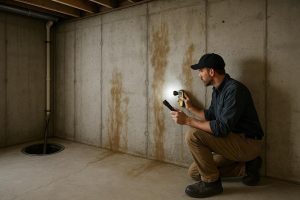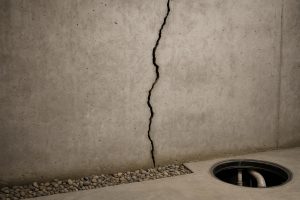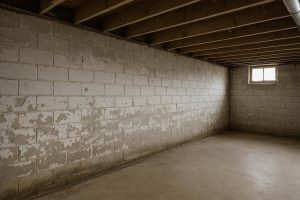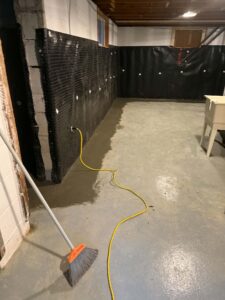
When comparing dimple membrane vs liquid membrane for exterior foundation waterproofing, the short verdict is: liquid-applied membrane is the primary waterproof barrier that seals the concrete surface, while dimple membrane is a drainage and protection layer installed over it. For most Ontario homes facing hydrostatic pressure from clay soils, both layers work together rather than as alternatives. If budget forces a single choice, liquid membrane addresses the root water-entry problem; dimple membrane alone does not seal cracks or pores.
- Liquid membrane bonds directly to the foundation wall and blocks water at the concrete surface.
- Dimple membrane creates an air gap that channels water downward to the weeping tile instead of letting it press against the wall.
- The two products serve different functions and are frequently used together in a full exterior system.
- Soil type, hydrostatic pressure, and budget all influence which combination makes sense for a given home.
- Neither product is a substitute for a functioning drainage system at the footing.
How we compared
This comparison draws on published product specifications from manufacturers, the waterproofing principles described in the Ontario Building Code (Division B, Section 9.13), and DryShield’s 25-plus years of field experience installing exterior waterproofing systems across Toronto, the GTA, and Ontario cottage country. We evaluated each product against five dimensions: primary function, installation requirements, performance under hydrostatic pressure, longevity, and cost drivers. Because no controlled side-by-side field trial data was supplied for this page, performance claims are qualified accordingly. Prices are described as cost drivers only; no specific dollar figures are stated without a verified current source.
Dimple membrane explained
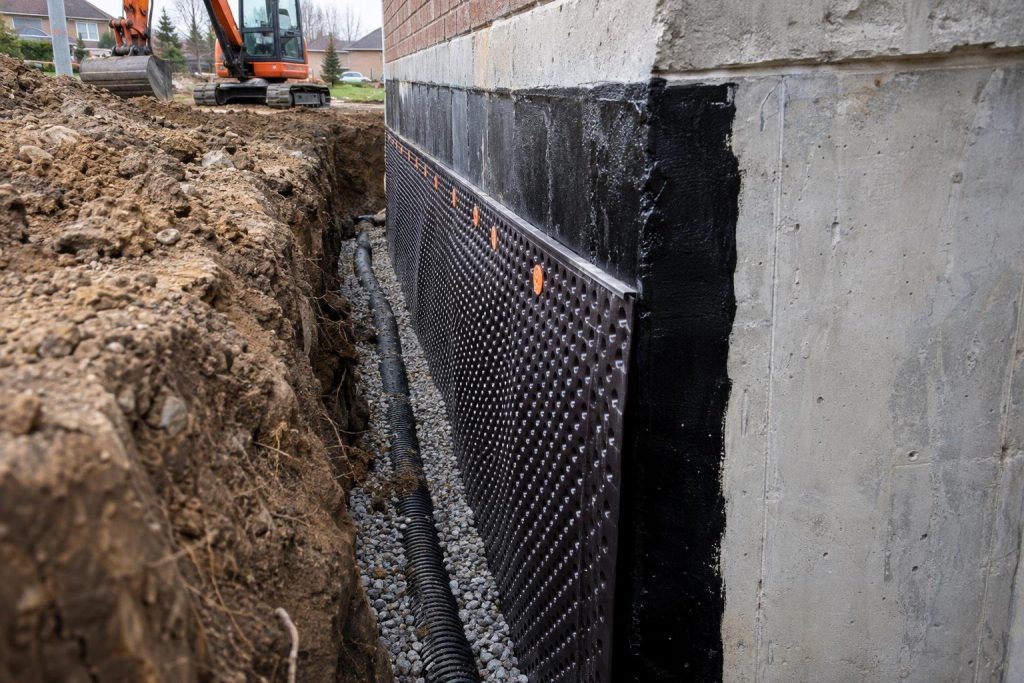
A dimple membrane, sometimes called a drainage mat or delta membrane, is a high-density polyethylene (HDPE) sheet moulded with a regular pattern of raised studs or “dimples” on one face. When pressed against a foundation wall, those studs hold the sheet away from the concrete, creating a continuous air and drainage gap typically 5 mm to 20 mm deep depending on the product specification.
Water that migrates through the soil and reaches the wall face enters the gap at the top of the dimple field, runs down the channels formed between studs, and exits at the footing into the weeping tile or drainage aggregate below. Because the water is moving rather than pooling against the wall, the hydrostatic pressure on the concrete is significantly reduced.
Dimple membrane does not seal the concrete. If the foundation wall has open cracks, snap-tie holes, or porous sections, water can still pass through the wall behind the membrane and enter the basement. For this reason, dimple membrane is almost always installed over a primary waterproof coating rather than directly on bare concrete.
The membrane also serves a mechanical protection role: it shields the primary waterproof coating from backfill damage during compaction. Sharp stones, roots, and settlement movement that would puncture or abrade a liquid coating are deflected by the rigid HDPE sheet. This protection function is one of the strongest genuine arguments for including dimple membrane even when a high-quality liquid membrane is already present.
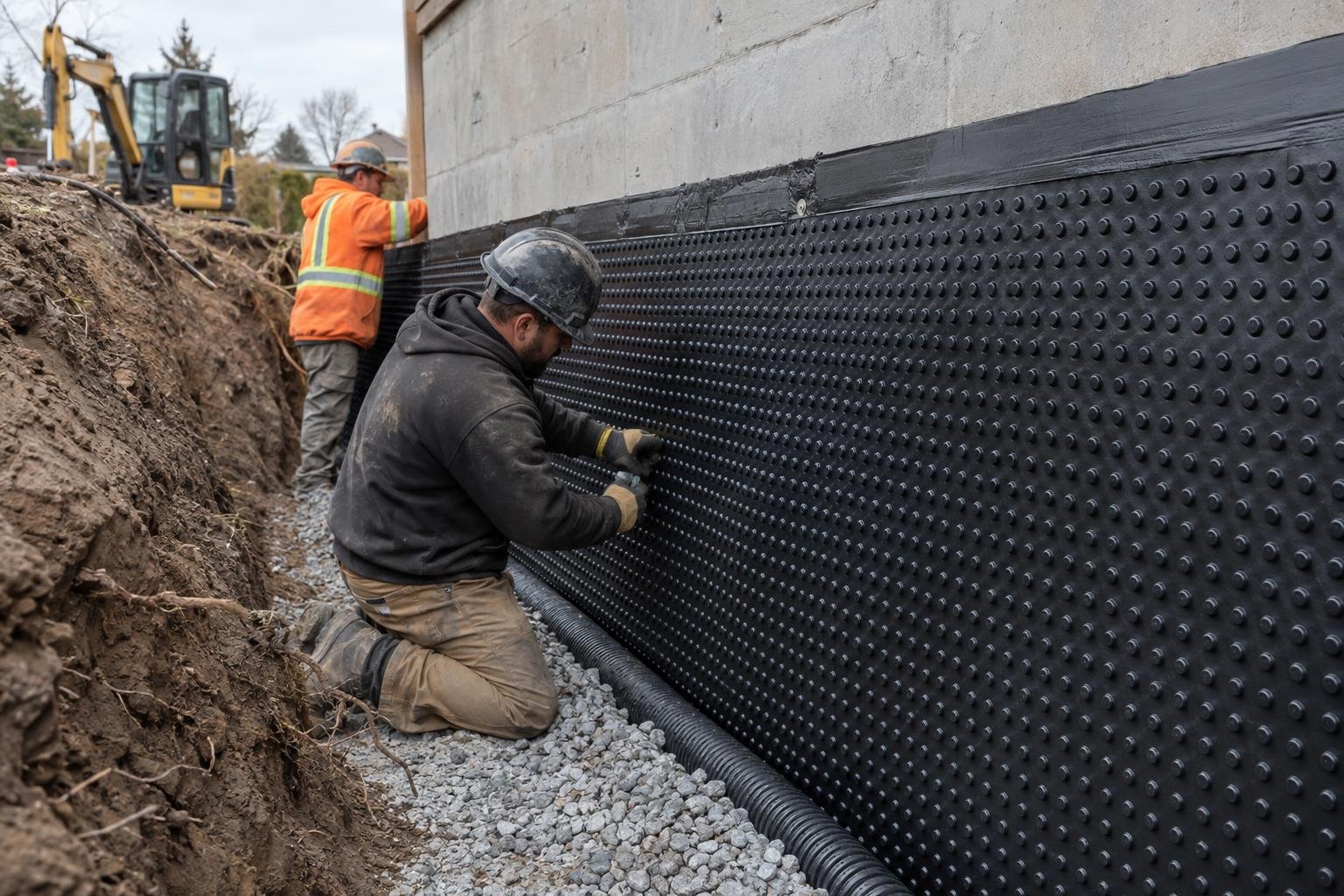
Installation involves unrolling the sheet against the coated wall, fastening it at the top with a termination strip or adhesive, and lapping seams by at least one row of dimples. The bottom edge is left open or directed into a drainage channel. The process is relatively fast compared to liquid application, and it is not weather-sensitive in the same way that wet-applied coatings are.
Liquid membrane explained
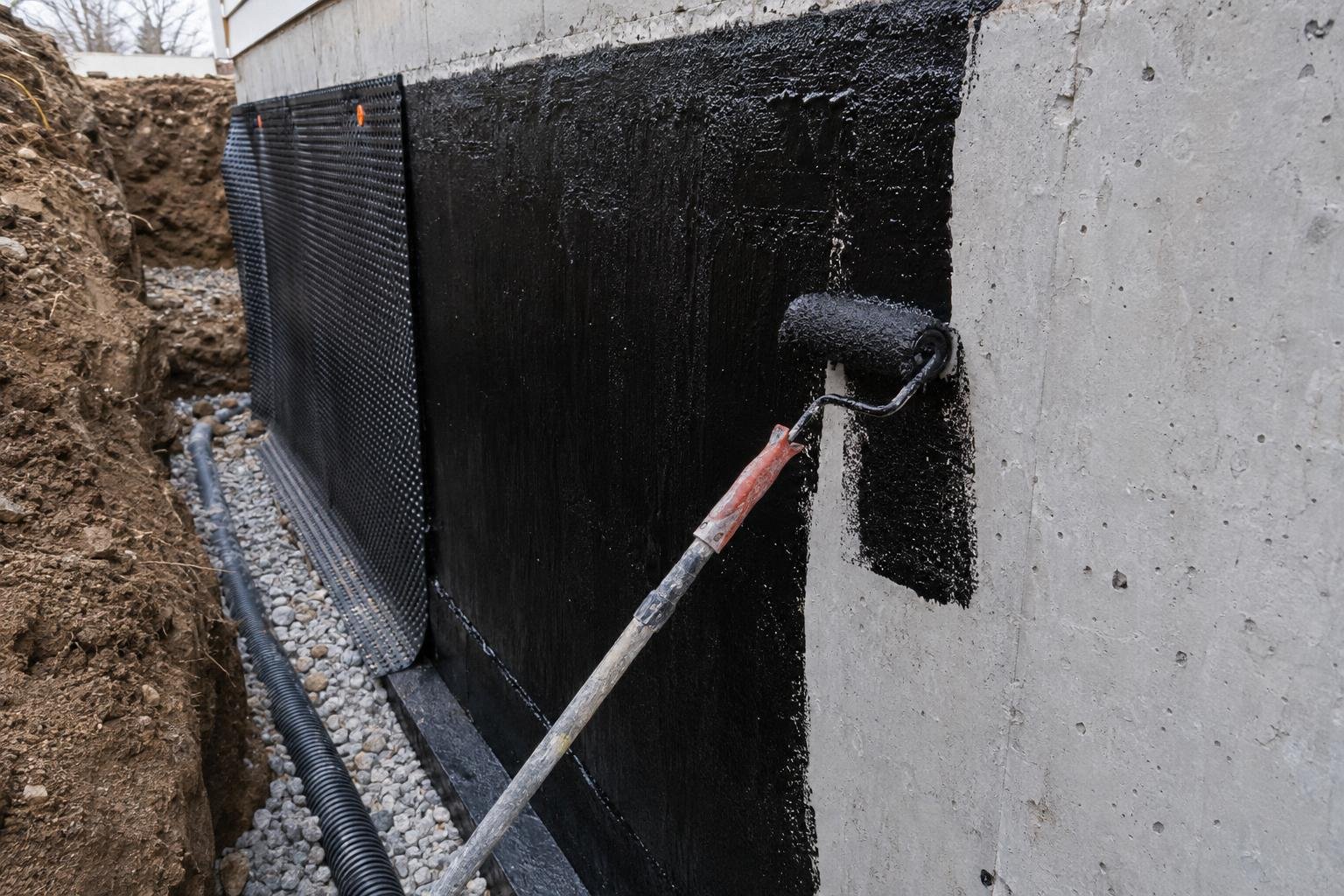
A liquid-applied waterproofing membrane is a coating brushed, rolled, or spray-applied directly onto the prepared concrete or masonry surface of a foundation wall. Once cured, it forms a continuous, seamless, flexible film that bridges hairline cracks and seals the pores inherent in poured concrete and concrete block.
The two most common chemistries used in residential exterior foundation waterproofing are rubberized asphalt (also called modified bitumen or tar-based elastomeric) and polyurethane or polymer-modified coatings. Rubberized asphalt products have a long track record and remain widely used. Polyurethane-based liquid membranes offer higher elongation at break, meaning they can accommodate more foundation movement before cracking, and they are generally more resistant to root intrusion.
Application requires a clean, dry, structurally sound surface. Any active cracks should be repaired before coating; a liquid membrane applied over an open structural crack will eventually re-open at that point. Surface preparation typically includes wire brushing, filling honeycombs or voids, and allowing the concrete to reach the moisture content specified by the product manufacturer.
Thickness matters. Most manufacturers specify a minimum dry film thickness, often in the range of 1 mm to 3 mm for residential applications, and professional installers use wet-film gauges or multiple coats to verify coverage. Thin spots are the most common cause of premature failure.
Liquid membrane is the layer that actually stops water from entering the structure. It is the primary waterproofing element in an exterior system. Without it, or with a compromised version of it, no amount of drainage matting will keep a basement dry if the wall itself is permeable or cracked. This is the dimension where liquid membrane genuinely outperforms dimple membrane: it addresses the source of ingress rather than managing water after it has already reached the wall.
Side by side
| Feature | Dimple Membrane | Liquid Membrane |
|---|---|---|
| Primary function | Drainage and pressure relief | Waterproof seal at the concrete surface |
| Seals cracks and pores | No | Yes (hairline and shrinkage cracks) |
| Protects primary coating from backfill | Yes, strong mechanical protection | No (is the coating being protected) |
| Reduces hydrostatic pressure | Yes, by draining water away from wall | Indirectly, by blocking ingress |
| Requires surface preparation | Minimal (wall must be coated first) | Significant (clean, dry, sound surface) |
| Weather sensitivity during install | Low | Moderate to high (temperature and moisture) |
| Bridges active structural cracks | No | No (cracks must be repaired first) |
| Longevity (general expectation) | HDPE rated for decades; seam integrity is the weak point | Depends on thickness, chemistry, and soil contact |
| Typical position in system | Outer layer, over liquid membrane | Inner layer, directly on concrete |
| Can be used alone | Not recommended as sole waterproofing | Yes, but mechanical protection is then absent |
The table makes clear that these two products occupy different positions in the same system rather than competing head-to-head for the same job. Dimple membrane wins on mechanical protection and ease of installation in variable weather. Liquid membrane wins on every measure related to actually stopping water from entering the structure. A contractor proposing one without the other should explain the reasoning specific to your wall condition, soil type, and drainage setup. On a wall with no active cracks and excellent drainage, dimple membrane alone may manage water adequately; on a wall with porous concrete or a history of seepage, liquid membrane is non-negotiable.
Cost comparison
| Cost Driver | Dimple Membrane | Liquid Membrane |
|---|---|---|
| Material cost per square metre | Moderate; HDPE sheet pricing varies by stud height and brand | Moderate to high; polyurethane chemistry costs more than rubberized asphalt |
| Labour intensity | Lower; roll-and-fasten installation is faster | Higher; surface prep, multiple coats, and cure time add hours |
| Excavation required | Yes, full exterior excavation to footing | Yes, full exterior excavation to footing |
| Excavation cost driver | Dominates total project cost for both; depth, access, and soil type are the main variables | |
| Failure repair cost | Seam or termination failure may require partial re-excavation | Pinhole or thin-spot failure requires re-excavation and recoating |
| Combined system premium | Adding both layers increases material cost modestly relative to total excavation cost | |
No verified current price quotes were supplied for this page, and waterproofing costs vary significantly by wall length, depth to footing, soil conditions, and site access. The excavation itself is the largest single cost component for any exterior system, making the incremental cost of adding a dimple membrane over a liquid membrane relatively small in the context of the total project. For verified cost ranges, see our Foundation Waterproofing Cost guide and the Basement Waterproofing Cost calculator.
Which is better for your situation
Choose liquid membrane if…
- Your foundation wall has visible seepage, staining, or a history of water entry through the concrete itself.
- You have poured concrete with shrinkage cracks or snap-tie holes that need to be sealed.
- Budget is constrained and you must prioritize: the sealing layer addresses the root cause of ingress.
- You are combining exterior waterproofing with polyurethane crack injection on specific cracks before the full excavation coat is applied.
Choose dimple membrane if…
- Your wall already has a sound liquid membrane but the backfill contains sharp aggregate or tree roots that could damage it over time.
- Your site has high groundwater or clay soil that holds water against the wall for extended periods after rain; the drainage gap actively reduces sustained hydrostatic pressure.
- You are in a high-water-table area such as the clay-rich soils common around the GTA, where managing water movement is as important as sealing the wall surface.
Choose both if…
- You are doing a full exterior excavation and want a system designed to last decades without re-excavation.
- Your soil is heavy clay, your weeping tile is being replaced at the same time, and you want every layer of the system working together.
- You are investing in a property where re-excavation in the future would be disruptive or expensive.
For most Ontario homeowners undertaking exterior waterproofing, the combination of a properly applied liquid membrane with a dimple drainage mat installed over it represents the most complete protection available from the outside. The exterior waterproofing service page describes how DryShield approaches this system. If exterior excavation is not feasible, interior vs exterior waterproofing explains the trade-offs of working from inside instead.
The trade-offs nobody mentions
Dimple membrane downsides: The drainage gap that makes dimple membrane effective also means that if the weeping tile at the bottom of the wall becomes blocked or collapses, water that has been channelled into the gap has nowhere to go and can pool at the footing. The membrane itself does not fail, but the system it depends on does. Seams and the top termination strip are the most vulnerable points; an improperly lapped seam allows soil fines to migrate into the drainage gap over time, eventually reducing flow capacity. HDPE is durable, but UV exposure before backfilling can degrade some products, so the membrane should be covered promptly after installation.
Liquid membrane downsides: Application quality is highly dependent on surface preparation and installer skill. A coat applied too thin, over damp concrete, or in temperatures outside the product’s specified range can fail within a few years without any visible sign until water re-enters. Once backfilled, the membrane cannot be inspected. Rubberized asphalt coatings can soften in sustained heat and may be more susceptible to root penetration than polyurethane alternatives. Neither chemistry bridges a structural crack that continues to move; a wall with ongoing lateral pressure or settlement requires structural intervention before waterproofing. See our guide on waterproofing vs foundation repair for when structural work must come first.
Shared limitation: Both products require full exterior excavation to the footing to be installed correctly. That excavation is disruptive, weather-dependent, and represents the majority of the project cost regardless of which membrane or combination is chosen. Neither product can be applied from inside the basement.
Frequently asked questions
Can I use dimple membrane without any liquid membrane underneath?
Dimple membrane alone will reduce hydrostatic pressure and channel water to the weeping tile, but it does not seal the concrete surface. If your wall has cracks, snap-tie holes, or porous sections, water can still pass through the wall behind the dimple sheet and enter the basement. Using dimple membrane without a primary waterproof coating is generally not recommended for walls with any history of seepage.
Does liquid membrane alone provide enough protection without a dimple mat?
A properly applied liquid membrane does seal the wall and can perform well on its own. The risk is mechanical damage from backfill: sharp stones, root growth, and soil settlement can abrade or puncture the coating over time. On sites with clean granular backfill and no root pressure, liquid membrane alone may hold up well. On sites with heavy clay, rocky backfill, or mature trees nearby, adding a dimple mat significantly extends the life of the coating beneath it.
How does dimple membrane affect the weeping tile system?
Dimple membrane is designed to work with a functioning weeping tile or drainage aggregate at the footing. Water channelled down the drainage gap must exit somewhere. If the weeping tile is collapsed, crushed, or blocked with silt, the dimple membrane cannot compensate. For this reason, exterior waterproofing projects typically include weeping tile inspection and often replacement. See our weeping tile installation page for more detail.
Which membrane type is better for Ontario clay soils?
Ontario’s clay-rich soils, common across the GTA and areas like Brampton’s Peel Plain and the lakeshore communities, hold water against foundation walls for extended periods after rain and snowmelt. In these conditions, both layers serve distinct purposes: liquid membrane seals the wall against the sustained moisture, and dimple membrane relieves the hydrostatic pressure by giving water a path downward. Neither product alone is as effective as the combination in high-clay environments. The exterior waterproofing guide covers how soil type influences system design.
Is dimple membrane the same as a vapour barrier?
No. A vapour barrier is a thin polyethylene sheet designed to limit moisture vapour diffusion; it has no structural drainage function and would be crushed flat by backfill pressure. Dimple membrane is a rigid HDPE product whose moulded studs maintain the drainage gap under soil load. The two products are not interchangeable in an exterior waterproofing application.
Can these membranes be applied in winter in Ontario?
Dimple membrane installation is not significantly affected by cold temperatures because it is a mechanical fastening process. Liquid membrane application is more sensitive: most rubberized asphalt and polyurethane coatings have minimum application temperature requirements, typically above 5 degrees Celsius, and the concrete surface must be free of frost and ice. Winter exterior waterproofing is possible with proper precautions but requires more planning. Our blog post on waterproofing a basement in winter covers the practical considerations.
Do I need both membranes if I am also installing interior waterproofing?
Interior waterproofing manages water that has already entered the wall cavity or passed through the foundation; it does not stop water at the exterior face. If you are doing exterior excavation at the same time, applying a full exterior system including both membrane layers makes sense because the excavation cost is already committed. If exterior work is not planned and you are relying solely on an interior drainage system, the membrane question is moot for that project. The interior vs exterior weeping tile guide explains when each approach is appropriate.