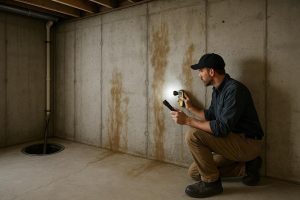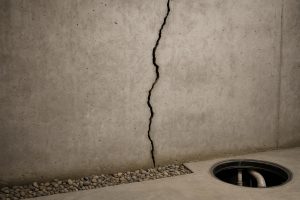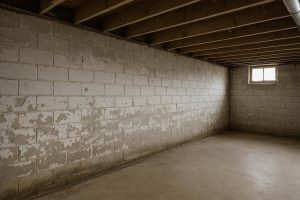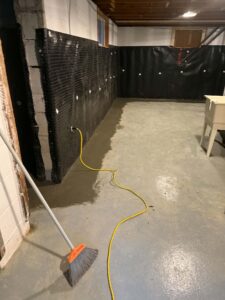
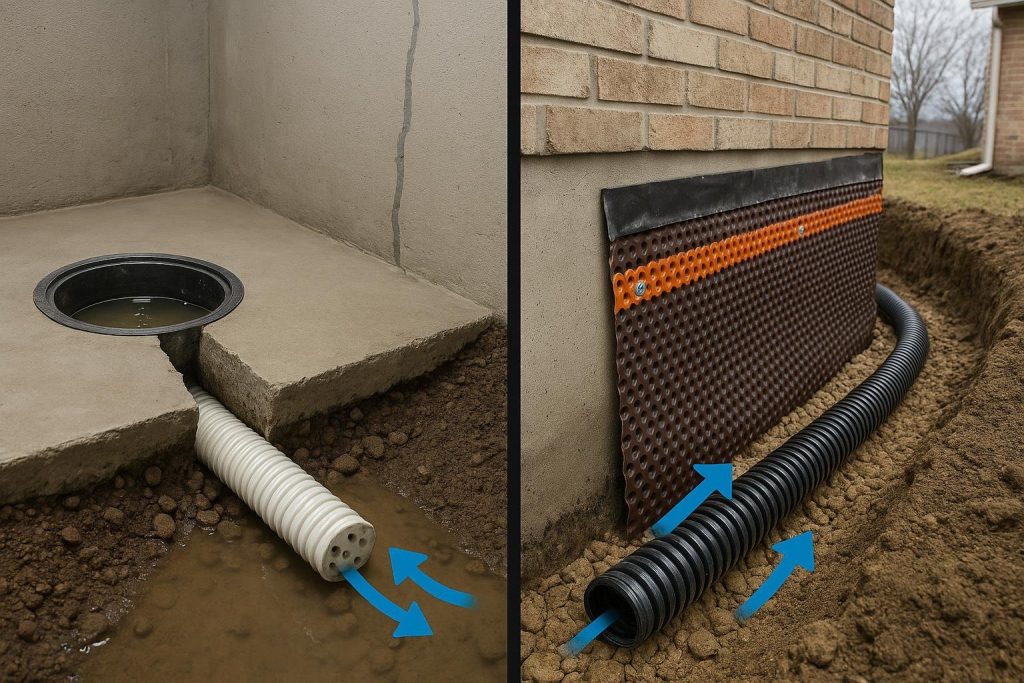
When comparing interior vs exterior weeping tile, the right choice depends on your water source, budget and how much disruption you can tolerate. Exterior weeping tile intercepts groundwater before it contacts the foundation wall and is the more comprehensive long-term solution for homes with active hydrostatic pressure or deteriorating original drain tile. Interior weeping tile is the practical choice when excavation is impossible or cost-prohibitive, offering reliable water management with far less disruption. Neither system is universally superior; the best fit depends on your specific situation.
- Exterior weeping tile addresses the water source directly; interior weeping tile manages water that has already entered the foundation zone.
- Exterior systems require significant excavation and landscaping restoration, making them more expensive and disruptive.
- Interior systems can be installed year-round with minimal outdoor impact and are often the only viable option for attached or semi-detached homes.
- Both systems typically connect to a sump pump for discharge; the pump is a shared dependency and a shared vulnerability.
- Soil type, foundation age, access constraints and the nature of the water intrusion all influence which approach is appropriate.
How we compared
This comparison evaluates interior and exterior weeping tile across seven dimensions: water interception point, installation disruption, access constraints, cost drivers, longevity considerations, maintenance requirements and suitability by situation. The assessment draws on established waterproofing principles, Ontario soil and climate conditions, and the Ontario Building Code framework for foundation drainage. No proprietary job dataset or measured outcome statistics are cited, because no verified completed-job dataset has been supplied for this page. Where cost ranges appear, they describe cost drivers rather than quoted prices; verified current pricing requires an on-site assessment.
Interior weeping tile explained
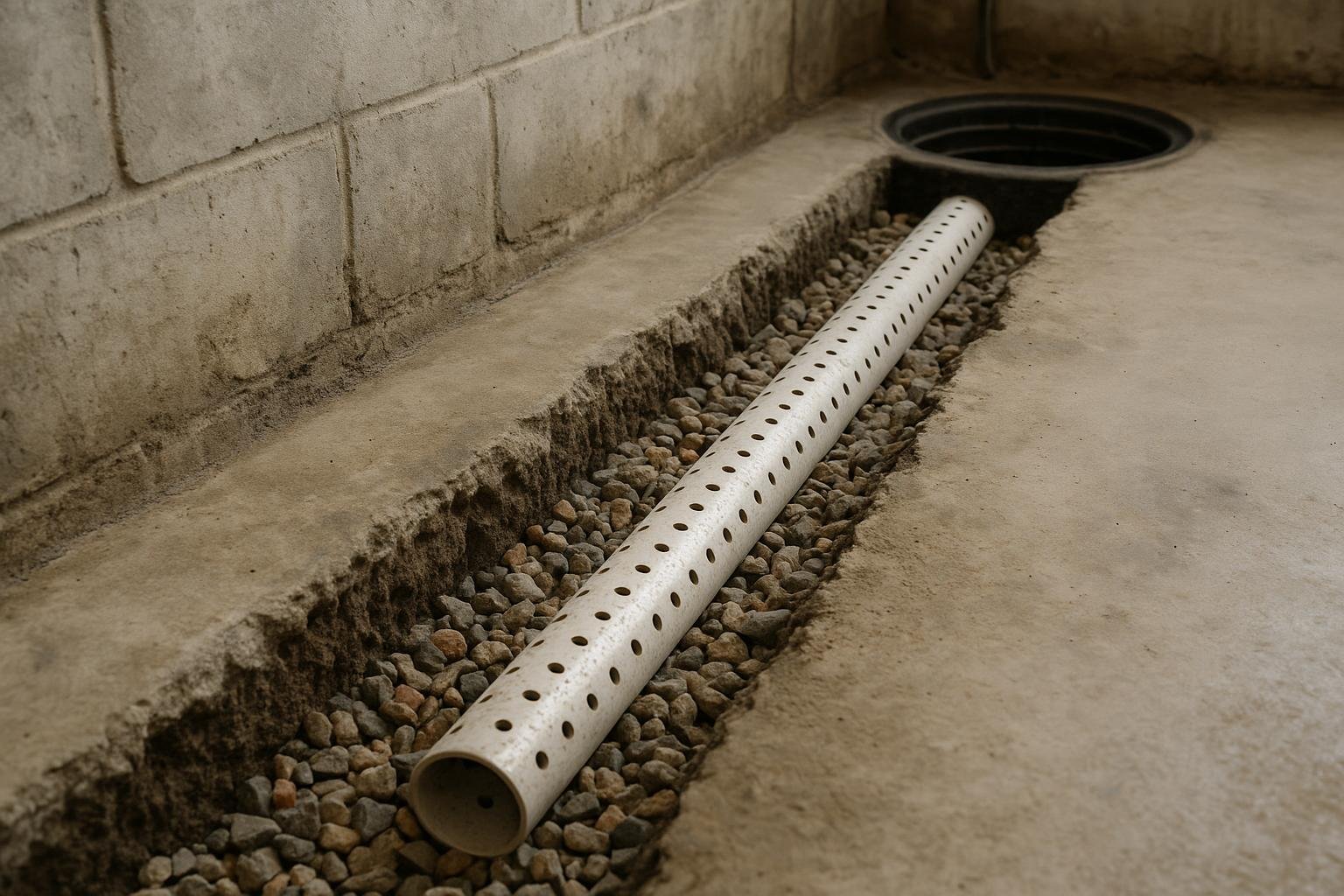
An interior weeping tile system, sometimes called an interior drain tile or interior perimeter drain, is installed inside the basement along the base of the foundation walls. The process involves breaking up a strip of the concrete floor along the perimeter, excavating a channel down to the footing level, laying perforated pipe in a bed of clean gravel, and then covering the assembly with new concrete. Water that seeps through the foundation wall or up through the floor-wall joint is captured by the pipe and directed to a sump pit, where a sump pump discharges it away from the home.
Because the work happens entirely inside the building, interior weeping tile can be installed regardless of what surrounds the exterior of the home. Attached garages, decks, mature landscaping, fences, driveways and neighbouring structures present no obstacle. Installation is also possible in winter when frozen ground would prevent exterior excavation.
The system does not waterproof the wall itself; it intercepts water that has already passed through or around the foundation. For this reason, it is accurately described as a water management system rather than a waterproofing system. Wall coatings or crack repairs are often performed alongside interior weeping tile to slow the rate of ingress and reduce mineral deposits on the wall surface.
Interior weeping tile is well suited to homes where the original exterior drain tile has failed and excavation is impractical, where hydrostatic pressure causes seepage through the floor-wall joint, or where budget constraints make full exterior excavation unrealistic. It is also the standard approach for finished basements being remediated, since the floor disruption is contained and the walls are not exposed.
Maintenance centres on the sump pump: the pump must be tested regularly, and a battery backup is strongly recommended. The gravel bed and pipe can accumulate silt over many years, though modern sock-wrapped pipe reduces this risk. See Sump Pump Not Working in Toronto? Here Is What to Check First for guidance on keeping the discharge system functional.
Exterior weeping tile explained
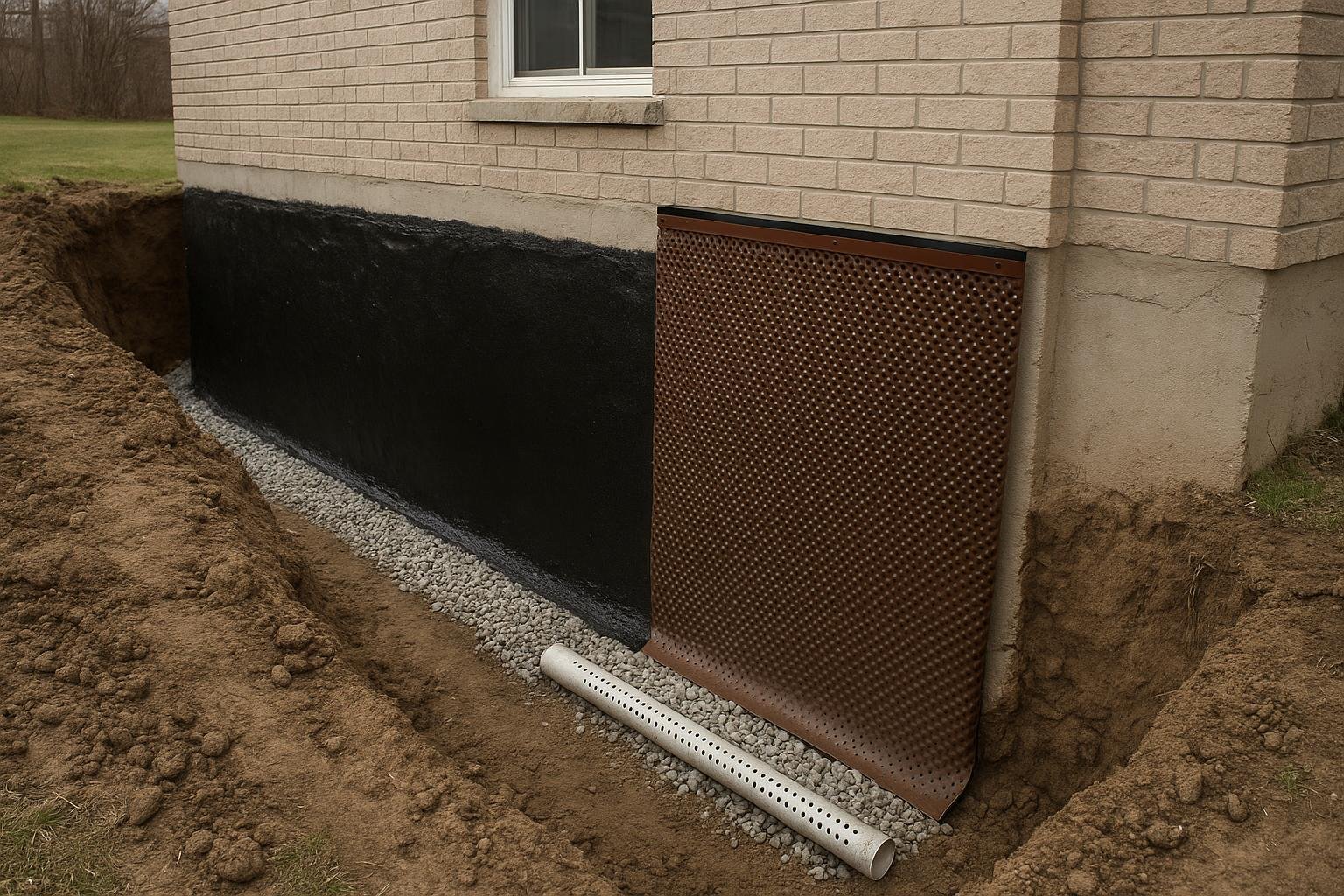
Exterior weeping tile is installed at the base of the foundation on the outside of the wall. Installing or replacing it requires excavating the soil down to the footing around the affected perimeter of the home, which typically means removing landscaping, walkways, decks or driveways that sit above the work zone. Once the foundation wall is exposed, crews clean the wall surface, apply a waterproofing membrane, install a drainage board to protect the membrane and direct water downward, lay new perforated pipe in gravel at the footing, and then backfill with granular material before restoring the surface.
Because the system sits outside the wall, it intercepts groundwater and surface water before either can build hydrostatic pressure against the foundation. This is the fundamental advantage of exterior weeping tile: it addresses the water at its source rather than after it has already reached the wall. A properly installed exterior system with a quality membrane and drainage board provides a layered defence that interior systems cannot replicate.
Exterior weeping tile is the preferred approach when the original drain tile has collapsed or become completely blocked, when the foundation wall shows active deterioration from prolonged water contact, when a full exterior waterproofing membrane is being applied anyway, or when the home has an unfinished basement and excavation access is straightforward. It is also the method of choice for new construction, where the system is installed before backfilling.
The significant trade-off is disruption and cost. Excavation to footing depth around a full perimeter is a major undertaking. Landscaping, concrete flatwork and utility locates all add complexity. In dense urban settings common across the GTA, access constraints frequently make full exterior excavation impractical or impossible without affecting neighbouring properties. Exterior work is also weather-dependent and generally cannot proceed when the ground is frozen.
For a detailed look at the exterior approach and what it involves, see Stop Foundation Leaks Permanently with Exterior Waterproofing and Exterior Basement Waterproofing Services.
Side by side
| Feature | Interior Weeping Tile | Exterior Weeping Tile |
|---|---|---|
| Water interception point | After water enters the foundation zone | Before water contacts the foundation wall |
| Excavation required | Interior floor only (perimeter strip) | Full exterior excavation to footing depth |
| Access constraints | Minimal; works around attached structures | Significant; decks, driveways, neighbours can block access |
| Seasonal availability | Year-round | Weather-dependent; not in frozen ground |
| Wall waterproofing membrane | Not included; wall remains exposed to soil | Applied to exposed wall as part of the system |
| Landscaping disruption | None | Substantial; restoration required after backfill |
| Sump pump required | Yes, in virtually all cases | Yes, unless gravity discharge is possible |
| Suitable for finished basements | Yes, with contained floor disruption | Yes, but exterior work is independent of interior finish |
| Addresses wall deterioration | No; manages water, does not stop wall contact | Yes; membrane protects wall from ongoing water contact |
| Longevity of pipe | Decades with proper installation; silt risk over time | Decades; backfill quality affects long-term performance |
The table highlights the core structural difference between the two systems. Exterior weeping tile wins on water interception, wall protection and the inclusion of a membrane, which is a genuine advantage for homes with deteriorating walls or severe hydrostatic pressure. Interior weeping tile wins clearly on access flexibility, seasonal availability and disruption, which is why it is the more frequently installed system in the dense urban and suburban neighbourhoods of Toronto and the GTA. Neither system eliminates the need for a functioning sump pump, and that shared dependency deserves equal weight in any decision.
Cost comparison
| Cost Driver | Interior Weeping Tile | Exterior Weeping Tile |
|---|---|---|
| Excavation labour | Jackhammering interior floor; lower volume | Full exterior dig to footing; higher volume and equipment cost |
| Concrete restoration | Interior floor strip repoured | Backfill and surface restoration (sod, concrete, interlock) |
| Waterproofing membrane | Not typically included | Included; adds material and labour cost |
| Drainage board | Not applicable | Included; protects membrane and directs water |
| Utility locates and permits | Generally not required for interior work | Required before exterior excavation |
| Sump pump (if not present) | Additional cost; required | Additional cost; required in most cases |
| Access complications | Minimal impact on cost | Decks, driveways, tight lots increase cost significantly |
| Relative overall cost | Lower | Higher; often substantially so |
No verified current price ranges have been supplied for this page, and quoting specific figures without an on-site assessment would be misleading. What the table makes clear is that exterior weeping tile carries more cost drivers at every stage: deeper excavation, surface restoration, membrane materials, drainage board and permit requirements all add to the total. Interior weeping tile is consistently less expensive for equivalent linear footage, which is one reason it is the more common remediation choice for existing homes. For a broader view of what waterproofing projects cost in Ontario, see Basement Waterproofing Cost in Southern Ontario (2026) and Foundation Waterproofing Cost: What Ontario Homeowners Pay in 2026.
Which is better for your situation
Choose interior weeping tile if…
- Your home is attached, semi-detached or has structures, driveways or mature landscaping that block exterior access.
- You need the work done in winter or early spring when frozen ground prevents excavation.
- The primary problem is seepage through the floor-wall joint or through porous block walls, rather than a failed exterior membrane.
- Budget is a significant constraint and the foundation wall itself is structurally sound.
- You are remediating a finished basement and want to contain disruption to the floor perimeter.
- The original exterior drain tile has failed but excavation is impractical given site conditions.
Choose exterior weeping tile if…
- You are already excavating for another reason, such as foundation crack repair, underpinning or exterior waterproofing membrane application.
- The foundation wall shows signs of active deterioration, spalling or ongoing water damage that requires the wall surface to be treated directly.
- The home has clear exterior access and the original drain tile is known to have collapsed or become fully blocked.
- You want the most comprehensive long-term solution and are willing to accept higher cost and disruption to achieve it.
- The property is being significantly landscaped or the driveway is being replaced, making the excavation cost easier to absorb.
Many Ontario homes end up with a combined approach: exterior weeping tile and membrane on the accessible sides of the foundation, and interior weeping tile on sides where excavation is blocked. This is a legitimate and practical solution. The Exterior vs Interior Perimeter Waterproofing: Complete 2026 Comparison guide explores this hybrid approach in more detail. For homes with a failed sump pump as a contributing factor, see Sump Pump Failed and Basement Flooded: What to Do Right Now.
The trade-offs nobody mentions
Interior weeping tile does not stop water from entering the wall. The system captures and redirects water, but the foundation wall continues to be in contact with saturated soil. Over time, this ongoing contact can contribute to efflorescence, mineral staining and, in block foundations, gradual deterioration of mortar joints. Homeowners sometimes expect the interior system to produce a dry wall; it produces a dry floor and a managed water table, which is not the same thing.
Exterior weeping tile is only as good as the backfill. If the excavated trench is backfilled with the original clay-heavy soil rather than clean granular material, drainage performance degrades over time as the clay consolidates around the pipe. The membrane can also be damaged during backfilling if care is not taken. These are installation quality issues, not inherent system flaws, but they are real risks that affect long-term performance.
Both systems depend on the sump pump. A power outage, pump failure or frozen discharge line can render either system ineffective within hours during a heavy rain event. Battery backup systems and monitored alarms reduce this risk but add cost. This dependency is frequently understated during sales conversations. See Putting In a Sump Pump: The Complete Homeowner’s Guide for what a proper installation involves.
Interior systems add ongoing maintenance obligations. The sump pump must be tested at least annually, the pit must be kept clear, and the discharge line must be checked for blockage or freezing. Homeowners who treat the system as set-and-forget sometimes discover failures only after a flood event.
Exterior excavation can uncover surprises. Old clay tile, collapsed pipe, deteriorated parging, previously unknown cracks and even unmarked utilities can all be discovered once the wall is exposed. These discoveries can increase scope and cost beyond the original estimate, and they are genuinely unpredictable without excavation.
Frequently asked questions
Can interior weeping tile be installed without a sump pump?
In rare cases where the foundation sits above a natural grade that allows gravity discharge, a sump pump may not be required. In the vast majority of Ontario homes, however, the basement floor sits below the level needed for gravity drainage, and a sump pump is essential. Installing interior weeping tile without a properly sized and maintained pump renders the system ineffective. See Sump Pump Installation Services for what is involved.
How long does interior weeping tile last?
Modern perforated pipe wrapped in a filter sock and bedded in clean gravel is designed to function for decades. The pipe itself rarely fails; the more common maintenance issue is silt accumulation in the gravel bed over many years, particularly in homes with fine-grained soils. The sump pump, by contrast, has a finite service life and will require replacement at intervals. No universal lifespan figure applies to all installations, as soil conditions, water volume and installation quality all vary.
Does exterior weeping tile include a waterproofing membrane?
A properly executed exterior weeping tile installation includes cleaning and preparing the exposed foundation wall, applying a waterproofing membrane (typically a rubberized asphalt or polymer-modified product), and installing a drainage board before backfilling. The membrane is a critical component of the system; exterior drain tile installed without a membrane on a deteriorated wall provides drainage but not wall protection. The Ontario Building Code sets out requirements for foundation drainage and dampproofing in new construction; consult Ontario Building Code Basement Waterproofing 2026 for context.
Is interior weeping tile a permanent fix or a temporary measure?
Interior weeping tile is a permanent drainage system, not a temporary patch. It does not address the root cause of water entering the foundation zone, but it permanently manages the water that does enter, preventing it from accumulating on the floor. For many homes, particularly those with access constraints or structurally sound walls, it is the appropriate long-term solution. It is not a substitute for crack repair where active cracks are present; those should be addressed separately. See Waterproofing vs Foundation Repair: Which Does Your Basement Actually Need? for guidance on sequencing repairs.
Can exterior weeping tile be replaced without replacing the interior system?
Yes. The two systems are independent. A home may have a functioning interior weeping tile system and still benefit from exterior weeping tile replacement if the original exterior drain tile has collapsed and is directing water toward the foundation rather than away from it. Conversely, a home with a new exterior system may still retain a functioning interior system as a secondary safeguard. The systems are complementary, not mutually exclusive.
What are the signs that the original weeping tile has failed?
Common indicators include persistent seepage along the floor-wall joint, water pooling in the sump pit during dry weather (suggesting the pipe is directing groundwater rather than draining it), wet patches that appear at the base of walls after rain or snowmelt, and in older homes, the complete absence of any drainage system. Collapsed clay tile is common in homes built before the 1980s. See Weeping Tile Problems in Toronto: Causes, Signs and How to Fix Them for a detailed symptom guide.
Does the City of Toronto offer any subsidy for weeping tile replacement?
The City of Toronto has operated a Basement Flooding Protection Subsidy Program that has included weeping tile disconnection and related work. Subsidy programs change over time and eligibility criteria apply; verify current program status and terms directly with the City before making decisions based on subsidy availability. See City of Toronto Basement Flooding Protection Subsidy for background information.
If you are unsure which system suits your home, a diagnostic assessment is the most reliable starting point. DryShield has served Toronto, the GTA and Ontario cottage country for over 25 years and can assess your foundation, soil conditions and access constraints to recommend the appropriate approach. Visit the Weeping Tile Installation and Replacement page to learn more about available solutions, or use the Basement Leak Diagnostic Tool to begin identifying your water source. You can also contact the DryShield team directly to arrange an assessment.