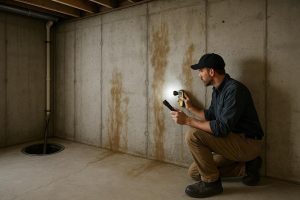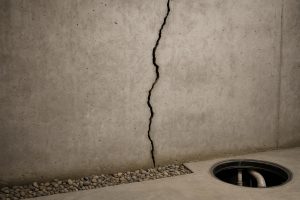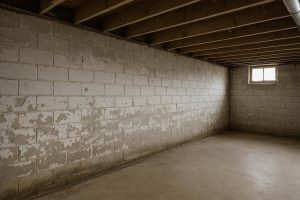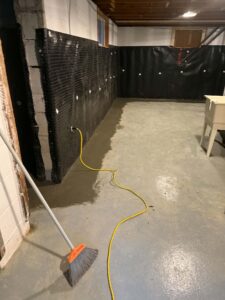
Waterproofing vs foundation repair is one of the most common points of confusion for Ontario homeowners facing a wet or cracked basement. Waterproofing manages water entry and suits homes where moisture is the primary problem; foundation repair addresses structural damage and is required when cracks threaten the integrity of the wall or footing. Many homes need both, in the right order. Understanding the difference prevents spending money on the wrong solution first.
- Waterproofing redirects or blocks water; it does not restore structural capacity.
- Foundation repair stabilises or seals the structure; it does not by itself stop future water infiltration.
- A leaking crack often requires crack injection (which is both a repair and a seal) before broader waterproofing is added.
- Structural cracks, bowing walls, and settlement require a structural assessment before any waterproofing work begins.
- The two scopes frequently overlap: a full exterior waterproofing project typically includes crack repair as part of the membrane preparation.
How we compared
This comparison draws on the technical definitions used in the Ontario Building Code, published guidance from the National Research Council of Canada on below-grade construction, and the service descriptions DryShield uses in practice across Toronto, the GTA, and Ontario cottage country. We evaluated both options across six dimensions: primary purpose, typical triggers, methods involved, disruption level, cost drivers, and long-term limitations. No proprietary job data, measured outcome statistics, or price quotes are cited because no verified dataset was supplied for this page. Where cost ranges appear, they are described as driver-based estimates only; readers should use the Basement Waterproofing Cost calculator or request a site assessment for project-specific figures.
Waterproofing explained
Basement waterproofing is the set of methods used to prevent water from entering a finished or unfinished basement space. It does not change the load-bearing capacity of the foundation; its purpose is moisture control.
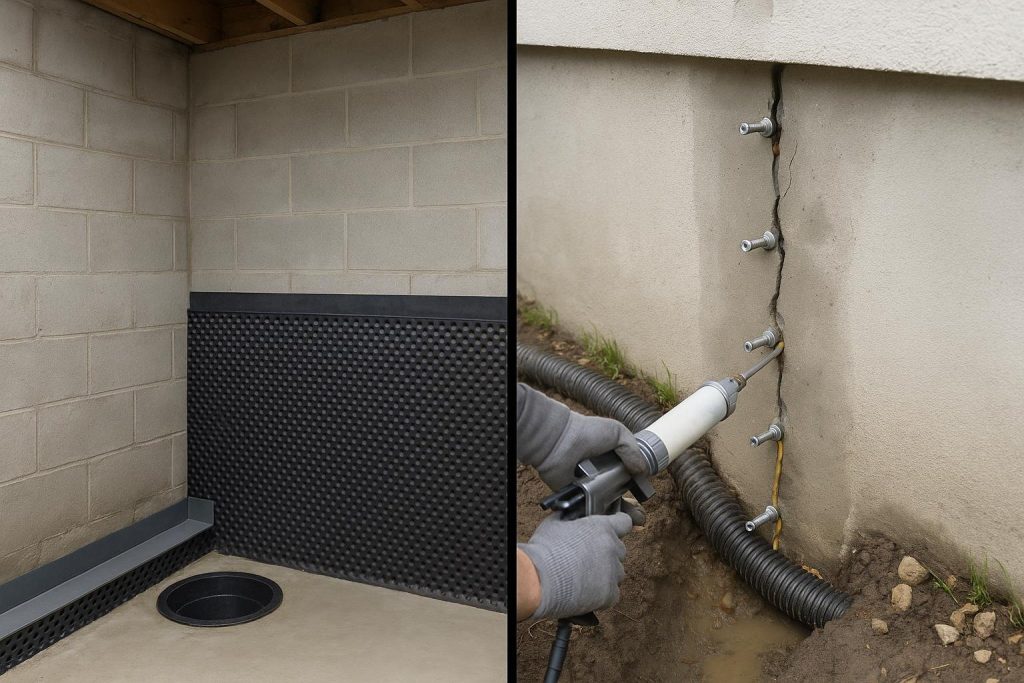
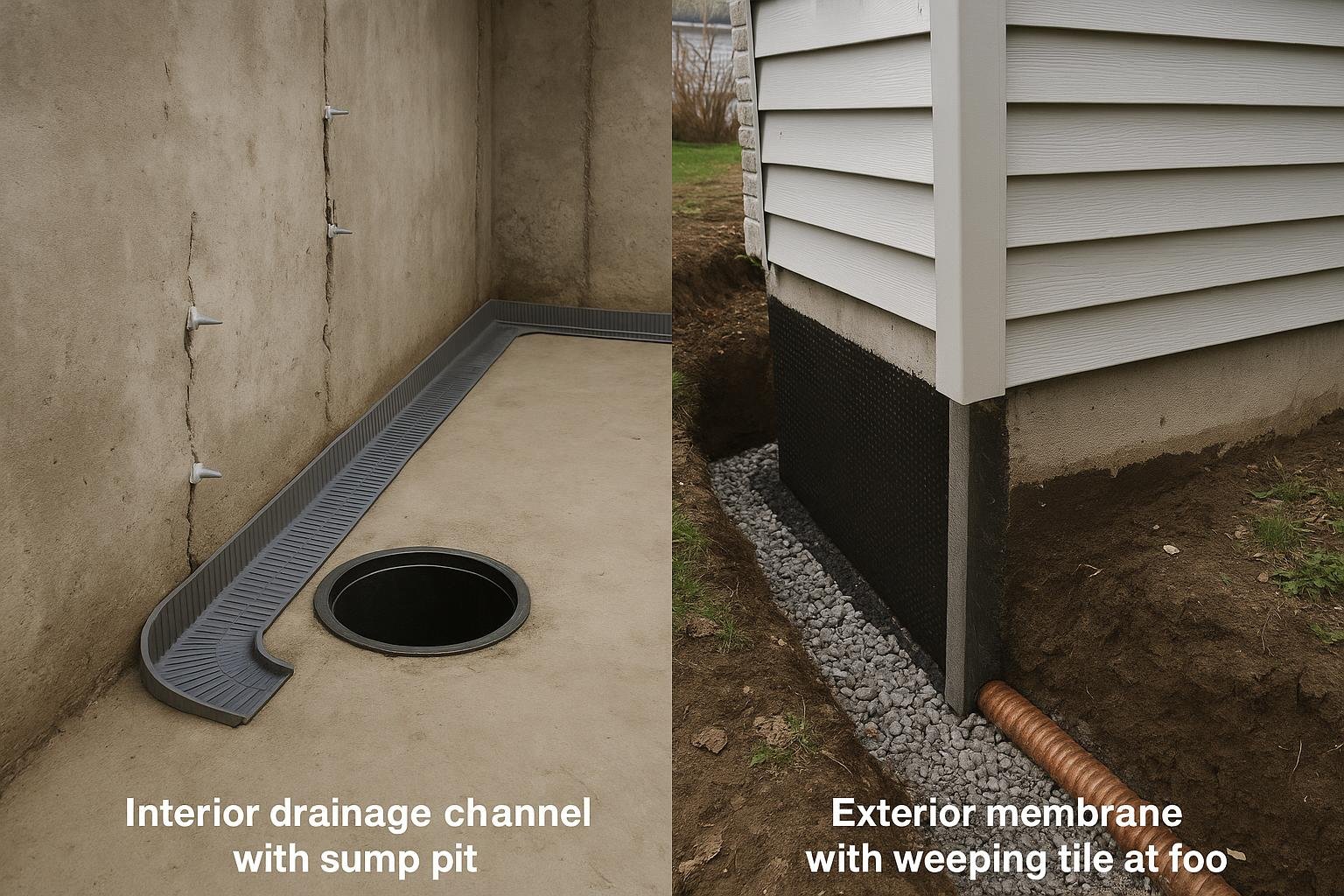
Interior waterproofing installs a drainage channel at the base of the interior perimeter wall, directs collected water to a sump pit, and removes it with a sump pump. This approach manages water that has already entered the wall assembly and channels it away before it reaches the floor. It is less disruptive than exterior work and can be completed in most weather conditions. See Interior Basement Waterproofing for a full method overview.
Exterior waterproofing requires excavating the soil around the foundation to expose the wall from footing to grade. A waterproof membrane is applied directly to the concrete, a new or rehabilitated weeping tile system is installed at the footing, and a drainage board protects the membrane during backfill. This is the most comprehensive approach because it addresses water before it contacts the wall. The Exterior Basement Waterproofing page describes the process in detail.
Weeping tile replacement and sump pump installation are often components of a waterproofing system rather than standalone solutions. Polyurethane crack injection seals an active leak in a poured-concrete wall and is sometimes classified under waterproofing and sometimes under crack repair, depending on whether the crack is structural.
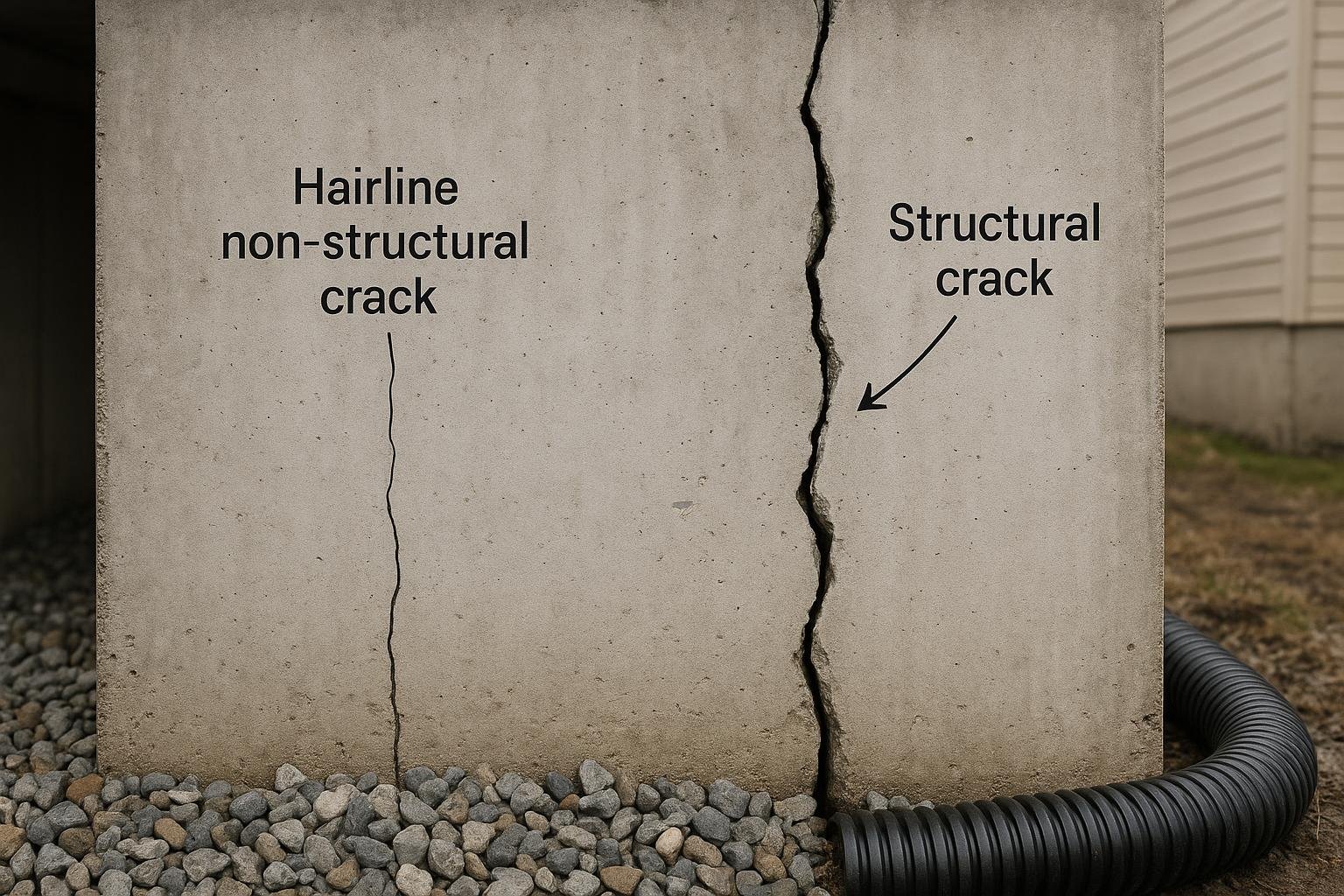
Waterproofing is the right primary scope when the wall is sound, the crack is non-structural, and the problem is moisture infiltration driven by hydrostatic pressure or surface drainage.
Foundation repair explained
Foundation repair addresses damage to the structural elements of the foundation: the wall, footing, or both. The goal is to restore or maintain the wall’s ability to resist lateral soil pressure and vertical loads.
Crack injection uses either polyurethane foam or epoxy resin injected under pressure into a crack to seal it and, in the case of epoxy, to restore tensile strength across the crack plane. Polyurethane is preferred for active leaks because it expands on contact with moisture. Epoxy is used where structural bond is the priority. The Crack Injection service page and the comparison guide Foundation crack injection vs waterproofing: When injection works explain the distinction in depth.
Bowing or deflecting walls require carbon-fibre straps, wall anchors, or steel I-beams to arrest movement. These are structural interventions that go beyond waterproofing. A bowing basement wall must be stabilised before any membrane or drainage system is installed, because continued movement will break the seal.
Underpinning deepens the footing to increase headroom or to transfer load to more stable soil. It is a major structural undertaking governed by the Ontario Building Code and typically requires an engineer’s drawings and a building permit. See Basement Underpinning for scope and process details.
Foundation repair is the right primary scope when cracks are widening, walls are deflecting, settlement is visible, or an engineer has identified a structural concern. Waterproofing applied over an unrepaired structural defect will not hold.
Side by side
The table below compares the two scopes across the dimensions most relevant to a homeowner deciding which to pursue first.
| Dimension | Waterproofing | Foundation Repair |
|---|---|---|
| Primary purpose | Prevent or redirect water entry | Restore or maintain structural integrity |
| Typical trigger | Seepage, efflorescence, damp walls, sump failure | Cracking, bowing, settlement, widening cracks |
| Methods | Interior drain, exterior membrane, weeping tile, sump pump, crack injection (non-structural) | Crack injection (structural), carbon-fibre straps, wall anchors, underpinning, piering |
| Excavation required? | Exterior only; interior methods need none | Often yes, for wall repair or underpinning |
| Permit typically required? | Rarely for interior; sometimes for exterior | Yes for underpinning and structural wall repair |
| Engineer involvement | Not usually required | Required for underpinning and bowing walls |
| Disruption level | Low (interior) to high (exterior excavation) | Moderate (injection) to very high (underpinning) |
| Addresses root cause of structural movement? | No | Yes |
| Addresses ongoing moisture infiltration? | Yes | Partially (injection seals crack; does not manage bulk water) |
The table reveals the key insight: these two scopes are not interchangeable. Waterproofing wins clearly on moisture management and disruption for interior methods. Foundation repair wins clearly on structural restoration. Crack injection occupies a middle ground, addressing both a structural gap and a water pathway simultaneously, which is why it is often the first intervention recommended when a leaking crack is discovered. For a home with both active seepage and a widening crack, repair comes first, then waterproofing.
Cost comparison
No verified price dataset was supplied for this page. The table below describes cost drivers rather than specific dollar ranges. For project-specific estimates, use the Foundation Repair Cost guide or the Basement Waterproofing Cost calculator.
| Cost Driver | Waterproofing | Foundation Repair |
|---|---|---|
| Scope of access | Interior: minimal; Exterior: full excavation around perimeter adds significant labour and equipment cost | Crack injection: minimal access; underpinning: major excavation inside and/or outside |
| Linear footage | Interior drain cost scales with perimeter length | Crack injection cost scales with number and length of cracks |
| Engineering and permits | Rarely required; adds cost when needed | Required for underpinning and bowing walls; can add thousands in professional fees |
| Landscaping restoration | Required after exterior excavation | Required after exterior structural work |
| Sump pump and pit | Often included in interior waterproofing scope | Not typically included |
| Warranty scope | DryShield offers a lifetime transferable warranty on qualifying work | Warranty terms vary by repair type; structural repairs may carry separate terms |
| Insurance relevance | Sudden water damage may be covered; gradual seepage typically is not | Structural repair is generally not covered; see the insurance guide for detail |
In general, interior waterproofing carries the lowest upfront cost of any comprehensive solution. Exterior waterproofing and structural underpinning sit at the higher end of the cost spectrum because of excavation, equipment, and permit requirements. Crack injection for a single non-structural crack is typically the lowest-cost intervention of all. The most expensive outcome is delaying structural repair until movement has progressed, because the scope of work grows with the damage.
Which is better for your situation
Choose waterproofing if:
- Your wall is structurally sound but water is seeping through the pores, a cold joint, or a non-structural hairline crack.
- You have efflorescence, damp patches, or a musty smell without visible cracking or wall movement.
- Your weeping tile system is aged or blocked and water is pooling at the footing level.
- Your sump pump is overwhelmed during heavy rain or spring thaw and you need a drainage upgrade.
- You are finishing the basement and want a dry, warranted envelope before framing begins. See Basement Crack Repair Before Finishing Your Basement for sequencing guidance.
Choose foundation repair first if:
- A crack is wider than 6 mm, is widening over time, or is horizontal (which indicates lateral soil pressure). The guide Is Your Foundation Crack Getting Wider? explains monitoring steps.
- Your wall is visibly bowing or deflecting inward.
- You have stair-step cracking in a block foundation suggesting differential settlement.
- A home inspector or structural engineer has flagged a structural concern. See How to Tell If a Foundation Crack Is Structural.
- You have a leaking crack that is actively admitting water: crack injection addresses both the structural gap and the water pathway in a single step.
Choose both if:
- Crack injection has sealed the structural crack but hydrostatic pressure remains high due to soil type or drainage conditions.
- An exterior waterproofing project is already planned: the contractor will expose the wall, making it the right time to repair any surface cracks before applying the membrane.
- Your home has a history of both seepage and settlement and you want a comprehensive, warranted solution.
The trade-offs nobody mentions
On the waterproofing side: Interior waterproofing does not stop water from entering the wall; it intercepts water that has already penetrated and routes it to a sump. This means the wall assembly itself may remain damp, which can matter for insulation performance and air quality over time. Exterior waterproofing is more comprehensive but requires full excavation, which disrupts landscaping, decks, walkways, and in some cases utilities. Neither approach addresses the cause of a structural crack.
On the foundation repair side: Crack injection, even when done correctly, seals the crack that exists at the time of injection. It does not prevent new cracks from forming if the underlying cause, such as soil settlement, tree root pressure, or frost heave, continues. Epoxy injection restores bond across the crack but makes that section of wall rigid; if movement continues, a new crack may open adjacent to the repair. Underpinning is highly effective for increasing headroom and stabilising a settling footing, but it is one of the most disruptive and costly residential foundation interventions available, and it requires the home to be occupied safely during a multi-stage excavation sequence.
The overlap nobody advertises: A contractor who only offers waterproofing may recommend a drainage system for a problem that actually needs structural repair first. A contractor who only offers structural repair may leave the moisture pathway unaddressed. The most honest assessment identifies which problem is primary and sequences the work accordingly. Use the Basement Leak Diagnostic Tool as a starting point, then request a professional inspection.
Frequently asked questions
Can I waterproof over a foundation crack without repairing it first?
For non-structural hairline cracks, polyurethane crack injection both seals and waterproofs in a single step, so the repair and the waterproofing happen together. For structural cracks, applying a waterproof membrane over an unrepaired crack is not a durable solution: continued wall movement will break the membrane. Structural cracks must be stabilised before any waterproofing membrane is applied. See Types of Foundation Cracks to identify which category your crack falls into.
Is crack injection the same as foundation repair?
Crack injection is one method within the broader category of foundation crack repair. Polyurethane injection primarily seals a water pathway; epoxy injection also restores structural bond across the crack plane. Neither addresses wall deflection, settlement, or footing failure, which require different structural interventions. The guide Does Crack Injection Work? covers what injection can and cannot achieve.
Which comes first: waterproofing or foundation repair?
Foundation repair always comes first when a structural issue is present. Applying waterproofing over an unstable wall wastes money because the membrane will fail as the wall moves. Once the structure is stable, waterproofing can be applied with confidence. For non-structural leaks, waterproofing alone may be sufficient and no repair sequencing is needed.
Does waterproofing add value to my home?
A dry, warranted basement is a positive disclosure item and removes a common buyer objection. The guide Will Basement Waterproofing Increase My Home Value in the GTA? reviews the available resale data and its limitations. Foundation repair that resolves a flagged structural issue similarly removes a material defect that would otherwise require disclosure or price negotiation.
Do I need a permit for waterproofing or foundation repair?
Interior waterproofing typically does not require a permit in most Ontario municipalities. Exterior excavation may require one depending on depth and proximity to property lines. Structural repairs including underpinning, wall anchors, and piering generally require a building permit and, for underpinning, engineer-stamped drawings. Requirements vary by municipality; the Ontario Building Code Basement Waterproofing guide provides a practical overview, but always confirm current requirements with your local building department.
Can the same contractor do both waterproofing and foundation repair?
Many basement waterproofing contractors, including DryShield, perform both crack injection and waterproofing as part of an integrated scope. Structural interventions such as underpinning and wall anchoring may require a structural engineer’s involvement and, in some cases, a specialist contractor. The key is that the contractor clearly distinguishes between the two scopes in their assessment and proposal.
What is the difference between interior and exterior waterproofing in the context of foundation repair?
Interior waterproofing manages water after it enters the wall assembly; it does not expose or treat the exterior face of the foundation. Exterior waterproofing exposes the foundation wall, allowing surface cracks to be repaired and a membrane to be applied before backfill. When foundation cracks are present, exterior waterproofing provides the opportunity to address them directly. The dedicated comparison at Interior Crack Injection vs Exterior Foundation Crack Repair covers this distinction in full.
If you are unsure whether your basement needs waterproofing, foundation repair, or both, the best next step is a professional assessment. DryShield has served Toronto, the GTA, and Ontario cottage country for over 25 years. Contact DryShield to arrange an inspection, or start with the Basement Leak Diagnostic Tool to narrow down the likely cause before you call.
For the wider picture, see our Comparison cluster overview.