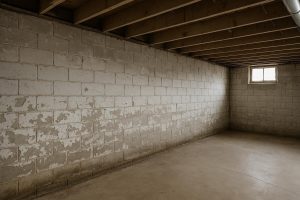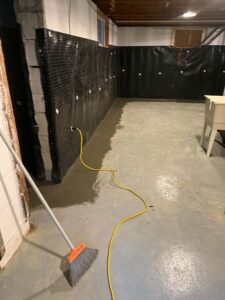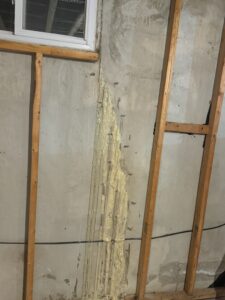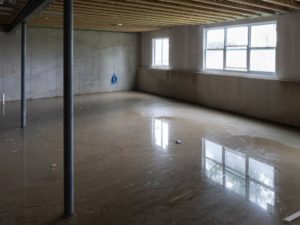
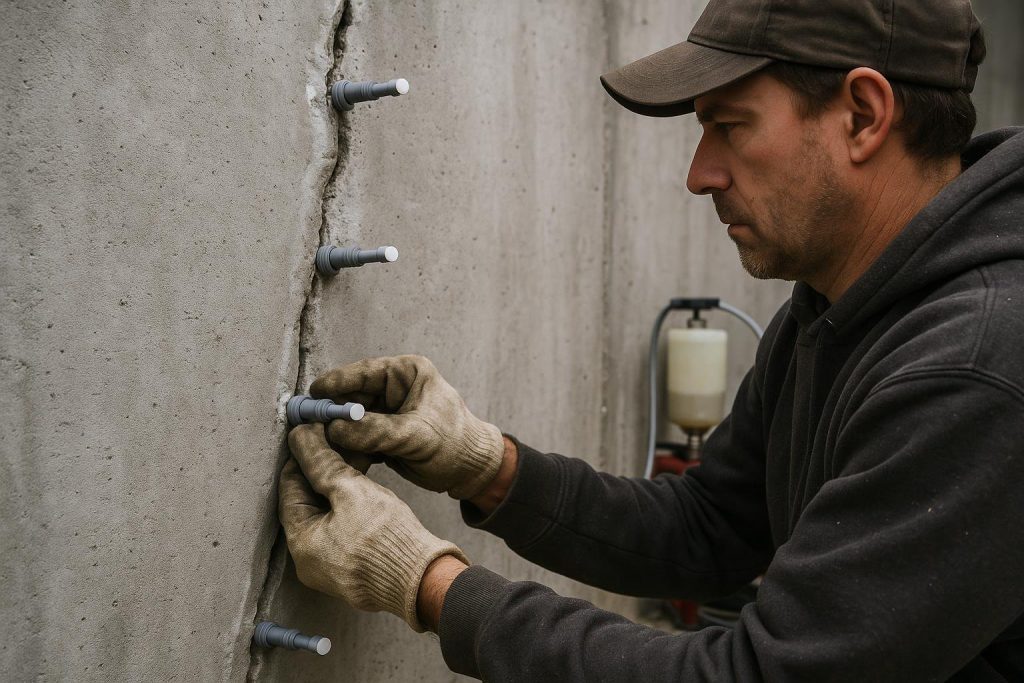
Does crack injection work? For most non-structural vertical and diagonal cracks in poured-concrete basement walls, the answer is yes: polyurethane or epoxy injection fills the crack from face to back, stops active water entry, and restores the wall’s integrity without excavation. The method works best when the crack is isolated, the surrounding concrete is sound, and the source of water is hydrostatic pressure through the wall rather than a drainage or structural problem. When those conditions are not met, injection alone is unlikely to provide a lasting result.
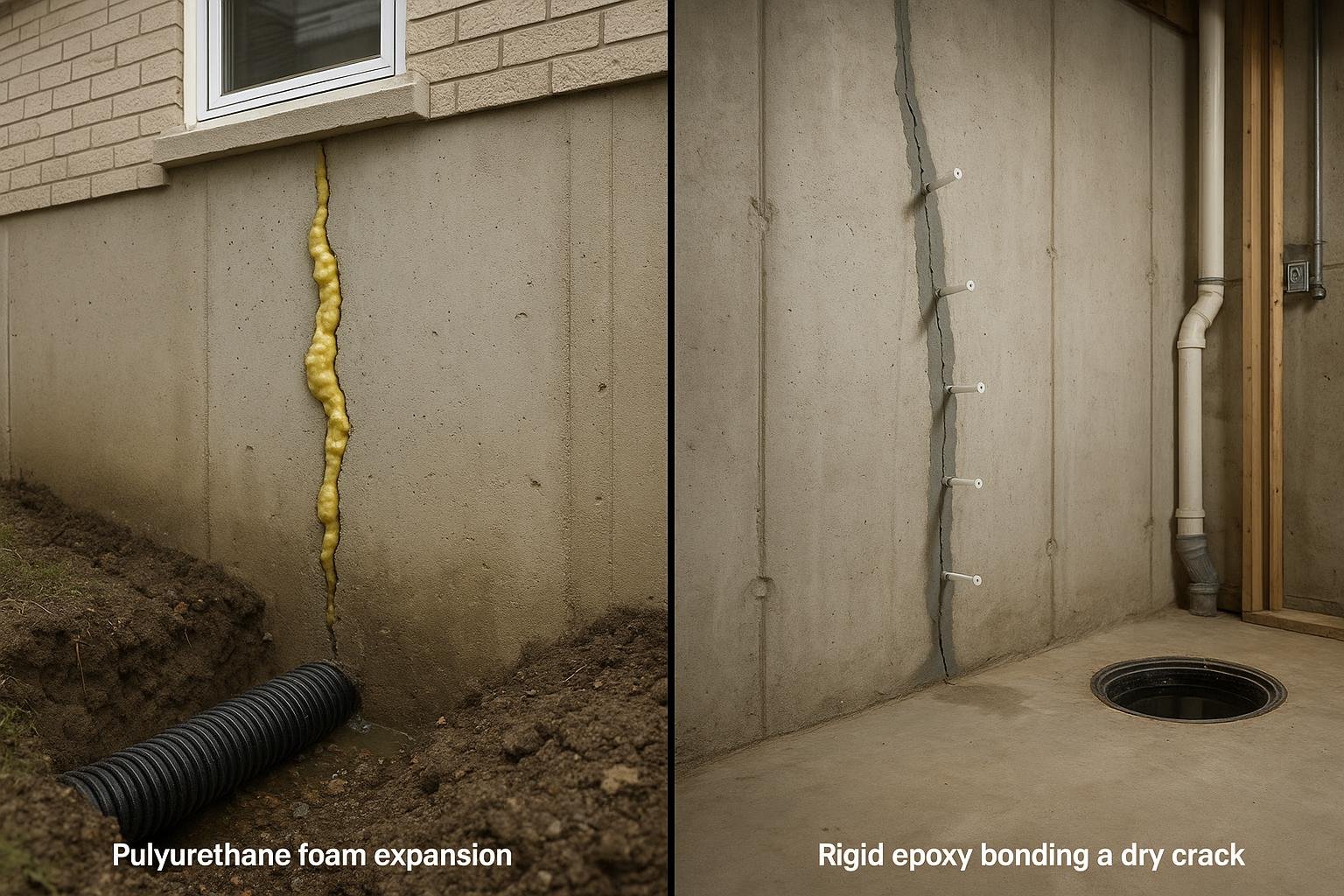
- Polyurethane foam injection is the standard choice for actively leaking or damp cracks; it expands to fill voids and remains flexible after curing.
- Epoxy injection is preferred for dry, structural cracks where restoring tensile strength matters more than flexibility.
- Injection does not address the underlying cause if water is entering through the floor, through block walls, or because of failed drainage.
- Crack width, crack activity (growing vs. stable), wall type, and moisture conditions all affect whether injection will hold long-term.
- A professional assessment before injection avoids wasted spend on cracks that need a different solution.
Definitions & scope
Crack injection is a repair technique in which a low-viscosity resin is pumped under pressure into a crack in a concrete or masonry wall or floor until the material fills the full depth and width of the void. Once cured, the resin bonds to the concrete on both sides, sealing the pathway that water was using to enter.
Two resins dominate residential foundation repair. Polyurethane is a moisture-reactive foam that expands as it cures, making it effective in wet or damp conditions. It remains slightly flexible after curing, which allows it to tolerate minor ongoing movement without re-cracking. Epoxy is a rigid, high-strength adhesive that bonds the two faces of a crack together and can restore a significant portion of the concrete’s original tensile strength. Epoxy requires a dry crack and a stable wall; it does not tolerate movement after curing.
The scope of this guide covers poured-concrete foundation walls, which are the most common wall type in Ontario homes built after roughly the mid-1960s. Block, stone, and pre-cast panel walls behave differently and are noted where relevant. Floor crack injection is a related but distinct topic covered at Floor Crack Injections.
Why this matters
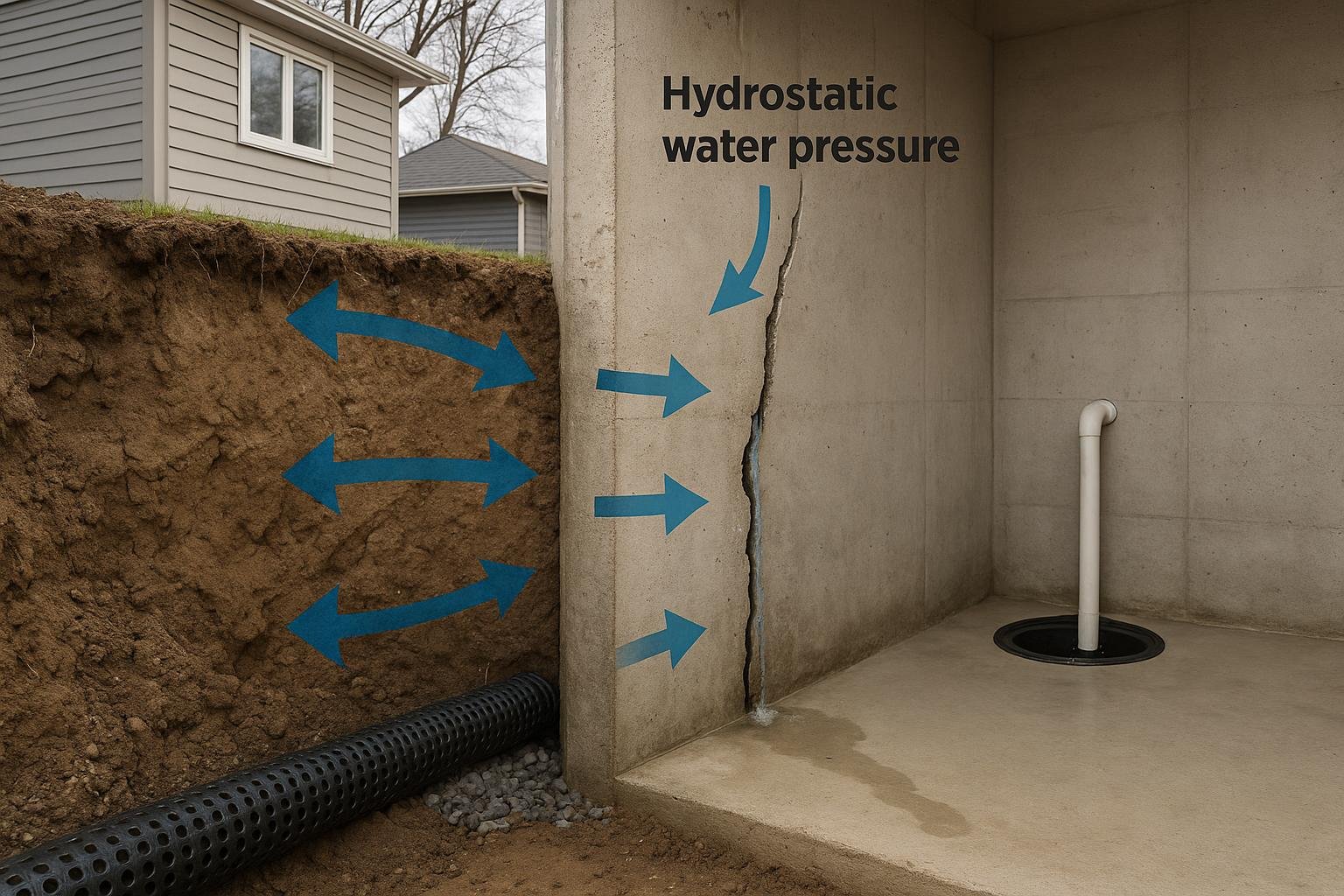
Ontario’s climate creates conditions that are particularly hard on poured-concrete foundations. Freeze-thaw cycling, heavy spring snowmelt, and clay-rich soils that expand when wet all generate hydrostatic pressure against basement walls. A hairline crack that appears cosmetic in summer can become an active leak within weeks of the first hard frost or a sustained rain event.
Left untreated, even a slow seep allows water to carry dissolved minerals out of the concrete (a process visible as white efflorescence on walls), gradually weakening the matrix. Persistent moisture raises interior humidity, promotes mould growth, and can damage finished spaces, stored belongings, and mechanical equipment. For a broader look at what moisture does to a foundation over time, see Foundation Waterproofing: Your Complete Homeowner’s Guide.
Crack injection matters because it offers a minimally invasive, relatively fast repair path for a specific and common problem. Understanding when it works and when it does not saves homeowners from either under-treating a serious issue or spending money on a more disruptive solution when injection would have been sufficient. The question of whether injection is the right first step versus a full waterproofing system is explored in detail at Foundation crack injection vs waterproofing: When injection works.
Crack type matters too. Vertical cracks in poured concrete typically result from shrinkage or settlement and are the most injection-friendly. Horizontal cracks can indicate lateral soil pressure and may signal a structural concern that injection alone cannot address. The Foundation Crack Diagnosis: Vertical vs. Horizontal page explains how to read crack orientation before deciding on a repair path.
Your options
Polyurethane foam injection
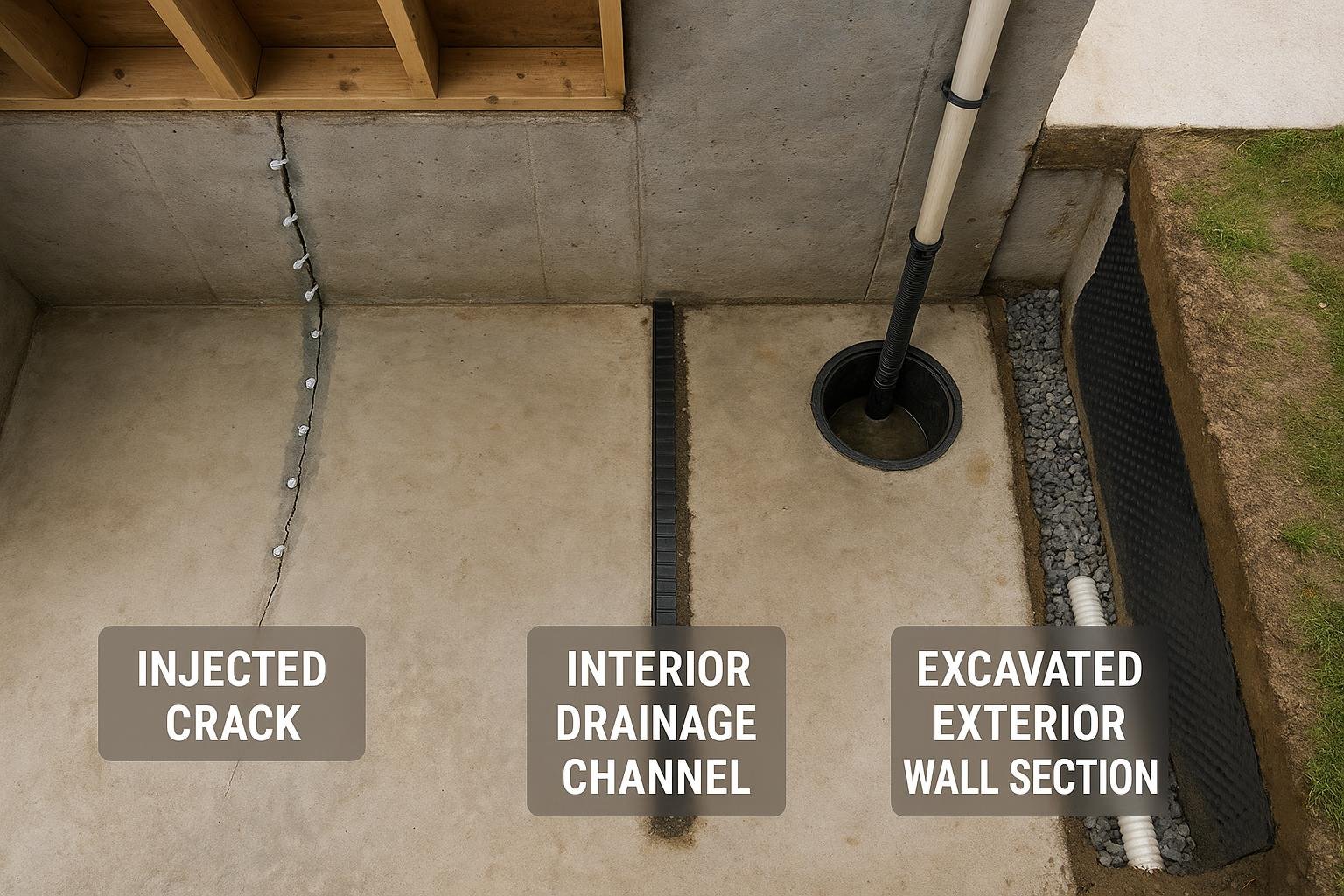
Polyurethane injection involves drilling ports into the face of the crack at intervals, attaching injection fittings, and pumping a two-part polyurethane resin under low pressure. The resin reacts with moisture in the crack, expanding into a closed-cell or semi-flexible foam that fills the void from face to back. Ports are filled sequentially until resin appears at the next port up, confirming full penetration.
Best for: Actively leaking or damp vertical and diagonal cracks in poured-concrete walls; situations where the wall may experience minor ongoing movement; most residential foundation crack repairs in Ontario.
Limitations: Does not restore structural strength. If the crack is caused by ongoing lateral pressure or settlement, the foam may re-crack over time. Not suitable for block or stone walls where the void geometry is irregular. Requires the crack to be accessible from the interior.
DryShield’s polyurethane injection service is described at Polyurethane Crack Injection Toronto & GTA.
Epoxy injection
Epoxy injection uses a high-viscosity, two-part adhesive pumped slowly into a dry crack. The epoxy wets both crack faces and cures to a rigid bond with compressive and tensile strength that can exceed the original concrete. The process requires the crack to be completely dry before injection; moisture prevents proper adhesion.
Best for: Dry, stable cracks where structural continuity needs to be restored; commercial or industrial applications where load-bearing capacity is a concern; cracks that have been dried out and stabilised before repair.
Limitations: Rigid after curing, so any further movement will cause the repair to fail or the concrete to crack adjacent to the injection. Cannot be used in wet or actively leaking conditions. Typically more expensive per linear foot than polyurethane. See the detailed comparison at Epoxy vs Polyurethane Crack Injection: Which Is Best for Your Basement Crack Repair?
Interior surface sealing (hydraulic cement or crystalline coatings)
Rather than filling the crack through its depth, surface sealants are applied to the interior face. Hydraulic cement can stop active water flow temporarily by swelling on contact with water. Crystalline waterproofing compounds penetrate the concrete matrix and form insoluble crystals that block capillary pathways.
Best for: Temporary emergency stop of active water entry while a permanent repair is arranged; supplementary treatment of porous concrete alongside injection; situations where injection access is obstructed.
Limitations: Surface-only treatments do not fill the crack through its depth and are more likely to fail under sustained hydrostatic pressure. They are generally considered a temporary or supplementary measure rather than a standalone permanent repair for a through-wall crack.
Exterior excavation and membrane repair
Excavating to the footing, cleaning the crack, applying a waterproof membrane or hydraulic cement patch, and installing or replacing drainage (weeping tile) addresses the crack from the water-source side. This is the most comprehensive single-crack repair and also addresses drainage deficiencies at the same time.
Best for: Cracks that have failed a previous interior injection; situations where drainage is also compromised; exterior access is required for another reason (e.g., landscaping, window well); structural cracks that need inspection from both sides.
Limitations: Significantly more disruptive and expensive than interior injection. Requires excavation, which may affect landscaping, driveways, or utilities. Not always practical in winter or on properties with limited access. See Exterior Basement Waterproofing Services for more detail.
Interior drainage system (perimeter channel and sump pump)
An interior perimeter drainage channel cut into the basement floor at the wall-floor joint collects water that enters through cracks and directs it to a sump pit and pump. This does not seal the crack but manages water so it cannot accumulate or damage the interior.
Best for: Multiple cracks or widespread seepage that makes individual crack injection impractical; high water-table situations where hydrostatic pressure is too great for injection alone; homes where exterior excavation is not feasible.
Limitations: Does not stop water from entering the wall; it intercepts it after entry. Requires a functioning sump pump and power supply. Ongoing maintenance is needed. Explore the full system at Internal & Interior Basement Waterproofing Solutions.
Do-nothing / monitor
For very fine, dry, stable hairline cracks with no evidence of water entry or growth, a professional may recommend monitoring rather than immediate repair. Crack monitors (simple graduated stickers) can be applied to track whether the crack is widening over time.
Best for: Hairline shrinkage cracks less than approximately 0.2 mm wide with no moisture, no staining, and no measurable growth over several months.
Limitations: Requires periodic inspection. Any sign of moisture, growth, or efflorescence should trigger a professional reassessment. This is not a repair; it is a deferral decision.
Options compared
| Option | Best for | Typical considerations | Durability / limitations |
|---|---|---|---|
| Polyurethane injection | Wet or damp vertical/diagonal poured-concrete cracks | Interior access only; minimal disruption; same-day repair | Long-lasting when crack is stable; may re-crack if movement continues |
| Epoxy injection | Dry, stable cracks needing structural restoration | Crack must be fully dry; rigid cure | High bond strength; fails if further movement occurs |
| Surface sealants | Temporary emergency stop or supplementary treatment | Fast application; no drilling required | Not a permanent through-wall seal; pressure can displace coating |
| Exterior excavation and membrane | Failed prior injection; drainage also compromised | Significant excavation; higher cost and disruption | Most comprehensive single-crack repair; addresses drainage simultaneously |
| Interior drainage system | Multiple cracks; high water table; excavation not feasible | Requires sump pump; floor cutting involved | Manages water rather than stopping entry; ongoing maintenance needed |
| Monitor only | Dry, stable hairline cracks with no moisture history | No cost; requires periodic inspection | Not a repair; deferral only; reassess at first sign of change |
The table above shows that no single option is universally superior. Polyurethane injection occupies the practical middle ground for most Ontario homeowners: it is minimally invasive, effective for the most common crack type (wet vertical poured-concrete), and can be completed in a single visit. Epoxy is the right call when structural integrity is the primary concern and the crack is dry. Exterior excavation becomes necessary when injection has already been attempted and failed, or when drainage is also deficient. Interior drainage systems are a system-level solution rather than a crack-specific one.
How to choose
Use the following decision framework to narrow down the right approach before calling a contractor.
Choose polyurethane injection if: the crack is vertical or diagonal; the wall is poured concrete; there is visible moisture, staining, or active seepage; the crack has not been injected before; and the surrounding concrete is otherwise sound with no signs of horizontal bowing or step cracking.
Choose epoxy injection if: the crack is dry and has been dry for an extended period; a structural engineer or experienced contractor has confirmed the crack is stable and non-structural in origin; and restoring the wall’s load-bearing continuity is a stated goal.
Choose exterior excavation if: a previous interior injection has failed; the crack is on a wall where exterior drainage is also compromised; the crack is structural and needs inspection from both sides; or the homeowner is already undertaking exterior work that provides access.
Choose an interior drainage system if: there are multiple cracks across the wall or multiple walls; the water table is persistently high and hydrostatic pressure exceeds what injection can reliably counter; or exterior excavation is not feasible due to access, cost, or timing.
Choose to monitor if: the crack is a dry hairline with no history of moisture, no measurable growth, and a professional has confirmed it poses no immediate risk. Set a reminder to re-inspect every six months and after any significant rain or frost event.
If you are unsure which category your crack falls into, the GTA Homeowner’s Guide to Basement Cracks and the How to Tell If Foundation Crack Is Structural guide provide detailed visual and diagnostic guidance. The Basement Leak Diagnostic Tool can also help narrow down the source before a site visit.
Costs & timelines
No verified current price data has been supplied to this page. The following describes cost drivers only. For indicative ranges, see Crack Injection Cost in Southern Ontario (2026) and the Crack Injection Cost Calculator.
| Cost driver | Why it affects price | Direction of effect |
|---|---|---|
| Crack length and depth | More resin, more ports, more labour time | Higher cost as length increases |
| Resin type (polyurethane vs. epoxy) | Epoxy material cost is typically higher per unit volume | Epoxy generally costs more per linear foot |
| Number of cracks | Mobilisation cost is shared; per-crack cost may decrease with volume | Fixed call-out cost spread over more cracks reduces unit cost |
| Access difficulty | Finished walls, low headroom, or obstructions add labour time | Higher cost when access is restricted |
| Active water flow at time of repair | May require hydraulic cement pre-treatment or specialised foam formulation | Can add to material and labour cost |
| Geographic location | Travel time and regional labour rates vary across Ontario | Cottage country and remote areas typically cost more |
Timeline for a typical interior polyurethane injection on a single crack is usually a few hours, with the resin curing sufficiently to resist water entry within 24 hours. Epoxy requires a longer cure before the wall is loaded. Exterior excavation is a multi-day project. Interior drainage system installation typically takes one to three days depending on basement perimeter length.
Risks & common mistakes
Understanding what can go wrong helps homeowners evaluate contractor proposals and set realistic expectations.
Injecting the wrong crack type. Horizontal cracks in poured-concrete walls can indicate lateral soil pressure causing the wall to bow inward. Injecting a horizontal crack without addressing the structural cause may seal the visible leak temporarily while the underlying movement continues. A structural assessment should precede any injection on a horizontal crack.
Using injection on block or stone walls. Concrete block and rubble-stone foundations have irregular void geometries that make through-depth injection unreliable. Resin can travel into block cores rather than filling the crack face. Different repair strategies apply to these wall types.
Injecting over a surface patch. If a previous owner applied hydraulic cement or epoxy paste to the crack face, a new injection cannot penetrate past the patch. The old material must be removed before injection ports can be placed effectively.
Ignoring drainage. Injection seals the crack but does not reduce hydrostatic pressure. If the exterior drainage system (weeping tile, grading, downspout discharge) is directing large volumes of water toward the foundation, even a well-executed injection may be overwhelmed. Addressing grading and drainage is a complementary step, not an alternative. See Foundation Waterproofing: Your Complete Homeowner’s Guide for the full drainage picture.
DIY injection without proper equipment. Consumer-grade injection kits exist, but achieving adequate pressure and port spacing to fill a crack through its full depth requires professional equipment and experience. Incomplete fills leave voids that water can exploit. The How to Fix Basement Concrete Cracks guide discusses what DIY approaches can and cannot achieve.
Assuming one injection is permanent regardless of conditions. Injection is highly effective for stable cracks in sound concrete. If the crack is caused by ongoing settlement, tree root pressure, or a structural deficiency, the repair may need to be revisited. A warranty from a reputable contractor provides recourse if the repair fails under normal conditions. DryShield offers a Lifetime Transferable Warranty on qualifying crack injection work; review the warranty page for full terms and conditions.
How the process works
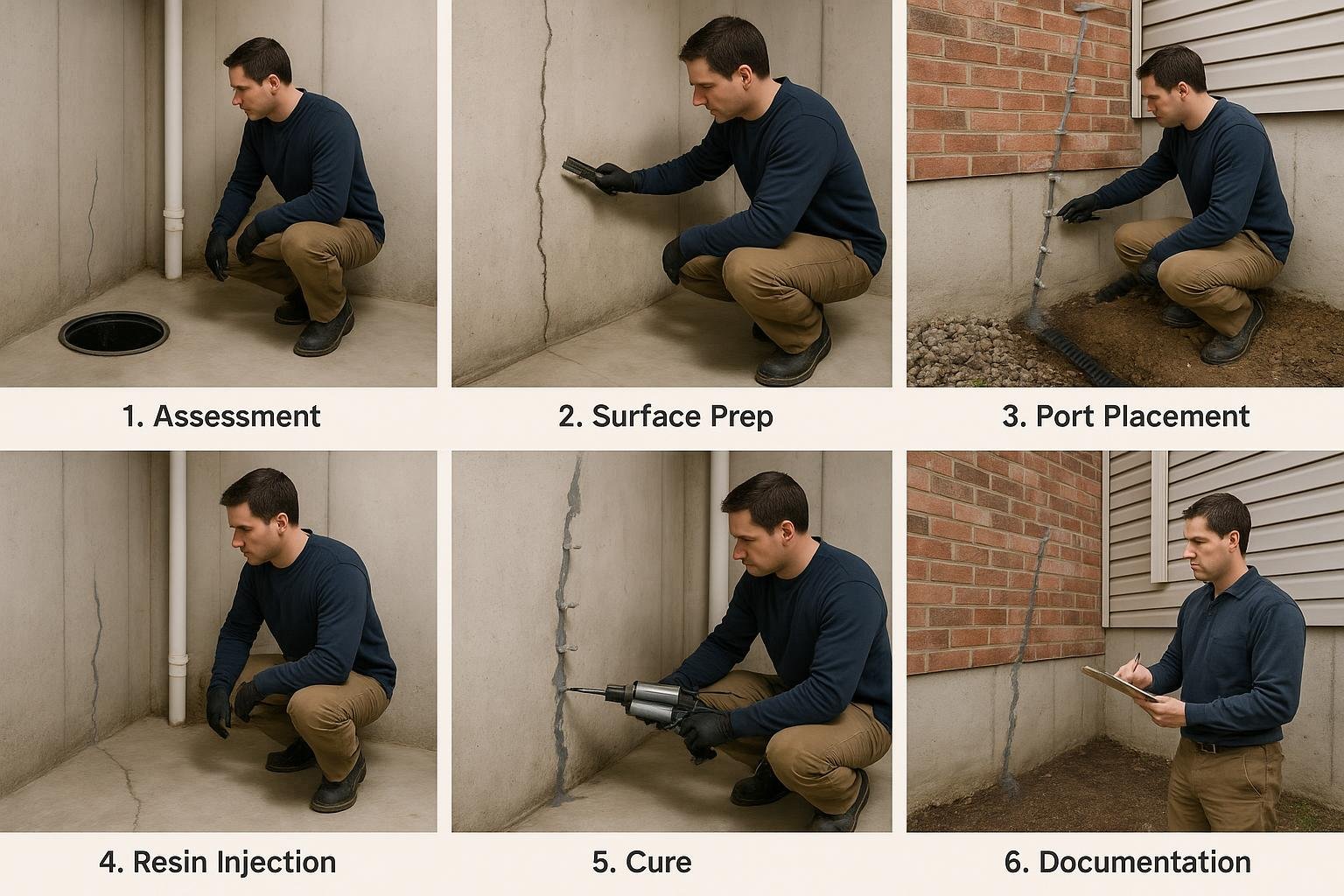
- Assessment and crack mapping. A technician inspects the crack, measures its width and length, checks for horizontal bowing or step cracking, and determines whether the crack is active (wet or growing) or dormant. The wall type and access conditions are noted.
- Surface preparation. The crack face is cleaned of loose concrete, efflorescence, paint, or previous patch material. Any active water flow is temporarily controlled with hydraulic cement or oakum packing if needed.
- Port installation. Injection ports (surface-mounted or drilled) are placed at regular intervals along the crack, typically every 15 to 30 cm depending on crack width and wall thickness.
- Resin injection. Starting at the lowest port, resin is pumped under controlled pressure until it appears at the next port, confirming the section is filled. Each port is capped and the process advances upward until the full crack length is treated.
- Cure and inspection. The resin is allowed to cure. The technician inspects the repair, removes port fittings, and grinds or patches the port holes flush with the wall surface.
- Documentation and warranty. The repair is documented, and warranty paperwork is provided where applicable. The homeowner is advised on monitoring and any complementary steps (grading, downspout extensions) that would support the repair’s longevity.
Frequently asked questions
Does crack injection work on all types of foundation walls?
Crack injection works most reliably on poured-concrete walls, which are the most common foundation type in Ontario homes built after the mid-1960s. Block walls, stone foundations, and pre-cast panels have different void geometries that make through-depth injection less predictable. For those wall types, a contractor may recommend surface crystalline treatments, exterior membrane repair, or interior drainage management instead of injection.
How long does a polyurethane crack injection repair last?
When the crack is stable, the surrounding concrete is sound, and drainage conditions are reasonable, a properly executed polyurethane injection can last for many years without re-leaking. The repair is not guaranteed to be permanent if the underlying cause of cracking continues, such as ongoing settlement or unresolved hydrostatic pressure. A contractor warranty, such as DryShield’s Lifetime Transferable Warranty, provides recourse if the repair fails under normal conditions; review that page for full terms.
Can I inject a crack myself with a kit from a hardware store?
Consumer injection kits are available, but achieving the pressure and port spacing needed to fill a crack through its full wall depth is difficult without professional equipment. An incomplete fill leaves internal voids that water can continue to exploit, even if the surface appears sealed. For a hairline crack with no active moisture, surface-applied crystalline sealant may be a reasonable temporary measure, but a through-wall crack with active seepage warrants professional injection.
What happens if the crack comes back after injection?
Re-leaking after injection usually means the crack has moved further (indicating ongoing structural or settlement activity), the injection did not fully penetrate the crack depth, or a new crack has formed adjacent to the repair. A reputable contractor will assess whether the original repair failed or a new pathway has opened. If the repair is within warranty, the contractor should re-treat at no additional cost under the warranty terms.
Does crack injection work when water is actively flowing through the crack?
Polyurethane foam is specifically formulated to react with moisture and can be injected into wet or actively leaking cracks. In cases of high-volume active flow, a technician may first pack the crack with hydraulic cement or oakum to slow the flow before injecting foam behind it. Epoxy injection cannot be used in wet conditions because moisture prevents the adhesive from bonding to the concrete faces.
Is crack injection covered by home insurance in Ontario?
Home insurance policies in Ontario generally cover sudden and accidental water damage but typically exclude gradual seepage, maintenance-related deterioration, and the cost of the repair itself. Whether a specific claim is covered depends on the policy wording and the cause of the crack. The Does Home Insurance Cover Basement Waterproofing & Foundation Cracks in Ontario? guide explains the typical exclusions and what documentation insurers may request.
How do I know if my crack is structural or just a shrinkage crack?
Shrinkage cracks are typically vertical, narrow (hairline to about 3 mm), and do not displace one face relative to the other. Structural cracks may be horizontal, diagonal at 45 degrees from corners, or show one face stepping higher than the other (displacement). Wall bowing, multiple cracks in a pattern, or cracks that are actively widening are additional warning signs. The How to Tell If Foundation Crack Is Structural guide provides a detailed visual checklist.
Can crack injection be done in winter in Ontario?
Interior crack injection can generally be performed year-round because the work is done inside the conditioned or semi-conditioned basement space. Resin cure times may be affected by very low temperatures, and the contractor may use a formulation suited to cold conditions. Exterior excavation and membrane repair is more weather-dependent and is typically avoided during frozen ground conditions.
Does crack injection address the cause of the crack, or just the symptom?
Injection seals the water pathway but does not change the conditions that caused the crack. Shrinkage cracks in poured concrete are a normal result of the curing process and do not typically recur once sealed. Cracks caused by ongoing settlement, tree root pressure, or lateral soil load may recur if the underlying cause is not addressed. A thorough assessment before injection helps identify whether complementary measures, such as improved grading or drainage, are also needed.
What is the difference between crack injection and full basement waterproofing?
Crack injection targets a specific, localised pathway through the wall. Full basement waterproofing, whether interior drainage or exterior membrane systems, addresses the entire wall surface and the drainage environment around the foundation. Injection is appropriate when the problem is a discrete crack in an otherwise sound wall. Full waterproofing is appropriate when seepage is widespread, drainage has failed, or multiple cracks are present. The Foundation crack injection vs waterproofing: When injection works guide walks through the decision in detail.
If you have a foundation crack and are unsure whether injection is the right solution, DryShield’s team is available to assess the crack, explain the options, and recommend the most appropriate repair for your specific wall type and conditions. Visit the Crack Injection service page or use the Contact page to arrange an assessment.