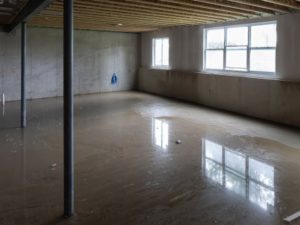
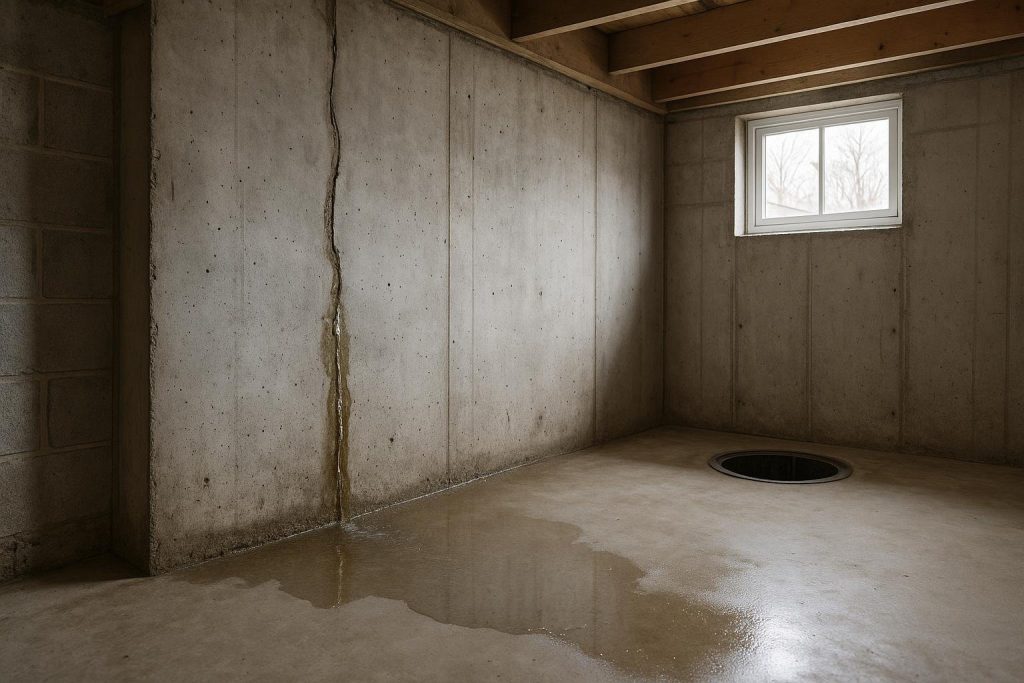
Spring thaw basement flooding North Bay homeowners deal with each year is most often caused by frozen ground that cannot absorb snowmelt fast enough, forcing water against foundation walls and through any existing crack or failed weeping tile. Stop the immediate flow first by clearing snow away from the foundation perimeter and directing downspouts at least two metres from the wall, then call a waterproofing professional to assess the source before the next melt cycle hits.
Key Takeaways
- North Bay’s heavy snowpack and clay-bearing soils create intense hydrostatic pressure against foundations every spring.
- The two most common entry points are hairline poured-concrete cracks and silted-up original weeping tile.
- A single injected crack typically costs $600 to $900; a full interior weeping-tile system runs less than exterior excavation.
- Temporary measures buy time but do not stop hydrostatic pressure from returning next season.
North Bay sits in the Canadian Shield transition zone, where shallow bedrock meets pockets of glacial till and clay. That combination means snowmelt has nowhere to drain quickly, and hydrostatic pressure against basement walls builds faster here than in many southern Ontario cities.
What does spring thaw flooding actually look like in a North Bay basement?
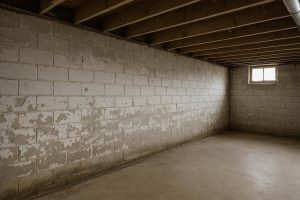
Spring thaw basement flooding North Bay homes experience typically appears as water along the base of the wall, at the floor-wall joint, or seeping through a vertical or diagonal crack in a poured concrete foundation. You may notice a damp mineral smell before you see standing water. In block foundations, moisture often wicks through the mortar joints rather than through the block face itself.
The timing is a reliable clue. If the water arrives in late March or April, tracks with daytime warming, and dries up once the ground thaws fully, hydrostatic pressure from frozen soil is almost certainly the driver. Water that appears only during heavy rain in July points to a different mechanism entirely.
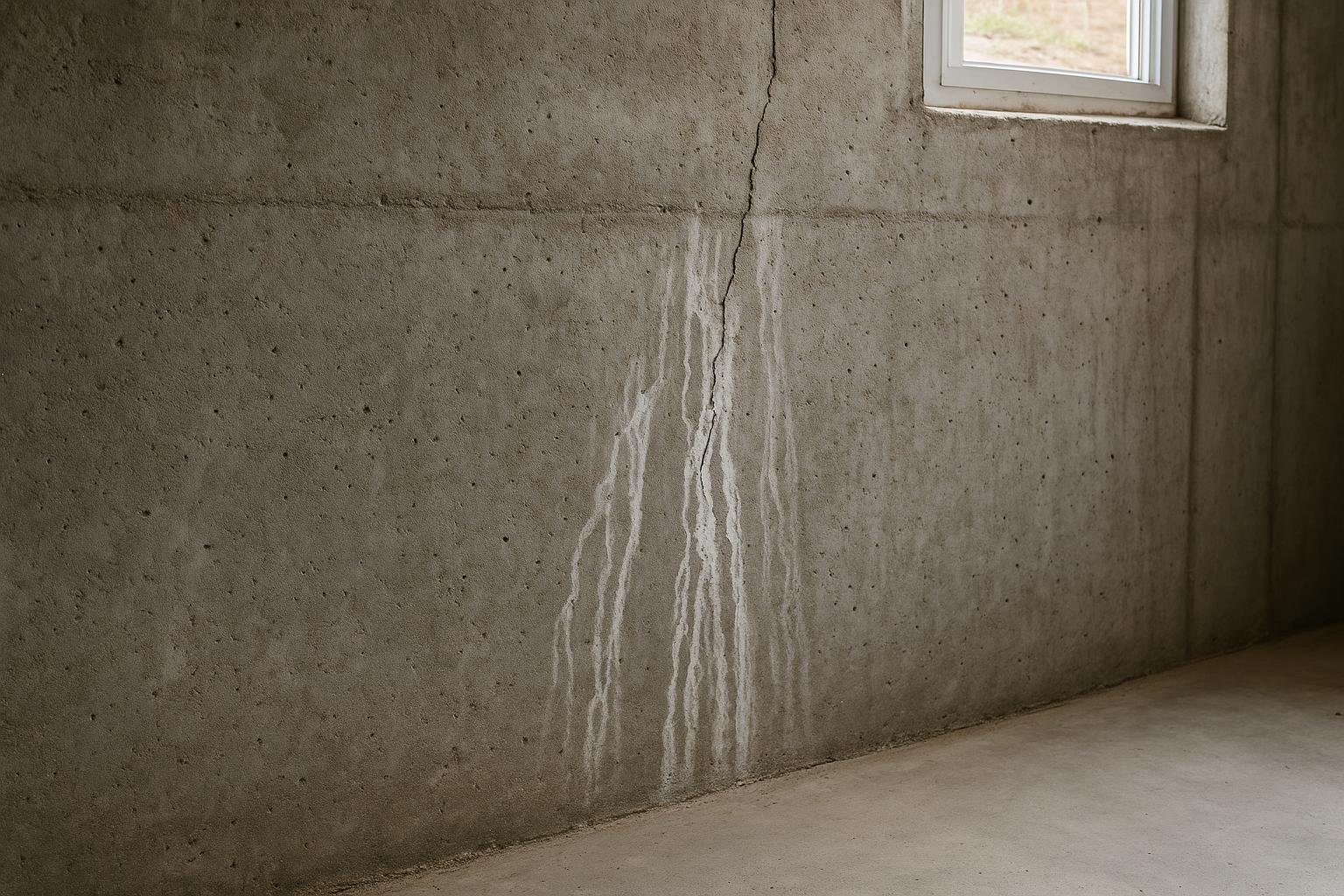
Look for white chalky deposits called efflorescence on the wall surface. These mineral stains show that water has been moving through the concrete repeatedly, even when the floor appears dry. They are a sign the problem is ongoing, not a one-time event.
Problems it gets confused with
Condensation on cold basement walls in spring is often mistaken for a leak. Touch the wall with a piece of plastic taped flat against it for 24 hours. If moisture forms on the room side of the plastic, it is condensation from warm air hitting a cold surface. If moisture forms between the plastic and the wall, water is coming through the concrete.
Window-well flooding is another common mix-up. Water pooling at a basement window well and running in under the frame looks like a wall leak but is actually a grading or drainage problem local to that window. The fix is a window-well cover and improved grading, not crack injection or weeping tile.
A failed sump pump during a thaw event can also mimic a wall leak. If your sump basin is full and the pump is not running, address the pump before assuming the wall is the source.
Causes, ranked
Understanding what drives spring thaw basement flooding North Bay properties face each season helps you match the right fix to the right problem.
1. Hydrostatic pressure against the foundation wall
This is the leading cause in North Bay. When the top layer of soil thaws but the ground below remains frozen, snowmelt has nowhere to go. It saturates the soil immediately around the foundation and pushes against the wall with significant force. Poured concrete walls develop hairline cracks under this pressure, and water finds those cracks within a single season. The telltale sign is water appearing at the same crack or joint every spring, stopping once the ground fully thaws.
2. Failed or silted-up weeping tile
Many North Bay homes built before the 1980s have original clay or concrete weeping tile at the footing. After 40-plus years, these pipes fill with silt, root intrusion, and mineral deposits and stop draining. When they fail, water that should be directed away from the footing instead pools against it. The sign is water seeping along the entire perimeter of the floor rather than at one specific crack.
3. Poured concrete foundation cracks
Concrete shrinks as it cures and continues to move slightly with seasonal freeze-thaw cycles. Vertical cracks in poured walls are the most common result and are almost always non-structural. They are, however, a direct path for water under hydrostatic pressure. The telltale sign is a clean, narrow crack running top to bottom on one wall, wet only during thaw or heavy rain.
4. Negative grade around the foundation
Soil settles over time and can slope toward the house rather than away from it. In North Bay, frost heave accelerates this process every winter. When the grade is negative, snowmelt runs directly toward the foundation instead of away from it. The sign is water appearing at the base of the wall closest to a garden bed, driveway edge, or settled patio slab.
5. Undersized or absent sump pump
A sump pit that fills faster than the pump can discharge is a common spring failure. North Bay thaw events can deliver large volumes of water over a short window. A pump rated for normal groundwater may be overwhelmed by peak thaw flow, especially if the battery backup has not been tested. The sign is a full sump basin with water backing up onto the floor.
Spring thaw basement flooding North Bay: cause and solution table
| Cause | Telltale sign | Appropriate fix | Urgency |
|---|---|---|---|
| Hydrostatic pressure through wall crack | Water at same crack each spring, stops after full thaw | Low-pressure polyurethane crack injection from interior | Act soon |
| Failed weeping tile at footing | Water along entire floor perimeter, not one spot | Interior weeping tile system to sump basin, or exterior excavation and new tile | Act now |
| Negative grade | Water at wall nearest settled soil or patio | Regrade soil to slope away 15 cm over 1.5 m; extend downspouts | Act soon |
| Overwhelmed sump pump | Full sump basin, water on floor near pit | Upgrade pump capacity; add battery backup | Act now |
| Window-well overflow | Water under window frame only | Window-well cover; improve local grading | Monitor |
Use this table to match what you are seeing to the most likely cause before calling for an inspection. If water appears at multiple locations simultaneously, failed weeping tile is the most probable root cause and warrants the fastest response. A single wet crack is usually the most straightforward repair.
Temporary vs permanent fixes
| Approach | What it does | Realistic lifespan | Approximate cost range |
|---|---|---|---|
| Hydraulic cement plug | Stops active flow at one point | 1 to 3 seasons; cracks around it as foundation moves | DIY materials only |
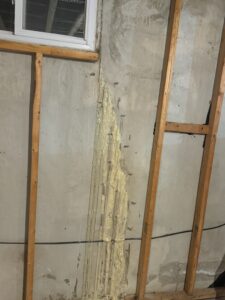
| Polyurethane crack injection | Fills crack with flexible, waterproof foam that moves with the wall | Long-term when properly installed | $600 to $900 per crack |
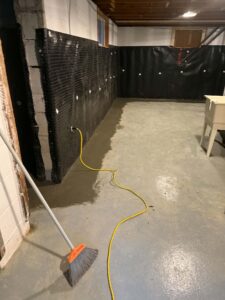
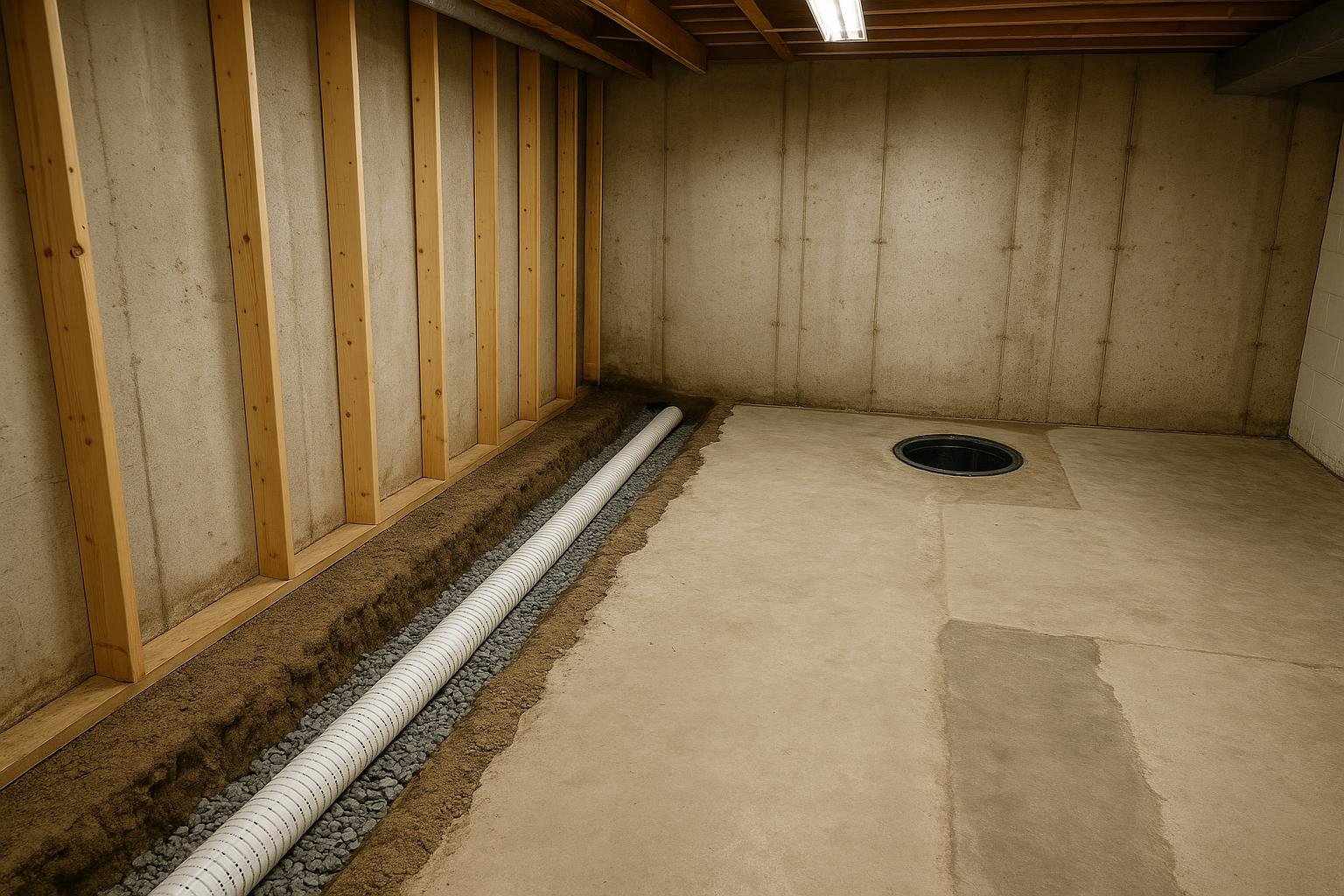
| Interior weeping tile to sump | Intercepts water at the footing before it reaches the floor | Permanent with pump maintenance | Varies by linear footage; below exterior cost |
| Exterior waterproofing membrane | Stops water at the wall face before it enters; includes new weeping tile and dimpled drainage board | Permanent | $6,000 to $9,000 for average home |
Hydraulic cement is a reasonable emergency measure to get through the current thaw, but it does not address hydrostatic pressure and will fail again. Polyurethane injection is the correct permanent fix for an isolated crack. Where weeping tile has failed across the whole perimeter, an interior drainage system or full exterior waterproofing is the only lasting solution. The right choice depends on access, budget, and how many entry points exist. A site inspection is the only way to confirm which approach applies to your home.
For a broader look at repair options and what they cost across the region, the leaky basement North Bay guide covers pricing and method comparisons in detail.
What you can safely check yourself
- Walk the exterior perimeter and note where snow is piled against the foundation wall. Shovel it back at least one metre.
- Check that all downspouts discharge at least two metres from the foundation and are not blocked by ice.
- Go into the basement and mark any wet spots with masking tape and a date. This tells a professional exactly where and when water entered.
- Locate your sump pit and confirm the pump activates when you pour a bucket of water into the basin. Check that the discharge line is not frozen at the exit point.
- Look at the floor-wall joint around the full perimeter for any white efflorescence or damp soil smell, and note which walls are affected.
What NOT to do
Do not apply hydraulic cement over an active crack while water is flowing under pressure. The cement will not bond properly and will pop out within one season. Do not seal the interior wall surface with a paint-on waterproofing product as a primary fix. These coatings cannot withstand sustained hydrostatic pressure and will blister or delaminate, masking the problem without solving it.
Do not ignore a sump pump that is running continuously. Constant cycling means the water table around your foundation is already elevated. Running the pump dry or burning it out during peak thaw leaves you with no protection at the worst possible moment. Keep a battery backup unit charged and tested before March.
Do not attempt to excavate around the foundation yourself to inspect the exterior membrane or weeping tile. Improper excavation near a footing can undermine the foundation and create a safety hazard.
Canada Mortgage and Housing Corporation (CMHC) notes that proper grading, functional weeping tile, and a working sump pump are the three most effective defences against basement flooding in Canadian homes. All three should be confirmed before each spring thaw season.
The CMHC homeowner guidance on basement moisture provides additional detail on grading standards and drainage maintenance that applies directly to North Bay conditions.
How a professional diagnoses spring thaw flooding
A qualified waterproofing inspector starts with a free on-site moisture assessment, not a quote. The inspector walks the exterior to evaluate grade slope, downspout discharge, and any visible foundation parging damage. Inside, they probe the floor-wall joint, check the sump basin depth and pump condition, and use a moisture meter on the wall surface to distinguish active seepage from old staining.
Where the source is not obvious, the inspector may trace cracks from the interior and cross-reference their location with the exterior to determine whether they penetrate the full wall thickness. On older North Bay homes, the condition of the original weeping tile is assessed by checking whether the sump pit receives any flow during a test or whether the tile has silted completely.
The result is a written scope with linear-foot pricing so you know exactly what work is proposed and why, before any commitment. For homes where the full picture is unclear, the wet basement repair North Bay service page explains what the inspection covers and how to book.
A single foundation crack injected with low-pressure polyurethane typically costs $600 to $900. A full interior weeping-tile system runs below the cost of exterior excavation. Exterior waterproofing of an average North Bay home, including membrane, dimpled drainage board, and new weeping tile bedded in clear stone, generally falls in the $6,000 to $9,000 range depending on linear footage, depth, and site access. All figures depend on a site inspection.
Frequently asked questions
Why does my North Bay basement flood every spring but stay dry the rest of the year?
Frozen ground is the reason. When the surface thaws but the soil below is still frozen, snowmelt cannot percolate downward and instead saturates the zone directly against your foundation. Hydrostatic pressure builds rapidly during this window, forcing water through any crack or gap. Once the ground thaws fully, drainage resumes and the pressure drops. The problem will return every spring until the entry point is sealed or drainage is improved.
Is polyurethane crack injection a permanent fix for a thaw-related crack?
Yes, when the crack is non-structural and properly injected. Low-pressure polyurethane foam cures flexible, so it tolerates the seasonal foundation movement that caused the crack in the first place. Epoxy injection is used only for structural cracks where the wall needs to be re-bonded. A professional will confirm which material is appropriate after inspecting the crack width, orientation, and whether it is actively moving.
How much does it cost to fix a flooded basement in North Bay?
A single injected crack runs $600 to $900. An interior weeping-tile system to a sump basin costs less than exterior excavation and is often the right choice when the original tile has failed. Full exterior waterproofing, including membrane, drainage board, and new weeping tile, typically falls in the $6,000 to $9,000 range for an average home. The final figure depends on linear footage, depth to the footing, and site access. A free inspection produces a firm written quote. See the foundation waterproofing cost guide for a full breakdown of cost drivers.
Can I fix the flooding myself with hydraulic cement or waterproofing paint?
Hydraulic cement can stop an active trickle temporarily, but it cannot withstand sustained hydrostatic pressure and will crack again within one or two seasons. Waterproofing paint applied to the interior wall face will blister and delaminate under pressure. Both are emergency measures at best. A permanent repair requires either injecting the crack with flexible polyurethane or installing a drainage system that relieves the pressure before it reaches the wall.
Should I upgrade my sump pump before spring?
Yes, if your current pump is more than seven years old, has no battery backup, or struggled to keep up during a previous thaw. North Bay thaw events can deliver a large volume of water over a short period. A pump that handles normal groundwater may be overwhelmed at peak flow. A battery backup unit is essential because power outages often coincide with the heaviest melt events. Test the pump by pouring water into the basin before March each year.
Does home insurance cover spring thaw basement flooding in North Bay?
Standard home insurance policies in Ontario typically exclude damage from groundwater seepage and hydrostatic pressure. Some policies include overland water or sewer backup riders that may cover certain flood events, but coverage for a crack that has been leaking repeatedly is usually denied as a maintenance issue. Review your policy before a thaw event rather than after. Waterproofing the foundation is the most reliable way to protect the home regardless of what insurance covers.
If you are seeing water in your North Bay basement right now, or want to get ahead of next spring before the ground freezes again, the DryShield Team offers a free on-site inspection with no obligation. Book through the North Bay waterproofing and foundation crack repair page or call to arrange a time that works for you. A written scope and price follow every assessment, so you know exactly what is involved before any work begins.