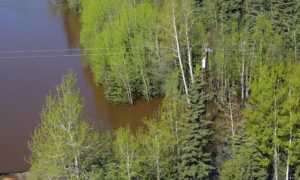
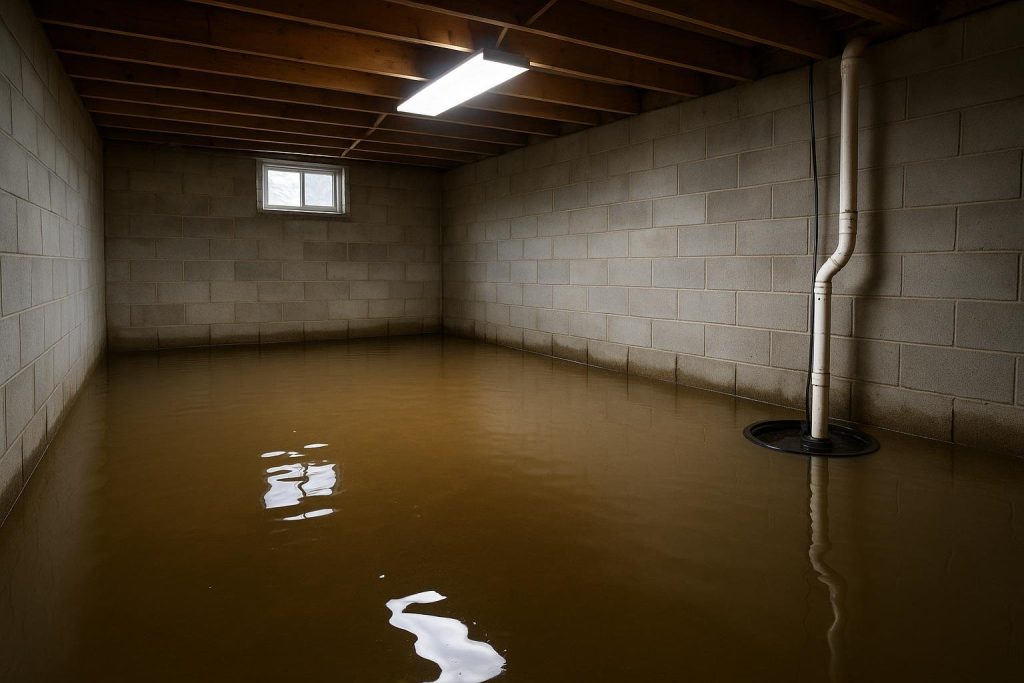
When a sump pump failed and your basement flooded, the most likely cause is a pump that burned out during a heavy rain event, lost power, or was overwhelmed by more water than its rated capacity could handle. A sump pump failed basement flooded situation demands immediate action: cut power to any submerged appliances at the breaker, then move to a dry area and call a waterproofing professional before re-entering standing water.
Key Takeaways
- Power loss and motor burnout are the two most common reasons a sump pump stops working during a storm.
- Toronto’s heavy clay soil holds hydrostatic pressure against foundation walls long after rain stops, so water keeps entering even after the storm passes.
- A battery backup or water-powered backup pump is the single most effective way to prevent a repeat flood.
- Interior weeping tile tied to a properly sized sump basin is the permanent fix when a pump failure reveals a wider drainage problem.
How urgent is this?
Monitor: Pump ran dry, no water in the basin, floor is damp but not pooling. Check the float switch and test the pump manually.
Act soon: Pump is humming but not moving water, or the basin is full and draining slowly. Motor or impeller failure is likely. Book an inspection within 24 hours.
Act now: Standing water on the floor, water touching electrical panels or appliances, or water still rising. Cut power at the breaker and call immediately.
Confirm it is actually a sump pump failure
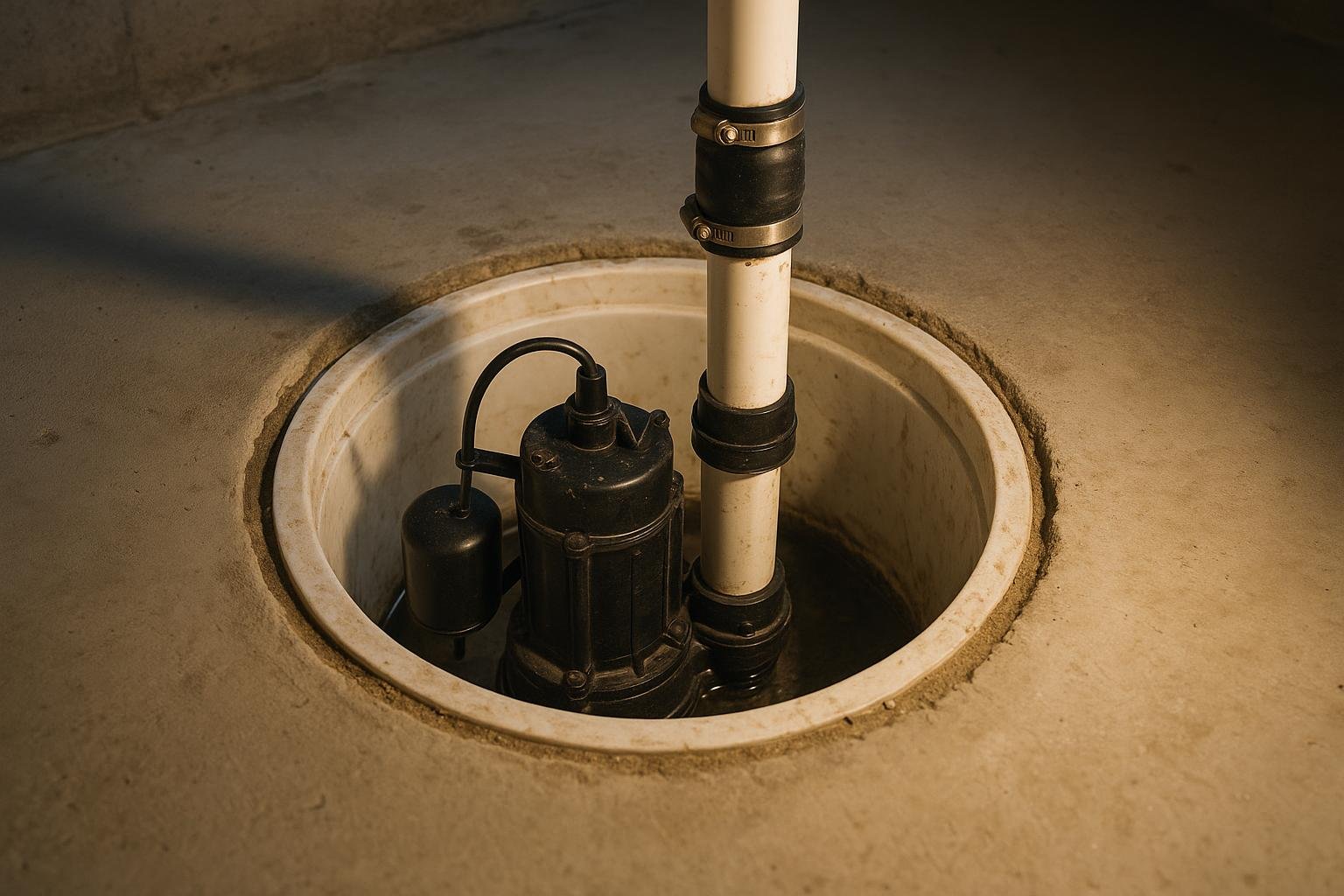
A flooded basement does not always mean the pump itself has failed. Before assuming the worst, check whether the basin is full of water with the pump sitting idle, whether the pump is running but water is not dropping, or whether the basin is empty and water is entering through the walls or floor instead.
A genuine pump failure looks like this: the basin fills to the float trigger point, the pump either does not start or starts and hums without discharging, and water overflows the basin rim onto the floor. The discharge pipe outside should be dry or barely dripping when the pump is running during a storm. If it is, the pump is not moving water.
Also check the check valve on the discharge line. A failed check valve lets water flow back into the basin the moment the pump shuts off, causing the pump to cycle constantly until it burns out. This is a common failure mode in Toronto homes during prolonged spring downpours.
Problems it gets confused with
A sump pump failed basement flooded scenario can look identical whether the cause is a dead pump, a cracked foundation wall, failed weeping tile, or a blocked floor drain. If water is seeping through wall cracks or rising through the floor independently of the basin level, the pump is not the root problem. Silted-up original weeping tile, which is extremely common in older Toronto homes, can overwhelm even a working pump by delivering more water to the basin than the pump can discharge. Window well flooding and blocked downspout extensions can also send water into the basement without involving the sump system at all.
Causes, ranked
1. Power outage during the storm
The most common reason a sump pump fails during a Toronto downpour is simple: the power goes out. Severe thunderstorms that produce the heaviest rainfall also knock out electricity. A standard pump with no backup power goes silent the moment the grid fails, and the basin fills within minutes. This is why a battery backup unit or a water-powered backup pump is considered essential equipment, not an optional upgrade, in GTA homes with active sump systems. The telltale sign is that the pump works fine once power is restored.
2. Motor burnout from continuous running
During a prolonged rain event, a pump rated for intermittent use can run continuously for hours. The motor overheats and seizes. Heavy clay soil across much of the GTA holds water against the foundation long after rain stops, so the pump never gets a rest cycle. The telltale sign is a pump that hums or is completely silent, with a basin that is full or overflowing and a motor casing that is hot to the touch.
3. Float switch stuck or jammed
The float switch tells the pump when to start and stop. If it gets wedged against the basin wall, tangled in debris, or corroded, the pump never receives the start signal. Water rises past the trigger point and floods the floor. The telltale sign is a full basin with a pump that does not start when you manually lift the float.
4. Undersized pump for the water volume
A pump installed years ago may have been adequate for normal groundwater, but Toronto’s increasingly intense summer downpours can exceed its rated gallons-per-hour capacity. The pump runs continuously but cannot keep up. The telltale sign is a pump that is clearly running and discharging, but the basin level keeps rising anyway.
5. Blocked or frozen discharge line
The discharge pipe that carries water away from the house can freeze in winter, become blocked by debris, or terminate too close to the foundation so water drains back. A blocked line causes the pump to run against back-pressure until it trips its thermal overload or burns out. The telltale sign is a running pump with no water exiting the discharge outlet outside.
6. Failed or silted weeping tile feeding the basin
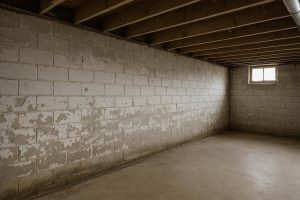
If the perimeter weeping tile around the footing has collapsed or silted up, water bypasses the drainage system entirely and enters through wall cracks or the floor-wall joint instead of flowing to the basin. The pump may be working perfectly but is irrelevant to the flood. This is a structural drainage failure, not a pump failure, and it requires a weeping tile replacement rather than a new pump. Older Toronto homes built before the 1980s are particularly prone to this.
Cause and solution table
| Cause | Telltale sign | Appropriate fix | Urgency |
|---|---|---|---|
| Power outage | Pump works after power returns | Install battery backup or water-powered backup pump | Act soon |
| Motor burnout | Pump hums or is silent, motor hot | Replace pump; upsize if basin fills quickly | Act now |
| Float switch failure | Basin full, pump does not start | Replace float switch or full pump unit | Act soon |
| Undersized pump | Pump runs but basin level rises | Upsize to higher GPH rated pump | Act soon |
| Blocked discharge line | Pump runs, no water exits outside | Clear blockage, extend discharge away from foundation | Act now |
| Failed weeping tile | Water enters through walls or floor, not basin | Interior weeping tile replacement to new sump basin | Act now |
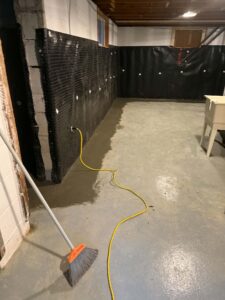
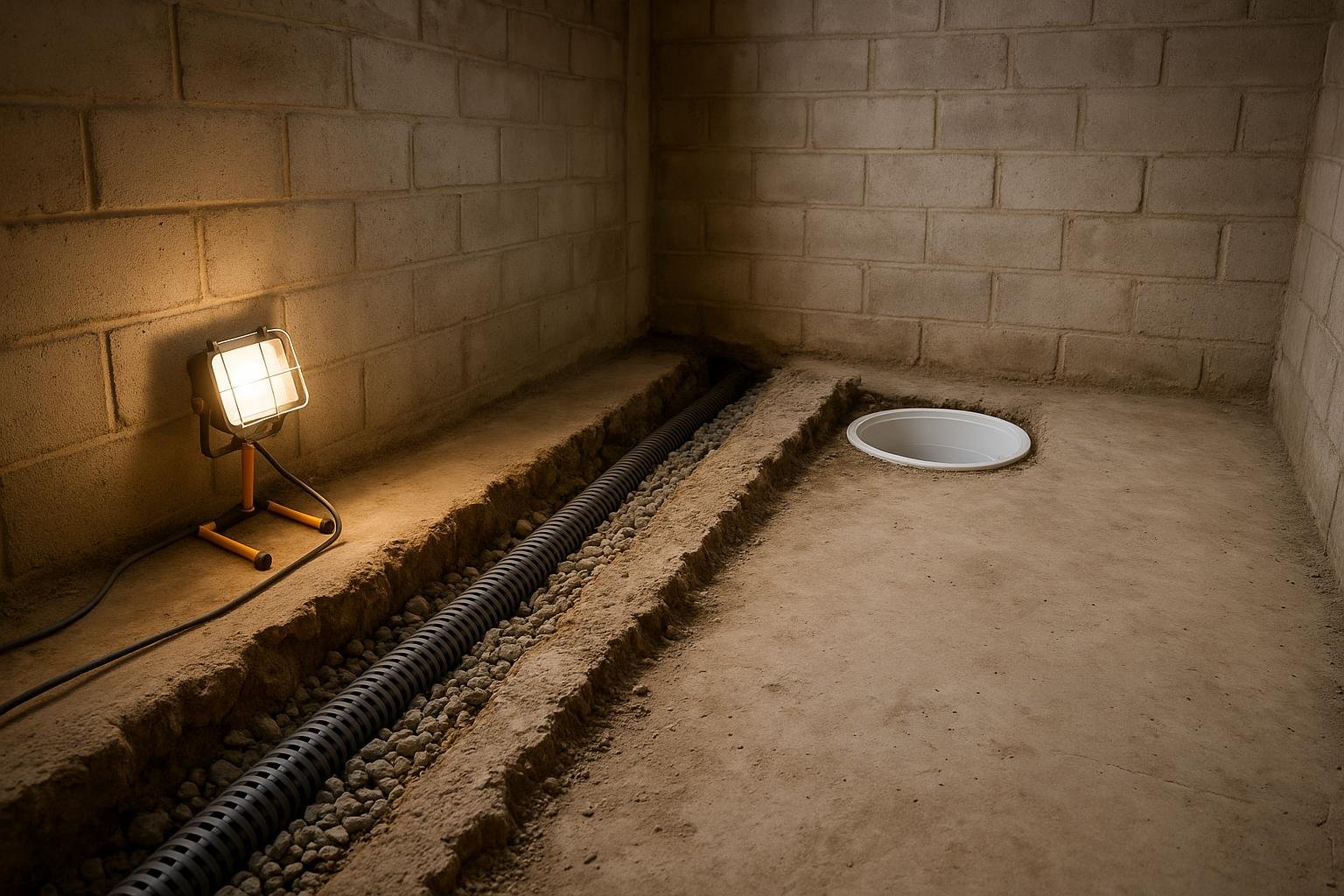
If the pump itself is the problem, a replacement or backup unit solves the immediate risk. If water is entering through the foundation independently of the basin, the pump is only one part of the answer. A failed weeping tile system requires a full interior drainage repair, which involves jackhammering the perimeter slab, installing new weeping tile to a properly sized sump basin, and re-pouring the concrete. For a realistic picture of what that work costs, the basement leak repair cost guide for Toronto breaks down the main cost drivers.
What you can safely check yourself
- Cut power first. Before touching anything in a flooded basement, go to your electrical panel and switch off the circuits serving the basement. Do not enter standing water with live circuits.
- Check the basin water level. Once power is off and it is safe to enter, look into the sump pit. A full or overflowing basin with a silent pump points to motor or float failure.
- Lift the float manually. Unplug the pump, plug it back in, and manually lift the float ball or arm. If the pump starts, the float switch is stuck. If it hums but does not move water, the impeller may be jammed or the motor is seized.
- Check the discharge outlet outside. Walk around to where the discharge pipe exits the house. Confirm it is not blocked by ice, debris, or soil settlement, and that it terminates at least 2 metres from the foundation.
- Inspect the check valve. The check valve on the vertical discharge pipe inside should only allow flow upward. If it is leaking back, you will hear water trickling back into the basin after the pump shuts off.
What NOT to do
Do not enter a flooded basement while electrical circuits are live. Water and electricity are a fatal combination, and a standard household circuit has more than enough current to cause cardiac arrest. Do not attempt to vacuum or pump out water yourself before the power is confirmed off at the panel.
Do not pour hydraulic cement into wall cracks as a permanent fix while water is actively flowing. It will not bond properly under hydrostatic pressure and will fail within one freeze-thaw cycle. Do not ignore the flood and assume the pump replacement alone solves the problem if water was entering through the walls or floor. That points to a drainage or crack issue that a new pump will not address.
How a professional diagnoses it
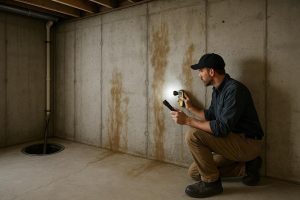
A proper inspection starts with a moisture assessment of the entire basement perimeter, not just the sump pit. The technician checks the basin size relative to the home’s footprint and soil type, tests the pump’s rated horsepower against the observed inflow rate, and inspects the weeping tile condition where accessible.
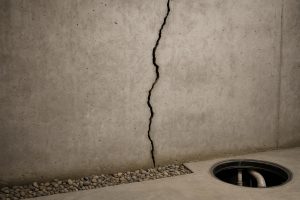
Wall cracks are probed for active seepage. The floor-wall joint is checked for the gap that forms when hydrostatic pressure lifts the slab slightly away from the footing. The discharge line is traced from the pump to its exterior termination point. The technician also checks whether the existing system was designed with a battery backup circuit and whether the basin has a sealed lid, which prevents radon and humidity from entering the living space.
The Canada Mortgage and Housing Corporation (CMHC) recommends that sump systems in high-water-table areas include both a primary pump and an independent backup, a standard DryShield applies on every new interior system installation. You can read CMHC’s guidance on basement moisture at cmhc-schl.gc.ca.
Temporary vs permanent fixes
A temporary fix gets the water out and buys time. A permanent fix stops water from reaching the pump in the first place. When a sump pump failed basement flooded situation reveals deeper drainage problems, a pump swap alone will not prevent the next event.
| Option | What it does | Typical cost range (Ontario) | How long it lasts |
|---|---|---|---|
| Pump replacement only | Replaces the failed unit with a correctly sized pump | Varies by pump size and labour; confirm with inspection | 7 to 10 years with annual testing |
| Battery backup added | Keeps the system running during power outages | Confirm with inspection | Battery replaced every 3 to 5 years |
| Interior weeping tile system | Intercepts groundwater at the footing before it enters the basement; drains to a new sump basin | Below the cost of full exterior waterproofing; site inspection required | Permanent with proper maintenance |
| Full exterior waterproofing | Excavates to the footing, applies rubberised membrane, dimpled drainage board, new weeping tile in clear stone | Roughly $6,000 to $9,000 for an average Toronto semi or detached, depending on linear footage and excavation depth | Permanent |
Replacing the pump alone is the right call when the pump is genuinely the only failure point and the drainage system is intact. When the flood revealed that water was entering through cracks, the floor-wall joint, or silted weeping tile, a new pump is only a stopgap. The interior weeping tile route is the most common permanent solution in Toronto because it does not require excavation and can be completed in one to two days. Exterior waterproofing is the most comprehensive option and is worth considering when the foundation membrane has also failed. Our sump pump installation service page covers the full range of pump and backup options we install.
Full exterior waterproofing of an average Toronto semi or detached runs roughly $6,000 to $9,000 depending on linear footage, excavation depth, and site access. The final figure always depends on a site inspection.
Frequently asked questions
Why did my sump pump fail during a heavy rainstorm specifically?
Heavy storms are the worst-case scenario for a sump pump because they combine peak inflow with the highest risk of power outage. Toronto’s clay soil also releases stored water slowly after rain stops, so the pump runs far longer than the storm itself lasts. A pump that is borderline adequate in normal conditions gets overwhelmed when both factors hit at once.
How do I know if my weeping tile has failed, not just the pump?
If water is seeping through wall cracks, rising through the floor slab, or entering at the floor-wall joint rather than flowing into the sump basin, the weeping tile is the likely culprit. A working pump cannot fix a drainage system that is no longer delivering water to the basin. A professional moisture assessment will confirm which system has failed.
Can I just replace the sump pump myself?
Swapping a like-for-like pump in a dry basin is within reach for a confident DIYer. The risk is choosing the wrong horsepower rating for your basin size and soil conditions, or failing to reinstall the check valve correctly. If the flood revealed any wall seepage or floor cracks, a professional inspection is worth doing before you invest in a new pump, so you are not replacing equipment that will be overwhelmed again.
Does home insurance cover a flooded basement from a sump pump failure?
Standard Ontario home insurance policies typically exclude sewer backup and overland flooding unless you have purchased those endorsements separately. Sump pump failure coverage is sometimes available as an add-on rider. Review your policy wording carefully and contact your broker before assuming the damage is covered. Our guide on home insurance and basement waterproofing in Ontario covers what is and is not typically included.
What size sump pump do I need for a Toronto home?
Most Toronto semi-detached and detached homes with active groundwater issues need a pump rated between 1/3 and 1/2 horsepower, capable of moving 2,000 to 3,000 gallons per hour at a 10-foot head. Homes on low-lying lots, near ravines, or with a history of flooding may need a 3/4 horsepower unit. The correct size depends on basin diameter, discharge head height, and observed inflow rate during a storm, all of which a site inspection will determine.
How often should a sump pump be tested and replaced?
Test the pump every spring before the thaw season by pouring a bucket of water into the basin and confirming it starts and discharges. Most pumps have a service life of seven to ten years. If yours is approaching that age and has never been replaced, proactive replacement before a major storm is far cheaper than emergency flood remediation. Battery backups need their batteries replaced every three to five years regardless of how often they have been used.
Toronto’s spring thaw and summer downpours are the two peak failure windows for sump pumps. Testing every April and replacing aging units before those windows is the most cost-effective prevention available.
If a sump pump failed basement flooded event has left you uncertain whether the pump, the weeping tile, or the foundation itself is the root cause, a free on-site assessment is the fastest way to get a clear answer. DryShield serves Toronto and the broader GTA, including Mississauga, Vaughan, Markham, Brampton, and Hamilton. Use our basement leak diagnostic tool to narrow down the likely cause before your appointment, or contact us directly to book a no-obligation inspection and written scope.