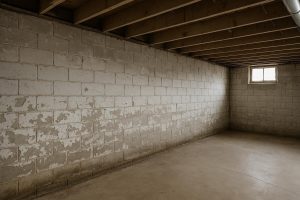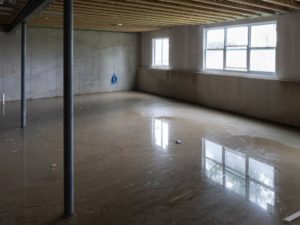
A leaky basement North Bay homeowners encounter most often traces back to two seasonal triggers: the spring snowmelt that saturates the Canadian Shield fringe soils around the city, and the heavy summer downpours that follow. Understanding which entry point is letting water in determines which repair method will actually work long term.
Key Takeaways
- North Bay’s mix of sandy loam, silty soils and exposed bedrock creates drainage patterns that differ significantly from GTA clay, making local diagnosis essential.
- The two peak failure windows are spring thaw (April to May) and intense summer rain events, when hydrostatic pressure spikes against foundation walls.
- A single injected foundation crack typically costs $600 to $900; a full interior weeping tile system or exterior waterproofing job runs considerably more depending on linear footage and access.
- Older North Bay homes often have original clay weeping tile that has silted up completely and no longer drains.
- Choosing the wrong repair method wastes money. Interior systems manage water that has already entered; exterior waterproofing stops it at the wall before it gets inside.
Definitions and Scope
A wet or leaky basement is any condition where liquid water, water vapour or both enter the below-grade living space. In North Bay, the three most common entry points are foundation wall cracks, the joint where the wall meets the footing (the cove joint), and the floor slab itself when hydrostatic pressure from a rising water table pushes upward.
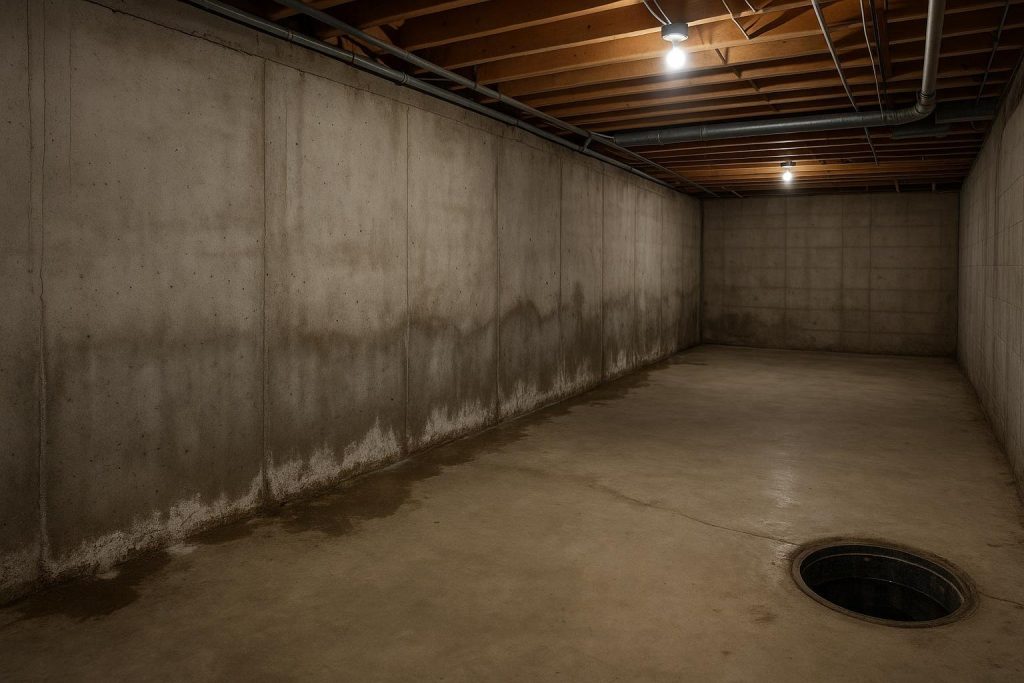
Hydrostatic pressure is the force that saturated soil exerts against a buried concrete or block wall. When the soil around a North Bay foundation holds more water than it can drain away, that pressure finds the weakest point in the wall, whether a shrinkage crack, a cold joint or a deteriorating parging coat. The result is a damp patch, a white mineral deposit called efflorescence, or an active trickle.
Waterproofing is the trade term for any system designed to prevent that water from reaching the interior. It ranges from a single crack injection taking a few hours to a full exterior excavation and membrane system taking several days. The right scope depends on where the water is coming from and how much of the wall is affected.
Why This Matters for North Bay Homeowners
North Bay sits at the edge of the Canadian Shield, which means the soil profile varies sharply across the city. Neighbourhoods closer to Lake Nipissing tend to have sandy, fast-draining soils, while areas further inland can have silty or loamy deposits that hold moisture longer. Neither profile is as predictable as the dense clay belt that dominates the GTA, so water can move laterally in unexpected directions before it finds a foundation wall.
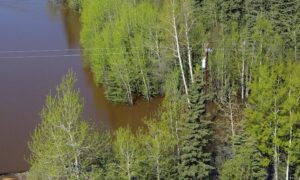
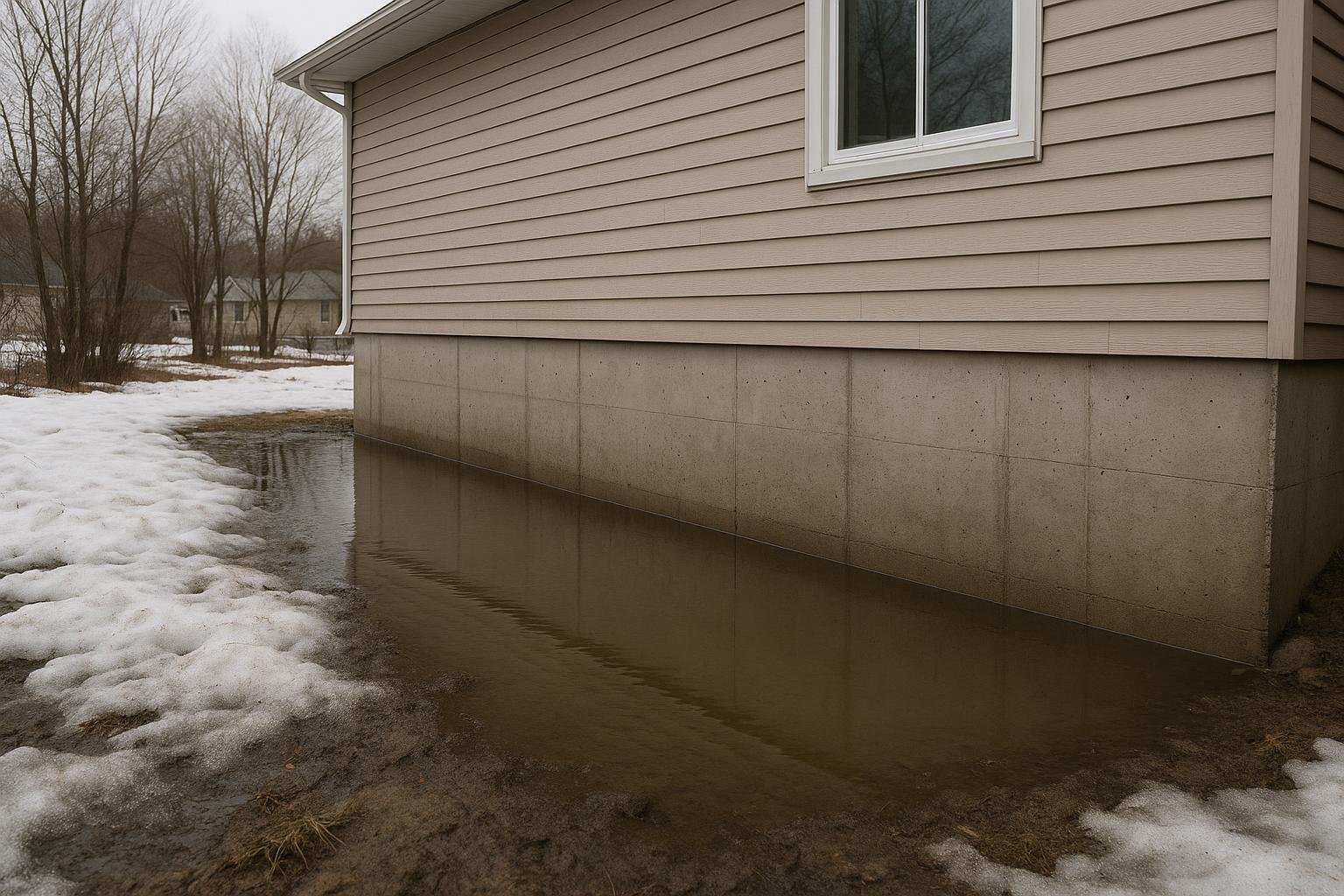
The city also receives significant snowfall each winter. When that snowpack melts rapidly in April and May, the ground is often still partially frozen below the surface, which means meltwater cannot percolate downward and instead runs horizontally toward the nearest below-grade structure. This is the single most common cause of a leaky basement North Bay residents report each spring.
Older homes in the downtown core and the Ferris neighbourhood were built with clay weeping tile, a fired-clay pipe system that was standard before perforated plastic pipe became the norm. After 40 or 50 years, those clay sections collapse, fill with silt or root intrusion, and stop draining entirely. When that happens, even a modest rainfall event can overwhelm the foundation.
Spring thaw is the highest-risk window for North Bay basements. When frozen subsoil blocks downward drainage, meltwater runs laterally and builds hydrostatic pressure against foundation walls within hours.
Canada Mortgage and Housing Corporation (CMHC) guidance on residential moisture control, available at cmhc-schl.gc.ca, confirms that foundation drainage failure is the leading cause of below-grade moisture problems in Canadian homes, a finding that matches what crews encounter on North Bay job sites every spring.
Warning Signs of a Leaky Basement North Bay Homeowners Should Know
| Warning Sign | What It Indicates | Urgency |
|---|---|---|
| White chalky deposits (efflorescence) on walls | Mineral salts left behind by water moving through concrete | Moderate: water is entering, investigate source |
| Damp or wet floor along the perimeter | Cove joint failure or high water table pushing through slab | High: drainage system likely compromised |
| Active trickle or drip from a wall crack | Open shrinkage or structural crack under hydrostatic pressure | High: inject or excavate promptly |
| Sump pump running constantly during wet weather | Failed weeping tile forcing pump to compensate | High: camera inspection recommended |
| Musty odour without visible moisture | Hidden mould growth behind drywall or insulation | Moderate: moisture meter test advised |
| Bowing or horizontal cracks in block walls | Lateral soil pressure causing structural movement | Critical: engineer assessment required |
| Peeling paint or bubbling on basement walls | Moisture vapour migrating through concrete | Low to moderate: monitor and assess drainage |
Any of the signs above in a leaky basement North Bay home warrant a professional inspection before the next freeze-thaw cycle. Early diagnosis keeps repair costs at the lower end of the range.
North Bay Soil Type and Foundation Risk
| Soil Type | Typical Location in North Bay | Drainage Behaviour | Foundation Risk Level |
|---|---|---|---|
| Sandy loam | Near Lake Nipissing shoreline | Fast-draining, low lateral water movement | Lower, but frost heave possible |
| Silty loam | Inland residential neighbourhoods | Holds moisture longer, moderate lateral flow | Moderate, spring thaw risk elevated |
| Mixed till over bedrock | Canadian Shield fringe areas | Unpredictable, water channels along rock face | High, water can redirect toward foundations |
| Disturbed fill (urban lots) | Downtown core and infill developments | Variable, often poorly compacted | High, settlement and drainage gaps common |
Knowing your soil type helps explain why a leaky basement North Bay diagnosis must be site-specific. A fix that works on a sandy lakeside lot may be inadequate for a mixed-till property on the Shield fringe.
Your Options for Fixing a Leaky Basement North Bay
Polyurethane Crack Injection
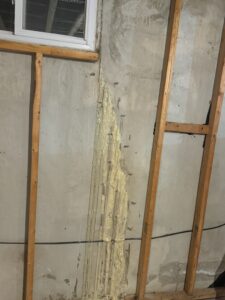
Low-pressure polyurethane injection is the correct repair for an isolated vertical or diagonal shrinkage crack in a poured concrete wall. A technician drills a series of ports along the crack, pastes surface packers over each port, then injects two-part polyurethane foam under low pressure. The foam expands to fill the full depth of the crack and cures flexible, so it tolerates the seasonal movement that North Bay foundations experience as the ground freezes and thaws each year.
This method works from the interior, which means no excavation and no disruption to landscaping. It is best suited to a single crack that is the clear and only entry point. It does not address failed weeping tile, high water tables or cracks in block foundations where the mortar joints are also deteriorating.
Epoxy Crack Injection
Epoxy injection is reserved for structural cracks where the wall itself needs to be re-bonded. Epoxy cures rigid and achieves compressive strength comparable to the surrounding concrete, making it appropriate when a crack shows signs of differential movement or when an engineer has flagged the wall for structural concern. Because it cures rigid, epoxy is not the right choice for a non-structural shrinkage crack in a North Bay home where seasonal freeze-thaw cycling will continue to stress the foundation.
Interior Weeping Tile System
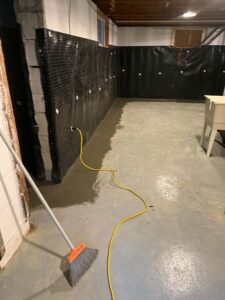
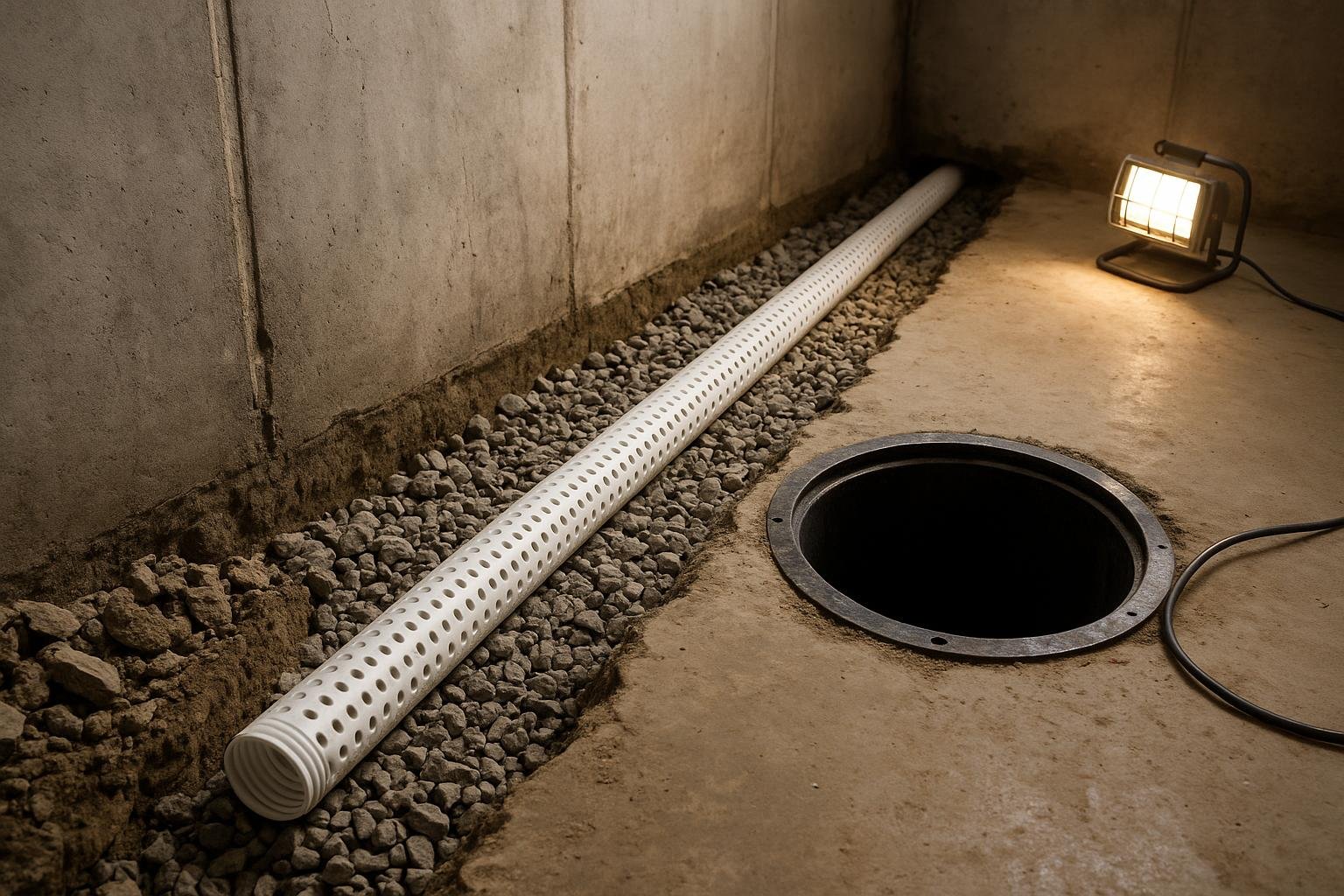
An interior drainage system addresses water that has already passed through the wall or is seeping up through the floor. A crew jackhammers a channel around the interior perimeter of the basement, installs a perforated drainage pipe bedded in clear stone, routes that pipe to a sump basin, and re-pours the concrete. A vapour barrier is then run up the wall to direct any wall seepage down into the drainage channel rather than onto the floor.
This approach does not stop water from entering the wall, but it intercepts and removes it before it can cause damage. It is the preferred solution when exterior excavation is not practical, when the water table is consistently high, or when multiple entry points make crack-by-crack injection impractical. A sump pump with a battery backup is an essential part of this system.
Exterior Waterproofing
Full exterior waterproofing is the most comprehensive solution. A crew excavates down to the footing, applies hydraulic cement to any voids or honeycombing in the concrete, installs a rubberised membrane over the full wall face, covers that membrane with a dimpled drainage board to protect it and create a drainage plane, lays new perforated weeping tile bedded in clear stone at the footing level, and then backfills with properly graded material. This stops water at the wall rather than managing it after entry.
For a typical North Bay semi-detached or detached home, full exterior waterproofing runs roughly $6,000 to $9,000 depending on linear footage, depth of excavation and site access. Final cost always depends on a site inspection. It is the right choice when the original weeping tile has failed, when the existing membrane has deteriorated, or when the homeowner wants the most permanent solution available.
Sump Pump Installation or Replacement
A sump pump is not a waterproofing method on its own, but it is a critical component of any drainage system. In North Bay, where spring thaw can deliver large volumes of meltwater in a short window, a properly sized pump with a battery backup prevents the sump basin from overflowing during a power outage. Pump sizing, discharge routing and the presence of a check valve all affect long-term reliability.
Parging and Surface Repairs
Parging is a coat of mortar applied to the above-grade or near-grade portion of a foundation wall. It protects the concrete from freeze-thaw spalling and surface water infiltration. Parging repairs are appropriate as a maintenance measure on sound walls, but they are not a substitute for waterproofing when water is entering below grade. Applying parging over an active leak traps moisture and accelerates deterioration.
Options Compared
| Method | Best For | Typical Lifespan | Relative Cost | Disruption |
|---|---|---|---|---|
| Polyurethane crack injection | Single poured-concrete shrinkage crack | Long-term when crack is stable | Lowest ($600-$900 per crack) | Minimal, interior only, no excavation |
| Epoxy crack injection | Structural cracks requiring re-bonding | Permanent if wall is stable | Low to moderate | Minimal, interior only |
| Interior weeping tile system | High water table, multiple entry points, failed drainage | 20+ years with pump maintenance | Moderate | Significant interior jackhammering |
| Exterior waterproofing | Failed original membrane or weeping tile, comprehensive protection | 25+ years | Highest ($6,000-$9,000 typical range) | Excavation required, landscaping affected |
| Sump pump installation | Complement to drainage system, high water table | 7-12 years per pump unit | Low to moderate | Minimal |
| Parging repair | Above-grade surface protection, maintenance | 5-15 years depending on exposure | Lowest | None |
Polyurethane injection is the fastest and most affordable fix when the problem is genuinely limited to one crack. Interior drainage systems suit situations where water is entering from multiple points or where the water table itself is the issue. Exterior waterproofing costs the most upfront but addresses the root cause at the wall face and typically carries the longest service life. Most North Bay homes with silted original weeping tile need either an interior system or full exterior work, not just crack injection.
How to Choose
Choose polyurethane crack injection if you have a single, clearly visible vertical or diagonal crack in a poured concrete wall, the crack is the only wet spot in the basement, and the surrounding concrete is otherwise sound. This is a same-day repair that does not require excavation.
Choose an interior weeping tile system if water is entering along the cove joint or through the floor, if you have a block foundation with multiple mortar joints weeping, or if exterior excavation is not possible due to a deck, driveway or neighbouring structure. An interior system paired with a reliable sump pump handles most high-water-table situations effectively.
Choose exterior waterproofing if your home is more than 40 years old and has never had the original weeping tile replaced, if you have had recurring leaky basement North Bay problems despite previous repairs, or if a camera inspection confirms the existing drainage pipe is collapsed or silted. This is also the right choice when you want a transferable warranty that adds value at resale.
Choose a sump pump upgrade if your existing pump is more than ten years old, lacks a battery backup, or has no alarm. In North Bay, a power outage during a spring thaw event is a realistic scenario, and a pump that fails at that moment can flood a finished basement within hours.
If your North Bay home was built before 1980 and has never had the weeping tile inspected, assume it has failed. A camera inspection during the free site assessment will confirm the condition before any repair scope is written.
Costs and Timelines
| Cost Driver | Why It Affects Price | Approximate Impact |
|---|---|---|
| Linear footage of affected wall | More wall means more membrane, more weeping tile, more labour | Primary pricing variable |
| Depth of excavation | Deeper footings require more excavation time and shoring | Significant on older homes with deep footings |
| Site access | Tight lots, fences, decks or driveways restrict equipment and add hand-digging | Can add 15-30% to exterior job cost |
| Number of cracks | Each crack injection is priced individually at $750-$1,000 per crack | Moderate on multi-crack scenarios |
| Condition of existing drainage | Fully collapsed weeping tile requires complete replacement rather than supplementing | Increases interior or exterior system scope |
| Sump basin and pump | New basin, pump, check valve and battery backup add to interior system cost | Fixed addition to interior system quotes |
A single foundation crack injected from the interior is typically $750-$1,000. A full exterior waterproofing job on an average North Bay detached home runs roughly $6,000 to $9,000, consistent with what the same scope costs in Toronto and the GTA, though site-specific variables always shift the final number. Interior weeping tile systems generally fall below the exterior range. All figures above are approximate ranges; the actual cost depends on a free on-site inspection and written scope. DryShield provides linear-foot pricing in every written quote so homeowners can see exactly what they are paying for.
Risks and Common Mistakes
The most expensive mistake North Bay homeowners make is applying a surface sealant or hydraulic cement to an active crack without addressing the drainage behind the wall. These products can temporarily stop visible seepage, but they do not relieve hydrostatic pressure. The water finds another path, often through the floor or a different section of wall, and the new entry point is usually harder to access than the original one.
A second common error is installing an interior drainage system without replacing a failed sump pump or adding a battery backup. An interior system collects water into a basin. If the pump fails during a spring thaw or a summer storm, the basin overflows and the basement floods. In North Bay, where power outages during severe weather are not uncommon, a battery backup is not optional.
Grading problems are frequently overlooked. If the soil around the foundation slopes toward the house rather than away from it, every rainfall event directs surface water directly against the wall. Correcting the grade costs far less than a waterproofing system and should be done regardless of which repair method is chosen.
Never seal a crack from the inside without first confirming the exterior drainage is functional. Trapping water behind a sealed wall face increases hydrostatic pressure and can cause the wall to bow or crack further.
Finally, confusing condensation with a leak leads to unnecessary repairs. If basement walls are wet only during humid summer months and dry out in winter, the problem may be warm humid air condensing on cool concrete rather than water infiltrating from outside. A moisture meter and a simple plastic sheet taped to the wall for 24 hours can distinguish between the two before any repair work begins. For a detailed look at what wet walls actually indicate, the DryShield guide on basement wet walls and their causes walks through the diagnostic steps.
How the Process Works
- Free on-site inspection and moisture assessment. A technician visits the property, identifies all entry points, checks the sump pit condition, and assesses whether the original weeping tile is functional. No repair scope is written without this step.
- Written scope with linear-foot pricing. The homeowner receives a written quote that breaks down cost by method and linear footage so there are no surprises on the final invoice.
- Preparation and protection. Interior contents near the work area are protected. For exterior work, landscaping and any hardscaping adjacent to the excavation zone is carefully removed and set aside for reinstatement.
- Core repair work. For exterior jobs: excavation to the footing, hydraulic cement parging of voids, rubberised membrane application, dimpled drainage board, new perforated weeping tile bedded in clear stone, backfill and grade correction. For interior systems: perimeter jackhammering, weeping tile installation to a sump basin, vapour barrier up the wall, concrete re-pour. For crack injection: port drilling, paste application, low-pressure polyurethane or epoxy injection.
- Sump pump check or installation. Where a sump basin is part of the scope, the pump, check valve and battery backup are installed and tested before the crew leaves.
- Site cleanup and reinstatement. Excavated soil is backfilled and graded away from the foundation. Interior concrete is re-poured flush with the existing floor.
- Final walkthrough and warranty documentation. The homeowner receives documentation of the work completed and warranty terms. DryShield’s lifetime transferable warranty applies to qualifying waterproofing systems and transfers to a new owner at resale. For full details on our North Bay service area, visit the North Bay waterproofing page.
Frequently Asked Questions
What causes a leaky basement in North Bay specifically?
The most common causes of a leaky basement North Bay homeowners face are spring snowmelt saturating partially frozen ground, original clay weeping tile that has silted up after decades of service, and foundation wall cracks that open as the ground freezes and thaws each year. The city’s varied soil profile, ranging from sandy loam near the lake to silty inland deposits, means water can travel laterally before reaching a wall rather than draining straight down.
How do I know if my weeping tile has failed?
Signs of failed weeping tile include water entering along the base of the wall or through the floor slab, a sump pump that runs constantly during wet weather, and a basement that was dry for years but has become progressively wetter. A camera inspection through the cleanout or sump pit can confirm whether the pipe is collapsed, root-filled or silted. Homes built before 1980 in North Bay should have the weeping tile inspected as a matter of routine.
Can I inject a crack myself with a store-bought kit?
Consumer crack injection kits exist, but they typically deliver product at higher pressure than the low-pressure port-and-paste method used by professionals, which can push the crack open rather than filling it fully. A properly injected crack fills the full depth of the wall from interior face to exterior face. Incomplete fill leaves a void that water will find. For a crack that is actively leaking or wider than a hairline, professional injection is the more reliable choice.
Is interior waterproofing as effective as exterior?
Interior drainage systems are highly effective at keeping a basement dry, but they manage water after it has entered the wall rather than stopping it at the exterior face. Exterior waterproofing stops water at the membrane and is the more comprehensive solution. For many North Bay homes where excavation is practical, exterior work is the preferred long-term fix. Interior systems are the right choice when exterior access is restricted or when the water table is the primary driver rather than wall penetration.
How long does a crack injection repair take?
A single crack injection typically takes two to four hours from start to finish, including port installation, injection and initial cure time. The polyurethane foam reaches working strength within hours and full cure within 24 to 48 hours. The homeowner can use the basement normally the same day in most cases.
Will waterproofing affect my home’s resale value in North Bay?
A documented waterproofing repair with a transferable warranty is a positive disclosure item in a real estate transaction. Buyers and their inspectors look closely at basements, and a dry basement with written warranty documentation removes a common negotiating point. Leaving a known leaky basement North Bay property unrepaired typically results in a price reduction that exceeds the cost of the repair itself.
Does homeowner’s insurance cover basement waterproofing in Ontario?
Standard Ontario home insurance policies do not cover the cost of waterproofing as a preventive measure or as a repair for gradual water infiltration. Sudden and accidental water damage from a specific event may be covered depending on the policy, but chronic seepage through a foundation wall is generally classified as a maintenance issue. Review your policy wording and speak with your broker before assuming coverage applies.
How do I find the right contractor for North Bay basement repairs?
Look for a contractor who provides a written scope with line-item pricing, carries liability insurance and WSIB coverage, and offers a written warranty on the completed work. Be cautious of quotes that skip the on-site inspection or that recommend the same solution regardless of the symptoms. The DryShield guide on how to choose a reliable waterproofing contractor covers the full checklist of questions to ask before signing anything.
What is the difference between polyurethane and epoxy injection?
Polyurethane cures flexible and is used for non-structural shrinkage cracks where seasonal movement will continue. Epoxy cures rigid and achieves high compressive strength, making it appropriate for structural cracks where the wall needs to be re-bonded. Using epoxy on a crack that will continue to move can cause the surrounding concrete to crack again adjacent to the rigid repair. A site assessment determines which product is correct for a given crack.
How soon should I act on a wet basement?
Act as soon as possible. Water that enters a basement repeatedly causes efflorescence, mould growth, wood rot in framing and insulation, and progressive deterioration of the concrete itself. A small crack that costs $600 to $900 to inject today can become a section of failed wall requiring far more extensive repair if left for another two or three freeze-thaw cycles. Spring thaw season in North Bay is the worst time to delay.
If your leaky basement North Bay situation is showing any sign of moisture, from a damp patch to an active trickle, the DryShield Team is ready to help. Visit the North Bay wet basement repair page for service details, or contact us directly to book a free on-site inspection. Every quote includes a written scope with linear-foot pricing and no obligation to proceed.