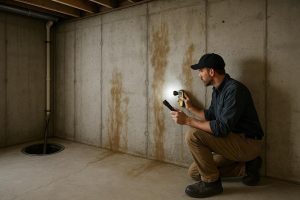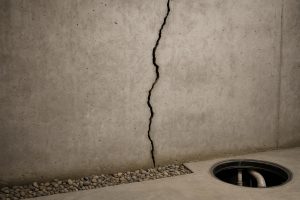
Basement leak repair Alliston homeowners need most often comes down to one of three causes: hydrostatic pressure from Simcoe County’s clay-heavy soils, a failed or silted-up weeping tile system, or a shrinkage crack in the poured concrete foundation wall. Identifying which problem you have before spending a dollar on materials is the single most important step, because the wrong fix applied to the wrong cause will fail within one or two seasons.
Key Takeaways
- Alliston sits on clay-rich soil that holds water against foundation walls, making hydrostatic pressure the most common driver of wet basements in the area.
- A single injected crack typically costs $600 to $900; a full interior weeping-tile system or exterior waterproofing job runs considerably more and depends on linear footage and access.
- Spring snowmelt and summer downpours are the two peak failure windows for Alliston foundations.
- Polyurethane injection cures flexible, tolerating seasonal foundation movement that is common in freeze-thaw climates like Simcoe County.
- A free on-site estimate is the only reliable way to confirm which repair method your specific foundation needs.
Definitions and Scope
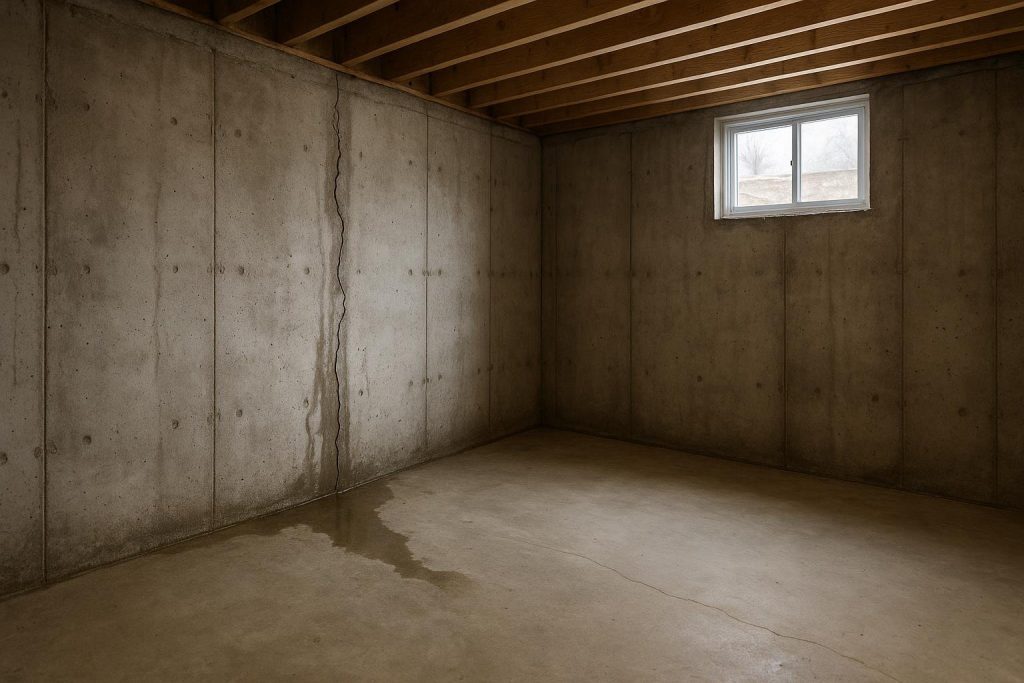
Basement leak repair Alliston professionals approach by first identifying which of three main pathways water is using: through a crack in the foundation wall, through the cove joint where the wall meets the floor, or through a saturated floor slab under hydrostatic pressure. Each pathway has a distinct repair method, and confusing them is the most expensive mistake a homeowner can make.
Hydrostatic pressure builds when groundwater accumulates against the outside of the foundation faster than it can drain away. Alliston’s clay soil is a poor conductor of water, so after a heavy rain or spring thaw, that water sits against the wall for days. Over time the pressure finds the path of least resistance, which is usually a hairline shrinkage crack, a deteriorated parging coat, or a failed weeping tile at the footing.
Weeping tile is the perforated pipe that runs along the base of the footing and channels groundwater away from the foundation. Many Alliston homes built before the 1990s have original clay or thin plastic weeping tile that has either crushed, silted up, or simply reached the end of its service life. When weeping tile fails, water has nowhere to go except up through the floor or in through the wall.
Why Basement Leak Repair Alliston Homeowners Prioritise Early Action
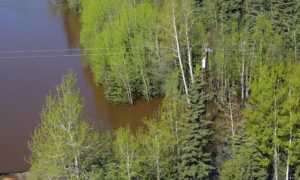
Alliston sits roughly 90 kilometres north of Toronto, in a zone where the soil transitions from the heavy Lakeshore clay of the southern GTA to a mix of clay, silt and sandy loam. That mix still holds water effectively against foundation walls, and the town’s position in Simcoe County means it receives meaningful snowfall each winter. The spring thaw, typically March through April, is the single highest-risk window for basement flooding in the area.
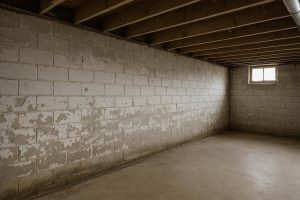
Homes in newer subdivisions on the south and east sides of Alliston were built on compacted fill, which settles unevenly and can pull foundation walls slightly out of alignment, opening hairline cracks. Older homes closer to the original town centre often have block or stone foundations with deteriorated mortar joints, a different repair challenge entirely.
Spring snowmelt and summer downpours are the two peak failure windows for Alliston foundations. Acting before either season arrives is always less expensive than reacting after water has entered.
Canada Mortgage and Housing Corporation (CMHC) notes that moisture entering a basement is one of the leading causes of indoor air quality problems in Canadian homes. You can find their guidance on foundation moisture at cmhc-schl.gc.ca. The structural and health consequences of an untreated leak compound quickly: efflorescence on the wall signals active mineral migration, mould follows within weeks of sustained dampness, and a crack that is 1 mm wide today can widen to 3 mm or more after two or three freeze-thaw cycles.
For a broader look at how waterproofing protects the whole Simcoe County region, the Simcoe County basement waterproofing guide covers the regional soil and drainage context in detail.
Your Options for Basement Leak Repair in Alliston
Polyurethane Crack Injection
Low-pressure polyurethane injection is the standard repair for a single, non-structural shrinkage crack in a poured concrete wall. A technician drills ports along the crack at roughly 200 mm intervals, pastes surface ports over each hole, then injects expanding polyurethane foam at low pressure. The foam follows the crack through the full thickness of the wall and cures flexible, which is critical in Alliston’s freeze-thaw climate because the foundation moves slightly each season. A rigid repair would re-crack at the same location.
Best for: isolated vertical or diagonal shrinkage cracks in poured concrete walls. Not suitable for horizontal cracks (which indicate lateral soil pressure and may be structural), block foundations with open mortar joints, or cracks wider than about 6 mm that suggest active movement.
Epoxy Crack Injection
Epoxy injection is used when a crack is structural and the wall must be re-bonded to restore load-bearing capacity. Epoxy cures rigid and bonds to concrete with very high tensile strength. The process is similar to polyurethane injection but requires the crack to be dry before injection, which is not always achievable in an actively leaking wall. An engineer’s assessment is recommended before choosing epoxy over polyurethane.
Best for: structural cracks where wall integrity must be restored. Not appropriate for active water infiltration or for cracks in walls that will continue to move seasonally.
Interior Weeping Tile System
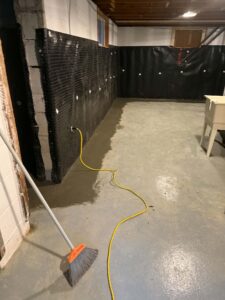
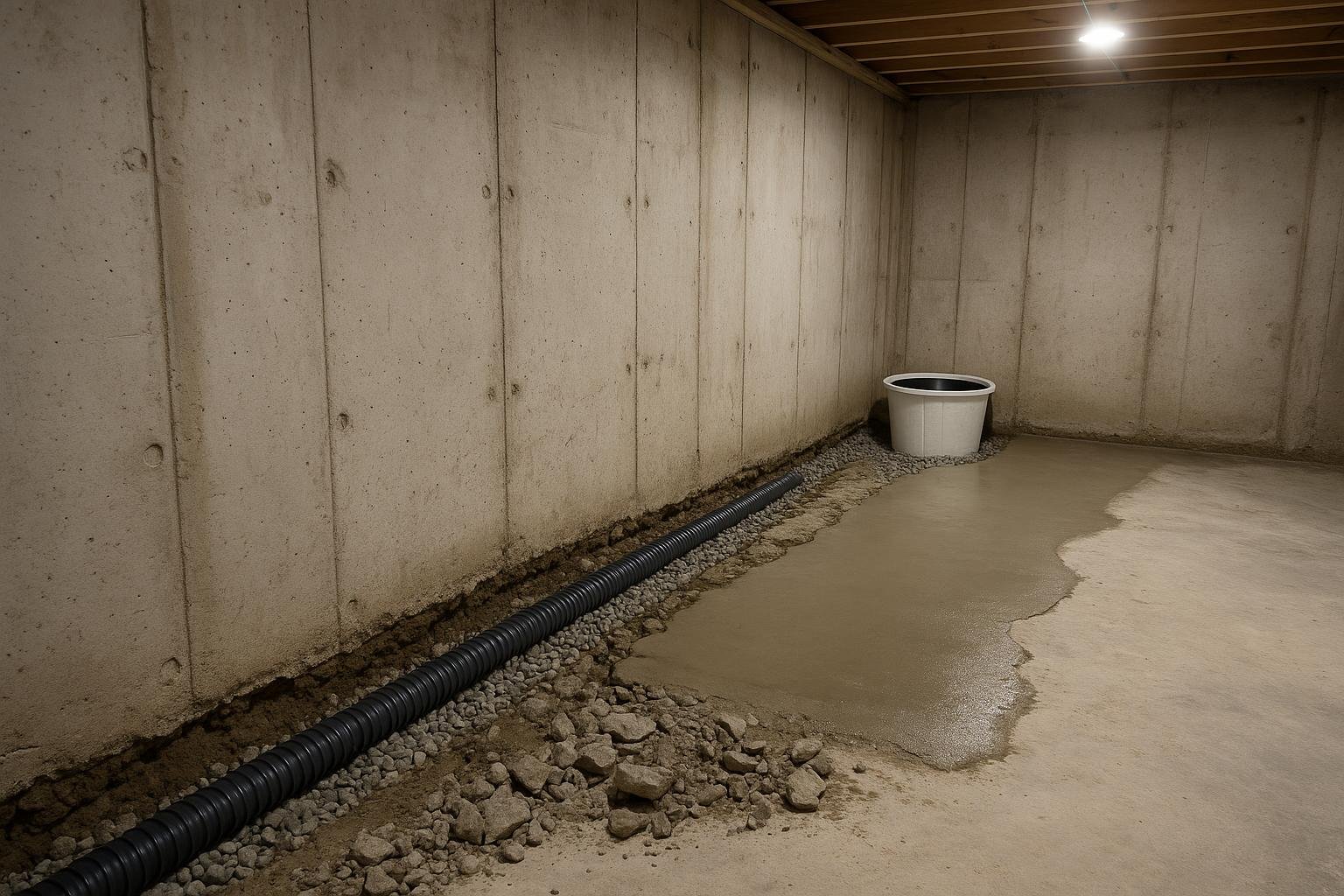
When water is entering through the cove joint, through multiple cracks, or through a saturated floor, an interior weeping tile system manages the water rather than stopping it at the source. A technician jackhammers a channel around the perimeter of the basement floor, installs a new perforated pipe bedded in clear stone, connects it to a sump basin, and re-pours the concrete. A vapour barrier is run up the wall to direct any wall seepage into the channel. The sump pump then discharges the collected water away from the foundation.
Best for: homes where exterior excavation is not practical, where multiple entry points exist, or where the original weeping tile has failed completely. This approach manages water rather than preventing it from reaching the wall, so it does not address the exterior source of pressure.
Exterior Waterproofing
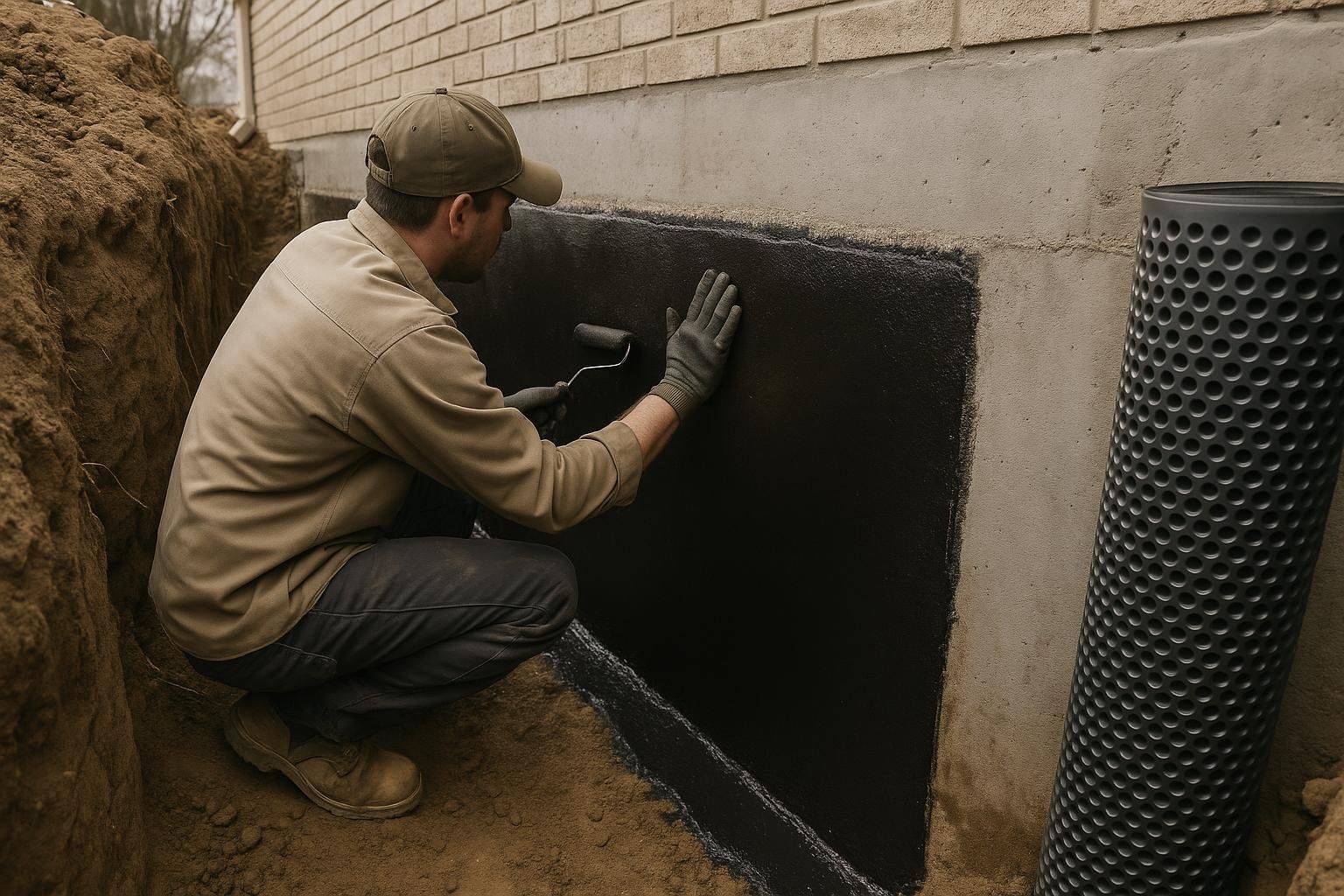
Exterior waterproofing is the most comprehensive repair because it addresses hydrostatic pressure at its source. The process involves excavating to the footing, applying hydraulic cement to any voids or honeycombing in the concrete, coating the wall with a rubberised membrane, installing a dimpled drainage board to protect the membrane and channel water downward, laying new weeping tile in clear stone at the footing, and backfilling with graded material. This is the only method that stops water before it contacts the wall.
Best for: foundations with severe or recurring leaks, failed original weeping tile, or where the homeowner wants the longest-lasting solution. Requires excavation, which means disruption to landscaping, driveways or decks adjacent to the foundation.
Sump Pump Installation or Replacement
A sump pump is the discharge mechanism for any interior drainage system, but it can also be installed as a standalone measure in a home that already has a weeping tile system but no working pump. In Alliston, where spring thaw can saturate the ground rapidly, a battery backup sump pump is strongly recommended so the system continues operating during power outages, which are common during spring storms.
Best for: homes with an existing interior drainage system that lacks a pump, or as an upgrade to an aging single-pump setup. Not a standalone fix for a leaking wall or failed weeping tile.
Parging and Surface Sealing
Parging is a mortar coat applied to the exterior of the foundation wall above grade. It seals minor surface deterioration and is a standard part of any exterior waterproofing job. As a standalone repair, parging addresses cosmetic surface erosion but does not stop water that is entering under hydrostatic pressure. Surface sealers applied to the interior wall face similarly manage minor condensation but will not hold against active water pressure.
Best for: cosmetic surface repair as part of a broader waterproofing scope. Not a primary repair for any active leak.
Options Compared
| Method | Best For | Typical Lifespan | Relative Cost | Disruption |
|---|---|---|---|---|
| Polyurethane crack injection | Single shrinkage crack, poured concrete | Long-term if crack is stable | Lowest | Minimal, interior only |
| Epoxy crack injection | Structural crack requiring re-bonding | Long-term in stable conditions | Low to moderate | Minimal, interior only |
| Interior weeping tile system | Multiple entry points, failed original tile | 20 to 25 years with pump maintenance | Moderate | Moderate, floor jackhammering |
| Exterior waterproofing | Severe or recurring leaks, full perimeter | 25 years or more | Highest | High, full excavation required |
| Sump pump installation | Discharge for interior system | 7 to 10 years per pump unit | Low to moderate | Low |
| Parging and surface sealing | Cosmetic surface repair only | 5 to 10 years | Lowest | Minimal |
The table shows that no single method suits every situation. Crack injection is the right starting point when there is one identifiable crack and no evidence of broader drainage failure. Exterior waterproofing costs more upfront but is the only approach that removes hydrostatic pressure from the equation entirely. Interior weeping tile sits in the middle: it cannot stop water at the wall face, but it manages groundwater reliably when excavation is not practical. For Alliston homes with aging original weeping tile and recurring wet seasons, combining an interior system with a quality sump pump is often the most cost-effective path.
How to Choose the Right Basement Leak Repair in Alliston
Choose polyurethane crack injection if you have one or two clearly visible vertical or diagonal cracks in a poured concrete wall, the surrounding concrete is otherwise sound, and water enters only at those specific points during heavy rain or snowmelt. This is the fastest and most affordable fix when the diagnosis is clear.
Choose an interior weeping tile system if water is entering along the cove joint at the base of the wall, if you see seepage across a wide section of wall rather than at a single crack, or if a camera inspection confirms the original weeping tile is silted or crushed. Interior systems are also the practical choice when the exterior is inaccessible due to a deck, driveway, or neighbouring structure.
Choose exterior waterproofing if you have had recurring leaks that interior repairs have not resolved, if the original membrane has failed (visible as flaking or missing material during excavation), or if you want the most durable long-term solution and the exterior is accessible. Full exterior work on an average Alliston detached home typically involves excavating to the footing depth, which varies but is commonly 1.5 to 2.1 metres in this region.
Choose epoxy injection only when a structural engineer has confirmed the crack is structural and the wall needs to be re-bonded. Do not choose epoxy for an actively wet crack, as the material requires a dry substrate to bond properly.
If you are unsure, the Alliston foundation and waterproofing service page outlines what a site inspection covers and what to expect from the assessment process.
Costs and Timelines
| Cost Driver | Why It Affects Price | Approximate Range (CAD) |
|---|---|---|
| Number and length of cracks | Each crack requires individual port placement and material | $600 to $900 per crack (injection) |
| Linear footage of perimeter | Interior or exterior systems are priced per linear foot of wall | Varies by home size; full perimeter quoted on inspection |
| Excavation depth and access | Deeper footings and restricted access increase labour and equipment time | Major factor in exterior jobs; full exterior on average detached $6,000 to $9,000+ |
| Weeping tile condition | Replacing failed tile adds material and disposal costs | Included in full exterior scope; separate line item on interior jobs |
| Sump pump specification | Battery backup and alarm systems add cost but are strongly recommended | Incremental over basic pump; quoted separately |
| Concrete reinstatement | Interior jobs require re-pouring the perimeter channel after tile installation | Included in interior system scope |
All figures above are approximate ranges drawn from completed jobs and depend on a site inspection. A single crack injection is the most predictable cost, typically $600 to $900 per crack. A full exterior waterproofing job on an average Alliston semi-detached or detached home runs roughly $6,000 to $9,000 depending on linear footage, footing depth and site access. Interior weeping tile systems generally fall below the exterior range. For a detailed breakdown of what drives waterproofing costs across Ontario, the foundation waterproofing cost guide is a useful reference. Timelines range from a single day for crack injection to three to five days for a full exterior job.
A single foundation crack injected with polyurethane typically costs $600 to $900. Full exterior waterproofing of an average Alliston detached home runs roughly $6,000 to $9,000. Every final figure depends on a site inspection.
Risks and Common Mistakes
| Symptom | Likely Cause | Correct Fix |
|---|---|---|
| Water at base of wall after rain | Failed cove joint or silted weeping tile | Interior weeping tile system with sump pump |
| Water through a single vertical crack | Shrinkage crack under hydrostatic pressure | Polyurethane crack injection |
| Horizontal crack mid-wall | Lateral soil pressure, possible structural issue | Engineer assessment; may require wall reinforcement |
| White powder on wall surface | Efflorescence from mineral-laden water migration | Identify and seal the water source; surface cleaning alone is not a fix |
| Damp floor across entire slab | Rising groundwater under hydrostatic pressure | Interior drainage system; check sump pump operation |
The most common mistake homeowners make when seeking basement leak repair Alliston contractors is applying hydraulic cement or a paint-on sealer to the interior wall face and calling the job done. These products can slow minor seepage but they cannot withstand sustained hydrostatic pressure. When the water table rises in spring, the pressure behind the wall will find a new path, often at a different location, and the homeowner is back to square one having spent money on a partial fix.
A second frequent error is ignoring the grading around the foundation. If the soil slopes toward the house rather than away from it, every rainfall directs surface water straight to the wall. Correcting the grade is inexpensive and reduces the load on any waterproofing system.
Never apply a paint-on sealer as the sole repair for an actively leaking wall. It cannot resist sustained hydrostatic pressure and will fail, often at a new location, within one or two seasons.
Skipping the sump pump battery backup is another costly oversight. Alliston experiences power outages during the same spring storms that generate the highest groundwater levels. A primary pump without a battery backup will stop working at exactly the moment it is needed most. For guidance on what to look for in a wet basement situation, the wet basement walls causes and fixes page covers the diagnostic steps clearly.
How the Process Works
- Free on-site estimate and moisture assessment. A technician visits the property, inspects the interior and exterior of the foundation, checks the grade, probes for moisture with a meter, and identifies all active and potential entry points.
- Written scope with linear-foot pricing. You receive a written proposal that specifies the method, the materials, the scope of work in linear feet or per-crack pricing, and the warranty terms. No work begins without your written approval.
- Preparation and access. For crack injection, ports are drilled and pasted. For interior systems, the perimeter floor is jackhammered and debris is removed. For exterior work, excavation begins to the footing using appropriate equipment for the site conditions.
- Core repair work. Depending on the method: polyurethane or epoxy is injected under low pressure; or weeping tile is laid in clear stone and connected to the sump basin; or the exterior wall is parged, membraned, covered with dimpled drainage board, and new weeping tile is set at the footing.
- Reinstatement and grade correction. Interior floors are re-poured with concrete. Exterior excavations are backfilled and the grade is corrected to slope away from the foundation. Landscaping disturbance is minimised where possible.
- Final inspection and documentation. The completed work is inspected, the warranty is issued, and the homeowner receives documentation of what was done and what the warranty covers.
Frequently Asked Questions
How do I know if my Alliston basement leak is a crack or a drainage problem?
If water enters at one specific point on the wall, especially after rain, a crack is the likely cause. If water appears along the base of the wall, across a wide section, or through the floor, a drainage failure is more probable. A moisture meter and a visual inspection during or just after a rain event will usually confirm which is which. When in doubt, a professional inspection is the fastest way to get a clear answer.
Can I inject a foundation crack myself?
DIY injection kits are available, but they use higher pressure than professional low-pressure systems and often push material into the crack unevenly, leaving voids. A crack that is not fully filled will leak again, usually within one season. Professional port-and-paste injection at low pressure fills the crack through its full thickness and is backed by a warranty. For a single crack costing $600 to $900 professionally, the risk of a failed DIY attempt is rarely worth it.
How long does crack injection take?
A single crack injection typically takes two to four hours from start to finish, including port installation, injection and cleanup. The polyurethane cures within 24 hours. There is no excavation and no concrete work, so the disruption to the home is minimal.
Does exterior waterproofing require a building permit in Alliston?
Excavation adjacent to a foundation wall may require a permit from the Town of New Tecumseth, which administers building permits for Alliston. Your contractor should confirm permit requirements before work begins. Work that is purely interior, such as crack injection or an interior weeping tile system, generally does not require a permit, but confirming with the municipality is always the right step.
What is the difference between weeping tile and a French drain?
Weeping tile runs along the base of the foundation footing and collects groundwater before it can build pressure against the wall. A French drain is a broader term for a trench filled with gravel and perforated pipe that redirects surface or subsurface water away from a specific area. In practice, a new weeping tile installation at the footing is the more precise and effective solution for foundation moisture in Alliston homes.
Will waterproofing increase my home’s resale value in Alliston?
A dry, documented basement is a meaningful selling point in any Ontario real estate market. Buyers and home inspectors look closely at foundation condition, and a transferable warranty on a waterproofing system is a tangible asset. Conversely, evidence of an active or past leak without documented repair is one of the most common reasons buyers reduce their offer or walk away entirely.
How often should a sump pump be tested?
Test the sump pump at least twice a year: once before the spring thaw and once before the fall rainy season. Pour a bucket of water into the pit to confirm the float triggers the pump and that water discharges fully. Test the battery backup separately by unplugging the primary pump and repeating the test. Replace the battery every three to five years regardless of apparent condition.
Is polyurethane injection a permanent fix?
Polyurethane injection is a long-term repair when the crack is stable and not widening due to ongoing structural movement. Because the cured foam is flexible, it accommodates the minor seasonal movement typical of Alliston foundations without re-cracking. If the underlying cause of the crack, such as soil settlement or hydrostatic pressure, is not addressed, new cracks can form elsewhere. A full drainage assessment alongside the injection gives the most complete picture.
What should I do immediately when I find water in my basement?
Move any valuables, electronics or documents away from the wet area. Do not use electrical outlets near standing water. If the volume of water is significant, contact a water damage restoration company before calling a waterproofing contractor, as they handle extraction and drying. Once the space is dry, document the location and extent of the leak with photos before any cleanup, as this information helps the inspector identify the source accurately.
Basement leak repair Alliston homeowners can rely on starts with a clear diagnosis. If you are ready to get that diagnosis and a written quote for your home, contact the DryShield team to book a free on-site estimate. There is no obligation, and the inspection gives you a specific, method-by-method answer rather than a guess.