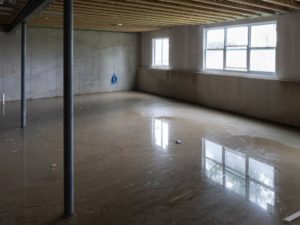
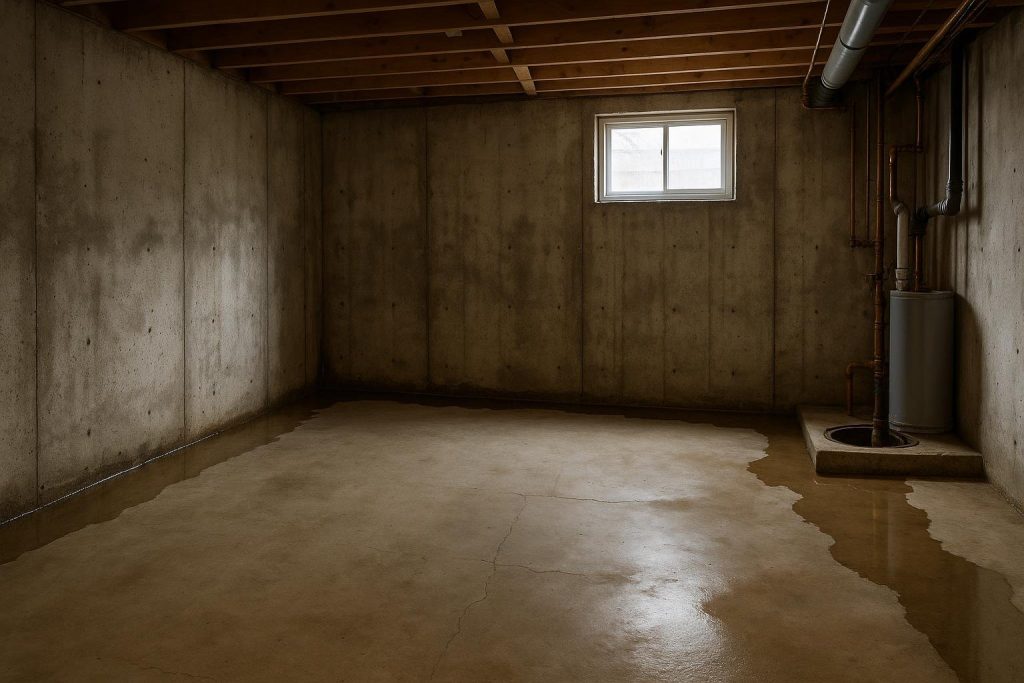
Basement flooding Alliston homeowners deal with most often traces back to two local conditions: the area’s mix of sandy loam and clay-heavy subsoil, and the dramatic spring snowmelt that pushes the water table up faster than ageing drainage systems can handle. Understanding exactly why water enters your foundation is the first step toward choosing a fix that actually lasts, rather than one that masks the symptom until next spring.
Key Takeaways
- Alliston sits in Simcoe County where silty clay pockets hold water against foundation walls, building hydrostatic pressure after every heavy rain or thaw.
- Failed or silted-up weeping tile is the single most common root cause found during inspections of homes built before the 1990s in this area.
- Interior weeping tile with a sump pump is often the most practical fix when exterior excavation is restricted by driveways, decks or tight lot lines.
- A single injected foundation crack typically costs $600 to $900; a full interior perimeter system runs higher and depends on linear footage confirmed at inspection.
- Doing nothing accelerates damage: water that enters through one crack widens it with every freeze-thaw cycle, and mould can establish within 48 hours of a flood event.
Definitions and Scope
Basement flooding covers any situation where water enters the below-grade living space in a volume that pools on the floor or soaks through walls. In Alliston and the broader Simcoe County region, basement flooding Alliston inspectors document ranges from a slow seep along a hairline crack to a sudden surge through a floor drain during a severe storm. The distinction matters because each entry point calls for a different repair method.
Hydrostatic pressure is the force that saturated soil exerts against a foundation wall or floor slab. When the soil around an Alliston home becomes waterlogged, that pressure can exceed the tensile strength of poured concrete, forcing water through existing cracks or creating new ones. Parging, the thin mortar coat applied to older block foundations, deteriorates over time and offers no meaningful resistance once hydrostatic pressure builds.
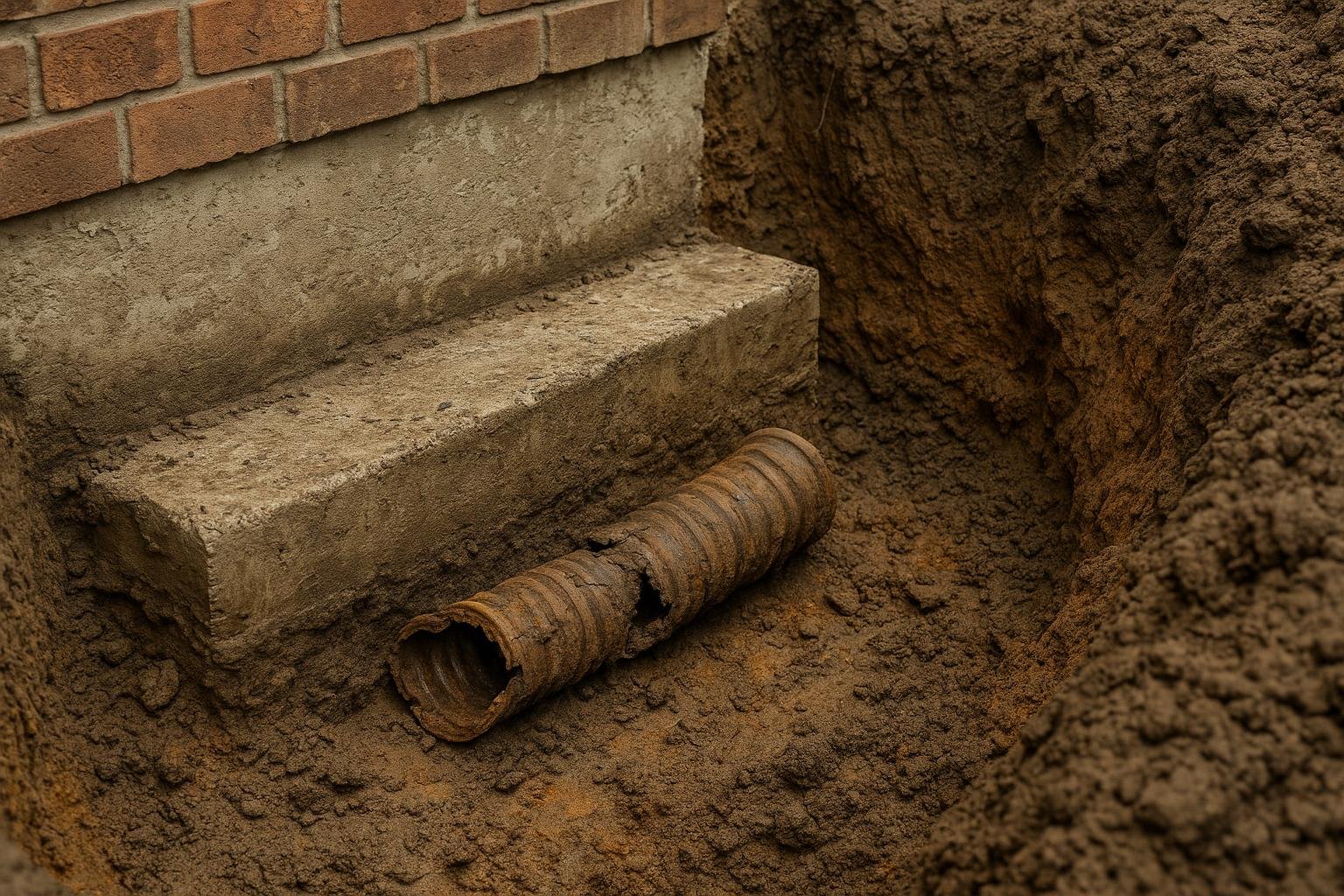
Weeping tile is the perforated pipe, bedded in clear stone, that runs along the footing to collect and redirect groundwater before it reaches the wall. Original clay weeping tile installed in homes built before the 1980s has a finite lifespan and is commonly found fully silted up during inspections in Alliston neighbourhoods developed in that era.
Why This Matters for Alliston Homeowners
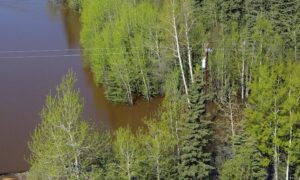
Basement flooding Alliston properties experience most often peaks during spring thaw because Simcoe County receives significant snowpack each winter, and the New Tecumseth area sits in a zone where melt can be rapid. When several centimetres of snow melt within days, the ground cannot absorb the volume quickly enough. Water travels along the path of least resistance, which is typically the backfill zone directly against the foundation wall, the same zone that was disturbed during original construction and never compacted as firmly as undisturbed soil.
Summer convective storms are the second peak failure window. Alliston can receive intense, short-duration rainfall events that overwhelm municipal storm sewers and cause surface water to pool against foundations before it can drain away. Homes on lower lots or those with negative grading, where the ground slopes toward the house rather than away, are especially exposed.
Hydrostatic pressure, not rain volume alone, is the root cause of most wet basements in Simcoe County. Saturated clay soil can exert hundreds of kilograms of force per square metre against a foundation wall.
The Canada Mortgage and Housing Corporation (CMHC) notes that foundation moisture problems left unaddressed lead to structural deterioration, indoor air quality issues from mould, and significant loss of property value. You can find their guidance on moisture management at CMHC’s housing resource centre. For Alliston homeowners, acting before the next thaw cycle is almost always less expensive than repairing the compounded damage afterward.
Your Options for Stopping Basement Flooding Alliston Properties Experience
Interior Weeping Tile System
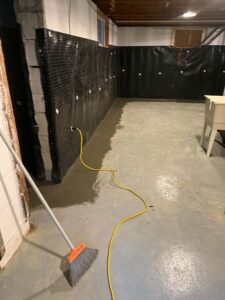
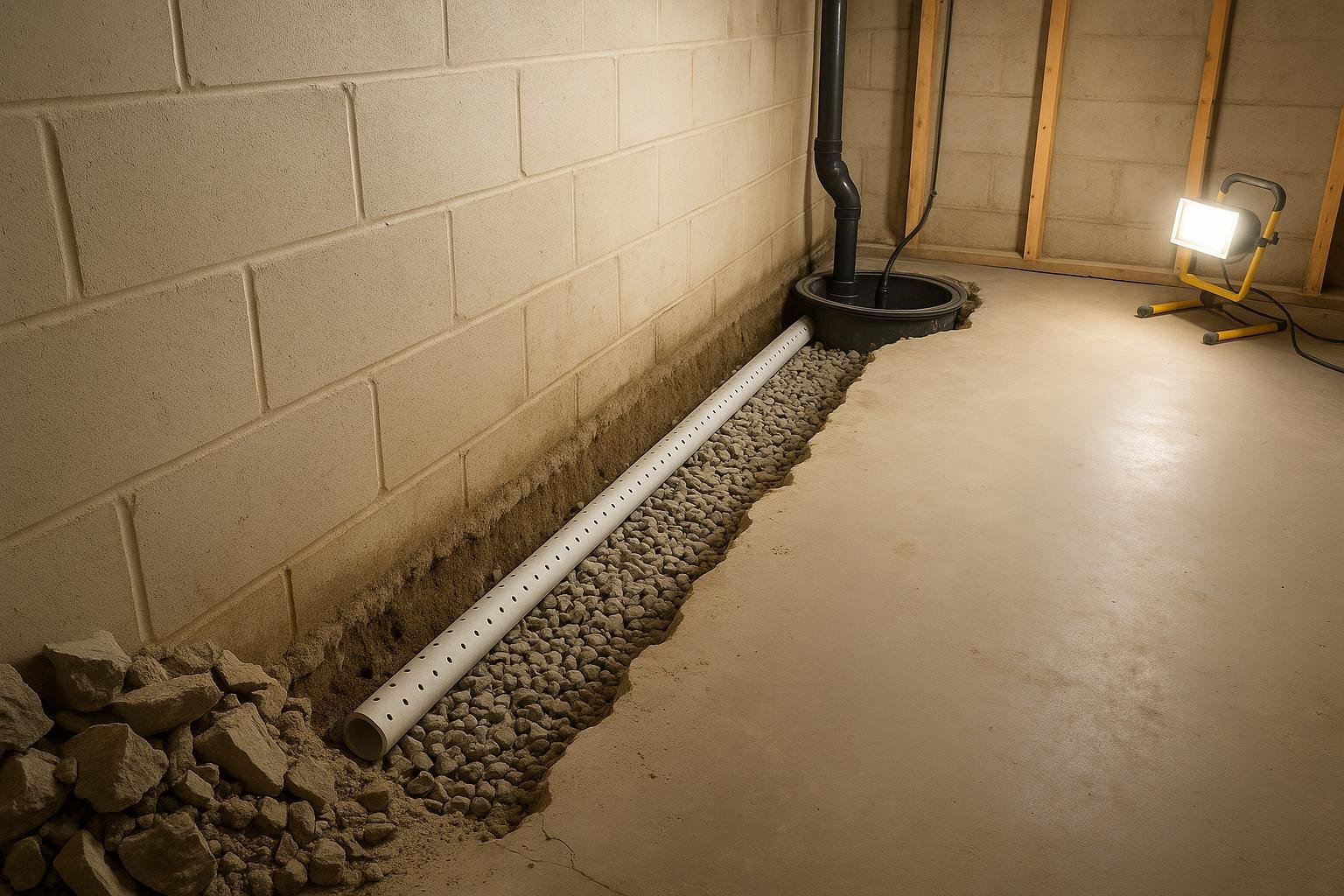
An interior weeping tile system involves breaking the concrete floor around the perimeter of the basement, installing a new perforated pipe in a bed of clear stone at or near the footing level, and directing collected water to a sump basin. A sump pump then ejects the water away from the foundation. A vapour barrier is applied up the wall and sealed to the new floor pour to prevent moisture from migrating through the wall face.
This method is best for homes where exterior excavation is not practical due to decks, driveways, finished landscaping or tight lot lines. It does not stop water from entering the wall, but it intercepts water before it can pool on the floor. Interior systems are generally less disruptive to the exterior of the property and can be completed in most weather conditions.
The limitation is that it manages water rather than blocking it at the source. If the goal is to stop hydrostatic pressure from acting on the wall itself, an exterior membrane is the more complete solution.
Exterior Waterproofing with Membrane and Drainage Board
Exterior waterproofing requires excavating the soil down to the footing along the affected wall or the full perimeter. The exposed foundation is cleaned, any voids are filled with hydraulic cement parging, and a rubberised waterproofing membrane is applied to the wall face. A dimpled drainage board is then placed over the membrane to protect it and to channel water downward to new weeping tile bedded in clear stone. The trench is backfilled and the grade is corrected to slope away from the house.
This is the most complete solution because it addresses hydrostatic pressure at the source, seals the wall against water entry, and replaces failed weeping tile at the footing. It is best for homes with accessible perimeters and for situations where the wall itself is showing signs of moisture damage or deterioration. Full exterior waterproofing of an average Alliston detached home typically runs in the $6,000 to $9,000 range depending on linear footage, excavation depth and site access, with the final figure confirmed at inspection.
Polyurethane Crack Injection
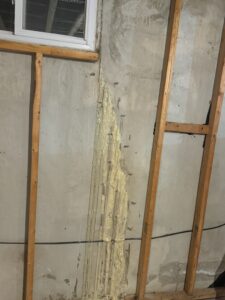
When a single vertical crack in a poured concrete wall is the entry point, low-pressure polyurethane injection is often the most targeted and cost-effective repair. Injection ports are surface-mounted along the crack at intervals, and polyurethane resin is injected under low pressure until it fills the crack from the footing to the surface. The resin cures flexible, which means it tolerates the seasonal foundation movement common in Alliston’s freeze-thaw climate without re-cracking.
Epoxy injection is reserved for structural cracks where the wall needs to be re-bonded and rigidity is required. A single crack injection typically costs $600 to $900. This method is best for isolated cracks with no sign of wall deflection or widespread moisture intrusion. It is not appropriate as a standalone fix when weeping tile failure or hydrostatic pressure across the full perimeter is the underlying problem.
For a detailed look at when injection is the right call, see the guide on foundation crack injection versus full waterproofing.
Sump Pump Installation or Replacement
A sump pump is the active component of any interior drainage system, but it can also be installed as a standalone measure in homes that already have a weeping tile system that is functioning but lacks a reliable discharge point. The pump sits in a basin at the lowest point of the basement and activates when water reaches a set level, ejecting it through a discharge pipe to daylight away from the foundation.
Battery backup units are strongly recommended for Alliston homes because power outages during severe storms, the exact moment the pump is needed most, are not uncommon in Simcoe County. A pump without backup is a single point of failure during the highest-risk events.
Grade Correction and Surface Drainage
Sometimes water enters because the ground around the foundation slopes toward the house. Correcting the grade by adding compacted fill and resloping the surface away from the wall can reduce the volume of surface water reaching the foundation significantly. This is rarely a complete solution on its own but is an important complement to any waterproofing work and is part of the backfill and grade correction step in a full exterior job.
Window Well Drains and Egress Improvements
Basement window wells that fill with water during heavy rain are a common secondary entry point in Alliston homes. Installing a properly sized window well with a gravel bed and a connected drain, or upgrading to a deeper well with a cover, can eliminate this specific failure mode without requiring a full perimeter repair.
Options Compared
| Method | Best For | Typical Lifespan | Relative Cost | Disruption |
|---|---|---|---|---|
| Interior weeping tile + sump pump | Perimeter seepage, restricted exterior access | 20+ years with pump maintenance | Moderate | Interior floor removal; no exterior dig |
| Exterior membrane + weeping tile | Full perimeter protection, wall deterioration | Lifetime with proper membrane | Higher ($6,000 to $9,000 typical) | Significant exterior excavation |
| Polyurethane crack injection | Single isolated vertical crack | Permanent if crack is stable | Lower ($600 to $900 per crack) | Minimal; interior access only |
| Sump pump only | Active water table, existing drainage system | 7 to 10 years per pump unit | Low to moderate | Minimal; basin installation only |
| Grade correction | Surface water pooling against foundation | Ongoing; may need periodic top-up | Low | Exterior landscaping only |
The table above reflects the range of approaches to basement flooding Alliston homeowners can choose from. No single method is universally correct. Exterior waterproofing offers the most complete protection but requires accessible perimeter space and a higher upfront investment. Interior systems are practical where excavation is not feasible and deliver reliable results when paired with a quality sump pump and battery backup. Crack injection is highly cost-effective for isolated entry points but should not be used as a substitute for addressing systemic drainage failure. A site inspection is the only reliable way to determine which combination applies to a specific Alliston property.
How to Choose the Right Fix
Choose exterior waterproofing if the foundation wall shows signs of moisture damage, efflorescence, or spalling across a wide area; if the original weeping tile is confirmed silted or absent; or if the home has accessible perimeter space and the budget to address the problem at its source. This is the right call for homes where long-term protection and the elimination of hydrostatic pressure on the wall are the priority.
Choose an interior weeping tile system if the exterior is blocked by a deck, attached garage, finished landscaping or a narrow lot; if multiple walls are showing seepage; or if the goal is to manage water entry reliably without full excavation. Pair it with a battery-backup sump pump for Alliston’s storm and outage conditions.
Choose polyurethane crack injection if a single vertical crack is the only identified entry point, the wall shows no deflection, and the surrounding drainage is otherwise functional. This is also the right first step when a crack is actively leaking and a more comprehensive repair is planned for a later season.
Choose grade correction and window well improvements as a complement to any of the above, not as a standalone fix, when surface water management is contributing to the problem.
If you are unsure which category your situation falls into, the basement leak diagnostic tool can help narrow down the likely cause before you book an inspection.
Costs and Timelines
| Cost Driver | Why It Affects Price | Approximate Impact |
|---|---|---|
| Linear footage of affected wall | More wall means more excavation, membrane, weeping tile and labour | Primary driver; priced per linear foot |
| Excavation depth to footing | Deeper footings require more soil removal and shoring time | Significant; older Alliston homes often have deeper footings |
| Site access | Tight lots, fences, decks or landscaping increase labour and equipment cost | Moderate to significant |
| Number and severity of cracks | Each crack requiring injection adds $600 to $900 to the scope | Low to moderate per crack |
| Sump pump specification | Battery backup, alarm systems and higher-capacity units increase material cost | Low to moderate |
| Concrete re-pour (interior systems) | Perimeter jackhammering and re-pour adds labour and material | Moderate; included in full interior scope |
All prices depend on a site inspection. The cost of addressing basement flooding Alliston properties experience varies by method: full exterior waterproofing of an average detached home runs roughly $6,000 to $9,000, interior perimeter systems typically fall below that figure, and a single polyurethane crack injection is typically $600 to $900. For a broader view of what drives waterproofing costs across Ontario, the foundation waterproofing cost guide provides useful context. Most interior jobs are completed in one to two days; exterior work on a full perimeter takes two to four days depending on access and depth.
A single crack injection at $600 to $900 is far less costly than the mould remediation, drywall replacement and flooring repair that follow an unaddressed flood event. Early action is almost always the lower-cost path.
Risks and Common Mistakes
| Symptom | Likely Cause | Correct Fix |
|---|---|---|
| Water along the base of the wall after rain | Failed or silted weeping tile; hydrostatic pressure | Interior or exterior weeping tile replacement |
| Water through a single vertical crack | Shrinkage or settlement crack in poured concrete | Polyurethane crack injection |
| Water rising through the floor slab | High water table; no sub-slab drainage | Interior drainage system with sump pump |
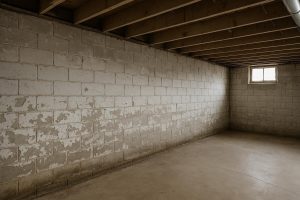
| White powder on block walls | Efflorescence from mineral-laden water moving through block | Exterior membrane or interior drainage; not paint |
| Window well flooding | Undersized well, no drain, or blocked outlet | Well upgrade with connected drain |
The most common mistake Alliston homeowners make is applying hydraulic cement or waterproofing paint to the interior wall surface and expecting it to hold against hydrostatic pressure. These products can slow seepage temporarily but cannot resist sustained pressure from saturated soil. The water will find another path, often through the floor-wall joint or an adjacent crack.
A second frequent error is replacing a failed sump pump without addressing why the basin is filling in the first place. If the weeping tile feeding the basin is silted, the system will be overwhelmed regardless of pump capacity. The drainage path and the pump must both be functional.
Skipping a battery backup unit is a risk specific to Alliston and Simcoe County, where the storms that cause flooding are the same events that knock out power. A pump that cannot run during an outage provides no protection at the worst possible moment. For guidance on keeping your drainage system reliable year-round, see the complete resource on basement waterproofing in Simcoe County.
How the Process Works
- Free on-site inspection and moisture assessment. A technician visits the property, identifies all active and potential entry points, assesses soil conditions, checks the existing weeping tile condition where accessible, and documents the scope. No work is quoted without this step.
- Written scope with linear-foot pricing. A detailed written proposal is provided, breaking down the recommended method, materials and cost per linear foot so the homeowner understands exactly what is being done and why.
- Excavation or interior preparation. For exterior work, soil is excavated to the footing along the affected wall. For interior work, the perimeter concrete is jackhammered to expose the footing area. Either way, the work area is protected and debris is removed from the site.
- Foundation repair and membrane or drainage installation. Voids and cracks are filled with hydraulic cement parging. On exterior jobs, the rubberised membrane is applied, followed by the dimpled drainage board. On interior jobs, the new weeping tile is laid in clear stone and connected to the sump basin, and a vapour barrier is run up the wall.
- Weeping tile and sump connection. New perforated weeping tile is bedded in clear stone at the footing level and connected to the discharge system. The sump pump is installed or confirmed operational, with battery backup where specified.
- Backfill, grade correction and concrete re-pour. Exterior trenches are backfilled with compacted material and the grade is corrected to slope away from the foundation. Interior perimeter trenches are re-poured with concrete to restore the floor.
- Final inspection and documentation. The completed work is reviewed, the homeowner is walked through what was done, and warranty documentation is provided.
For a broader look at waterproofing and foundation repair services available to Alliston homeowners, the Alliston basement waterproofing and foundation crack repair page covers the full scope of what is available locally.
Frequently Asked Questions
Why does my Alliston basement flood every spring but stay dry the rest of the year?
Spring snowmelt in Simcoe County raises the water table rapidly, and the saturated backfill zone around the foundation builds hydrostatic pressure faster than failed or silted weeping tile can relieve it. Basement flooding Alliston homeowners report most often follows this seasonal pattern because the water table drops again by late spring. The underlying drainage failure is present year-round; the spring thaw simply exposes it. Fixing the weeping tile or installing an interior drainage system eliminates the seasonal pattern.
Can I inject a crack myself using a hardware store kit?
Consumer-grade crack injection kits use materials that are thicker and cure rigid, which means they are more likely to re-crack when the foundation moves through freeze-thaw cycles. Professional low-pressure polyurethane injection uses flexible-cure resin delivered at controlled pressure through surface-mounted ports, filling the crack from the footing upward. The material and technique difference is significant, and a failed DIY repair can complicate a proper repair later by partially blocking the crack channel.
How long does an interior weeping tile system last?
The pipe and stone components of an interior weeping tile system are essentially permanent when installed correctly. The sump pump itself has a typical service life of seven to ten years and should be tested annually and replaced proactively before failure. Battery backup units should be tested at the start of each spring thaw season. The system as a whole, maintained properly, provides reliable protection for the life of the home.
Will waterproofing my basement increase my home’s resale value in Alliston?
A dry, documented basement is a meaningful selling point in the Alliston and New Tecumseth market, where buyers and their home inspectors look closely at foundation condition. A transferable warranty on waterproofing work provides additional confidence to buyers. While exact value uplift depends on the property and market conditions, removing a known moisture problem eliminates a common negotiating point that buyers use to reduce their offer.
Is exterior or interior waterproofing better for an Alliston home?
Exterior waterproofing addresses hydrostatic pressure at the source and is the more complete solution, but it requires accessible perimeter space and a higher investment. Interior systems are highly effective where excavation is not practical and are the more common choice for homes with decks, attached structures or tight lot lines. The right answer depends on the specific site conditions confirmed at inspection, not a general preference.
How do I know if my original weeping tile has failed?
Signs of failed weeping tile include water consistently appearing at the base of the wall rather than through a specific crack, water that appears after sustained rain rather than immediately, and a basement that was dry for years before gradually becoming wetter. A camera inspection of the existing tile, where accessible, can confirm silting or collapse. Many Alliston homes built before 1985 have original clay tile that is at or past the end of its functional life.
What should I do immediately after my basement floods?
Remove standing water as quickly as possible using a wet-dry vacuum or submersible pump. Run a dehumidifier and open windows if outdoor humidity allows. Document the damage with photos before cleaning. Do not run electrical equipment in standing water. Contact your insurance provider to report the event. Once the space is dry, arrange a professional inspection to identify the entry point before the next rain event, since the same failure will recur without a repair.
Does home insurance cover basement flooding in Alliston?
Standard Ontario home insurance policies typically exclude damage from groundwater seepage and hydrostatic pressure. Overland water coverage and sewer backup coverage are available as endorsements and cover different scenarios. Reviewing your policy with your broker before a flood event is the only way to know what is covered. Waterproofing work itself is generally not covered by insurance, but the cost of repairs to finished space may be depending on the cause and your specific endorsements.
If you are dealing with a wet basement right now or want to assess your home before the next thaw season, the DryShield Team offers free on-site inspections for Alliston and Simcoe County properties. Contact us to book a no-obligation assessment and get a written scope with clear pricing before any work begins.