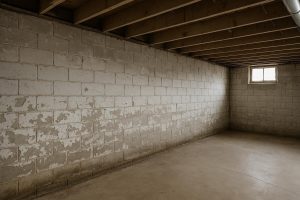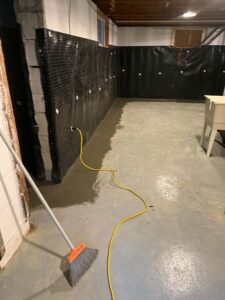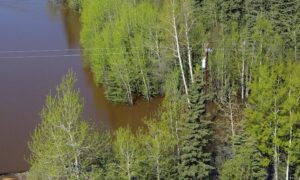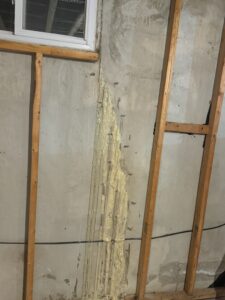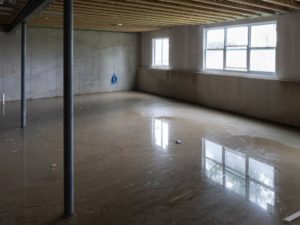
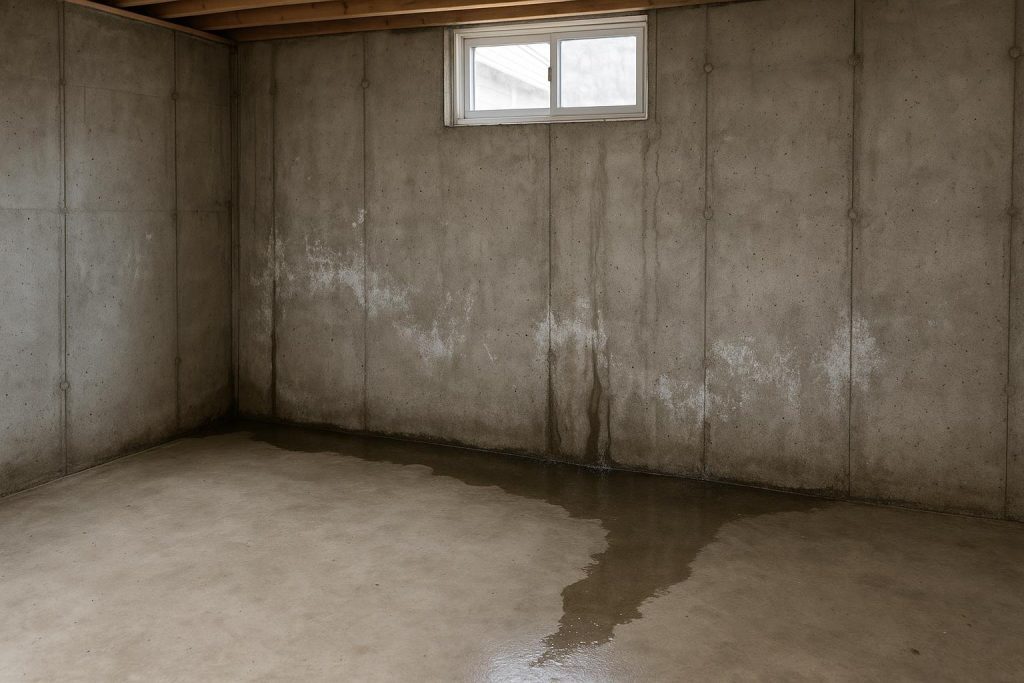
A leaky basement Alliston homeowners encounter most often traces back to hydrostatic pressure building against the foundation wall during spring thaw and heavy summer rain. Alliston sits in Simcoe County on a mix of clay-loam and sandy till soils that behave very differently from one another, and that soil variation is a key reason two houses on the same street can have completely different leak patterns. Understanding the root cause is the only reliable way to choose a fix that lasts.
Key Takeaways
- Hydrostatic pressure from saturated clay soil is the most common driver of basement leaks in Alliston, not rainfall alone.
- Spring thaw and summer downpours are the two peak failure windows for Alliston foundations.
- A single injected crack typically costs $600 to $900; a full interior weeping-tile system or exterior waterproofing runs higher and depends on linear footage and access.
- Older Alliston homes frequently have silted-up original weeping tile that no longer drains, making a full perimeter solution necessary.
- The right repair method depends on where water enters, the age of the foundation, and site access, not on a one-size-fits-all approach.
Definitions and Scope
A basement leak is any uncontrolled entry of water into the below-grade living space. In Alliston, leaks fall into three broad categories: wall cracks that admit water under pressure, perimeter seepage where water travels through the joint between the footing and the wall, and floor seepage driven upward by a high water table. Each category has a distinct cause and a distinct fix.
Hydrostatic pressure is the force that saturated soil exerts against a foundation wall. When clay-loam soil around an Alliston home becomes fully saturated, it holds that water against the concrete or block wall for days or weeks after a rain event stops. That sustained pressure is what forces water through hairline cracks, through parging that has spalled away, and through the cove joint at the base of the wall.
Weeping tile is the perforated pipe, bedded in clear stone, that runs around the perimeter of the footing to collect and redirect groundwater before it can build pressure. Many Alliston homes built before the 1980s have clay-pipe weeping tile that has since collapsed or silted up completely, leaving the foundation with no drainage relief at all.
Why This Matters for Alliston Homeowners
A leaky basement Alliston residents deal with is not simply a nuisance. Alliston’s position in Simcoe County means it receives significant snowfall accumulation through winter, followed by a rapid spring thaw that can saturate the ground faster than it can drain. That thaw window, typically March through early May, is when the largest share of basement leak calls come in from this area. A foundation that stayed dry all winter can suddenly show active seepage within 48 hours of a warm spell.
The soil profile matters too. The sandy till found in parts of Alliston drains relatively well, but the clay-loam that dominates many residential neighbourhoods holds water tightly. A foundation wall in clay-loam soil can experience sustained hydrostatic pressure for a week or more after a single heavy rain, which is long enough to force water through a crack that seemed stable for years.
Ignoring a slow seep is rarely a safe option. Water that enters through a foundation crack carries dissolved minerals that deposit as white efflorescence on the wall surface. Over time, freeze-thaw cycling widens the crack, mould establishes itself in the insulation and framing, and what started as a $600 crack injection becomes a much larger repair. Canada Mortgage and Housing Corporation (CMHC) guidance on residential moisture control confirms that early intervention consistently produces better outcomes than deferred repair.
For a broader look at how Simcoe County soil and seasonal conditions affect foundations across the region, the Simcoe County basement waterproofing guide covers the full picture in detail.
Soil Type and Leak Risk in Alliston
The soil beneath and around a foundation is the single biggest variable in predicting how a leaky basement Alliston property develops. The table below summarises how the two dominant soil types in the Alliston area behave during wet seasons and what that means for foundation risk.
| Soil Type | Drainage Rate | Hydrostatic Pressure Risk | Common Leak Pattern | Typical Neighbourhoods |
|---|---|---|---|---|
| Clay-loam | Slow, holds water for days to weeks | High, sustained pressure after rain or thaw | Perimeter seepage, cove joint leaks, wall cracks | Most established residential areas |
| Sandy till | Faster, drains within hours | Lower, pressure dissipates more quickly | Isolated wall cracks during peak events | Newer subdivisions on higher ground |
Knowing which soil type surrounds your foundation helps narrow the repair approach before an inspection even begins. Clay-loam properties are more likely to need a full drainage solution, while sandy-till properties may be resolved with targeted crack injection.
Your Options for Fixing a Leaky Basement in Alliston
Polyurethane Crack Injection
Low-pressure polyurethane injection is the standard repair for a single active crack in a poured concrete wall. A technician drills injection ports along the crack at regular intervals, pastes surface caps over them, then injects expanding polyurethane foam that fills the crack from the inside face to the exterior face. The cured foam remains flexible, which means it tolerates the seasonal movement that Alliston foundations experience as the ground freezes and thaws each year.
This method works best when the crack is non-structural, runs vertically or diagonally, and has a clear path from interior to exterior. It is not suitable for horizontal cracks, which signal lateral soil pressure and require a structural assessment, or for block foundations where water travels through the mortar joints rather than through a single crack plane.
Epoxy Crack Injection
Epoxy injection is reserved for structural cracks where the two sides of the crack must be re-bonded into a single rigid unit. Epoxy cures harder than the surrounding concrete and restores load-carrying capacity. The trade-off is that epoxy is rigid, so it is not appropriate for cracks that are still moving seasonally. A qualified inspector can determine whether a crack needs epoxy or polyurethane based on crack width, orientation, and whether displacement is present.
Interior Weeping Tile System
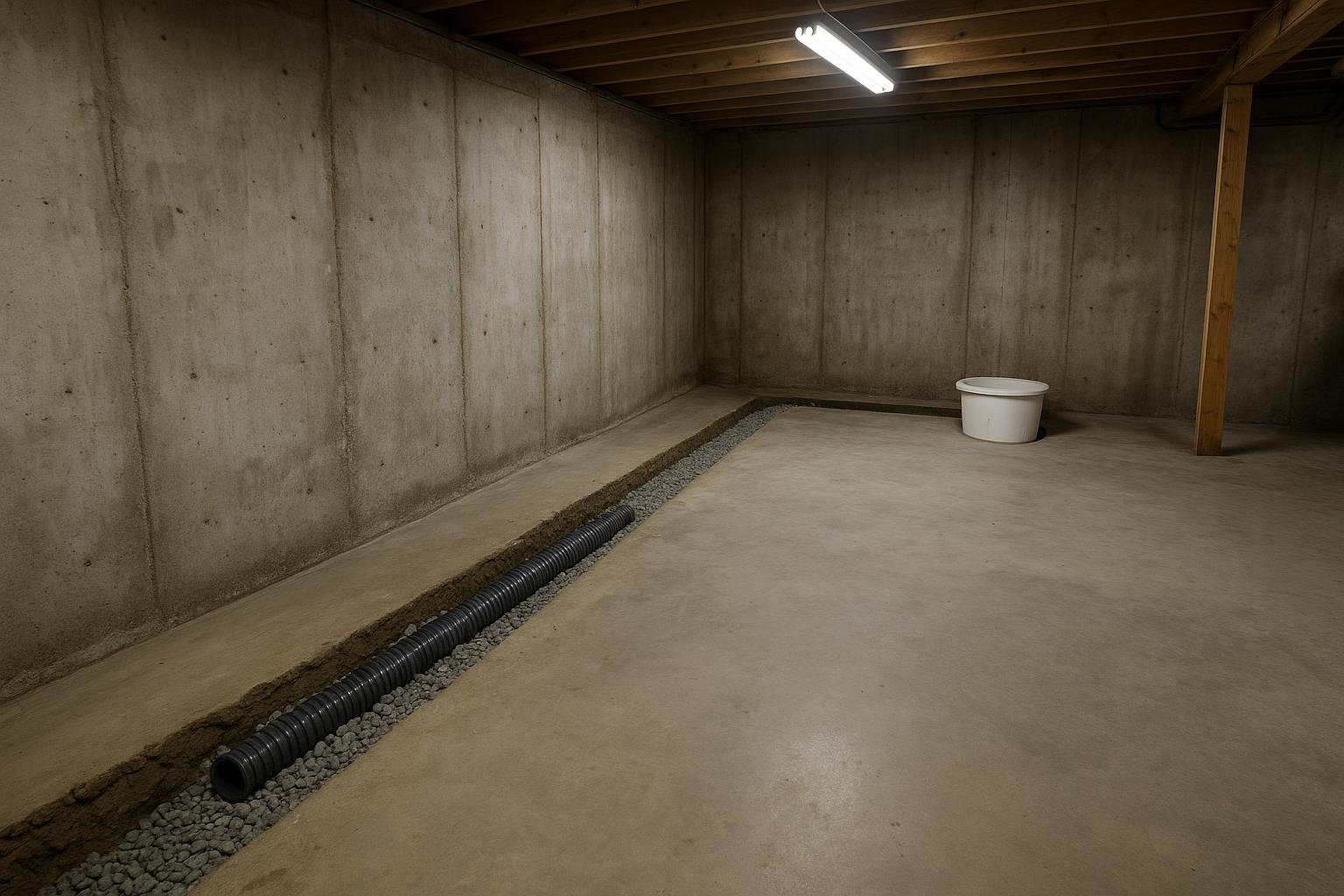
An interior weeping-tile system addresses perimeter seepage and floor seepage without excavating the exterior. The process involves breaking the concrete floor along the perimeter, installing a new perforated drain pipe in a bed of clear stone at the footing level, routing that pipe to a sump basin, and installing a sump pump to discharge collected water away from the foundation. A vapour barrier is then run up the interior wall face and sealed to the floor system.
This approach is well-suited to Alliston homes where exterior access is limited by decks, driveways, or mature landscaping, and where the original weeping tile has failed. It manages water that has already entered the wall cavity rather than stopping it at the exterior face, which is an important distinction when choosing between interior and exterior solutions.
Exterior Waterproofing
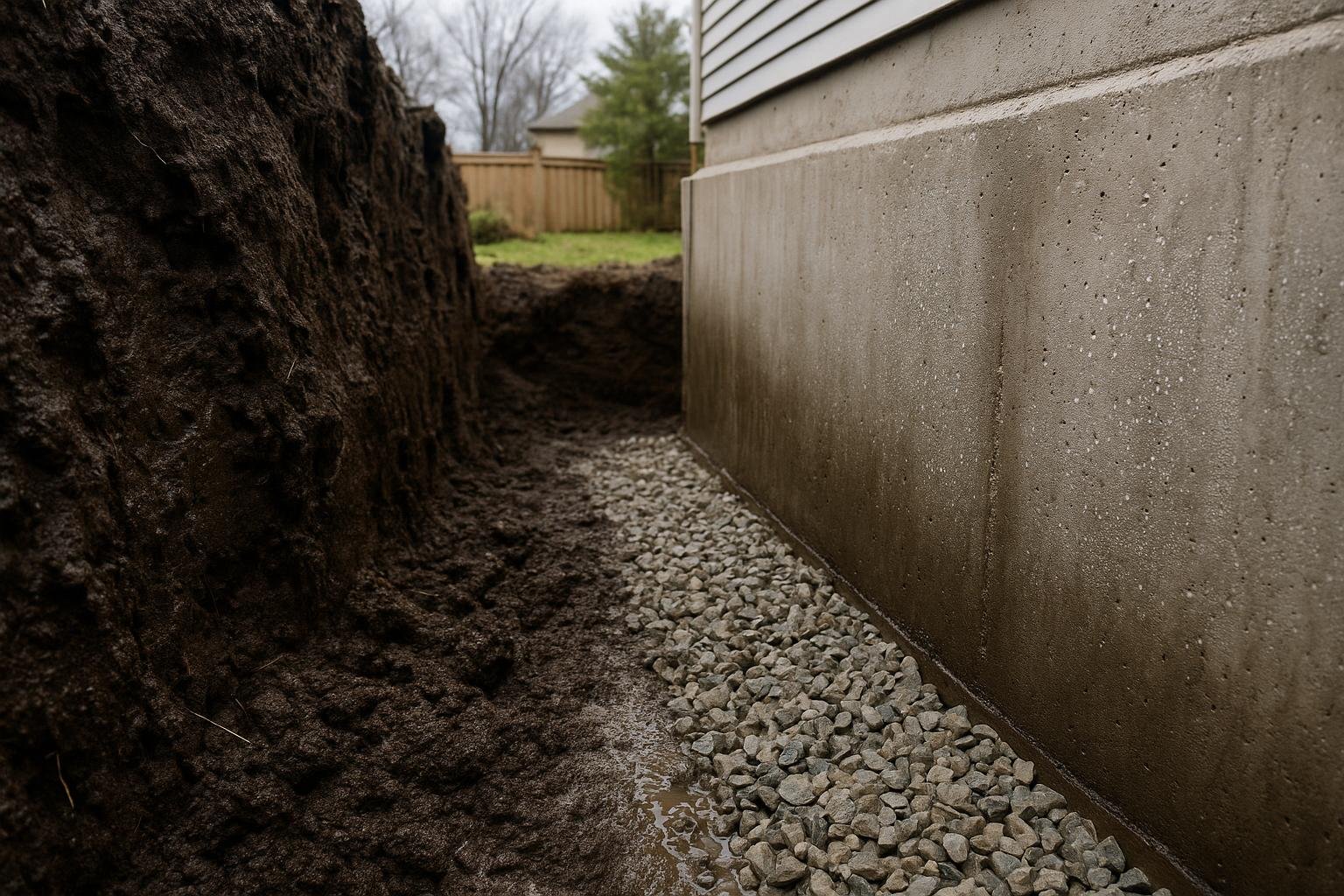
Exterior waterproofing is the most comprehensive solution because it addresses the source of the problem directly. Excavation exposes the foundation wall down to the footing. Any voids or honeycombing in the concrete are filled with hydraulic cement parging. A rubberised membrane is applied to the wall face, followed by a dimpled drainage board that creates an air gap and directs water downward. New weeping tile is installed in clear stone at the footing, and the trench is backfilled with properly graded material to direct surface water away from the wall.
Exterior waterproofing is the preferred solution when the existing membrane has failed, when the weeping tile needs full replacement, or when the homeowner wants the longest-lasting protection. The disruption is greater than interior methods, but the protection is applied where water first contacts the structure.
Sump Pump Installation or Upgrade
A sump pump is often the final component of either an interior or exterior waterproofing system, but it can also be installed as a standalone measure when the existing drainage system is functional but overwhelmed during peak events. A correctly sized pump with a battery backup protects against power outages during the storms that most commonly cause flooding. For Alliston homes on properties with a high seasonal water table, a sump pump is not optional.
Crack Monitoring and Parging Repair
For very fine, dormant cracks and for spalled parging on block foundations, surface repair and monitoring is sometimes appropriate as a first step. Hydraulic cement can fill active seeps temporarily, and fresh parging restores the sacrificial outer layer of a block wall. This is not a permanent waterproofing solution, but it can stabilise a situation while a homeowner plans a more complete repair.
Options Compared
When evaluating how to address a leaky basement Alliston property presents, the table below provides a side-by-side comparison of all main repair methods.
| Method | Best For | Typical Lifespan | Relative Cost | Disruption |
|---|---|---|---|---|
| Polyurethane crack injection | Single vertical/diagonal crack in poured concrete | Long-term if crack is stable | Lowest | Minimal, interior only, no excavation |
| Epoxy crack injection | Structural cracks requiring re-bonding | Permanent if crack stops moving | Low to moderate | Minimal, interior only |
| Interior weeping tile system | Perimeter seepage, failed original weeping tile, limited exterior access | 25 years or more with pump maintenance | Moderate | Interior concrete breaking, 1 to 3 days |
| Exterior waterproofing | Failed exterior membrane, full weeping tile replacement, maximum protection | Lifetime with proper membrane | Highest | Excavation required, landscaping affected |
| Sump pump installation | High water table, overwhelmed drainage, backup protection | Pump unit 7 to 10 years, system indefinite | Low to moderate | Minimal, basin excavation only |
| Parging and surface repair | Spalled block walls, temporary stabilisation | 5 to 10 years depending on conditions | Lowest | Minimal |
Crack injection is the right starting point when there is a single identifiable entry point in a poured concrete wall. When water enters along the full perimeter, or when the original weeping tile has failed, a drainage system is necessary regardless of how many individual cracks are present. Exterior waterproofing delivers the most complete protection but requires excavation and a larger investment. The comparison above is a starting framework; the correct answer for any specific Alliston home depends on a site inspection.
How to Choose the Right Fix
Choose polyurethane crack injection if water enters through a single vertical or diagonal crack in a poured concrete wall, the crack is not displacing, and the rest of the perimeter is dry. This is the most cost-effective first step and can be completed in a few hours.
Choose an interior weeping-tile system if water appears along the base of the wall in multiple locations, if the floor-wall joint is wet, or if the home has a block foundation where water migrates through the cores. Interior drainage is also the practical choice when exterior excavation is blocked by a deck, a paved driveway, or a close property line.
Choose exterior waterproofing if the existing exterior membrane has visibly failed, if the weeping tile needs full replacement, or if you want the most durable long-term solution and site access allows excavation. Homes in Alliston that have never had exterior waterproofing and are showing multiple wall cracks or widespread seepage are strong candidates.
Choose a sump pump upgrade or addition if the existing pump is more than seven years old, lacks a battery backup, or has failed during a storm event. A pump is a critical component of any drainage system in Alliston given the spring thaw volumes this area experiences.
If you are unsure which category your leaky basement Alliston situation falls into, the Alliston basement waterproofing and foundation crack repair page outlines the full range of services available in the area, and a free on-site inspection will identify the entry point precisely.
Costs and Timelines
The cost of fixing a leaky basement Alliston homeowners face varies widely by method, foundation type, and site conditions. The table below breaks down the main cost drivers.
| Cost Driver | Why It Affects Price | Approximate Range (CAD) |
|---|---|---|
| Number of cracks to inject | Each crack is a separate repair with its own materials and labour | $600 to $900 per crack |
| Linear footage of interior weeping tile | More perimeter means more pipe, stone, concrete breaking and re-pour | Varies by perimeter length; inspection required |
| Depth of excavation for exterior work | Deeper footings require more excavation time and equipment | Deeper footings increase cost materially |
| Site access | Tight access limits equipment and increases hand-digging labour | Can add significantly to exterior job cost |
| Foundation material | Block foundations require different prep than poured concrete | Block work typically costs more per linear foot |
| Sump pump and basin | Required for interior systems; battery backup adds cost | Included in system quote; backup unit is additional |
A single polyurethane crack injection in Alliston typically falls in the $600 to $900 range. A full exterior waterproofing job on an average detached home, including excavation to the footing, membrane, dimpled drainage board, and new weeping tile, runs roughly $6,000 to $9,000 depending on linear footage, footing depth, and site access. Interior weeping-tile systems generally fall below the exterior range. Every figure here is an approximate band drawn from completed work; the final number for any specific home depends on a site inspection and a written scope. For a broader Ontario cost breakdown, the foundation waterproofing cost guide provides additional context on what drives pricing across different methods.
Repair Timeline by Method
Timeline is often as important as cost when planning a leaky basement Alliston repair. The table below shows typical completion windows for each method so homeowners can plan accordingly.
| Method | Typical Completion Time | When Work Can Begin | Key Scheduling Note |
|---|---|---|---|
| Polyurethane crack injection | 2 to 4 hours per crack | Year-round, including winter | Can be booked within days of inspection |
| Epoxy crack injection | 2 to 4 hours per crack | Year-round above freezing | Epoxy requires minimum temperature to cure |
| Interior weeping tile system | 1 to 3 days for average home | Year-round | Concrete re-pour needs 24 to 48 hours cure before use |
| Exterior waterproofing | 2 to 5 days depending on perimeter | Spring through fall preferred | Frozen ground limits excavation in deep winter |
| Sump pump installation | Half day to full day | Year-round | Battery backup testing adds minimal time |
| Parging and surface repair | Half day to full day | Above-freezing temperatures required | Allow full cure before backfilling or wetting |
Spring is the busiest booking window for leaky basement Alliston repairs because that is when thaw-related seepage becomes visible. Scheduling an inspection in late winter gives homeowners the best chance of securing an early-season appointment before demand peaks.
A single injected crack typically costs $600 to $900. A full exterior waterproofing system on an average Alliston home runs roughly $6,000 to $9,000 depending on linear footage and site access. Always get a written scope before work begins.
Risks and Common Mistakes
The most common mistake Alliston homeowners make is treating a symptom rather than the cause. Applying hydraulic cement or waterproofing paint to a wet wall stops visible moisture temporarily but does nothing to relieve the hydrostatic pressure that is driving water through the wall. Within one or two freeze-thaw cycles, the patch fails and the crack is wider than before.
A second frequent error is injecting a crack without checking whether the wall is also leaking at the footing. If the cove joint is the primary entry point, injecting the wall crack above it will not solve the problem. A thorough inspection maps all entry points before any repair begins.
Choosing interior drainage when exterior waterproofing is actually needed is another risk. Interior systems manage water that has already entered the wall cavity. They do not stop water from contacting the exterior face of the foundation, which means the wall itself continues to be exposed to hydrostatic pressure and freeze-thaw cycling. For walls that are already showing structural distress, managing water from the inside is not a substitute for addressing the exterior.
Skipping the sump pump battery backup is a mistake that becomes obvious during the first power outage in a storm. Alliston experiences ice storms and high-wind events that can cut power for hours, and a pump that cannot run during the worst conditions provides no protection when it is needed most.
Waterproofing paint and hydraulic cement patches are temporary measures. They do not relieve hydrostatic pressure and typically fail within one to two freeze-thaw cycles in Simcoe County conditions.
How the Process Works
- Free on-site inspection and moisture assessment. A technician visits the property, identifies all active and historic entry points, assesses the foundation material and condition, and checks the existing drainage and sump pump if present.
- Written scope with linear-foot or per-crack pricing. A detailed written quote is provided before any work begins, specifying the method, materials, and scope so there are no surprises.
- Preparation and access. For crack injection, ports are drilled and surface caps are pasted. For interior drainage, the perimeter concrete is saw-cut and broken. For exterior work, excavation proceeds to the footing using appropriate equipment for the site.
- Core repair work. Injection material is introduced under low pressure for crack work. For exterior jobs, voids are filled with hydraulic cement parging, the rubberised membrane is applied, and the dimpled drainage board is installed. For interior systems, weeping tile is laid in clear stone and routed to the sump basin.
- Drainage and waterproofing completion. New weeping tile is bedded in clear stone at the footing level. The sump pump is installed or connected. For exterior work, backfill is placed and grade is corrected to direct surface water away from the wall.
- Interior finishing. For interior systems, the concrete floor is re-poured over the new drainage pipe. A vapour barrier is run up the wall face and sealed to the floor system.
- Final inspection and warranty documentation. The completed work is reviewed with the homeowner. Warranty documentation is provided, and the homeowner is advised on maintenance steps such as annual sump pump testing.
For a closer look at what the interior repair route involves step by step, the guide on fixing a leaking basement from the inside walks through the full process in plain language.
CMHC guidance on residential moisture control confirms that early intervention in foundation leaks consistently produces better long-term outcomes than deferred repair. See CMHC’s homeowner resources for general moisture management guidance.
Frequently Asked Questions
Why does my Alliston basement leak only in spring?
Spring thaw saturates the clay-loam soil around your foundation faster than it can drain, building hydrostatic pressure against the wall. That pressure forces water through cracks and the cove joint that stayed dry all winter when the soil was frozen and not exerting the same force. The leak stops when the soil dries out, but the entry point remains and will re-activate every thaw season until it is repaired.
Can I inject a foundation crack myself?
DIY injection kits are available, but they use surface-applied materials that rarely penetrate the full depth of the crack. A professional low-pressure polyurethane injection system uses drilled ports that deliver material from the interior face through to the exterior face, filling the crack completely. Incomplete injection leaves voids that allow water to bypass the repair within one or two seasons.
How do I know if my weeping tile has failed?
Signs of failed weeping tile include water seeping along the full perimeter of the basement floor, persistent dampness at the base of the wall that does not correspond to a visible crack, and a sump pump that runs continuously during wet periods. A camera inspection of the existing weeping tile can confirm whether the pipe is intact, collapsed, or silted up.
Is interior or exterior waterproofing better for an Alliston home?
Exterior waterproofing addresses the problem at the source by stopping water before it contacts the wall, making it the more complete solution. Interior drainage manages water that has already entered the wall cavity and is the practical choice when exterior access is limited. The right answer depends on the specific entry point, the condition of the existing membrane and weeping tile, and the site layout. A site inspection is the only reliable way to determine which approach is appropriate for a leaky basement Alliston property.
How long does a crack injection repair last?
A properly executed polyurethane injection into a stable, non-structural crack provides long-term protection because the cured foam remains flexible and moves with the foundation through seasonal cycles. If the crack is still actively widening due to ongoing soil movement or a structural issue, the repair may need to be revisited. Epoxy injection into a structural crack that has been stabilised is considered a permanent repair.
Will waterproofing my basement increase my home’s value?
A dry, documented basement is a positive factor in a home sale in Alliston. Buyers and home inspectors flag active leaks and efflorescence as deficiencies that reduce offers or trigger conditions. A completed waterproofing system with a transferable warranty removes that concern and can support a stronger sale price, particularly in a market where buyers are aware of the area’s spring thaw conditions.
What is the difference between a sump pump and a weeping tile system?
Weeping tile is the perforated pipe that collects groundwater at the footing level and channels it to a collection point. The sump pump is the mechanical device that lifts that collected water out of the basin and discharges it away from the foundation. The two work together: weeping tile without a pump has nowhere to send the water, and a pump without functional weeping tile has nothing to collect. Both components are required for a complete interior drainage system.
How much does it cost to waterproof a basement in Alliston?
A leaky basement Alliston homeowners want to fix can cost as little as $600 to $900 for a single crack injection, or roughly $6,000 to $9,000 for a full exterior waterproofing system on an average detached home, depending on linear footage, footing depth, and site access. Interior weeping-tile systems generally fall below the exterior range. These are approximate bands; the final cost depends on a site inspection and a written scope. For a detailed breakdown of what drives pricing, the basement leak repair cost guide covers the key variables across Southern Ontario.
Do I need a permit for basement waterproofing in Alliston?
Crack injection and interior drainage work typically do not require a building permit in Alliston. Exterior excavation that affects the structure or grade may require notification to the Township of Essa. A reputable contractor will advise on any permit requirements specific to the scope of work before starting.
If your leaky basement Alliston home is showing signs of moisture, a free on-site inspection is the fastest way to identify the entry point and get a written scope. Contact the DryShield Team to book an assessment and find out exactly what your home needs.