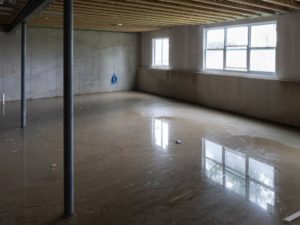
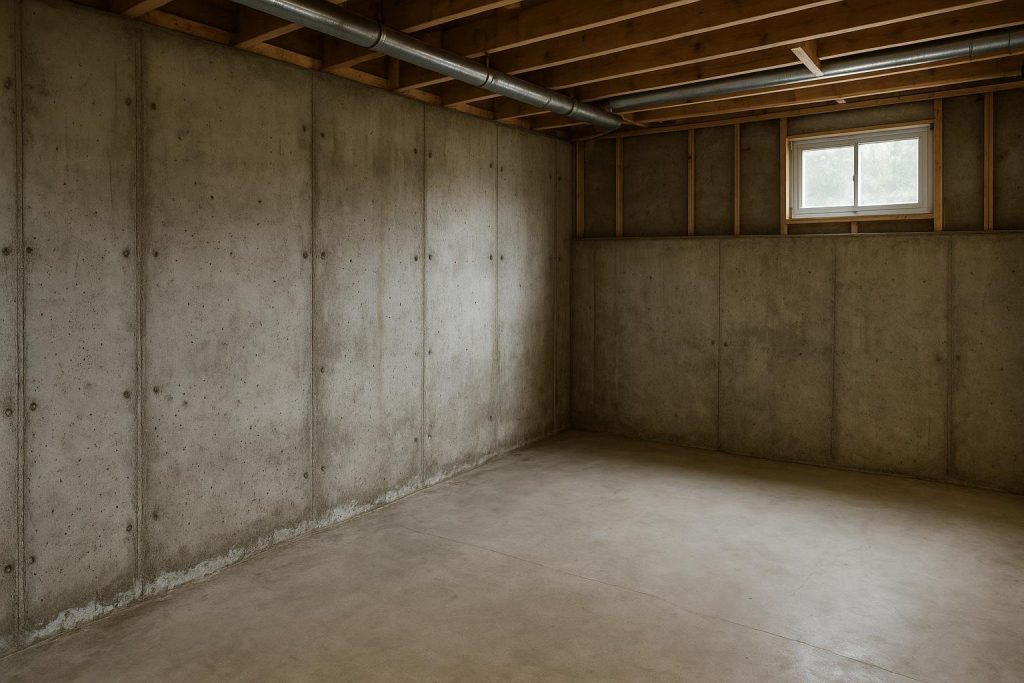
Basement leak repair Essa homeowners need most often traces back to hydrostatic pressure building against the foundation wall, not simply rain finding a gap. Essa sits in Simcoe County on a mix of sandy loam and heavier clay pockets, and that soil variation means water behaves differently from one street to the next. Getting the diagnosis right before choosing a repair method is the single most important step.
Key Takeaways
- Hydrostatic pressure from clay-heavy soil is the leading cause of wet basements in Essa, especially after spring thaw and summer downpours.
- A single foundation crack injected from the interior typically costs $600 to $900; full exterior waterproofing of an average home runs roughly $6,000 to $9,000, depending on linear footage and excavation depth.
- Interior weeping tile systems are less disruptive and cost less than exterior work, but exterior waterproofing stops water at the source.
- Failed or silted-up original weeping tile is common in older Essa homes and is a frequent root cause of perimeter seepage.
- Every final price depends on a site inspection because access, soil conditions and foundation depth all affect the scope.
Definitions and Scope
Basement leak repair covers any professional intervention that stops water from entering a below-grade living space. The work ranges from a single low-pressure polyurethane crack injection to a full exterior excavation with a new rubberised membrane and weeping tile system. The correct scope depends on where water is entering, how much is coming in, and what is driving it.
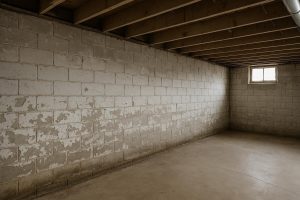
In Essa, the relevant failure points are poured-concrete wall cracks (the most common entry point in homes built after the 1980s), deteriorated parging on block foundations, failed or silted weeping tile at the footing, and floor-wall joints where hydrostatic pressure forces water upward. Each entry point calls for a different repair, which is why a proper moisture assessment before any work begins is not optional.
This guide covers the main repair methods available to Essa homeowners, how to choose between them, what drives the cost, and what the process looks like from first call to finished job. For a broader look at waterproofing across Simcoe County, see the Simcoe County basement waterproofing guide.
Why Basement Leak Repair Essa Homes Need Is Different
Essa Township includes Angus, Thornton and Utopia, communities that grew quickly over the past two decades with a mix of newer subdivisions on disturbed fill soil and older rural homes on original clay. Both soil types create conditions where water accumulates against the foundation rather than draining away cleanly.
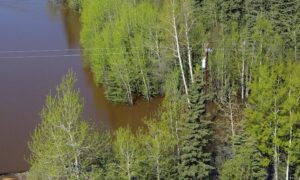
Spring thaw is the highest-risk window. When the frost leaves the ground, saturated soil releases weeks of stored moisture all at once. A foundation wall that held through winter can show its first crack or seep during that two-to-four-week thaw period. Heavy summer thunderstorms are the second peak failure window, particularly where lot grading has settled and directs runoff toward the house rather than away from it.
Older homes in Thornton and Angus frequently have original clay or concrete weeping tile installed decades ago. That tile silts up over time, loses its ability to carry water to a sump or daylight outlet, and the result is hydrostatic pressure that has nowhere to go except through the wall. The Canada Mortgage and Housing Corporation notes that most basement moisture problems in Ontario stem from drainage failure rather than waterproofing membrane failure alone. Addressing the drainage system, not just sealing the crack, is what produces a lasting result.
Leaving a leak unaddressed accelerates the problem. Water that enters through a hairline crack widens it through freeze-thaw cycling. Mould can establish within 48 hours of a wet event. Efflorescence on the wall surface is a sign that mineral-laden water has already been moving through the concrete for some time.
Your Options for Basement Leak Repair in Essa
Polyurethane Crack Injection
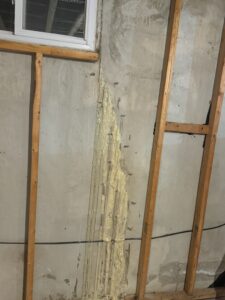
Low-pressure polyurethane injection is the standard repair for a single non-structural crack in a poured-concrete wall. Ports are surface-mounted along the crack at regular intervals, a paste seal is applied over the face, and two-part polyurethane foam is injected under low pressure. The foam expands to fill the full depth of the crack and cures flexible, which matters in Essa because seasonal ground movement continues to stress the wall after repair. A rigid filler would re-crack; polyurethane tolerates that movement.
Best for: isolated vertical or diagonal cracks in poured concrete, active seeps where water is present at time of repair. Limitations: does not address the underlying drainage problem, so if hydrostatic pressure is high, a second crack may open nearby.
Epoxy Crack Injection
Epoxy injection is used when the crack is structural and the wall needs to be re-bonded to restore load-bearing capacity. Epoxy cures rigid and bonds at tensile strength comparable to the original concrete. It is not appropriate for active leaks because moisture interferes with adhesion, and it is not appropriate where ongoing seasonal movement is expected.
Best for: structural cracks identified by an engineer, dry cracks in stable walls. Limitations: rigid cure means it can re-crack if movement continues; not suitable for wet cracks.
Interior Weeping Tile System
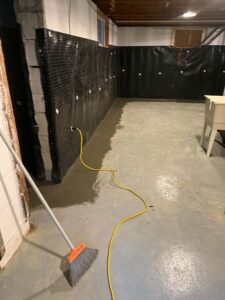
Where perimeter seepage is the problem rather than a single crack, an interior weeping tile system manages water that has already entered the wall assembly. The perimeter concrete floor is jackhammered, a new perforated drain tile is installed at the footing level, and water is directed to a sump basin where a pump discharges it away from the house. A vapour barrier is run up the wall and the floor is re-poured. This system does not stop water from entering the wall, but it intercepts it before it reaches the floor and living space.
Best for: homes where exterior excavation is impractical, perimeter seepage from multiple points, older homes with failed original weeping tile. Limitations: does not address the exterior membrane or soil drainage; the sump pump requires power and periodic maintenance.
Exterior Waterproofing
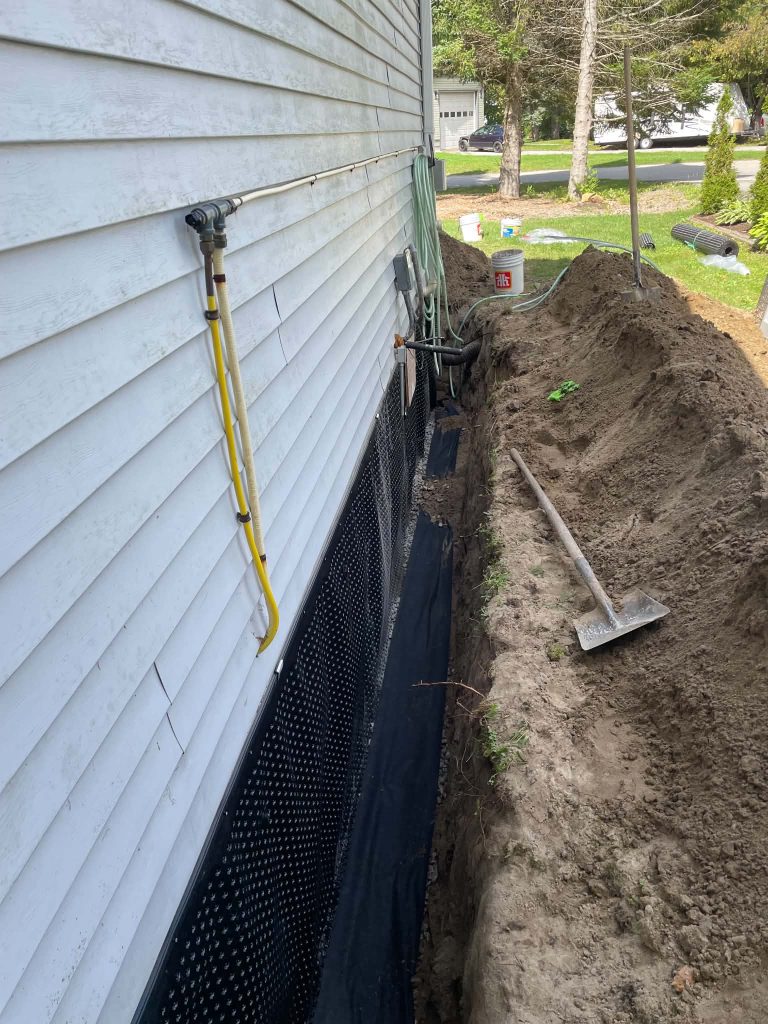
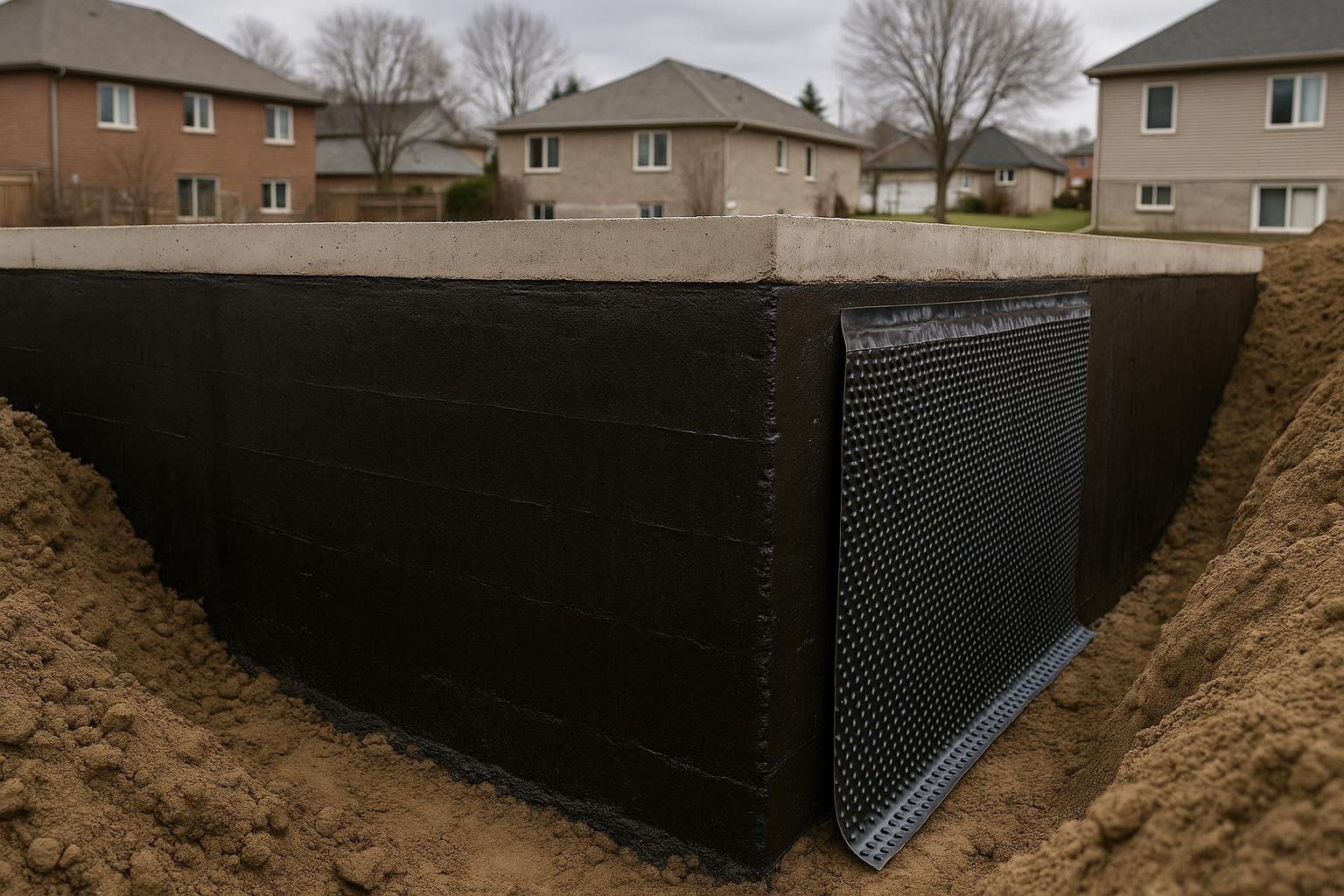
Full exterior waterproofing is the most comprehensive repair. The soil is excavated to the footing, voids in the foundation wall are filled with hydraulic cement parging, a rubberised membrane is applied to the full wall face, a dimpled drainage board is installed over the membrane, new weeping tile is bedded in clear stone at the footing, and the trench is backfilled with grade correction to direct surface water away. This stops water at the source rather than managing it after entry.
Best for: homes with multiple cracks, failed exterior membrane, high hydrostatic pressure, or where a long-term solution is the priority. Limitations: requires excavation, which means disruption to landscaping, driveways or decks; higher cost than interior methods.
Sump Pump Installation or Replacement
A sump pump is often the final component of either an interior or exterior system, but it can also be installed as a standalone upgrade where a basin already exists. A properly sized pump with a battery backup keeps the sump pit from overflowing during power outages, which are common during the same heavy storms that cause basement flooding.
Best for: homes with an existing interior drainage system that lacks a reliable pump, or as part of a new interior weeping tile installation. Limitations: the pump addresses water management, not water entry; it must be maintained and tested seasonally.
Exterior Grading and Downspout Correction
Sometimes the fix is simpler than excavation. Settled lot grading that directs surface water toward the foundation, or downspouts that discharge within two metres of the wall, can be corrected at relatively low cost. This is rarely sufficient on its own for a home with active seepage, but it is always part of a complete repair plan because it reduces the volume of water the drainage system must handle.
Best for: homes where surface drainage is clearly contributing to the problem, as a complement to other repairs. Limitations: does not address existing cracks, failed weeping tile, or hydrostatic pressure already present in the soil.
Options Compared
| Method | Best For | Typical Lifespan | Relative Cost | Disruption |
|---|---|---|---|---|
| Polyurethane crack injection | Single poured-concrete wall crack | Long-term with flexible cure | Lowest | Minimal, interior only |
| Epoxy crack injection | Structural dry cracks | Permanent if wall is stable | Low to moderate | Minimal, interior only |
| Interior weeping tile | Perimeter seepage, failed original tile | 20+ years with pump maintenance | Moderate | Moderate, floor jackhammer required |
| Exterior waterproofing | Multiple cracks, high hydrostatic pressure | 25+ years | Highest | High, full excavation required |
| Sump pump installation | Water management, backup for existing system | 7 to 10 years per pump unit | Low to moderate | Low |
| Grading and downspout correction | Surface drainage contribution | Ongoing with settlement monitoring | Lowest | Minimal |
The table above shows that no single method is right for every situation. When homeowners seek basement leak repair Essa properties require, crack injection is the right call for a single isolated crack in a newer poured-concrete wall. Interior weeping tile makes sense when perimeter seepage comes from multiple points and excavation is impractical. Exterior waterproofing is the correct choice when the root cause is a failed membrane or persistently high hydrostatic pressure that an interior system would only manage rather than solve. A site inspection is the only way to determine which category your home falls into.
How to Choose the Right Repair
Start with the symptom and work backward to the cause. A single damp patch on a poured-concrete wall, with a visible hairline crack at its centre, is almost always a candidate for polyurethane injection. A wet perimeter floor joint, or seepage appearing at multiple points along the base of the wall, points to a drainage failure that injection alone will not fix.
Choose polyurethane crack injection if the leak is isolated to one or two cracks in a poured-concrete wall, the wall shows no signs of lateral movement, and the surrounding soil drains reasonably well.
Choose interior weeping tile if seepage appears along the floor-wall joint or at multiple wall locations, if the home is older and the original weeping tile has never been replaced, or if exterior excavation is blocked by a driveway, deck or close neighbour.
Choose exterior waterproofing if you have had repeated failures with interior repairs, if the exterior membrane is visibly failed or was never applied, or if you want the most permanent solution available and access permits excavation.
Choose a sump pump upgrade if your existing interior system drains to a pit but the pump is more than seven years old, lacks a battery backup, or has no alarm. A pump failure during a spring thaw event can flood a finished basement in hours.
For homeowners unsure where to start, the basement leak diagnostic tool on the DryShield site can help narrow down the likely cause before booking an inspection.
Costs and Timelines
A single foundation crack injected from the interior typically runs $600 to $900. Full exterior waterproofing of an average Essa home is roughly $6,000 to $9,000. Every final figure depends on a site inspection.
| Cost Driver | Why It Affects Price | Approximate Impact |
|---|---|---|
| Linear footage of wall treated | More wall means more membrane, more weeping tile, more labour | Primary driver for exterior and interior systems |
| Excavation depth | Deeper footings require more digging time and shoring | Significant for exterior work on older homes |
| Access constraints | Decks, driveways, fences or close lot lines restrict equipment | Can add meaningful cost to exterior jobs |
| Number of cracks | Each crack injection is priced per crack | $600 to $900 per crack, approximate |
| Soil type | Heavy clay is harder to excavate and backfill than sandy loam | Moderate effect on exterior job duration |
| Sump pump and basin | New basin, pump and battery backup add to interior system cost | Moderate addition to interior weeping tile scope |
Interior weeping tile systems typically cost less than full exterior waterproofing because they avoid excavation. The trade-off is that they manage water rather than stopping it at the source. For a detailed breakdown of what Ontario homeowners pay across repair types, the basement leaking repair cost guide covers the full range. Timeline for crack injection is usually one day. Interior weeping tile on an average Essa bungalow takes two to three days. Full exterior waterproofing typically runs three to five days depending on wall length and access.
Risks and Common Mistakes
| Symptom | Likely Cause | Correct Fix |
|---|---|---|
| Damp patch centred on a hairline crack | Shrinkage or settlement crack in poured concrete | Polyurethane crack injection |
| Water along the floor-wall joint | Failed weeping tile, high hydrostatic pressure at footing | Interior weeping tile system or exterior waterproofing |
| White powder (efflorescence) on wall | Long-term water migration through concrete | Identify and seal entry point; address drainage |
| Horizontal crack in block wall | Lateral soil pressure, potentially structural | Engineer assessment before any waterproofing work |
| Seepage after heavy rain only | Surface drainage directed toward foundation | Grade correction plus crack or membrane repair |
The most common mistake Essa homeowners make is applying hydraulic cement or a paint-on sealant to the interior wall surface and expecting it to hold. These products can slow minor seepage temporarily, but they do not address hydrostatic pressure. When pressure builds, it finds a new path, often at the floor-wall joint where the seal is weakest.
Never inject a horizontal crack in a block wall without an engineer’s assessment first. Horizontal cracking can indicate lateral soil pressure that is actively moving the wall, and sealing it without addressing the structural issue can mask a worsening condition.
A second common error is choosing interior waterproofing when the real problem is a failed exterior membrane. Interior systems work well as a long-term management solution, but if the exterior membrane has deteriorated and water is saturating the wall assembly, the wall itself continues to degrade even when the interior system keeps the floor dry. The CMHC guidance on foundation moisture (cmhc-schl.gc.ca) recommends addressing the source of water entry where access permits, before relying solely on interior drainage.
Delaying basement leak repair Essa homeowners put off is also a risk. A $700 crack injection today can prevent a $7,000 interior system replacement in three years if the crack is allowed to widen through freeze-thaw cycling. Essa winters are cold enough that any water inside a crack will expand on freezing and widen the gap measurably each season.
How the Process Works
- Free on-site inspection and moisture assessment. A technician visits the property, identifies all entry points, checks the sump pit if present, and assesses soil grading and downspout discharge locations.
- Written scope with linear-foot pricing. You receive a written proposal that breaks down the repair method, the wall footage or crack count being addressed, and the total investment range before any work begins.
- Preparation. For crack injection, ports are mounted and paste is applied. For interior weeping tile, the perimeter floor is jackhammered and debris is removed. For exterior work, excavation to the footing begins.
- Core repair. Injection foam is pumped, or new weeping tile is bedded in clear stone at the footing, or the exterior wall face receives hydraulic cement parging followed by rubberised membrane and dimpled drainage board.
- System completion. Interior jobs are finished with a vapour barrier up the wall and a new concrete pour over the weeping tile. Exterior jobs are backfilled with grade correction to direct surface water away from the foundation.
- Final inspection and documentation. The completed work is reviewed, the sump pump is tested if installed, and warranty documentation is provided.
For homes in the Innisfil and Bradford area just south of Essa, the process and soil conditions are similar. The basement flooding guide for Innisfil covers comparable scenarios if your property sits near that boundary.
DryShield carries a lifetime transferable warranty on qualifying waterproofing work, which transfers to the next owner if you sell the home. That warranty is a meaningful asset when listing a property.
Frequently Asked Questions
What is the most common cause of basement leaks in Essa?
Hydrostatic pressure from water-saturated soil is the most common cause. Essa’s mix of clay and sandy loam holds moisture against the foundation wall, particularly after spring thaw or a heavy summer storm. That pressure forces water through any weak point: a shrinkage crack, a deteriorated floor-wall joint, or a section of wall where the original parging has failed.
Can I fix a basement crack myself with hydraulic cement?
Hydraulic cement can stop an active drip temporarily, but it does not bond into the full depth of the crack and it cures rigid. Seasonal foundation movement will re-open the crack, often in a slightly different location. Professional polyurethane injection fills the crack through its full depth and cures flexible, which is why it holds through Ontario’s freeze-thaw cycles where surface patches do not.
How much does basement leak repair cost in Essa?
A single crack injection typically runs $600 to $900. An interior weeping tile system for an average Essa home costs less than full exterior waterproofing, which runs roughly $6,000 to $9,000 depending on linear footage, excavation depth and site access. Every final figure depends on a site inspection because soil conditions, foundation depth and access constraints all affect the scope.
How long does the repair take?
Crack injection is usually completed in a single day. An interior weeping tile system on a typical Essa bungalow takes two to three days. Full exterior waterproofing, including excavation, membrane application and backfill, typically runs three to five days. Weather and access can affect the exterior timeline.
Will the repair work if my weeping tile is the original clay tile?
Original clay weeping tile from older homes silts up over decades and loses its drainage capacity entirely. If the inspection confirms the original tile is blocked, it needs to be replaced rather than supplemented. An interior weeping tile system installs new perforated pipe at the footing level and bypasses the failed original tile completely.
Does the repair come with a warranty?
DryShield provides a lifetime transferable warranty on qualifying waterproofing work. The warranty transfers to a new owner if the home is sold, which is a practical benefit when listing a property in Essa’s active real estate market. Crack injection warranties cover the injected crack specifically; if a new crack opens nearby due to ongoing hydrostatic pressure, that is a separate repair.
Is exterior waterproofing always better than interior?
Exterior waterproofing stops water at the source and is the most comprehensive solution, but it is not always the right choice. When excavation is blocked by a driveway, deck or close lot line, or when the homeowner’s priority is cost management, an interior weeping tile system is a legitimate long-term solution. The right answer depends on the specific failure mode identified during the inspection, not a general preference for one method over the other.
What should I do while waiting for the repair appointment?
Keep the area around the leak clear and dry where possible. Run a dehumidifier to reduce airborne moisture and slow mould growth. Do not apply paint-on sealants or hydraulic cement, as these can interfere with the adhesion of professional injection materials. If water is entering rapidly, place a sump pump or wet-dry vacuum in the lowest point of the floor and discharge the water away from the foundation outside.
DryShield provides basement leak repair Essa and the surrounding Simcoe County area rely on, including Angus, Thornton and Utopia. If you are seeing water in your basement, the right next step is a free on-site inspection. Contact the DryShield team to book your assessment and get a written scope before any work begins.