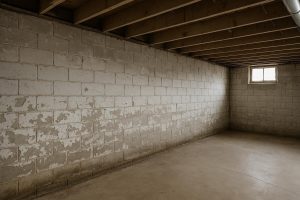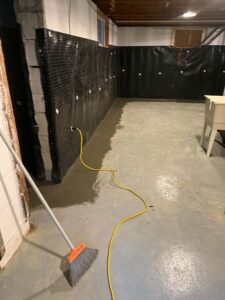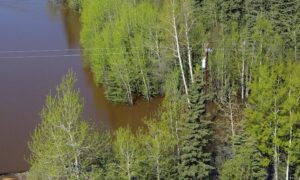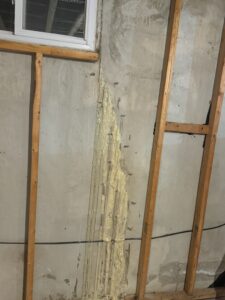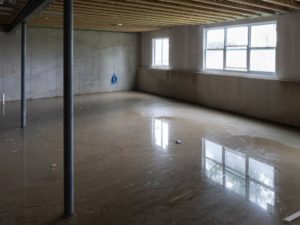
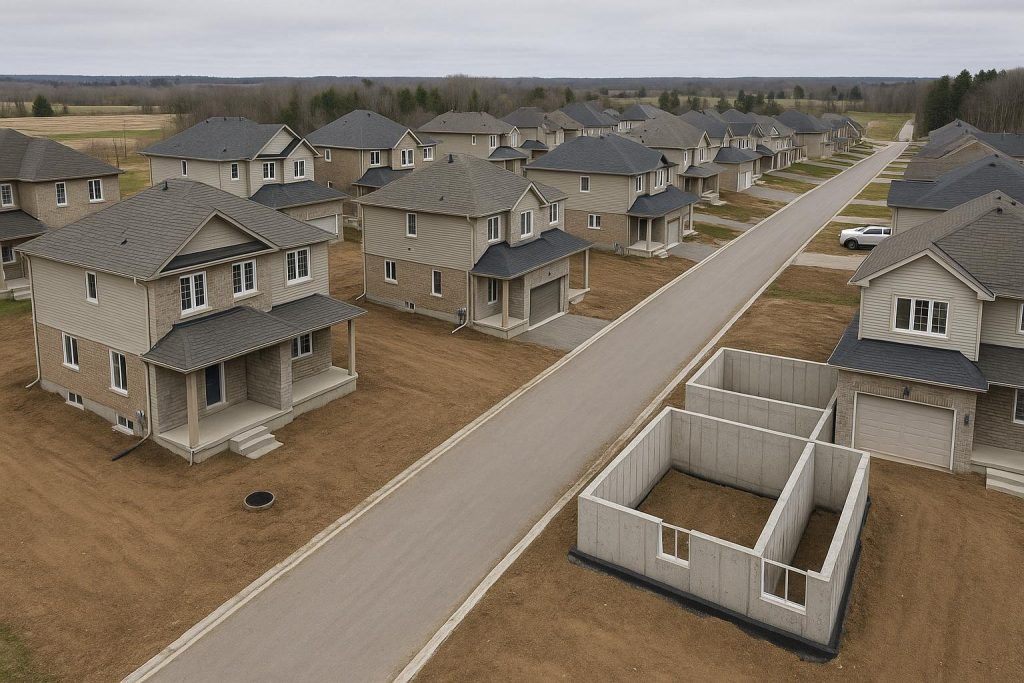
Foundation crack repair in Essa addresses the cracks that form in poured-concrete and block foundations when freeze-thaw cycling, clay-soil hydrostatic pressure, and seasonal water-table fluctuations stress the structure. Essa sits on a mix of clay-rich till and sandy loam soils south of Barrie, and its frost line, combined with spring snowmelt from the surrounding agricultural land, creates conditions that regularly open new cracks and widen existing ones. Choosing the right repair method depends on crack type, severity, and whether water is actively entering.
Key takeaways
- Vertical and diagonal shrinkage cracks in poured concrete are the most common type in Essa and are typically sealed with polyurethane or epoxy injection.
- Horizontal cracks signal lateral soil pressure and require structural assessment before any sealing work begins.
- Essa’s clay-till soils retain moisture and expand against foundation walls, making exterior drainage an important long-term complement to crack sealing.
- Repair method, crack length, wall thickness, and access all drive cost more than any single price list can capture.
- Untreated cracks allow water infiltration that can lead to mold, efflorescence, and progressive structural deterioration.
Definitions & scope
A foundation crack is any fracture in a concrete or masonry wall, floor, or footing that breaks the monolithic structure of the foundation. Cracks are classified by orientation, width, depth, and whether they are active (still moving) or dormant (stable). The main categories relevant to Essa homes are:
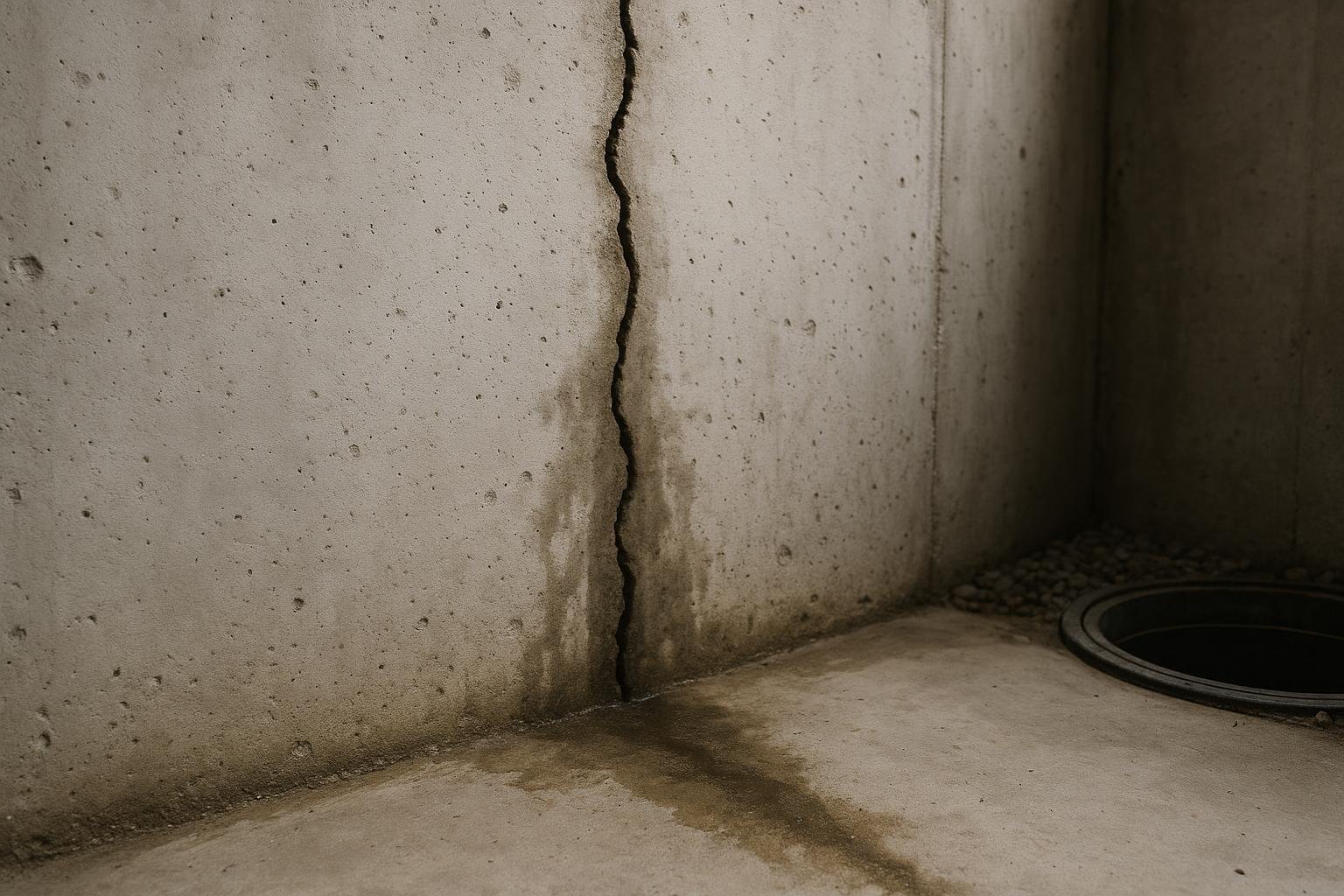
- Vertical cracks: Run straight up and down; usually caused by concrete shrinkage during curing or minor differential settlement. Typically non-structural when narrow.
- Diagonal cracks: Run at an angle, often from corners of window openings; caused by differential settlement or uneven soil loading.
- Horizontal cracks: Run parallel to the ground; caused by lateral soil or hydrostatic pressure against the wall. These carry the highest structural risk.
- Stair-step cracks: Follow mortar joints in block or brick foundations; indicate differential settlement or moisture-driven mortar deterioration.
- Floor cracks: Appear in the basement slab; may allow water seepage under hydrostatic pressure.
The scope of repair ranges from a single low-pressure injection to full exterior excavation with membrane application, depending on crack type and root cause. This guide covers all practical options available to Essa homeowners.
Why this matters
Essa Township encompasses communities including Angus, Thornton, and Utopia, set on soils that transition from sandy loam near the Nottawasaga River floodplain to heavier clay-till on the upland areas. Clay soils absorb water and expand, generating hydrostatic pressure against foundation walls. When that pressure exceeds the tensile strength of concrete, cracks form. Freeze-thaw cycling compounds the problem: water that enters a hairline crack in autumn freezes, expands by roughly nine percent in volume, and widens the crack each winter.
Essa also receives significant snowfall accumulation, and spring snowmelt can saturate the ground rapidly, raising the local water table and increasing the pressure differential across basement walls. Homes built on re-graded lots or near low-lying agricultural fields may experience particularly high seasonal water-table peaks.
Beyond structural risk, open cracks are the primary entry point for liquid water, soil gases including radon, and humid air that promotes mold growth. The connection between foundation cracks and basement mold is well established, and early repair is consistently less costly than remediation after water damage has spread. Understanding the difference between cosmetic and structural cracks is the essential first step for any Essa homeowner.
Your options
Polyurethane crack injection
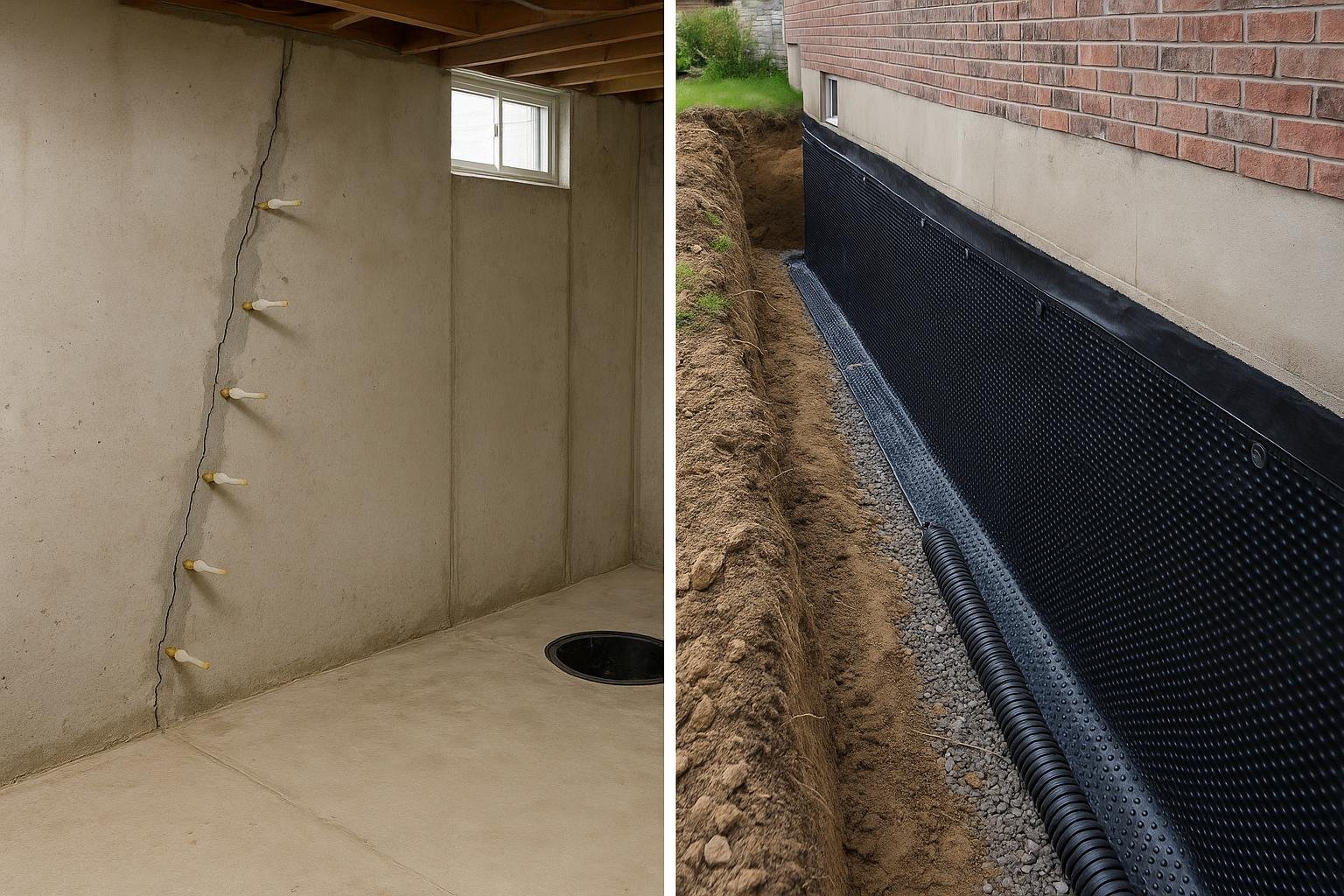
What it is: A two-part or single-component polyurethane foam or resin is injected under low pressure through ports installed along the crack. The material expands to fill the full depth of the crack and cures into a flexible, waterproof seal.
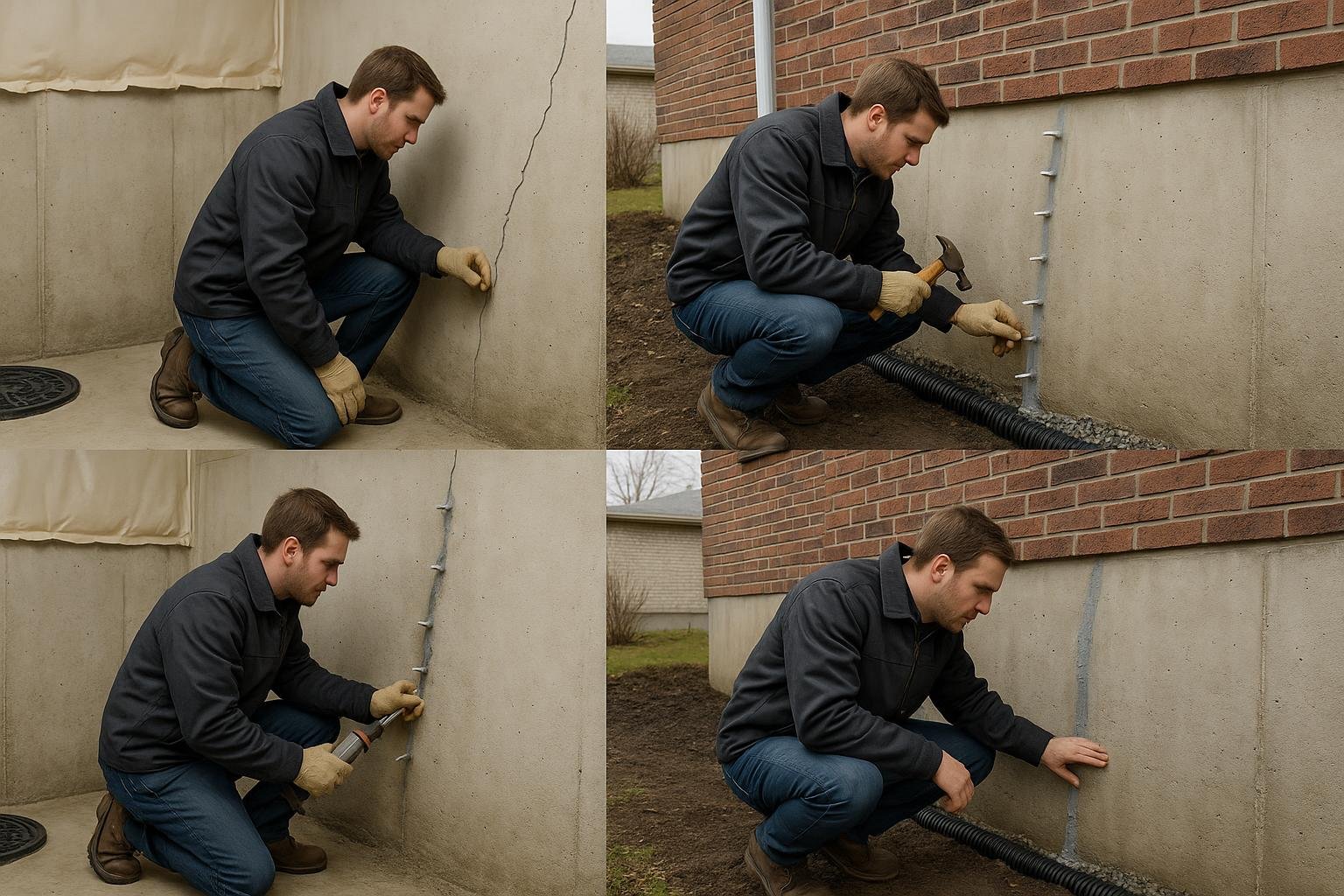
How it works: Ports are surface-mounted or drilled at intervals along the crack. Resin is injected from the lowest port upward until it appears at the next port, confirming full penetration. The flexible cure accommodates minor ongoing movement.
Best for: Active or dormant vertical and diagonal cracks in poured-concrete walls where water infiltration is the primary concern. Particularly suited to Essa’s freeze-thaw environment because the flexible seal can absorb minor seasonal movement without re-cracking.
Limitations: Does not address the external water source or soil pressure. Not suitable for horizontal cracks with structural displacement, severely deteriorated concrete, or cracks wider than approximately 12 mm without supplemental preparation. Learn more about polyurethane injection technique.
Epoxy crack injection
What it is: A rigid two-part epoxy resin is injected under low pressure to bond the two faces of a crack together, restoring structural continuity to the concrete.
How it works: The process is similar to polyurethane injection but uses a slower-curing, high-strength adhesive. The wall must be dry or nearly dry for epoxy to bond correctly.
Best for: Dormant structural cracks where restoring tensile strength across the crack plane is the goal, such as cracks caused by one-time settlement events that have since stabilized.
Limitations: Rigid cure means the repair can re-crack if the foundation continues to move. Requires a dry crack face; active water infiltration prevents proper bonding. Not appropriate for active leaks. See the epoxy vs. polyurethane comparison for a detailed breakdown.
Interior drainage system with sump pump
What it is: A perimeter channel is cut into the basement floor at the base of the walls, a drainage pipe is installed, and water is directed to a sump pit where a pump discharges it away from the foundation.
How it works: Rather than blocking water at the crack, this system intercepts water that has already entered the wall assembly and manages it before it reaches the living space. The slab is saw-cut, the channel excavated, pipe laid, and the slab patched.
Best for: Situations where multiple cracks exist, where exterior excavation is impractical, or where the water table is persistently high and crack injection alone cannot keep pace with infiltration volume.
Limitations: Does not stop water from entering the wall; it manages water after entry. Requires a functioning sump pump with a reliable power source and ideally a battery backup. Ongoing maintenance is needed. Review whether a perimeter water solution is right for your situation.
Exterior excavation and waterproofing membrane
What it is: The soil is excavated down to the footing on the affected wall face. The foundation exterior is cleaned, cracks are repaired, and a waterproofing membrane (rubberized asphalt, spray-applied polymer, or dimple mat system) is applied. New weeping tile and drainage stone are typically installed at the footing.
How it works: By addressing the wall from the outside, water is prevented from reaching the foundation surface at all. Cracks are sealed from the positive-pressure side, which is the most durable configuration.
Best for: Severe or recurring cracks, walls with multiple entry points, homes where interior methods have failed, or new construction where exterior access is straightforward. The most comprehensive long-term solution for Essa’s clay-soil conditions.
Limitations: Most disruptive and costly option. Requires excavation that may affect landscaping, decks, driveways, or utility lines. Weather-dependent. Learn about exterior foundation waterproofing in detail.
Carbon fibre straps and wall anchors (structural stabilization)
What it is: For horizontal or bowing walls, carbon fibre straps bonded vertically to the interior wall face, or steel wall anchors driven into stable soil and connected to wall plates, resist further inward movement.
How it works: Carbon fibre straps are epoxy-bonded to the wall surface and transfer tensile load across the damaged zone. Wall anchors connect the foundation wall to undisturbed soil beyond the active pressure zone, allowing gradual straightening over time with periodic tightening.
Best for: Horizontal cracks with measurable inward displacement, bowing walls, or any situation where a structural engineer has identified active lateral movement.
Limitations: Structural stabilization does not waterproof the crack; a separate sealing step is still required. A structural engineering assessment is strongly recommended before this work is undertaken. This option addresses symptom management, not the underlying soil-pressure cause.
Hydraulic cement and surface patching
What it is: A fast-setting hydraulic cement compound is packed into a crack or void to stop active water flow temporarily. Surface coatings or crystalline waterproofing compounds may be applied over the patched area.
How it works: Hydraulic cement expands slightly as it sets, creating a mechanical plug. Crystalline coatings penetrate the concrete matrix and react with moisture to form insoluble crystals that block capillary pores.
Best for: Emergency water stoppage while a permanent repair is arranged, or as a supplemental treatment over injection-repaired cracks in very wet conditions.
Limitations: Surface patches do not address the full depth of a crack and are prone to re-opening under hydrostatic pressure or freeze-thaw cycling. Not a standalone long-term solution for Essa’s conditions.
Options compared
| Method | Best for | Typical considerations | Durability / limitations |
|---|---|---|---|
| Polyurethane injection | Active vertical / diagonal cracks, wet conditions | Minimal disruption, interior access only, no excavation | Long-lasting flexible seal; may need re-injection if crack re-opens significantly |
| Epoxy injection | Dormant structural cracks, dry wall face | Restores tensile strength; wall must be dry | Rigid; can re-crack if movement continues |
| Interior drainage + sump | High water table, multiple cracks, impractical exterior access | Saw-cutting required; ongoing pump maintenance | Manages water rather than blocking it; effective long-term with maintenance |
| Exterior excavation + membrane | Severe / recurring cracks, positive-side waterproofing | Most disruptive; landscaping impact; weather-dependent | Most durable when properly installed; addresses root cause |
| Carbon fibre / wall anchors | Horizontal cracks, bowing walls | Requires engineering assessment; does not waterproof | Stabilizes movement; sealing still required separately |
| Hydraulic cement / surface patch | Emergency stoppage, supplemental treatment | Fast application; low cost | Short-term; prone to re-opening under pressure |
Polyurethane injection is the most practical first-line repair for the majority of Essa homeowners dealing with vertical or diagonal cracks because it works in wet conditions, requires no excavation, and produces a flexible seal suited to freeze-thaw movement. Exterior excavation becomes the preferred choice when cracks are recurring, when multiple wall faces are affected, or when the homeowner wants to address the water source rather than the symptom. Interior drainage systems fill the gap when exterior work is not feasible and water volume is high. Structural options should always be preceded by a professional assessment.
How to choose
Use the following framework to narrow down the right repair path for your Essa home.
Choose polyurethane injection if you have one or a small number of vertical or diagonal cracks in a poured-concrete wall, water is actively seeping through, and you want a minimally disruptive repair that can be completed in a single visit without excavation.
Choose epoxy injection if the crack is dormant (no movement in at least six to twelve months), the wall face is dry, and restoring structural continuity across the crack is the priority rather than waterproofing alone.
Choose an interior drainage system if you have multiple cracks across one or more walls, exterior excavation is blocked by a deck, driveway, or utility corridor, or the seasonal water table in your area of Essa is persistently high and crack sealing alone has not kept the basement dry.
Choose exterior excavation and membrane if you have had crack injections re-open, if the exterior drainage around your foundation is failing, if weeping tile is collapsed or absent, or if you are undertaking significant landscaping or addition work that already requires excavation.
Choose structural stabilization if a crack is horizontal, the wall shows measurable inward bow, or a contractor or engineer has identified active lateral movement. Sealing alone is not appropriate until movement is arrested.
Choose hydraulic cement as a temporary measure only while arranging a permanent repair, particularly if water is flowing actively and needs to be slowed before injection ports can be set. Consult the injection vs. full waterproofing decision guide for additional detail.
Costs & timelines
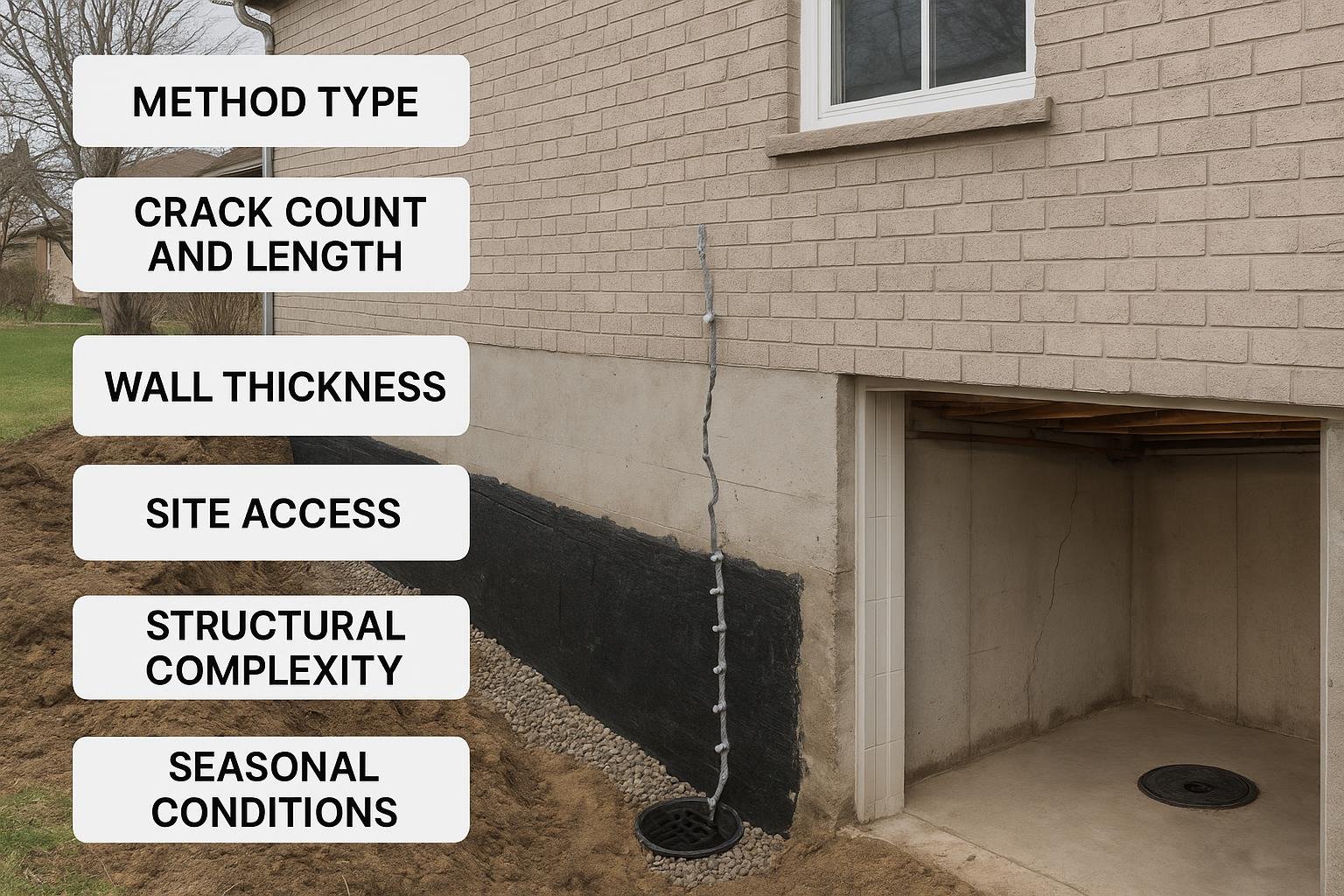
No verified current price data for Essa-specific foundation crack repair has been supplied to this guide. The following cost drivers are ranked by their typical influence on total project cost. For current estimates, use the online cost calculator or request a site assessment.
| Cost driver | Why it matters | Relative impact |
|---|---|---|
| Repair method selected | Injection is least costly; exterior excavation is most costly | High |
| Number and length of cracks | More cracks or longer cracks require more material and labour time | High |
| Wall thickness and foundation depth | Thicker walls and deeper footings increase excavation volume and injection material | Medium-high |
| Access conditions | Decks, driveways, utility lines, and finished interior walls increase labour cost | Medium-high |
| Structural complexity | Horizontal cracks requiring engineering assessment and stabilization hardware add cost | Medium |
| Season and ground conditions | Frozen ground or saturated soil can delay exterior work and affect scheduling | Low-medium |
Injection repairs are typically completed in a few hours for a single crack. Interior drainage systems generally require one to two days depending on basement perimeter length. Exterior excavation timelines depend on wall length, depth, and site conditions and can range from one day for a single wall section to several days for a full perimeter. Any subsidy programs available through the Township of Essa or the County of Simcoe should be verified directly with those authorities, as program availability and terms change and cannot be confirmed here. See the foundation crack sealing cost guide for broader Ontario context.
Risks & common mistakes
Treating a structural crack as cosmetic. Horizontal cracks and cracks with measurable displacement are structural concerns. Applying a surface patch or injection without first assessing whether the wall is moving can mask a worsening problem. Always identify crack orientation and check for inward bow before selecting a repair method.
Using hydraulic cement as a permanent fix. Hydraulic cement is a temporary plug. Under sustained hydrostatic pressure from Essa’s clay soils, surface patches routinely fail within one to three freeze-thaw seasons. Homeowners who rely on patching alone often find the crack has widened and water damage has spread by the time a contractor is called back.
Injecting an active crack without addressing drainage. Crack injection seals the current opening but does not reduce the pressure that caused it. If surface grading directs water toward the foundation, or if weeping tile is blocked, a new crack may open nearby. Grading and downspout extensions are low-cost complements to any crack repair.
Delaying repair on a wet crack. Water that enters a crack carries dissolved minerals that deposit as efflorescence and can accelerate concrete deterioration. Mold can establish within days of sustained moisture. Early repair is consistently less costly than remediation. Review efflorescence as a warning sign.
Choosing the wrong injection material. Epoxy in an active or wet crack will not bond. Polyurethane in a crack that requires structural re-bonding will not restore tensile strength. Material selection must match the crack condition.
Skipping a warranty review. Reputable contractors offer written warranties on injection work. Confirm what is covered, for how long, and whether the warranty is transferable if the home is sold. DryShield offers a lifetime transferable warranty on qualifying work.
How the process works
- Inspection and crack classification: A technician examines the crack for orientation, width, depth, active water, displacement, and signs of ongoing movement. The foundation type (poured concrete, block, or stone) is confirmed. This step determines which repair method is appropriate.
- Surface preparation: The crack face is cleaned of loose concrete, efflorescence, paint, and debris. For injection work, the surface is dried as much as possible. For exterior work, excavation begins and the wall face is pressure-washed.
- Port installation or membrane preparation: For injection, ports are surface-mounted or drilled at intervals along the crack. For exterior work, the cleaned wall is primed and the membrane system is applied in layers according to the product specification.
- Injection or membrane application: Resin is injected from the lowest port upward, or the membrane is applied and allowed to cure. Drainage components (weeping tile, drainage stone, dimple mat) are installed for exterior systems.
- Curing and port removal: Injection material is allowed to cure fully. Ports are removed and the surface is patched. For exterior systems, drainage stone is placed, filter fabric installed, and backfill compacted in lifts.
- Final inspection and documentation: The completed repair is inspected, photographed, and documented. Warranty paperwork is issued. The homeowner is advised on grading, downspout management, and any follow-up monitoring.
- Follow-up monitoring guidance: The homeowner is shown how to monitor the repaired area for any signs of re-opening or new cracking, and advised on the timeline for any recommended complementary work such as improved grading or sump pump installation.
Frequently asked questions
How do I know if a crack in my Essa foundation is serious?
Horizontal cracks, cracks wider than about 6 mm, cracks with visible displacement (one side higher than the other), or cracks that have grown since you first noticed them are the most serious categories. Vertical hairline cracks in poured concrete are common and often non-structural, but any crack that is actively leaking water warrants prompt attention. Use the crack diagnosis tool to help classify what you are seeing, and arrange a professional inspection if you are uncertain.
Can foundation cracks be repaired from the inside without digging?
Yes. Polyurethane and epoxy injection are interior methods that require no excavation. They are effective for vertical and diagonal cracks in poured-concrete walls and can be completed in a single visit. Interior drainage systems are also installed entirely from inside the basement. Exterior excavation is reserved for situations where interior methods are insufficient or where the exterior drainage system needs replacement.
How long does polyurethane crack injection last?
When properly installed in a suitable crack, polyurethane injection creates a flexible, waterproof seal that is designed to last for many years. The repair can be compromised if the foundation continues to move significantly, if the crack was not fully penetrated during injection, or if the surrounding concrete deteriorates. A warranty from a reputable contractor provides recourse if the repair fails within the covered period.
Will crack repair stop my basement from smelling damp?
Sealing active water entry points through cracks will reduce one source of moisture, which can improve odour over time. However, damp basement odour can also result from condensation on cold walls, floor seepage, or inadequate ventilation. A basement dehumidification strategy is often a useful complement to crack repair for controlling residual humidity.
Does the Township of Essa require a permit for foundation crack repair?
Interior crack injection typically does not require a building permit in Ontario. Exterior excavation that affects the foundation structure, or any work that could be classified as structural repair, may require a permit under the Ontario Building Code. Homeowners should confirm current permit requirements with the Township of Essa’s building department before exterior work begins, as requirements can change and this guide cannot verify current local rules.
What causes new cracks to appear after a repair?
A repaired crack that re-opens, or a new crack that forms nearby, usually indicates that the underlying pressure source has not been addressed. Common causes include poor surface grading that directs runoff toward the foundation, blocked or failed weeping tile, downspouts discharging too close to the wall, or ongoing soil settlement. Addressing drainage at the surface and ensuring weeping tile is functional are important steps after any crack repair. See the French drain system guide for drainage options.
Is it safe to finish a basement after crack repair?
Finishing a basement before confirming that all water entry has been resolved is a common and costly mistake. Framing, insulation, and drywall installed over a leaking wall will trap moisture and promote mold growth behind the finished surface. It is advisable to monitor a repaired crack through at least one full wet season, including spring snowmelt, before proceeding with interior finishing work.
How does Essa’s soil affect foundation crack risk compared to nearby areas?
Essa’s soils vary across the township. Areas with heavier clay-till content, particularly on upland terrain, generate more hydrostatic pressure against foundation walls than sandier areas near the Nottawasaga River. Clay soils also shrink and swell with moisture changes, creating cyclical stress on foundations that can open cracks over time. Homes on re-graded lots or in low-lying areas may face higher seasonal water-table peaks. Neighbouring Barrie and Innisfil share similar soil and climate conditions, and the Innisfil foundation crack repair guide provides useful parallel context.
Can I repair a foundation crack myself?
DIY hydraulic cement patching is possible and can slow active water temporarily, but it does not address the full depth of a crack and is not a durable solution under Essa’s freeze-thaw conditions. Low-pressure injection kits are available at hardware stores, but achieving full crack penetration without professional equipment and experience is difficult. Misidentifying a structural crack as cosmetic and applying a surface patch is a risk that can delay necessary structural intervention. Professional assessment is recommended for any crack that is leaking, horizontal, or wider than a hairline.
Does home insurance cover foundation crack repair in Essa?
Most standard Ontario home insurance policies do not cover foundation crack repair or basement waterproofing as maintenance items. Coverage may apply if a crack results from a sudden, accidental event such as a burst pipe, but gradual water infiltration and soil-pressure cracking are generally excluded. Policy terms vary significantly. Homeowners should review their specific policy and speak with their insurer. The Ontario home insurance and foundation cracks guide provides a broader overview of what is and is not typically covered.
If you are dealing with a foundation crack in Essa and want to understand which repair approach suits your specific situation, DryShield Services provides assessments for homeowners across Simcoe County. Visit the foundation crack repair services page or use the basement leak diagnostic tool to get started, or contact the team directly to arrange an on-site evaluation.