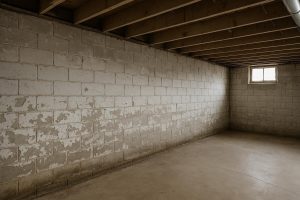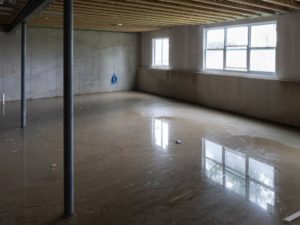
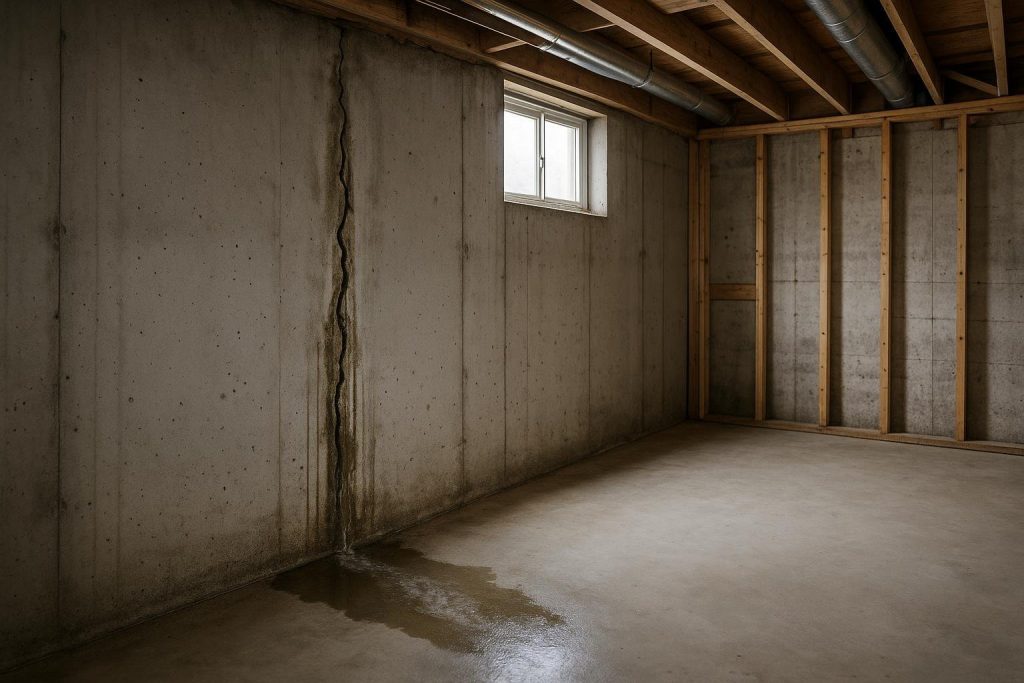
Basement leaking repair covers a range of methods, from low-pressure polyurethane crack injection to full exterior excavation, and choosing the right one depends on where the water is entering and why. In Ontario, heavy clay soil across the GTA holds water against foundation walls for days after a storm, meaning hydrostatic pressure, not rainfall alone, is usually the root cause. Acting on the correct diagnosis protects your home’s structure and prevents mould from taking hold.
Key Takeaways
- The entry point determines the fix: a single crack calls for injection; perimeter seepage calls for weeping tile or exterior waterproofing.
- Interior systems manage water that has already entered; exterior systems stop it before it reaches the wall.
- A single crack injected with polyurethane typically costs $600 to $900; full exterior waterproofing of a Toronto semi runs roughly $6,000 to $9,000, depending on linear footage and excavation depth.
- Spring thaw and summer downpours are the two peak failure windows in Ontario, so inspecting before those seasons is worthwhile.
- Older Toronto homes commonly have fully silted-up original weeping tile, which no surface patch will fix.
Definitions and Scope
A basement leak is any uncontrolled entry of water into the below-grade living space. The source may be a hairline crack in a poured-concrete wall, a failed joint at the footing, deteriorated parging on a block foundation, a silted weeping tile that can no longer carry water away from the footing, or a floor drain overwhelmed by hydrostatic pressure from below.
Basement leaking repair methods fall into three broad families: injection (sealing the crack itself), interior water management (intercepting water that enters and routing it to a sump pump), and exterior waterproofing (stopping water before it contacts the wall). Each family has sub-methods with different costs, disruption levels, and lifespans. The full basement waterproofing service overview covers the complete system, but this guide focuses on what each repair costs and how to match the right fix to the right problem.
Scope matters too. A single vertical crack in a poured-concrete wall is a contained problem. Perimeter seepage along the base of every wall is a drainage failure. Treating a drainage failure with crack injection alone will not solve the problem, and treating a single crack with a full excavation is unnecessary. Correct diagnosis is the starting point for every basement leaking repair.
Why This Matters
Water in a basement is not just a nuisance. Sustained moisture degrades concrete, corrodes steel reinforcement, and creates conditions for mould growth within 24 to 48 hours of a wetting event. In Ontario, the Canada Mortgage and Housing Corporation (CMHC) identifies basement moisture as one of the leading contributors to indoor air quality problems in Canadian homes.
Hydrostatic pressure is the specific force that drives most GTA basement leaks. When clay-heavy soil becomes saturated, it cannot drain quickly, so water pressure builds against the outside face of the foundation wall. That pressure finds the path of least resistance: a shrinkage crack, a cold joint at the footing, or a gap around a pipe penetration. The crack does not cause the leak; the pressure does. Any basement leaking repair that ignores pressure management is a temporary fix.
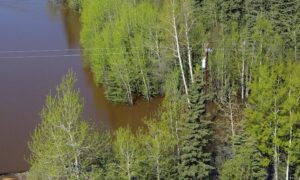
Spring thaw is the most dangerous season for Ontario foundations. Frozen ground prevents meltwater from percolating downward, so it runs laterally and pools against foundation walls. Heavy summer downpours create a second peak. Homes built before the 1980s often have clay or concrete weeping tile that has collapsed or silted up entirely, leaving no drainage path at the footing. When that happens, hydrostatic pressure builds unchecked until something gives.
Delaying basement leaking repair also affects resale. A wet basement disclosed on a property listing, or discovered during a home inspection, typically triggers price negotiations well beyond the cost of the repair itself. Fixing the problem before listing protects equity.
Your Options for Basement Leaking Repair
Polyurethane Crack Injection
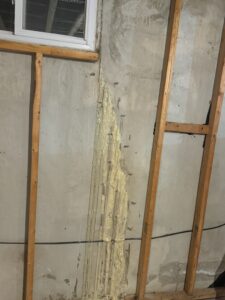
Low-pressure polyurethane injection seals an active crack from the interior without excavation. A technician drills injection ports along the crack at regular intervals, pastes surface ports over them, then injects expanding polyurethane foam under low pressure. The foam travels through the full depth of the wall and cures flexible, so it tolerates the seasonal movement that poured-concrete foundations experience through Ontario freeze-thaw cycles. This is the correct fix for a single vertical or diagonal shrinkage crack in a poured-concrete wall.
Limitations: polyurethane injection does not address the drainage conditions outside the wall. If hydrostatic pressure is high and multiple cracks are present, injection buys time but does not solve the underlying problem. It is also not appropriate for horizontal cracks, which may indicate lateral soil pressure and a structural concern.
Epoxy Crack Injection
Epoxy injection is used when the crack must be structurally re-bonded, not just sealed. Epoxy cures rigid and achieves compressive strengths that exceed the surrounding concrete. It is the correct choice when a crack has displaced or when an engineer has identified a structural deficiency. Because epoxy does not flex, it is not suitable for cracks that are still moving seasonally.
Limitations: epoxy requires a dry crack to bond properly, so it cannot be injected into an actively weeping crack. It is also more expensive per linear foot than polyurethane and requires longer cure times before the wall can be loaded.
Interior Weeping Tile System
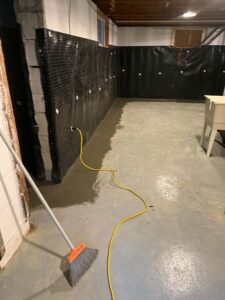
An interior weeping tile system intercepts water at the footing before it can spread across the floor. The perimeter concrete is jackhammered, a drainage channel is cut along the inside of the footing, perforated pipe is laid in clear stone, and the whole system drains to a sump basin. A sump pump then ejects the collected water away from the building. A vapour barrier is run up the wall to direct any wall seepage into the channel rather than onto the floor. The concrete is re-poured over the system.
This is the most practical basement leaking repair when exterior excavation is not feasible due to finished landscaping, a deck, a driveway, or a neighbouring structure. It does not stop water from entering the wall, but it manages water so effectively that the basement stays dry. Interior systems typically cost less than exterior work and cause no disruption to the outside of the property.
Exterior Waterproofing
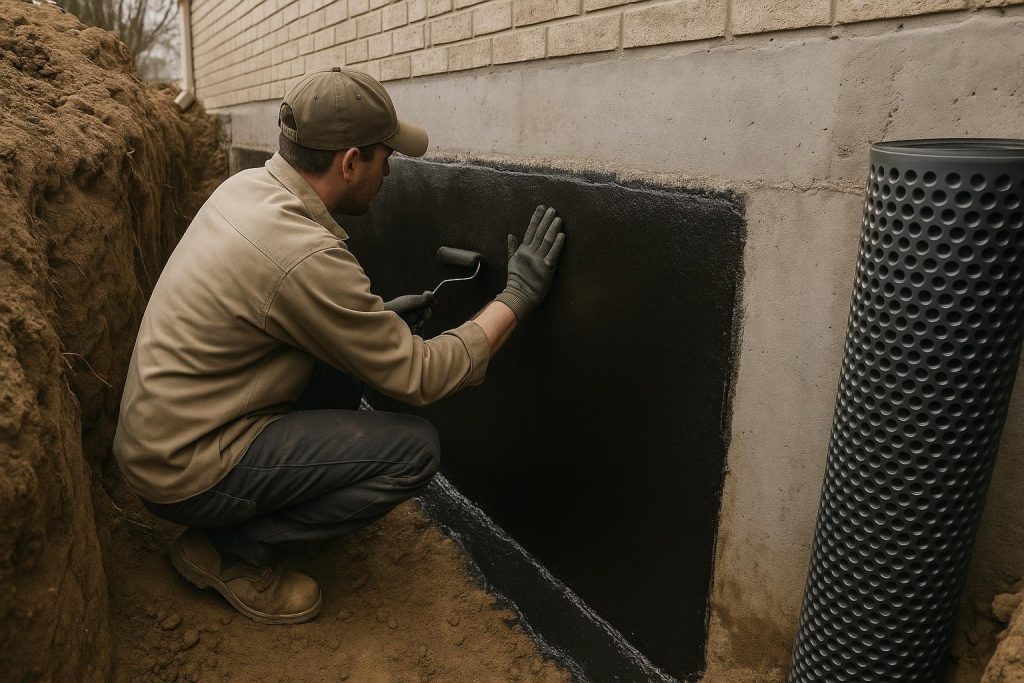
Exterior waterproofing is the only method that stops water before it contacts the foundation wall. The process involves excavating to the footing, applying hydraulic cement to any voids, coating the wall with a rubberised membrane, installing a dimpled drainage board to protect the membrane and create a drainage plane, laying new weeping tile bedded in clear stone at the footing, and backfilling with corrected grade. This is the most comprehensive and longest-lasting solution.
Full exterior waterproofing of an average Toronto semi-detached or detached home runs roughly $6,000 to $9,000, depending on linear footage, excavation depth, and site access. Tight laneways, mature trees near the foundation, or a high water table all increase cost. The final figure always depends on a site inspection.
Sump Pump Installation or Replacement
A sump pump is the discharge mechanism for any interior drainage system, but it can also be installed as a standalone measure in a basement that collects water through the floor during high water-table events. A properly sized pump with a battery backup keeps the sump basin from overflowing during power outages, which often coincide with the storms that cause the most water entry. Without a working pump, even a well-designed interior system will flood.
Limitations: a sump pump alone does not address wall cracks or failed exterior drainage. It is a component of a system, not a complete solution on its own.
Parging and Surface Sealing
Parging is the application of a cement-based coating to the above-grade or near-grade portion of a foundation wall. It seals minor surface porosity and protects block or stone foundations from weathering. Surface sealers applied to the interior wall face can slow minor condensation or very light seepage, but neither parging nor interior sealers can resist sustained hydrostatic pressure. They are maintenance measures, not waterproofing solutions.
Options Compared
| Method | Best For | Typical Lifespan | Relative Cost | Disruption |
|---|---|---|---|---|
| Polyurethane crack injection | Single vertical/diagonal shrinkage crack, poured concrete | Long-term if crack is stable | Lowest ($600-$900 per crack) | Minimal, interior only, no excavation |
| Epoxy crack injection | Structural cracks requiring re-bonding | Permanent if crack is stable | Low to moderate | Minimal, interior only |
| Interior weeping tile system | Perimeter seepage, silted original tile, no exterior access | 20-plus years with pump maintenance | Moderate | Interior jackhammering, 1-2 days |
| Exterior waterproofing | Comprehensive protection, new membrane, failed exterior drainage | Lifetime with proper membrane | Highest ($6,000-$9,000 typical) | Excavation, landscaping disruption |
| Sump pump installation | High water table, backup for interior system | 7-12 years per pump unit | Low to moderate | Minimal |
| Parging and surface sealing | Minor surface porosity, above-grade weathering | 5-10 years | Lowest | None |
The table makes clear that no single method is universally correct. Crack injection is the most cost-effective fix for a contained crack, but it does nothing for a drainage failure. Exterior waterproofing is the most thorough solution but carries the highest cost and disruption. Interior weeping tile sits in the middle: it cannot stop water from entering the wall, but it manages water so reliably that the basement stays dry even when the exterior drainage is compromised. Most homes with perimeter seepage and no exterior access are best served by an interior system paired with a sump pump.
How to Choose
Choose polyurethane crack injection if you have one or two isolated vertical cracks in a poured-concrete wall, the cracks are not horizontal, and the rest of the basement stays dry. This is the fastest and least expensive basement leaking repair and, when done correctly with the port-and-paste method, it is a long-term seal.
Choose epoxy injection if a structural engineer or inspector has identified a crack that has displaced or that needs to be re-bonded for load-bearing reasons. Do not use epoxy on an actively weeping crack or on a crack you expect to keep moving seasonally.
Choose an interior weeping tile system if water enters along the base of multiple walls, if the original weeping tile is silted up, or if exterior excavation is not practical because of a deck, driveway, or neighbouring property. Interior systems are also the right choice when budget constraints make exterior work difficult right now but a permanent drainage solution is still needed.
Choose exterior waterproofing if you want the most complete solution, if the exterior membrane has failed, if you are already planning significant landscaping or driveway work, or if the home has a history of repeated water entry that interior management has not resolved. The exterior vs interior perimeter waterproofing comparison covers this decision in more detail.
Choose a sump pump addition if you already have an interior system but no pump, or if the existing pump is more than ten years old and has no battery backup. A pump failure during a storm undoes every other investment in the system.
If you are unsure which entry point is causing the leak, use the basement leak diagnostic tool to narrow down the likely cause before booking an inspection.
Costs and Timelines
| Cost Driver | Why It Matters | Approximate Impact |
|---|---|---|
| Linear footage of affected wall | Interior and exterior systems are priced per linear foot of wall treated | Primary driver for perimeter work |
| Excavation depth | Deeper footings require more labour and equipment time | Significant for exterior work |
| Site access | Tight laneways, mature trees, or attached structures restrict equipment and increase hand-digging | Can add 20-40% to exterior cost |
| Number of cracks | Each crack injection is priced individually; $600-$900 per crack is typical | Scales directly with crack count |
| Condition of existing weeping tile | Fully silted or collapsed tile requires complete replacement rather than supplementing | Moderate to significant |
| Sump basin and pump specification | Battery backup, alarm, and higher-capacity pumps add cost but reduce risk | Low to moderate |
| Concrete reinstatement | Interior systems require re-pouring the perimeter slab after installation | Included in most quotes |
As a general reference: a single crack injection runs $600 to $900. An interior weeping tile system for a typical Toronto semi typically falls below the cost of full exterior work. Full exterior waterproofing of an average semi or detached home in the GTA runs roughly $6,000 to $9,000. These are ranges drawn from completed jobs and should be treated as starting points. The final figure for any basement leaking repair depends on a site inspection, because excavation depth, soil conditions, and access vary significantly from one address to the next. For a detailed breakdown of what drives foundation waterproofing costs, see the foundation waterproofing cost guide.
Crack injection costs $600 to $900 per crack. Full exterior waterproofing of a Toronto semi runs roughly $6,000 to $9,000. Every quote depends on a site inspection because no two foundations are identical.
Risks and Common Mistakes
The most common mistake is treating the symptom rather than the cause. Applying hydraulic cement or a crystalline sealer to a leaking wall face will slow water entry temporarily, but if hydrostatic pressure is the driver, the water will find another path within one or two wet seasons. Surface patches do not address the drainage conditions that created the pressure in the first place.
A second frequent error is injecting a crack without checking whether the crack is still moving. A crack that is actively widening due to ongoing settlement or lateral soil pressure will re-open after injection. Before any injection work, the crack should be monitored with a tell-tale gauge or inspected by a professional to confirm it is stable.
Horizontal cracks in a block or poured-concrete wall are a specific warning sign. They indicate lateral soil pressure pushing the wall inward, which is a structural concern, not a simple waterproofing problem. Injecting a horizontal crack without addressing the structural cause is dangerous. A structural engineer should assess any horizontal crack before basement leaking repair work begins. The guide on how to tell if a foundation crack is structural explains the warning signs in detail.
Installing an interior weeping tile system without a battery-backup sump pump is another common oversight. Power outages and heavy storms arrive together. A pump that loses power during the worst storm of the year defeats the purpose of the drainage system.
Finally, correcting the interior without correcting the exterior grade is a missed opportunity. If the ground around the foundation slopes toward the house, every rainfall directs water to the wall. Regrading so the ground falls away from the foundation at a minimum slope is a low-cost step that reduces the load on any waterproofing system.
| Symptom | Likely Cause | Correct Fix |
|---|---|---|
| Single damp streak on poured-concrete wall | Shrinkage crack admitting water under hydrostatic pressure | Polyurethane crack injection |
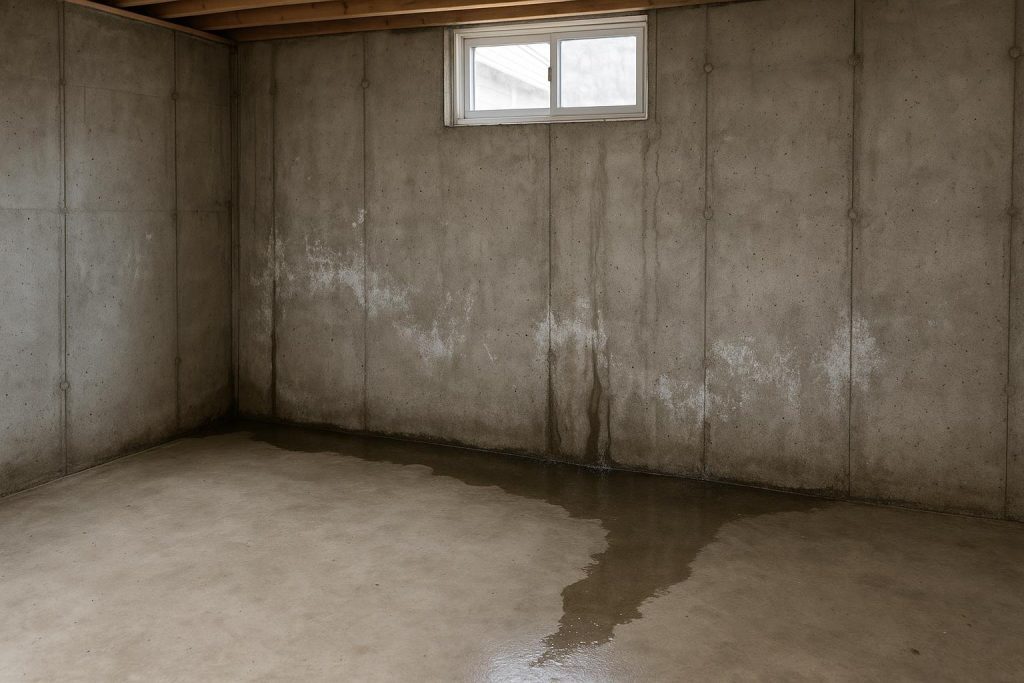
| Water along base of multiple walls after rain | Failed or silted weeping tile, high hydrostatic pressure | Interior weeping tile system with sump pump |
| Water seeping through floor cracks or drain | High water table, hydrostatic pressure from below | Interior drainage system, sump pump |
| Horizontal crack in wall | Lateral soil pressure, possible structural movement | Structural assessment first, then repair |
| White chalky deposits on wall face | Efflorescence from mineral-laden water passing through concrete | Identify and seal water source; efflorescence is a symptom, not the problem |
| Musty smell, no visible water | Slow seepage or condensation feeding mould behind finishes | Moisture assessment, vapour barrier, ventilation review |
The symptom-to-cause table above is a starting framework, not a substitute for a professional inspection. Multiple symptoms often overlap, and the correct repair sequence matters: structural issues must be resolved before waterproofing, and drainage must be addressed before surface sealing.
How the Process Works
- Free on-site inspection and moisture assessment. A technician walks the perimeter inside and out, identifies entry points, checks the grade, tests for active moisture with a meter, and notes the condition of any existing weeping tile or sump system.
- Written scope with linear-foot or per-crack pricing. You receive a written quote that breaks down the work by method, so you understand exactly what is being done and why. No verbal estimates.
- Preparation and protection. Interior contents near the work area are protected. For exterior work, landscaping, downspouts, and utility locations are marked before any digging begins.
- Core repair work. For crack injection: ports are drilled and pasted, polyurethane or epoxy is injected under low pressure, and ports are removed and patched. For exterior work: excavation to the footing, hydraulic cement parging of voids, rubberised membrane application, dimpled drainage board installation, new weeping tile bedded in clear stone, backfill, and grade correction. For interior systems: perimeter jackhammering, weeping tile to sump basin, vapour barrier up the wall, concrete re-pour.
- Sump pump installation or inspection. Where a sump basin is part of the scope, the pump is installed, tested, and the battery backup is commissioned. Existing pumps are tested and replaced if they fail the load test.
- Final inspection and documentation. The completed work is inspected, the homeowner is walked through what was done, and warranty documentation is issued.
- Post-repair monitoring advice. The technician advises on seasonal checks: clearing window wells before spring thaw, testing the sump pump before the wet season, and watching for new cracks after the first winter.
Every basement leaking repair job starts with a free on-site inspection. The inspection determines the correct method. Skipping it and ordering a repair type based on a neighbour’s experience is the single most common reason repairs fail to hold.
Frequently Asked Questions
How do I know if my basement leak needs injection or a full waterproofing system?
If water enters through one or two isolated cracks in a poured-concrete wall and the rest of the basement is dry, crack injection is usually the right basement leaking repair. If water appears along the base of multiple walls, seeps through the floor, or returns after previous patching, the problem is a drainage failure and a weeping tile or exterior system is needed. A professional moisture assessment will confirm which situation you have.
Can I inject a foundation crack myself?
DIY injection kits exist, but they use surface-applied epoxy paste rather than low-pressure port injection, which means the sealant rarely penetrates the full depth of the wall. A crack that is sealed only at the surface will re-wet within one or two seasons. Professional low-pressure injection fills the crack through its entire thickness, which is what makes the repair last.
How long does a polyurethane crack injection last?
When the crack is stable and the injection fills the full wall thickness, a polyurethane seal is a long-term repair. The material cures flexible, so it moves with the seasonal expansion and contraction of the foundation rather than cracking again. If the underlying cause of the crack, such as settlement or ongoing lateral pressure, is not resolved, the crack may re-open or a new one may form nearby.
Will an interior weeping tile system make my basement completely dry?
Yes, in the sense that water will not appear on the floor or pool in the space. The system intercepts water at the footing and routes it to the sump before it can spread. The wall itself may still admit moisture, which is why a vapour barrier is run up the wall face as part of the installation. The basement will be dry for practical purposes, including finishing, storage, and living space use.
How long does exterior waterproofing take?
A typical exterior waterproofing job on one or two walls of a Toronto semi-detached home takes one to three days, depending on excavation depth and linear footage. Larger homes or properties with restricted access take longer. The excavation is backfilled and graded on the same day the membrane work is completed, so the property is not left open overnight in most cases.
Does basement leak repair affect my home insurance?
Most standard Ontario home insurance policies do not cover gradual water seepage or foundation deterioration, but they may cover sudden and accidental water damage. Completing a documented waterproofing repair can support a claim if a future event occurs, and some insurers offer reduced premiums for homes with sump pumps and backwater valves. The home insurance and basement waterproofing guide covers what Ontario policies typically include and exclude.
What is the difference between weeping tile and a French drain?
Weeping tile is perforated pipe installed at the footing level, either inside or outside the foundation, to collect groundwater before it builds pressure against the wall. A French drain is a broader term for any subsurface drainage trench filled with clear stone and perforated pipe, often used to redirect surface or subsurface water away from a structure. At the footing, the two terms describe essentially the same installation.
How do I know if my original weeping tile has failed?
Signs include water appearing along the base of walls during or after rain, a sump pit that never fills (suggesting water is not reaching it), or a sump that runs continuously during wet weather. A camera inspection of the existing tile, where accessible, can confirm whether it is silted, crushed, or disconnected. Many Toronto homes built before 1980 have clay or concrete tile that is fully blocked.
Is basement leaking repair worth it before selling my home?
A documented, warranted repair is almost always worth completing before listing. Buyers and their inspectors look for moisture evidence, and a wet basement disclosure typically results in price reductions that exceed the repair cost. A transferable warranty adds further value because it reassures the buyer that the problem has been professionally resolved.
Do I need a permit for basement waterproofing in Ontario?
Crack injection and interior drainage systems generally do not require a building permit in Ontario. Exterior excavation that alters the foundation drainage may require one in some municipalities. Your contractor should confirm permit requirements for your specific municipality before work begins. The Ontario Building Code sets minimum standards for drainage and dampproofing of below-grade spaces.
If your basement is showing signs of water entry, the right time to act is before the next spring thaw or summer storm season. Contact the DryShield Team for a free on-site inspection and written quote. Every recommendation is based on what your specific foundation actually needs, not a one-size-fits-all package.