When comparing hydraulic cement vs crack injection, crack injection is the better long-term solution for most poured-concrete foundation cracks because it bonds through the full wall thickness and flexes with seasonal movement. Hydraulic cement is faster and cheaper for an immediate stop to active water flow, but it does not penetrate the crack and is prone to re-opening. Choose hydraulic cement only as a short-term measure or for large voids; choose crack injection when you need a durable, waterproof seal.
- Crack injection fills the crack through its full depth; hydraulic cement sits on the surface.
- Polyurethane injection remains flexible after curing, accommodating freeze-thaw movement common in Ontario.
- Hydraulic cement can stop active water flow in minutes, making it useful as a temporary measure before a permanent repair.
- Injection is generally the preferred method for hairline to moderate cracks in poured-concrete walls; hydraulic cement suits large voids or honeycombed concrete.
- Neither method addresses the underlying source of hydrostatic pressure; drainage improvements may also be needed.
How we compared
This comparison draws on published material science data for Portland-cement-based hydraulic cement and polyurethane and epoxy injection resins, manufacturer technical data sheets, and the Ontario Building Code’s requirements for foundation repair. We evaluated both methods across seven dimensions: penetration depth, flexibility after cure, cure time, application conditions, suitability by crack type, longevity, and cost drivers. No proprietary job-count data or internal outcome statistics are cited because a verified completed-job dataset was not available for this automated route. Where evidence is limited, that limitation is stated rather than filled with assumed figures.
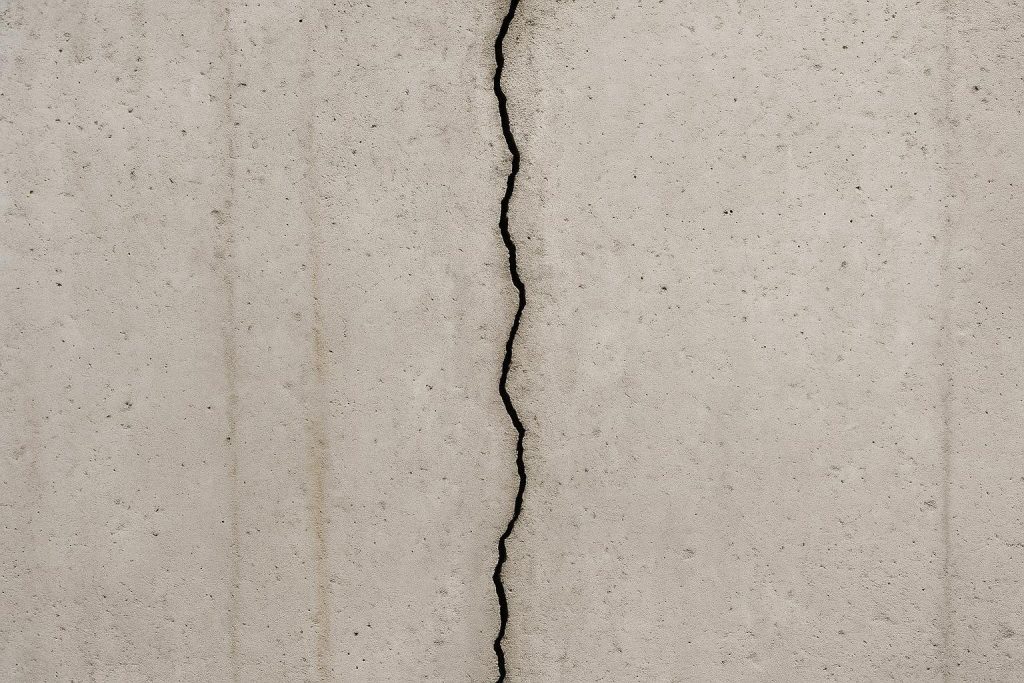 Hydraulic cement explained
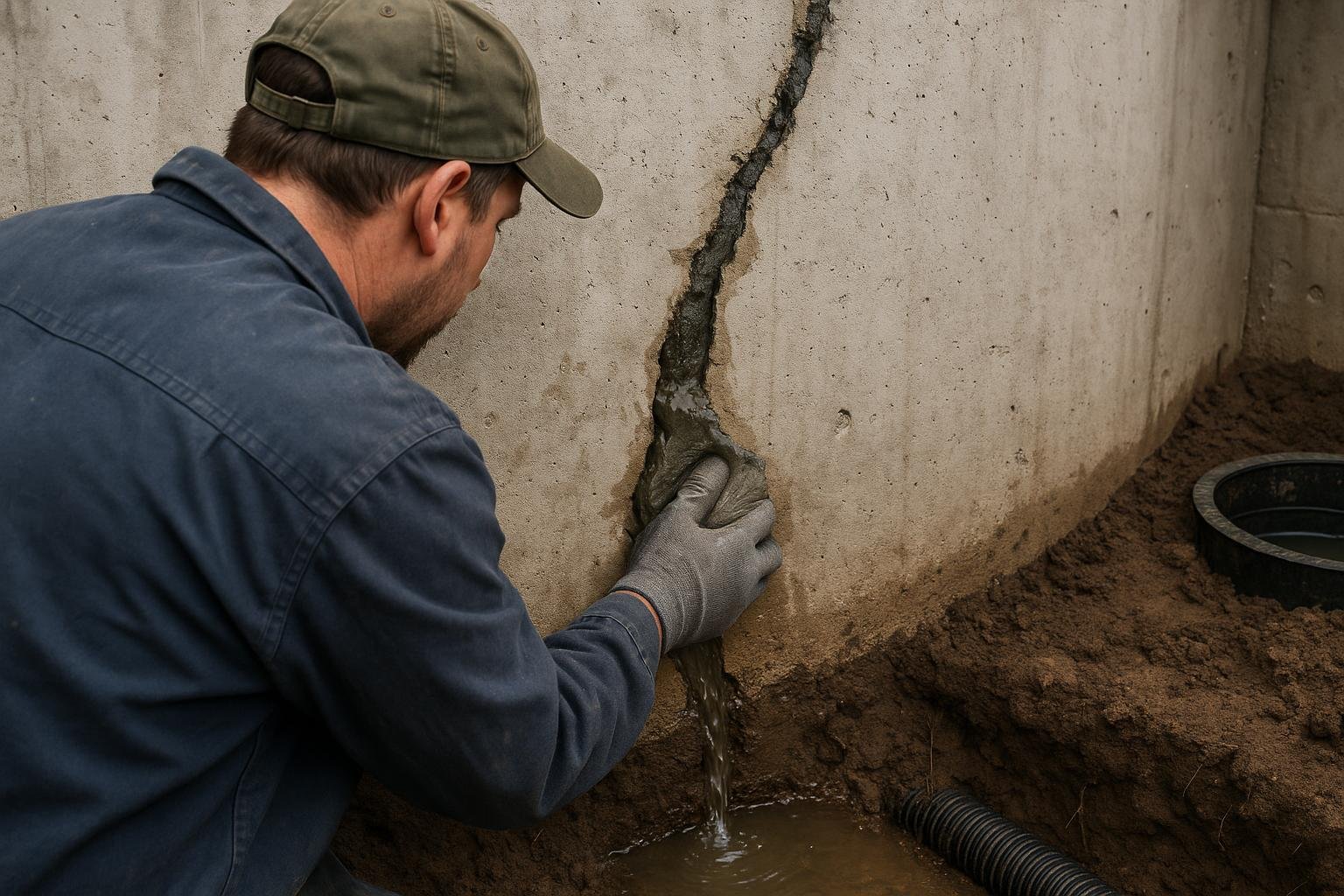
Hydraulic cement is a fast-setting, Portland-cement-based compound that expands slightly as it cures, allowing it to fill and plug gaps even in the presence of flowing water. It is mixed to a putty-like consistency and pressed firmly into a crack or void by hand, where it sets within three to five minutes depending on water temperature and product formulation.
How it works
The expansion reaction creates a mechanical lock inside the opening. Because the material is rigid after curing, it does not accommodate movement. Ontario’s freeze-thaw cycle, which can subject a foundation wall to dozens of expansion-contraction events per winter, can break the bond between the cement plug and the surrounding concrete, reopening the crack alongside or through the patch.
Where it genuinely performs well
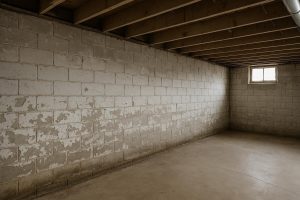
Hydraulic cement is well-suited to large voids, honeycombed concrete, pipe penetrations, and situations where water is actively flowing and must be stopped immediately before a more permanent repair can be applied. It is also useful for filling wide gaps in block foundations where injection ports cannot seat properly. For these applications it is a legitimate, cost-effective tool.
Limitations
The compound does not penetrate the crack through the full wall thickness. It bonds to the surface of the crack faces rather than fusing them together. Shrinkage over time and differential movement between the plug and the parent concrete are the two most common reasons hydraulic cement repairs fail and require re-treatment. It is not recommended as a standalone permanent repair for hairline to moderate cracks in poured-concrete walls subject to hydrostatic pressure.
Crack injection explained
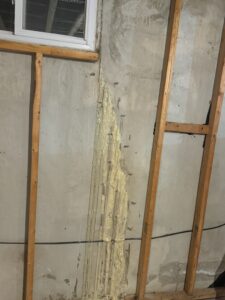
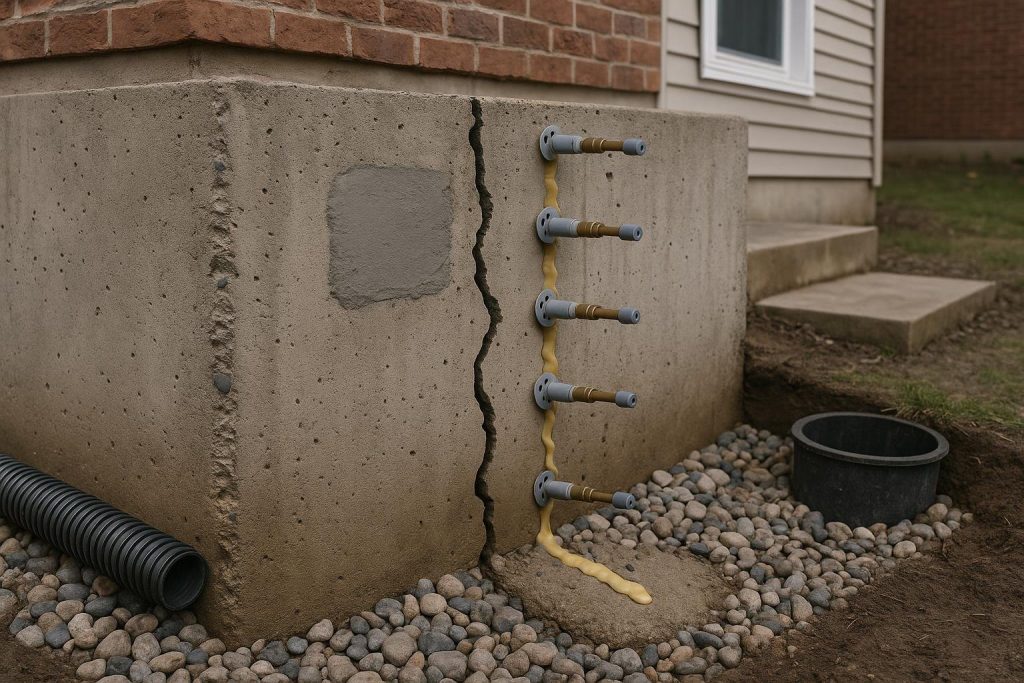
Crack injection is a process in which low-pressure ports are installed along a crack at regular intervals and a liquid resin, either polyurethane foam or epoxy, is pumped through the full thickness of the wall. The resin travels through the crack plane and cures in place, creating a continuous seal from the interior face to the exterior face of the foundation.
Polyurethane injection
Polyurethane resin reacts with moisture inside the crack to expand into a closed-cell foam. It remains flexible after curing, which is a significant advantage in Ontario’s climate where freeze-thaw cycling causes concrete to move seasonally. Polyurethane is the standard choice for active leaks and for cracks that have shown movement. DryShield uses polyurethane injection as its primary crack repair method. For more detail on the process, see the Polyurethane Injection: Expert Crack Repair Guide.
Epoxy injection
Epoxy resin cures to a rigid, high-strength bond that can exceed the tensile strength of the surrounding concrete. It is appropriate for dry, stable cracks where structural restoration is the goal rather than waterproofing alone. Because it is rigid, epoxy is not recommended for cracks that are still moving. See also: Epoxy vs Polyurethane Crack Injection: Which Is Best?
Where injection genuinely performs well
Injection is the preferred repair for hairline to moderate-width cracks in poured-concrete basement walls, including vertical shrinkage cracks and diagonal cracks caused by settlement. It is also appropriate before finishing a basement, since the repair is permanent and does not require access to the exterior. The guide to crack repair before finishing a basement covers this scenario in detail.
Limitations
Injection requires that ports can be seated and that the crack is narrow enough for the resin to travel under low pressure. Very wide cracks, severely deteriorated concrete, or cracks with debris inside may not inject cleanly. Horizontal cracks caused by lateral soil pressure are a structural concern and typically require engineering assessment before any crack repair is attempted; injection alone does not address the structural cause.
Side by side
| Feature | Hydraulic Cement | Crack Injection (Polyurethane) |
|---|---|---|
| Penetration depth | Surface only | Full wall thickness |
| Flexibility after cure | Rigid; brittle | Flexible; accommodates movement |
| Works with active water flow | Yes, by design | Yes (polyurethane reacts with moisture) |
| Cure time | 3-5 minutes | Typically 24-48 hours for full cure |
| Suitable for hairline cracks | Difficult; hard to pack tightly | Yes; resin wicks into fine cracks |
| Suitable for large voids | Yes | Limited; ports may not seat |
| Freeze-thaw resistance | Low; bond can break with movement | High (polyurethane); moderate (epoxy) |
| DIY accessible | Yes | Possible with kits; professional preferred |
| Addresses structural cause | No | No |
| Warranty potential | Rarely warranted | Often warranted by professionals |
The table makes clear that the two methods are not direct substitutes. Hydraulic cement wins on speed and on its ability to stop flowing water almost instantly, which no injection resin can match in the same timeframe. That is a genuine advantage, not a minor footnote. Crack injection wins on penetration, flexibility, longevity, and suitability for the most common crack type found in Ontario poured-concrete foundations. For most homeowners facing a leaking hairline or shrinkage crack, injection is the more appropriate permanent repair. Hydraulic cement remains a legitimate first-response tool and a good fit for specific void-filling applications where injection is impractical.
Cost comparison
| Cost Factor | Hydraulic Cement | Crack Injection (Professional) |
|---|---|---|
| Material cost (DIY) | Low; bags available at hardware stores | Moderate; resin cartridges or kits |
| Labour complexity | Low; hand-applied | Moderate; port installation and injection equipment |
| Likelihood of re-treatment | Higher; bond can fail with movement | Lower when properly injected |
| Long-term cost trajectory | Can increase if repeated repairs needed | Generally lower over time if repair holds |
| Warranty included | Typically none | Often yes from professional contractors |
Verified current price quotes for either method in Ontario were not available for this page. Cost depends on crack length, wall thickness, number of ports required, accessibility, and whether the crack is actively leaking. For current pricing information, see the Crack Injection Cost in Southern Ontario (2026) page and the Crack Injection Cost Calculator. As a general principle, hydraulic cement materials cost less upfront, but if the repair fails and must be redone, the total cost over time can exceed that of a single professional injection repair. The Foundation Crack Sealing Cost in Ontario guide provides additional context on what drives pricing for both approaches.
Which is better for your situation
Choose hydraulic cement if…
- Water is actively flowing through a crack or void right now and you need to stop it within minutes as a temporary measure.
- The opening is a large void, a pipe penetration, or honeycombed concrete where injection ports cannot seat.
- You are working on a block foundation with wide mortar joint failures rather than a through-wall crack in poured concrete.
- Budget is severely constrained and you understand the repair is likely temporary, requiring follow-up injection later.
Choose crack injection if…
- You have a hairline to moderate-width vertical or diagonal crack in a poured-concrete foundation wall.
- The crack has leaked during rain or snowmelt and you want a permanent, warranted repair.
- You are planning to finish the basement and need confidence the repair will not re-open behind drywall or insulation.
- The crack has been patched with hydraulic cement before and has re-opened, indicating the surface repair is not holding.
- You want a repair backed by a transferable warranty, which can be relevant at resale.
It is worth noting that the two methods are not mutually exclusive. A professional may apply hydraulic cement to stop active flow, allow it to set, and then inject polyurethane resin through the same area once conditions allow. This staged approach uses each material for what it does best. If you are unsure which situation applies to your crack, the Foundation Crack Diagnosis tool can help you identify crack type before calling for an assessment.
The trade-offs nobody mentions
Hydraulic cement trade-offs
The speed advantage of hydraulic cement is real, but it can create a false sense of security. A crack that appears dry after a cement plug is applied may still be transmitting moisture vapour through the surrounding concrete, contributing to humidity, efflorescence, and mould growth over time. Because the plug sits on the surface, it can also mask the crack from view, making it harder to monitor for widening. Homeowners who rely on hydraulic cement as a permanent fix sometimes discover years later that the underlying crack has widened while hidden behind the patch.
Crack injection trade-offs
Injection is not a structural repair. A crack caused by ongoing differential settlement, lateral soil pressure, or a drainage problem that has not been corrected will likely re-crack alongside or through the injected resin. Injection also requires a degree of crack cleanliness; cracks packed with old hydraulic cement, debris, or efflorescence deposits may not accept resin cleanly through the full depth. In those cases, the old material must be removed before injection, adding time and cost. Finally, injection does not address the source of hydrostatic pressure. If the exterior drainage, weeping tile, or grading is the root cause, injection seals the symptom rather than the source. A complete assessment should consider whether injection alone is sufficient or whether broader waterproofing is needed.
Frequently asked questions
Can I apply hydraulic cement over a crack and then inject it later?
Yes, but the cement must be removed from the crack plane before injection ports are installed. Hydraulic cement left inside the crack will block resin flow and prevent the injection from reaching the full wall thickness. A professional will typically grind or chisel out any previous cement patch before proceeding with injection.
Does crack injection work on block foundations?
Polyurethane injection can be used on block foundations in some cases, but the hollow cores and mortar joints make it less predictable than on poured concrete. Wide mortar joint failures are often better addressed with hydraulic cement or tuck-pointing followed by a waterproof parging coat. A professional assessment is recommended before choosing a method for block walls.
How long does polyurethane crack injection last?
When properly injected into a stable crack in poured concrete, polyurethane foam can remain effective for many years. The repair is most durable when the underlying cause of the crack, such as shrinkage or minor settlement, is no longer active. Cracks caused by ongoing movement or unresolved hydrostatic pressure are more likely to re-open regardless of the repair material used. No verified long-term outcome statistics from DryShield’s own job history are available for citation here.
Is hydraulic cement waterproof?
Hydraulic cement is water-resistant when freshly applied and properly cured, but it is not fully waterproof in the same sense as an injected resin that fills the crack through the wall. Over time, the rigid plug can debond from the crack faces, allowing water to bypass it. It is best described as water-resistant rather than waterproof for long-term applications. The Portland Cement Association’s technical resources provide further detail on cement-based repair material properties.
Will crack injection stop my basement from leaking during heavy rain?
If the leak is entering through a through-wall crack in poured concrete, a properly executed injection repair should stop that specific entry point. However, if the basement also has drainage issues, failed weeping tile, or other entry points, injection of a single crack will not make the basement fully dry. A thorough leak diagnosis is important before committing to any single repair. The Wet Basement and Basement Leak Master Guide covers the full diagnostic process.
Does the Ontario Building Code specify which method to use for foundation crack repair?
The Ontario Building Code sets requirements for foundation performance and structural integrity but does not mandate a specific repair material for crack sealing in existing homes. The choice of method is typically guided by engineering judgment, the crack type, and the cause of the crack. For more on code considerations, see the Ontario Building Code Basement Waterproofing 2026 guide.
Can I use hydraulic cement on a crack that is not actively leaking?
You can, but it offers limited benefit compared to injection for a dry crack. Hydraulic cement applied to a dry crack provides only a surface patch with no penetration. If the goal is to seal the crack against future water entry, polyurethane or epoxy injection is a more effective approach because it fills the crack through the full wall thickness before water has a chance to find a path through.
If you are weighing your options for a foundation crack and want a professional assessment, contact the DryShield team or use the Basement Leak Diagnostic Tool to describe what you are seeing. DryShield has served Toronto, the GTA, and Ontario cottage country for more than 25 years and can help you determine whether injection, hydraulic cement, or a broader waterproofing approach is the right fit for your foundation.
For the wider picture, see our crack injections overview.