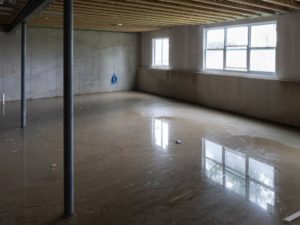
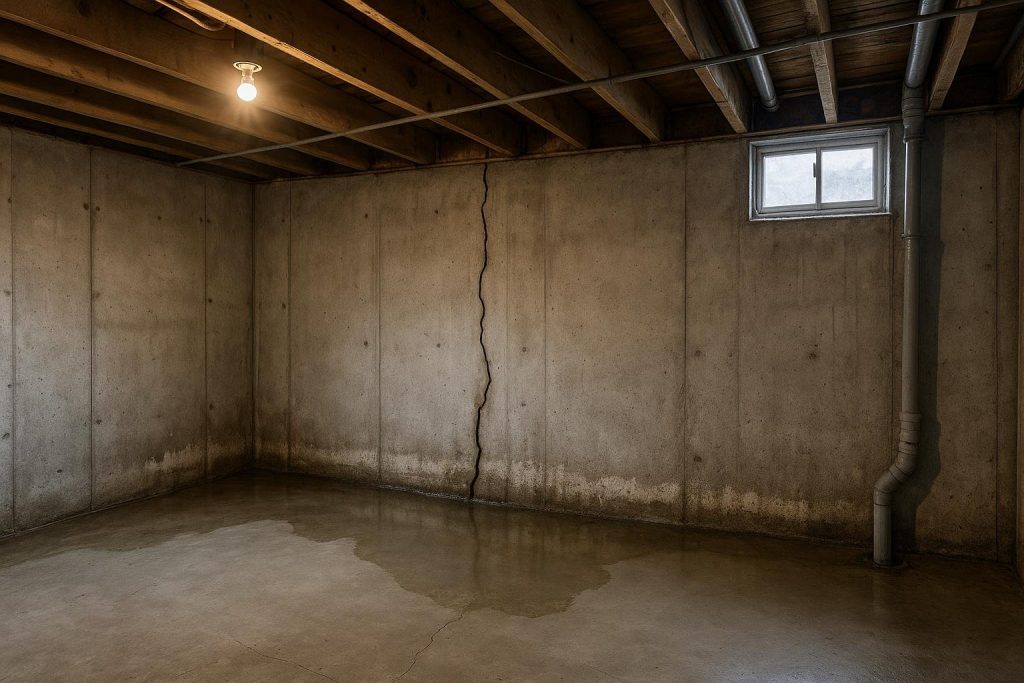
A leaky basement Hamilton homeowners encounter most often traces back to hydrostatic pressure, not simple rainfall. Hamilton sits on a mix of dense clay-rich soils and shale escarpment terrain, and that combination holds groundwater against foundation walls long after a storm passes, forcing moisture through cracks, cold joints and deteriorated parging. Understanding the true source of the leak is the first step toward choosing a repair that actually lasts.
Key Takeaways
- Hydrostatic pressure from Hamilton’s clay-heavy soils is the most common root cause of a leaky basement Hamilton homeowners deal with, not surface water alone.
- Repair options range from a single polyurethane crack injection (roughly $600 to $900) up to full exterior waterproofing (roughly $6,000 to $9,000), depending on the scope.
- Older Hamilton homes frequently have silted-up or collapsed original weeping tile that must be replaced, not just patched.
- Spring thaw and heavy summer downpours are the two peak failure windows when calls for help spike across the Hamilton area.
- A free on-site inspection is the only reliable way to confirm which method is right for your specific foundation and soil conditions.
Definitions and Scope
A leaky basement is any condition where water or moisture enters the living or storage space below grade. In Hamilton, that entry point is almost always one of four things: a shrinkage crack in a poured concrete wall, a failed mortar joint in a block foundation, a deteriorated cold joint where the wall meets the footing, or a perimeter floor-wall seam where hydrostatic pressure pushes water upward through the slab.
Hydrostatic pressure is the force that groundwater exerts against a buried wall. When Hamilton’s clay soil becomes saturated after a spring thaw or a heavy July storm, it cannot drain quickly. Water has nowhere to go except against your foundation. Even a hairline crack that was dry for years can begin leaking once that pressure builds to a threshold the concrete cannot resist.
Scope matters too. A single vertical crack in an otherwise sound wall is a very different problem from a perimeter that is wet along its entire length. The first may need only crack injection; the second likely needs a full drainage system. Confusing the two is the most expensive mistake a Hamilton homeowner dealing with a leaky basement Hamilton situation can make.
Why This Matters for Hamilton Homeowners
A leaky basement Hamilton homeowners experience is often tied directly to the city’s geography. The Niagara Escarpment runs through the upper city, and the lower city sits on a lake plain with soils that drain poorly. Homes in neighbourhoods like Stoney Creek, Ancaster and the North End all sit on different soil profiles, but the common thread is clay content that holds water against walls for days after a rain event.
The city also has a large stock of older housing. Many Hamilton homes built before 1970 were constructed with clay weeping tile, the original perforated pipe that surrounds the footing and carries groundwater away. After 50 or more years, those tiles collapse, fill with silt or root intrusion, and stop functioning entirely. When that happens, water that used to drain harmlessly now accumulates at the footing and finds its way inside.
Hamilton’s spring thaw and summer convective storms are the two windows when foundation leaks go from occasional drips to active flooding. Addressing the drainage system before those seasons is always less expensive than emergency repair after them.
Ignoring a leaky basement Hamilton property owners discover carries real costs beyond the repair bill. Persistent moisture feeds mould growth on framing and insulation, degrades the structural integrity of mortar joints in block foundations, and can trigger a clause in a home insurance policy that voids coverage for gradual water damage. The Canada Mortgage and Housing Corporation (CMHC) notes that uncontrolled basement moisture is one of the leading contributors to indoor air quality problems in Canadian homes. You can review their guidance at cmhc-schl.gc.ca.
Your Options for Fixing a Leaky Basement in Hamilton
Polyurethane Crack Injection
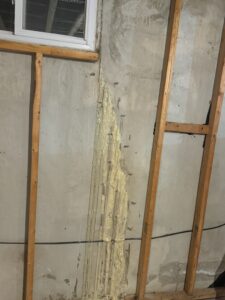
Low-pressure polyurethane injection is the right tool when the leak source is a single, clearly defined crack in a poured concrete wall. The process involves drilling injection ports along the crack at regular intervals, applying a surface paste to seal the face, then injecting expanding polyurethane foam under low pressure until it fills the crack from face to back. The foam cures flexible, which matters in Hamilton because seasonal freeze-thaw cycles cause minor foundation movement every year. A rigid filler would re-crack; polyurethane tolerates that movement.
This method works from the interior, so no excavation is needed and the job is typically completed in a few hours. It is best suited to non-structural vertical or diagonal cracks. It is not appropriate for horizontal cracks, which signal lateral soil pressure and may require an engineer’s assessment, or for perimeter seepage where the source is the footing drain rather than the wall itself.
For structural cracks where the wall needs to be re-bonded, epoxy injection is used instead. Epoxy cures rigid and restores tensile strength, but it does not tolerate movement, so it is reserved for cracks that are stable and confirmed non-active by an inspection. You can learn more about the cost breakdown on the crack injection cost page.
Interior Weeping Tile System
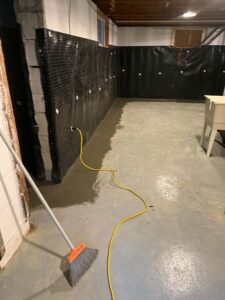
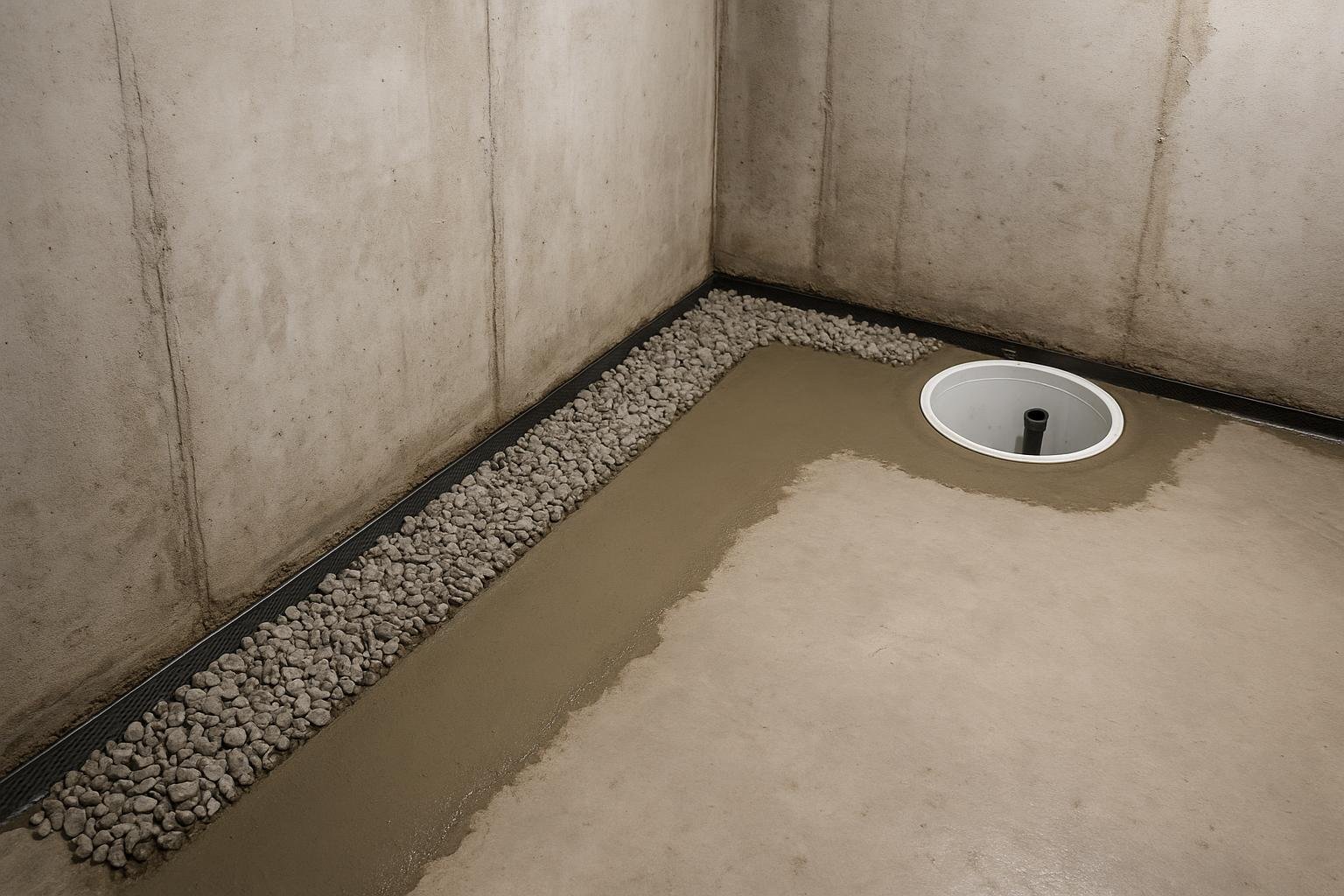
When a leaky basement Hamilton home presents water entering along the perimeter floor-wall joint or through multiple points in the lower wall, an interior drainage system is the most practical solution. The process involves breaking the concrete floor along the perimeter, excavating a channel to the footing level, installing a new perforated weeping tile in clear stone, running it to a sump basin, then re-pouring the concrete. A vapour barrier is applied up the wall face to direct any wall seepage down into the drainage channel rather than onto the floor.
The interior route does not stop water from entering the wall; it intercepts it before it can spread across the floor. That distinction matters: the wall itself may still be damp, but the living space stays dry. This method is less disruptive than full exterior excavation and is often the right choice when access around the house is limited by fencing, decks or neighbouring structures, which is common in Hamilton’s older urban neighbourhoods.
Exterior Waterproofing
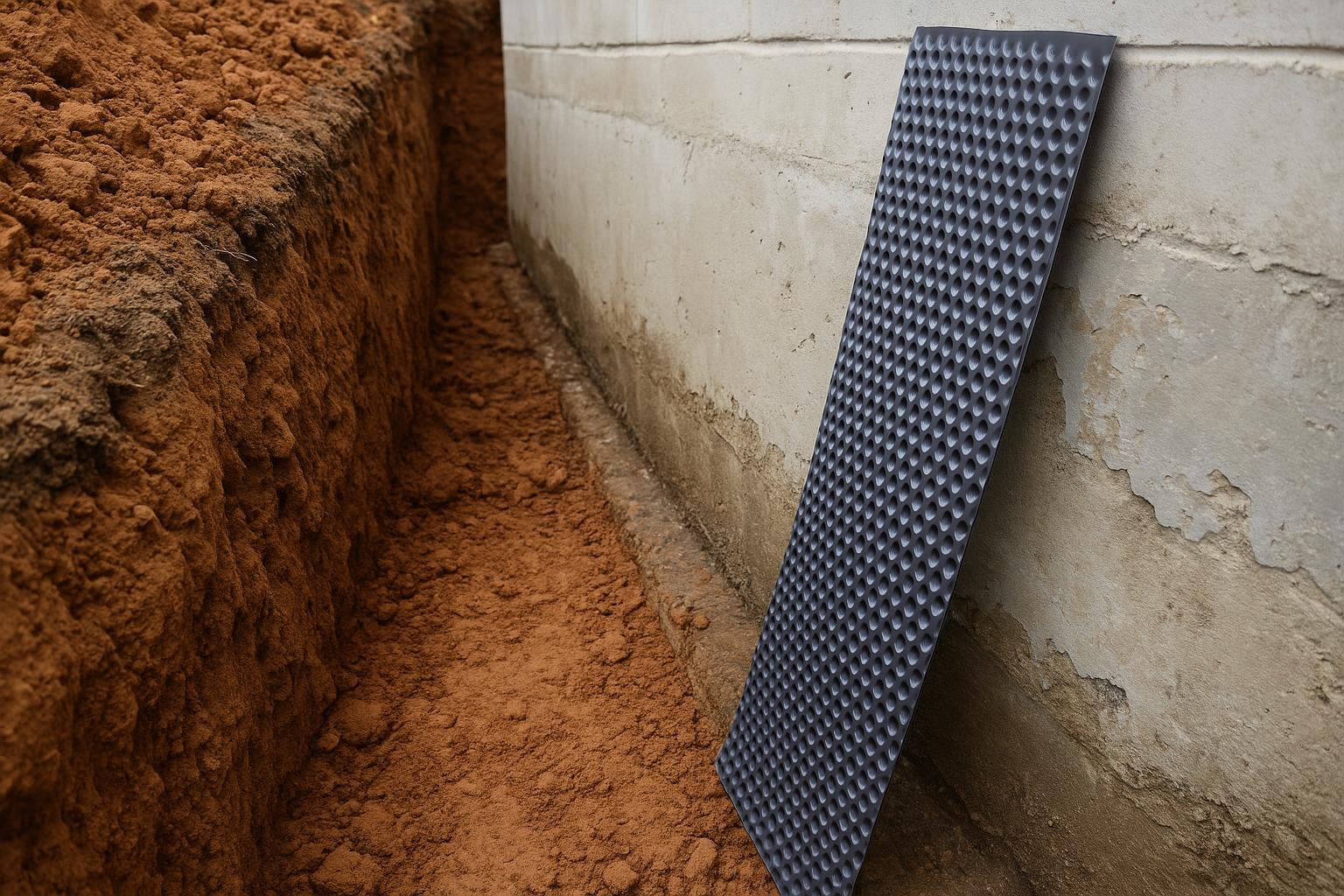
Exterior waterproofing is the most comprehensive solution and the only method that stops water from contacting the foundation wall at all. The process requires excavating to the footing, cleaning the wall, applying hydraulic cement to fill any voids or honeycombing, then coating the wall with a rubberised membrane. A dimpled drainage board is installed over the membrane to protect it and create a drainage plane. New weeping tile is bedded in clear stone at the footing and connected to a functioning outlet. The trench is then backfilled and the grade is corrected to direct surface water away from the house.
For an average Hamilton semi-detached or detached home, exterior waterproofing typically runs in the $6,000 to $9,000 range depending on linear footage, depth of excavation and site access. It is the best long-term solution for walls with widespread deterioration, failed parging or a history of repeated leaks. The main limitation is disruption: landscaping, walkways and sometimes driveways must be removed and restored.
Sump Pump Installation or Replacement
A sump pump is not a waterproofing method on its own, but it is an essential component of any interior drainage system and a critical backup for any Hamilton home in a low-lying area. The pump sits in a basin at the lowest point of the drainage system and activates automatically when water reaches a set level, discharging it away from the foundation. A battery backup unit is strongly recommended given Hamilton’s history of power outages during the same storms that cause basement flooding. Learn more about sump pump installation services and what to look for in a reliable unit.
Parging and Surface Repairs
Parging is the mortar coat applied to the above-grade or near-grade portion of a foundation wall. When it cracks or spalls, it exposes the concrete or block beneath to direct water entry. Repairing or replacing parging is a surface-level fix that addresses cosmetic deterioration and minor above-grade seepage. It is not a substitute for a drainage system when hydrostatic pressure is the root cause, but it is a necessary step in any exterior waterproofing job and a reasonable standalone repair when the underlying wall is sound and the leak is clearly surface-driven.
Crack Repair for Block Foundations
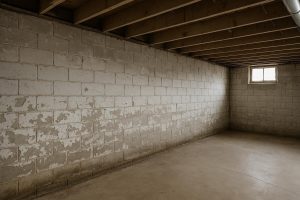
Many older Hamilton homes have poured concrete block or concrete masonry unit foundations. These walls leak through mortar joints rather than through cracks in the block itself. Repair typically involves repointing deteriorated joints, applying a crystalline waterproofing compound to the interior face, and addressing the drainage at the footing. Block walls are more porous than poured concrete and generally benefit from an interior drainage system rather than injection alone, because water can travel through the block itself even after joints are sealed.
Options Compared
| Method | Best For | Typical Lifespan | Relative Cost | Disruption Level |
|---|---|---|---|---|
| Polyurethane crack injection | Single vertical/diagonal crack, poured concrete | Long-term if crack is stable | Lowest ($600 to $900 per crack) | Minimal, interior only, no excavation |
| Epoxy crack injection | Structural cracks needing re-bonding | Long-term in stable conditions | Low to moderate | Minimal, interior only |
| Interior weeping tile system | Perimeter seepage, multiple entry points, limited exterior access | 25+ years with proper sump maintenance | Moderate | Moderate, floor breaking required |
| Exterior waterproofing | Widespread wall deterioration, repeated leaks, new membrane needed | Lifetime with proper backfill and grade | Highest ($6,000 to $9,000 typical) | High, full excavation required |
| Sump pump installation | Complement to any drainage system, low-lying lots | 7 to 10 years for the pump unit | Low to moderate | Low, basin excavation only |
| Parging repair | Above-grade surface deterioration, cosmetic cracks | 10 to 20 years depending on exposure | Lowest | Minimal |
The table above shows that no single method suits every leaky basement Hamilton homeowner encounters. Crack injection is the fastest and least expensive fix when the problem is genuinely limited to one crack. Exterior waterproofing costs more and takes longer but is the only option that addresses the wall, the membrane and the drainage system together. Interior weeping tile sits in the middle: it does not stop water from entering the wall, but it reliably keeps the floor dry and is often the practical choice when excavation is not feasible. A sump pump should accompany any drainage system regardless of which route you choose.
How to Choose the Right Fix
Choose polyurethane crack injection if you have one or two isolated vertical cracks in a poured concrete wall, the rest of the wall is dry, and the crack appeared after the house settled rather than after a structural event. This is the right starting point for many Hamilton homeowners who notice a single wet streak after a heavy rain.
Choose an interior weeping tile system if water is entering along the floor-wall joint across multiple walls, if your original weeping tile is silted up and non-functional, or if exterior excavation is blocked by a deck, fence, driveway or neighbouring structure. This is the most common solution for a leaky basement Hamilton older urban homes present, where yard access is tight.
Choose exterior waterproofing if the wall itself is deteriorated, if parging has failed across a wide area, if you have had repeated leaks that interior repairs have not resolved, or if you are doing a major renovation that already requires excavation. The higher upfront cost is offset by the fact that the wall is protected from the outside, which is where water originates.
Choose epoxy injection only for confirmed structural cracks where an engineer or experienced inspector has determined the wall needs to be re-bonded. Do not use epoxy on active or moving cracks.
When in doubt, use the basement leak diagnostic tool to narrow down the likely source before booking an inspection. A free on-site assessment will always give you a more accurate answer than any online guide, because Hamilton’s soil conditions vary significantly between the lower city, the mountain and the escarpment communities.
The single most common mistake in Hamilton is treating a drainage problem with a surface patch. If the weeping tile has failed, no amount of parging or interior sealant will keep the basement dry through a spring thaw.
Costs and Timelines
| Cost Driver | Why It Affects Price | Approximate Impact |
|---|---|---|
| Linear footage of wall treated | More wall means more membrane, more weeping tile, more labour | Primary driver for exterior and interior systems |
| Depth of excavation | Deeper footings require more digging time and shoring | Can add significantly to exterior jobs on older homes |
| Site access | Tight yards, fences, decks and driveways increase labour and equipment cost | Common issue in Hamilton’s older urban neighbourhoods |
| Foundation type | Block walls require more prep than poured concrete; stone rubble foundations need additional stabilisation | Moderate to significant depending on condition |
| Number of cracks | Each injection port adds material and labour; multiple cracks can approach the cost of a partial interior system | $600 to $900 per crack, final figure depends on inspection |
| Sump pump and basin | Required with any interior drainage system; battery backup adds cost but is strongly recommended | Moderate addition to interior system total |
| Concrete restoration | Interior jobs require breaking and re-pouring the perimeter floor; exterior jobs may require driveway or walkway restoration | Included in most full-system quotes |
As a general reference, a single crack injection in Hamilton runs roughly $600 to $900. A full exterior waterproofing job on an average semi-detached or detached home typically falls in the $6,000 to $9,000 range. Interior weeping tile systems generally come in below the exterior figure. Every quote depends on a site inspection because depth, access and foundation condition vary too much to give a firm number without seeing the wall. For a broader look at what drives waterproofing costs across southern Ontario, the basement waterproofing cost guide covers the full range of variables.
Timeline-wise, crack injection is typically a same-day or next-day job. An interior weeping tile system for an average Hamilton home takes two to three days. Full exterior waterproofing, including excavation, membrane application and backfill, generally runs three to five days depending on wall length and access.
Risks and Common Mistakes
| Symptom | Likely Cause | Correct Fix |
|---|---|---|
| Wet streak on wall after rain, single location | Shrinkage crack in poured concrete wall | Polyurethane crack injection from interior |
| Water along entire floor-wall joint | Failed weeping tile, hydrostatic pressure at footing | Interior weeping tile system with sump pump |
| White chalky deposits on wall (efflorescence) | Mineral-laden water moving through concrete over time | Identify and seal entry point; address drainage |
| Horizontal crack in block wall | Lateral soil pressure, potentially structural | Engineer assessment before any repair |
| Damp smell, no visible water | Vapour transmission through wall or floor slab | Vapour barrier and improved drainage; check sump function |
| Recurring leak after previous repair | Surface patch applied over a drainage problem | Full drainage system assessment and installation |
The most common mistake Hamilton homeowners make is applying hydraulic cement or a paint-on sealant directly to a wet wall and expecting it to hold. These products can slow seepage temporarily, but they cannot withstand sustained hydrostatic pressure. When the clay soil saturates again the following spring, the patch fails and the wall is often in worse condition than before because moisture has continued to move behind the sealant.
A second frequent error is replacing a sump pump without addressing why the basin is filling in the first place. If the weeping tile is silted up, a new pump will run constantly and wear out quickly. The drainage system and the pump must be assessed together.
Never ignore a horizontal crack in a block or poured concrete wall. Unlike vertical shrinkage cracks, horizontal cracks can indicate that lateral soil pressure is bowing the wall inward. That is a structural concern that requires an engineer’s assessment before any waterproofing work begins.
Choosing a contractor based on price alone is also a risk in Hamilton’s competitive market. A written scope with linear-foot pricing, a clear description of materials and a transferable warranty are the minimum you should expect before signing anything. The Hamilton area is part of DryShield’s regular service territory, so local knowledge of soil conditions and typical footing depths is built into every assessment. For a full overview of local services, visit the Hamilton basement waterproofing and foundation crack repair page.
How the Process Works
- Free on-site inspection and moisture assessment. A technician visits the property, identifies all entry points, checks the sump basin and weeping tile condition, and assesses the foundation type and soil drainage around the perimeter.
- Written scope with linear-foot pricing. You receive a clear quote that specifies which walls are being treated, what materials are used and what the finished system will look like. No surprises on the day of work.
- Preparation and access. For exterior work, excavation begins to the footing. For interior work, the perimeter concrete is broken with a jackhammer and the channel is excavated. Landscaping or flooring protection is put in place before work starts.
- Core repair work. Exterior: hydraulic cement fills voids, rubberised membrane is applied, dimpled drainage board is installed, new weeping tile is bedded in clear stone. Interior: weeping tile is laid to the sump basin, vapour barrier is applied up the wall face.
- Drainage connection and sump installation. New weeping tile connects to a functioning outlet or a properly sized sump basin. Battery backup is installed where recommended.
- Backfill, grade correction and concrete restoration. Exterior trenches are backfilled and graded to direct surface water away from the house. Interior perimeter concrete is re-poured and finished.
- Final walkthrough and warranty documentation. The completed system is reviewed with the homeowner. DryShield’s lifetime transferable warranty is issued, which is a meaningful asset when the home is eventually sold.
Frequently Asked Questions
What causes a leaky basement in Hamilton specifically?
Hamilton’s dense clay soils hold groundwater against foundation walls long after rain stops, building hydrostatic pressure that forces water through cracks, cold joints and deteriorated mortar. Older homes in the lower city and Stoney Creek area also commonly have original clay weeping tile that has silted up after 50 or more years, removing the only drainage path the footing ever had. Spring thaw and summer convective storms are the two periods when these conditions peak.
Can I fix a leaky basement myself?
Minor surface parging repairs and basic caulking are DIY-feasible, but they address cosmetic issues only. Crack injection, interior weeping tile installation and exterior waterproofing all require specialised equipment, knowledge of footing depth and soil conditions, and proper membrane or drainage materials. Incorrect DIY repairs often make the underlying problem worse by trapping moisture behind a surface seal, which accelerates concrete deterioration.
How do I know if I need interior or exterior waterproofing?
Interior waterproofing is the right choice when water is entering at or near the footing, when exterior access is blocked, or when the wall itself is structurally sound but the drainage system has failed. Exterior waterproofing is better when the wall membrane has deteriorated, when parging has failed across a wide area, or when repeated interior repairs have not held. A free on-site inspection is the only reliable way to confirm which applies to your leaky basement Hamilton situation.
How long does basement waterproofing last in Hamilton?
A properly installed exterior system with a rubberised membrane, dimpled drainage board and new weeping tile is designed to last the life of the home. Interior weeping tile systems with a quality sump pump typically perform reliably for 25 or more years, though the pump unit itself should be tested annually and replaced every 7 to 10 years. Crack injection with polyurethane is long-lasting in stable cracks but should be monitored if the foundation continues to move seasonally.
Does home insurance cover a leaky basement in Hamilton?
Most standard Ontario home insurance policies cover sudden and accidental water damage, such as a burst pipe, but exclude gradual seepage or damage caused by a maintenance issue like failed weeping tile. Some policies offer sewer backup riders that cover certain basement flood events. You should review your specific policy with your broker. Addressing a known leak promptly is important because insurers can deny claims if they determine the damage was foreseeable and not repaired.
How much does it cost to fix a leaky basement in Hamilton?
A single polyurethane crack injection typically runs $600 to $900. A full exterior waterproofing job on an average Hamilton semi-detached or detached home generally falls in the $6,000 to $9,000 range, depending on linear footage, excavation depth and site access. Interior weeping tile systems typically come in below the exterior figure. Every final number depends on a site inspection because Hamilton’s foundation types and soil conditions vary significantly across neighbourhoods.
What is weeping tile and why does it matter in Hamilton?
Weeping tile is the perforated pipe installed at the base of the foundation footing to collect groundwater and carry it away from the house. In Hamilton, most homes built before the 1980s have original clay tile that collapses and silts up over time. When it stops functioning, groundwater accumulates at the footing and has no path except into the basement. Replacing failed weeping tile, either as part of an exterior dig or an interior drainage system, is often the most important single repair for a leaky basement Hamilton homeowner can make.
Is a sump pump enough to solve a wet basement?
A sump pump manages water that has already entered the drainage system; it does not stop water from reaching the foundation. Without a functioning weeping tile system to collect and direct groundwater to the basin, a pump has nothing to discharge. A pump is an essential component of a complete drainage system, not a standalone fix. In Hamilton, where power outages often coincide with the storms that cause flooding, a battery backup unit is strongly recommended alongside any primary pump.
How do I find a reliable waterproofing contractor in Hamilton?
Look for a contractor who provides a written scope with linear-foot pricing, specifies the materials being used, carries liability insurance, and offers a transferable warranty. Be cautious of quotes that arrive without an in-person inspection, as soil conditions and footing depth in Hamilton vary too much for accurate remote estimates. Checking the contractor’s service history in Hamilton specifically is worthwhile, since local experience with escarpment soils and clay-plain drainage is genuinely different from GTA clay conditions.
Can basement waterproofing be done in winter in Hamilton?
Interior crack injection and interior weeping tile work can generally proceed year-round because the work happens inside a heated space. Exterior excavation in Hamilton is more challenging in winter due to frozen ground and the need to protect the fresh membrane from frost during curing, but it is not impossible in mild stretches. Spring and fall are the most practical windows for exterior work. If you have a leaky basement Hamilton winter conditions have worsened, interior methods are the appropriate first response.
If your Hamilton basement is showing signs of moisture, do not wait for the next spring thaw to confirm the problem. Contact the DryShield Team for a free on-site inspection and a written quote. Every assessment is no-obligation, and the scope will be specific to your foundation type, soil conditions and access, not a one-size-fits-all package.