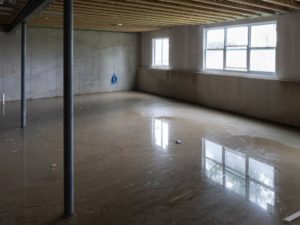
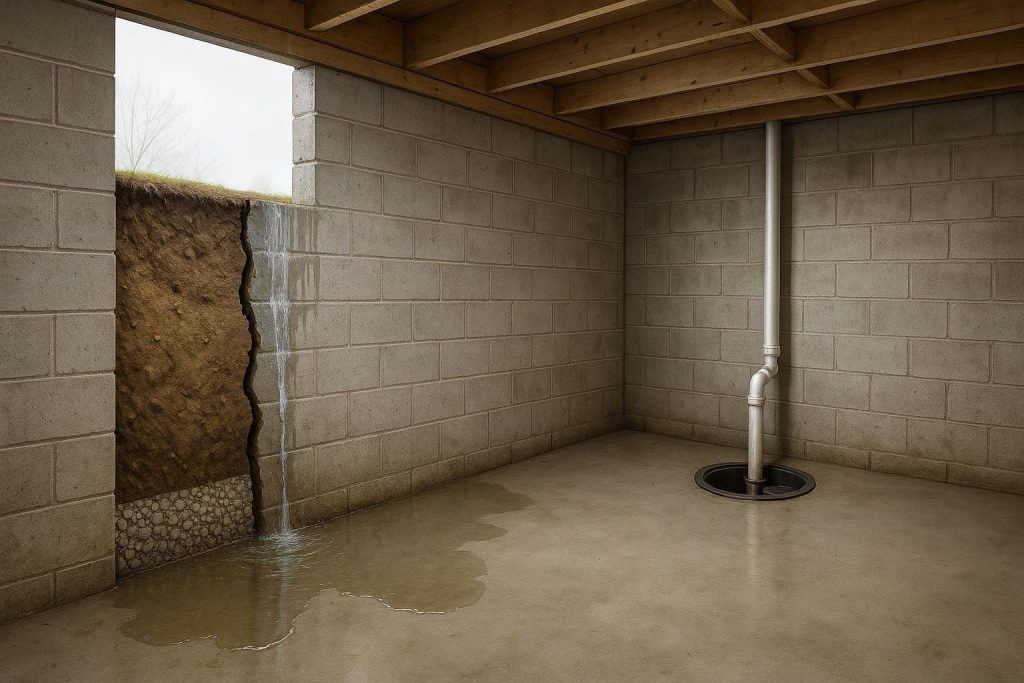
Basement waterproofing in Hamilton means applying one or more systems, interior drainage, exterior membrane, crack injection, or sump management, to stop water from entering or accumulating in a below-grade living space. Hamilton homes face a specific combination of challenges: clay-heavy soils across much of the lower city and Mountain, freeze-thaw cycling along the Niagara Escarpment, and aging housing stock where original drainage has deteriorated. Choosing the right method depends on where the water is entering, the age and construction of your foundation, and your budget.
- Most Hamilton basement leaks originate from foundation cracks, failed weeping tile, or hydrostatic pressure through the floor-wall joint.
- Interior waterproofing manages water that has already entered; exterior waterproofing stops it at the source.
- Polyurethane crack injection is the least invasive fix for isolated poured-concrete wall cracks.
- Sump pumps are almost always part of a complete interior system and require a reliable power or battery backup.
- No single method suits every situation; a proper diagnosis should precede any repair commitment.
Definitions & scope
Waterproofing a basement is not the same as damp-proofing. Damp-proofing, typically a thin asphalt coating applied at the time of construction, resists soil moisture vapour but is not designed to withstand hydrostatic pressure. True waterproofing involves systems rated to resist liquid water under pressure, whether applied from the exterior, managed from the interior, or injected directly into a crack.
The scope of work on a Hamilton home can range from a single crack injection taking a few hours to a full exterior excavation with new membrane, drainage board, and weeping tile replacement taking several days. Foundation crack repair addresses specific structural openings. Perimeter drainage systems address chronic water accumulation at the base of the wall. Sump pump installation provides the mechanical means to discharge collected water. These systems are often combined rather than used in isolation.
For a broader overview of the terminology used throughout this guide, the Basement Waterproofing Glossary defines key terms including hydrostatic pressure, weeping tile, and drainage board.
Why this matters
Hamilton sits on two distinct geological zones divided by the Niagara Escarpment. The lower city and east end are underlain by lacustrine clay and glacial till deposited by ancient Lake Iroquois, the predecessor to Lake Ontario. These soils drain slowly, hold moisture for extended periods after rain or snowmelt, and expand and contract with temperature changes. The result is persistent lateral pressure on foundation walls and a water table that can rise quickly after heavy precipitation.
The Mountain and upper Hamilton areas sit on limestone and dolostone bedrock with thinner soil cover. Drainage is faster in some locations but freeze-thaw action is more pronounced, and water can travel along bedrock fractures toward foundations in unexpected ways.
Hamilton’s housing stock includes a large proportion of homes built before 1980, many with clay tile weeping tile systems that have collapsed or become root-clogged over decades. When original drainage fails, hydrostatic pressure builds against the foundation wall and floor slab. According to the National Research Council of Canada, hydrostatic pressure is one of the primary mechanisms driving water infiltration in Canadian residential basements. Left unaddressed, chronic moisture leads to efflorescence, mold growth, structural deterioration of the foundation wall, and reduced home value.
Understanding why basements leak in Hamilton and what the repair options cost is the first step toward a durable solution. You can also review basement leak repair options for Hamilton homeowners for a complementary perspective on diagnosis and repair sequencing.
Your options
Polyurethane crack injection
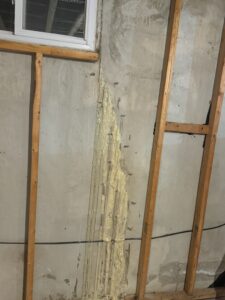
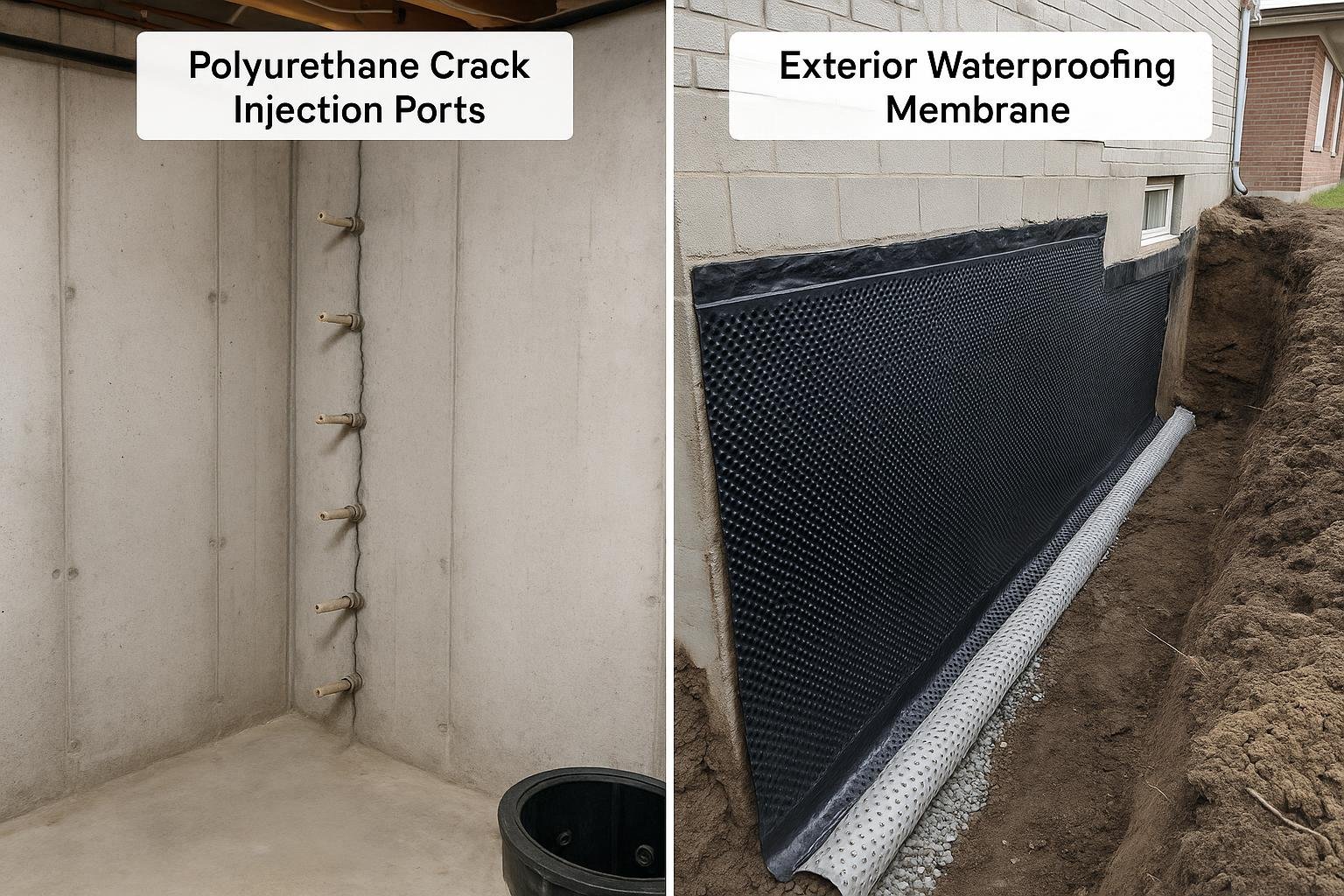
Polyurethane crack injection fills an active or dormant crack in a poured concrete wall from the interior. A technician drills injection ports along the crack at intervals, then pumps a two-part polyurethane resin under low pressure. The resin expands as it cures, filling the full depth of the crack and bonding to the concrete on both sides. The cured material remains slightly flexible, accommodating minor future movement without re-opening.
Best for: Isolated vertical or diagonal cracks in poured concrete walls where the surrounding wall is otherwise sound. This is the standard first-line repair for shrinkage cracks and settlement cracks that are actively leaking or showing staining.
Limitations: Not suitable for horizontal cracks, which indicate lateral soil pressure and may require structural assessment. Does not address failed weeping tile or floor-wall joint seepage. Block or stone foundations require different approaches. See the full comparison of interior crack injection vs exterior foundation crack repair to understand when each is appropriate.
Interior drainage system (interior waterproofing)
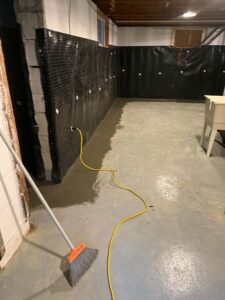
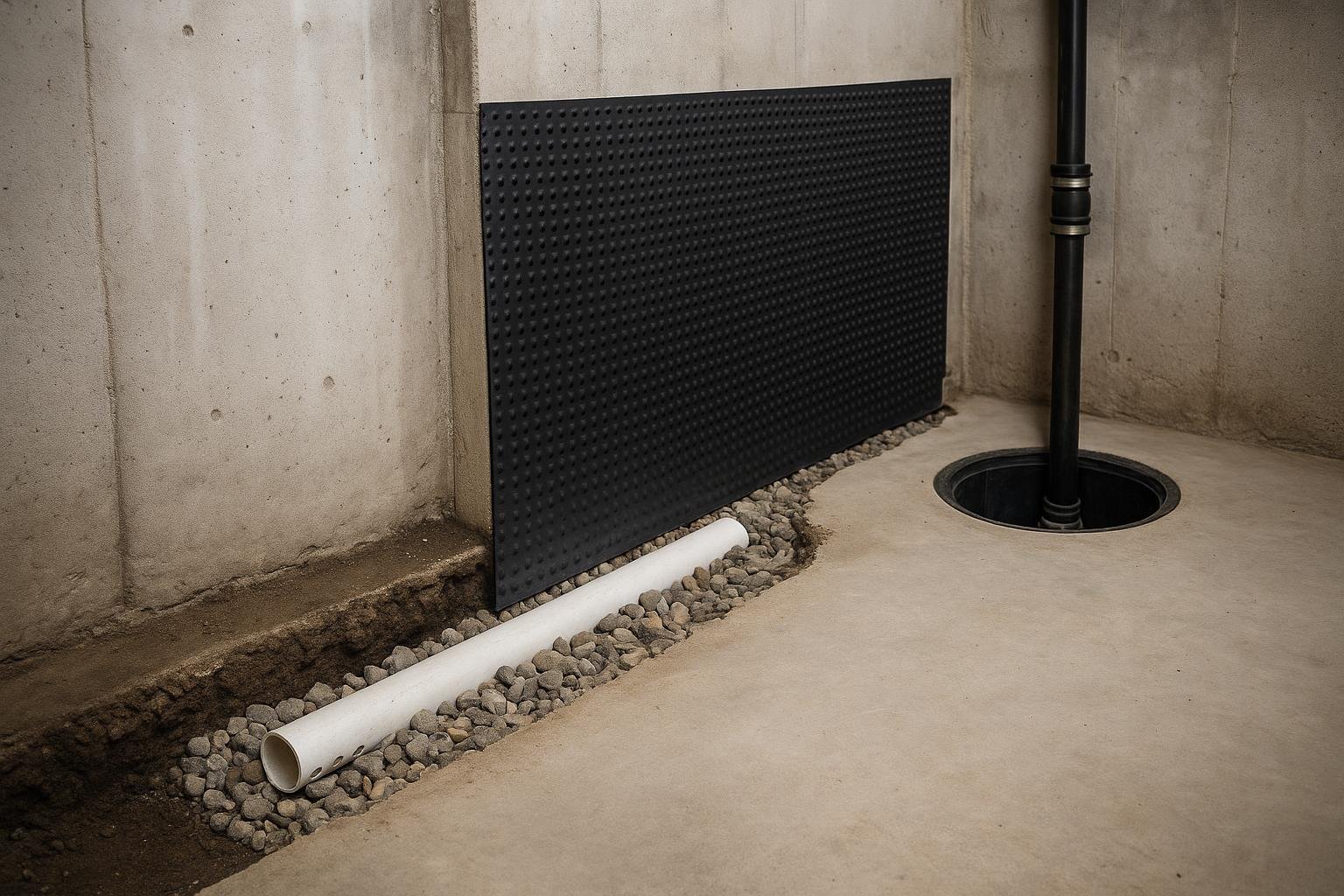
An interior drainage system, sometimes called a French drain or interior weeping tile, involves breaking the concrete floor along the perimeter of the basement, installing a perforated pipe in a gravel bed at the footing level, and directing collected water to a sump pit. The floor is then patched over the pipe. A wall membrane or drainage board is often installed against the foundation wall to channel seeping water down to the pipe rather than allowing it to pool on the floor.
Best for: Homes with chronic perimeter seepage, failed original weeping tile, or floor-wall joint leaks where exterior excavation is impractical due to cost, landscaping, or access constraints.
Limitations: Manages water after it enters the wall rather than stopping it at the exterior. Does not address the root cause of wall deterioration. Requires a functioning sump pump and, ideally, a battery backup. Learn more about interior basement waterproofing solutions.
Exterior waterproofing
Exterior waterproofing requires excavating the soil around the foundation down to the footing. The exposed wall is cleaned, any cracks are repaired, and a waterproof membrane, typically a rubberized asphalt or polymer-modified product, is applied to the exterior face. A drainage board is installed over the membrane to protect it and channel water downward. New weeping tile is laid at the footing and connected to a sump or daylight outlet, and the excavation is backfilled.
Best for: Foundations with significant exterior deterioration, multiple cracks, failed original damp-proofing, or situations where a permanent, source-side solution is the priority. Also appropriate when exterior access is available and the homeowner wants to avoid interior disruption.
Limitations: The most expensive and disruptive option. Requires excavation that may affect landscaping, driveways, decks, or utilities. Not always feasible on semi-detached or row homes with shared or narrow lot lines. Review exterior vs interior perimeter waterproofing for a detailed comparison.
Sump pump installation or replacement
A sump pump sits in a pit at the lowest point of the basement and automatically pumps accumulated groundwater out of the home through a discharge line. Modern units include float switches that activate the pump when water reaches a set level. Battery backup systems or water-powered backup pumps provide protection during power outages, which often coincide with the heavy rain events that cause basement flooding.
Best for: Any home with an interior drainage system, high seasonal water table, or history of flooding. Also appropriate as a standalone upgrade when the existing pump is aging or undersized.
Limitations: A sump pump is a mechanical device that requires maintenance and eventual replacement. It does not seal cracks or stop water from entering the wall; it only manages water that has already reached the pit. Power dependency is a real risk without backup. See sump pump installation services for more detail.
Weeping tile repair or replacement
Original weeping tile, installed as clay or concrete pipe sections in homes built before the 1980s, degrades over time through root intrusion, collapse, and sediment clogging. Modern replacement uses perforated PVC pipe wrapped in filter fabric. Replacement can be done from the exterior during excavation or, in some cases, from the interior by breaking the floor. Camera inspection can confirm whether existing tile is functional before committing to replacement.
Best for: Homes where the drainage system has clearly failed, evidenced by perimeter seepage at the floor-wall joint, persistent wet floors after rain, or camera inspection confirming blockage or collapse.
Limitations: Interior replacement is disruptive to the floor slab. Exterior replacement is expensive. If the tile is partially functional, a targeted repair may be more cost-effective than full replacement. The drain tile complete guide covers system types and replacement criteria.
Epoxy crack injection
Epoxy injection fills structural cracks with a rigid, high-strength adhesive that bonds the two faces of the crack together. Unlike polyurethane, epoxy cures to a material stronger than the surrounding concrete, making it appropriate when structural continuity of the wall is the primary concern rather than flexibility.
Best for: Cracks where structural integrity is the priority and the crack is stable (not actively moving). Often specified by engineers for structural repairs.
Limitations: Epoxy is rigid and can re-crack if the foundation continues to move. Not appropriate for active leaks because moisture inhibits adhesion. The epoxy vs polyurethane comparison explains when each resin is the correct choice.
Options compared
| Method | Best for | Typical considerations | Durability / limitations |
|---|---|---|---|
| Polyurethane crack injection | Isolated poured-concrete wall cracks | Minimal disruption; interior access only needed | Long-lasting if crack is stable; may need re-injection if movement continues |
| Epoxy crack injection | Structural crack repair on stable foundations | Requires dry crack; rigid cure | Very high bond strength; can re-crack if movement persists |
| Interior drainage system | Chronic perimeter seepage; failed weeping tile | Floor breaking required; sump pump needed | Manages water rather than stopping it; ongoing pump maintenance required |
| Exterior waterproofing | Multiple cracks; failed damp-proofing; source-side solution | Excavation required; highest cost and disruption | Most comprehensive; protects wall from exterior moisture long-term |
| Sump pump installation | High water table; interior drainage systems | Requires pit; power dependency | Effective while functioning; mechanical lifespan typically 7-10 years |
| Weeping tile replacement | Failed original clay tile; confirmed blockage | Interior or exterior approach; camera inspection recommended first | Modern PVC with filter sock is durable; root intrusion risk reduced |
The table above shows that no single method dominates across all criteria. Crack injection is the least disruptive and most cost-effective for isolated cracks, but it does not address systemic drainage failure. Interior drainage systems are practical for many Hamilton homes where exterior access is limited, but they require ongoing pump maintenance. Exterior waterproofing provides the most thorough protection but carries the highest cost and disruption. In practice, many homes benefit from a combination: crack injection for active wall cracks plus an interior system and sump pump for perimeter drainage management.
How to choose
Use the following framework to narrow your options before speaking with a contractor.
Choose polyurethane crack injection if you have one or two identifiable vertical or diagonal cracks in a poured concrete wall that are actively leaking or staining, the rest of the wall is dry, and there is no evidence of floor seepage or perimeter wetness. This is the fastest and least expensive path to a dry wall when the problem is genuinely isolated.
Choose an interior drainage system if water is entering at the floor-wall joint or across multiple points along the perimeter, exterior excavation is not feasible due to cost or access, or your home has a history of recurring wet floors after heavy rain. This approach is also appropriate when a previous repair has failed and the underlying drainage system is the root cause.
Choose exterior waterproofing if you want to address the problem at its source, the foundation wall shows significant deterioration or multiple cracks, you are planning a major renovation that already involves exterior work, or you have the budget and access to excavate. This is the most thorough option and is particularly valuable on Hamilton lower-city homes with clay soils where hydrostatic pressure is chronic.
Choose sump pump installation or upgrade if you already have or are installing an interior drainage system, your existing pump is more than seven to ten years old, or you have experienced flooding during power outages. A battery backup is strongly recommended in Hamilton given the frequency of summer storm events.
Choose weeping tile replacement if a camera inspection confirms the original tile is collapsed, root-clogged, or completely blocked, and interior drainage alone is not resolving persistent floor seepage. Consult the foundation crack repair Hamilton guide if cracks are also present alongside drainage concerns.
If you are unsure where the water is entering, use the basement leak diagnostic tool to help identify the likely source before committing to a repair method.
Costs & timelines
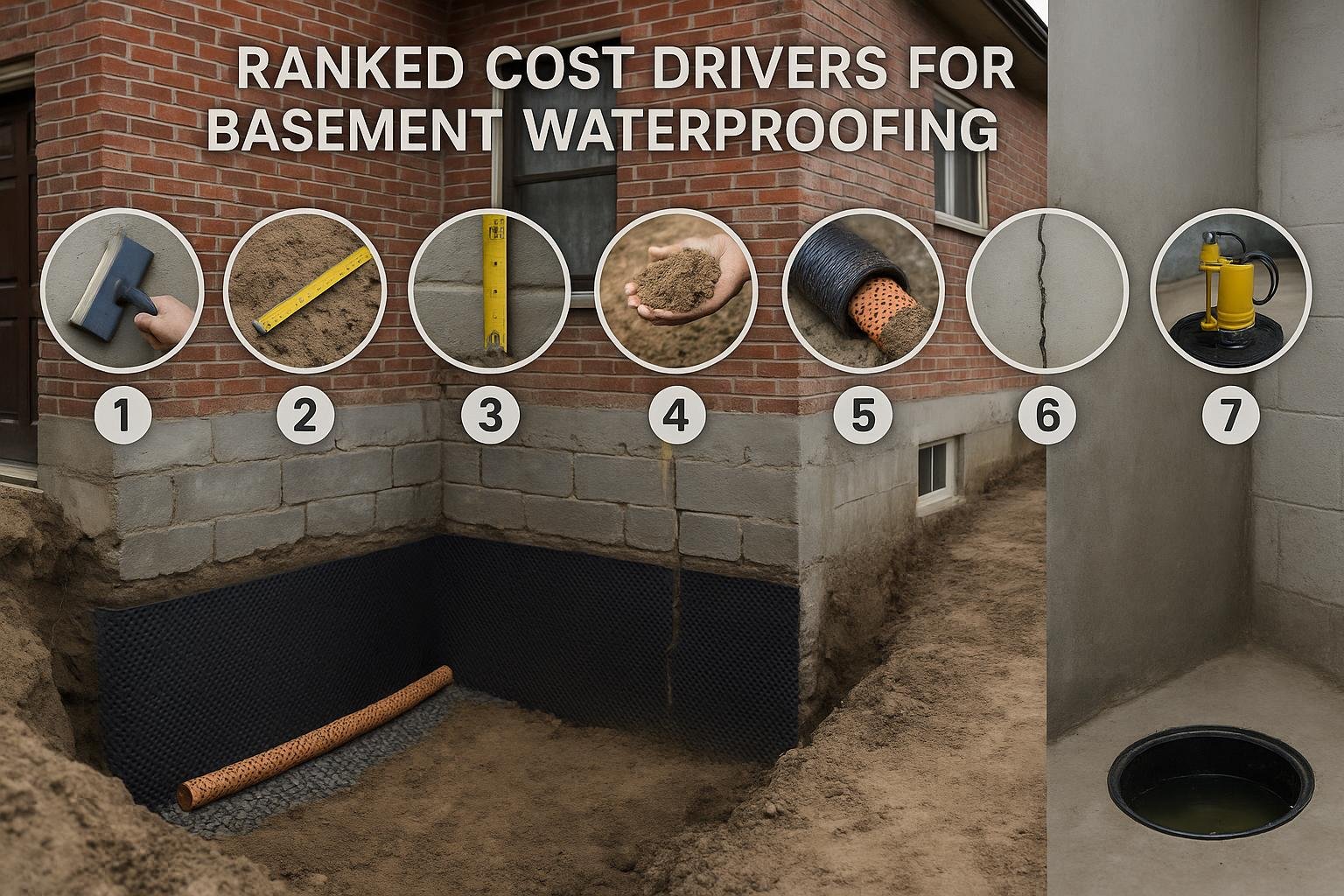
No verified price data specific to Hamilton has been supplied to this guide. The following describes cost drivers only, ranked by their typical influence on the final scope and price. Consult a contractor for a site-specific estimate.
| Cost driver | Why it matters | Direction of influence |
|---|---|---|
| Method selected | Crack injection is the least material- and labour-intensive; exterior excavation is the most | Highest single variable |
| Linear footage of wall treated | Interior and exterior perimeter systems are priced per linear foot | Increases proportionally with basement perimeter |
| Depth of foundation | Deeper foundations require more excavation volume and labour | Increases exterior cost |
| Soil and access conditions | Clay soils are heavier and slower to excavate; tight lot lines restrict equipment | Can increase exterior cost significantly |
| Condition of existing drainage | Collapsed or root-filled tile requires full replacement rather than supplementation | Increases scope and cost |
| Number and type of cracks | Multiple cracks or horizontal cracks requiring structural assessment add cost | Increases crack repair cost |
| Sump pit and pump specification | Battery backup, alarm systems, and larger-capacity pumps add to base cost | Moderate incremental increase |
For general Ontario cost context, the basement waterproofing cost guide for Southern Ontario provides a framework for understanding price ranges by method, with the caveat that local soil conditions, access, and scope will affect any specific project. The crack injection cost page covers injection-specific pricing drivers. Timelines range from a single day for crack injection to several days for full exterior excavation and membrane installation.
Risks & common mistakes
Treating symptoms rather than causes. Applying hydraulic cement or a surface sealant over an active crack or seeping wall without addressing the underlying pressure source is the most common mistake. These products can slow visible water temporarily but do not stop hydrostatic pressure. The water will find another path. See the comparison of hydraulic cement vs crack injection for a detailed explanation of why surface patching fails under pressure.
Skipping diagnosis. Committing to an interior drainage system when the actual source is a single injectable crack, or injecting a crack when the real problem is failed weeping tile, wastes money and leaves the underlying issue unresolved. A proper inspection, including checking the floor-wall joint, wall face, and window wells, should precede any repair decision.
Ignoring horizontal cracks. Horizontal cracks in a block or poured concrete wall indicate lateral soil pressure and can signal structural movement. These require assessment beyond standard waterproofing. The guide on how to tell if a foundation crack is structural outlines the warning signs that warrant an engineer’s review.
Installing a sump pump without a backup. Hamilton experiences significant summer thunderstorms. Power outages during heavy rain are precisely when a sump pump is most needed. Installing a primary pump without a battery backup or water-powered backup leaves the system vulnerable at its most critical moment.
Poor grading and downspout management. Even a correctly installed waterproofing system can be overwhelmed if surface water is directed toward the foundation. Downspouts should discharge at least 1.8 metres from the foundation, and the grade should slope away from the house. These are low-cost corrections that reduce the load on any waterproofing system.
Choosing a contractor on price alone. Basement waterproofing involves work that is largely hidden after completion. A low quote that omits drainage board, filter fabric, or proper sump pit sizing may appear attractive but will underperform. Review the guide to choosing a reliable waterproofing contractor for a checklist of questions to ask before signing a contract.
How the process works
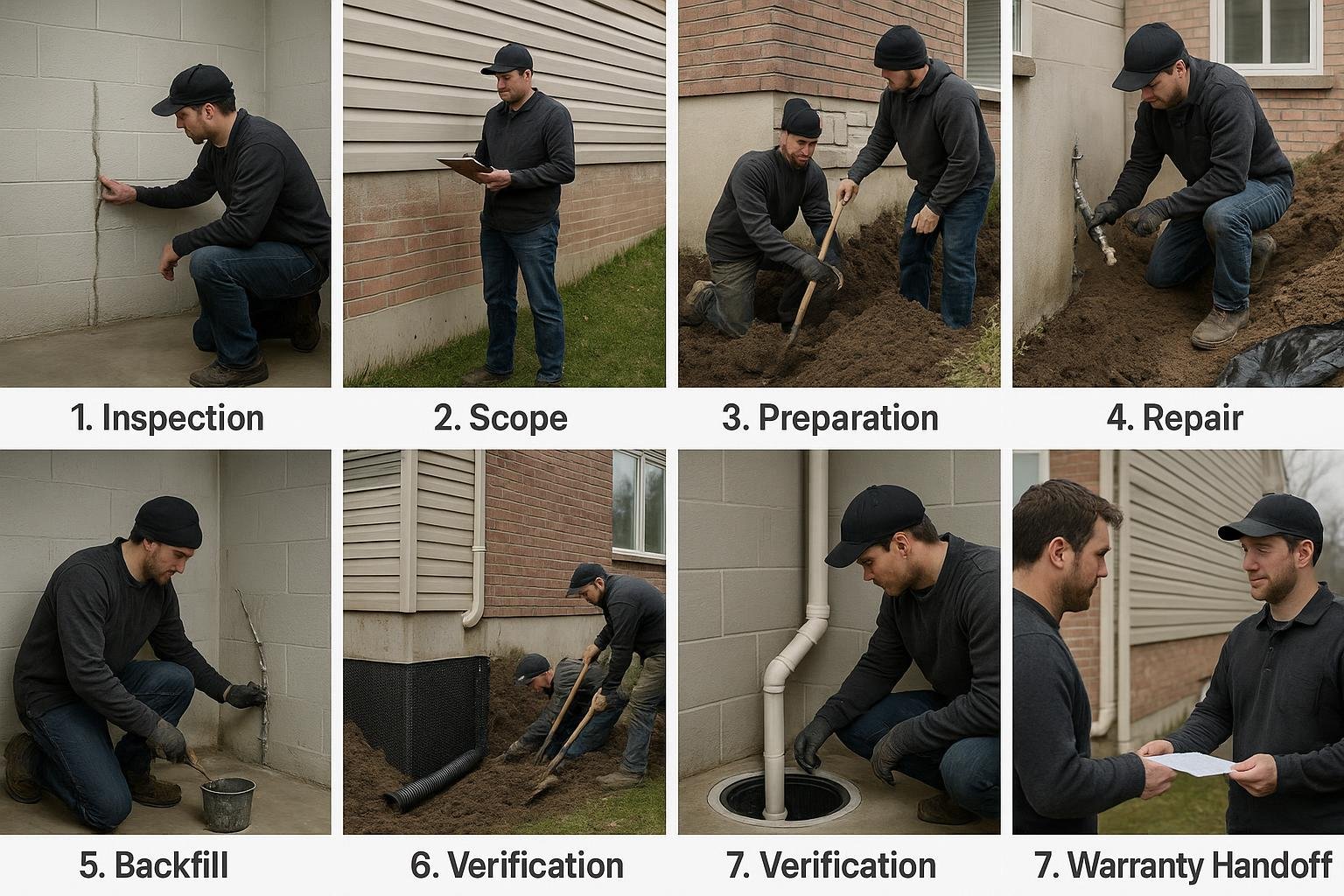
- Inspection and diagnosis. A technician inspects the basement interior, checks the exterior grade and downspouts, identifies crack types and locations, and assesses the floor-wall joint and any visible efflorescence or staining. The goal is to determine where water is entering and why, not simply to confirm that it is wet.
- Scope and method selection. Based on the inspection findings, the appropriate method or combination of methods is identified. The homeowner receives a written scope of work before any repair begins.
- Preparation. For crack injection, the wall surface around the crack is cleaned. For interior drainage, furniture and stored items are cleared from the perimeter. For exterior work, utilities are located and the excavation area is marked.
- Repair execution. The selected method is applied: ports drilled and resin injected for crack work; floor cut, pipe laid, and sump pit formed for interior drainage; wall excavated, cleaned, membrane applied, drainage board installed, and new weeping tile laid for exterior work.
- Backfill and restoration. Exterior excavations are backfilled and compacted. Interior floor cuts are patched with concrete. The work area is cleaned and the homeowner is walked through what was done and any maintenance requirements.
- Verification. Where possible, the repair is tested or monitored before the technician leaves. For sump pump installations, the float switch and discharge line are tested. For crack injection, the cured resin is inspected for full penetration.
- Warranty documentation. DryShield provides a lifetime transferable warranty on qualifying work. The homeowner receives written warranty documentation at job completion.
Frequently asked questions
How do I know if my Hamilton basement needs waterproofing or just crack repair?
If water is entering through one or two identifiable cracks in a poured concrete wall and the floor and perimeter are dry, crack injection is likely sufficient. If water appears at the floor-wall joint, across multiple wall locations, or after every significant rain regardless of visible cracks, a drainage system assessment is warranted. The leak diagnostic tool can help you identify the likely entry point before calling a contractor.
Is interior waterproofing as effective as exterior waterproofing?
They solve different problems. Exterior waterproofing stops water at the foundation wall before it enters. Interior waterproofing collects and redirects water that has already passed through or around the wall. Exterior is more comprehensive but significantly more expensive and disruptive. Interior is practical for many Hamilton homes and, when properly installed with a reliable sump pump, provides effective long-term moisture management. The right choice depends on your foundation condition, budget, and access constraints.
How long does basement waterproofing last in Hamilton?
Properly installed exterior membranes and interior drainage systems are designed to perform for the life of the home, though sump pumps require periodic replacement (typically every seven to ten years) and should be inspected annually. Crack injection with polyurethane is durable on stable foundations but may need re-treatment if the foundation continues to move. No waterproofing system eliminates the need for ongoing maintenance of grading, downspouts, and drainage components.
Will waterproofing affect my home’s resale value?
A documented waterproofing repair with a transferable warranty is generally viewed positively by buyers and their home inspectors. A wet or visibly damaged basement, by contrast, is a common reason for price reductions or failed sales. The GTA basement waterproofing ROI guide discusses the relationship between waterproofing and resale value in more detail, though specific Hamilton resale data was not available at the time of writing.
Does home insurance cover basement waterproofing in Hamilton?
Standard home insurance policies in Ontario generally do not cover the cost of waterproofing or foundation crack repair as a preventive measure. Coverage for water damage depends on the cause: sudden and accidental events may be covered under certain endorsements, while gradual seepage is typically excluded. The Ontario home insurance and basement waterproofing guide explains the coverage landscape in detail. Always confirm your specific policy terms with your insurer.
Can I waterproof my basement in winter?
Interior work, including crack injection and interior drainage installation, can generally proceed year-round because it is performed inside a conditioned space. Exterior excavation in Hamilton is more challenging in winter due to frozen ground and access conditions, though it is not always impossible depending on frost depth and temperature. The winter waterproofing guide covers the practical considerations for cold-weather work.
What is the difference between weeping tile and a French drain?
In Canadian residential construction, weeping tile refers to the perforated pipe installed at the footing of a foundation to collect and redirect groundwater. A French drain is a broader term for any gravel-filled trench with a perforated pipe used to manage subsurface water, and it can be installed at various depths and locations on a property. Both function on the same principle: gravity-fed collection and redirection of water away from a structure. The French drain system guide and the drain tile guide explain each in detail.
How do I monitor a foundation crack to see if it is getting worse?
A simple method is to mark the ends of the crack with pencil lines and note the date, then check monthly for extension beyond the marks. You can also apply a thin line of plaster or grout across the crack; if it breaks, the crack has moved. Width can be measured with a crack gauge or compared against a coin. Any crack that is widening, extending, or accompanied by wall bowing should be assessed by a professional promptly. The guide on foundation cracks that are getting wider provides a detailed monitoring protocol.
Do I need a building permit for basement waterproofing in Hamilton?
The City of Hamilton requires building permits for structural foundation repairs and excavation work. Interior drainage installation that does not involve structural alteration may not require a permit, but requirements can vary by scope. It is the homeowner’s and contractor’s responsibility to confirm permit requirements with the City of Hamilton Building Division before work begins. DryShield does not provide legal or regulatory advice; always verify current requirements directly with the municipality.
What should I do immediately if my Hamilton basement floods?
First, ensure the electrical panel is safe to approach before entering a flooded basement. Do not enter if water has reached electrical outlets or the panel. Once safe, stop the water source if identifiable (for example, a failed sump pump). Document the damage with photographs before removing water. Contact your insurer promptly. Remove standing water as quickly as possible to reduce mold risk; professional water extraction equipment is significantly faster than consumer wet-vacs. Then arrange a professional inspection to identify the entry point before the next rain event.
If you are dealing with a wet or leaking basement in Hamilton and want to understand your options, DryShield has served the Hamilton area as part of its Southern Ontario service territory. Contact us to arrange an inspection, or use the waterproofing cost calculator to get an initial sense of scope before your appointment. You can also visit the Hamilton service page for an overview of the services available in your area.