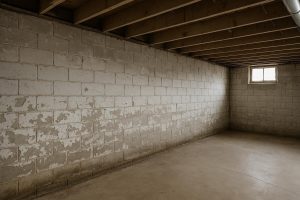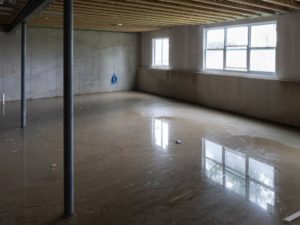
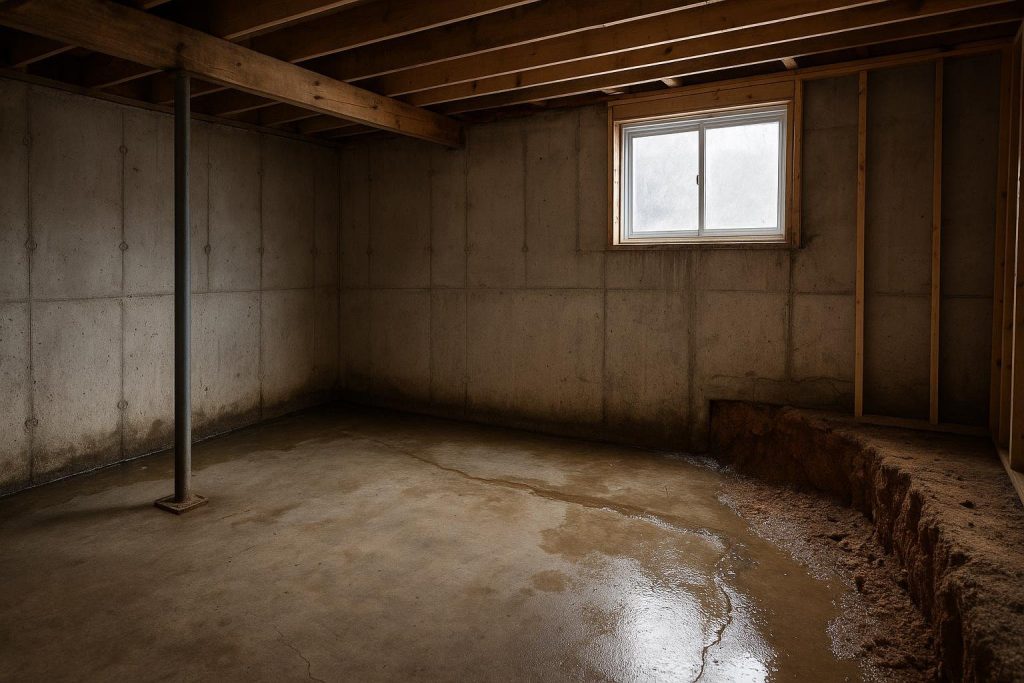
Basement flooding Springwater homeowners report most often traces back to two seasonal triggers: spring snowmelt saturating the sandy-loam and clay-till soils around Midhurst and Minesing, and heavy summer downpours that overwhelm original weeping tile installed decades ago. Understanding the exact entry point, whether that is a foundation crack, a failed footing drain, or a sump pump that cannot keep pace with rising hydrostatic pressure, is the first step toward a fix that actually lasts.
Key Takeaways
- Springwater sits in Simcoe County where clay-till soils hold groundwater against foundation walls long after rain stops, making hydrostatic pressure the primary culprit.
- Spring snowmelt and summer storms are the two peak failure windows for foundations in this area.
- A single injected crack typically costs $600 to $900; a full interior weeping-tile system or exterior waterproofing runs $6,000 to $9,000 depending on linear footage and access.
- Older homes in Springwater’s rural subdivisions commonly have original clay-pipe weeping tile that is fully silted up and no longer functional.
- The right fix depends on where water enters, not on which method is cheapest upfront.
Definitions and Scope
Basement flooding Springwater residents experience covers a wide range of water problems, from a visible puddle after a storm to chronic wall dampness that never fully dries. For Springwater homeowners, the term usually means one of three things: surface water entering through a crack or gap in the foundation wall, groundwater rising through the floor slab under hydrostatic pressure, or sewer backup during a heavy rain event. This guide focuses on the first two categories, which are structural and drainage problems that a waterproofing contractor can address.
Springwater Township spans a large rural area north and west of Barrie, including communities like Midhurst, Minesing, Hillsdale, and Elmvale. Soil conditions vary across the township. The Midhurst area sits on sandy outwash deposits that drain quickly, while Minesing and areas closer to the Nottawasaga River floodplain have heavier clay-till that holds water. Knowing your soil type matters because it changes which drainage solution will perform best on your property.
Why This Matters for Springwater Homes
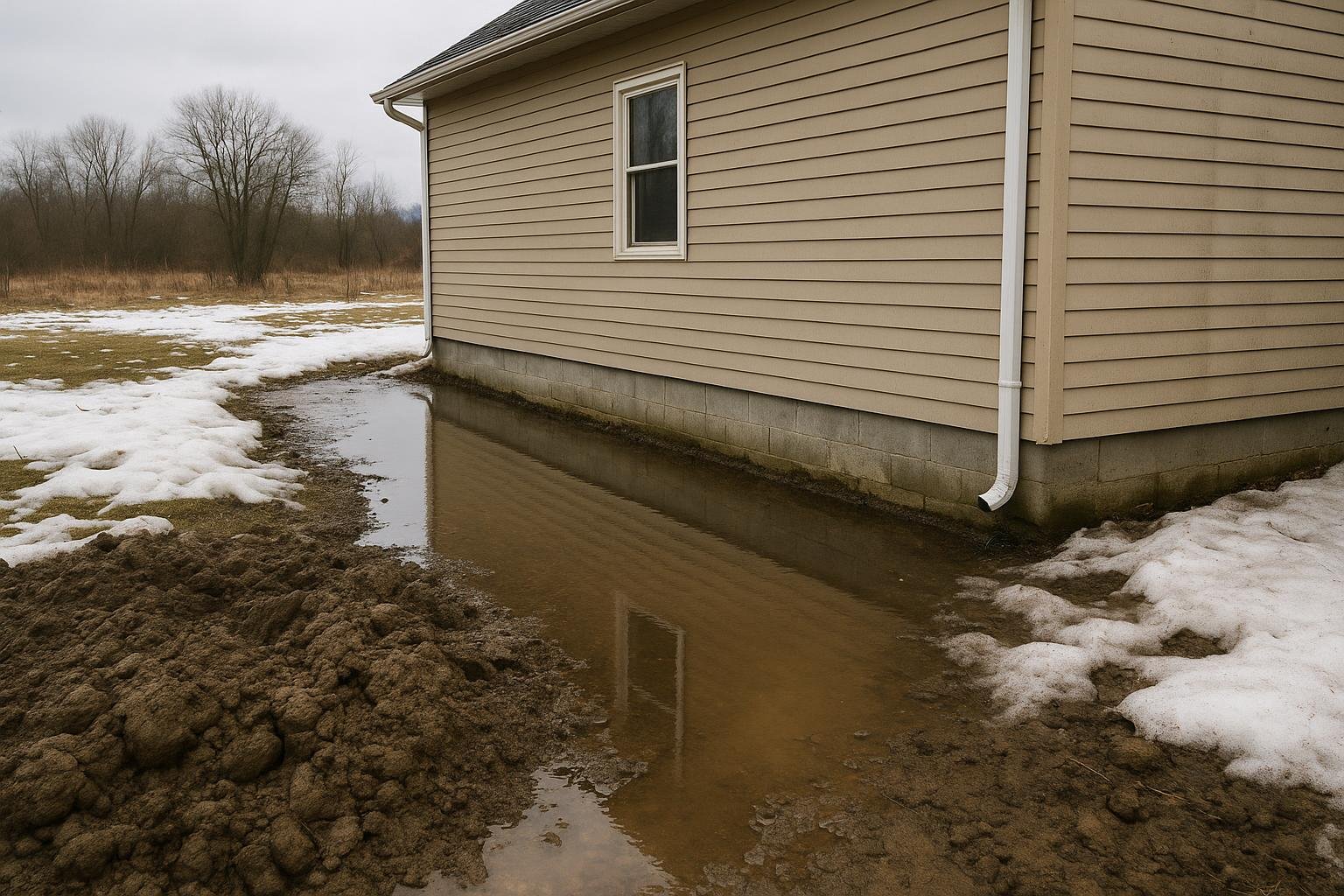
Basement flooding Springwater properties face is closely tied to the Georgian Bay snowbelt. A heavy snow year followed by a rapid March or April thaw can push the local water table up faster than most original drainage systems can handle. When frozen ground thaws from the top down, meltwater cannot percolate quickly and instead runs laterally toward the lowest point it can find, which is often a foundation wall.
Many homes in Springwater’s older rural subdivisions were built in the 1970s and 1980s with clay or perforated plastic weeping tile bedded in gravel at the footing. After 40 or 50 years, that tile is frequently silted up, crushed, or invaded by tree roots. When the drain no longer moves water away from the footing, hydrostatic pressure builds against the wall and finds any crack, cold joint, or gap around a pipe penetration as an entry point.
Summer convective storms are the second major risk. Simcoe County regularly sees intense short-duration rainfall events in July and August. A sump pump that has sat idle all winter may fail on its first real test of the season, and a window well without proper drainage can funnel hundreds of litres directly against the foundation in under an hour.
Hydrostatic pressure, not rainfall alone, is the root cause of most wet basements in Springwater. Water does not need to be falling to push through your foundation wall.
Canada Mortgage and Housing Corporation (CMHC) guidance on residential foundation drainage, available at cmhc-schl.gc.ca, confirms that failed perimeter drainage is the leading cause of basement moisture in Canadian homes built before 1990. That matches what we see on the ground in Springwater every spring.
Your Options for Fixing a Flooded Basement in Springwater
Basement flooding Springwater homes experience can be addressed through several methods. The right approach depends on where water is entering and the condition of the existing drainage system.
Polyurethane Crack Injection
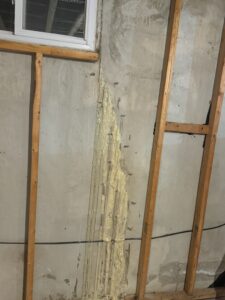
Low-pressure polyurethane injection seals an active crack from the interior using a port-and-paste method. Ports are glued over the crack at intervals, a surface paste bridges the gap, and then flexible polyurethane foam is injected under low pressure until it fills the crack from footing to grade. The cured foam remains flexible, which matters in Springwater because seasonal freeze-thaw cycles cause minor foundation movement every year. This method is best for a single vertical or diagonal crack in a poured concrete wall. It does not address failed weeping tile or floor seepage.
Interior Weeping Tile System
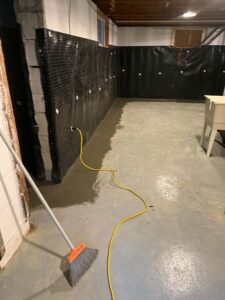
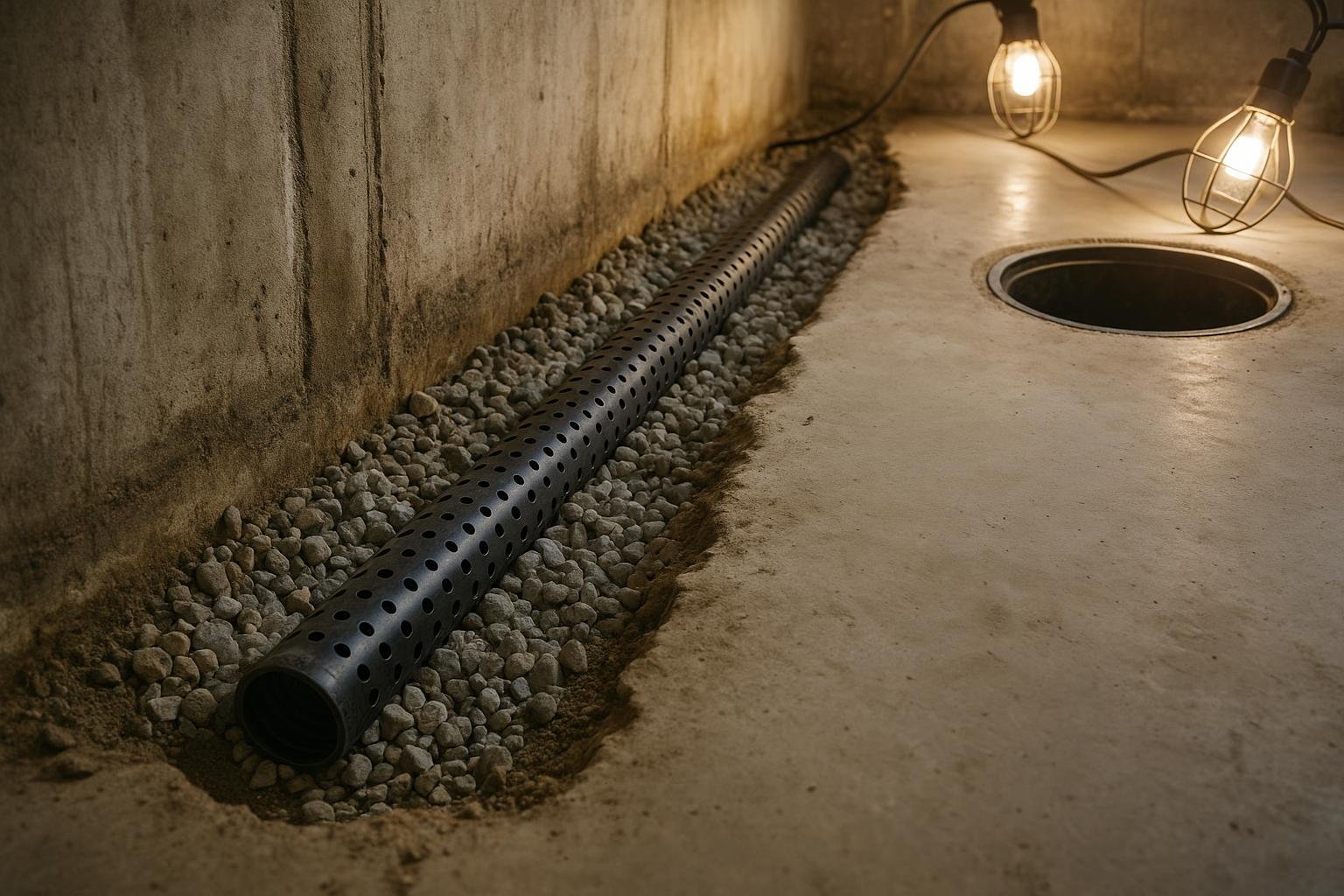
An interior system involves breaking the concrete floor around the perimeter of the basement, installing a new perforated weeping tile in a bed of clear stone, routing it to a sump basin, and re-pouring the concrete. A vapour barrier is run up the wall behind the new drain channel. This approach does not stop water from entering the wall, but it intercepts groundwater before it reaches the floor and directs it to the sump pump. It is the most common solution for homes where exterior excavation is impractical or where the water source is diffuse rather than a single crack.
Exterior Waterproofing
Full exterior waterproofing is the most comprehensive option. The process involves excavating to the footing, applying hydraulic cement parging to any voids in the wall, coating the exterior face with a rubberised membrane, installing a dimpled drainage board over the membrane, laying new weeping tile in clear stone at the footing level, and backfilling with corrected grade. This approach addresses hydrostatic pressure at its source and typically carries the longest service life. It is best for homes with chronic water entry along the full wall height or where the existing weeping tile has completely failed.
Sump Pump Installation or Upgrade
A sump pump is often the final component of an interior or exterior waterproofing system, but it can also be installed as a standalone measure in a home that already has functional weeping tile but no pump. In Springwater, where power outages during spring storms are not uncommon, a battery backup unit is strongly recommended. A pump that fails during a thaw event can allow the sump basin to overflow within minutes.
Epoxy Crack Injection
Epoxy injection is used specifically for structural cracks where the wall needs to be re-bonded rather than simply sealed against water. Epoxy cures rigid and bonds the two faces of the crack together, restoring some of the wall’s original tensile strength. It is not appropriate for active leaks or for cracks that are still moving seasonally. A structural assessment should precede this repair.
Exterior Grade Correction and Window Well Drainage
Sometimes the simplest fix delivers real results. If the grade around the foundation slopes toward the house, surface water runs directly against the wall. Regrading so the ground falls away from the foundation at a minimum slope, combined with extending downspout discharge at least two metres from the wall, can reduce the volume of water reaching the footing significantly. Window wells without a gravel sump at the base should have one added. This is a preventive measure, not a cure for an already-failed drainage system.
Options Compared
The table below compares the main solutions for basement flooding Springwater homeowners typically consider, based on entry point, lifespan, cost, and disruption.
| Method | Best For | Typical Lifespan | Relative Cost | Disruption |
|---|---|---|---|---|
| Polyurethane crack injection | Single active crack in poured concrete | Long-term if crack is stable | Lowest ($600 to $900 per crack) | Minimal, interior only, no excavation |
| Interior weeping tile system | Diffuse seepage, failed footing drain, floor moisture | 25 to 30 years with pump maintenance | Moderate ($6,000 to $9,000 range) | Jackhammer work inside, 2 to 3 days |
| Exterior waterproofing | Full wall failure, chronic hydrostatic pressure | Longest, membrane rated 25+ years | Moderate to higher (same range, varies by access) | Excavation required, landscaping affected |
| Sump pump installation | Homes with functional tile but no pump | 7 to 10 years per pump unit | Lower standalone cost | Minimal, basin cut in floor |
| Epoxy crack injection | Structural cracks requiring re-bonding | Permanent if crack is stable | Similar to polyurethane per crack | Minimal, interior only |
| Grade correction and window wells | Surface water management, prevention | Ongoing maintenance required | Lowest of all options | Exterior landscaping only |
No single method suits every Springwater home. Crack injection is the right starting point when there is one identifiable entry point and the surrounding wall is otherwise sound. Interior weeping tile makes sense when water enters along the full perimeter or through the floor. Exterior waterproofing is the definitive solution when the wall membrane has failed and hydrostatic pressure is severe. Grade correction is always worth doing regardless of which primary fix is chosen.
How to Choose the Right Fix
Choose polyurethane crack injection if you have a single vertical crack in a poured concrete wall, the crack is actively wet during rain or snowmelt, and the rest of the wall is dry. This is the most cost-effective entry point and can be completed in a single visit.
Choose an interior weeping tile system if water appears along the base of the wall or seeps up through the floor slab, if you have a block foundation where injection is not practical, or if exterior excavation is blocked by a deck, driveway, or finished landscaping. The Simcoe County basement waterproofing guide covers how interior systems are sized for the range of soil conditions found across the county.
Choose exterior waterproofing if the home has never been waterproofed, if multiple walls are wet, if the original weeping tile has completely failed, or if you want the most permanent solution available. Access matters: a detached home with open yard on all sides is a straightforward excavation job. A semi-detached or a home with a narrow side yard will cost more and take longer.
Choose a sump pump upgrade if your existing system drains to a basin but the pump is more than seven years old, has no battery backup, or has no high-water alarm. In Springwater, where spring thaw events can last several days, a pump failure without backup is a serious risk.
If you are unsure which entry point is causing the flooding, a free on-site moisture assessment is the fastest way to get a definitive answer before spending anything.
Costs and Timelines
Basement flooding Springwater repair costs vary by method, wall footage, and site conditions. The table below outlines the main cost drivers.
| Cost Driver | Why It Affects Price | Approximate Impact |
|---|---|---|
| Linear footage of affected wall | More wall means more membrane, more weeping tile, more labour | Primary driver for interior and exterior systems |
| Depth of excavation | Deeper footings require more digging time and shoring | Adds cost on older homes with deeper foundations |
| Site access | Narrow side yards, fences, decks, or mature trees limit equipment | Can increase exterior job cost significantly |
| Number of cracks | Each crack is a separate injection port setup | $600 to $900 per crack, stacks with multiple cracks |
| Existing drainage condition | Fully silted tile requires complete removal and replacement | Adds labour versus a home with no prior system |
| Sump basin and pump specification | Battery backup, horsepower rating, and alarm systems vary in cost | Battery backup adds to base pump cost |
As a general guide drawn from completed jobs in the Barrie and Simcoe County area: a single injected crack runs approximately $600 to $900. A full interior weeping-tile system or exterior waterproofing for an average detached home typically falls in the $6,000 to $9,000 range, depending on the drivers listed above. Every job is different, and the final figure depends on a site inspection. For a broader look at what Ontario homeowners pay across different repair types, the basement leaking repair cost guide breaks down pricing by method.
Risks and Common Mistakes
| Symptom | Likely Cause | Correct Fix |
|---|---|---|
| Water along base of wall after snowmelt | Failed or silted weeping tile, hydrostatic pressure | Interior or exterior weeping tile replacement |
| Wet vertical crack in poured concrete | Shrinkage or settlement crack admitting groundwater | Polyurethane crack injection |
| Floor seepage in spring only | Seasonal water table rise above footing level | Interior weeping tile routed to sump pump |
| Efflorescence on block wall | Chronic moisture wicking through mortar joints | Exterior membrane or interior drainage system |
| Sump pump running constantly | High water table, possibly no check valve | Check valve installation, pump sizing review |
The most common mistake Springwater homeowners make is applying hydraulic cement or a paint-on sealant to a wet wall and expecting it to hold. These products can slow surface moisture temporarily, but they cannot resist sustained hydrostatic pressure. When the water table rises in spring, the pressure behind a painted wall will find a new path, often popping the coating off entirely.
A second frequent error is ignoring a crack because it looks small. A hairline crack in poured concrete can admit significant water once the surrounding soil is saturated. The crack does not need to be wide to be a problem; it needs only to be continuous from the exterior face to the interior face of the wall.
Skipping a battery backup sump pump is a third mistake that costs Springwater homeowners dearly. Power outages during spring storms are common in rural Simcoe County, and a primary pump without backup can allow a sump basin to overflow in under 30 minutes during a heavy thaw event.
Hydraulic cement and waterproofing paint are temporary measures. Neither product is designed to resist the sustained hydrostatic pressure that builds up in Springwater’s clay-till soils after a heavy snowmelt.
How the Process Works
When addressing basement flooding Springwater technicians follow a consistent process regardless of which repair method is selected.
- Free on-site inspection and moisture assessment. A technician visits the property, identifies all entry points, checks the existing weeping tile condition where accessible, and assesses the sump pump if one is present.
- Written scope with linear-foot pricing. You receive a written proposal that itemises the work, the materials, and the cost. No verbal estimates.
- Preparation and protection. Interior contents near the work area are protected. For exterior work, excavation equipment is positioned and any landscaping that must be disturbed is documented.
- Core repair work. For crack injection: ports are installed, paste is applied, and polyurethane is injected. For interior weeping tile: the perimeter slab is jackhammered, the new drain channel is cut, weeping tile is laid in clear stone, and the sump basin is set. For exterior work: excavation to the footing, hydraulic cement parging, rubberised membrane application, dimpled drainage board, new weeping tile in clear stone, and backfill with grade correction.
- Vapour barrier and concrete reinstatement. On interior jobs, a vapour barrier is run up the wall behind the new drain channel before the concrete is re-poured.
- Final inspection and cleanup. The completed work is reviewed with the homeowner, the sump pump is tested, and the site is left clean.
- Warranty documentation. Applicable warranty paperwork is issued. Work backed by a lifetime transferable warranty protects the investment and transfers to a new owner if the home is sold.
For a detailed look at how interior and exterior approaches compare step by step, the exterior vs interior perimeter waterproofing comparison covers the trade-offs in full.
Frequently Asked Questions
Why does my Springwater basement flood only in spring?
Spring snowmelt raises the local water table rapidly, often within days of a warm spell. When the saturated soil around your foundation reaches a certain pressure, it forces water through any crack, gap, or failed joint in the wall or floor slab. Homes that stay dry all summer can still experience basement flooding Springwater thaw seasons bring, because the water table in spring is simply higher than at any other time of year.
How much does it cost to fix a flooded basement in Springwater?
A single foundation crack sealed by polyurethane injection typically runs $600 to $900. A full interior weeping-tile system or exterior waterproofing for an average detached home in the Springwater area generally falls in the $6,000 to $9,000 range, depending on linear footage, excavation depth, and site access. The final figure always depends on a site inspection because no two foundations are identical.
Is interior or exterior waterproofing better for Springwater homes?
Exterior waterproofing addresses hydrostatic pressure at its source and is the most permanent solution, but it requires excavation and is more disruptive. Interior weeping tile is less invasive and works well when exterior access is limited or when the water source is diffuse. The right choice depends on where water is entering, the condition of the existing drainage system, and site access. A free inspection will clarify which approach suits your specific home.
My sump pump runs constantly in spring. Is that normal?
A pump that runs frequently during snowmelt is doing its job, but one that runs non-stop without the water level dropping may indicate the pump is undersized, the weeping tile is overwhelmed, or there is no check valve preventing water from cycling back into the basin. Have the system inspected before the next thaw season to confirm the pump and basin are correctly sized for your site’s water volume.
Can I seal a foundation crack myself?
DIY hydraulic cement or epoxy paste can temporarily slow a small crack, but neither product bonds reliably to a wet surface under pressure, and neither fills the full depth of the crack. Low-pressure polyurethane injection, done correctly, fills the crack from the interior face to the exterior face and cures flexible to tolerate seasonal movement. A professional injection typically carries a warranty; a DIY patch does not.
How long does a basement waterproofing job take in Springwater?
A single crack injection is usually completed in two to four hours. An interior weeping-tile system for a standard basement perimeter takes two to three days. Full exterior waterproofing, including excavation and backfill, typically takes three to five days depending on the linear footage and site conditions.
Does basement waterproofing affect my home’s resale value?
A documented, warranted waterproofing system is a positive disclosure item in an Ontario real estate transaction. Buyers and their inspectors look for evidence of past water problems. A completed repair with a transferable warranty removes that concern and can support the asking price. An unaddressed wet basement, by contrast, is a negotiating point that typically costs more at sale than the repair would have.
What is weeping tile and how do I know if mine has failed?
Weeping tile is a perforated pipe installed at the base of the foundation footing to collect groundwater and route it away from the wall. In Springwater homes built before the 1990s, it is often original clay pipe or early plastic that has silted up, crushed, or been invaded by roots. Signs of failure include water appearing consistently along the base of the wall, a sump pump that never activates even during heavy rain, and efflorescence building up at the wall-floor joint.
Do I need a permit to waterproof my basement in Springwater?
Interior waterproofing work is generally considered maintenance and does not require a building permit in most Ontario municipalities. Exterior work that involves excavation close to the property line or that affects grading may require notification to the Township of Springwater. Your contractor should confirm permit requirements as part of the scoping process.
Ready to find out exactly what is causing your basement to flood? Request a free on-site inspection from the DryShield Team. We serve Springwater, Midhurst, Minesing, Elmvale, and the surrounding Simcoe County area, and we will give you a written scope with no obligation.