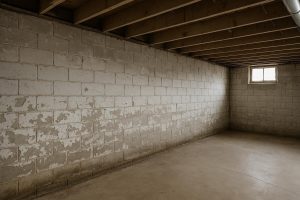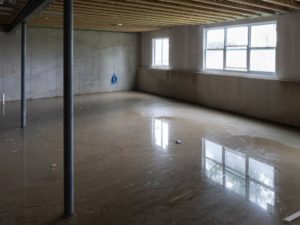
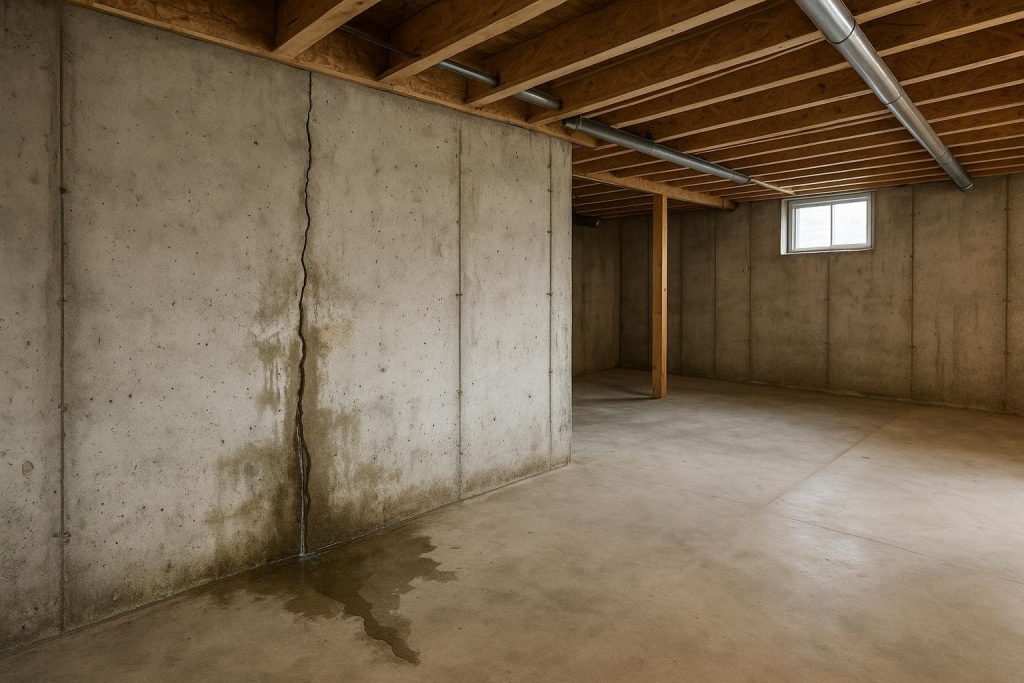
A leaky basement Springwater homeowners encounter is almost always driven by hydrostatic pressure building up against the foundation wall, not simply by rain finding a gap. Springwater Township sits on a mix of sandy loam near the Oro Moraine and heavier clay deposits closer to Barrie, and both soil types create distinct water-management challenges that require different repair strategies. Getting the diagnosis right before choosing a fix is what separates a lasting solution from a temporary patch.
Key Takeaways
- Hydrostatic pressure from saturated soil is the root cause in most Springwater basement leaks, not surface water alone.
- Spring thaw and summer downpours are the two peak failure windows for foundations in this area.
- A single injected crack typically costs $600 to $900; a full interior weeping-tile system or exterior waterproofing runs considerably more and depends on linear footage and access.
- Older homes in Springwater frequently have original weeping tile that has silted up completely and no longer drains.
- The correct fix depends on whether water enters through a crack, through the cove joint at the floor, or through the wall face itself.
Definitions and Scope
A basement leak is any unwanted water entry below grade. In Springwater, that entry point is usually one of three things: a shrinkage crack in a poured concrete wall, a failed cove joint where the wall meets the floor, or a saturated wall face where the original damp-proofing has broken down. The term “waterproofing” refers to a membrane or drainage system that actively manages water; “damp-proofing” is the thin tar coating applied at the time of construction, which degrades over 20 to 30 years and is not a waterproofing system.
Hydrostatic pressure is the force that water exerts against a buried wall when the surrounding soil is saturated. On clay-heavy lots, that pressure can be significant because clay holds water rather than letting it drain away. On sandier lots near the Oro Moraine, drainage is faster but freeze-thaw cycling creates its own crack patterns. Understanding which soil type surrounds a specific Springwater home is the first step in choosing the right repair method.
Why This Matters for Springwater Homeowners
Springwater Township experiences pronounced seasonal water-table swings. The spring thaw, when snowpack from the Oro Moraine and surrounding farmland melts rapidly, pushes large volumes of water into the ground over a short period. Foundations that have managed fine through a dry autumn can suddenly face intense hydrostatic pressure in March and April. Summer convective storms add a second peak, particularly on properties with flat or inward-sloping grades that direct runoff toward the house.
Many homes in the Springwater area, including those in Midhurst, Elmvale and rural concession roads, were built in the 1970s through 1990s with clay-tile or perforated plastic weeping tile that is now 30 to 50 years old. That original drainage layer is frequently silted up, crushed, or root-invaded, meaning it no longer carries water away from the footing. When the weeping tile fails, water has nowhere to go except against the wall and eventually through it, producing a leaky basement Springwater residents recognise all too well.
CMHC research on residential moisture confirms that foundation moisture problems worsen progressively when left untreated, leading to mould growth, structural deterioration and reduced indoor air quality. You can review CMHC’s homeowner guidance at cmhc-schl.gc.ca. Early intervention is consistently less expensive than remediation after mould has established itself in framing and insulation.
For a broader look at how Simcoe County soil and climate conditions affect foundations across the region, the Simcoe County basement waterproofing guide covers the full picture from Barrie to Collingwood.
Your Options for Fixing a Leaky Basement in Springwater
Polyurethane Crack Injection
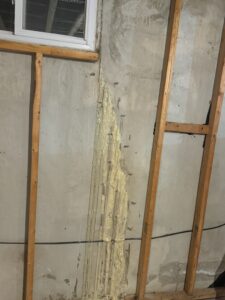
Low-pressure polyurethane injection fills an active crack from the interior without excavation. Ports are pasted along the crack at intervals, and flexible polyurethane foam is injected under low pressure until it travels through the full wall thickness and cures against the wet concrete. The cured material remains flexible, which matters in Springwater because seasonal freeze-thaw movement is significant and a rigid filler would re-crack. This method works best on a single vertical shrinkage crack in a poured concrete wall. It is not appropriate for horizontal cracks, which indicate lateral soil pressure and may require structural assessment, or for cracks in block foundations where water travels through the mortar joints rather than through a single plane.
Epoxy Crack Injection
Epoxy injection is used when a crack has compromised the structural integrity of the wall and the two faces need to be re-bonded. Epoxy cures rigid and bonds with tensile strength comparable to the original concrete. Because it is rigid, it is reserved for structural cracks only; using epoxy on a non-structural crack in a foundation that still moves seasonally will result in a new crack forming adjacent to the repair. A qualified inspector should confirm whether a crack is structural before epoxy is specified.
Interior Weeping Tile System
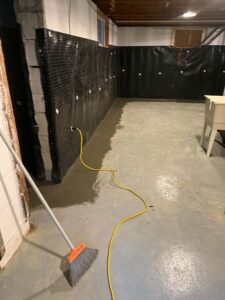
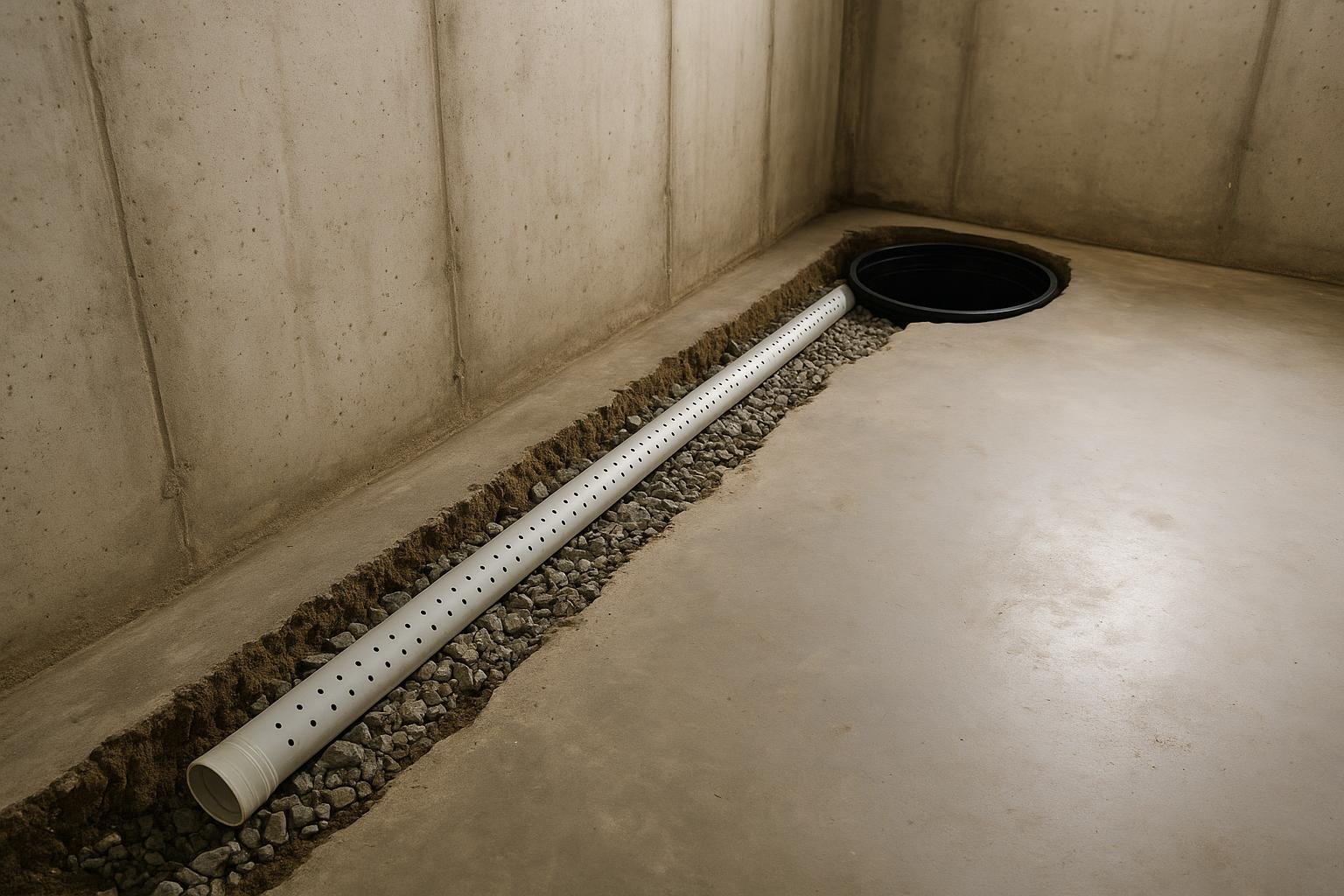
An interior system involves breaking the perimeter concrete floor, installing a new perforated drain pipe in clear stone at the footing level, routing it to a sump basin, and re-pouring the concrete. A vapour barrier is run up the wall to direct any seepage that does enter the wall into the drain rather than onto the floor. A sump pump then discharges the collected water away from the house. This approach manages water that has already entered the wall cavity rather than stopping it at the exterior, but it is highly effective and causes no exterior disruption. It is the preferred solution when excavation is impractical due to decks, driveways, or mature landscaping.
Exterior Waterproofing
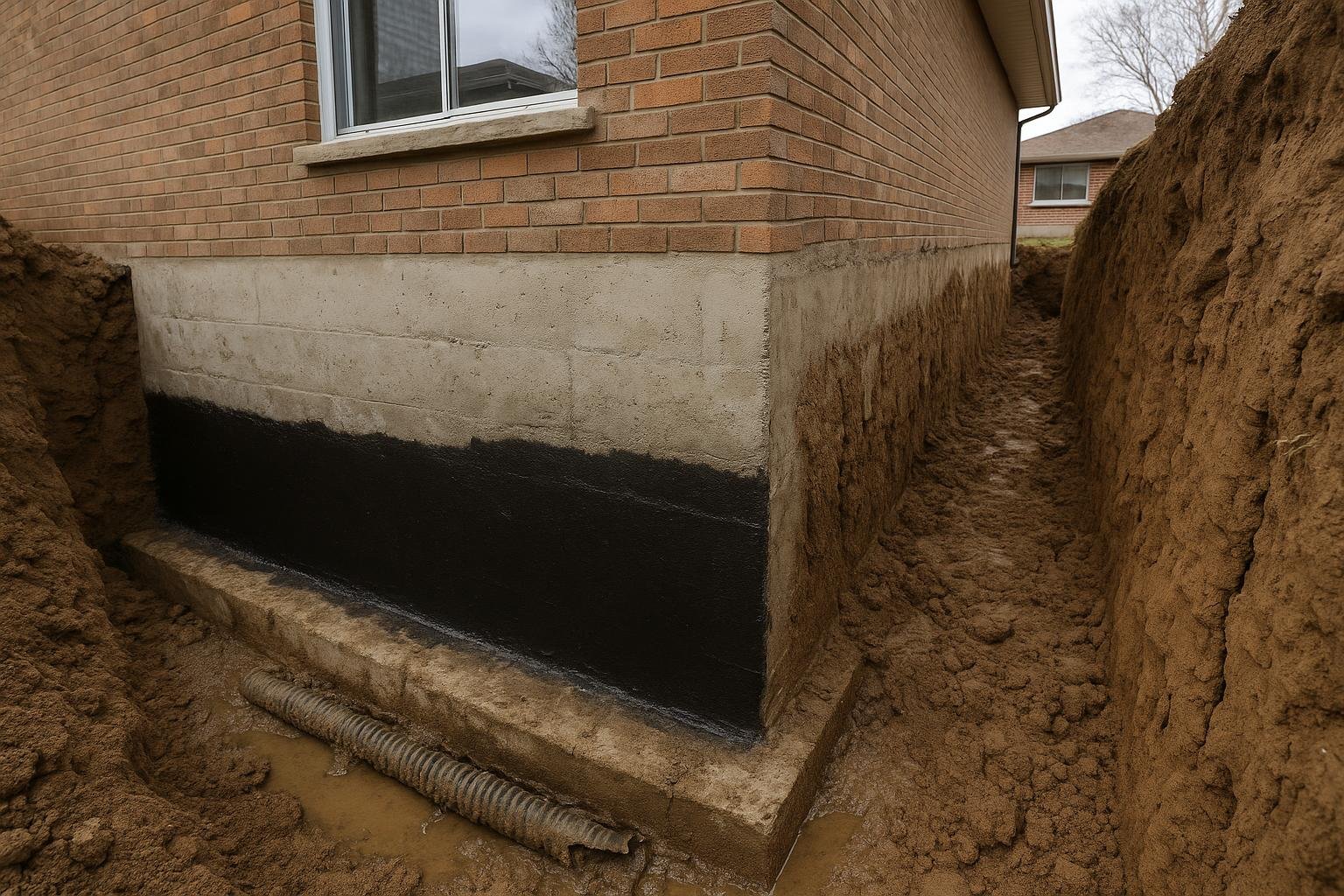
Exterior waterproofing addresses the problem at its source. Excavation goes down to the footing, voids in the parging are filled with hydraulic cement, a rubberised membrane is applied to the wall face, a dimpled drainage board is installed over the membrane to protect it and create a drainage plane, new weeping tile is bedded in clear stone at the footing, and the trench is backfilled with grade correction to direct surface water away. This is the most comprehensive solution and carries the longest service life, but it requires access around the perimeter and is more disruptive than interior work. For an average Springwater detached home, exterior waterproofing typically runs in the $6,000 to $9,000 range depending on linear footage, depth of excavation, and site access.
Sump Pump Installation or Replacement
A sump pump is often a component of a larger system rather than a standalone fix, but on properties with a high seasonal water table, a properly sized pump with a battery backup is essential. Springwater properties that experience spring flooding benefit from a backup system that continues operating during power outages, which are common during severe weather. A pump that is undersized for the inflow rate will run continuously and fail prematurely.
Grade Correction and Surface Drainage
On some Springwater properties, particularly those on rural lots where the original grade has settled, correcting the slope around the foundation so that the first two metres of soil direct water away from the wall can meaningfully reduce hydrostatic pressure. This is not a substitute for membrane waterproofing on a wall that is already compromised, but it is a cost-effective first step on a wall that is showing early signs of moisture rather than active leaking.
Leaky Basement Springwater: Options Compared
| Method | Best For | Typical Lifespan | Relative Cost | Disruption |
|---|---|---|---|---|
| Polyurethane crack injection | Single vertical shrinkage crack, poured concrete | Long-term if crack is stable | Lowest ($600-$900 per crack) | Minimal, interior only |
| Epoxy crack injection | Structural cracks requiring re-bonding | Permanent if no new movement | Low to moderate | Minimal, interior only |
| Interior weeping tile system | Perimeter seepage, failed original weeping tile | 25+ years with pump maintenance | Moderate | Interior floor disruption |
| Exterior waterproofing | Wall face failure, comprehensive protection | Lifetime with proper membrane | Highest ($6,000-$9,000 typical) | Excavation around perimeter |
| Sump pump installation | High water table, complement to drainage system | 7-12 years per pump unit | Low to moderate | Minimal |
| Grade correction | Early-stage moisture, surface drainage issues | Ongoing maintenance required | Lowest | Exterior landscaping only |
The table above shows that no single method suits every situation. Crack injection is the right call for an isolated shrinkage crack but does nothing for a wall that is seeping along its full height. Exterior waterproofing is the most thorough solution but requires excavation access. Interior weeping tile is the practical middle ground when the wall face is compromised but excavation is not feasible. A site inspection is the only reliable way to match the method to the actual failure mode.
How to Choose the Right Fix for a Leaky Basement in Springwater
Choose polyurethane crack injection if water enters through a single, clearly defined vertical crack in a poured concrete wall and the crack shows no signs of horizontal displacement or widening over time. This is the most targeted and cost-effective repair when the diagnosis is confirmed.
Choose an interior weeping tile system if water appears along the cove joint at the base of the wall, if multiple wall sections show seepage, or if excavation is blocked by a deck, attached garage, or mature trees. Interior systems are also the right choice when the original weeping tile has silted up and the water table is consistently high in spring. A leaky basement Springwater homeowners trace to failed weeping tile almost always benefits from this approach.
Choose exterior waterproofing if the wall face itself is deteriorating, if parging has cracked and fallen away, or if you want the most comprehensive long-term solution and excavation access is available. Properties in Springwater with clay-heavy soil that holds water against the wall for weeks after a rain event benefit most from stopping water at the membrane rather than managing it inside.
Choose grade correction as a first step if the lot slopes toward the house and the basement is showing early dampness rather than active leaking. Correct the grade, extend downspouts at least two metres from the wall, and reassess after one full seasonal cycle before committing to a larger system.
If you are unsure which category your problem falls into, the basement leak diagnostic tool can help narrow down the likely cause before you book an inspection.
Costs and Timelines
| Cost Driver | Why It Affects Price | Approximate Impact |
|---|---|---|
| Linear footage of wall treated | More wall means more membrane, drain pipe and labour | Primary driver for exterior and interior systems |
| Depth of excavation | Deeper footings require more digging time and shoring | Significant on older Springwater homes with deep footings |
| Site access | Tight side yards, fences, or decks slow excavation | Can add 15-25% to exterior work |
| Number of cracks | Each crack injection is priced individually | $600-$900 per crack, all-in |
| Sump basin and pump | Required for interior systems; pump grade affects cost | Battery backup adds meaningful cost but is recommended |
| Concrete re-pour | Interior systems require breaking and re-pouring the floor | Included in interior system pricing |
A leaky basement Springwater property owners bring to us for costing typically falls into one of two ranges: a single foundation crack injected from the interior runs $600 to $900, while full exterior waterproofing of an average detached home runs roughly $6,000 to $9,000 depending on the factors above. Interior weeping-tile systems generally fall below the exterior range. All figures depend on a site inspection, and any quote given without one should be treated with caution. For a broader Ontario cost comparison, the basement leaking repair cost guide breaks down what homeowners across the province actually pay.
A crack injection at $600 to $900 is one of the most cost-effective repairs in residential construction. The same crack left open for two or three seasons can allow enough water infiltration to cause mould remediation costs that are many times higher.
Risks and Common Mistakes
| Symptom | Likely Cause | Correct Fix |
|---|---|---|
| Water at base of wall after rain | Failed cove joint or silted weeping tile | Interior weeping tile system with sump |
| Vertical crack with staining | Shrinkage crack, hydrostatic pressure | Polyurethane crack injection |
| Horizontal crack mid-wall | Lateral soil pressure, possible structural issue | Engineering assessment, possible wall repair |
| White powder on wall face | Efflorescence from mineral-laden water moving through concrete | Identify and stop water source; membrane or injection |
| Damp wall face, no visible crack | Deteriorated damp-proofing, no membrane | Exterior waterproofing with new membrane |
The most common mistake Springwater homeowners make is applying hydraulic cement or interior sealant paint to a leaking wall and treating it as a permanent fix. These products can slow seepage temporarily but do not address hydrostatic pressure, and the force of water will eventually push through or around any surface-applied product. A second frequent error is replacing a sump pump without inspecting the weeping tile that feeds it. If the tile is silted up, a new pump will have nothing to collect and the basement will continue to flood.
Horizontal cracks in a poured concrete or block wall are a different category of problem from vertical shrinkage cracks. They indicate lateral soil pressure and should be assessed by a qualified inspector before any repair is attempted, because the wrong repair on a structurally compromised wall can make the situation worse.
A third mistake is delaying action because the leak appears minor. Water that enters a wall cavity wets insulation, promotes mould growth in framing, and accelerates concrete carbonation. What presents as a small damp patch in September can become a significant mould problem by the following spring if the wall stays wet through winter.
How the Process Works
- Free on-site inspection and moisture assessment. A technician visits the property, identifies all entry points, checks the grade, inspects the sump pit if one exists, and assesses whether the original weeping tile is functional.
- Written scope with linear-foot pricing. A written quote specifies exactly which walls are treated, which method is used, and what the all-in price is. No surprises at the end of the job.
- Preparation and access. For exterior work, excavation goes down to the footing. For interior work, the perimeter concrete is cut and removed. For crack injection, ports are pasted along the crack face.
- Core repair work. Exterior: hydraulic cement parging of voids, rubberised membrane application, dimpled drainage board, new weeping tile in clear stone, backfill and grade correction. Interior: weeping tile to sump basin, vapour barrier up the wall, concrete re-pour. Crack: low-pressure polyurethane injection through ports until the material cures through the full wall thickness.
- Final inspection and cleanup. The completed work is reviewed, the sump pump is tested if installed, and the site is left clean. Documentation of the work is provided for insurance and resale purposes.
For Springwater properties where exterior excavation is part of the scope, the full process from inspection to backfill typically takes one to three days depending on the number of walls treated and site conditions. Crack injection on a single crack can be completed in a few hours.
Springwater’s spring thaw window, typically late March through April, is the single highest-risk period for foundation water entry. Booking an inspection in late winter, before the ground saturates, gives you the best chance of completing repairs before peak pressure arrives.
Frequently Asked Questions
What causes a leaky basement in Springwater specifically?
The most common cause is hydrostatic pressure from saturated soil pressing against the foundation wall. Springwater’s mix of clay and sandy loam soils, combined with significant spring snowmelt from the Oro Moraine, creates high seasonal water-table pressure. Failed original weeping tile, which is common in homes built before 1990, removes the drainage layer that was supposed to relieve that pressure. Vertical shrinkage cracks in poured concrete walls are the second most frequent entry point.
How do I know if my crack needs injection or full waterproofing?
A single vertical crack in a poured concrete wall with water staining directly behind it is typically a candidate for polyurethane injection. If water appears along the base of multiple walls, if the wall face is damp without a visible crack, or if efflorescence covers a large area, the problem is systemic and injection alone will not resolve it. A site inspection is the only reliable way to make this determination.
Can I fix a leaky basement myself in Springwater?
Surface-applied hydraulic cement and sealant paints are available at hardware stores, but they do not address hydrostatic pressure and rarely provide lasting results on an active leak. Low-pressure injection kits exist for DIY use, but correct port spacing and injection pressure require experience to get right. For any leak that recurs after a first attempt at repair, professional diagnosis is the more cost-effective path.
How much does basement waterproofing cost in Springwater?
A single crack injection runs approximately $600 to $900. A full exterior waterproofing system on an average detached home typically falls in the $6,000 to $9,000 range, depending on linear footage, excavation depth, and site access. Interior weeping-tile systems generally cost less than exterior work. Every quote should follow a site inspection, as soil conditions and access vary significantly across Springwater Township.
Does homeowners insurance cover a leaky basement in Ontario?
Standard homeowners policies in Ontario typically cover sudden and accidental water damage but exclude gradual seepage and pre-existing conditions. Some policies include overland water or sewer backup riders that may apply in specific flooding scenarios. Reviewing your policy wording with your broker before filing a claim is important, as a denied claim can affect future coverage. Waterproofing work itself is generally not covered but may be required as a condition of continued coverage after a claim.
How long does a basement waterproofing repair last in Springwater?
A properly installed exterior membrane with new weeping tile is designed to last the life of the foundation. Interior weeping-tile systems perform reliably for 25 years or more with routine sump pump maintenance. Polyurethane crack injection provides a long-term seal on a stable crack, though a crack that continues to move due to ongoing settlement may require re-treatment. The sump pump itself, as a mechanical component, typically needs replacement every 7 to 12 years.
Is spring the worst time for basement leaks in Springwater?
Spring thaw is the highest-risk window because snowmelt saturates the ground quickly, raising the water table before the soil can drain. Summer convective storms are the second peak, particularly on properties with flat grades. Autumn is generally lower risk, but a wet October followed by a hard freeze can cause ice-lens expansion that widens existing cracks over winter, making them more active the following spring.
What is weeping tile and why does it fail?
Weeping tile is a perforated drain pipe installed at the footing level to collect groundwater and carry it away from the foundation before it can build up as hydrostatic pressure. Original clay-tile systems installed before the 1980s are prone to cracking and root intrusion. Perforated plastic pipe installed in the 1980s and 1990s can silt up when the surrounding filter fabric degrades. Once the weeping tile stops draining, water accumulates at the footing and begins to force its way through the wall. Replacement with new pipe in clear stone and proper filter sock is the correct repair.
Should I get a sump pump if I fix my weeping tile?
Yes. A new interior or exterior weeping-tile system collects groundwater and routes it to a sump basin, and that basin needs a pump to discharge the water away from the house. On Springwater properties with a high spring water table, a battery backup pump is strongly recommended so the system continues operating during power outages, which are common during the severe storms that cause the most flooding.
If you are dealing with a leaky basement Springwater property and want to understand your options before committing to a repair, DryShield offers a free on-site inspection with no obligation. A technician will assess the entry points, check the condition of your existing drainage, and provide a written scope so you know exactly what the work involves and what it will cost. Contact the team to book your inspection and get a clear answer before the next rain season arrives.