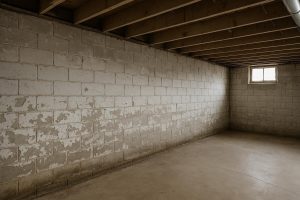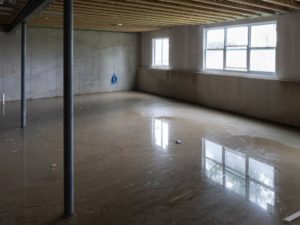
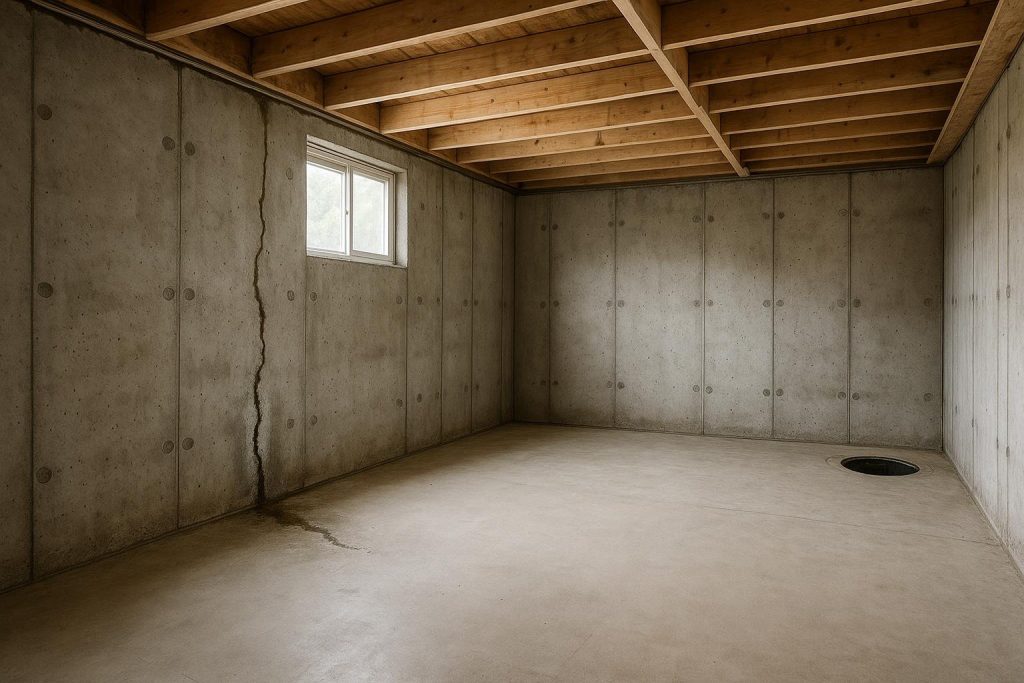
Basement leak repair Innisfil homeowners need most often traces back to one root cause: hydrostatic pressure from Simcoe County’s sandy-loam and clay-mix soils pushing groundwater against foundation walls. Whether your home sits in a newer Big Bay Point subdivision or an older Cookstown-area property, the fix must match the source of the water, not just the symptom you can see.
Key Takeaways
- Innisfil’s mix of sandy soils near Lake Simcoe and heavier clay inland creates two distinct water-entry patterns that require different repair strategies.
- A single foundation crack injected from the interior typically costs $600 to $900; a full exterior waterproofing system on an average home runs roughly $6,000 to $9,000, depending on linear footage and excavation depth.
- Spring snowmelt from Simcoe County’s above-average snowfall and summer downpours are the two peak failure windows for Innisfil foundations.
- Silted-up or collapsed weeping tile is the most common reason a previously dry basement starts leaking in homes built before the mid-1990s.
- Every repair quote should follow a free on-site moisture assessment, because no published price replaces a site inspection.
Definitions and Scope
Basement leak repair covers any intervention that stops water from entering a below-grade living space through foundation walls, floor slabs, or the joint where the wall meets the footing. In Innisfil, the term spans a wide range of work: from a single low-pressure polyurethane crack injection that takes a few hours, to a full exterior excavation with new weeping tile, rubberised membrane, and dimpled drainage board that takes several days.
The scope of any repair depends on three things: where the water is entering, what is driving it there, and how long the problem has been active. A hairline shrinkage crack in a poured-concrete wall is a very different repair from a perimeter leak caused by a failed weeping tile system buried at the footing. Confusing the two leads to money spent on the wrong solution.
This guide covers the main repair methods available to Innisfil homeowners, how to match the method to the problem, what drives cost, and what the repair process actually looks like from inspection to completion.
Why This Matters for Innisfil Homes
Innisfil sits on the southern shore of Lake Simcoe, and the town’s soil profile changes noticeably as you move inland. Lakeside properties and those in the Friday Harbour and Alcona areas often sit on sandy or gravelly fill that drains quickly but can channel large volumes of water toward a foundation during a heavy rain event. Properties further inland, toward Stroud and Cookstown, encounter heavier clay content that holds water against the wall for days after a storm, sustaining hydrostatic pressure long after the rain stops.
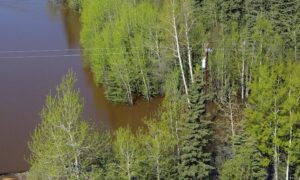
Simcoe County receives significant winter snowpack, and the spring thaw is the single most damaging event for Innisfil foundations each year. Frozen ground prevents meltwater from percolating downward, so it runs laterally and pools against foundation walls. A sump pump that is undersized or lacks a battery backup can be overwhelmed within hours during a rapid thaw.
Older homes in the Cookstown and Stroud areas were commonly built with clay-tile or concrete-pipe weeping tile systems that have a service life of 30 to 50 years. Many of those systems are now fully silted up or crushed, meaning the drainage that was designed to relieve hydrostatic pressure at the footing no longer functions. The Canada Mortgage and Housing Corporation (CMHC) notes that failed drainage is one of the leading causes of chronic basement moisture in older Canadian homes. You can find CMHC’s guidance on foundation moisture at cmhc-schl.gc.ca.
For a broader look at how waterproofing and foundation crack repair are handled across Simcoe County, the Simcoe County basement waterproofing guide covers regional soil and drainage patterns in detail.
Your Options for Basement Leak Repair in Innisfil
When evaluating basement leak repair Innisfil contractors recommend, the right method depends entirely on where water is entering and what is driving it. The sections below cover each option in plain terms.
Polyurethane Crack Injection
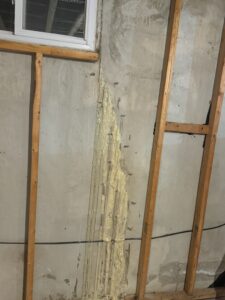
Low-pressure polyurethane injection is the standard repair for a non-structural vertical or diagonal crack in a poured-concrete foundation wall. A technician drills ports along the crack at regular intervals, pastes surface ports over them, and injects two-part polyurethane foam under low pressure. The foam expands to fill the full depth of the crack and cures flexible, so it tolerates the seasonal movement that Innisfil’s freeze-thaw cycles cause without re-cracking.
This method works from the interior, so no excavation is needed. It is best for isolated shrinkage cracks where the surrounding wall is otherwise sound. It is not appropriate for cracks caused by lateral soil pressure (which tend to be horizontal), for block foundations, or for situations where water is entering at multiple points along the perimeter.
Epoxy Crack Injection
Epoxy injection is reserved for structural cracks where the two sides of the wall must be chemically re-bonded. Epoxy cures rigid and achieves compressive strength comparable to the original concrete, making it the right choice when an engineer has identified a crack as load-bearing. Because it cures rigid, epoxy is not suitable for cracks that are still moving seasonally. The port-and-paste application process is similar to polyurethane, but the material and cure time differ.
Interior Weeping Tile System
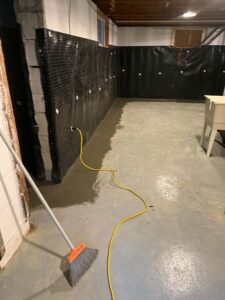
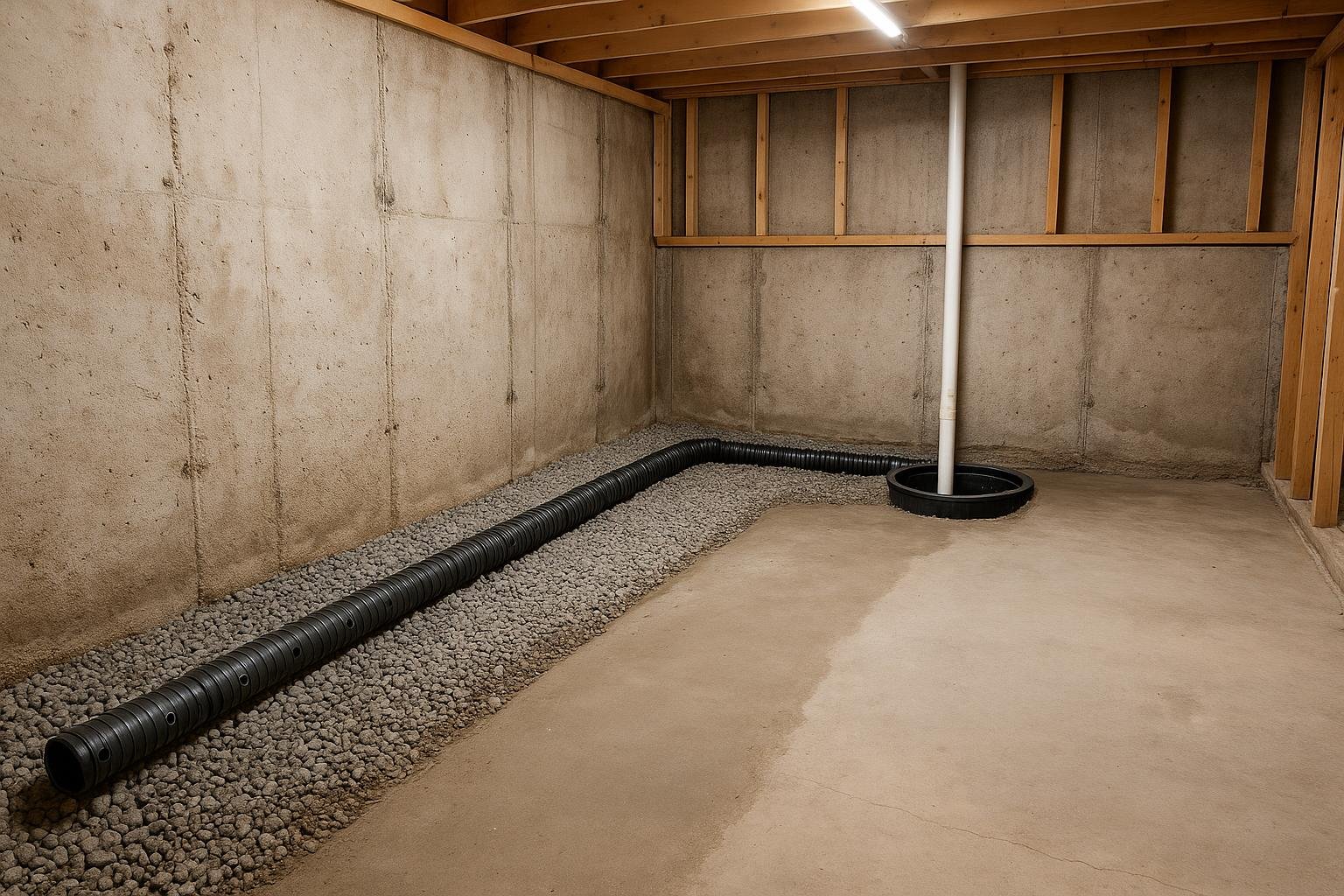
When water is entering along the base of the wall or through the floor-wall joint, an interior weeping tile system addresses the problem by intercepting water before it reaches the living space. The process involves jackhammering a channel around the perimeter of the basement floor, installing a perforated drainage pipe bedded in clear stone, running it to a sump basin, and re-pouring the concrete. A vapour barrier is applied up the wall to direct any wall seepage down into the drain channel rather than onto the floor.
This approach does not stop water from entering the wall, but it manages water so effectively that the basement stays dry. It is the preferred solution when exterior excavation is not practical due to landscaping, finished decks, or tight lot lines, which are common constraints in Innisfil’s newer subdivisions.
Exterior Waterproofing
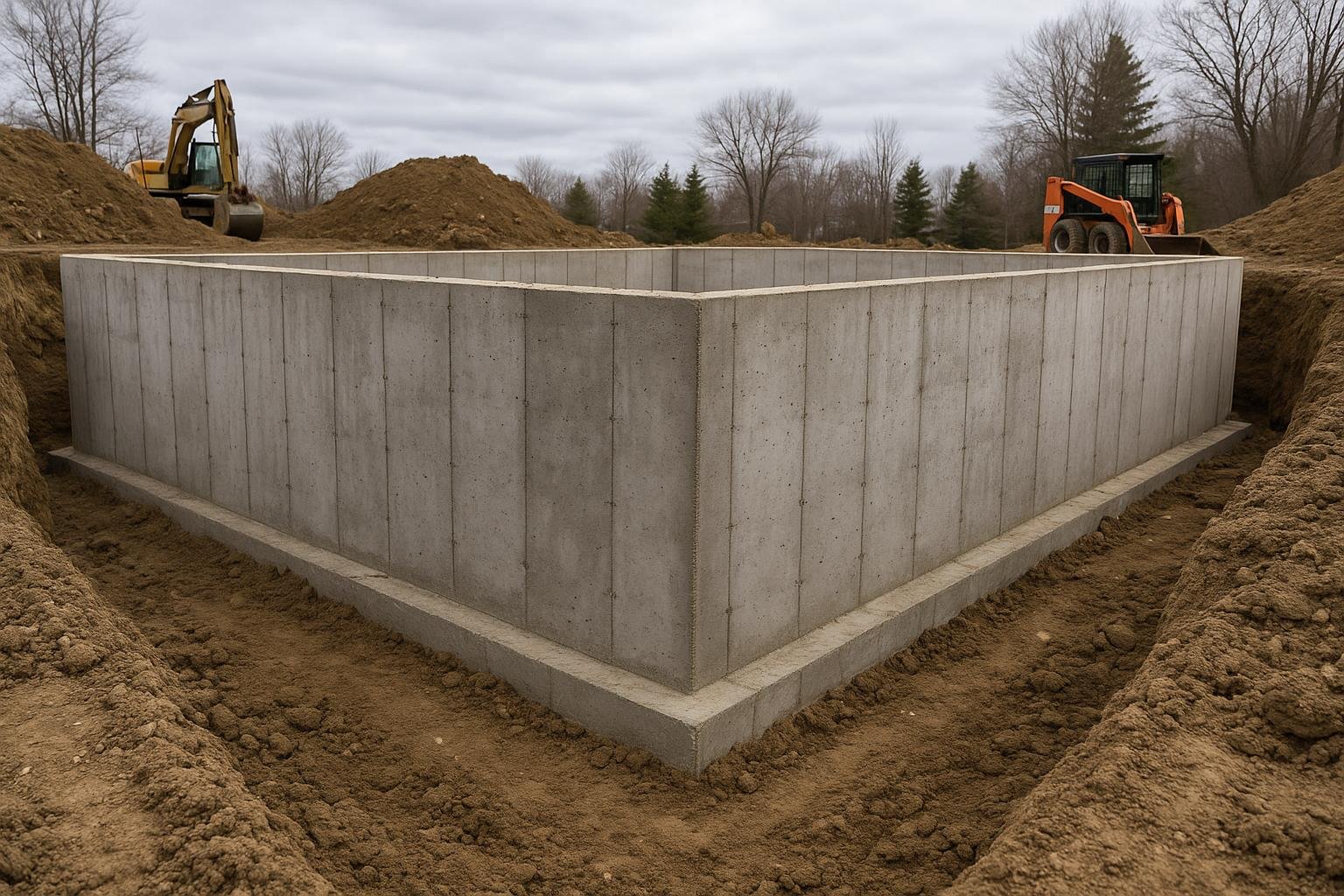
Exterior waterproofing is the most comprehensive repair available. The process requires excavating to the footing, cleaning and parging any voids in the foundation wall with hydraulic cement, applying a rubberised waterproofing membrane, installing a dimpled drainage board to protect the membrane and create an air gap, laying new weeping tile in clear stone at the footing, and backfilling with corrected grade. This stops water at the source rather than managing it inside.
For an Innisfil home with a full perimeter problem, this is the gold-standard fix. The main limitation is cost and disruption: excavation requires equipment access around the foundation, and the work disturbs landscaping, driveways, and garden beds. The Innisfil waterproofing and foundation crack repair service page outlines what this work involves locally.
Sump Pump Installation or Upgrade
A sump pump is not a waterproofing method on its own, but it is an essential component of any interior or exterior drainage system. In Innisfil, where spring thaw can saturate the water table quickly, a properly sized pump with a battery backup is critical. A battery backup system keeps the pump running during power outages, which frequently coincide with the heavy rain events that cause basement flooding. Pump capacity should be matched to the drainage volume the system is designed to handle.
Parging and Surface Sealing
Parging, the application of a cement-based coating to the exterior of the foundation wall above grade, addresses surface deterioration and minor porosity but does not resolve hydrostatic pressure or failed drainage. It is appropriate as a maintenance step on a wall that is otherwise sound, not as a primary repair for an actively leaking basement. Surface sealants applied from the interior have similar limitations and should not be confused with waterproofing.
Options Compared
| Method | Best For | Typical Lifespan | Relative Cost | Disruption |
|---|---|---|---|---|
| Polyurethane crack injection | Isolated vertical/diagonal shrinkage cracks, poured concrete | Long-term if crack is stable | Lowest ($600-$900 per crack) | Minimal, interior only |
| Epoxy crack injection | Structural cracks requiring re-bonding | Permanent if crack is stable | Low to moderate | Minimal, interior only |
| Interior weeping tile system | Perimeter seepage, floor-wall joint leaks, tight lots | 25+ years with maintenance | Moderate | Moderate (jackhammer, concrete re-pour) |
| Exterior waterproofing | Full perimeter failure, failed original weeping tile | Lifetime with proper membrane | Highest ($6,000-$9,000 typical range) | High (excavation, landscaping disruption) |
| Sump pump installation | Complement to drainage systems, high water table | 7-10 years pump life | Low to moderate | Low |
| Parging and surface sealing | Surface maintenance, above-grade wall deterioration | 5-10 years | Lowest | Minimal |
The table above shows that no single method suits every situation. Crack injection is the right answer for a specific, isolated crack but would be completely ineffective against a perimeter drainage failure. Exterior waterproofing delivers the most durable result but carries the highest cost and disruption. Interior weeping tile sits in the middle and is often the practical choice for basement leak repair Innisfil properties where excavation access is limited by fences, decks, or neighbouring structures.
How to Choose the Right Repair
Choose polyurethane crack injection if you have a single visible crack in a poured-concrete wall, the crack is vertical or diagonal, and water entry is clearly localized to that crack. This is the fastest and most affordable path to a dry wall, and the flexible cure handles Innisfil’s seasonal freeze-thaw movement well.
Choose an interior weeping tile system if water is entering along the base of the wall, through the floor, or at multiple points around the perimeter, and if excavation is not practical. This is also the right choice if your home is in a newer Innisfil subdivision where landscaping and lot lines make exterior access difficult.
Choose exterior waterproofing if your home is more than 30 years old and has never had its original weeping tile replaced, if you have chronic perimeter leaking that interior methods have not resolved, or if you are planning a major renovation and want to address the foundation permanently while the site is already disrupted.
Choose a sump pump upgrade if you already have a drainage system but the pump is aging, undersized, or lacks battery backup. Given Innisfil’s proximity to Lake Simcoe and the elevated water table in low-lying areas, a backup pump is not optional, it is essential.
A free on-site moisture assessment is the only reliable way to confirm which method is right for your specific foundation. Published ranges are a starting point, not a quote.
Costs and Timelines
| Cost Driver | Why It Affects Price | Approximate Impact |
|---|---|---|
| Linear footage of affected wall | More wall to treat means more material and labour | Primary driver for interior and exterior systems |
| Excavation depth | Deeper footings require more excavation time and equipment | Significant for exterior work; older Innisfil homes often have deeper footings |
| Site access | Tight lots, fences, decks, and landscaping increase labour | Can add meaningfully to exterior waterproofing cost |
| Number of cracks | Each crack injection is priced individually ($600-$900 per crack) | Multiple cracks multiply the base cost |
| Condition of existing weeping tile | Fully silted or collapsed tile requires complete replacement | Adds scope to both interior and exterior jobs |
| Sump basin and pump | New basin, pump, and battery backup add to interior system cost | Moderate addition; essential for Innisfil water-table conditions |
A single foundation crack injected with polyurethane typically falls in the $600 to $900 range. For basement leak repair Innisfil detached homes, a full exterior waterproofing system runs roughly $6,000 to $9,000, depending on linear footage, excavation depth, and site access. Interior weeping tile systems generally come in below the exterior range. All figures depend on a site inspection, and the final scope can shift once the wall is exposed. For a broader look at what drives waterproofing costs across Ontario, the foundation waterproofing cost guide breaks down the variables in detail.
Crack injection at $600 to $900 per crack is the most cost-effective entry point, but only when the crack is the actual source of the problem. Injecting a crack while ignoring a failed weeping tile system will not keep the basement dry.
Risks and Common Mistakes
| Symptom | Likely Cause | Correct Fix |
|---|---|---|
| Water at base of wall after rain | Failed weeping tile or blocked drainage | Interior weeping tile system or exterior waterproofing |
| Wet patch at a single vertical crack | Shrinkage crack in poured concrete | Polyurethane crack injection |
| Horizontal crack with wall bowing | Lateral soil pressure, potential structural issue | Structural assessment first, then engineered repair |
| White powder on wall (efflorescence) | Mineral deposits from chronic slow seepage | Find and seal the water source; efflorescence is a symptom, not the problem |
| Damp floor after spring thaw | High water table overwhelming drainage | Sump pump upgrade with battery backup; review drainage capacity |
The most common mistake Innisfil homeowners make is applying a surface sealer or hydraulic cement plug to a crack without addressing the hydrostatic pressure driving water through it. Plugging the visible entry point without fixing the drainage simply redirects water to the next weakest point in the wall. A second frequent error is delaying repair after the first sign of moisture. Efflorescence, a musty smell, or a damp patch on the wall are early warnings. Waiting until water is pooling on the floor means the wall has been saturated for an extended period, which increases the scope and cost of the eventual repair. Finally, choosing a contractor based on price alone without verifying that the scope includes a proper inspection and written warranty is a risk that often leads to repeat repairs.
Horizontal cracks in a foundation wall are a structural warning sign, not a routine waterproofing job. If you see a crack running horizontally with any visible bowing, get a structural assessment before any waterproofing work begins.
How the Repair Process Works
Understanding the steps involved in basement leak repair Innisfil professionals follow helps homeowners know what to expect from inspection through to completion.
- Free on-site inspection and moisture assessment. A technician visits the property, identifies all entry points, checks the sump basin, probes the wall for moisture, and assesses the condition of the existing weeping tile system where accessible.
- Written scope with linear-foot pricing. You receive a written proposal that specifies the method, the materials, the linear footage or number of cracks being addressed, and the warranty terms. No work begins without your sign-off.
- Preparation and access. For exterior work, the area around the foundation is cleared and excavated to the footing using appropriate equipment. For interior work, the perimeter floor is jackhammered and debris is removed.
- Core repair work. Exterior: hydraulic cement parging of voids, rubberised membrane application, dimpled drainage board installation, new weeping tile in clear stone. Interior: perforated pipe to sump basin, vapour barrier up the wall, concrete re-pour. Crack injection: port installation, paste application, low-pressure injection, port removal.
- Drainage and sump connection. New weeping tile is connected to the sump basin or to a gravity outlet where grade permits. Pump capacity is confirmed against the drainage volume.
- Backfill and grade correction. For exterior work, backfill is compacted and grade is corrected to direct surface water away from the foundation, a step that is often overlooked but is critical to long-term performance.
- Final inspection and warranty documentation. The completed work is reviewed with the homeowner, and warranty documentation is provided. DryShield’s lifetime transferable warranty means the coverage stays with the home if it is sold.
Frequently Asked Questions
How do I know if my Innisfil basement leak needs crack injection or a full drainage system?
If water is entering at a single visible crack in a poured-concrete wall and nowhere else, crack injection is likely the right repair. If water appears along the base of the wall, at the floor-wall joint, or at multiple points around the perimeter, a drainage system is needed. An on-site inspection is the only way to confirm which applies to your home, because the visible entry point is not always where the water is originating.
What causes basement leaks in Innisfil specifically?
Innisfil’s position on the Lake Simcoe shoreline means a naturally elevated water table in low-lying areas. Sandy soils near the lake channel water quickly toward foundations during rain events, while heavier clay soils inland hold hydrostatic pressure against the wall for days. Spring snowmelt from Simcoe County’s significant winter snowpack is the peak failure window each year. Older homes in Stroud and Cookstown commonly have original weeping tile systems that are now silted up or collapsed.
Is basement leak repair in Innisfil more expensive than in the GTA?
Costs are broadly comparable. The main variables are linear footage, excavation depth, and site access, not geography. The $600 to $900 range for crack injection and the $6,000 to $9,000 range for full exterior waterproofing apply across the region, with the final figure depending on a site inspection.
Can I do basement leak repair myself?
Surface patching with hydraulic cement is a temporary measure a homeowner can apply, but it does not address the underlying pressure or drainage failure. Low-pressure crack injection requires specialized equipment and training to ensure the polyurethane fills the full depth of the crack. Weeping tile installation and exterior waterproofing involve excavation, membrane application, and drainage engineering that require professional execution to perform correctly and to qualify for a warranty.
How long does basement leak repair take in Innisfil?
A single crack injection typically takes two to four hours. An interior weeping tile system on an average basement perimeter takes one to two days. Full exterior waterproofing on a standard Innisfil detached home generally takes two to four days, depending on linear footage and excavation conditions.
Does a repaired basement leak come with a warranty?
A professionally installed interior or exterior waterproofing system should carry a written warranty. DryShield provides a lifetime transferable warranty on qualifying work, meaning the coverage transfers to a new owner if the home is sold. Always confirm warranty terms in writing before work begins.
Will fixing the basement leak also fix the mould problem?
Stopping the water source is the necessary first step, but existing mould growth on framing, drywall, or insulation requires separate remediation. Once the leak is repaired and the basement has dried out fully, any affected materials should be assessed. Porous materials like wood framing or fibreglass insulation that have been wet for an extended period typically need to be removed and replaced.
What is the difference between interior and exterior waterproofing for an Innisfil home?
Exterior waterproofing stops water at the outside face of the foundation wall before it contacts the structure. Interior waterproofing intercepts water that has already entered the wall and manages it to a sump before it reaches the living space. Exterior is more comprehensive and addresses the root cause, but it requires excavation. Interior is less disruptive and often the practical choice where exterior access is limited. For a detailed comparison, see the guide on exterior versus interior perimeter waterproofing.
How do I find a reliable waterproofing contractor in Innisfil?
Look for a contractor who offers a free on-site inspection rather than a phone quote, provides a written scope with itemized pricing, and backs the work with a written warranty. Verify that the company has experience with Simcoe County soil conditions and can explain why they are recommending a specific method for your situation. The guide on how to choose a reliable waterproofing contractor walks through the full checklist.
If your Innisfil basement is showing signs of moisture, a free on-site inspection is the right first step. Basement leak repair Innisfil homeowners can rely on DryShield, which serves Innisfil and the broader Simcoe County area with the same methods and warranty coverage as our GTA work. Contact us to book your inspection and get a written scope before any water damage progresses further.