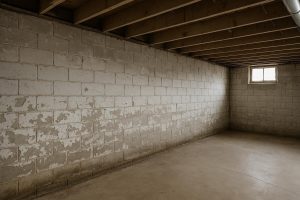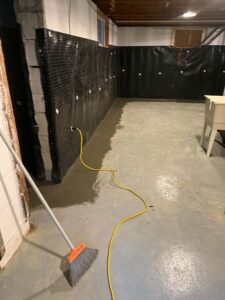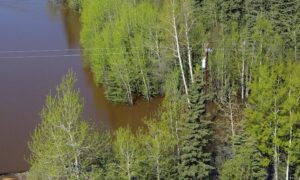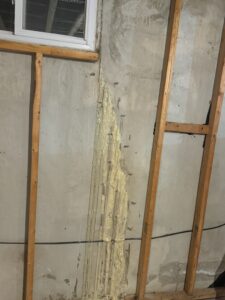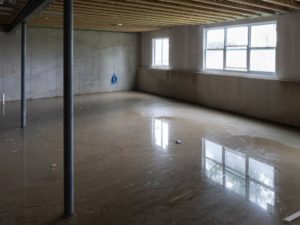
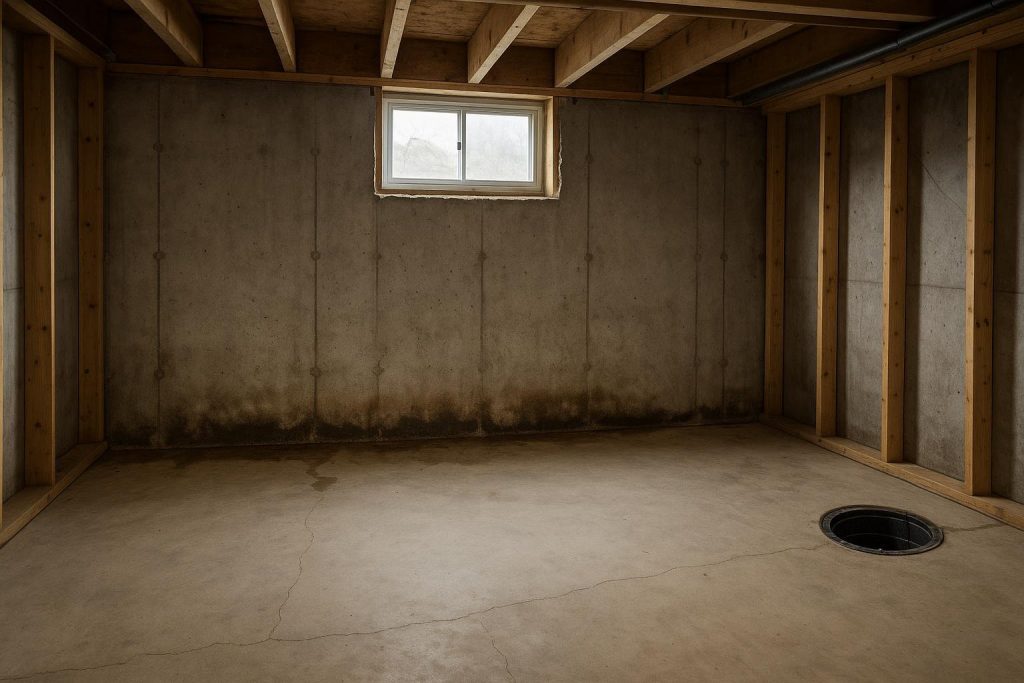
A leaky basement Innisfil homeowners deal with is not simply a rainy-day nuisance. Innisfil sits along the western shore of Lake Simcoe, and its mix of sandy lakeshore soils, shallow water tables and heavy spring snowmelt creates conditions that push water against foundation walls with persistent hydrostatic pressure. Left unaddressed, that pressure works through poured-concrete cracks, failed parging and silted-up weeping tile until the basement floor or walls are visibly wet.
Key Takeaways
- Innisfil’s proximity to Lake Simcoe keeps the local water table higher than in many inland GTA communities, making hydrostatic pressure the most common root cause of a leaky basement Innisfil residents encounter.
- A single injected foundation crack typically costs $600 to $900; a full interior weeping-tile system or exterior waterproofing job ranges from roughly $6,000 to $9,000 depending on linear footage and access.
- Spring thaw and summer downpours are the two peak failure windows in Innisfil, so inspection before May is the most cost-effective timing.
- Choosing the wrong fix, such as applying hydraulic cement over an active crack without addressing the source, delays the real repair and usually costs more in the end.
- DryShield serves Innisfil and the broader Simcoe County area with the same methods used across the GTA, adapted for local soil and drainage conditions.
Definitions and Scope
A leaky basement Innisfil homeowners report can involve any situation where water enters the living or storage space below grade. The entry point can be a hairline crack in a poured-concrete wall, a joint between the wall and the footing, a failed or absent weeping-tile system, a floor crack driven by upward hydrostatic pressure, or a window well that has lost its drainage. In Innisfil, the sandy and silty soils near the lake drain quickly after light rain but become saturated quickly during heavy events, and that saturation can persist for days when the water table is already elevated.
Scope matters because the correct fix depends entirely on where the water is entering and why. A crack that leaks only during heavy rain is a different problem from a wall that seeps continuously in spring. Confusing the two leads to mismatched repairs and repeat failures.
Why This Matters for Innisfil Homeowners
Innisfil has grown rapidly over the past decade. Newer subdivisions in the Friday Harbour corridor and along Innisfil Beach Road sit on land that was previously low-lying agricultural field, and many of those lots have drainage patterns that concentrate runoff toward the foundation rather than away from it. Older homes closer to the lake often have original clay-tile weeping systems installed decades ago that are now fully silted and non-functional.
The Canada Mortgage and Housing Corporation notes that inadequate drainage is the leading cause of residential basement moisture problems across Canada. In Innisfil specifically, the combination of a high seasonal water table and improperly graded lots means hydrostatic pressure, not surface water alone, is usually the culprit. That distinction matters because surface-water fixes such as improved grading and downspout extensions help but rarely solve a leaky basement Innisfil problem that is being driven by groundwater pressing against the footing.
Mould growth, structural deterioration of the footing, and compromised indoor air quality are the downstream consequences. Catching a wet basement early, before efflorescence on the walls turns into active seepage and active seepage turns into a flooded floor, is almost always cheaper than waiting.
Your Options for Fixing a Leaky Basement in Innisfil
Polyurethane Crack Injection
Low-pressure polyurethane crack injection is the right first response when a single vertical or diagonal crack in a poured-concrete wall is the source of the leak. Ports are surface-mounted along the crack at regular intervals, and a two-part polyurethane resin is injected at low pressure until it fills the crack from the footing to the surface. The resin cures flexible, which is important in Innisfil where seasonal freeze-thaw movement causes foundations to shift slightly each year. A rigid filler would re-crack; the flexible cure tolerates that movement. Epoxy injection is reserved for structural cracks where the wall itself needs to be re-bonded rather than simply sealed.
This method works from the interior with no excavation, and a single crack is typically completed in a few hours. It is not appropriate for block foundations, floor cracks driven by hydrostatic pressure, or walls with multiple entry points that suggest a systemic drainage failure.
Interior Weeping Tile System
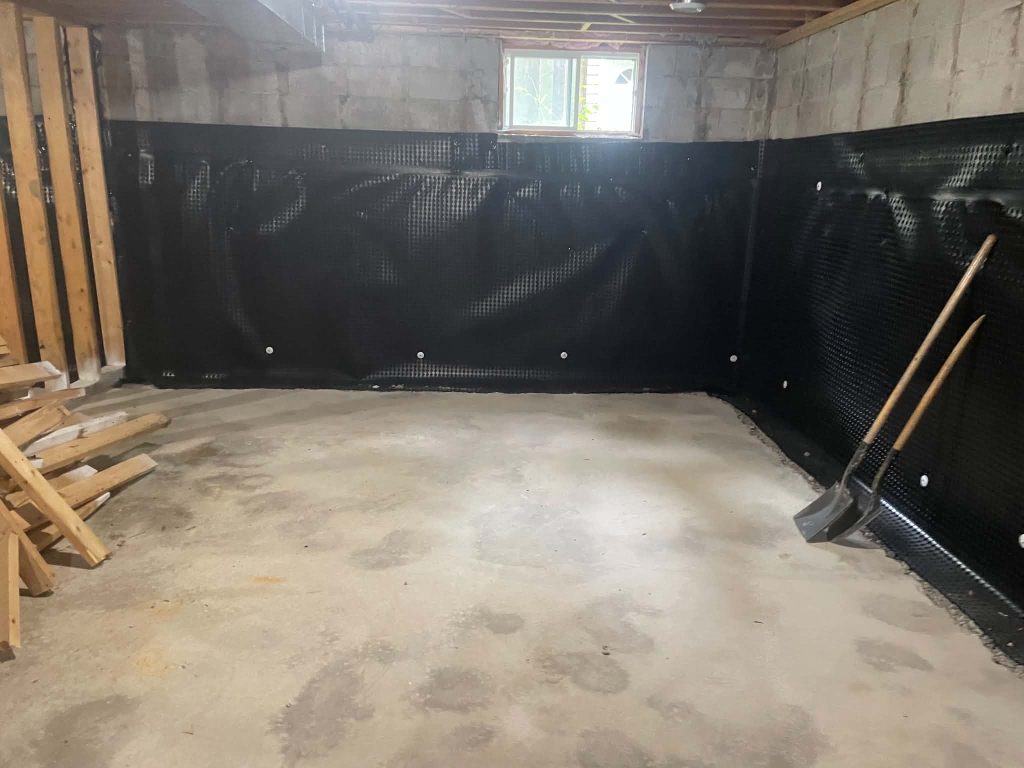
When water is entering along the wall-footing joint or through the floor perimeter, an interior weeping tile system is the most practical solution for a leaky basement Innisfil property. The concrete perimeter is jackhammered, a perforated weeping-tile pipe is installed at footing level and bedded in clear stone, and the water is directed to a sump basin where a pump discharges it away from the home. A vapour barrier is applied up the wall before the concrete is re-poured. This approach does not stop water from entering the wall, but it intercepts it before it reaches the floor and manages it safely. It is less disruptive than full exterior excavation and is well-suited to Innisfil homes where access around the perimeter is limited by decks, fencing or proximity to neighbouring lots.
Exterior Waterproofing
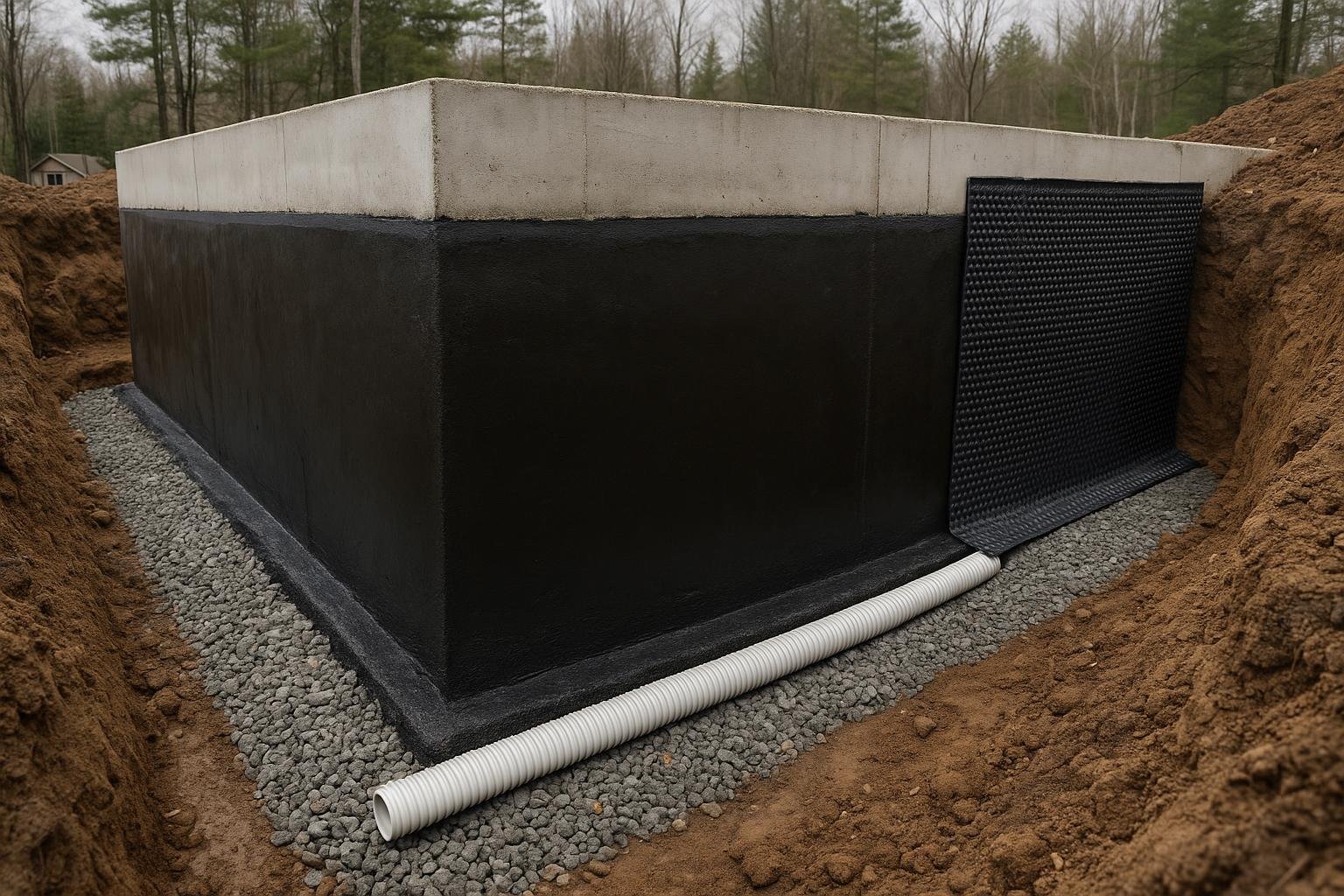
Exterior waterproofing is the most comprehensive solution and the only method that stops water at the source rather than managing it after entry. The process requires excavating to the footing, applying hydraulic cement to any voids or honeycombing in the concrete, coating the wall with a rubberised membrane, installing a dimpled drainage board to protect the membrane and direct water downward, laying new weeping tile in clear stone at the footing, and backfilling with corrected grade. For an average Innisfil semi or detached home, this work typically falls in the $6,000 to $9,000 range depending on linear footage, depth of excavation and site access. It is the preferred method when the exterior membrane has failed or when the original weeping tile is confirmed to be non-functional.
Sump Pump Installation or Replacement
A sump pump installation is often the final component of both interior and exterior waterproofing systems, but it can also be installed as a standalone measure in a home that already has a drainage system but lacks reliable discharge. In Innisfil, where the water table rises significantly during spring thaw, a battery-backup sump pump is strongly recommended. A primary pump that loses power during a spring storm, which is exactly when it is working hardest, will allow the pit to overflow within minutes if there is no backup.
Grading and Downspout Correction
Negative grade, where the soil slopes toward the foundation rather than away from it, and downspouts that discharge within two metres of the wall are surface-water contributors that amplify any underlying drainage problem. Correcting grade and extending downspouts is low cost and should be done regardless of which primary repair method is chosen. On its own, grading correction rarely solves an active leaky basement Innisfil situation, but it reduces the volume of water the drainage system must handle.
Parging Repair
Parging is the mortar coating applied to the above-grade portion of the foundation wall. In older Innisfil homes it often cracks and spalls, allowing surface water to saturate the top of the wall and migrate downward. Re-parging with hydraulic cement is a surface repair only and does not address below-grade moisture, but it is a worthwhile maintenance step when the existing parging is visibly deteriorated.
Options Compared
| Method | Best For | Typical Lifespan | Relative Cost | Disruption |
|---|---|---|---|---|
| Polyurethane crack injection | Single vertical crack in poured concrete | Long-term if crack is stable | Lowest ($600 to $900 per crack) | Minimal, interior only, no excavation |
| Interior weeping tile system | Perimeter seepage, wall-footing joint leaks | 25 or more years with pump maintenance | Moderate | Interior concrete removal, 1 to 2 days |
| Exterior waterproofing | Failed membrane, failed original weeping tile | Lifetime with proper membrane | Highest ($6,000 to $9,000 typical) | Full excavation, landscaping disturbed |
| Sump pump installation | High water table, existing drainage system | 7 to 10 years per pump unit | Low to moderate | Minimal, pit excavation only |
| Grading and downspout correction | Surface-water contribution, maintenance | Ongoing with landscaping upkeep | Lowest | Exterior only, no structural work |
| Parging repair | Above-grade wall surface deterioration | 10 to 15 years | Low | Minimal, surface application |
The table above shows that no single method fits every leaky basement Innisfil case. Crack injection is the fastest and least expensive option but only applies to a specific, isolated problem. Exterior waterproofing costs more and disrupts the yard, but it is the only approach that physically stops water before it contacts the wall. Interior weeping tile sits in the middle: it does not eliminate water entry but manages it reliably and is far less disruptive than excavation. Most homes with a systemic moisture problem need a combination of two or more of these methods.
How to Choose the Right Fix
Choose polyurethane crack injection if you have identified a single, isolated vertical crack in a poured-concrete wall and the rest of the basement is dry. The crack should be non-structural and the wall should show no bowing or horizontal cracking.
Choose an interior weeping-tile system if water is entering along the base of the wall, through the floor perimeter, or at multiple points around the basement. This is also the right choice when exterior excavation is not practical because of a deck, a finished driveway, or a tight lot line.
Choose exterior waterproofing if the original weeping tile is confirmed to be silted and non-functional, if the exterior membrane has visibly failed, or if you want the most permanent solution and have the access and budget for excavation.
Choose sump pump installation or replacement if you already have a drainage system but the pump is aging, lacks a battery backup, or has failed during a previous storm. In Innisfil’s spring thaw season, a reliable pump is not optional.
Combine grading correction and downspout extensions with any of the above. Reducing the volume of surface water reaching the wall makes every other repair more effective and longer-lasting.
A free on-site inspection is the only reliable way to confirm which method applies to your home. Hydrostatic pressure from a high water table looks identical to surface-water infiltration until the wall is examined at the footing.
Costs and Timelines
| Cost Driver | Why It Affects Price | Approximate Impact |
|---|---|---|
| Linear footage of affected wall | More wall to treat means more membrane, weeping tile and labour | Primary pricing variable for exterior and interior systems |
| Depth of excavation | Deeper footings require more excavation time and equipment | Can add meaningfully to exterior waterproofing cost |
| Site access | Tight lots, decks, fences or landscaping increase excavation difficulty | Can require hand-digging, raising labour cost |
| Number of cracks | Each crack injection is priced individually at $600 to $900 | Multiple cracks add up; may shift recommendation to full system |
| Sump pump type | Battery-backup and combination units cost more than primary-only pumps | Moderate incremental cost, high value in Innisfil spring conditions |
| Concrete thickness and condition | Thicker or reinforced slabs take longer to jackhammer for interior systems | Adds to interior weeping-tile labour cost |
As a general reference, a single injected crack runs $600 to $900. A full exterior waterproofing job on an average Innisfil detached home typically falls between $6,000 and $9,000. Interior weeping-tile systems generally come in below the exterior range. These are approximate bands drawn from completed jobs in the region. The final figure for any leaky basement Innisfil repair depends on a site inspection, because linear footage, depth and access vary significantly from one property to the next. For a broader look at what drives waterproofing costs across Ontario, the foundation waterproofing cost guide covers the full range of variables.
Timing matters for cost too. Booking an inspection before the spring thaw, ideally in late winter, means work can be scheduled before the peak season backlog and before water has had another season to worsen the damage.
Risks and Common Mistakes
| Symptom | Likely Cause | Correct Fix |
|---|---|---|
| White chalky deposits on wall surface | Efflorescence from mineral-laden water moving through concrete | Identify and seal the water entry point; efflorescence is a symptom, not the problem |
| Water at base of wall after rain | Failed or absent weeping tile, or wall-footing joint failure | Interior weeping tile system or exterior waterproofing |
| Crack that leaks only during heavy rain | Poured-concrete shrinkage crack with no drainage backup | Polyurethane crack injection |
| Wet floor across the entire slab | Hydrostatic pressure from high water table below slab | Interior weeping tile to sump basin; grading review |
| Musty smell without visible water | Condensation or slow seepage behind vapour barrier or insulation | Moisture assessment; remove and inspect insulation before treating |
The most common mistake Innisfil homeowners make is applying hydraulic cement or waterproofing paint directly over an active crack or seeping wall. These products can slow visible moisture temporarily, but they do not address hydrostatic pressure. The water finds a new path, often behind the patch, and the underlying concrete continues to deteriorate. The second most common mistake is skipping the battery-backup sump pump. A primary pump without backup will fail during the exact storm that produces the most water, which is when power outages are also most likely. The Canada Mortgage and Housing Corporation’s guidance on basement moisture, available at CMHC’s website, reinforces that drainage management, not surface sealing, is the foundation of a dry basement.
How the Process Works
- Free on-site inspection and moisture assessment. A technician examines the foundation walls, floor, footing area and exterior grade. Moisture readings are taken and the likely entry points are identified before any scope is written.
- Written scope with linear-foot pricing. You receive a written proposal that breaks down the work by method and linear footage. There are no surprises added after the job starts.
- Excavation or interior preparation. For exterior work, excavation proceeds to the footing. For interior systems, the perimeter concrete is jackhammered and removed. For crack injection, ports are mounted along the crack.
- Core repair work. Exterior: hydraulic cement parging of voids, rubberised membrane application, dimpled drainage board, new weeping tile in clear stone, backfill and grade correction. Interior: weeping tile to sump basin, vapour barrier up the wall, concrete re-pour. Crack injection: low-pressure polyurethane fill from port to port until the crack is fully saturated.
- Sump pump installation or inspection. Where a sump basin is part of the system, the pump and any battery-backup unit are installed and tested before the crew leaves.
- Site cleanup and grade check. Excavated areas are backfilled and graded away from the wall. Interior concrete is finished flush with the existing slab.
- Final walkthrough. The completed work is reviewed with the homeowner, including maintenance expectations for the sump pump and any surface drainage recommendations.
DryShield’s work in Innisfil is backed by a lifetime transferable warranty on qualifying waterproofing systems, which means the protection stays with the home if you sell.
Frequently Asked Questions
Why does my Innisfil basement leak in spring but stay dry the rest of the year?
Spring snowmelt raises the water table around Lake Simcoe faster than the soil can drain it. That elevated water table pushes against the footing and wall with hydrostatic pressure that simply does not exist in summer or fall. If the weeping tile is silted or the exterior membrane has failed, that pressure finds its way through the path of least resistance, usually a crack or the wall-footing joint. The fix is a drainage system that handles the peak spring load, not a surface patch.
Can I fix a leaky basement myself with waterproofing paint?
Waterproofing paint and hydraulic cement are surface treatments. They can slow minor condensation but they cannot resist sustained hydrostatic pressure. In Innisfil’s spring conditions, active water pressure will push through or around any surface coating within one or two seasons. A proper repair addresses the drainage path, not just the visible wet surface.
How long does crack injection take and will it last?
A single crack injection typically takes two to four hours from port installation to completion. Polyurethane cures flexible, so it tolerates the seasonal foundation movement common in Innisfil’s freeze-thaw climate. When the crack is non-structural and the injection fully fills the void, the repair is long-lasting. Epoxy is used instead when the crack is structural and the wall needs to be re-bonded.
Is exterior waterproofing always better than interior?
Exterior waterproofing stops water at the source and is the most comprehensive solution, but it requires full excavation and is not always practical. Interior weeping tile manages water after it enters the wall but before it reaches the floor, and it is highly effective for perimeter seepage. The right choice depends on where the water is entering, the site access available and the budget. Many Innisfil homes with a leaky basement Innisfil diagnosis are well-served by an interior system combined with a reliable sump pump.
Do I need a battery-backup sump pump in Innisfil?
Yes. Innisfil’s spring thaw season produces the heaviest pump loads at the same time that thunderstorms are most likely to knock out power. A primary pump without battery backup will overflow the pit within minutes of a power failure. A battery-backup or combination unit is a modest additional cost relative to the damage a flooded basement causes.
How do I know if my weeping tile has failed?
Persistent perimeter seepage at the base of the wall, water entering along the wall-footing joint, or a basement that floods every spring despite no obvious cracks are all indicators that the original weeping tile is silted or broken. A camera inspection of the drain line can confirm it, but in many older Innisfil homes the original clay-tile system is simply assumed to be non-functional after several decades of service.
What does Innisfil’s soil type mean for my foundation?
Innisfil’s soils vary from sandy lakeshore deposits near the water to heavier silty soils further inland. Sandy soils drain faster than the heavy clay found across much of the GTA, but they also allow water to move quickly toward the foundation during heavy rain events. Silty soils hold moisture longer and can sustain hydrostatic pressure against the wall for days after a storm. Both conditions require proper drainage at the footing level rather than surface-only fixes.
Will fixing my basement leak increase my home’s value?
A documented, warranted waterproofing repair removes a material defect that buyers and home inspectors will flag. In Innisfil’s active real estate market, a leaky basement Innisfil disclosure can reduce offers or kill a sale. A properly repaired and warranted basement is a positive disclosure rather than a liability. The lifetime transferable warranty that comes with qualifying DryShield systems transfers to the new owner, which is a tangible selling point.
How soon can work be scheduled after an inspection?
Scheduling depends on the season and current workload. Spring is the busiest period across Simcoe County, so inspections booked in late winter typically result in faster scheduling. Crack injection jobs are generally completed within days of booking. Exterior excavation projects require more lead time for equipment and crew coordination. Calling before the spring rush is the most reliable way to get work done before the peak failure window.
Does DryShield serve Innisfil and the surrounding Simcoe County area?
Yes. DryShield serves Innisfil, Barrie, Bradford, and the broader Simcoe County region as part of its regular service territory. The team that works in Innisfil is the same team that handles GTA jobs, bringing the same methods and warranty coverage. For a full picture of waterproofing and foundation crack repair services available locally, see the Innisfil basement waterproofing service page.
If your Innisfil basement is showing signs of a leaky basement Innisfil situation, from a damp smell to visible seepage or an active crack, the right next step is a free on-site inspection. DryShield will assess the entry points, explain the options that apply to your specific home and provide a written scope before any work begins. Contact the team today to book your inspection and get ahead of the next spring thaw.