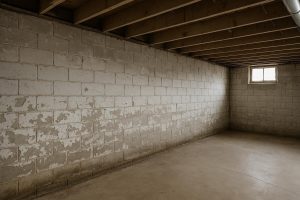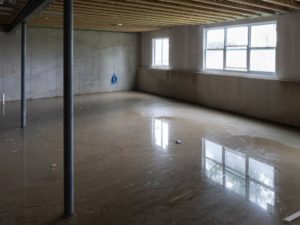
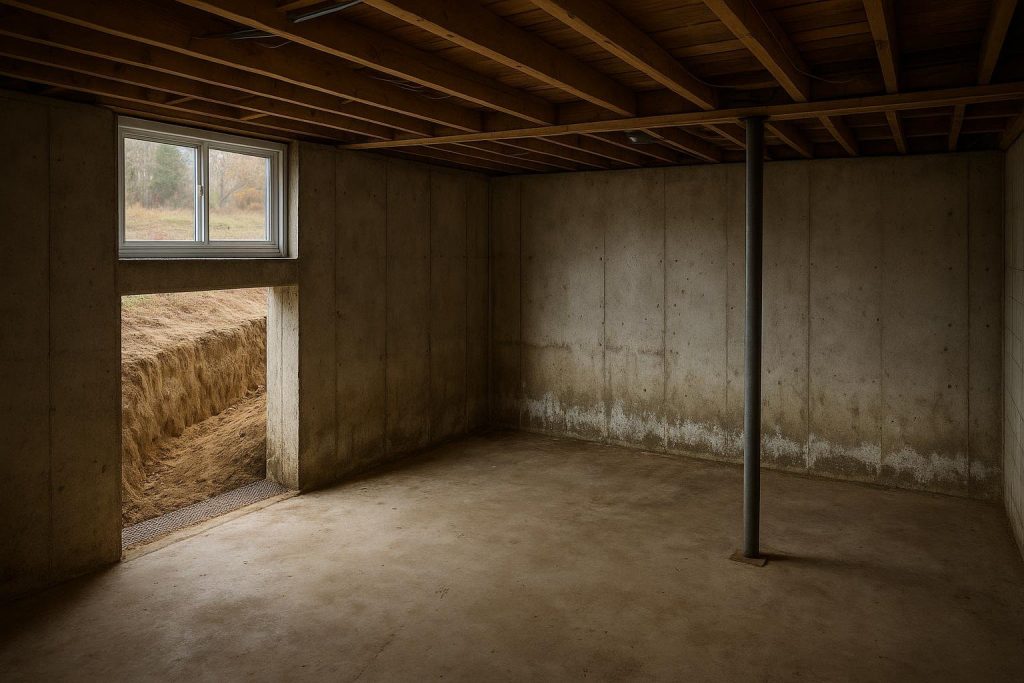
Basement leak repair Oro-Medonte homeowners need is shaped by the township’s distinct mix of sandy loam, rock outcroppings and a water table that swings dramatically between spring snowmelt and late-summer drought. Whether your home sits on a rural lot near Horseshoe Valley, a lakefront property on Lake Simcoe’s western shore, or a newer subdivision in Moonstone, the root cause of a wet basement here is almost always hydrostatic pressure pushing groundwater through a foundation crack, a failed weeping tile system, or a compromised membrane at the footing.
Key Takeaways
- Oro-Medonte’s sandy and gravelly soils drain faster than GTA clay, but spring snowmelt from the Horseshoe Valley hills creates intense, short-duration hydrostatic pressure spikes that crack foundations.
- A single foundation crack injected with low-pressure polyurethane typically costs $600 to $900 and can be completed in a few hours with no excavation.
- Full exterior waterproofing to the footing runs roughly $6,000 to $9,000 depending on linear footage, excavation depth and site access.
- Interior weeping tile systems are the most common solution when exterior access is restricted by decks, landscaping or rock close to the surface.
- Seasonal and part-time properties in Oro-Medonte face unique risks: an unmonitored sump pump failure over a winter absence can cause far more damage than the original leak.
Definitions and Scope
Basement leak repair covers any intervention that stops water from entering a below-grade living space through the foundation walls, floor, or the joint where the wall meets the footing. In Oro-Medonte, the term spans a wide range of work: a single polyurethane crack injection taking two hours, all the way to a full perimeter excavation with new weeping tile, rubberised membrane and dimpled drainage board.
The township sits in Simcoe County, roughly between Barrie to the west and Orillia to the east. Elevations vary from Lake Simcoe’s shoreline up through the Oro Moraine and into the Horseshoe Valley ski area. That topographic range means soil conditions, frost depth and seasonal water movement differ significantly from one neighbourhood to the next, which is why a proper on-site moisture assessment matters before any repair scope is written.
For a broader look at how Simcoe County conditions affect basement waterproofing decisions across the region, the Simcoe County basement waterproofing guide provides useful regional context that applies directly to Oro-Medonte properties.
Why Basement Leaks Are Common in Oro-Medonte
Oro-Medonte’s geology is more varied than most of the GTA. The Oro Moraine is a ridge of glacially deposited sand, gravel and till that runs east-west through the centre of the township. Soils on and near the moraine are coarser and drain more freely than the heavy clay found in Barrie or Mississauga, but that same free-draining quality means water moves quickly toward foundations during a rain event rather than spreading across the surface.
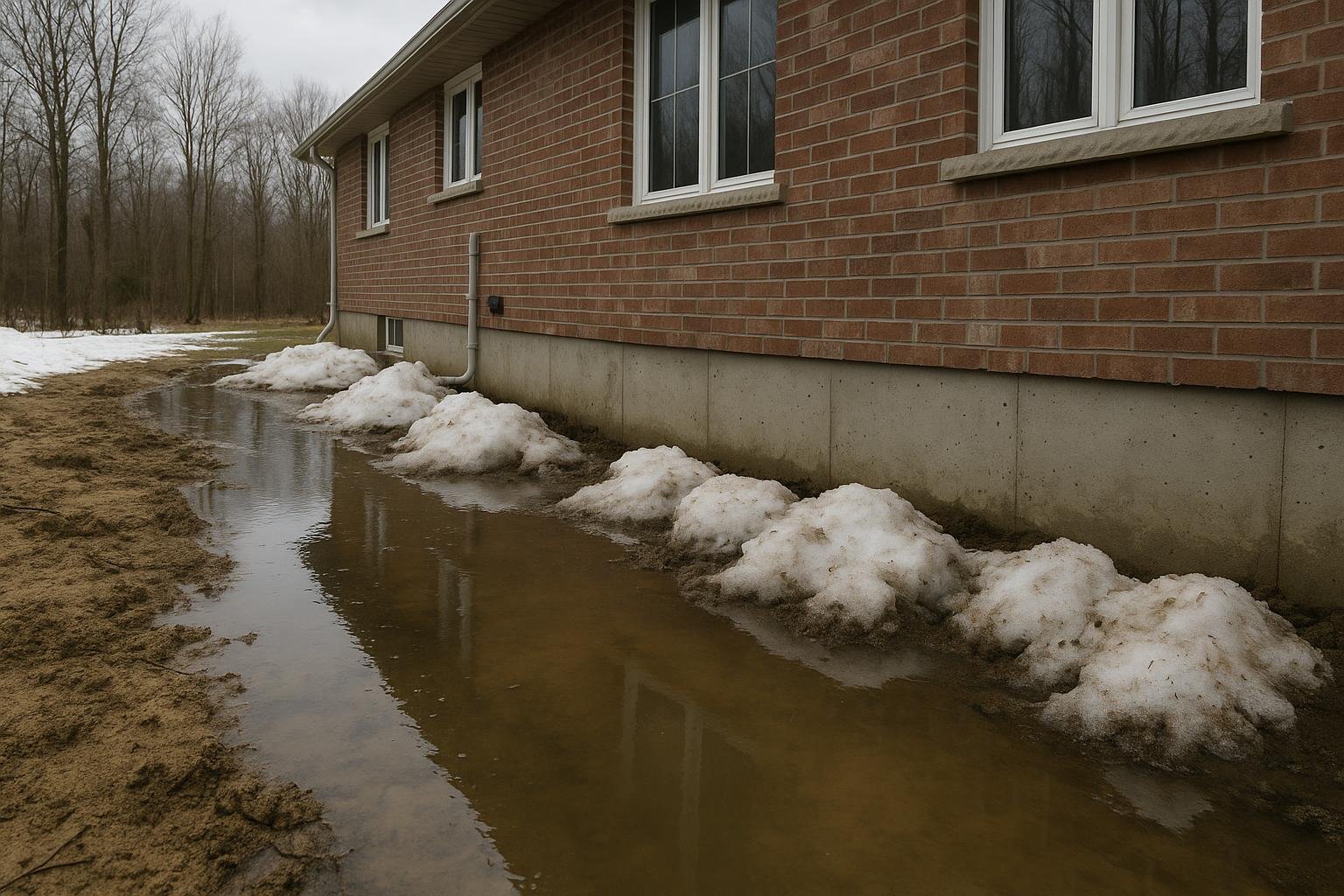
Spring is the highest-risk season. Snowpack in the Horseshoe Valley area can be substantial, and when it melts rapidly, large volumes of water saturate the ground before it has a chance to drain. Hydrostatic pressure builds against foundation walls within hours, and any existing crack or gap in parging becomes an entry point. The Canada Mortgage and Housing Corporation notes that most residential basement water problems originate from inadequate drainage at the foundation rather than from the concrete itself failing.
Older homes in the township often have original clay-tile or perforated-pipe weeping tile that has silted up over decades. Once that drainage path is blocked, water has nowhere to go except through the wall. Newer homes built on the moraine’s sandy soils sometimes skip the membrane entirely, relying on the soil’s natural drainage, which works until a wet spring overwhelms the system. Basement leak repair Oro-Medonte contractors are called most frequently in April and May for exactly this reason.
If you have noticed water appearing only during or after heavy rain, the problem page on why basements leak when it rains explains the mechanism in detail and helps you distinguish surface-water entry from groundwater pressure.
Your Options for Basement Leak Repair in Oro-Medonte
Polyurethane Crack Injection
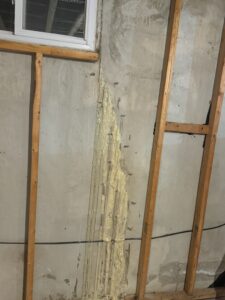
Low-pressure polyurethane injection is the correct first response to a single, non-structural vertical or diagonal crack in a poured concrete wall. Ports are surface-mounted along the crack at regular intervals, a paste seals the face of the crack, and two-part polyurethane foam is injected under low pressure until it fills the crack from the inside face to the exterior face. The foam cures flexible, which matters in Oro-Medonte because seasonal freeze-thaw cycles cause minor foundation movement every year. A rigid filler would re-crack; polyurethane accommodates that movement.
This method works from the interior with no excavation, no landscaping disruption and no need to vacate the property. It is best suited to hairline-to-moderate cracks where the wall itself is structurally sound. It does not address failed weeping tile or hydrostatic pressure at the footing.
Epoxy Crack Injection
Epoxy injection is reserved for structural cracks where the two sides of the wall must be re-bonded to restore load-bearing capacity. Epoxy cures rigid and achieves compressive strengths exceeding the original concrete, but that rigidity means it is not appropriate for cracks that are still moving seasonally. A structural engineer’s assessment is advisable before choosing epoxy over polyurethane.
Interior Weeping Tile System
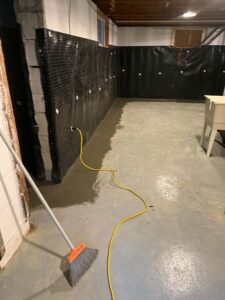
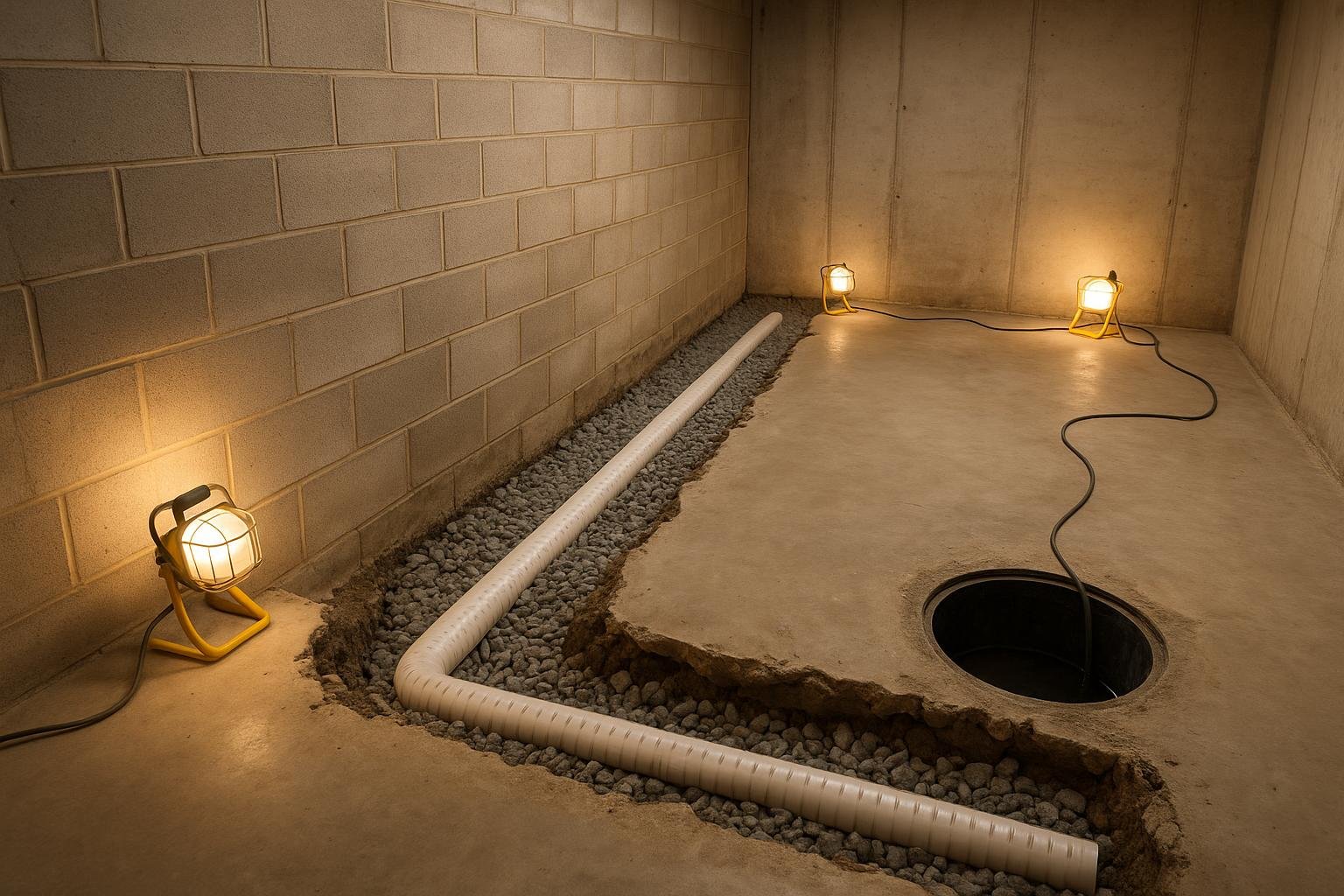
Where hydrostatic pressure is the root cause and exterior excavation is impractical, an interior perimeter drainage system is the most effective long-term solution. The concrete floor is jackhammered along the perimeter, a perforated drainage pipe is installed in a bed of clear stone, and the system drains to a sump basin. A sump pump then discharges collected water away from the foundation. A vapour barrier is applied up the wall to direct any seeping water down into the drainage channel rather than into the living space. The floor is re-poured over the system.
This approach is particularly relevant for Oro-Medonte properties where rock close to the surface makes exterior excavation expensive or impossible. When basement leak repair Oro-Medonte homeowners face shallow bedrock, an interior system is typically the most practical permanent fix.
Exterior Waterproofing to the Footing
Full exterior waterproofing is the most comprehensive repair available. The process involves excavating to the footing, applying hydraulic cement to any voids or cracks in the parging, coating the wall with a rubberised membrane, installing a dimpled drainage board to protect the membrane and direct water downward, laying new weeping tile in clear stone at the footing level, and backfilling with grade correction to direct surface water away. This method addresses every possible entry point simultaneously and is the appropriate choice when multiple cracks are present, when the existing weeping tile has failed, or when the property has a history of repeated leaks.
Access is the main constraint in Oro-Medonte. Properties with decks built over the foundation, mature trees close to the wall, or rock outcroppings at shallow depth may require interior methods instead.
Sump Pump Installation or Replacement
A sump pump is often the final component of either an interior or exterior system, but it can also be installed as a standalone measure in a basement that collects water through the floor rather than the walls. For Oro-Medonte seasonal properties, a battery backup unit and a water-level alarm are not optional extras. A power outage during a spring storm, with no one at the property, can result in a flooded basement before anyone is aware there is a problem.
Parging and Surface Sealing
Repairing deteriorated parging on the above-grade portion of the foundation wall stops surface water from entering at the wall-to-grade transition. This is a lower-cost measure appropriate for minor surface deterioration, but it does not address cracks below grade or failed weeping tile. It is best used as a complement to a more comprehensive repair, not as a standalone fix for an actively leaking basement.
Options Compared
| Method | Best For | Typical Lifespan | Relative Cost | Disruption |
|---|---|---|---|---|
| Polyurethane crack injection | Single non-structural poured-concrete crack | Long-term if crack is stable | Lowest | Minimal, interior only, no excavation |
| Epoxy crack injection | Structural cracks requiring wall re-bonding | Long-term, rigid bond | Low to moderate | Minimal, interior only |
| Interior weeping tile system | Hydrostatic pressure, failed drainage, rock-limited sites | 25 to 30 years with maintenance | Moderate | Moderate, jackhammer floor, sump basin |
| Exterior waterproofing to footing | Multiple cracks, failed weeping tile, comprehensive repair | 25 years or more | Highest | High, full excavation, landscaping impact |
| Sump pump installation | Floor seepage, complement to drainage systems | 7 to 10 years (pump mechanism) | Low to moderate | Low, basin excavation only |
| Parging repair | Above-grade surface deterioration | 5 to 15 years depending on exposure | Lowest | Minimal |
The table shows that no single method is universally correct. Polyurethane injection is the right starting point for a single crack in an otherwise sound wall, but it will not solve a basement that floods at the perimeter every spring because the weeping tile is silted up. Exterior waterproofing offers the most complete protection but requires site access that not every Oro-Medonte property can provide. Most jobs involve a combination: crack injection to seal the wall, a drainage system to manage pressure, and a sump pump to discharge collected water.
How to Choose the Right Repair
Choose polyurethane crack injection if you have one or two identifiable cracks in a poured concrete wall, the cracks are not actively widening, and the rest of the basement stays dry. This is the fastest and most cost-effective fix when the diagnosis is clear.
Choose an interior weeping tile system if water appears along the base of the wall or across the floor during wet periods, if the property sits on the Oro Moraine where shallow rock makes exterior excavation expensive, or if the original weeping tile is confirmed to be blocked. Interior systems are also the preferred route for Oro-Medonte seasonal properties where the homeowner wants a permanent solution without major exterior disruption.
Choose exterior waterproofing to the footing if the foundation has multiple cracks, if previous interior repairs have not held, if the weeping tile is completely failed and the soil allows excavation, or if you are planning a significant renovation and want to address the foundation comprehensively while the site is already disrupted.
Add a battery-backup sump pump in every case where the property is occupied seasonally or left unattended for extended periods. The CMHC recommends that homeowners in areas with high seasonal water tables treat sump pump backup power as a standard component of any drainage system, not an upgrade. You can read more about this at the CMHC website.
If you are unsure which category your leak falls into, the basement leak troubleshooting guide can help you narrow down the likely cause before booking an inspection.
Costs and Timelines
A single polyurethane crack injection in Oro-Medonte typically falls in the $600 to $900 range. Full exterior waterproofing of an average home runs roughly $6,000 to $9,000. Every final figure depends on a site inspection.
| Cost Driver | Why It Affects Price | Approximate Impact |
|---|---|---|
| Linear footage of affected wall | More wall to treat means more membrane, drainage pipe and labour | Primary driver for perimeter systems |
| Excavation depth | Deeper footings require more digging time and shoring; rock at shallow depth adds equipment cost | Can add 20 to 40% to exterior jobs |
| Site access | Decks, fences, mature trees and rock outcroppings restrict equipment movement and increase hand-digging | Significant on rural and lakefront lots |
| Number of cracks | Each crack injection is priced individually; multiple cracks may indicate a systemic drainage failure requiring a larger scope | $600 to $900 per crack |
| Sump pump specification | Battery backup, alarm monitoring and higher-capacity pumps add to the base installation cost | Moderate incremental cost, high value for seasonal properties |
| Concrete re-pour after interior system | Jackhammered floor must be re-poured after weeping tile installation | Included in interior system scope |
Timelines are generally short relative to the scope of work. A crack injection is completed in a single visit. An interior weeping tile system for an average Oro-Medonte home typically takes two to three days. Full exterior waterproofing, including excavation, membrane application and backfill, runs three to five days depending on wall length and access. For a detailed breakdown of what drives repair costs across Ontario, the basement leaking repair cost guide provides useful comparison data.
Risks and Common Mistakes
The most expensive mistake Oro-Medonte homeowners make is treating a symptom rather than the cause. Painting over efflorescence or applying hydraulic cement to a crack face without addressing the water source behind it will fail within one or two seasons.
| Symptom | Likely Cause | Correct Fix |
|---|---|---|
| White chalky deposits on wall (efflorescence) | Mineral-laden water moving through concrete over time | Identify and seal the water source; efflorescence itself is a symptom, not the problem |
| Water at base of wall after rain | Crack at or below grade, or failed parging at the footing | Crack injection if single crack; exterior waterproofing if multiple or if weeping tile is failed |
| Water across the floor in spring | Hydrostatic pressure exceeding drainage capacity; silted weeping tile | Interior weeping tile system with sump pump |
| Damp walls with no visible crack | Condensation from warm air meeting cold wall, or diffuse seepage through porous concrete | Moisture test to distinguish condensation from seepage; exterior membrane if seepage confirmed |
| Recurring leak after previous repair | Symptom treated without addressing drainage failure or hydrostatic pressure | Full diagnostic inspection; likely interior or exterior drainage system required |
A second common mistake is skipping the battery backup sump pump on a seasonal property. A primary pump that loses power during a spring storm will allow water to fill the sump basin and overflow into the basement within hours. For a property that is closed for the winter or unoccupied on weekdays, that means a flooded basement discovered days or weeks later.
Choosing a contractor who does not perform an on-site moisture assessment before quoting is also a risk. Oro-Medonte’s soil and topographic variation means that a method appropriate for a home on sandy moraine soil may be completely wrong for a lakefront property with a high seasonal water table. A written scope with linear-foot pricing, produced after a physical inspection, is the baseline standard for any reputable contractor offering basement leak repair Oro-Medonte homeowners can rely on.
How the Process Works
- Free on-site inspection and moisture assessment. A technician visits the property, inspects the foundation walls and floor, checks the existing sump and weeping tile condition where accessible, and identifies the water entry points and likely causes.
- Written scope with linear-foot pricing. A detailed written proposal is produced, specifying the method, materials, linear footage and any site-specific considerations such as rock depth or access restrictions. No work begins without a signed scope.
- Preparation and protection. Interior contents near the work area are protected. For exterior work, landscaping, downspouts and grade are assessed before excavation begins.
- Core repair work. For crack injection: ports are installed, the crack face is pasted, and polyurethane is injected under low pressure. For exterior waterproofing: excavation to the footing, hydraulic cement parging of voids, rubberised membrane application, dimpled drainage board installation, new weeping tile in clear stone, and backfill with grade correction. For interior systems: perimeter jackhammering, weeping tile to sump basin, vapour barrier up the wall, concrete re-pour.
- Sump pump installation or inspection. Where a sump is part of the scope, the pump, check valve and discharge line are installed and tested. Battery backup and alarm are connected for seasonal properties.
- Final inspection and cleanup. The completed work is inspected, the homeowner is walked through what was done and why, and the site is cleaned.
- Warranty documentation. Applicable warranty paperwork is provided. DryShield offers a lifetime transferable warranty on qualifying waterproofing work, which is relevant to Oro-Medonte homeowners who may sell a seasonal property in the future.
Frequently Asked Questions
How do I know if my Oro-Medonte basement leak needs crack injection or a full drainage system?
If water enters through one or two identifiable cracks in a poured concrete wall and the rest of the basement stays dry, crack injection is usually sufficient. If water appears along the base of the wall, across the floor, or at multiple points after rain or snowmelt, the weeping tile system has likely failed and a drainage solution is needed. A site inspection is the only reliable way to confirm which applies to your property.
Does Oro-Medonte’s sandy soil make basement leaks less likely than in Barrie?
Sandy and gravelly soils on the Oro Moraine drain more freely than Barrie’s clay, which reduces sustained hydrostatic pressure. However, rapid spring snowmelt from the Horseshoe Valley hills can saturate even free-draining soil quickly, creating short but intense pressure spikes. Lakefront properties near Lake Simcoe also contend with a seasonally high water table that clay-soil areas do not face in the same way.
Can I repair a basement crack myself with hydraulic cement from a hardware store?
Hydraulic cement can temporarily slow water entry at an active crack, but it does not bond to the crack through its full depth and does not flex with seasonal foundation movement. Most surface-applied patches fail within one to two freeze-thaw cycles. Low-pressure polyurethane injection fills the crack through its entire depth and cures flexible, making it the correct permanent repair for a non-structural crack.
How long does a polyurethane crack injection last in Oro-Medonte’s climate?
When the crack is stable and the injection fills the full depth of the wall, a polyurethane repair is long-lasting. The material cures flexible and tolerates the freeze-thaw movement typical of Simcoe County winters. If the crack is still actively widening due to ongoing settlement or structural movement, the repair should be preceded by an assessment of the underlying cause.
What happens if my sump pump fails at a seasonal cottage in Oro-Medonte?
A failed sump pump during spring snowmelt can allow the sump basin to overflow within hours, flooding the basement floor. For a property that is unoccupied, that water can sit for days or weeks, causing damage to framing, insulation and contents that far exceeds the cost of the original waterproofing repair. A battery backup pump and a cellular water alarm are the standard protection for any unoccupied or seasonal property in this region.
Is exterior waterproofing possible on a property with rock close to the surface?
Rock at shallow depth significantly increases the cost and complexity of exterior excavation, sometimes to the point where interior methods are more practical. A site inspection will determine the depth of rock relative to the footing. Where rock is encountered above footing depth, an interior weeping tile system combined with crack injection is typically the recommended approach.
How much does basement leak repair cost in Oro-Medonte?
A single polyurethane crack injection typically falls in the $600 to $900 range. An interior weeping tile system for an average home is a moderate investment below the cost of full exterior work. Full exterior waterproofing to the footing runs roughly $6,000 to $9,000 depending on linear footage, excavation depth and site access. Every final figure depends on a site inspection, and any contractor who quotes without visiting the property should be treated with caution.
Does DryShield service Oro-Medonte and the surrounding Simcoe County area?
Yes. DryShield serves Oro-Medonte, Barrie, Orillia, Innisfil, Midland, Wasaga Beach and the broader Simcoe County region, as well as Ontario cottage country including the Minden and Haliburton areas. The team is familiar with the soil conditions, frost depths and seasonal water behaviour specific to this part of Ontario. Basement leak repair Oro-Medonte and surrounding townships is a core part of the service area.
Will waterproofing my Oro-Medonte basement affect my home’s resale value?
A dry, warranted basement is a positive factor in any home sale, and a lifetime transferable warranty on the waterproofing work transfers to the new owner, which is a concrete selling point. Buyers in Simcoe County are increasingly aware of basement water issues, and a documented repair with a transferable warranty removes a common objection during the inspection process.
Ready to stop guessing and get a clear answer about your basement? The DryShield team offers free on-site inspections across Oro-Medonte and Simcoe County. Contact us through the DryShield homepage to book your assessment and receive a written scope with no obligation.